



Conching is the step in chocolate production that most separates artisan and fine-flavor chocolate from industrial mass-market product. It is where residual acids are driven off, flavor compounds develop and round out, particle surfaces are coated with cocoa butter, and viscosity is adjusted to the working consistency you want in the finished chocolate. Without adequate conching, even excellent beans produce a rough, acidic, incomplete-tasting chocolate. With good conching, the same beans express their full potential.
What conching actually does
The word comes from the Spanish concha (shell) — early conching machines were shell-shaped. The process involves continuous mechanical agitation of the chocolate mass at elevated temperature, typically 45–60°C, for anywhere from a few hours to several days depending on the desired result.
Four things happen simultaneously during conching:
- Acid volatilization: Acetic acid and other volatile acids produced during fermentation are driven off by heat and airflow. This is why under-conched chocolate tastes sharp or vinegary — the fermentation acids are still present. Proper conching removes them without destroying the desirable flavor compounds.
- Flavor development: Maillard reaction continues at conching temperatures, developing additional flavor complexity. Bitter and astringent compounds (tannins, polyphenols) partially oxidize and mellow. The chocolate rounds out.
- Particle coating: Cocoa butter coats the surface of sugar and cocoa solid particles, reducing friction between them. This is what gives conched chocolate its smooth, fluid mouthfeel. Under-refined or under-conched chocolate feels gritty or sticky.
- Moisture reduction: Residual moisture from the mass is evaporated, improving shelf life and flow properties. Final moisture content in finished chocolate should be below 1.5%.
Dry conching vs wet conching vs liquefaction
Professional conching involves three phases that are sometimes run separately and sometimes combined in the same machine:
| Phase | What happens | Temperature |
| Dry conching | Chocolate mass in dry, crumbly state. Maximum acid and moisture removal. Intense friction generates heat and drives volatiles off. | 60–80°C |
| Paste conching | Chocolate transitions to paste as temperature and moisture decrease. Flavor development continues. | 50–60°C |
| Liquid conching | Cocoa butter and lecithin added to bring chocolate to fluid state. Viscosity adjustment and final flavor integration. | 45–50°C |
How long to conch
Conching time depends on the starting material (bean quality, fermentation quality) and the desired result:
- 4–8 hours: Minimum for a clean, well-fermented fine-flavor origin like Venezuelan Criollo. The flavor is already expressive — longer conching can over-develop and mute the origin character.
- 12–24 hours: Standard for most artisan single-origin production. Sufficient acid removal, good flavor development, smooth texture.
- 24–72 hours: Used for some commodity origins where more development is needed, or for specific flavor profiles. Diminishing returns after 48 hours for well-fermented fine-flavor cacao.
Over-conching is a real risk with fine-flavor origins like Venezuelan Sur del Lago or Ocumare. The delicate floral and fruity aromatics that define these origins are volatile — conch too long and you drive off the character that makes the bean valuable in the first place. This is one reason why sourcing well-fermented, traceable fine-flavor cacao reduces the conching time required to reach a clean, complex result.
Conching equipment: what you need
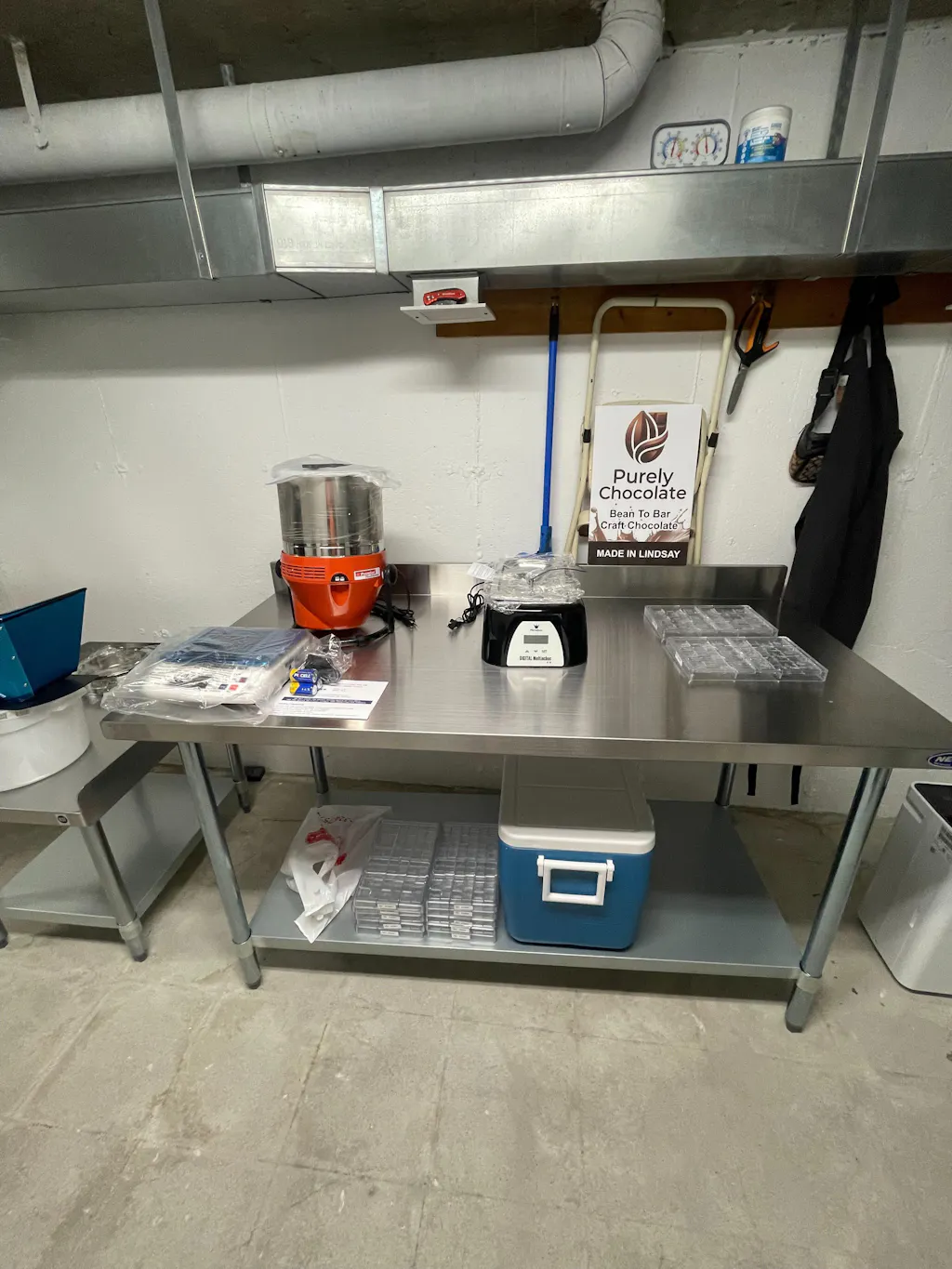
For small-scale bean-to-bar production, conching is often done in a melanger or ball mill that also handles refining — the mechanical agitation of the grinding process partially substitutes for dedicated conching. Results are adequate for small batches but the level of acid removal and flavor development is limited compared to dedicated conching.
For professional bean-to-bar production, a dedicated conching machine — or a combined melting and conching unit — is the right tool. At Zucchero Canada, we carry the FBM KLEEGO 50 ($23,899 CAD) — a combined 50 kg melting tank and 35 kg conche from FBM Boscolo (Italy).
The KLEEGO 50 handles both melting and conching in one unit, making it practical for operations that don't need the throughput of dedicated industrial equipment. For producers running the full FBM bean-to-bar line — Ninja Kid cracker/winnower, Rumbo Kid or TAOBROMA refiner, KLEEGO conche, Bilait or Pomati tempering — the KLEEGO sits at the center of the production flow between refining and tempering.
The starting material matters more than the conching
Conching can improve poorly fermented cacao, but it cannot fix it completely. Astringency from incomplete fermentation, off-flavors from contamination, and flat flavor from commodity-grade beans are all partially addressed by conching — but the ceiling is always the quality of what went in.
This is why bean-to-bar producers who want to make consistently excellent chocolate invest in sourcing before they invest in equipment. Well-fermented, single-origin fine-flavor cacao from Venezuela's Criollo-dominant regions allows shorter conching times and produces more expressive, complex finished chocolate than commodity Forastero that has been conched for 72 hours.
At Zucchero Canada, we source through Canada Cacao Co. with Certificate of Origin and full traceability on every lot:
- Sur del Lago Ancestral Criollo Lineage — Trinitario with 10–30% ancestral Criollo genetics. Controlled fermentation, sun-dried. 1.5 kg to 60 kg.
- OCUMARE Criollo Blood — High Criollo content, low bitterness, floral-fruity profile. 1.5 kg to 60 kg.
Priority allocation available for standing B2B orders. Contact our team to discuss equipment, sourcing, or production setup for your bean-to-bar operation.
FBM KLEEGO 50 Melter and Conche · Single-origin cacao beans · Bean-to-bar production guide






Leave a comment
All comments are moderated before being published.
This site is protected by hCaptcha and the hCaptcha Privacy Policy and Terms of Service apply.