
How to Roast Cacao Beans: From Home Roasting to Professional Bean-to-Bar Production
Short answer: roast fermented, dried cacao beans with hot air between about 110°C and 150°C (230–302°F) until their moisture drops to about 1%; above 150°C you risk over-roasting. A review of the research found that roasting time changes the beans more than temperature does, so keep the temperature steady and adjust the time. In an oven, work in small test batches; in production, a dedicated roaster and the equipment that follows it (cracker-winnower, refiner, conche, tempering machine) make every batch repeatable.
| What you need | Product | Price |
|---|---|---|
| Venezuelan beans to roast, low acidity and astringency | Sur del Lago Ancestral Criollo Lineage, 1.5 kg | $80.00 |
| Peruvian beans to roast, very low bitterness | Ucayali Peru raw cacao beans, 1.5 kg | $80.00 |
| Crack the roasted beans and remove the shells | FBM Ninja Kid cracker & winnower | $20,650.00 |
| Refine your first small batches on 110 V | Chocolate World M1025, 1.3–4.5 kg | $1,750.00 |
| Skip roasting: start from cocoa mass | Natural cocoa liquor wafers, 1 kg | $29.99 |
What roasting does to a cacao bean
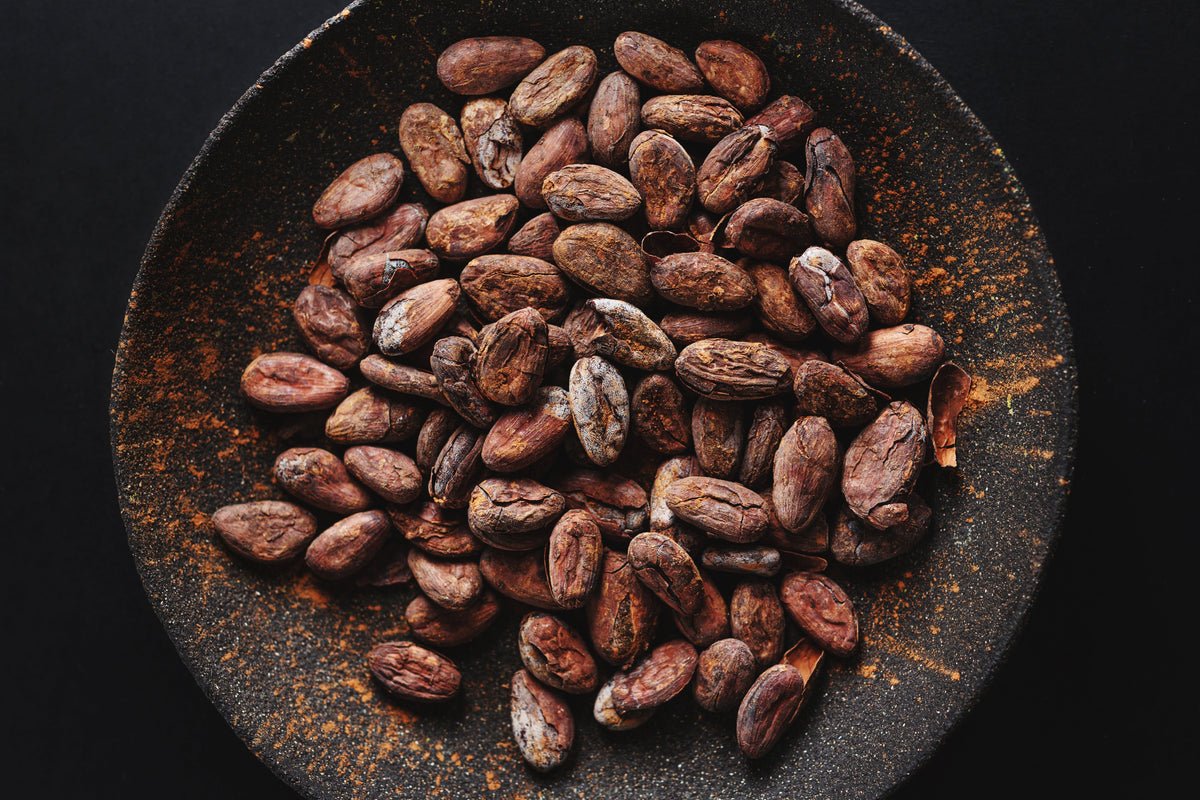
Roasting is where chocolate flavour is created. Fermented, dried beans go into the roaster with their flavour precursors, sugars and amino acids, and the heat turns them into chocolate aroma through the Maillard reaction. Three changes happen at once:
- Moisture drops. Roasting continues until moisture falls to about 1% and water activity to about 0.2. Above 2% moisture the roast is considered incomplete: it hampers grinding and the dispersion of the chocolate mass. For reference, our Sur del Lago beans are sun-dried to about 5.4% moisture before they ship.
- Maillard reaction. Sugars and amino acids are consumed (fructose fastest) and form the aroma compounds of chocolate, including Strecker aldehydes and pyrazines, whose formation depends on the roasting temperature.
- Acidity falls. Acetic acid, the strongest odour-active compound in unroasted beans and the source of their vinegar-like off-flavour, drops markedly. Research lists lower acidity, bitterness and astringency among the desirable changes of roasting.
Roasting temperature and time: what the research says
In industrial batch roasters, cocoa is roasted with hot air between 110°C and 150°C (230–302°F); the time depends on the roaster and on how fast the moisture comes down. These are the figures from a 2022 review of the research on cocoa roasting:
| Parameter | Figure |
|---|---|
| Industrial batch drum roasters | Hot air at 110–150°C (230–302°F) for 20 minutes to 2 hours |
| Convective ovens in published studies | 110–140°C (230–284°F) and 135–150°C (275–302°F) |
| Over-roasting | Above 150°C (302°F) in cocoa nibs |
| End point | Moisture about 1%, water activity about 0.2 |
| Incomplete roast | Moisture above 2% |
| What changes the beans most | Roasting time, more than roasting temperature |
There is no single right roast: the review also notes that the bean variety changes how some compounds behave during roasting. That is why producers build a profile for each origin with test batches, and why the flavour of the bean you start with matters as much as the roaster.
Whole beans or nibs?
Whole-bean roasting is common because it makes winnowing, the removal of the shells, easier. Some continuous roasters even pre-heat the beans with a short burst of infrared heat: the water in the shells and the edges of the nibs evaporates quickly, pushes the shells outwards, and they detach from the nibs. Nibs and cocoa mass roast faster, because heat transfers more efficiently into smaller particles, but they must be shelled (and, for mass, ground) before roasting.
Roasting cacao beans in an oven
Yes, you can roast cacao beans in a home or convection oven: published studies roast cocoa in convective ovens between 110°C and 150°C (230–302°F). Treat the oven as a development tool, not a production method:
- Weigh a small batch of beans before roasting.
- Keep the temperature steady at a set point in the 110–150°C range and stay at or below 150°C (302°F).
- Change one thing at a time, mainly the roasting time, since time affects the beans more than temperature.
- Weigh again after roasting. Going from 5.4% to 1% moisture, water alone accounts for a loss of about 44 g per kilo of beans; volatile acids leave too.
- Check the shells and taste. Roasting loosens the shells, so check how easily they come off; crack a few, taste the nibs, and write down time, temperature and weight loss for each batch.
Raw cacao beans are an agricultural product: our Ucayali Peru beans, for example, are labelled "do not eat raw" and require roasting and processing.
Beans that reward careful roasting
The bean you start with sets the flavour you can develop. We stock single-origin beans through Canada Cacao Co., each with its own profile:
- Sur del Lago Ancestral Criollo Lineage → Zulia and Trujillo, Venezuela. Trinitario with 10–30% ancestral Criollo lineage, fermented to at least 65% uniformity and sun-dried over 7 days to about 5.4% moisture. Fruity, woody and nutty notes with low acidity and low astringency. Every lot comes with a Certificate of Origin & Authenticity. 1.5 kg $80.00 · 5 kg $200.00
- Ucayali Peru → Amazon region of Ucayali, grown by a group of 140 farmers at 100–1,000 m. Fermented and sun-dried; hints of ripe fruit, subtle spice and light wood, very low bitterness and astringency. 1.5 kg $80.00 · 5 kg $246.95
Priority allocation is available for standing B2B orders. To benchmark your roasts against a finished chocolate, taste Bassan's Sur del Lago Ancestral Criollo Lineage 71% couverture, made from Venezuelan Trinitario cacao with ancestral Criollo lineage (5 kg $273.00).
After roasting: the bean-to-bar line, step by step
Each machine below has one job in the line; pick the size that matches your batch. The FBM machines are made to order in Italy; see each product page for availability.
| Step | Equipment | What it does | Price |
|---|---|---|---|
| Roast | Dedicated roaster (contact us for options) | Roasts whole beans or nibs with hot air | — |
| Crack & winnow | FBM Ninja Kid | Cracks 25–30 kg of beans per hour into nibs and separates the shells | $20,650.00 |
| Refine, small batches (110 V) | Chocolate World M1025 | Stone refiner and conching device for 1.3–4.5 kg batches | $1,750.00 |
| Refine and conche in one chamber | Bilait R15 | Batches up to about 15 kg; heats to 70°C (158°F) to carry a batch through refining and conching without transferring it | $12,370.00 |
| Stone-grind larger batches | FBM Rumbo Kid / Rumbo 120 | Granite stone grinders with forced hot air up to 75°C (167°F): 28 kg capacity, or a 120 kg bowl (60–70 kg recommended batch) | $27,299.00 / $35,000.00 |
| Ball-mill refining | FBM TAO KID / TAOBROMA | Refine chocolate and nut pastes to 20–25 microns; 15 kg tank or 35 kg batch | $27,600.00 / $48,650.00 |
| Melt & conche | FBM KLEEGO 50 | 50 kg melting tank with a 35 kg conche; pumps the chocolate straight into a tempering machine | $23,899.00 |
| Temper | Bilait Adam K6 / Pavoni MiniTemper | Adam K6: 6 kg tank, up to 24 kg per hour, integrated refrigeration and heated vibrating table, 230 V. MiniTemper: 3.5 kg tank and 110 V for small test batches | $10,990.00 / $3,350.00 |
The Adam K6 runs on 230 V (1.5 kW at full capacity, Bilait catalogue 2026). Contact us to confirm your electrical setup before ordering.
Why refine to that size: food scientists set chocolate particle size below about 25 microns to avoid a gritty texture. Conching then develops flavour and texture; our guide on what conching does explains it.
View all bean-to-bar machines →
How AI can help your production
Keep a roast log for every batch: origin, lot, weight in and out, set temperature, time, and tasting notes. Paste it into an AI assistant and ask it to compare batches, show how weight loss moves with roasting time for each origin, and draft a written roasting procedure per origin for your team. Ask it to calculate the bean cost per bar from your purchase price and your measured roasting and winnowing losses, so you know your real yield.
AI organises the information; tasting and the final decision stay with your chef.
Starting your bean-to-bar production in Canada
At Zucchero Canada, we are the authorized Canadian distributor for FBM Boscolo and the exclusive Bilait distributor in Canada, and we also carry Chocolate World and Pavoni equipment. All equipment ships from our Calgary warehouse or direct from the manufacturer with Canadian support. We also supply the single-origin Venezuelan and Peruvian cacao beans that go into your production, so you can source beans and equipment from one place, with traceability documentation on every lot. Each machine has its job: the Chocolate World M1025 for first batches on 110 V, the Bilait R15 to refine and conche up to about 15 kg in one chamber, FBM stone grinders and ball mills when you scale, the KLEEGO 50 to conche, and the Bilait Adam K6 to temper, with the Pavoni MiniTemper for small test batches on 110 V.
Whether you're developing your first bean-to-bar recipe or scaling an existing operation, contact our team — we work with craft chocolate producers across Canada and can help you spec the right equipment for your volume, space, and budget.
→ Browse single-origin cacao beans · → Browse tempering machines
Raw cacao beans | Bean-to-bar machines | Ball mills & refiners | What is conching? | Where cocoa beans come from | Starting a bean-to-bar business
This article is for information only. Every business is different: draw your own conclusions based on your own expectations, budget and goals, and talk to qualified experts before you decide or invest.
Sources: R. F. Peña-Correa, B. Ataç Mogol and V. Fogliano, "The impact of roasting on cocoa quality parameters", Critical Reviews in Food Science and Nutrition (2022); B. Wolf, "Rheological properties of chocolate", New Food Magazine (2011); Canada Cacao Co., FBM Boscolo, Bilait, Chocolate World and Pavoni product data on zuccherocanada.ca; Bilait, catalogue 2026 (Adam K6).
Good to know
Frequently asked questions
What temperature should I roast cacao beans at?
Research on cocoa roasting reports hot-air roasting between 110°C and 150°C (230–302°F), with over-roasting above 150°C (302°F). Keep the temperature steady inside that range and adjust the time for each origin.
How long does it take to roast cacao beans?
It depends on the roaster and the batch: industrial batch drum roasters run from about 20 minutes to 2 hours at 110–150°C. The roast is finished when moisture is down to about 1%; above 2% it is considered incomplete. A 2022 review found that time changes the beans more than temperature, so build your profile by adjusting the time.
Can you roast cacao beans in the oven?
Yes. Published studies roast cocoa in convective ovens between 110°C and 150°C (230–302°F). Roast small, weighed batches, keep the temperature steady, change the time one step at a time, and record the weight loss, how easily the shells come off and the taste of each batch. For production, a dedicated roaster gives repeatable batches.
How do I know when cacao beans are roasted?
The target is a moisture content of about 1%. In practice, weigh the beans before and after: going from 5.4% to 1% moisture, water alone accounts for about 44 g per kilo. Roasting also loosens the shells, and the vinegar-like acidity of raw beans falls, so check the shells and taste the nibs.
Should I roast whole cacao beans or nibs?
Whole beans are the common choice because the shells come off more easily after roasting. Nibs roast faster because heat transfers better into smaller pieces, but they must be shelled before roasting.
Can you eat raw cacao beans?
Our raw beans are sold for processing, not for eating as they are: the Ucayali Peru beans, for example, are labelled "do not eat raw" and require roasting and processing. For a ready ingredient, use cacao nibs or cocoa liquor wafers.
Where can I buy cacao beans for roasting in Canada?
Zucchero Canada sells Sur del Lago Venezuelan beans and Ucayali Peru beans in 1.5 kg and 5 kg bags. Cacao is excluded from free shipping; orders over $500 CAD get 5% off automatically at checkout. Food products, including cacao beans, are sold within Canada only. For standing B2B orders, contact our team.
Shop this article
Products mentioned in this guide
 Canada Cacao Co.Sur del Lago Ancestral Criollo Lineage Cocoa Beans · VenezuelaFrom $80.00 CADView product →
 Canada Cacao Co.Ucayali Peru Raw Cacao Beans - Fine Flavor Fermented & Sun-DriedFrom $80.00 CADView product →
 FBM Boscolo MachinesNinja Kid Cocoa Bean Cracker & Winnower – 25–30 kg/h$20,650.00 CADView product →
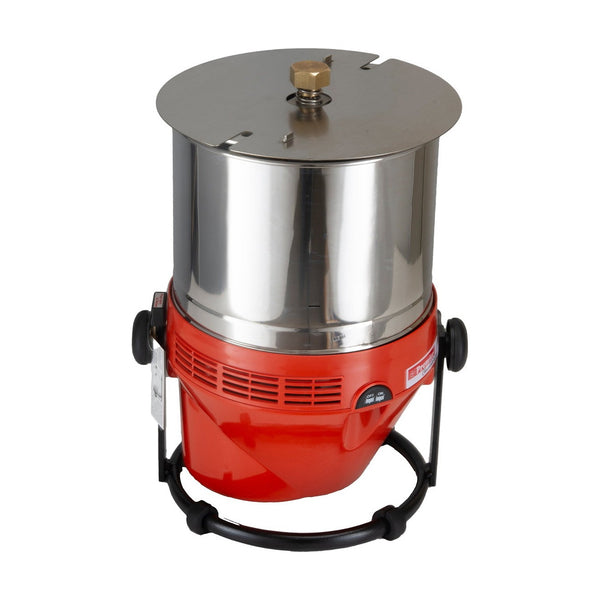 Chocolate WorldChocolate World M1025 Conching Device – 4.5kg Tabletop Refiner 110V$1,750.00 CADView product →
For professionals
Equipping a chocolate shop, bakery or kitchen?
Tell us what you produce and how much. We will recommend the right machine, moulds and ingredients, and send you a quote.
For home bakers
Professional tools for your own kitchen
The same European moulds, tools and ingredients the professionals use.
5% off orders over $500 CAD, applied automatically at checkout.
Keep reading



Leave a comment
All comments are moderated before being published.
This site is protected by hCaptcha and the hCaptcha Privacy Policy and Terms of Service apply.