
How to Start a Bean-to-Bar Chocolate Business in Canada: Equipment, Sourcing, and What to Buy First
Short answer: start a bean-to-bar business in Canada by proving your recipe in small batches first, with fermented beans, a tabletop refiner and a tempering machine, then buy the production line in process order: cracker and winnower, refiner or grinder, conche, tempering machine and moulds. A professional starter line from our catalogue (FBM Ninja Kid, FBM Rumbo Kid, FBM KLEEGO 50 and a tabletop tempering machine) totals $82,838.00 at current prices. If you import your own beans or sell across provincial borders, you also need a Safe Food for Canadians licence from the CFIA.
Quick answer: what to buy, in order
| Stage | Machine or ingredient | What it does | Price |
|---|---|---|---|
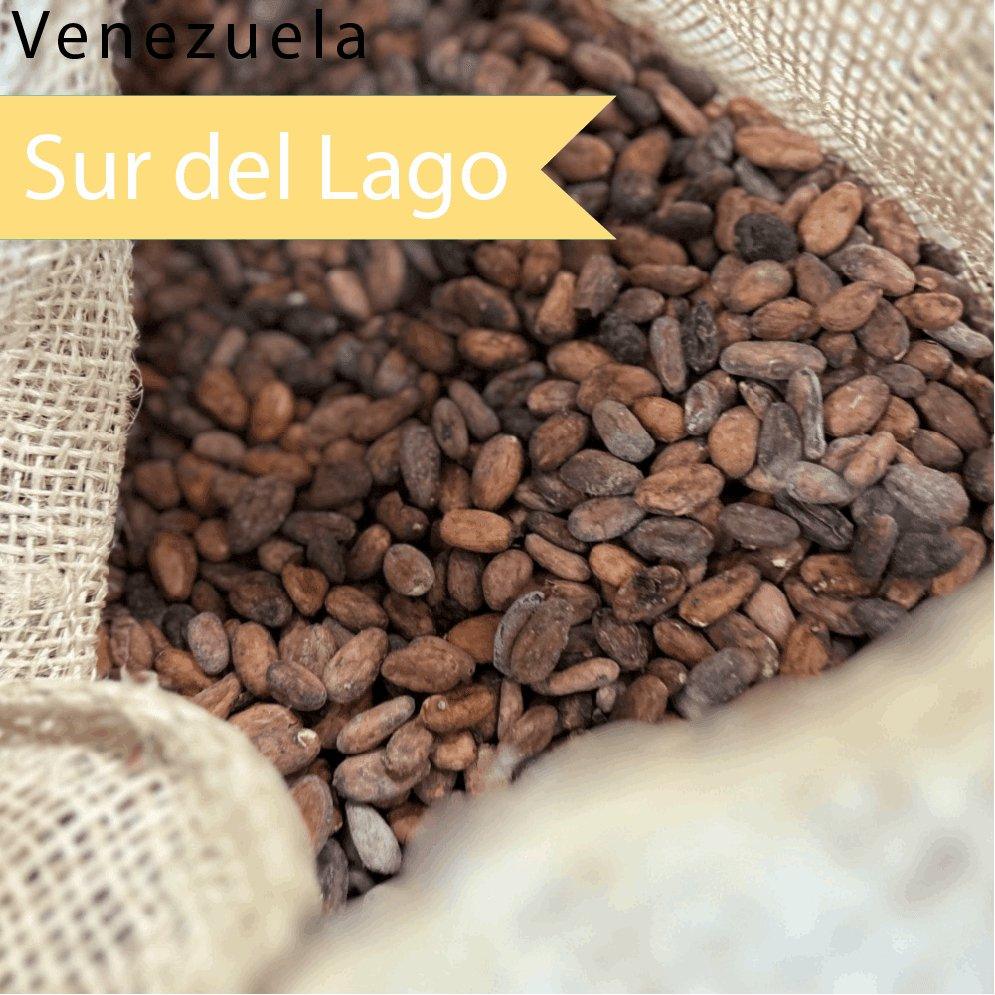
| Beans for development | Sur del Lago cocoa beans, Venezuela | 1.5 kg and 5 kg GrainPro bags for recipe trials | $80.00 / 1.5 kg |
| Recipe trials | Chocolate World M1025 tabletop refiner | Stone refining and conching, 1.3–4.5 kg per batch, 110 V | $1,750.00 |
| Crack and winnow | FBM Ninja Kid | Cracks 25–30 kg of beans per hour into nibs and separates the shells | $20,650.00 |
| Refine and conche, up to about 15 kg | Bilait R15 refiner | Refines and conches in one closed chamber, heats to 70°C (158°F) | $12,370.00 |
| Grind nibs, 28 kg | FBM Rumbo Kid | Granite stone grinder (melangeur), hot air up to 75°C (167°F) | $27,299.00 |
| Melt and conche | FBM KLEEGO 50 | 50 kg melting tank and 35 kg conche; pumps into the tempering machine | $23,899.00 |
| Temper | Bilait Adam K6 | 6 kg tabletop tempering machine | $10,990.00 |
View all bean-to-bar machines →
Is bean-to-bar right for your business?
Bean-to-bar means you make the chocolate itself from cocoa beans; a chocolatier starts from finished couverture. The difference decides your equipment list:
| Bean-to-bar producer | Chocolatier (couverture-based) |
|---|---|
| Makes chocolate from fermented, dried cocoa beans | Works from purchased couverture chocolate |
| Controls flavour from the origin of the bean to the bar | Controls flavour from the couverture to the finished piece |
| Needs cracking, winnowing, refining and conching equipment before tempering ($82,838.00 for our professional starter line, up to $126,099.00 for a full line) | Starts at tempering and moulding |
| Best for origin-focused bars and craft chocolate brands | Best for bonbons, pralines, confections and custom chocolate work |
If you are still deciding between the two models, our guide on how to start a chocolate business in Canada covers the couverture route.
Step 1: Prove your recipe before you buy a line
Our recommendation is to validate the recipe and the market with small batches before investing in a production line: a grinder and a tempering machine sitting idle while you develop your first recipe is capital you are not yet using. Two ways to start:
- Contract processing: develop the recipe with a co-packer or a shared kitchen that already has bean-to-bar equipment.
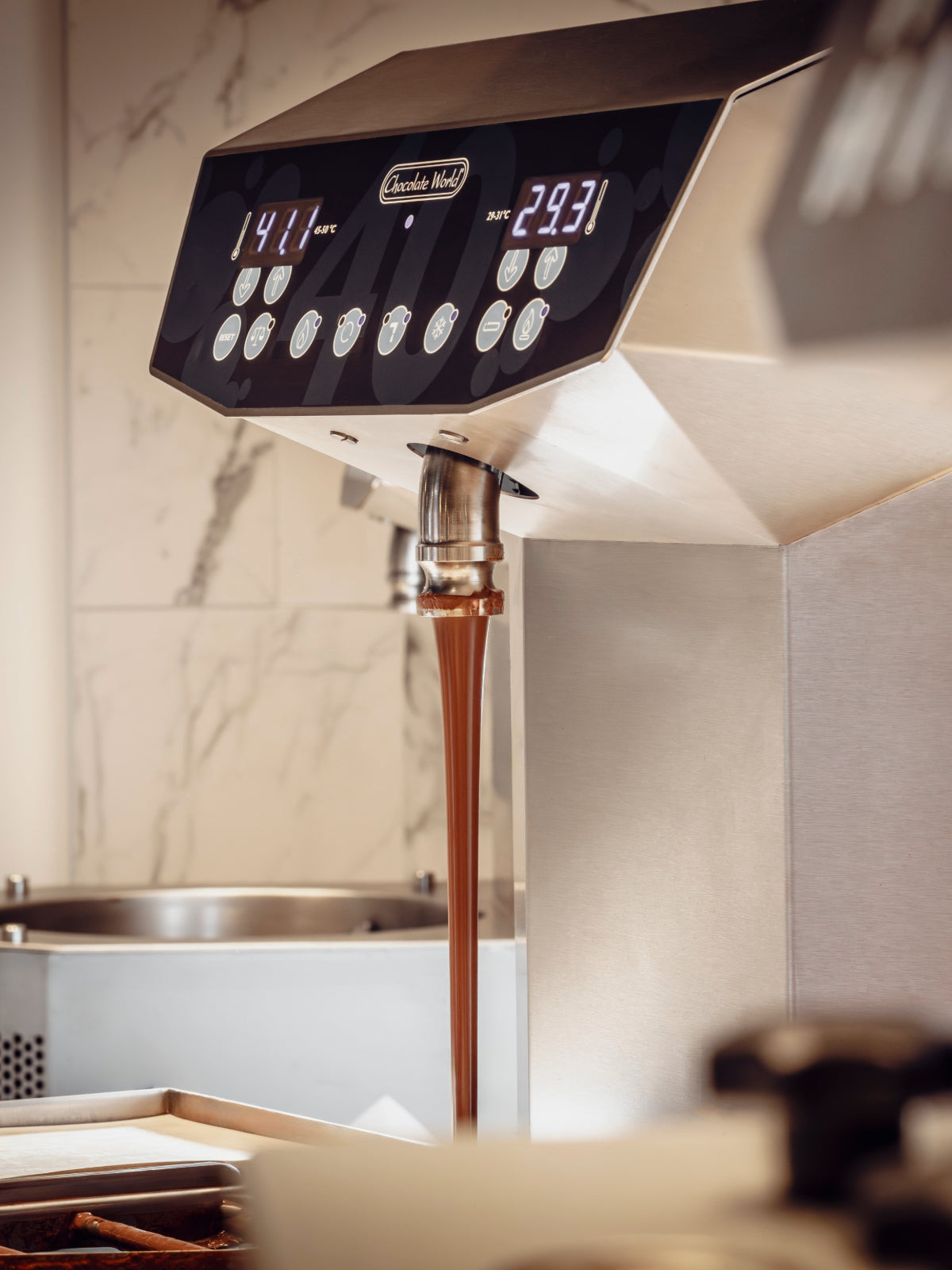
- A tabletop refiner: the Chocolate World M1025 refines with natural granite stones to under 20 microns, runs 1.3 to 4.5 kg per batch on 110 V, and has a motor rated for up to 72 hours of continuous running. Feed it with Venezuelan cacao nibs ($69.95 / 1 kg) to skip roasting and winnowing at the trial stage.
Once you have a recipe you can repeat, a defined market and steady orders, the investment in a professional line has something to pay it back.
Step 2: The bean-to-bar process and the machine for each step
Chocolate production runs through fermentation, drying, roasting and grinding of the beans, then mixing, conching and tempering. Fermentation is carried out at the plantations; beans reach you fermented and dried, and every step after that happens in your workshop.
| Step | Process | Equipment |
|---|---|---|
| 1 | Source and evaluate fermented, dried beans | Sourcing relationship |
| 2 | Roast | Cacao roaster (we do not list one at present; see our roasting guide) |
| 3 | Crack and winnow (separate nibs from shells) | FBM Ninja Kid |
| 4 | Grind and refine nibs into chocolate mass | FBM Rumbo Kid or Rumbo 120 (stone grinders); FBM TAO KID or TAOBROMA (ball mills, 20–25 microns); Bilait R15 (up to about 15 kg) |
| 5 | Conche: coat the particles with fat, drive off volatile acids and moisture, set the viscosity, develop flavour | FBM KLEEGO 50 or KLEEGO 100; Bilait R15 at small batch sizes |
| 6 | Temper (stable cocoa butter crystals) | Bilait Adam K6, Pomati T5 or Chocolate World CW12 |
| 7 | Mould, cool and package | Bar and tablet moulds |
For the conching stage in detail, read low-impact vs traditional conching.
Step 3: The equipment path, from compact line to full line
Compact line: batches up to about 15 kg
The Bilait R15 refines nibs and conches them in the same closed chamber, so at this size one machine covers steps 4 and 5. It takes batches from very small quantities up to about 15 kg, heats to 70°C (158°F) and holds the temperature. Rollers come in Teflon or stone; the Teflon rollers are light, removable and dishwasher safe. We are Bilait's exclusive distributor in Canada.
- FBM Ninja Kid cracker and winnower → $20,650.00
- Bilait R15 refiner → $12,370.00
- Bilait Adam K6 tempering machine → $10,990.00
Compact line total: $44,010.00 CAD at current prices.
Professional starter line
The entry point for professional output with separate grinding and conching:
- FBM Ninja Kid, cracker and winnower ($20,650.00 CAD): a stainless steel machine that cracks 25–30 kg of cocoa beans per hour into nibs and separates the shells with minimal dust.
- FBM Rumbo Kid, stone grinder, 28 kg ($27,299.00 CAD): a granite melangeur that refines nibs or chocolate liquor, with a direct-drive motor and forced hot air up to 75°C (167°F).
- FBM KLEEGO 50, melter and conche ($23,899.00 CAD): a 50 kg melting tank with a 35 kg conche, counter-rotating stirrers and CPU control of speed, airflow and temperature; it pumps the chocolate straight into the tempering machine.
- Tempering machine: Bilait Adam K6 ($10,990.00 CAD), 6 kg tank, 230 V single-phase; or Pomati T5 ($11,650.00 CAD), 5 kg tank, listed by Pomati at 240 V with special voltages on request and on our product page in a 110 V North American version.
Professional starter line total: $82,838.00–$83,498.00 CAD (with the Bilait Adam K6 or the Pomati T5, at current prices).
Full production line (scaling)
When volume justifies larger equipment:
- FBM Rumbo 120, stone grinder ($35,000.00 CAD): 120 kg bowl, 60–70 kg recommended batch, 45 kg granite millstones.
- FBM TAOBROMA, ball mill, 35 kg ($48,650.00 CAD): refines to 20–25 microns, with integrated pump, reversible auger and touchscreen PLC with recipe storage.
- FBM KLEEGO 100, melter and conche ($36,500.00 CAD): 100 kg melting tank and 65 kg conche, with conching time under 3 hours.
- Chocolate World CW12 ($20,299.00 CAD): continuous tempering from a 12 kg tank, up to 45 kg of tempered chocolate per hour.
Full production line total: $112,449.00–$126,099.00 CAD (FBM Ninja Kid, FBM Rumbo 120 or TAOBROMA, FBM KLEEGO 100 and Chocolate World CW12, at current prices).
Making your own cocoa butter? The FBM STING press ($13,599.00) extracts 35–45% of the cocoa butter from nibs at about 1 kg per hour.
Step 4: Cacao sourcing, the most important decision
The beans you source set the ceiling of your chocolate. Professional bean-to-bar producers in Canada have historically struggled to source high-quality single-origin beans with reliable traceability documentation. At Zucchero Canada we supply single-origin beans through Canada Cacao Co. Our Sur del Lago lots come with a Certificate of Origin and Authenticity co-signed by Agrícola Lamboean and Canada Cacao Company, certifying single-origin traceability, controlled fermentation and verified Criollo genetic content.
- Sur del Lago Ancestral Criollo Lineage, Venezuela: Trinitario cacao with 10–30% ancestral Criollo lineage, fruity, woody and nutty notes with low acidity and astringency; fermented to at least 65% uniformity and sun-dried over 7 days to about 5.4% moisture. $80.00 / 1.5 kg, $200.00 / 5 kg.
- Ucayali, Peru: fermented and sun-dried fine-flavour beans with notes of ripe fruit, spice and light wood and very low bitterness. $80.00 / 1.5 kg, $246.95 / 5 kg.
Our other Venezuelan origins (Ocumare, Carenero Superior, Gibraltar and Río Caribe Superior) are listed in the raw cocoa beans collection → with their current availability. For recipe development, start with 1.5 kg or 5 kg GrainPro bags across several origins to learn how each processes and tastes before committing to 20 kg or 60 kg production lots. Priority allocation is available for standing B2B orders. Compare origins in our guide to the best single-origin cocoa beans for bean-to-bar in Canada.
Step 5: Licensing and regulatory requirements in Canada
- Safe Food for Canadians licence (CFIA): required if you import food, or if you manufacture, process, package or label food for export or to be sent across provincial or territorial borders. Importing your own lots of beans is one of the activities that needs it. The CFIA's interactive licensing tool confirms what your activities need.
- Provincial rules: if you sell only within your province, check your provincial and municipal food safety requirements for your kitchen and permits before you build out.
- The name "chocolate" is standardized: the CFIA expects products named chocolate, dark chocolate or milk chocolate to meet the Canadian Food Compositional Standards; dark chocolate, for example, needs at least 35% total cocoa solids, of which at least 18% cocoa butter and 14% fat-free cocoa solids.
- Allergens: milk, soy and tree nuts are on Health Canada's list of priority food allergens, so check how each one appears on your labels.
Step 6: The cost of each stage
| Stage | Equipment at current prices |
|---|---|
| Recipe trials (tabletop refiner) | $1,750.00 for the Chocolate World M1025, plus a tempering method |
| Compact line (up to about 15 kg batches) | $44,010.00 |
| Professional starter line | $82,838.00–$83,498.00 CAD |
| Full production line (scale-up) | $112,449.00–$126,099.00 CAD |
Bean-to-bar is a capital-intensive category. Size the line to the orders you have, not the ones you hope for, and add capacity stage by stage.
How AI can help your production
Give an AI assistant the machine prices above, your bean cost per kilo and your expected yield, and ask it to build a cost per bar and a payback table for each stage of the line. Ask it to draft a batch log template (bean lot, roast, refining and conching times, tempering temperatures, tasting notes) and a step-by-step SOP for each machine from its manual. Logged batches are what let you repeat the good ones and trace a problem to its lot.
AI organises the information; tasting and the final decision stay with your chef.
Bean-to-bar equipment and cacao at Zucchero Canada
We are the exclusive Canadian distributor of Bilait and an authorized distributor of FBM Boscolo, Chocolate World and Pomati, so one supplier can quote your whole line with a distinct job for each machine: Chocolate World M1025 for trials, Bilait R15 for compact batches, FBM for cracking, grinding and conching at scale, and Bilait, Pomati or Chocolate World for tempering. The FBM machines are made to order in Italy. We also supply single-origin beans and nibs through Canada Cacao Co. Machines and cacao are not part of the free-shipping offer, and orders over $500 CAD get 5% off automatically at checkout. Contact our team to discuss equipment sizing, cacao sourcing or production setup for your operation.
Single-origin cacao beans | Bean-to-bar machines | Tempering machines | How to roast cacao beans | What is conching
This article is for information only. Every business is different: draw your own conclusions based on your own expectations, budget and goals, and talk to qualified experts before you decide or invest.
Sources: FBM Boscolo, Bilait, Chocolate World and Pomati product data at zuccherocanada.ca; Bilait catalogue 2026 (Adam K6, R15); Chocolate World equipment catalogue (M1025); Pomati T5 datasheet; Canada Cacao Co. product data (Sur del Lago, Ucayali, nibs); CFIA, "Licensing under the Safe Food for Canadians Regulations" and Canadian Food Compositional Standards, Volume 4; Health Canada, "Food allergies"; V. Barišić et al., Molecules 24 (2019) 3163.
Good to know
Frequently asked questions
How much does it cost to start a bean-to-bar chocolate business in Canada?
It depends on the stage. Recipe trials can start with a tabletop refiner such as the Chocolate World M1025; a compact line pairs the FBM Ninja Kid, the Bilait R15 and a tabletop tempering machine; a professional starter line adds separate grinding and conching (FBM Ninja Kid, Rumbo Kid, KLEEGO 50 and a Bilait Adam K6 or Pomati T5); a full line moves up to the Rumbo 120 or TAOBROMA, the KLEEGO 100 and the Chocolate World CW12. The cost table in this article shows each total at current prices.
Where can I buy single-origin cacao beans for bean-to-bar production in Canada?
Zucchero Canada supplies single-origin beans through Canada Cacao Co., including Sur del Lago from Venezuela, with a Certificate of Origin and Authenticity for each lot, and Ucayali from Peru, in 1.5 kg and 5 kg GrainPro bags for development. Priority allocation is available for standing B2B orders. Food products ship within Canada only.
Do I need a licence to import cacao beans to Canada?
Yes. Under the Safe Food for Canadians Regulations, businesses that import food need a licence from the CFIA, as do businesses that prepare food for export or to be sent across provincial or territorial borders. Canada Cacao Co. handles import documentation for all lots we distribute.
What is the difference between a bean-to-bar producer and a chocolatier?
A chocolatier starts with purchased couverture chocolate and creates finished products such as bonbons, bars and truffles. A bean-to-bar producer makes the chocolate itself from fermented, dried cocoa beans, which adds cracking, winnowing, refining and conching equipment but gives control of flavour from the origin to the bar.
Which bean-to-bar machine should I buy first?
For recipe development, a tabletop refiner such as the Chocolate World M1025 (1.3–4.5 kg per batch, 110 V) fed with cacao nibs. When you move to production, buy in process order: the FBM Ninja Kid cracker and winnower, then a refiner (Bilait R15 up to about 15 kg, or FBM Rumbo Kid with a KLEEGO 50 conche), then a tempering machine.
Do bean-to-bar machines and cacao qualify for free shipping?
No: machines, cacao and chocolate are excluded from the $300 free-shipping offer. Orders over $500 CAD get 5% off automatically at checkout. Contact our team for a quote on a complete line.
Shop this article
Products mentioned in this guide
 Canada Cacao Co.Sur del Lago Ancestral Criollo Lineage Cocoa Beans · VenezuelaFrom $80.00 CADView product →
 Chocolate WorldChocolate World M1025 Conching Device – 4.5kg Tabletop Refiner 110V$1,750.00 CADView product →
 FBM Boscolo MachinesNinja Kid Cocoa Bean Cracker & Winnower – 25–30 kg/h$20,650.00 CADView product →
 BilaitBilait R15 Refiner (Teflon) — 15 kg Bean to Bar$12,370.00 CADView product →
For professionals
Equipping a chocolate shop, bakery or kitchen?
Tell us what you produce and how much. We will recommend the right machine, moulds and ingredients, and send you a quote.
For home bakers
Professional tools for your own kitchen
The same European moulds, tools and ingredients the professionals use.
5% off orders over $500 CAD, applied automatically at checkout.
Keep reading

Leave a comment
All comments are moderated before being published.
This site is protected by hCaptcha and the hCaptcha Privacy Policy and Terms of Service apply.