
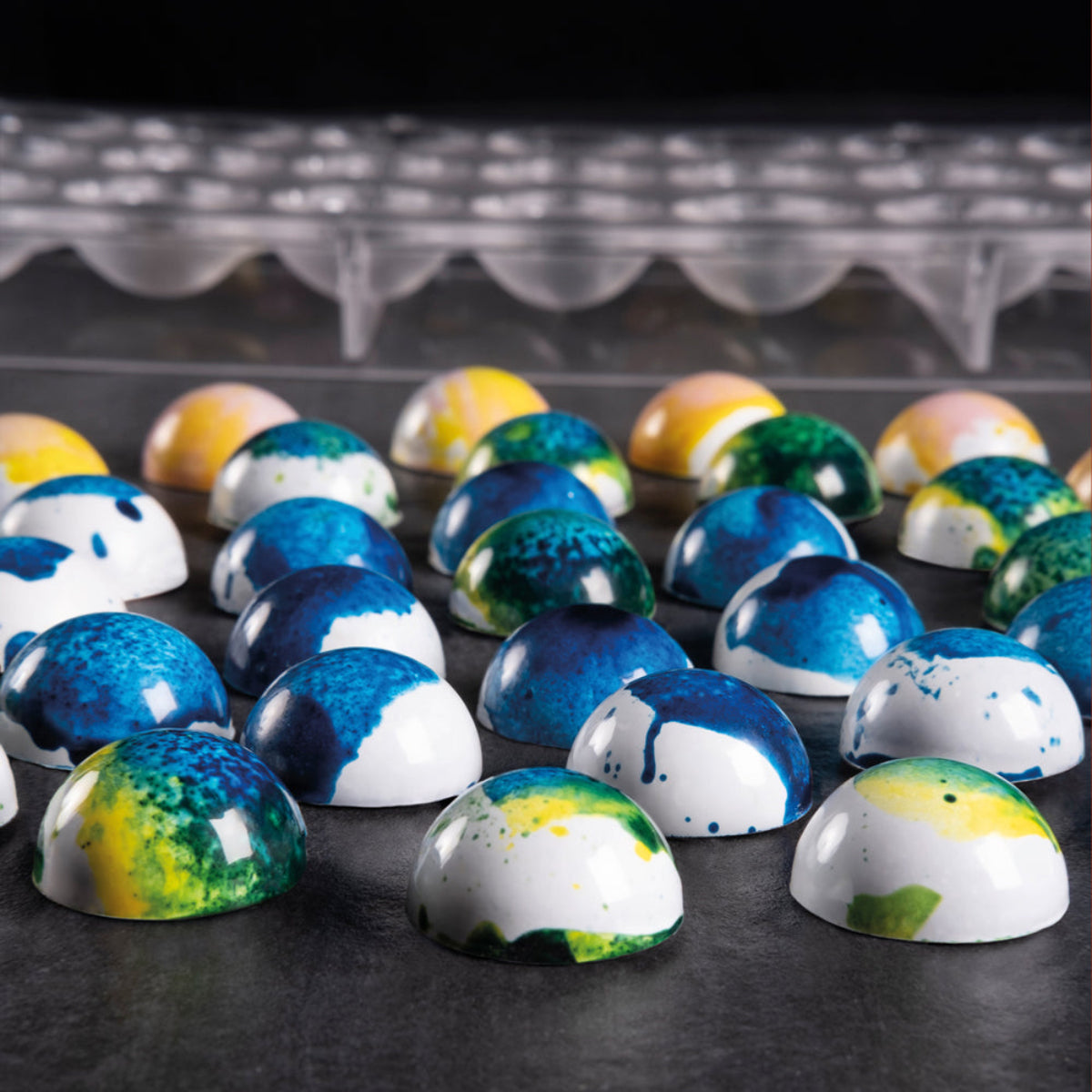




Short answer: to make chocolate spoons with a mold, use tempered real chocolate (couverture) and a clean, completely dry spoon mould. Fill every cavity, tap out the air, scrape the top flat, let the chocolate set at room temperature or briefly in a cool place at around 18°C (64°F), then turn the mould over and tap gently. Tempered chocolate contracts as it sets, which is what releases it from a rigid mould and gives the spoons their shine and snap. Martellato's spoon mould makes 13 spoons of about 6 g each.
| Your need | What we recommend | Price |
|---|---|---|
| A spoon-shaped mould | Martellato spoon mould 21MA3006 (13 spoons of about 6 g) or Chocolate World Coffeespoon CW1533 | Ask our team |
| Chocolate on a stick to stir into hot milk | Chocolate World Lollipop Bear mould CW1354 | $39.95 |
| Couverture made for moulding and chocolate drinks | Bassan Sur del Lago 71%, 5 kg | $273.00 |
| Check the chocolate temperature | Martellato digital thermometer 50T001 | $29.95 |
| Keep chocolate at working temperature | Martellato Meltinchoc Digital melter, 3.6 L | $1,150.00 |
| Scrape the mould clean | Professional chocolate scraper 145 mm | $36.95 |
Choosing a chocolate spoon mold
For glossy spoons with sharp detail, use a rigid mould (polycarbonate or BPA-free Tritan) and tempered chocolate.
| Mould | Material | What it makes |
|---|---|---|
| Martellato 21MA3006 | BPA-free resin (Tritan) | 13 spoons of about 6 g, 26 × 7 × 96 mm each, on a 275 × 175 × 26 mm mould |
| Martellato MA3006 | Polycarbonate | Spoon mould in polycarbonate, 13 cavities |
| Chocolate World CW1533 Coffeespoon | Polycarbonate | A Belgian alternative from the Chocolate World range |
Spoon moulds are a specialised item and not always on the shelf. Contact us and we will tell you which one we can supply. If you want a chocolate stirrer right away, a lollipop mould does the same job: the Chocolate World Lollipop Bear CW1354 casts 6 pieces of 11 g on a 275 × 135 × 24 mm mould. See all chocolate lollipop moulds.
Silicone moulds release by flexing, but shine and snap still come from tempering, not from the mould material. For help choosing, read how to choose a chocolate mold.
Which chocolate to use for chocolate spoons
Use real couverture and temper it; compound coating does not set firmly enough to come out of a mould.
BCcampus explains that compound chocolate, where other fats replace cocoa butter, is not appropriate for moulding: it does not set as firmly and is difficult to remove from a mould, while properly tempered cocoa butter chocolate shrinks slightly, which aids removal. Follow the working curve of your couverture:
| Couverture | Melt | Work / temper at | Set |
|---|---|---|---|
| Bassan Sur del Lago 71% | 50°C (122°F) maximum | 30–32°C (86–90°F) | Crystallise at 16–18°C (61–64°F), then demould |
| FCH 55% dark, Venezuela | 45–50°C (113–122°F) | Crystallisation 28–29°C (82–84°F); tempering 31–32°C (88–90°F) | — |
Both suit a spoon that ends up in a cup: Bassan lists chocolate beverages among the uses of its 71%, and FCH describes its 55% for beverages and lists moulding among its uses. For milk and white chocolate, follow the sheet of the chocolate you use; the Martellato Meltinchoc Digital, for example, holds dark at 31°C (88°F), milk at 29°C (84°F) and white at 28°C (82°F). New to tempering? Start with how to temper chocolate.
Step by step: how to make chocolate spoons with a mold
1. Clean and dry the mould
Wash new moulds before their first use and make sure every mould is completely dry. Chocolate World recommends cleaning polycarbonate moulds before first use because they can carry dust and oil, washing at about 60°C (140°F) with a detergent compatible with polycarbonate, rinsing with demineralised water and drying with warm air at no more than 70–80°C (158–176°F). Keep water away from the chocolate too: melting chocolate cannot tolerate small drops of water, and even steam from a double boiler can make it seize (Exploratorium).
2. Temper the chocolate
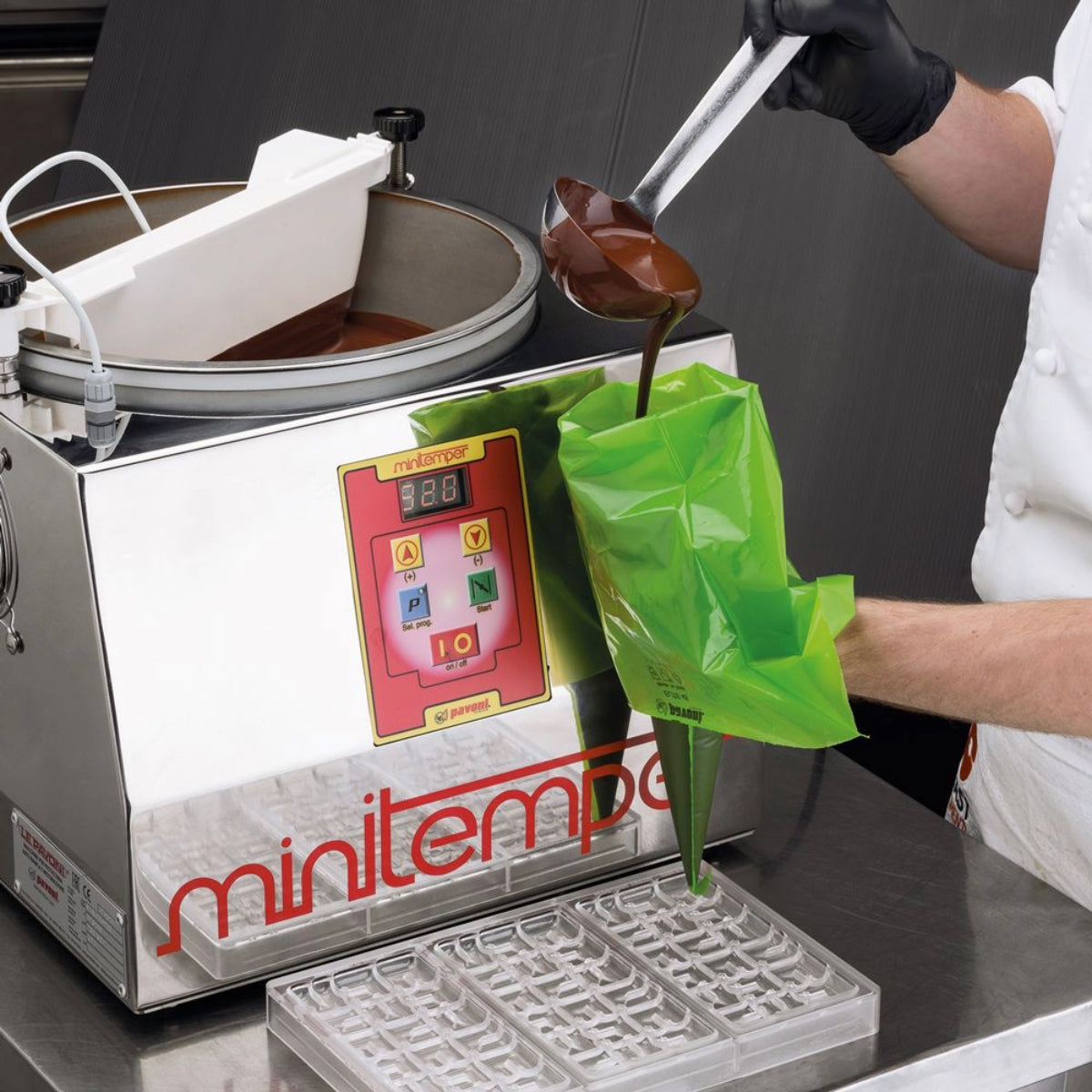
Bring the chocolate to its working temperature and keep it there while you fill. Good tempering makes chocolate crystallise quickly with maximal contraction, which facilitates mould release, and gives a high gloss (Lonchampt and Hartel, 2004). Tempering by hand works for small quantities: KREA Swiss notes that passive hand cooling is fine for a few hundred grams. Above that, a melter or a tempering machine keeps every mould consistent.
3. Fill the cavities and remove the air
Fill each spoon cavity completely with tempered chocolate. If you temper by hand, Chocolate World suggests filling the cavities with a piping bag. Then tap the mould on the bench or use a vibrating table so air bubbles rise and the chocolate settles into the bowl and handle of each spoon.
4. Scrape the top flat
Scrape the excess chocolate from the top of the mould for a flat, neat back. A stiff stainless-steel scraper does it in one pass; Martellato's 145 mm chocolate scraper has a 145 × 80 mm blade enclosed in a non-slip handle.
5. Let the spoons set
Let the chocolate crystallise and set completely. Depending on the chocolate, the shape and the room, Chocolate World leaves the mould at room temperature or places it briefly in a cool room or chocolate fridge at around 18°C (64°F). Do not rush it in a very cold place: cooling too fast can create unstable crystals and hair cracks and pores on the surface, which promote bloom (Lonchampt and Hartel, 2004).
6. Demould
Turn the mould over and tap it gently to release the spoons. Chocolate World advises minimising twisting, demoulding with a material softer than polycarbonate, and using several soft taps rather than one hard strike. If the spoons stick, the chocolate was usually not tempered correctly: see tempering troubleshooting.
Decorating chocolate spoons
The cleanest way to add colour is inside the mould, before the chocolate goes in.
- Apply a thin, even layer of tempered coloured cocoa butter in the cavities with a spray gun or airbrush, and let it crystallise completely.
- Chocolate World's guideline: the mould should be around 20°C (68°F) before you fill it.
- For two colours, apply the second once the first has crystallised.
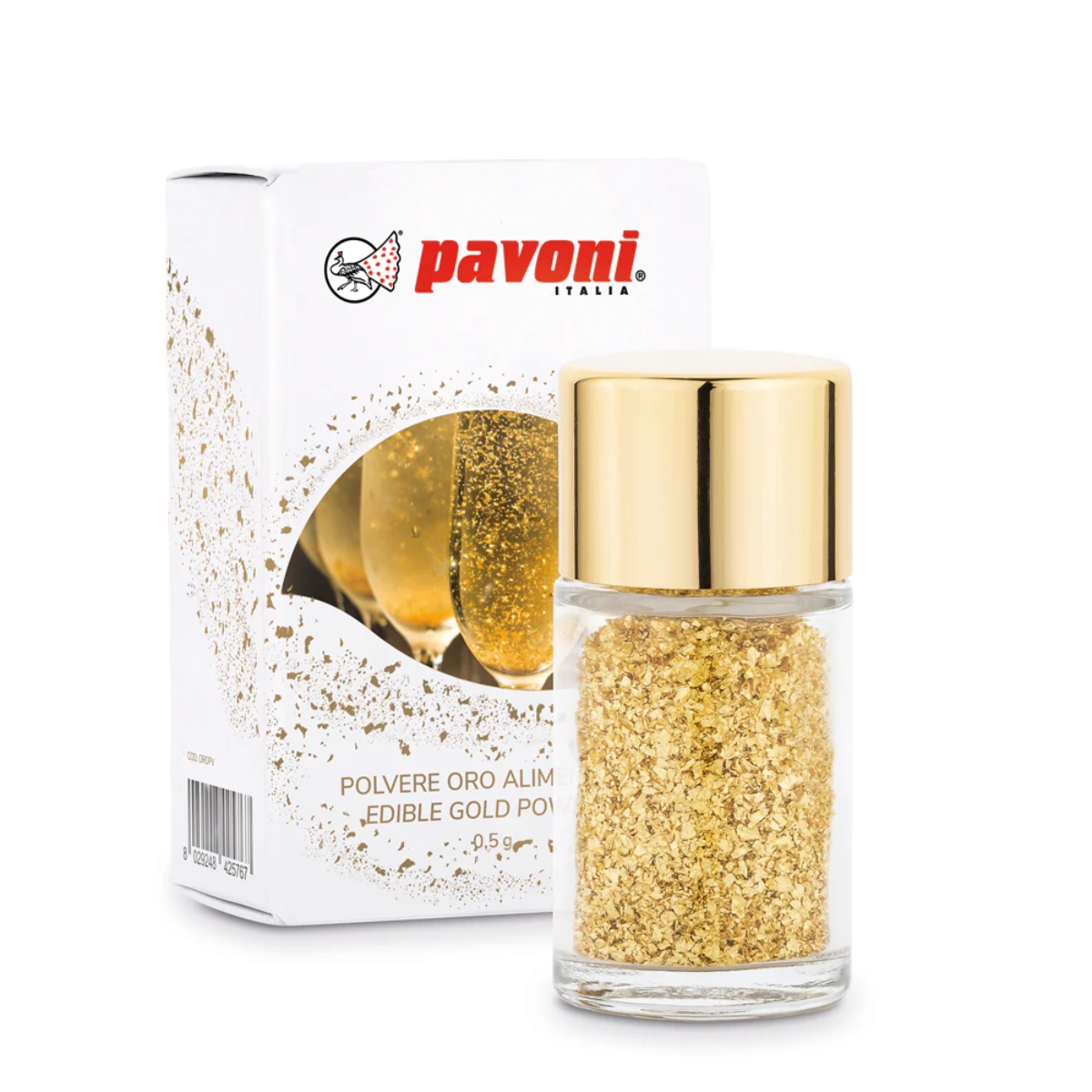
Pavoni Italia's Chocolart colours are ready to use, 200 g, E171-free, for colouring chocolate in the mass, on the surface and in moulds: Chocolart red is $79.99 and Chocolart gold is $109.00.
Storing chocolate spoons
Store finished spoons sealed, cool and dry, away from light, odours and temperature swings.
Bassan's storage guideline for its 71% couverture is 16–20°C (61–68°F) and below 50% relative humidity, away from direct sunlight and strong odours, avoiding temperature fluctuations that cause bloom. Lonchampt and Hartel note that, in general, the lower the storage temperature, the lower the bloom risk. For shelf life and storage in detail, read does chocolate go bad.
Troubleshooting chocolate spoons
| Problem | Likely cause | What to do |
|---|---|---|
| Spoons will not release | Chocolate not tempered, or compound coating | Use tempered couverture; it contracts as it sets |
| Melted chocolate turns thick and grainy | Water or steam got into it | Keep moulds, bowls and tools completely dry |
| Fine cracks, pores or later bloom | Cooled too fast | Set at room temperature or around 18°C (64°F), not colder |
| Marks on the spoons from the mould | Hard-water traces or detergent not rinsed off the mould | Rinse with demineralised water; do not use a machine or abrasive to remove traces, it scratches the mould |
| Grey streaks during storage | Temperature swings | Store at a steady 16–20°C (61–68°F), below 50% humidity |
How AI can help your production
Give an AI assistant your mould data (13 spoons of about 6 g per Martellato mould, roughly 78 g of chocolate per mould before scraping losses) and your order, and ask it how many moulds to fill and how much couverture to temper for 200 spoons. Ask it to turn the six steps above into a one-page SOP with the temperatures of your couverture, and to keep a batch log of room temperature, setting time and demoulding results, so you can see what works in your kitchen.
AI organises the information; tasting and the final decision stay with your chef.
Chocolate spoon supplies at Zucchero Canada
We are an authorized distributor of Martellato, Chocolate World and Pavoni Italia. Each brand has its job in a spoon run:
- Martellato chocolate moulds → Italian moulds in polycarbonate and BPA-free resin, including the spoon mould 21MA3006, plus the Meltinchoc melters and the digital thermometer.
- Chocolate World moulds → Belgian polycarbonate moulds, including lollipop moulds for chocolate stirrers.
- Pavoni Italia Chocolart colours → to colour the spoons inside the mould.
For the chocolate itself, the Bassan Sur del Lago 71% is made in Canada from Venezuelan cacao and ships across Canada from Calgary. To go deeper into technique, Chocolate by Ramon Morató ($160.00) covers tempering, coating and glazing in 416 pages and 200 recipes.
Moulds and tools count toward free shipping on orders of CAD 300 or more within Canada (remote areas and the territories pay the actual carrier rate; chocolate is excluded), and orders over CAD 500 get 5% off automatically at checkout. Making spoons for a café, an event or a gift range? Contact our team or call 587-774-8873 (toll free 877-741-8251).
Chocolate moulds | Lollipop moulds | Coloured cocoa butter | How to mold chocolate | Hot cocoa bombs
This article is for information only. Every business is different: draw your own conclusions based on your own expectations, budget and goals, and talk to qualified experts before you decide or invest.
Sources: Martellato General Catalogue 2026 (spoon mould 21MA3006) and Digital Meltinchoc user manual; Chocolate World Moulds catalogue Edition 15 ("Cleaning polycarbonate moulds", "Usage of the moulds", CW1354) and "How to Use Chocolate World × Makeat Silicone Stamps" (chocolateworld.be, 2026); BCcampus, Understanding Ingredients for the Canadian Baker, §7.03; P. Lonchampt and R. W. Hartel, Eur. J. Lipid Sci. Technol. 106 (2004); KREA Swiss Knowledge, "Tempering"; Exploratorium, Science of Cooking, "Why does my melted chocolate seize up?"; Bassan, FCH, Pavoni Italia and Martellato product data (zuccherocanada.ca).








Leave a comment
All comments are moderated before being published.
This site is protected by hCaptcha and the hCaptcha Privacy Policy and Terms of Service apply.