
What Chocolate Is Best for Melting and Dipping? Couverture, Temperatures and Melters
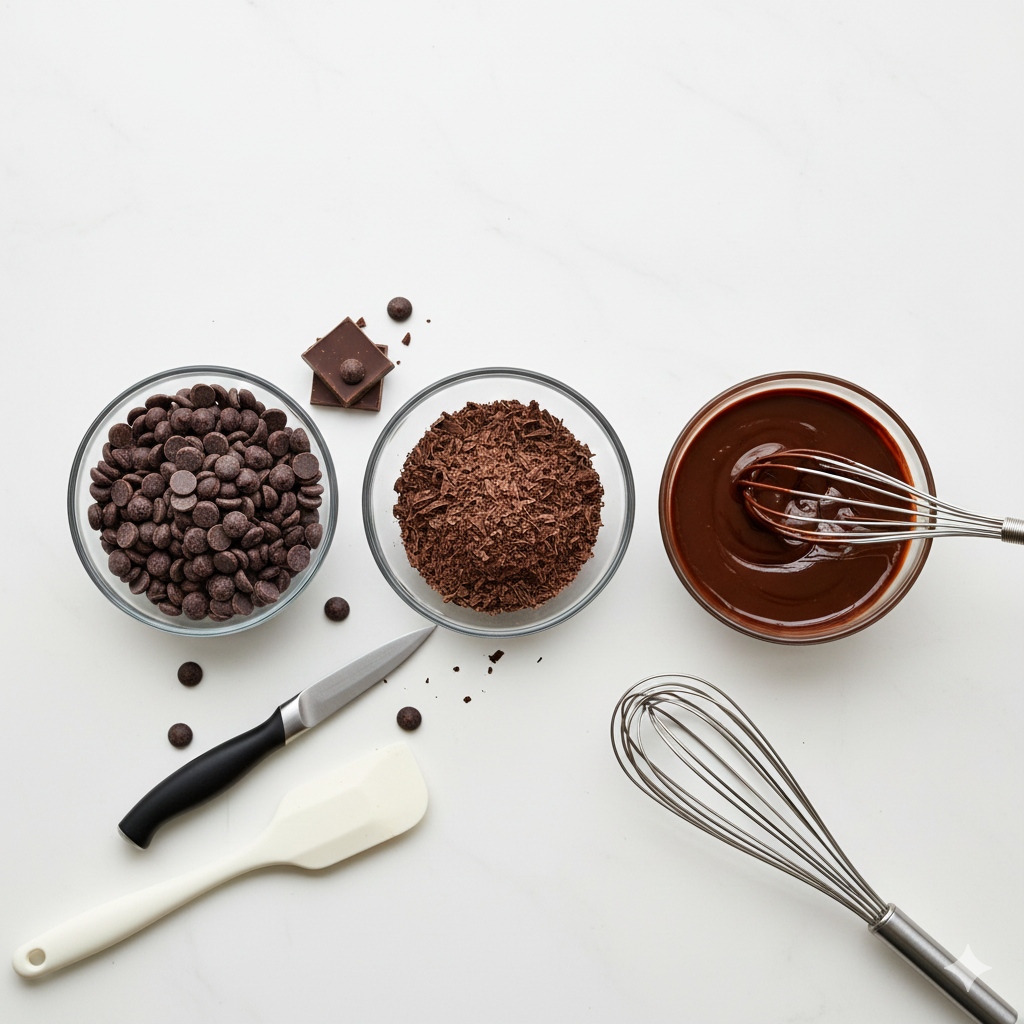
Short answer: the best chocolate for melting is couverture: by the Codex Alimentarius definition it contains at least 31% cocoa butter, against at least 18% for ordinary chocolate, and its technical sheet gives you the melting and working temperatures. If the chocolate must set hard and glossy on its own (dipped strawberries, bonbons, bars), temper it; for ganache, mousse and baking, melt it gently and stay below the maker's maximum (50°C/122°F for the Bassan 71% couverture we stock). Below: what to buy, the temperatures for dark, milk and white, and the right melter for your volume.
| Your need | What we recommend | Price |
|---|---|---|
| Dipping, bonbons and bars with shine and snap | Bassan Sur del Lago 71% dark couverture, 5 kg | $273.00 |
| Ganache, glazes, mousse, coating fillings | FCH 55% dark chocolate minibars, 10 kg | $299.00 |
| Small batches, coating fruit at home | Organic dark chocolate chips 70%, 1 kg | $45.95 |
| Melt and hold chocolate all day | Martellato Meltinchoc analogue melter 6 L | $925.00 |
| Melt, seed and hold at tempering temperature | Martellato Digital Meltinchoc 3.6 L | $1,150.00 |
| Programmable tempering, small batches | Pavoni MiniTemper 110V | $3,350.00 |
Why couverture is the best chocolate for melting
Couverture carries more cocoa butter than ordinary chocolate, and cocoa butter is the fat that melts, flows and sets. The Codex Alimentarius standard for chocolate (CXS 87-1981) sets the minimums on a dry-matter basis:
| Product (Codex CXS 87-1981) | Total cocoa solids | Cocoa butter |
|---|---|---|
| Chocolate | 35% minimum | 18% minimum |
| Couverture chocolate | 35% minimum | 31% minimum |
| Milk chocolate couverture | Total fat 31% minimum | |
Canada's food compositional standards have no separate "couverture" category; they set at least 18% cocoa butter for dark chocolate, 15% for milk chocolate and 20% for white chocolate. So the word on the bag is not enough: read the technical sheet. Good couverture sheets give you the cocoa content, the fluidity and the working temperatures. For example, the Bassan Sur del Lago 71% sheet lists a target viscosity of about 5,000 mPa·s, fluidity 4 out of 5 and a working temperature of 30–32°C (86–90°F).
View dark chocolate couverture →
Best chocolate for melting and dipping (strawberries included)
For dipping that sets firm and shiny at room temperature, use tempered couverture. Tempering puts the melted chocolate through a temperature cycle that forms the stable crystals of cocoa butter; well-tempered chocolate crystallises quickly, contracts, and sets with a high gloss and good resistance to fat bloom (Lonchampt and Hartel, 2004). Under-tempered chocolate often blooms in less than two days, with large white spots or white rings.
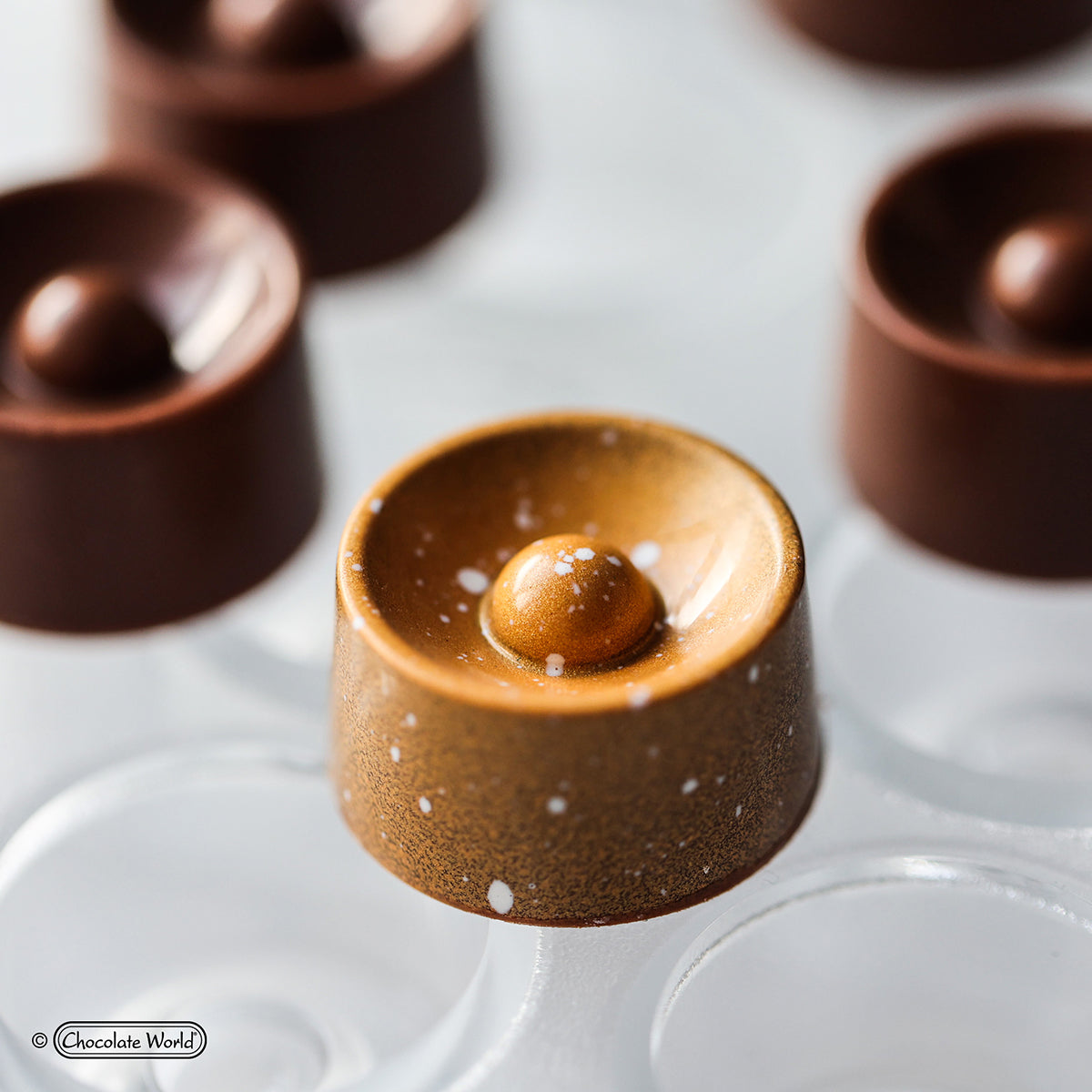
- For a glossy professional coating: Bassan Sur del Lago 71%, made in Canada from Venezuelan Trinitario cacao with ancestral Criollo lineage, with notes of fruit, wood and nuts and low acidity. 5 kg $273.00 CAD · 20 kg case $880.00 CAD
- For small batches at home: organic dark chocolate chips 70% (organic cocoa mass, cane sugar, cocoa butter and cocoa powder), listed for coating fruit and dipping. $45.95 CAD
For a step-by-step method, see our guide on how to melt chocolate chips for dipping.
Dark, milk or white: melting and working temperatures
Each chocolate has its own curve: Lonchampt and Hartel note that chocolates with different ingredients often need different tempering conditions, so the technical sheet of your chocolate comes first. These are the published numbers for the chocolate and the melter we stock:
| Source | Melt | Cool / crystallise | Work at |
|---|---|---|---|
| FCH 55% dark (product sheet) | 45–50°C (113–122°F) | 28–29°C (82–84°F) | 31–32°C (88–90°F) |
| Bassan 71% dark (product sheet) | 50°C (122°F) maximum | — | 30–32°C (86–90°F) |
| Martellato Digital Meltinchoc, dark program | 45°C (113°F), then seed | — | 31°C (88°F) |
| Martellato Digital Meltinchoc, milk program | 45°C (113°F), then seed | — | 29°C (84°F) |
| Martellato Digital Meltinchoc, white program | 45°C (113°F), then seed | — | 28°C (82°F) |
The Martellato programs use the seeding method: the melter brings the chocolate to 45°C, signals when to add more chocolate to seed it, then cools and holds it at the tempering temperature. Bassan's sheet asks you to use the 71% within 4 hours of tempering and, once it is poured or applied, to let it set (crystallise) at 16–18°C (61–64°F).
If your chocolate is too thick for thin shells or dipping, see how to make melted chocolate thinner. Adding cocoa butter is the method our natural cocoa butter product data describes for thinner bonbon shells and easier dipping (8 kg box $550.00 CAD).
Melting vs tempering: which job are you doing?
You need tempering when the chocolate must set on its own with gloss and snap; you need only melting when it goes into another preparation.
- Temper: moulded bonbons and shells, bars and tablets, dipped fruit and biscuits, enrobed pieces, decorations.
- Melt and hold: ganache, glazes, mousse, creams and batters, where the chocolate is mixed with other ingredients. Melt slowly and do not exceed the maker's limit (50°C for Bassan 71%; 45–50°C on the FCH 55% sheet).
The equipment follows the job: a melter holds chocolate at a set temperature; a tempering machine runs the melt–cool–work cycle for you. Our guide chocolate melter vs chocolate temperer compares the two.
Martellato Meltinchoc melters for every production size
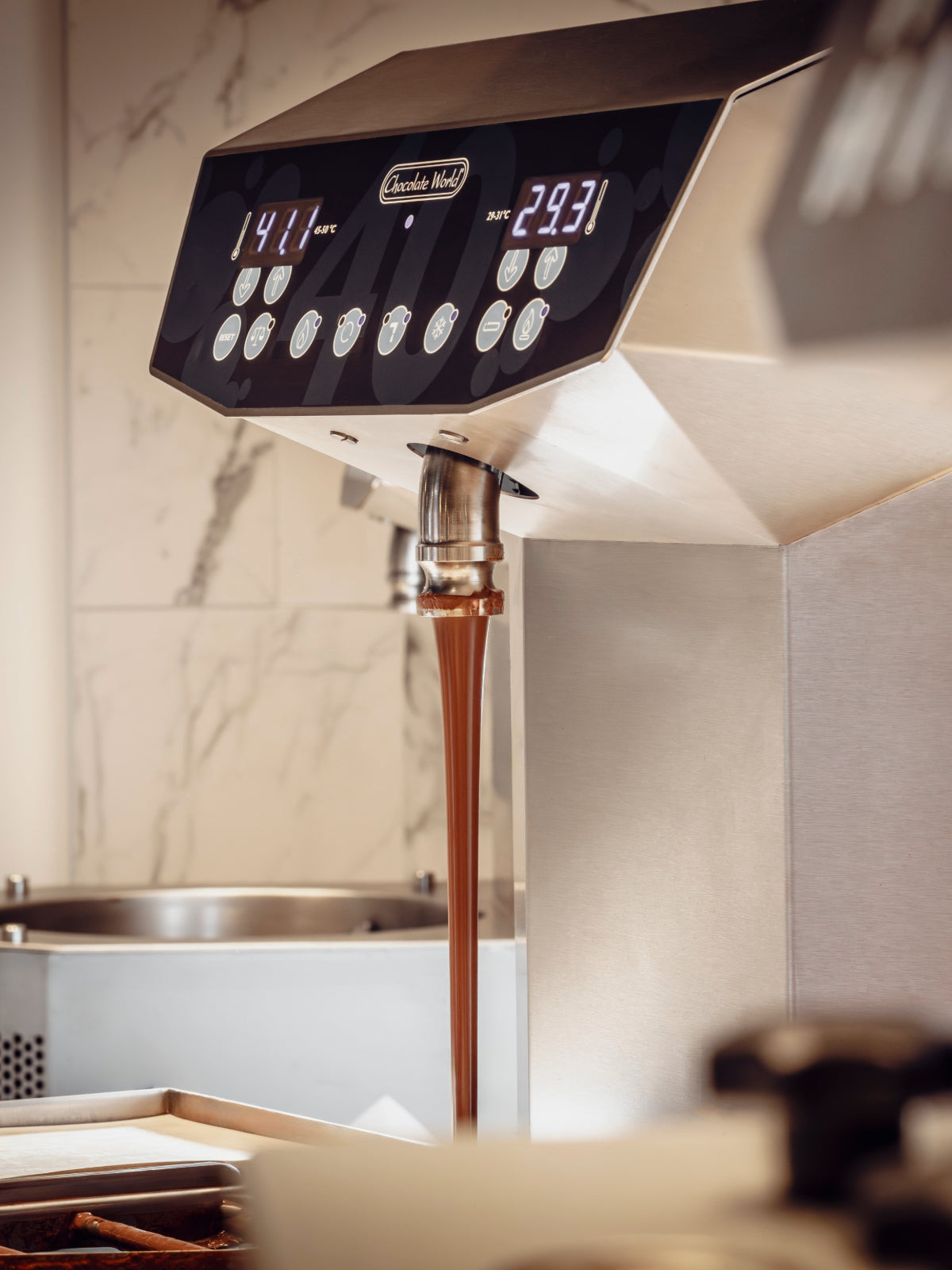
The analogue Meltinchoc melts and holds chocolate with dry heat and a manual thermostat up to 50°C; the digital Meltinchoc adds a temperature probe and dark, milk and white programs. All the models below run on 110V and have removable stainless-steel tanks.
| Model | Tank | Control | Price |
|---|---|---|---|
| Meltinchoc Multi-Tank MC108 | 2 × 1.5 L (3 L) | Analogue, up to 50°C | $865.00 |
| Meltinchoc MC102 | 6 L | Analogue, up to 50°C | $925.00 |
| Meltinchoc MC103 | 9 L | Analogue, up to 50°C | $1,150.00 |
| Meltinchoc MC104 | 13.7 L | Analogue, up to 50°C | $1,369.69 |
| Digital Meltinchoc MCD101 | 3.6 L | Digital, 3 programs | $1,150.00 |
| Digital Meltinchoc MCD102 | 6 L | Digital, 3 programs | $1,259.99 |
| Digital Meltinchoc MCD104 | 13.7 L | Digital, 3 programs | $1,699.00 |
How to choose: the Multi-Tank holds two different chocolates side by side in its two tanks; the 6, 9 and 13.7 L tanks scale with the amount you dip or coat per shift; choose the digital models when you want the melter to guide the seeding and hold the dark, milk or white working temperature for you. Every Martellato table-top melter comes with a free spatula.
When you need a tempering machine
When you temper every day, a machine that runs the whole curve saves the manual steps. The Pavoni MiniTemper 110V has a 5 L bowl, five programmable presets with three stages each (melt, crystallise, harden), digital control from 20 to 60°C in 0.5°C steps and an interchangeable bowl for switching between dark, milk and white; it plugs into a standard 110V outlet (300 W). Pavoni describes it as a bench machine that keeps chocolate tempered for hours. $3,350.00 CAD
For continuous production in larger volumes, compare the machines in our tempering collection or ask our team.
View chocolate tempering machines →
How AI can help your production
Paste your chocolate's technical sheet into an AI assistant and ask it to turn the curve into a one-page procedure for your team: melt temperature, seeding quantity, working temperature, the maximum time the chocolate stays in use and the room temperature for setting. Ask it to build a shift log for the melter (time, temperature, a temper test result, notes on gloss and release) and to calculate how many kilograms of couverture each dipped or moulded product uses, so you know when to reorder 5 kg bags or a 20 kg case.
AI organises the information; tasting and the final decision stay with your chef.
Couverture and melters at Zucchero Canada
We are an authorized distributor of Martellato and Pavoni Italia, and we stock Bassan couverture, which is made in Canada and ships across Canada from Calgary. Choose by job: Bassan 71% for anything that must set with gloss, FCH 55% for ganache and pastry, a Meltinchoc to hold chocolate through the shift, and the MiniTemper when tempering becomes daily work. If you make your own chocolate, we also stock Sur del Lago Ancestral Criollo Lineage cocoa beans from Venezuela (1.5 kg bag $80.00 CAD).
For a complete reference on tempering, coating and glazing, Ramon Morató's Chocolate, 6th edition (416 pages, 200 recipes) is on our shelf: $160.00 CAD.
Not sure whether you need a melter or a tempering machine? The answer depends on your application. Contact our team — we'll recommend the right equipment for your production without the upsell. Buying for a chocolate shop, hotel or pastry lab? Ask us about volume orders: write to sales@zuccherocanada.ca or call 587-774-8873 (toll free 877-741-8251).
Chocolate melters | Tempering machines | Dark couverture | Make melted chocolate thinner | Chocolate bloom vs mould | Double boiler vs microwave
This article is for information only. Every business is different: draw your own conclusions based on your own expectations, budget and goals, and talk to qualified experts before you decide or invest.
Sources: Codex Alimentarius, Standard for Chocolate and Chocolate Products CXS 87-1981 (amended 2022); CFIA, Canadian Food Compositional Standards, Volume 4, 4.1.6–4.1.9; Lonchampt P. and Hartel R.W., "Fat bloom in chocolate and compound coatings", European Journal of Lipid Science and Technology 106 (2004) 241–274; Martellato, Digital Meltinchoc use and maintenance handbook (Programs and Directions for use); Martellato General Catalogue 2026 (Meltinchoc); Pavoni Italia machines catalogue (MiniTemper); product data for Bassan Sur del Lago 71%, FCH 55% dark, organic dark chips 70%, natural cocoa butter, Meltinchoc and MiniTemper (zuccherocanada.ca product pages).
Good to know
Frequently asked questions
What chocolate is best for melting?
Couverture. The Codex Alimentarius defines couverture as chocolate with at least 31% cocoa butter (and at least 35% total cocoa solids), against at least 18% cocoa butter for ordinary chocolate. Read its technical sheet for the fluidity and the melting and working temperatures.
What is the best chocolate for melting and hardening?
Tempered couverture. Well-tempered chocolate crystallises quickly and sets with a high gloss and good resistance to bloom; under-tempered chocolate often blooms in less than two days (Lonchampt and Hartel, 2004). Follow the curve on your chocolate's sheet, for example 45–50°C to melt, 28–29°C to crystallise and 31–32°C to work for the FCH 55% dark we stock.
What is the best chocolate for chocolate-covered strawberries?
A dark couverture that you temper, so the coating sets firm and shiny at room temperature, such as Bassan Sur del Lago 71% (work at 30–32°C). For small batches at home, our organic 70% dark chocolate chips are listed for coating fruit and dipping.
At what temperature should I melt dark, milk and white chocolate?
Use your chocolate's technical sheet first, because curves differ between chocolates. As published references: the Martellato Digital Meltinchoc melts all three at 45°C (113°F), then, after seeding, holds dark at 31°C, milk at 29°C and white at 28°C. Bassan sets a maximum of 50°C (122°F) for melting its 71% dark.
Do I need a melter or a tempering machine?
A melter holds chocolate at a set temperature, which suits ganache, glazes and coating work; the digital Meltinchoc also holds a tempering temperature after you seed the chocolate. A tempering machine such as the Pavoni MiniTemper runs the whole melt, crystallise and harden cycle with programmable presets, which suits daily tempering.
Do melters and chocolate qualify for free shipping or discounts?
Orders over $500 CAD get 5% off automatically at checkout. Chocolate and machines are excluded from the free-shipping offer on orders of $300 CAD or more. Every Martellato table-top melter comes with a free spatula. Chocolate ships within Canada only.
Shop this article
Products mentioned in this guide
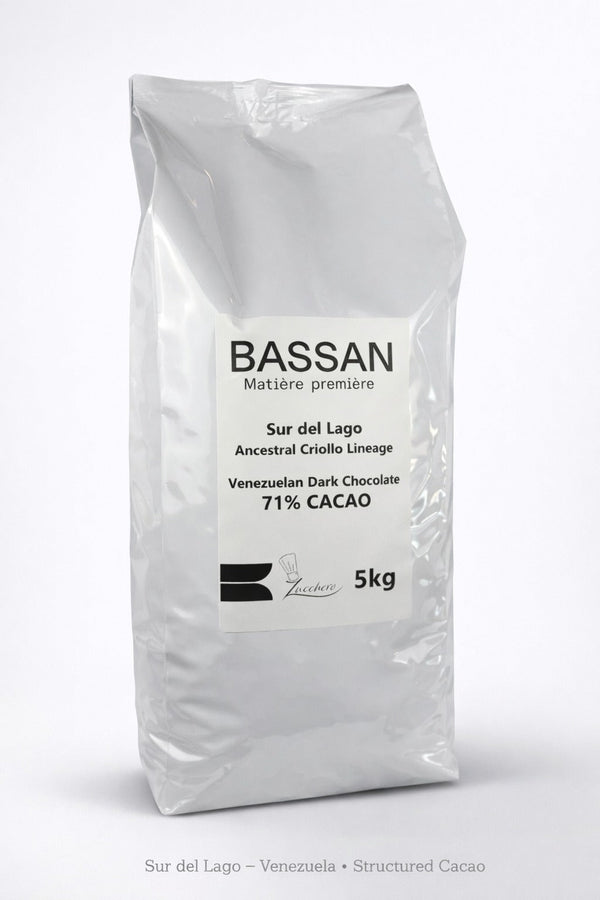 Bassan ChocolateSur del Lago Ancestral Criollo Lineage Dark Chocolate 71%From $69.95 CADView product →
 FCH Origins55% DARK CHOCOLATE MINIBARS 10 kg box - Origin Venezuela$299.00 CADView product →
 Canada Cacao Co.Organic Dark Chocolate Chips 70% Cacao 1 kg$45.95 CADView product →
 MartellatoMeltinchoc Analogue Melter 6 L – MC102110V$925.00 CADView product →
For professionals
Equipping a chocolate shop, bakery or kitchen?
Tell us what you produce and how much. We will recommend the right machine, moulds and ingredients, and send you a quote.
For home bakers
Professional tools for your own kitchen
The same European moulds, tools and ingredients the professionals use.
5% off orders over $500 CAD, applied automatically at checkout.
Keep reading




Leave a comment
All comments are moderated before being published.
This site is protected by hCaptcha and the hCaptcha Privacy Policy and Terms of Service apply.