



Short answer: there are four practical ways to make chocolate flowers: comb petals out of tempered chocolate spread on acetate and build the flower from them; spread chocolate through a flower stencil (chablon); cast flowers in a chocolate mould; or shape them by hand from modelling chocolate with flower cutters. A comb makes several identical petals per stroke, stencils and moulds repeat the same shape every time, and modelling chocolate lets you sculpt flowers by hand. Colour them only with cocoa-butter or fat-soluble colours, never water-based ones.
Which method for which job
| You want | Method | Tool | Price |
|---|---|---|---|
| Many identical petals, fast | Combed petals | Martellato Petal Comb small, 8 petals of 60 mm per pass | $96.50 |
| Larger petals for cake tops | Combed petals | Martellato Petal Comb large, 8 petals of 80 mm per pass | $113.99 |
| Small leaves to go with the flowers | Combed leaves | Pavoni FlyChoc small leaf tool CH4 | $35.99 |
| Flat flowers in three sizes from one sheet | Stencilled flowers | Martellato CHASIL34 decorative flowers chablon | $34.95 |
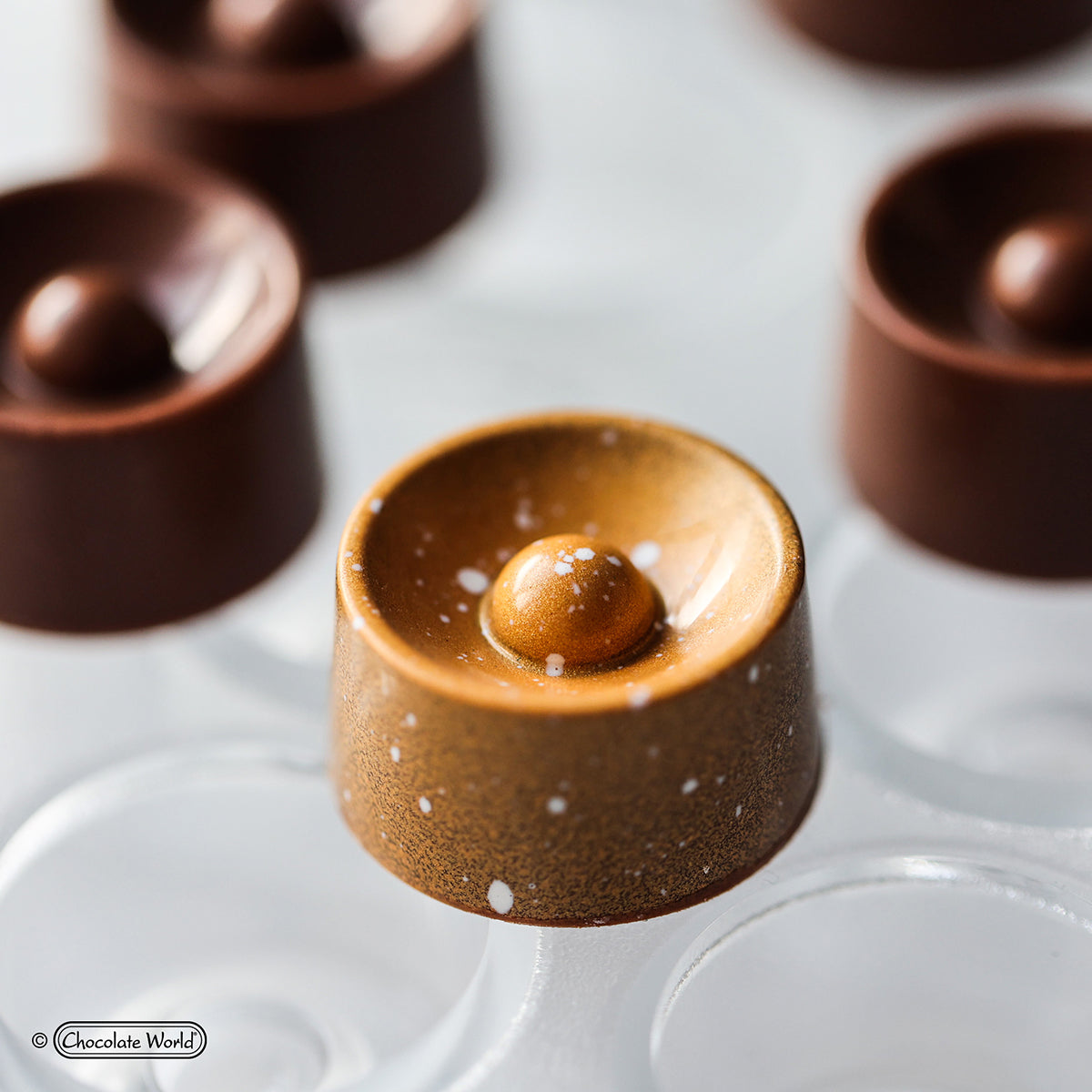
| Flower-shaped bonbons | Moulded flowers | Chocolate World Flower Cube mould CF0228 | $39.95 |
| Hand-shaped roses and blossoms | Modelling chocolate | Martellato rose flower cutter set, 3 pieces | $19.95 |
Before you start: tempered chocolate and the right colours
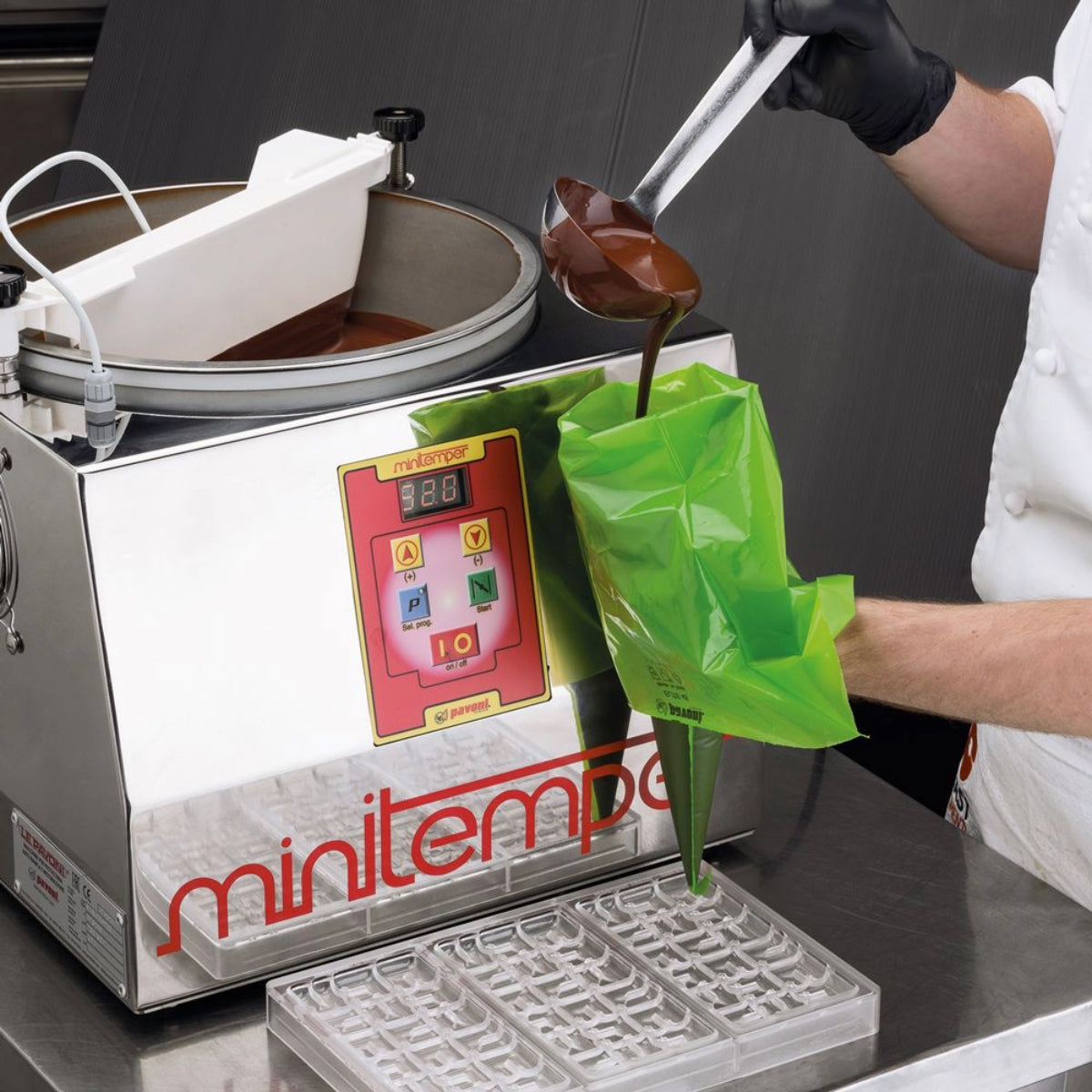
Methods 1 to 3 use tempered chocolate; method 4 uses modelling chocolate. Tempering gives cocoa butter stable, consistently sized crystals that build a stable crystalline network as the chocolate cools (Barišić et al., 2019). If you need a refresher, follow our guide on how to temper chocolate.
For colour, remember that melted chocolate cannot tolerate even small drops of water: it seizes into a grainy mass (Exploratorium, Science of Cooking). Use colours made for fat:
- Chocolart Pink cocoa butter, 200 g → $79.99. Ready to use, for colouring chocolate in the mass, on the surface and in the mould.
- Seasons Pink natural cocoa butter, 200 g → $69.00. Plant-based, vegan friendly, for chocolate masses, direct mould application and velvet finishes.
Both are Pavoni Italia colours and E171-free. Wondering what goes into red colours? Read what red food colouring is made from.
Method 1: Combed chocolate petals
A petal comb makes a full set of identical petals in one stroke, which suits production in volume.
- Spread a thin layer of tempered chocolate on an acetate sheet.
- Draw the comb through the chocolate in one movement.
- Let the petals set, then release them from the acetate.
- Assemble the petals into a flower.
This is the method Pavoni describes for its FlyChoc leaf tool: draw it through tempered chocolate spread on acetate or marble, let it set and release, for identical decorations across a batch. Martellato's stainless-steel combs, designed by pastry chef Frank Haasnoot, come in three sizes:
| Tool | Petals per pass | Petal height |
|---|---|---|
| Petal Comb small 20FH03S | 8 | 60 mm (2.4 in) |
| Petal Comb large 20FH03L | 8 | 80 mm (3.1 in) |
| Petal Éclair 20FH06 | 6 | 120 mm (4.7 in) |
Add leaves with the Pavoni FlyChoc CH4, which makes small leaf shapes for petit fours, bonbons and miniature decorations.
View chocolate scrapers and combs →
Method 2: Stencilled flowers with a chablon
A chablon is a stencil you spread chocolate through, so every flat flower comes out the same shape.
The Martellato CHASIL34 decorative flowers chablon lets you spread chocolate, royal icing or coloured cocoa butter into flower motifs in three sizes from a single sheet. Use the flat flowers on bonbon tops, plated desserts, entremet finishes and seasonal showpieces.
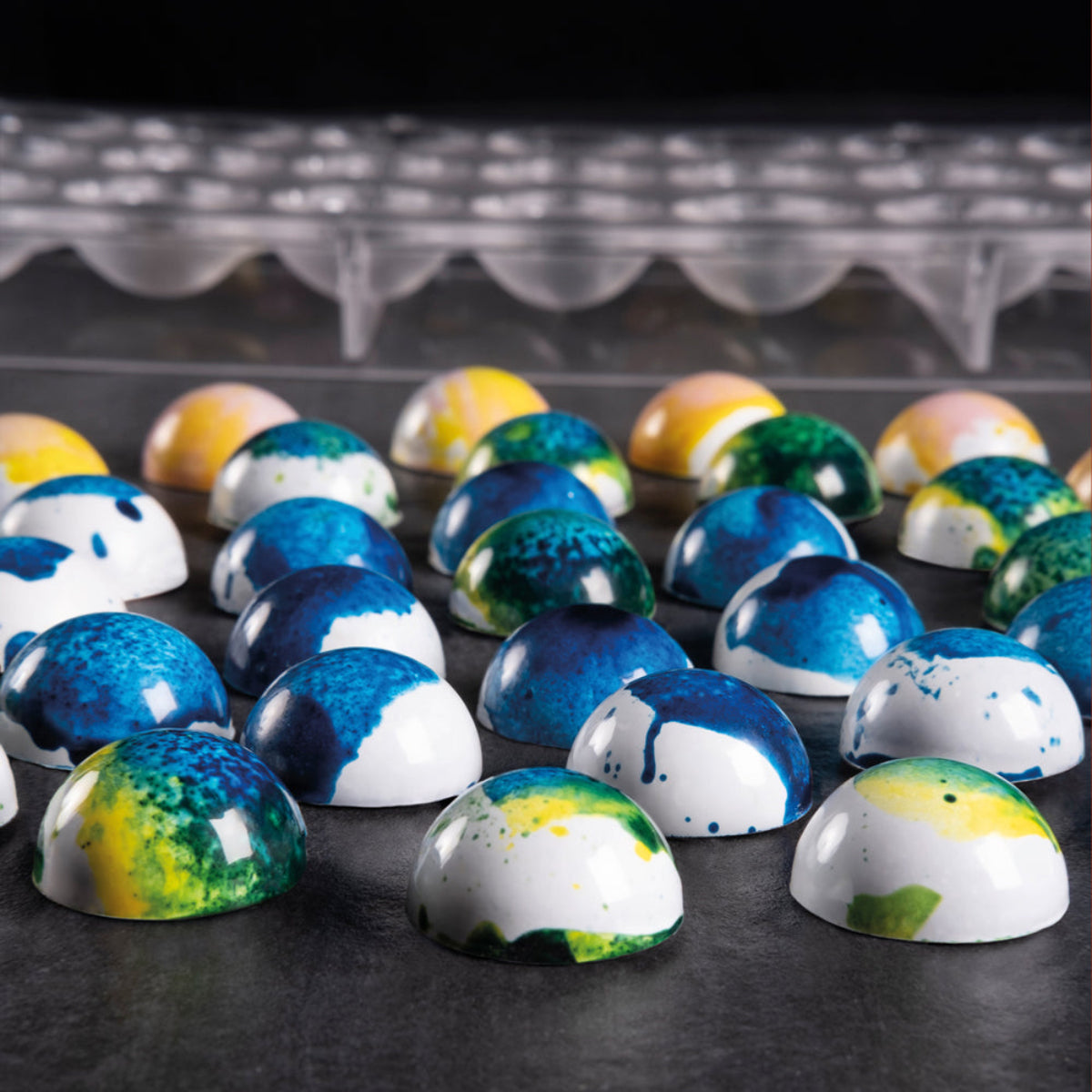
Method 3: Moulded chocolate flowers
A polycarbonate mould gives you identical, glossy flowers every time and needs no hand-shaping skill.
The Chocolate World Flower Cube CF0228, developed with Silvia Federica Boldetti, has 24 flower-cube cavities of 11.5 g each and works for pralines, bonbons and chocolate shells. To colour the flowers, colour the cavities with coloured cocoa butter first: Chocolart and Seasons cocoa butters are both made for mould application.
Choosing your first flower mould? See how to choose a chocolate mould.
View Chocolate World chocolate moulds →
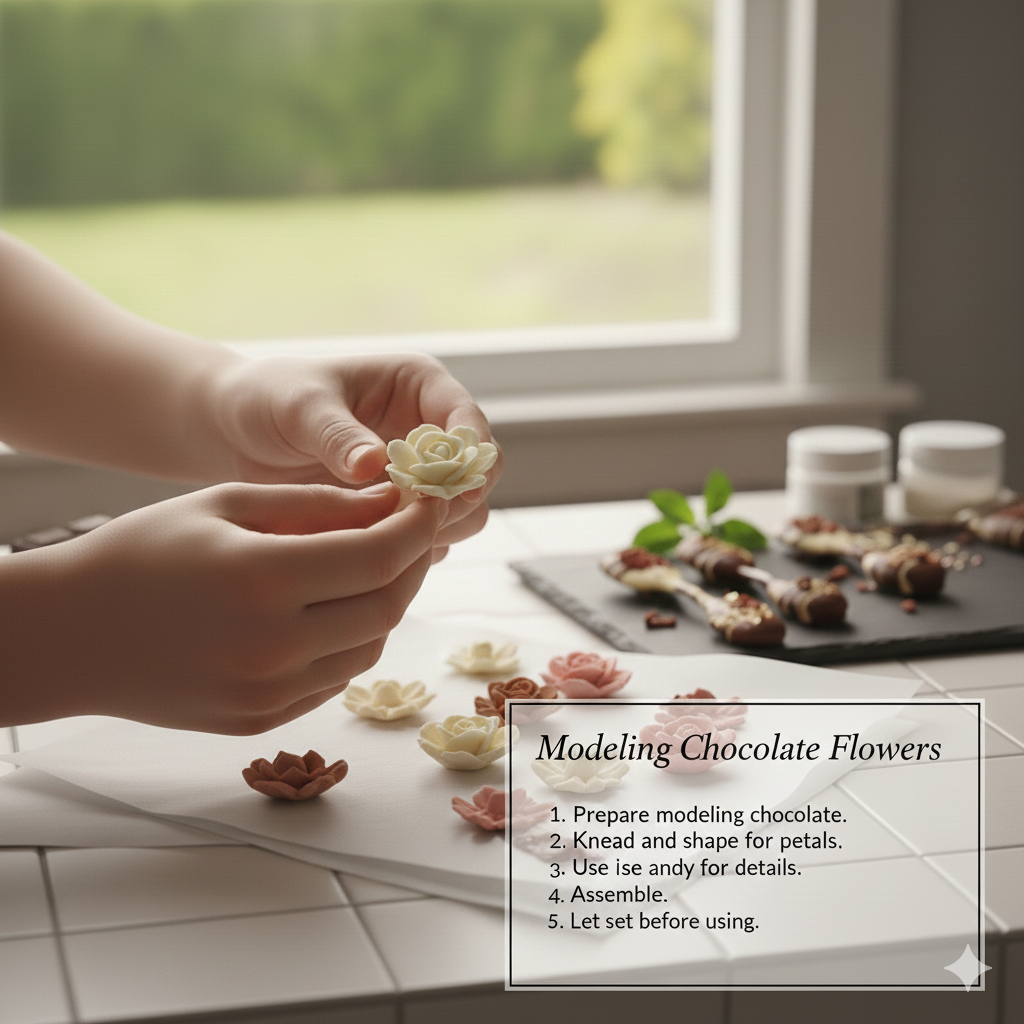
Method 4: Modelling chocolate flowers
Modelling chocolate (also called plastic chocolate) is chocolate made pliable so it can be shaped by hand. Pavoni describes plastic chocolate as ideal for flowers and ribbons, and lists its glucose syrup for preparing sugar paste and plastic chocolate.
Cutters give you identical petals and leaves, and veiners press in the leaf veins. Martellato makes these sets for sugar-paste flowers; test them on your modelling chocolate before a production run:
- Martellato rose flower cutter set 40-W028 → $19.95
- Martellato orchid and pansy moulds 40-W030 → $19.95
- Martellato leaf veiner and cutter set, Decor 1 → $29.50
View sugar paste and flower tools →
When the flower is the dessert: rose-shaped entremets
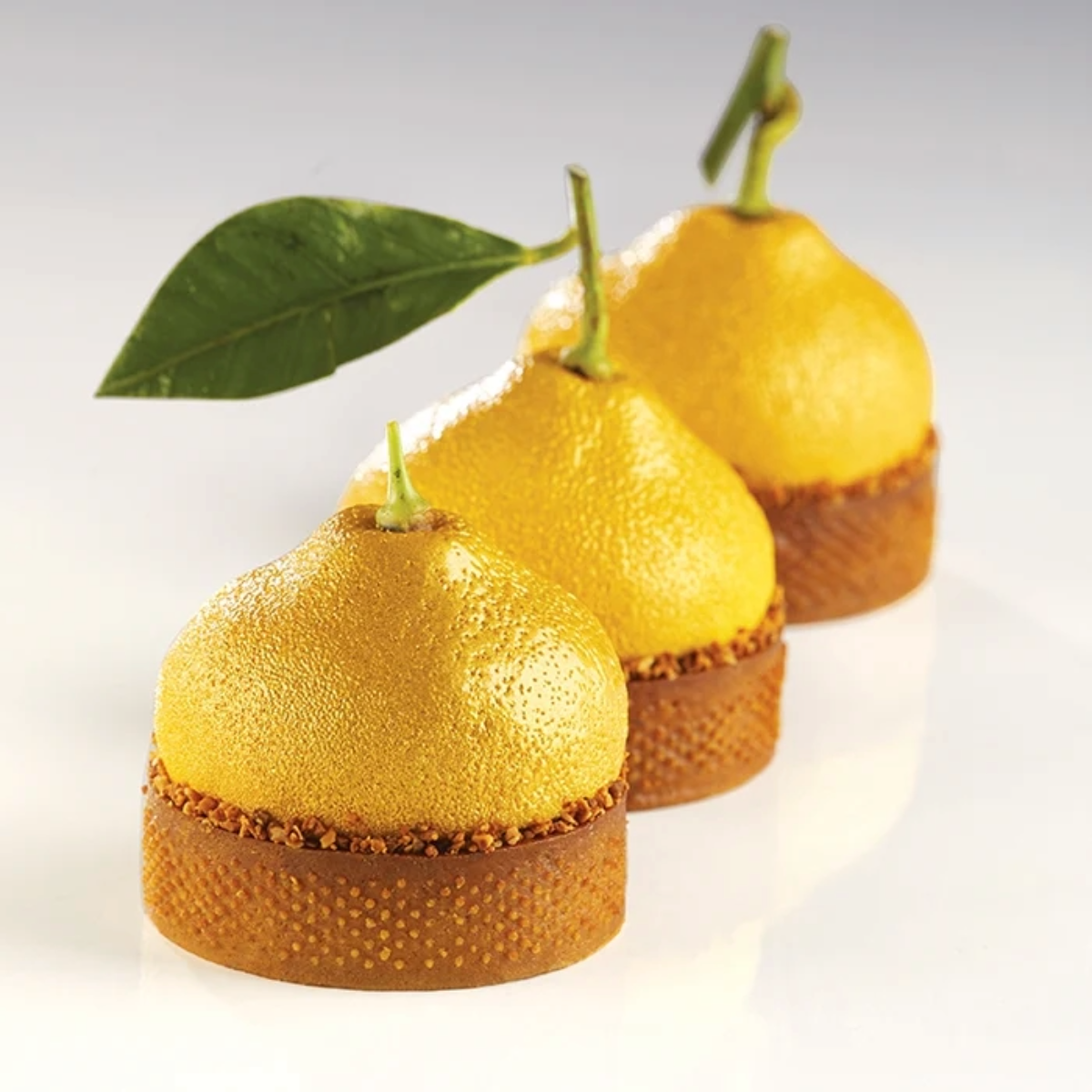
If you want the whole dessert to look like a rose, use a 3D silicone mould instead of making chocolate flowers. Pavoni's Bouquet de Roses mould, designed by Cédric Grolet, has 12 cavities for individual desserts in platinum silicone that goes from −40°C to +250°C (−40°F to 482°F), so the mousse can go straight into the blast chiller. Finish the frozen roses with a velvet spray: Pavoni's Dolce Velluto is a coloured cocoa butter spray applied to cold surfaces for a velvet effect.
- Pavoni Bouquet de Roses 3D Pavoflex PX4397S → $69.00
- Dolce Velluto Red velvet spray, 400 ml → $56.99
For spraying technique and equipment, read our chocolate spray gun guide.
Storing chocolate flowers
Chocolate flowers can bloom like any chocolate. For how to store chocolate and how to tell bloom from mould, read our article on chocolate bloom vs mould.
How AI can help your production
Tell an AI assistant how many cakes you are decorating, how many flowers go on each and how many petals make one flower, and ask it to work out how many comb passes you need (8 petals per pass with the Martellato Petal Comb, 6 with the Petal Éclair), how much tempered chocolate to prepare and which day to make each component. Ask it to cost each flower from your chocolate and colour prices. A written prep plan keeps decoration out of the last-minute rush.
AI organises the information; tasting and the final decision stay with your chef.
Chocolate decorating tools at Zucchero Canada
We are an authorized distributor of Martellato, Pavoni Italia and Chocolate World. Each brand has a clear job in flower work: Martellato combs, chablons and cutters to form the flowers, Chocolate World polycarbonate moulds for moulded flowers, and Pavoni for colours, leaf tools and rose-shaped silicone moulds. For pastry shops and hotels buying for volume, contact our team.
Combs and scrapers | Chablons | Coloured cocoa butter | Chocolate garnish for cakes | Chocolate spray guns
This article is for information only. Every business is different: draw your own conclusions based on your own expectations, budget and goals, and talk to qualified experts before you decide or invest.
Sources: Martellato product data (Petal Comb 20FH03S and 20FH03L, Petal Éclair 20FH06, CHASIL34 chablon) and Martellato General Catalogue 2026; Pavoni Italia product data (FlyChoc CH4, Chocolart and Seasons cocoa butters, glucose syrup, Bouquet de Roses PX4397S, Dolce Velluto) and Pavoni Food Equipment catalogue 2026; Chocolate World product data (Flower Cube CF0228); Barišić V. et al., "The Chemistry behind Chocolate Production", Molecules 24 (2019) 3163; Exploratorium, Science of Cooking, "Why does my melted chocolate seize up?".







Leave a comment
All comments are moderated before being published.
This site is protected by hCaptcha and the hCaptcha Privacy Policy and Terms of Service apply.