What Is Red Food Colouring Made From? Natural vs Synthetic, and Red for Chocolate
Short answer: red food colouring is made either by chemical synthesis or from natural sources. Synthetic reds include the azo dye Allura Red AC (Red 40, E129) and erythrosine (Red No. 3). Natural reds come from beets, from cochineal (carmine, E120, extracted from the dried bodies of a female insect), from paprika and from fruit and vegetable juices. For chocolate, the source matters less than the base: chocolate needs fat-soluble or cocoa-butter colours, not water-based ones.
Red food colouring sources at a glance
| Colour | Also called | What it is made from |
|---|---|---|
| Allura Red AC | Red 40, FD&C Red No. 40, E129 | Synthetic azo dye, made by chemically coupling two aromatic sulphonic acids; soluble in water |
| Erythrosine | FD&C Red No. 3, Red Dye 3 | Synthetic dye that gives a bright, cherry-red colour |
| Carmine and cochineal extract | E120, carminic acid | Extracts of cochineal, the dried bodies of the female insect Dactylopius coccus; carmine is an aluminium or calcium-aluminium lake of carminic acid |
| Beet red, dehydrated beets | Beet powder | Dehydrated edible beets, a dark red powder |
| Paprika | The ground dried pod of mild capsicum (Capsicum annuum) | |
| Vegetable and fruit juice colours | Juice pressed from edible vegetables or fruit, or a water infusion of the dried vegetable or fruit, sometimes concentrated or dried |
Sources: EFSA (2009, 2015); US Code of Federal Regulations, 21 CFR 73 and 74; FDA.
Synthetic red food colouring: what Red 40 is made from
Red 40 is a synthetic azo dye made in a chemical plant, not extracted from a plant or an insect. The European Food Safety Authority describes Allura Red AC (E129) as an azo dye manufactured by coupling diazotised 5-amino-4-methoxy-2-toluenesulphonic acid with 6-hydroxy-2-naphthalene sulphonic acid. It is sold as a sodium salt (calcium and potassium salts are also permitted) and can be converted into an aluminium lake. FD&C Red No. 40 is the name used in the United States.
The US Food and Drug Administration calls certified colour additives "synthetic colorings" used for intense, uniform colour, and lists confections among the uses of Red No. 40. In April 2025 the FDA announced measures to phase out petroleum-based synthetic dyes from the US food supply, including working with industry to eliminate Red No. 40 and five other synthetic dyes by the end of 2026.
Red No. 3 (erythrosine)
Erythrosine is the synthetic dye behind the bright cherry red of some candy, frostings and icings. The FDA issued an order on January 16, 2025 to revoke its authorisation in food; manufacturers have until January 15, 2027 to reformulate. The FDA based the decision on the Delaney Clause, after data showed cancer in male laboratory rats exposed to high levels through a mechanism specific to male rats, and states that there is no evidence showing it causes cancer in humans.
Natural red food colouring: beets, insects and plants
Natural reds come from food plants or, in one case, from an insect. The main ones:
- Beets: dehydrated beets are a dark red powder made by dehydrating edible beets (21 CFR 73.40). Health Canada lists "Beet Red" as a permitted colouring agent.
- Cochineal and carmine (E120): obtained from aqueous or alcoholic extracts of cochineal, the dried bodies of the female insect Dactylopius coccus. Carmine is the aluminium (or calcium-aluminium) lake of carminic acid (EFSA, 2015; 21 CFR 73.100). In the United States, carmine and cochineal extract must be named on food labels.
- Paprika: the ground dried pod of mild capsicum (21 CFR 73.340).
- Vegetable and fruit juices: juice pressed from edible vegetables or fruit, or a water infusion of the dried vegetable or fruit (21 CFR 73.250 and 73.260).
If a customer asks "is red food colouring made from bugs?", the honest answer is: only carmine and cochineal are. Synthetic reds and plant-based reds are not.
Is red food colouring allowed in Canada, the US and the EU?
| Market | Status (official sources) |
|---|---|
| Canada | Health Canada's List of Permitted Colouring Agents includes Allura Red, Amaranth, Beet Red, Citrus Red No. 2, Cochineal and Erythrosine. |
| United States | Red No. 3: authorisation in food revoked, food compliance date January 15, 2027. Red No. 40: approved, but targeted by the FDA's April 2025 phase-out plan. |
| European Union | Allura Red AC (E129) is an azo dye allowed as a food additive (EFSA, 2009). Titanium dioxide (E171) has no longer been authorised as a food additive since 2022. |
On titanium dioxide, Health Canada reviewed the same science in 2022 and concluded that there is no conclusive scientific evidence that the food additive is a concern for human health; it has been permitted in Canada for many years. If you sell into several markets, check each label against the rules where it will be sold.
Why ordinary red food colouring does not work in chocolate
Water-based colours do not work in chocolate: melted chocolate cannot tolerate even small drops of water, and it seizes into a grainy mass (Exploratorium, Science of Cooking). Allura Red itself is water-soluble. That is why chocolatiers colour chocolate with colours made to dissolve in fat:
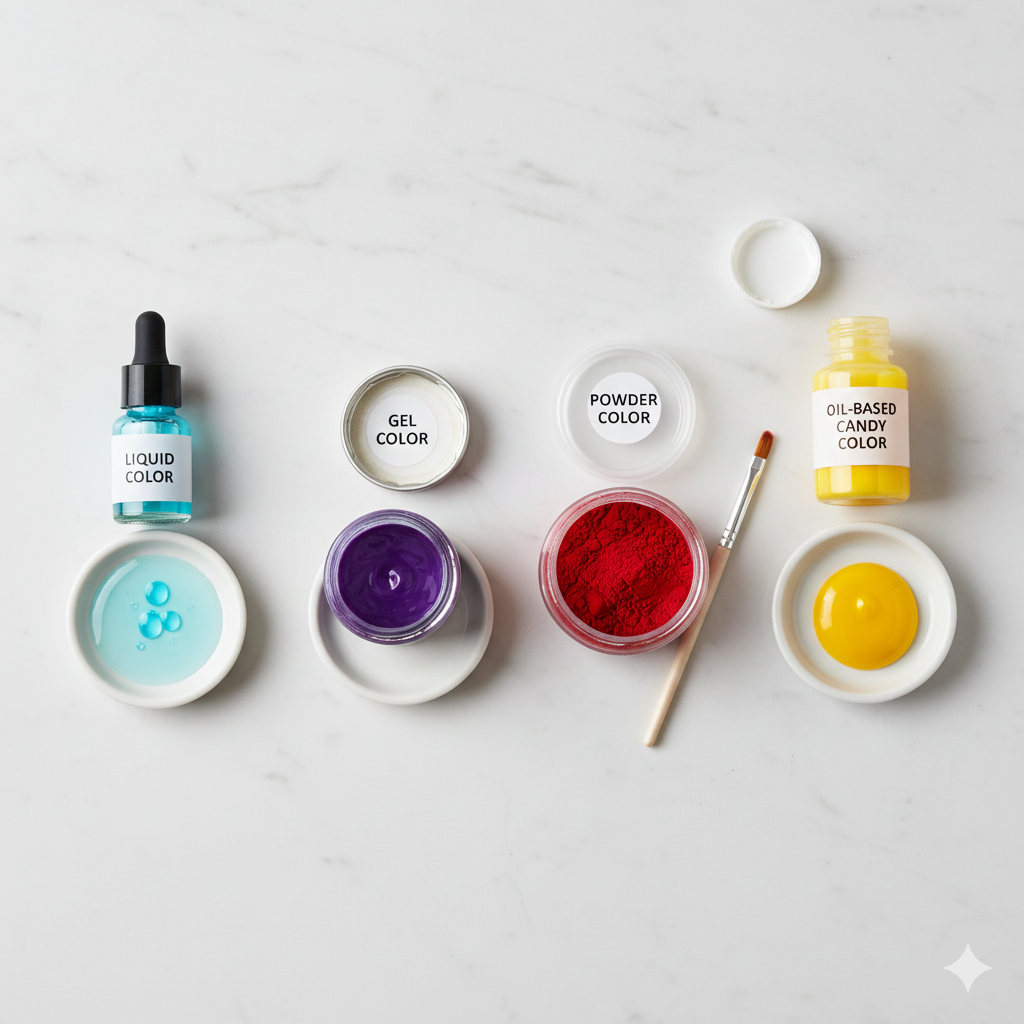
- Coloured cocoa butter: ready-to-use, for colouring chocolate in the mass, on the surface and in the mould.
- Fat-soluble powders: high colour density, made to be melted into cocoa butter.
- Water-soluble powders: for water-based work such as artistic sugar, macarons, sugar paste and icing, not for chocolate.
For a full answer on colouring candy melts and chocolate, read Can you add food colouring to candy melts and chocolate?
Which red for which job
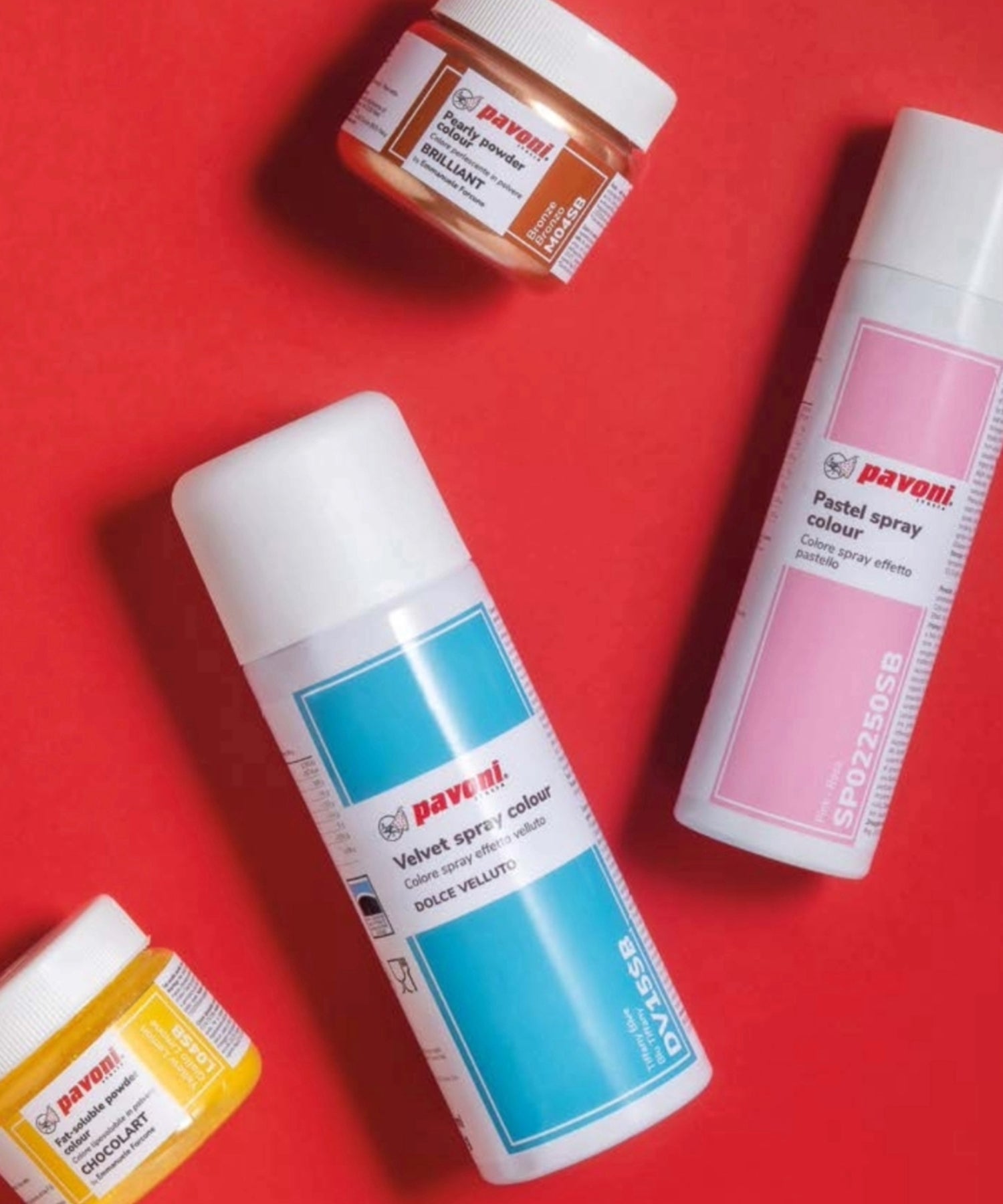
Pavoni Italia makes every format below, so the choice is about the base your product needs and whether you want plant-based colour:
| Your product | Red to use | Price |
|---|---|---|
| Coloured bonbon shells, painted moulds | Chocolart Red cocoa butter LB10SB, 200 g | $79.99 CAD |
| Ruby shade marked AZO free in Pavoni's catalogue | Chocolart Ruby cocoa butter LB15SB, 200 g | $102.60 CAD |
| Mixing your own red cocoa butter, colouring chocolate masses and glazes | Chocolart Red fat-soluble powder L10SB, 40 g | $46.99 CAD |
| Plant-based red for chocolate, glazes and velvet finishes | Seasons Red natural cocoa butter NC10, 200 g | $73.99 CAD |
| Plant-based cherry red in cocoa butter | Seasons Cherry Red natural cocoa butter NC05, 200 g | $69.00 CAD |
| Plant-based red for icings, doughs, creams and viennoiserie | Seasons Red natural powder NCP10, 80 g | $44.99 CAD |
| Macarons, sugar paste, royal icing, artistic sugar | Absolute Cherry Red water-soluble powder A01SB, 50 g | $40.50 CAD |
| Red velvet finish on frozen mousse cakes | Dolce Velluto Red velvet spray DV1SB, 400 ml | from $56.99 CAD |
| Ready-to-spray red on cream and chocolate cakes, biscuits | Red pastel colour spray SP01250SB, 250 ml | $39.95 CAD |
Natural vs synthetic red: reading Pavoni's labels
All the Pavoni colour lines above are E171-free, so none contains titanium dioxide. Beyond that, the two families differ in what they are made from:
- Seasons is Pavoni's natural range: cocoa butter concentrates made with vegetable concentrates, and powder concentrates made from plant extracts such as spirulina, pumpkin and beetroot, all marked vegan friendly. Choose it when your label or your customers call for plant-based colour.
- Chocolart, Absolute, Dolce Velluto and the pastel sprays are Pavoni's other professional ranges. In Pavoni's 2026 catalogue, the shades that are AZO free carry a mark; among the reds, Chocolart Ruby (LB15SB) has it, while the Chocolart red cocoa butter and red powder do not.
If you need the exact colouring agents for your ingredient list, ask us for the product label before you print.
View Seasons natural colours →
How AI can help your production
Give an AI assistant your product list and ask it to build a colour sheet: which red goes into which product, in which base (cocoa butter, fat-soluble powder or water-soluble powder), and which items must use a plant-based colour for your label. Ask it to draft the ingredient-list wording from the supplier label you paste in, and to flag any product sold in a market with different rules. A written sheet stops a water-based red from ending up in a chocolate batch.
AI organises the information; tasting and the final decision stay with your chef.
Pavoni Italia colours at Zucchero Canada
We are an authorized distributor of Pavoni Italia. We carry the full Pavoni Italia Chocolart and Seasons colour ranges, plus Absolute and Dolce Velluto colours, stocked in Calgary and shipping across Canada. Priority allocation is available for professional quantities. Contact our team for volume pricing.
The full colour ranges, with the live price span of each line:
| Range | Format | Price |
|---|---|---|
| Chocolart cocoa butter colours | 200 g | $79.99–$109.00 CAD |
| Chocolart fat-soluble powders | 40 g | $46.99–$60.99 CAD |
| Seasons natural cocoa butter concentrates | 200 g | $69.00–$83.00 CAD |
| Seasons natural powder concentrates | 80 g | $44.99–$60.99 CAD |
To spray cocoa butter colours and velvet finishes, see our guide to chocolate spray guns.
Food colours | Fat-soluble powders | Velvet sprays | What is gel food colouring | Colouring candy melts and chocolate
This article is for information only. Every business is different: draw your own conclusions based on your own expectations, budget and goals, and talk to qualified experts before you decide or invest.
Sources: EFSA Panel on Food Additives, re-evaluation of Allura Red AC (E 129), EFSA Journal 2009;7(11):1327, and of cochineal, carminic acid, carmines (E 120), EFSA Journal 2015;13(11):4288; US Code of Federal Regulations 21 CFR 73.40, 73.100, 73.250, 73.260, 73.340 and 74.340; FDA, "FD&C Red No. 3", "Color Additives Questions and Answers for Consumers" and news release of April 22, 2025; Health Canada, List of Permitted Colouring Agents and "Titanium dioxide (TiO2) as a food additive: current science report" (2022); Food Safety Authority of Ireland, "Titanium dioxide is no longer authorised as a food additive"; Exploratorium, Science of Cooking; Pavoni Italia Food Equipment catalogue 2026, colours and natural concentrates.
Good to know
Frequently asked questions
What is red food coloring made of?
It depends on the colour. Synthetic reds such as Allura Red AC (Red 40, E129) are azo dyes made by chemical synthesis; erythrosine (Red No. 3) is also synthetic. Natural reds are made from beets, paprika, fruit and vegetable juices, or carmine and cochineal extract (E120), which come from the dried bodies of the female cochineal insect, Dactylopius coccus.
Is red food colouring made from bugs?
Only carmine and cochineal extract (E120) are. They are extracted from the dried bodies of the female insect Dactylopius coccus. Synthetic reds like Red 40 and plant-based reds like beet red are not made from insects. In the United States, carmine and cochineal extract must be named on food labels.
How is Allura Red (Red 40) made?
The European Food Safety Authority describes it as an azo dye manufactured by coupling diazotised 5-amino-4-methoxy-2-toluenesulphonic acid with 6-hydroxy-2-naphthalene sulphonic acid. It is sold mainly as a sodium salt and can be made into an aluminium lake. It is soluble in water.
Can I use red food colouring in chocolate?
Not a water-based one: melted chocolate cannot tolerate even small drops of water and seizes. Use a red made for fat, such as Pavoni Chocolart red cocoa butter or red fat-soluble powder, or Seasons natural red cocoa butter if you want a plant-based colour. Keep water-soluble reds for macarons, sugar paste and icing.
Is there a natural red colour for chocolate?
Yes. Pavoni's Seasons range includes Red (NC10) and Cherry Red (NC05) cocoa butter concentrates made with vegetable concentrates, marked vegan friendly and E171-free, for colouring chocolate masses, direct mould application, glazes and velvet finishes. The Seasons powders (such as Red NCP10) are for icings, doughs, creams and viennoiserie.
Do you ship Pavoni food colours across Canada?
Yes. We stock Pavoni Italia colours in Calgary and ship across Canada. Orders of $300 CAD or more on selected products ship free within Canada (remote areas and the territories pay the actual carrier rate), and orders over $500 CAD get 5% off automatically at checkout. For professional quantities, contact our team.
Shop this article
Products mentioned in this guide
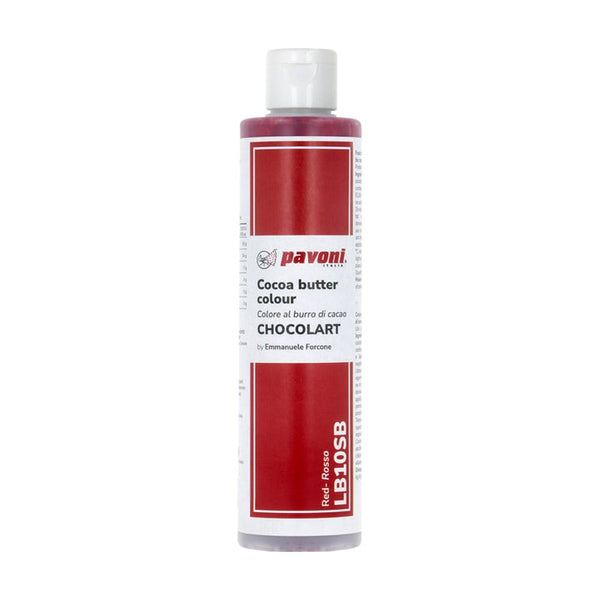 Pavoni ItaliaChocolart Red Cocoa Butter – LB10SB$79.99 CADView product →
 Pavoni ItaliaChocolart Ruby Cocoa Butter – LB15SB$102.60 CADView product →
 Pavoni ItaliaChocolart Red Fat-Soluble Powder – L10SB$46.99 CADView product →
 Pavoni ItaliaSeasons Red Natural Cocoa Butter Concentrate – NC10$73.99 CADView product →
For professionals
Equipping a chocolate shop, bakery or kitchen?
Tell us what you produce and how much. We will recommend the right machine, moulds and ingredients, and send you a quote.
For home bakers
Professional tools for your own kitchen
The same European moulds, tools and ingredients the professionals use.
5% off orders over $500 CAD, applied automatically at checkout.
Keep reading



Leave a comment
All comments are moderated before being published.
This site is protected by hCaptcha and the hCaptcha Privacy Policy and Terms of Service apply.