Can You Add Food Colouring to Candy Melts and Chocolate? How to Colour It Right
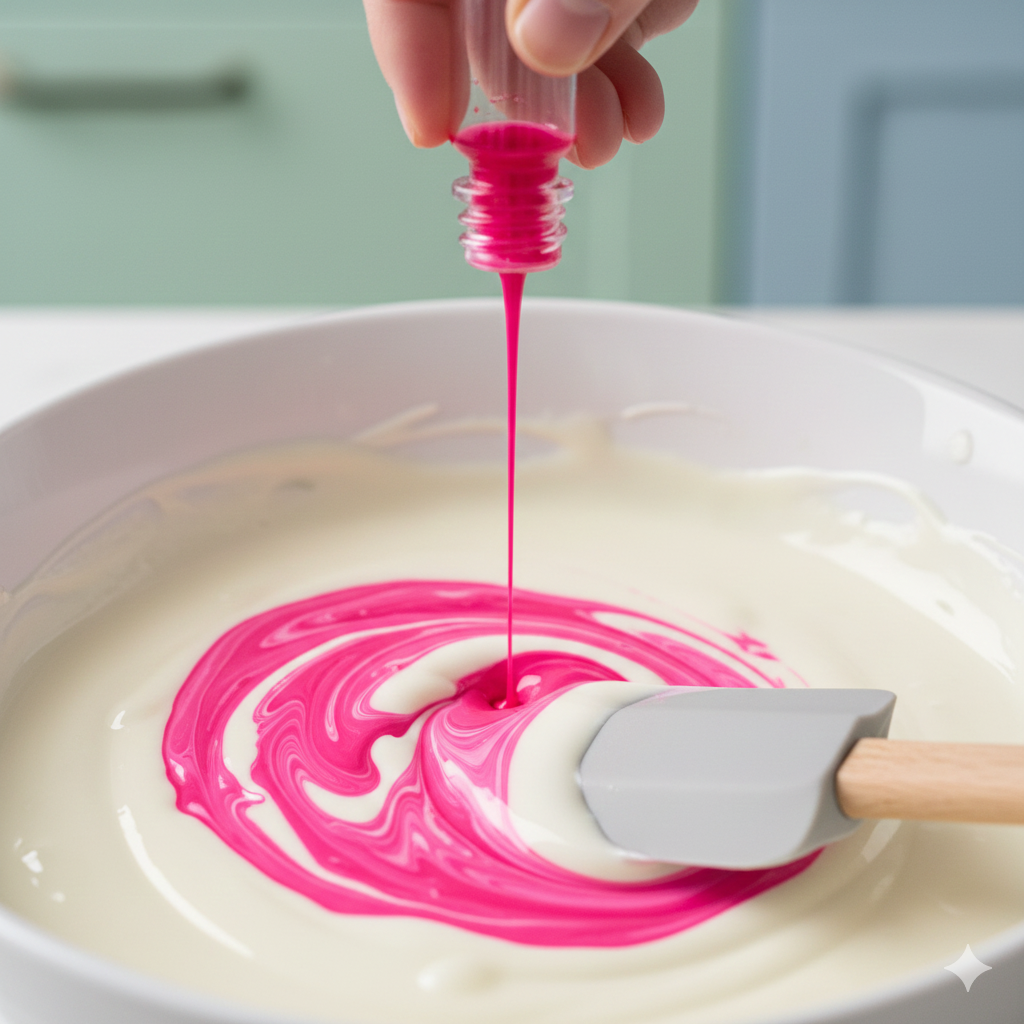
Short answer: yes, you can add colour to candy melts and to chocolate, but only a fat-based colour: a coloured cocoa butter, a fat-soluble powder dissolved in cocoa butter, or a fat-soluble liquid colour. Chocolate and candy melts are fat-based, and moisture thickens melted chocolate, so a colour whose ingredient list includes water does not belong in the bowl. Pavoni Italia classifies its colours the same way: fat-soluble colours for chocolate and fat masses, water-soluble colours for sugar work, icing, macarons and airbrushing.
| What you want to do | Pavoni colour to use | Price |
|---|---|---|
| Colour a whole batch of white chocolate or candy melts | Fat-soluble liquid colour, 180 g | $40.50 |
| Colour bonbon shells in moulds, or chocolate in mass | Chocolart coloured cocoa butter, 200 g | $79.99 |
| Make your own colour at high density | Chocolart fat-soluble powder, 40 g | $46.99 |
| Plant-based colour, vegan friendly | Seasons natural cocoa butter concentrate, 200 g | $73.99 |
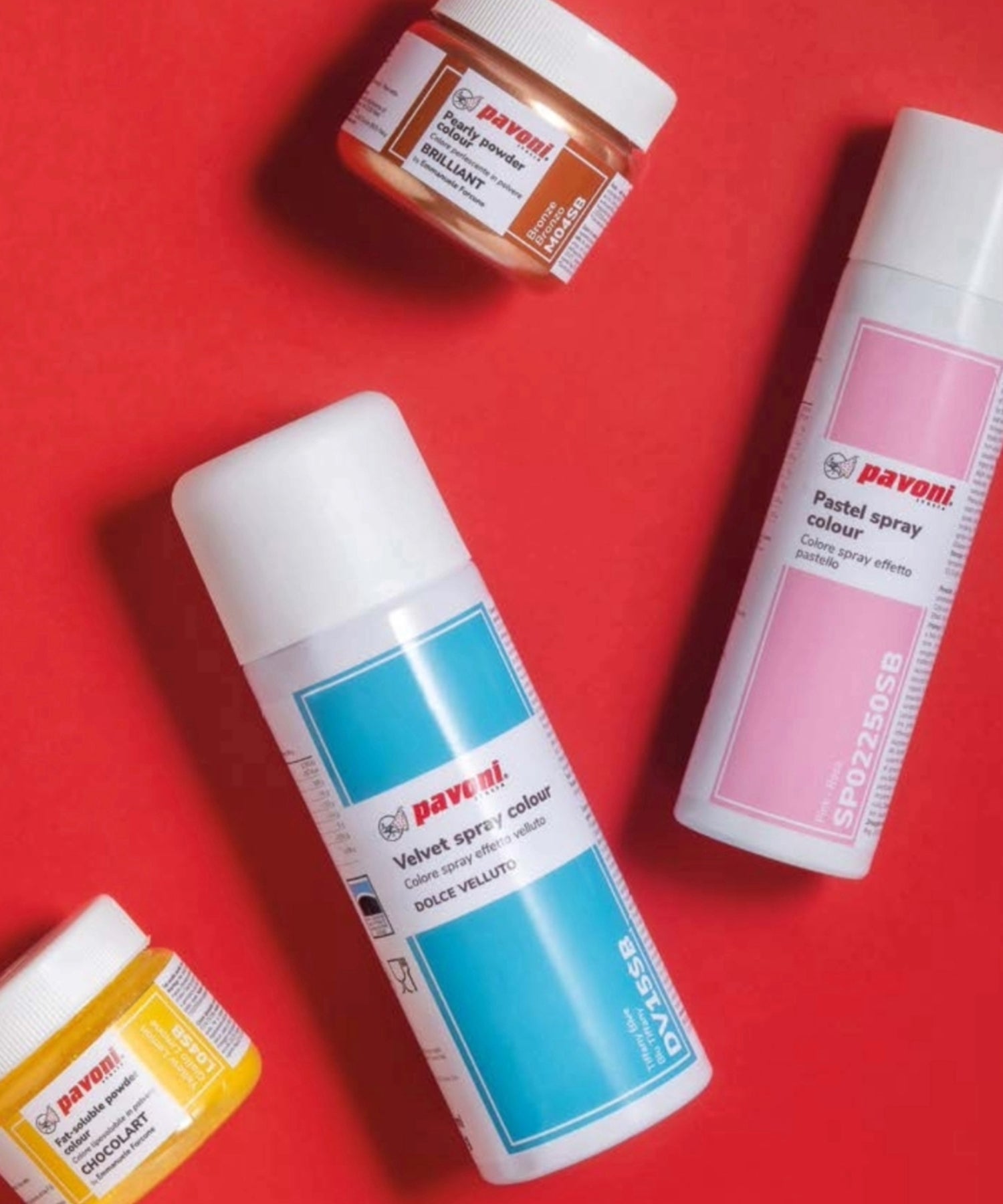
| Velvet finish on frozen desserts and chocolate | Dolce Velluto velvet cocoa butter spray, 400 ml | $56.99 |
Prices shown for the red shade; each line comes in several colours.
Why water-based food colouring and chocolate don't mix
Water is the problem, not the colour. Chocolate is a suspension of sugar, cocoa and milk particles in melted fat, and food scientists note that higher moisture content increases its viscosity: the melted chocolate thickens instead of flowing. In Canada, the compositional standards set minimum cocoa butter levels for chocolate, and a product sold as chocolate cannot contain vegetable fats or oils other than cocoa butter.
That is why colour makers separate their ranges by solvent. Pavoni Italia's catalogue lists its fat-soluble liquid colours for "chocolate masses and all fat masses" and its fat-soluble powders for dissolving in cocoa butter, while its water-soluble powders are for artistic sugar, macarons, sugar paste and icing, and its water-soluble liquids are made for the airbrush. Before you colour chocolate, read the ingredient list of your colour: if it contains water, keep it for icing.
Candy melts vs real chocolate: what you are colouring
Candy melts are usually a compound coating rather than chocolate, so check the ingredient list: if the fat is a vegetable fat such as palm kernel oil instead of cocoa butter, treat it as a compound coating. The colouring rule is the same for both, because both are fat masses; what changes is how you melt them.
| Property | Chocolate (Canadian standard) | Compound coating |
|---|---|---|
| Fat | Cocoa butter (plus milk fat in milk and white chocolate) | About 35–40% fat, mainly a hard fat, usually hydrogenated palm kernel oil |
| Composition | White chocolate: at least 20% cocoa butter, 14% milk solids and 3.5% milk fat. Milk chocolate: at least 25% total cocoa solids | About 8–18% cocoa, mostly powdered sugar |
| Tempering | Moulded pieces are made with pre-crystallised (tempered) chocolate | Not needed; sets without tempering |
| Working temperature | Follow the tempering curve of your chocolate | Melts at about 35–37°C (95–99°F), used for coating at about 40°C (104°F); heating to 50°C (122°F) or more can destroy its seed crystals |
| Colour to use | Fat-based: coloured cocoa butter, fat-soluble powder or liquid | Fat-based: the same colours |
New to tempering? Our guide on how to temper chocolate covers the method step by step.
Which Pavoni colour does which job
Pick the colour by the job, not by the shade: each Pavoni line is made for a different use.
| Pavoni line | What it is | Use it for |
|---|---|---|
| Chocolart cocoa butter, 200 g | Ready-to-use coloured cocoa butter, 14 shades, E171-free; $79.99–$109.00 CAD | Colouring chocolate in mass, on the surface and in the mould |
| Chocolart fat-soluble powder, 40 g | High-density colour powder, 12 shades, E171-free; $46.99–$60.99 CAD | Dissolving in cocoa butter to make your own colour |
| Fat-soluble liquid, 180 g | Ready-to-use liquid colour, 6 shades, E171-free | Colouring chocolate masses and all fat masses |
| Seasons cocoa butter, 200 g | Plant-based concentrates in cocoa butter, vegan friendly, E171-free; $69.00–$83.00 CAD | Colouring chocolate masses, direct application, glazes and velvet finishes |
| Dolce Velluto spray, 400 ml | Coloured cocoa butter spray, E171-free | A velvet effect, sprayed on cold surfaces |
| Brilliant metallic powder, 40 g | Pearlescent powder, E171-free | Chocolate, sugar and pastillage; dissolve in alcohol or use pure |
Two Pavoni lines are listed for other uses rather than for melted chocolate: the Absolute water-soluble powders (artistic sugar, macarons, sugar paste, icing) and the Seasons natural powders, which Pavoni lists for glazes, doughs, creams, fillings, shortcrust and viennoiserie. For those bakery uses, the Seasons natural powders, 80 g (for example Seasons Red), cost $44.99–$60.99 CAD.
View all colours for chocolate →
How to colour melted chocolate or candy melts, step by step
- Keep everything dry. Bowls, spatulas and moulds must be dry: water is what thickens the chocolate.
- Melt correctly. Compound coating: melt it gently and work it at about 40°C (104°F), staying below 50°C (122°F). Chocolate: melt it; for moulded work, the coloured chocolate must be tempered before it goes into the mould.
- Prepare the colour. A fat-soluble liquid or a Chocolart cocoa butter is ready to use. A Chocolart powder is dissolved in melted cocoa butter first.
- Add a little, stir, test. Add a small amount, stir until even, and let a sample set on parchment: the set colour is the one your customer sees.
- Write it down. Record the weight of chocolate and of colour for each shade, so the next batch matches.
Pavoni's catalogue gives no dosage for these colours, so build the shade on a small test batch before you colour a full bowl.
Can you dye milk chocolate and dark chocolate?
You can, but white chocolate gives the truest colour. Under Canadian standards, white chocolate is made from cocoa butter, milk ingredients and sugar, with no brown cocoa solids, so the colour you add is the colour you see. Milk chocolate contains at least 2.5% fat-free cocoa solids and dark chocolate at least 14%, and that brown base shifts or hides the colour you add. For milk and dark chocolate, colour the surface instead: coloured cocoa butter in the mould, a Dolce Velluto velvet spray or a Brilliant metallic powder.
Colouring bonbon shells in polycarbonate moulds
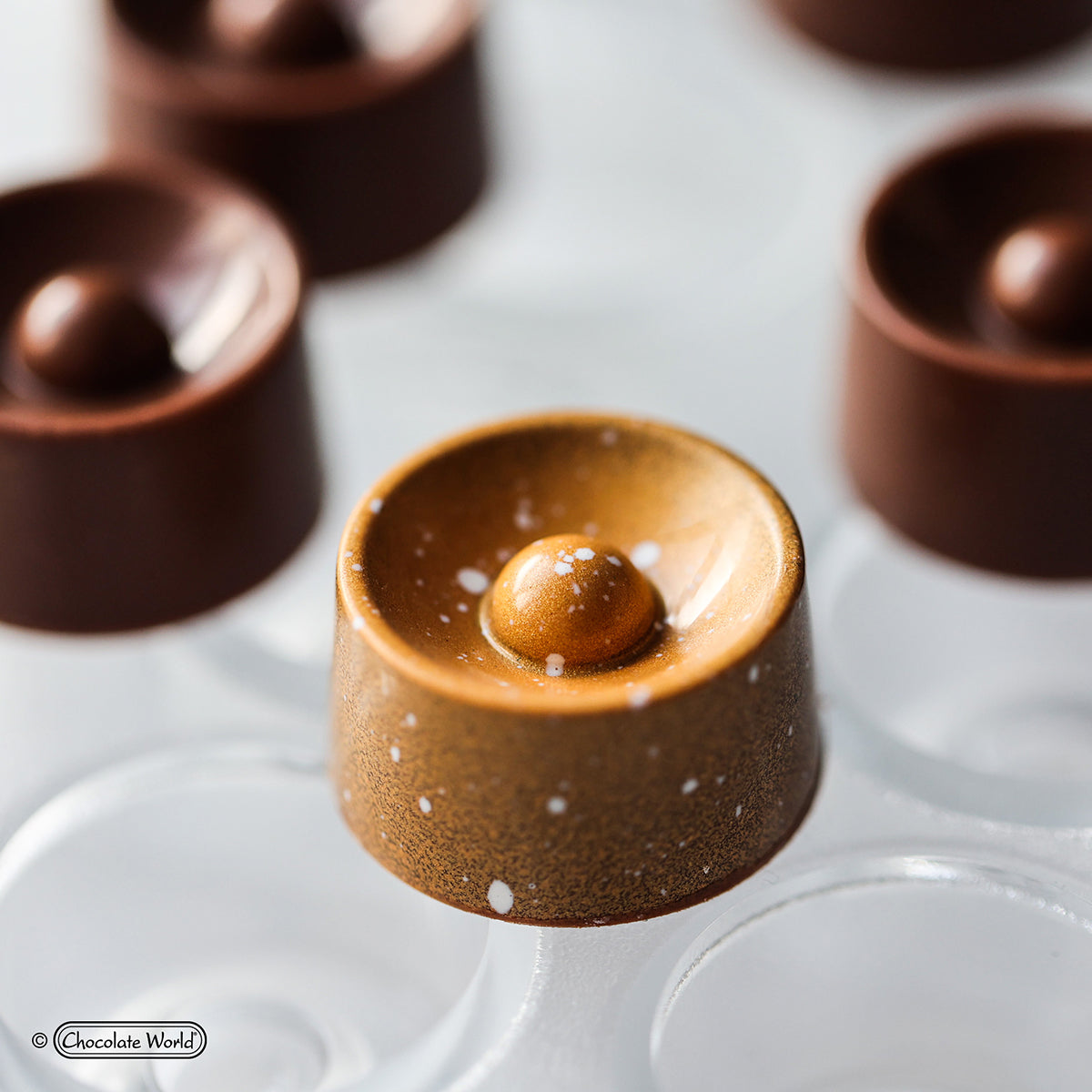
For coloured bonbons, the colour goes into the mould before the chocolate. Chocolate World's chef recipes describe the order: spray coloured cocoa butter into the mould, then pour pre-crystallised chocolate to make the shell, fill, and close. Chocolart cocoa butter is made for this mould work.
- Chocolart Red Cocoa Butter, 200 g → $79.99 CAD
- Chocolart Gold Cocoa Butter, 200 g → $109.00 CAD
- Chocolart White Cocoa Butter, 200 g → $79.99 CAD
To spray cocoa butter without a compressor, the KREA Swiss chocSPRAYER ($1,250.00 CAD) has a heated nozzle, runs on 120 V and sprays cocoa butter, glazes and chocolate at 26–40°C. It does not temper: bring the cocoa butter or chocolate to working temperature first. Our chocolate spray gun guide explains the technique, and the shiny bonbons guide covers the moulding.
View bonbon and praline moulds →
Natural and vegan-friendly colours
For a plant-based colour story, use Seasons: Pavoni's range of vegetable concentrates in cocoa butter, vegan friendly and E171-free, for colouring chocolate masses, direct application in the mould, glazes and velvet finishes.
- Seasons Red, 200 g → $73.99 CAD
- Seasons Blue, 200 g → $83.00 CAD
- Seasons Yellow, 200 g → $83.00 CAD
View all Seasons natural colours →
How AI can help your production
Keep a colour library: for every shade, record the chocolate or coating used, the grams of colour per kilo, the temperature and a photo of the set result, then ask an AI assistant to turn it into a one-page recipe card per colour and to scale each recipe to the batch size of the day. Ask it to plan which colours you need for a seasonal collection and how many 200 g bottles that uses, so you order before you run out.
AI organises the information; tasting and the final decision stay with your chef.
Pavoni colours at Zucchero Canada
We are an authorized distributor of Pavoni Italia, and we stock its colour lines in Calgary, shipping across Canada. Each line has its own job: Chocolart cocoa butter for moulds and coloured shells, Chocolart powders when you make your own colour, fat-soluble liquids for colouring a whole batch, Seasons for a plant-based range, and Dolce Velluto for velvet finishes. For cocoa butter to dissolve powders, see our natural cocoa butter.
Producing coloured bonbons or decorations in volume? Contact our team for volume pricing on professional quantities.
View all coloured cocoa butters →
Coloured cocoa butter | Fat-soluble powders | Velvet sprays | What is gel food colouring? | How to temper chocolate
This article is for information only. Every business is different: draw your own conclusions based on your own expectations, budget and goals, and talk to qualified experts before you decide or invest.
Sources: Pavoni Italia, Food Equipment catalogue 2026, "Colours & raw materials" (Chocolart, Seasons, Dolce Velluto, Absolute, Brilliant, fat-soluble and water-soluble liquids); Pavoni and KREA Swiss product data on zuccherocanada.ca; Chocolate World Moulds catalogue, Edition 15 (chef recipes); CFIA, Canadian Food Compositional Standards, Volume 4, "Cocoa and Chocolate Products"; BC Cook Articulation Committee, Understanding Ingredients for the Canadian Baker (BCcampus, 2015), chapters "Canadian Definitions and Regulations" and "Compound Chocolate"; B. Wolf, "Rheological properties of chocolate", New Food Magazine (2011).
Good to know
Frequently asked questions
Can you add regular food colouring to candy melts?
Only if it is fat-based. Candy melts and chocolate are fat masses, and moisture thickens melted chocolate, so a colour whose ingredient list includes water should stay out of the bowl. Use a fat-soluble liquid colour, a coloured cocoa butter or a fat-soluble powder dissolved in cocoa butter.
Can I use gel food colouring in chocolate?
Read the label first. If the gel contains water, use it for icing, not for chocolate. For chocolate and candy melts, choose a colour made for fat masses, such as Pavoni's fat-soluble liquid colours or Chocolart coloured cocoa butters. Our guide to gel food colouring explains where gels work best.
How do you color white chocolate?
Melt the white chocolate and stir in a fat-based colour: a ready-to-use fat-soluble liquid or Chocolart cocoa butter, or a Chocolart powder first dissolved in melted cocoa butter. Add a little at a time and let a sample set to check the shade; for moulding, the coloured chocolate must still be tempered. White chocolate gives the truest colour because it contains no brown cocoa solids.
Can you dye milk chocolate?
Yes, with a fat-based colour, but milk chocolate's brown base (at least 2.5% fat-free cocoa solids under Canadian standards) shifts the shade, and dark chocolate's even more. For milk and dark chocolate, colour the surface instead: coloured cocoa butter in the mould, a velvet spray or a metallic powder.
Why did my chocolate turn thick after I added colour?
Most likely the colour, or a utensil, brought water into the chocolate: higher moisture increases chocolate's viscosity. Keep tools dry and switch to a fat-soluble colour or a coloured cocoa butter.
Is there a natural or vegan colour for chocolate?
Yes. Pavoni's Seasons range is made of vegetable concentrates in cocoa butter, vegan friendly and E171-free, for colouring chocolate masses, direct application in moulds, glazes and velvet finishes.
Do Pavoni colours qualify for free shipping?
Yes. Colours count toward free shipping on orders of $300 CAD or more within Canada; remote areas and the territories pay the actual carrier rate. Orders over $500 CAD also get 5% off automatically at checkout. Food products, including colours, ship within Canada only.
Shop this article
Products mentioned in this guide
 Pavoni ItaliaRed Fat-Soluble Liquid Colour 180 g – LL07SB$40.50 CADView product →
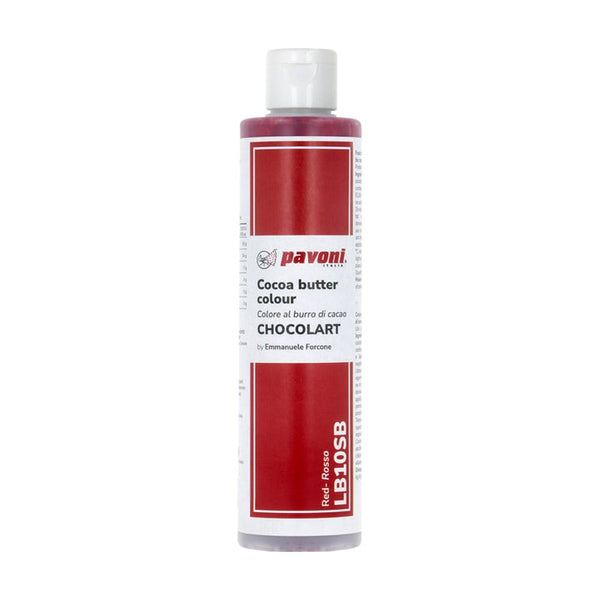 Pavoni ItaliaChocolart Red Cocoa Butter – LB10SB$79.99 CADView product →
 Pavoni ItaliaChocolart Red Fat-Soluble Powder – L10SB$46.99 CADView product →
 Pavoni ItaliaSeasons Red Natural Cocoa Butter Concentrate – NC10$73.99 CADView product →
For professionals
Equipping a chocolate shop, bakery or kitchen?
Tell us what you produce and how much. We will recommend the right machine, moulds and ingredients, and send you a quote.
For home bakers
Professional tools for your own kitchen
The same European moulds, tools and ingredients the professionals use.
5% off orders over $500 CAD, applied automatically at checkout.
Keep reading

Leave a comment
All comments are moderated before being published.
This site is protected by hCaptcha and the hCaptcha Privacy Policy and Terms of Service apply.