



Short answer: chocolate doesn't really "go bad" in the way milk or bread does. It rarely supports microbial growth because its water activity is too low. But it does degrade — losing flavor, snap, and visual appeal — long before any "best by" date stamped on the wrapper. Whether you're a home baker with one bar in the pantry or a chocolatier with a $20,000 inventory of couverture, the real question isn't can I eat this, it's is this still good enough to use?
This guide covers the actual shelf life of chocolate by type, what causes degradation, the difference between bloom and spoilage, how to safely recover chocolate that's bloomed or sat too long, and — for pastry pros — how to store couverture and cocoa butter so you're not throwing money in the trash.
Does chocolate expire?
Most chocolate is safe to eat well past its printed "best by" date. That date is a quality indicator, not a safety one. As long as the chocolate has been stored reasonably (away from heat, light, moisture, and strong odors), it remains safe — sometimes for years.
What changes over time is the eating experience: flavor flattens, aromatic compounds fade, fat may oxidize, and texture can shift from clean snap to soft or grainy.
Real shelf life by chocolate type
The number on the wrapper is conservative. Here's what actually happens at proper storage temperature (16-18°C, below 50% relative humidity, dark, sealed):
- Dark chocolate (60%+ cacao): Optimal for 12-18 months. Safe for 2+ years.
- Milk chocolate: Optimal for 8-12 months. Milk solids are the limiting factor.
- White chocolate: Optimal for 6-10 months. Shortest shelf life of the three.
- Ruby chocolate: Similar to white, 6-10 months. Fruity notes are particularly volatile.
- Filled chocolates (bonbons, pralines, ganache-filled): Days to weeks depending on filling.
Bloom is not spoilage
If you see a white or grayish film on chocolate, that's almost always bloom — a cosmetic defect caused by fat or sugar crystals migrating to the surface. The chocolate is safe to eat and can be re-melted and re-tempered. Bloom is not mold.
Can you recover bloomed or old chocolate?
If the chocolate hasn't gone rancid and was stored in a way that didn't expose it to moisture or contamination, the answer is almost always yes. Pure chocolate has a water activity below 0.5 — far below the threshold for bacterial or mold growth. Re-melting and re-tempering rebuilds the crystal structure and gives you working chocolate again.
What you can recover
- Bloomed couverture or callets that smell like chocolate (not rancid)
- Leftover tempered chocolate from previous production runs
- Trim and scrap from molded work returned to the melter
- Old single-origin or premium chocolate that has lost aromatic intensity but is otherwise sound
What you cannot recover
- Anything that smells rancid — soapy, stale, paint-like, or musty
- Filled chocolates with fresh ganache, fruit, caramel, or cream centers
- Chocolate that was contaminated or got wet
The process: re-melt and re-temper
- Smell first. If anything is off, discard.
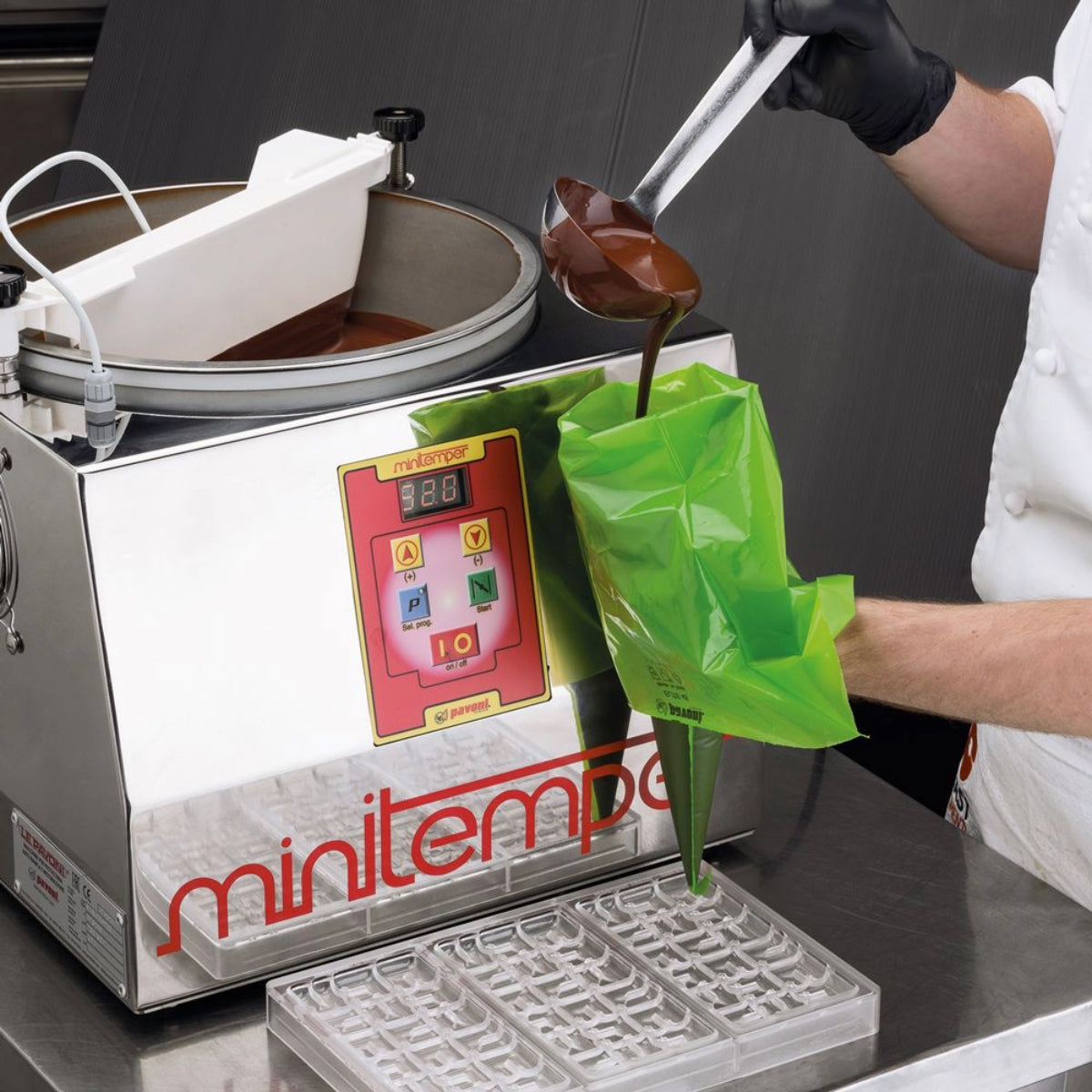
- Melt slowly in a chocolate melter. Don't exceed 45-50°C for dark, 40-45°C for milk, 40°C for white.
- Re-temper using a tempering machine or seeding method.
- Test the temper on parchment. Sets glossy with clean snap = ready.
When chocolate has actually gone bad
The clearest sign is rancidity — a stale, soapy, or paint-like smell from oxidized cocoa butter. Caused by heat above 20°C, light, air, or absorbed odors. Rancid chocolate isn't dangerous but can't be saved.
For chocolatiers: storage is a business decision
A small chocolatier with $5,000-10,000 in couverture inventory loses 5-15% per year to bloom and flavor degradation in uncontrolled conditions. Proper storage conditions:
- Temperature: 16-18°C, stable. Avoid swings of more than ±2°C.
- Humidity: Below 50% RH.
- Light: Dark. UV accelerates fat oxidation.
- Air: Sealed. Chocolate absorbs odors from coffee, spices, and cleaning products.
- Rotation: FIFO. Date every block on receipt.
A standard kitchen walk-in is the wrong tool. A dedicated chocolate fridge maintains stable temperature and humidity specifically calibrated for couverture.
Cacao beans: stored differently than chocolate
Raw cacao beans need cool, dry storage (15-18°C, below 60% RH) with good ventilation. Use within 6-12 months of harvest for best flavor. Sealed plastic causes moisture issues.
Frequently asked questions
- Does chocolate actually expire or just lose quality?
- Chocolate does not become unsafe to eat past its best-by date — it loses quality. Properly stored dark chocolate (16-18°C, sealed, away from light) remains usable for 2+ years. What changes is flavor intensity, snap, and bloom risk, not food safety.
- Can you use bloomed chocolate for baking or ganache?
- Yes — bloom is purely cosmetic and does not affect food safety. Bloomed chocolate re-melts and performs identically to fresh chocolate for ganaches, fillings, and baked goods where appearance does not matter.
- What is the correct way to store professional quantities of couverture?
- Store at 16-18°C, below 50% relative humidity, in sealed original packaging, away from light and strong odors. Do not refrigerate — condensation when returning to room temperature causes sugar bloom.
- How long does cocoa butter last in storage?
- Properly stored pure cocoa butter lasts 2+ years. Keep it sealed at 16-18°C away from odors — cocoa butter absorbs aromas aggressively. Temperature cycling degrades its crystal stability faster than constant cool storage.







Leave a comment
All comments are moderated before being published.
This site is protected by hCaptcha and the hCaptcha Privacy Policy and Terms of Service apply.