


Geometric Croissants: Professional Techniques for Cube and Cylinder Croissants
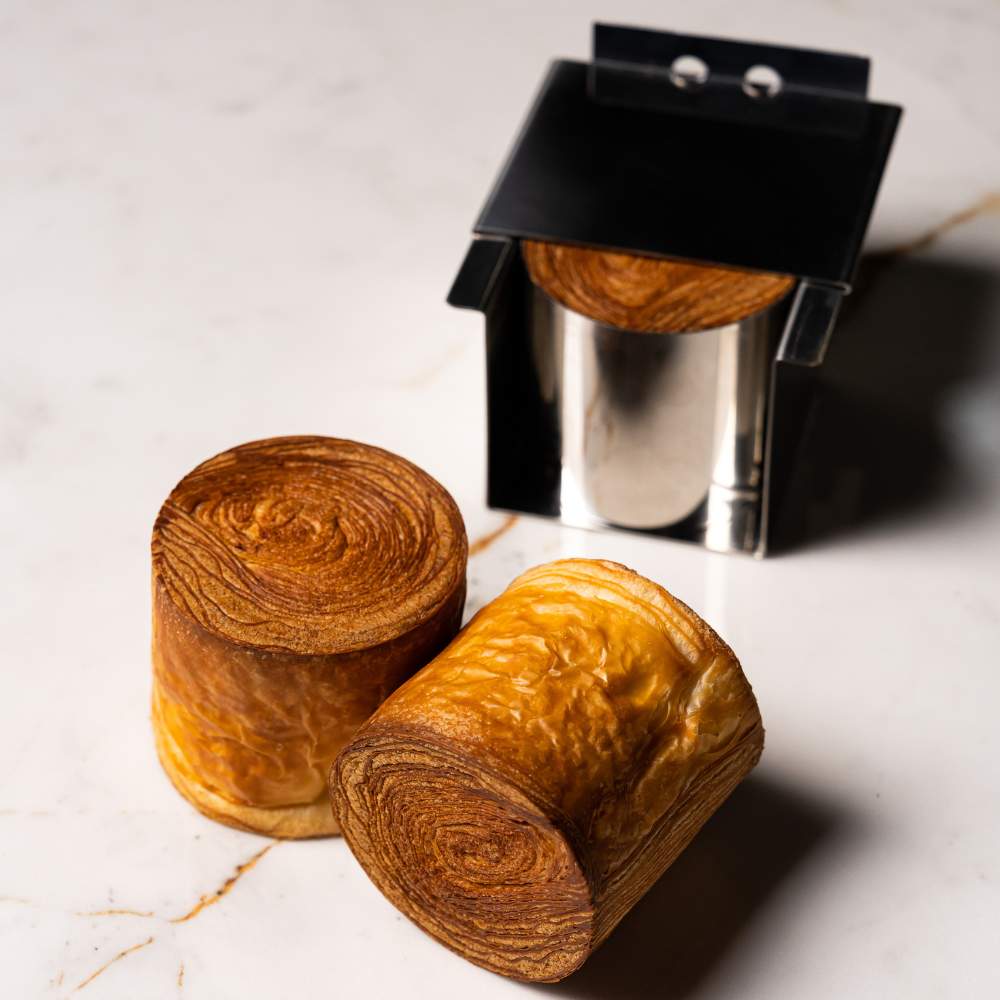
Short answer: geometric croissants are laminated croissant dough shaped and baked in a stainless-steel mould that gives the final form: a cube, a cylinder, a pyramid, a heart or a sphere. Sharp, repeatable shapes come from three things: a strong flour that carries the butter through every fold, even lamination at a controlled temperature, and a mould sized for your production. Below: the moulds and their sizes, the flour, the lamination numbers, and how to standardise the process.
Quick answer: what you need
| Need | Product | Price |
|---|---|---|
| Cube croissants, 60 mm | Pavoni Italia CV1 cube mould | $43.99 CAD |
| Cylinder croissants, five per bar | Martellato Mini Cylinder 5 by Frank Haasnoot | $145.00 CAD |
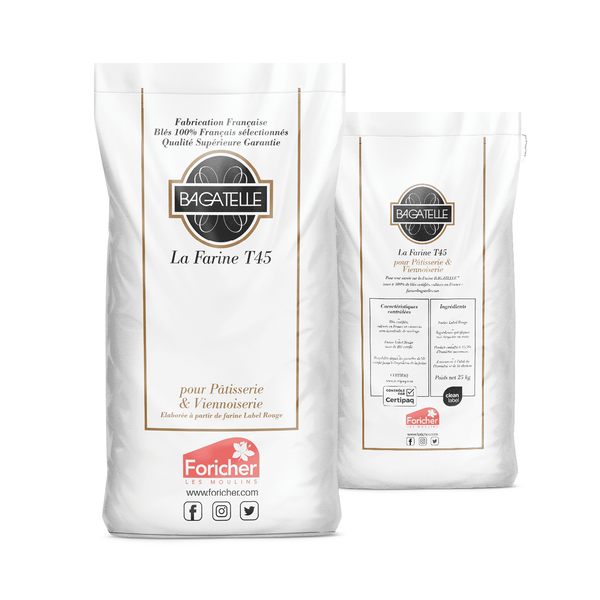
| Flour for laminated dough | Foricher Bagatelle T45, 1 kg or 25 kg | $12.50 CAD / $175.00 CAD |
| Chocolate for the filling | Venezuelan Blend 55% dark chocolate sticks, 2.27 kg | $62.50 CAD |
| Step-by-step reference | Bachour – The New Era of Viennoiserie | $145.00 CAD |
What geometric croissants are
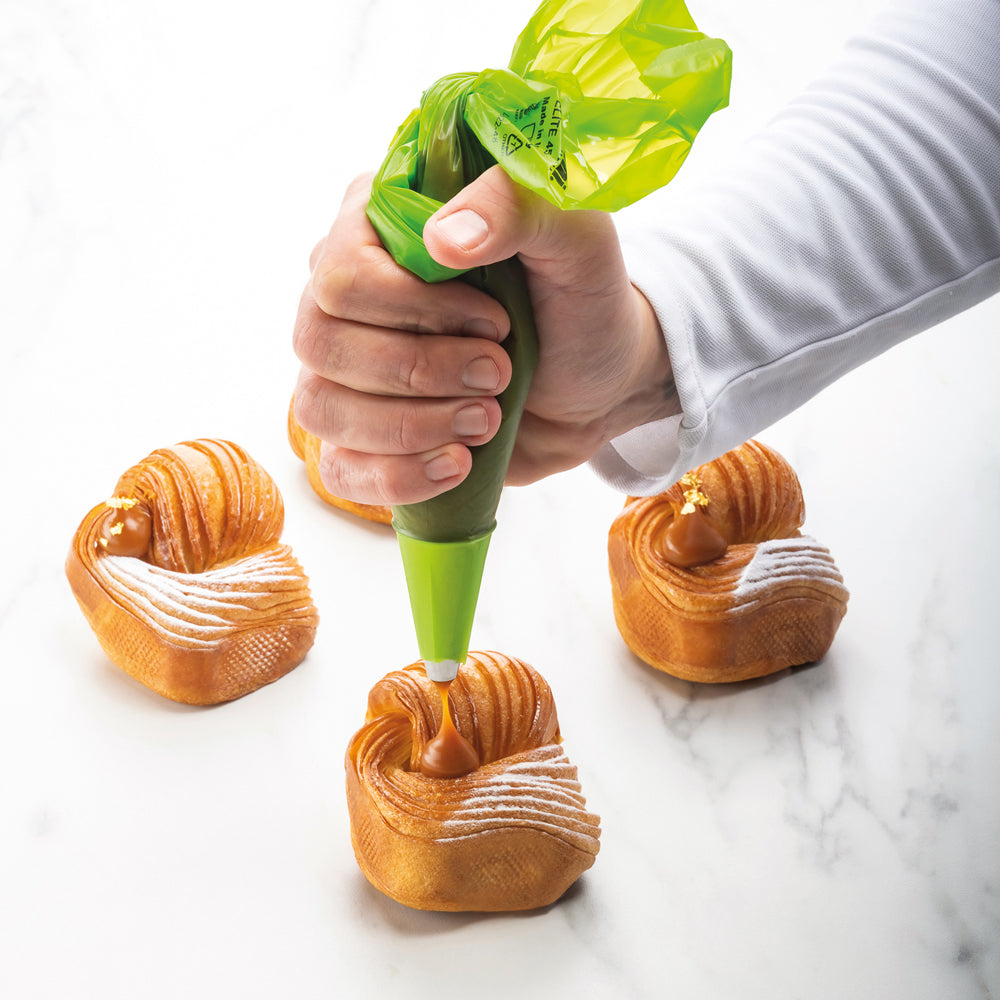
A geometric croissant is a classic laminated dough given a modern, precise shape by a mould. Pavoni Italia describes its stainless-steel range as moulds "to create unique geometric croissants", each designed to shape croissants or other preparations with a geometric form. The mould sets the edges and the final size of every piece.
The same moulds also work with other doughs and batters: Pavoni's Geometric Croissants recipe book includes a cocoa millefeuille cube, a millefeuille cylinder, a millefeuille heart, a carrot cake pyramid and a lemon and poppy seed heart.
The moulds and their sizes
Pick the shape for your display, then the format for your volume.
| Mould | Shape | Size |
|---|---|---|
| Pavoni CV1 | Cube | 60 × 60 × 60 mm |
| Pavoni CV2 | Cylinder | Ø 65 × 60 mm high |
| Pavoni CV3 | Cube | 70 × 70 × 70 mm |
| Pavoni CV4 | Heart | 80 × 70 × 50 mm high |
| Pavoni CV5 | Pyramid | 85 × 85 × 85 mm high |
| Pavoni CV6, by Cesare Murzilli | Sphere | Ø 75 mm |
| Martellato Mini Cylinder 5 (30TCB58) | Five cylinders on one bar | Each Ø 60 × 60 mm high, 170 ml; bar 392 × 70 × 75 mm |
- Pavoni CV1 is a single 60 mm stainless-steel cube, made in Italy: the simplest way to start, or to add one cube line to an existing croissant production. $43.99 CAD.
- Martellato Mini Cylinder 5 joins five cylinders on one bar and is built for tray work: Martellato rates 25 pieces per 60 × 40 cm tray, includes Teflon strips (385 × 63 mm), and the mould is dishwasher safe. Choose it when cylinders are a daily product. $145.00 CAD.
View all croissant moulds and cutters →
The flour: strength to carry the butter
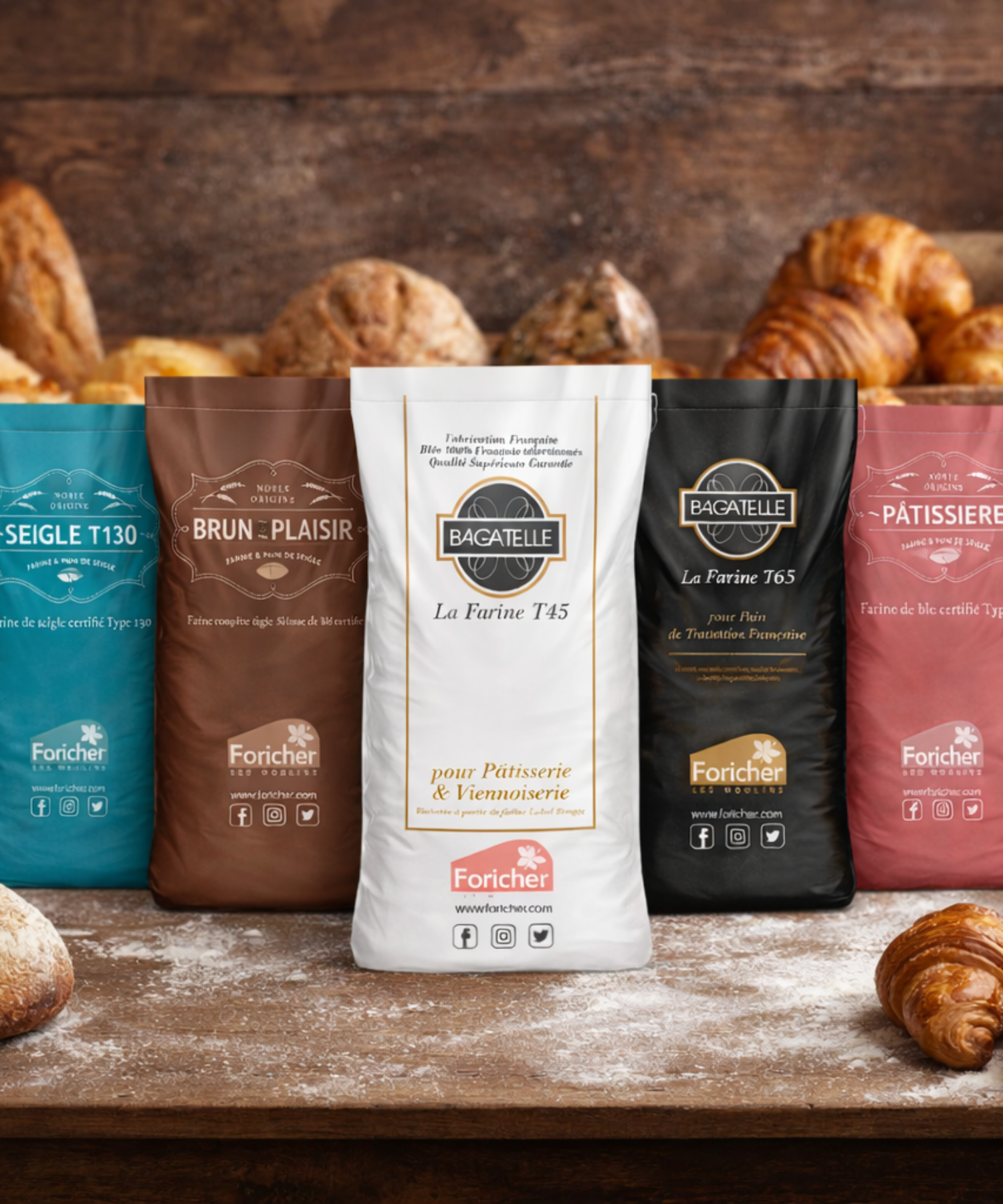
Laminated dough needs a flour strong enough to hold thin layers of butter through every fold. Foricher declares its Bagatelle T45 for viennoiserie and pastry, and its datasheet (FT208A) gives 14.0% protein (±0.3). Our product data adds a W of 350 (±30) and a P/L of 0.8 (±0.2). It is milled in France by Foricher Les Moulins from CRC®-certified wheat.
If your geometric line is built on puff pastry (the millefeuille cubes and cylinders), Foricher's Feuilletage flour is milled for lamination: Foricher describes it as a blend of strong wheats, more regular than mixing a T45 and a T65. We stock it as Terroir Feuilletage T55 in 25 kg bags ($175.00 CAD).
For a side-by-side of the French flour types, read T45 vs T65 flour.
View flour for croissants and viennoiserie →
Lamination: the numbers that matter
Lamination wraps dough around fat, then rolls it out and folds it over on itself many times. The American Society of Baking, citing Michel Suas's Advanced Bread and Pastry, gives these reference points:
| Point | Reference |
|---|---|
| Fat layers in croissants | 24 to 144 |
| Three-fold (English) | Dough sheeted to ½ in (12.7 mm); two-thirds covered with fat and folded in thirds, giving 2 fat layers after the first fold |
| Four-fold (double turn) | Both ends folded to the centre, then folded in half |
| Layer arithmetic | 2 initial fat layers × three 3-folds = 54 layers (2 × 3 × 3 × 3) |
| Rest between folds | Usually about 30 minutes |
| Temperature | Refrigerate between folds, or hold the room at 15°C (60°F), so the fat does not melt |
A firmer dough (lower hydration) gives more layers, and a lower room temperature preserves the thin fat layers. In a geometric croissant the layers are on display, so this is where consistency is won or lost.
The butter
In Canada, butter must contain at least 80% milk fat. BCcampus notes that butter has a poor plastic range, 18–20°C (64–68°F). Roll-in pastry fats, by contrast, offer a large plastic range, excellent extensibility and lifting ability, and are used in puff and Danish pastry where lamination is required.
Shaping, proofing and baking in the mould
The mould sets the shape; your job is to make every piece of dough the same. Pavoni publishes recipes in its Geometric Croissants recipe book, linked from the CV1 page on pavonitalia.com: start from those, then write down your own numbers.
- Dough weight per mould. Fix one weight for each mould size, weigh every piece and record it.
- Cut and roll the same way every time. Same strip width, same length, same number of turns for every piece.
- Proof and bake by the log. Record proof time, temperature and humidity, and oven temperature and time for each mould. Change one variable at a time.
- Bake on a perforated mat. The FOROSIL43 micro-perforated mat ($35.99 CAD) lets hot air circulate under the product for even browning, and is listed for viennoiserie and laminated dough.
Fillings and finishes
Two chocolates have a clear job here:
- Venezuelan Blend 55% dark chocolate sticks → 5 g sticks, about 450 pieces per 2.27 kg pack, made from fermented Venezuelan Trinitario cacao, with caramel, nut and spicy notes; recommended for breads, croissants and brioches. $62.50 CAD.
- Bassan Sur del Lago 71% → a single-origin couverture made in Canada from Venezuelan cacao, for ganache fillings and finishes. 5 kg bag $273.00 CAD.
For a cocoa dough like Pavoni's cocoa millefeuille cube, KKO Real Repostería is our 100% Venezuelan alkalized baking cocoa; see the KKO Real collection for availability.
Where lamination goes wrong
- Fat melts into the dough: the room or the dough is too warm. Refrigerate between folds or work at 15°C (60°F).
- Dough tears when you sheet it: the American Society of Baking links this to a flour that is too strong and not properly hydrated.
- Uneven pieces from one batch: fix the dough weight per mould and weigh every piece.
How AI can help your production
Give an AI assistant your croissant recipe and ask it to scale it to the number of moulds you fill per day, with the dough weight per mould and the butter for each block. Ask it to build a lamination log (fold, time, dough temperature, room temperature) and a proofing and baking sheet per mould shape. With Martellato's 25 pieces per 60 × 40 cm tray, it can also plan how many trays and bars you need for a weekend run.
AI organises the information; tasting and the final decision stay with your chef.
Geometric croissant tools at Zucchero Canada
We stock Foricher flour in Calgary and ship it across Canada, along with Pavoni Italia and Martellato moulds for viennoiserie. Each product has its own job: Bagatelle T45 for the croissant dough, Terroir Feuilletage for puff-pastry shapes, the Pavoni CV1 for cube croissants, the Martellato Mini Cylinder 5 for cylinder production on trays.
For the method behind modern viennoiserie, Bachour – The New Era of Viennoiserie ($145.00 CAD) has 52 signature creations — croissants, brioche, puff pastry and more — with step-by-step production methods and Antonio Bachour's folding technique, across 410 pages in English and Spanish.
Orders over CAD 500 get 5% off automatically at checkout. Bakeries and hotels buying flour or moulds in volume: contact us or call 587-774-8873 (toll free 877-741-8251).
Croissant moulds | Flour for viennoiserie | Foricher flour | Ingredients for croissants | T45 vs T65 flour
This article is for information only. Every business is different: draw your own conclusions based on your own expectations, budget and goals, and talk to qualified experts before you decide or invest.
Sources: Pavoni Italia, Food Equipment catalogue 2026, "Geometric croissants moulds" (CV1–CV6), CV1 product page and Geometric Croissants recipe book contents (pavonitalia.com, Issuu); Martellato, General Catalogue 2026, "Mini Cubò 5 & Mini Cylinder 5"; Foricher datasheet FT208A (Bagatelle T45) and foricher.com "Feuilletage"; American Society of Baking, "Dough Lamination" (citing M. Suas, Advanced Bread and Pastry, 2009); BC Cook Articulation Committee, Understanding Ingredients for the Canadian Baker (BCcampus), section 3.3 "Major Fats and Oils Used in Bakeries"; Zucchero Canada product data.
Good to know
Frequently asked questions
What are geometric croissants?
Geometric croissants are laminated croissant dough shaped and baked in a stainless-steel mould that sets the final form: a cube, cylinder, pyramid, heart or sphere. Pavoni Italia's range runs from the 60 mm CV1 cube to the CV6 sphere (Ø 75 mm).
What size is a cube croissant mold?
Pavoni's CV1 cube is 60 × 60 × 60 mm and its CV3 cube is 70 × 70 × 70 mm. For cylinders, Pavoni's CV2 is Ø 65 × 60 mm high, and each cylinder of Martellato's Mini Cylinder 5 is Ø 60 × 60 mm high (170 ml).
Which flour is best for geometric croissants?
A strong viennoiserie flour that carries the butter through every fold. Foricher declares Bagatelle T45 for viennoiserie and pastry; its datasheet gives 14.0% protein (±0.3), and our product data gives W 350 (±30). For puff-pastry shapes, Foricher's Feuilletage flour is milled for lamination.
How many layers does a croissant have?
The American Society of Baking, citing Michel Suas, gives 24 to 144 fat layers for croissants. Two initial fat layers folded three times in thirds give 54 layers (2 × 3 × 3 × 3).
How do you keep the butter from melting during lamination?
Rest the dough about 30 minutes between folds and refrigerate it, or hold the room at 15°C (60°F). A lower room temperature also preserves the thin fat layers.
Where can I buy geometric croissant molds and French flour in Canada?
Zucchero Canada stocks the Pavoni CV1 cube, the Martellato Mini Cylinder 5 and Foricher flour; the flour is stocked in Calgary and ships across Canada. Orders over CAD 500 get 5% off automatically at checkout. For volume orders, contact us.
Shop this article
Products mentioned in this guide
 Pavoni ItaliaCube Geometric Croissant Mold CV1$43.99 CADView product →
 MartellatoGeometric Croissant Mold - Mini Cylinder set of 5 - by Frank Haasnoot – 30TCB58$145.00 CADView product →
 ForicherBagatelle T45 French Flour for Croissants & ViennoiserieFrom $12.50 CADView product →
 FCH OriginsDark Chocolate Venezuelan Blend 55% Sticks 2.27 Kg (5 lb)$62.50 CADView product →
For professionals
Equipping a chocolate shop, bakery or kitchen?
Tell us what you produce and how much. We will recommend the right machine, moulds and ingredients, and send you a quote.
For home bakers
Professional tools for your own kitchen
The same European moulds, tools and ingredients the professionals use.
5% off orders over $500 CAD, applied automatically at checkout.
Keep reading




Leave a comment
All comments are moderated before being published.
This site is protected by hCaptcha and the hCaptcha Privacy Policy and Terms of Service apply.