


Can Pregnant Women Eat Chocolate? Caffeine, How Much and What to Avoid
Short answer: yes, most pregnant women can eat chocolate; the part to count is its caffeine. Health Canada sets a maximum of 300 mg of caffeine a day during pregnancy, and the American College of Obstetricians and Gynecologists (ACOG) says that under 200 mg a day does not appear to be a major factor in miscarriage or preterm birth. A 28 g (1 oz) serving of 70–85% dark chocolate has about 23 mg of caffeine, milk chocolate about 6 mg and white chocolate none. Skip chocolates filled with alcohol and desserts made with raw eggs, and ask your doctor how chocolate fits your diet, especially if you have gestational diabetes.
This article is for general information only and is not medical or nutritional advice. Always consult your doctor, pharmacist or a registered dietitian about your own situation, especially during pregnancy or breastfeeding, or if you have diabetes, allergies or a medical condition.
How much caffeine is in chocolate?
Dark chocolate has the most: 70–85% dark chocolate has four times the caffeine of milk chocolate, and white chocolate is listed with none.
| Chocolate (USDA entry) | Caffeine per 100 g | Caffeine per 28 g (1 oz) | Sugars per 28 g (1 oz) |
|---|---|---|---|
| Dark, 70–85% cacao | 80 mg | about 23 mg | about 7 g |
| Dark, 60–69% cacao | 86 mg | about 24 mg | about 10 g |
| Dark, 45–59% cacao | 43 mg | about 12 mg | about 14 g |
| Milk chocolate | 20 mg | about 6 mg | about 15 g |
| White chocolate | 0 mg (estimated) | 0 mg | about 17 g |
Per-100 g values from USDA FoodData Central; the 28 g columns are our calculation (× 0.2835). USDA's white chocolate values are estimated from its formulation, not analysed.
For comparison, Health Canada lists 135 mg of caffeine in an 8 oz (237 ml) cup of brewed coffee, 30 to 50 mg in a cup of brewed black or green tea, 36 to 46 mg in a 355 ml can of regular cola, and 7 mg in 1 oz (28 g) of milk chocolate candy. Read more in does dark chocolate have caffeine?
How much chocolate can you eat while pregnant?
There is no official limit for chocolate itself: the limits are for caffeine from all sources together, so chocolate counts alongside coffee, tea and cola.
- Health Canada: a maximum of 300 mg of caffeine a day for people who are pregnant, breastfeeding or planning to become pregnant (400 mg for other adults).
- ACOG (Committee Opinion 462, reaffirmed 2023): moderate caffeine consumption, less than 200 mg a day, does not appear to be a major contributing factor in miscarriage or preterm birth.
In practice (our calculations from the figures above): one cup of brewed coffee (135 mg) plus a 28 g square of 70–85% dark chocolate (about 23 mg) comes to about 158 mg, under both figures. A 28 g serving of 70–85% dark chocolate is about 8% of Health Canada's 300 mg. Caffeine is not the only thing to watch: 28 g of milk chocolate also carries about 15 g of sugars. Your doctor, midwife or dietitian can tell you what amount suits your pregnancy.
What does research say about caffeine and pregnancy?
The concern is high caffeine intake from all sources, not a few squares of chocolate.
In a population-based prospective cohort study (Weng, Odouli and Li, American Journal of Obstetrics and Gynecology, 2008), a caffeine intake of 200 mg a day or more was associated with a higher risk of miscarriage than no caffeine (adjusted hazard ratio 2.23). Below 200 mg a day, the hazard ratio was 1.42, with a confidence interval that included no effect (0.93 to 2.15). Health questions about your own intake belong with your doctor.
Does dark chocolate lower the risk of preeclampsia?
Not proven. Some observational studies found an association, another did not, and a randomised trial in women at risk found no added benefit from high-flavanol chocolate.
- Triche and colleagues (Epidemiology, 2008), a cohort of 2,291 pregnant women: higher theobromine (a cocoa compound) in umbilical cord blood was associated with less preeclampsia; self-reported chocolate intake showed lower estimates, but with confidence intervals that included no effect. The authors noted that reverse causality may contribute.
- Saftlas and colleagues (Annals of Epidemiology, 2010), a Connecticut cohort: women who ate chocolate had reduced odds of preeclampsia; the authors called for prospective studies to confirm it.
- Klebanoff and colleagues (Epidemiology, 2009), 2,769 women pregnant in 1959–1966: theobromine measured in the mothers' blood did not support the earlier finding.
- Bujold and colleagues (Journal of Maternal-Fetal & Neonatal Medicine, 2017), a randomised trial of 131 women at risk of preeclampsia who ate 30 g of chocolate a day for 12 weeks: high-flavanol chocolate did no better than low-flavanol chocolate on the uterine artery measure studied.
- Babar and colleagues (Hypertension in Pregnancy, 2018), 131 women at risk of preeclampsia, from the same Québec research group: daily high-flavanol chocolate had no positive impact on endothelial function, arterial stiffness or blood pressure compared with low-flavanol chocolate.
Chocolate should not be eaten to prevent preeclampsia. If you are at risk, follow your obstetrician's advice.
Which chocolates and desserts should you avoid while pregnant?
Check two things on any chocolate or dessert: alcohol and raw eggs.
- Chocolates with alcohol. Bonbons and truffles filled with liqueur or made with spirits contain alcohol. Canada's Guidance on Alcohol and Health says that when pregnant or trying to get pregnant, there is no known safe amount of alcohol use. Read the label or ask the chocolatier.
- Desserts made with raw or lightly cooked eggs. Health Canada lists raw or lightly cooked eggs, and egg products that contain raw eggs (including cookie dough and cake batter), among the foods to avoid during pregnancy. Egg dishes should be cooked to 74°C (165°F), and pasteurized egg products should be used in uncooked recipes that call for raw eggs. Ask how a homemade chocolate dessert was made.
- Allergens. Milk and white chocolate contain milk, and some chocolates contain soy lecithin or carry a nut warning: read the label.
Chocolate with gestational diabetes or heartburn
Both are reasons to talk to your care team before deciding how much chocolate to eat.
- Gestational diabetes: sugar content varies widely by type, from about 7 g per 28 g in 70–85% dark chocolate to about 17 g in white chocolate (USDA, table above). Your diabetes educator or dietitian can tell you how to fit it into your meal plan. Our article can diabetics eat dark chocolate? explains carbohydrates by cacao percentage.
- Heartburn: if chocolate seems to trigger your reflux, mention it to your doctor; read does chocolate cause acid reflux?
After the birth, see our article on chocolate while breastfeeding.
For producers: answering expecting parents
A chocolatier should never give medical advice, but you can make your chocolate easy to choose for a pregnant customer.
- Print the cacao percentage. In the USDA figures above, dark chocolate has several times the caffeine of milk chocolate, so the percentage helps a customer count it.
- Mark every piece that contains alcohol on the box, the counter card and your website, and keep alcohol-free options in the range.
- Use pasteurized egg products in any uncooked filling, mousse or cream that calls for raw eggs, as Health Canada advises for pregnant consumers, and say so.
- Keep ingredient and allergen lists to hand, and refer health questions on: "Please ask your doctor or midwife" is the right answer.
The chocolate and cacao we stock come with their cacao content declared on the product page:
| Product | Cacao (product data) | Price |
|---|---|---|
| Bassan Sur del Lago 71% couverture, 5 kg bag | 71% dark couverture, Venezuelan cacao, made in Canada | $273.00 CAD |
| Franceschi 55% chocolate sticks | 55%, Venezuelan Trinitario cacao, 5 g sticks for breads, croissants, brioches | $62.50 CAD |
| Natural Cocoa Liquor Wafers, 1 kg | 100% cocoa mass, no added fat or sugar, to set your own percentage | $29.99 CAD |
| Sur del Lago cacao beans, 1.5 kg | Venezuelan beans for bean-to-bar, where you set the recipe | $80.00 CAD |
View dark chocolate couverture →
How AI can help your production
Ask an AI assistant to build a one-page information card for each chocolate and bonbon you sell from your recipes and supplier data: cacao percentage, ingredients, allergens, and a clear "contains alcohol" or "no alcohol" line. Your counter staff then give every customer the same accurate answer, and anything that sounds like a health question gets the same reply: please ask your doctor or midwife. Check every line against the original documents before you print it.
AI organises the information; tasting and the final decision stay with your chef.
Chocolate and cacao at Zucchero Canada
We stock couverture, chocolate sticks, cocoa mass and cacao beans for chocolatiers, pastry chefs and bakeries across Canada, from our Calgary warehouse. Food products ship within Canada only.
- Bonbons, tablets and ganache: Bassan Sur del Lago 71%.
- Pains au chocolat, croissants and brioches: Franceschi 55% sticks.
- Your own recipes and percentages: Natural Cocoa Liquor Wafers, or raw cocoa beans for bean-to-bar.
Chocolate and cacao are excluded from free shipping; orders over CAD 500 get 5% off automatically at checkout. Buying for a chocolate shop, bakery or café? Contact us for volume pricing, write to sales@zuccherocanada.ca or call 587-774-8873 (toll free 877-741-8251).
Dark couverture | Cacao | Caffeine in dark chocolate | Chocolate while breastfeeding | Can diabetics eat dark chocolate?
This article is for information only. Every business is different: draw your own conclusions based on your own expectations, budget and goals, and talk to qualified experts before you decide or invest.
Sources: Health Canada, "Caffeine in foods" (modified 2025-04-02) and "Safe food handling for pregnant people" (modified 2025-06-05); American College of Obstetricians and Gynecologists, Committee Opinion 462, "Moderate caffeine consumption during pregnancy" (reaffirmed 2023); Canadian Centre on Substance Use and Addiction, Canada's Guidance on Alcohol and Health; Weng X, Odouli R, Li DK, American Journal of Obstetrics and Gynecology 198(3):279.e1–8, 2008; Triche EW et al., Epidemiology 19(3):459–464, 2008; Klebanoff MA et al., Epidemiology 20(5):727–732, 2009; Saftlas AF et al., Annals of Epidemiology 20(8):584–591, 2010; Bujold E et al., Journal of Maternal-Fetal & Neonatal Medicine 30(17):2062–2067, 2017; Babar A et al., Hypertension in Pregnancy 37(2):68–80, 2018; USDA FoodData Central, entries 170273, 170272, 170271, 167587 and 167571; Zucchero Canada product data for Bassan Sur del Lago 71%, Franceschi 55% sticks, Natural Cocoa Liquor Wafers and Sur del Lago cacao beans.
Good to know
Frequently asked questions
Can pregnant women eat dark chocolate?
Most can, as long as they count its caffeine. USDA lists 80 mg of caffeine per 100 g of 70–85% dark chocolate, about 23 mg in a 28 g (1 oz) serving, and Health Canada's maximum during pregnancy is 300 mg a day from all sources. Ask your doctor or midwife what suits you, especially if you have gestational diabetes or another condition.
How much chocolate can I eat per day while pregnant?
There is no official limit for chocolate itself; the guidance is for caffeine. Health Canada sets 300 mg a day during pregnancy, and ACOG says under 200 mg a day does not appear to be a major factor in miscarriage or preterm birth. Count chocolate together with coffee (135 mg in an 8 oz cup, per Health Canada), tea and cola, and remember that chocolate also adds sugar.
Is white chocolate safe during pregnancy?
USDA lists white chocolate with 0 mg of caffeine (an estimated value). It is high in sugars, about 17 g per 28 g, and contains milk. As with any chocolate, check that it has no alcohol filling, and ask your care team if you have gestational diabetes.
Can chocolate cause a miscarriage?
The research concerns caffeine from all sources, not chocolate specifically. ACOG says moderate caffeine consumption, less than 200 mg a day, does not appear to be a major contributing factor in miscarriage. In a 2008 cohort study (Weng and colleagues), 200 mg a day or more was associated with a higher risk than no caffeine. A 28 g serving of 70–85% dark chocolate has about 23 mg. If you are worried, talk to your doctor.
Does dark chocolate prevent preeclampsia?
That has not been shown. Some observational studies (Triche 2008, Saftlas 2010) found an association between chocolate and less preeclampsia, another (Klebanoff 2009) did not, and a randomised trial in women at risk (Bujold 2017; Babar 2018) found no benefit of high-flavanol over low-flavanol chocolate. Do not use chocolate to prevent preeclampsia; follow your obstetrician's advice.
Does Zucchero Canada ship chocolate and cacao across Canada?
Yes, within Canada only: food products are not shipped outside Canada. Chocolate and cacao are excluded from our free shipping on orders of $300 CAD or more, and orders over $500 CAD get 5% off automatically at checkout. For volume orders, contact sales@zuccherocanada.ca or call 587-774-8873.
Shop this article
Products mentioned in this guide
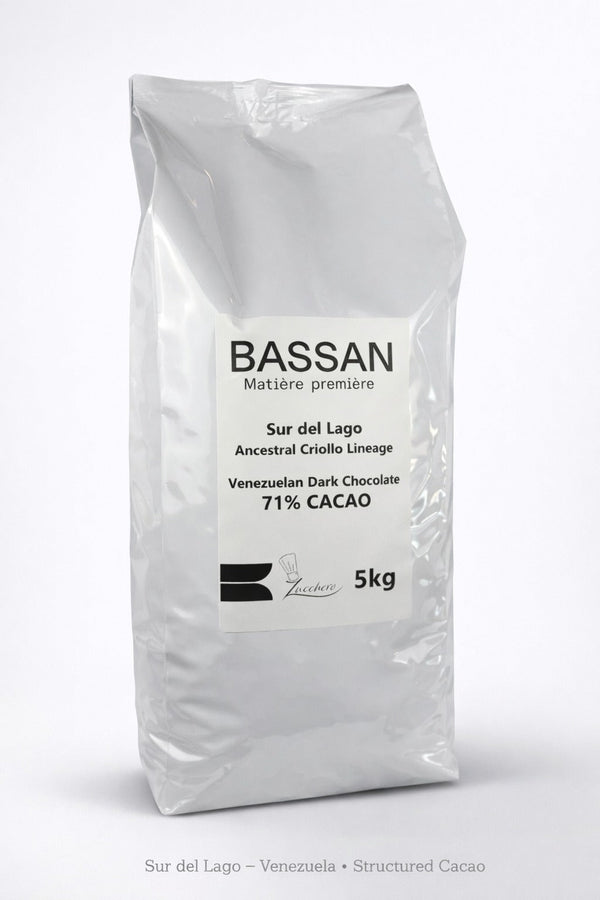 Bassan ChocolateSur del Lago Ancestral Criollo Lineage Dark Chocolate 71%From $69.95 CADView product →
 FCH OriginsDark Chocolate Venezuelan Blend 55% Sticks 2.27 Kg (5 lb)$62.50 CADView product →
 Canada Cacao Co.Natural Cocoa Liquor Wafers - 100% Peruvian Fine CocoaFrom $29.99 CADView product →
 Canada Cacao Co.Sur del Lago Ancestral Criollo Lineage Cocoa Beans · VenezuelaFrom $80.00 CADView product →
For professionals
Equipping a chocolate shop, bakery or kitchen?
Tell us what you produce and how much. We will recommend the right machine, moulds and ingredients, and send you a quote.
For home bakers
Professional tools for your own kitchen
The same European moulds, tools and ingredients the professionals use.
5% off orders over $500 CAD, applied automatically at checkout.
Keep reading


Leave a comment
All comments are moderated before being published.
This site is protected by hCaptcha and the hCaptcha Privacy Policy and Terms of Service apply.