


How to Mold Chocolate: Step-by-Step Technique for Polycarbonate and Silicone Molds
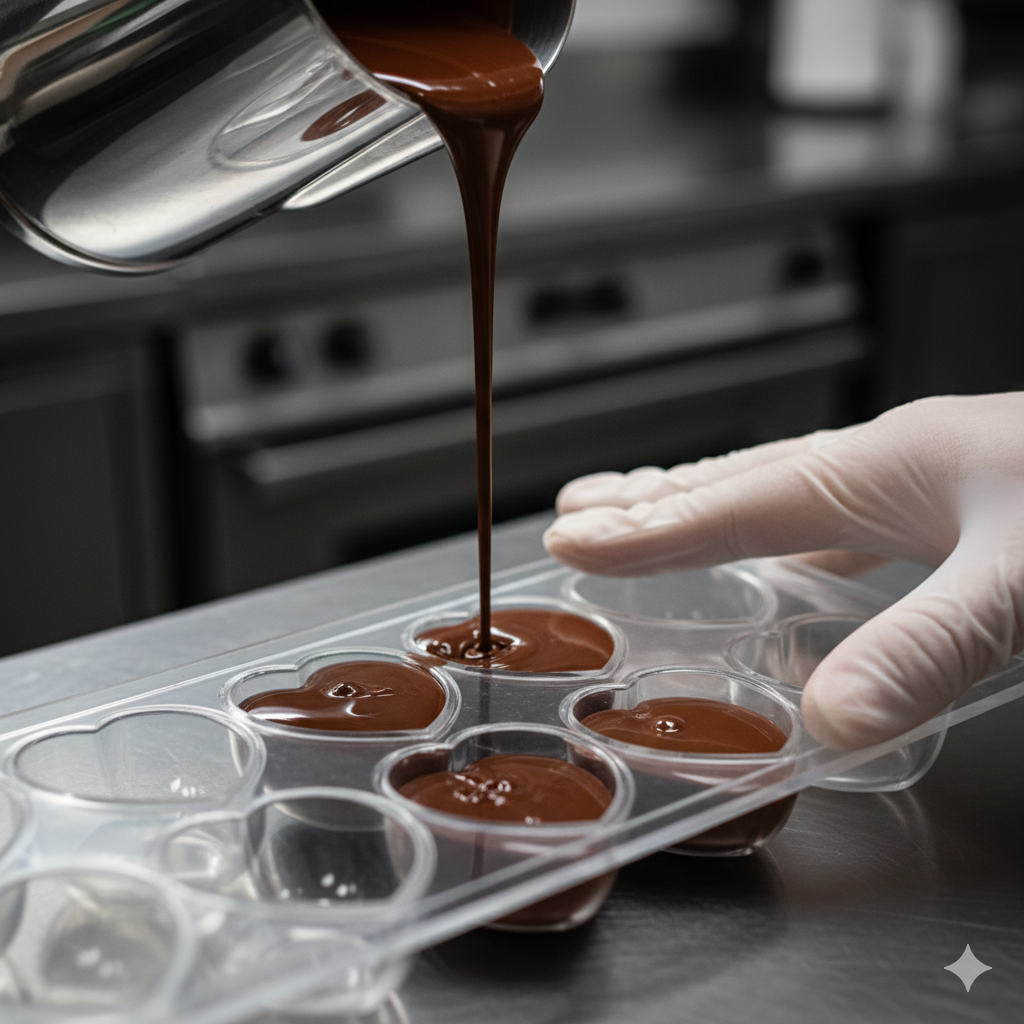
Short answer: to mold chocolate, use tempered real chocolate and a clean, dry mould at about 20°C (68°F). Fill the cavities, vibrate or tap out the air, and for hollow bonbons turn the mould over to empty it so a thin shell remains. Scrape the top clean, let it crystallise, fill to about three-quarters, seal with tempered chocolate, let it set at room temperature or briefly at about 18°C (64°F), then turn the mould over and tap to release. Tempered chocolate contracts as it sets, which is what frees it from a polycarbonate mould; silicone moulds release because they flex.
| Your need | What we recommend | Price |
|---|---|---|
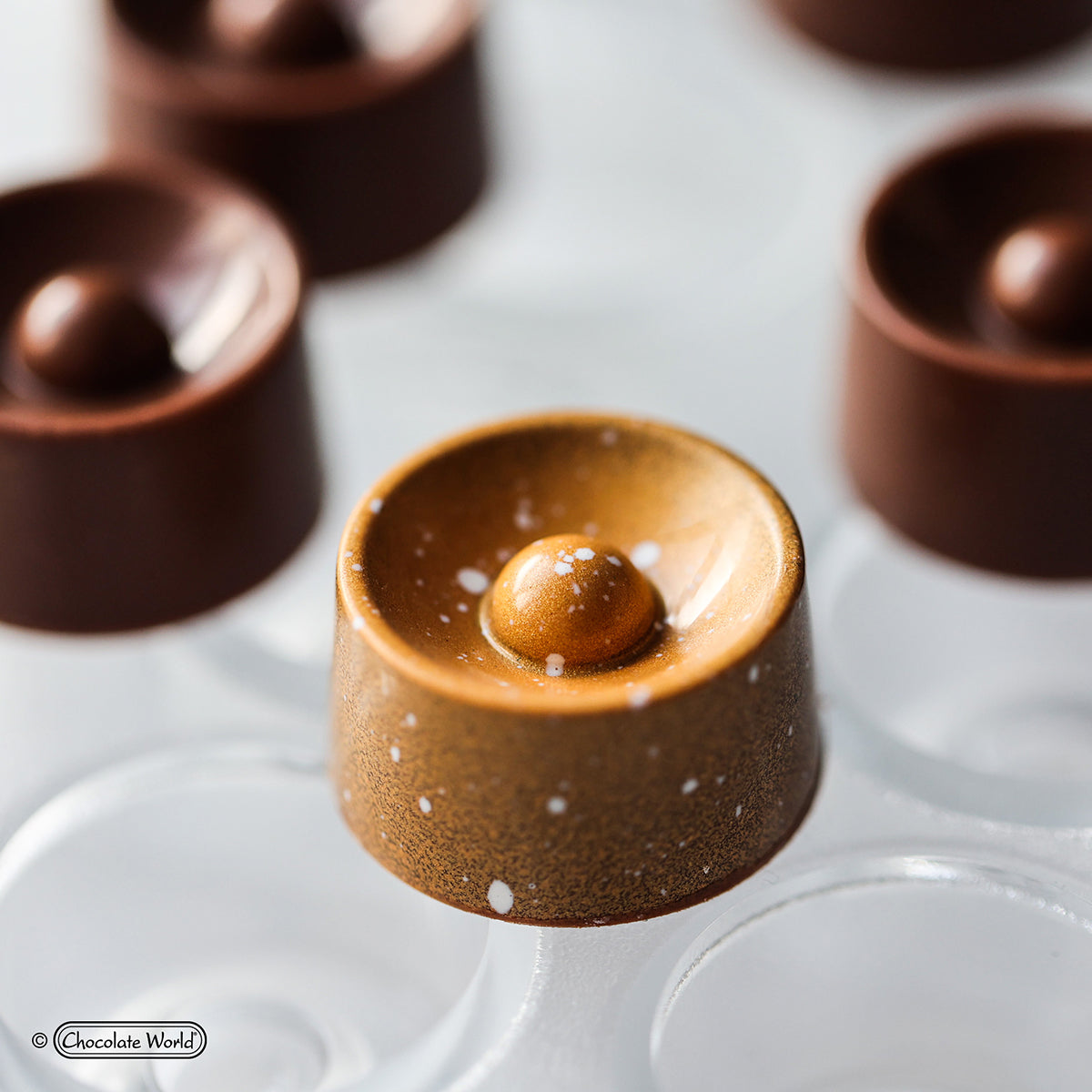
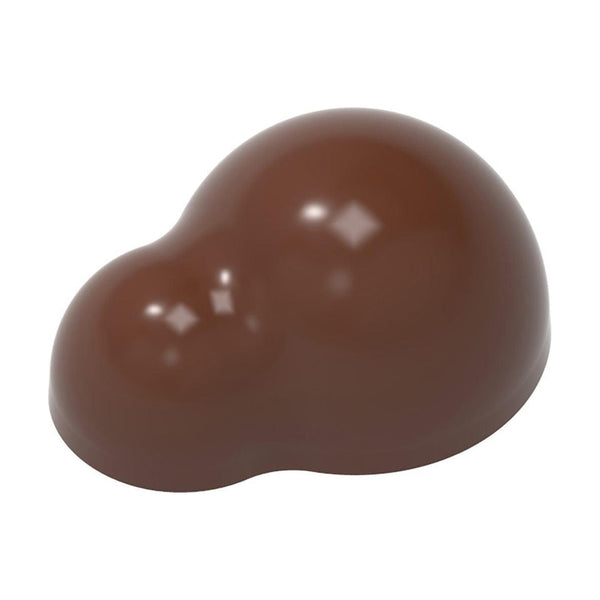
| A polycarbonate mould for filled bonbons | Chocolate World × Andrey Dubovik mould CW1921, 21 cavities | $39.95 CAD |
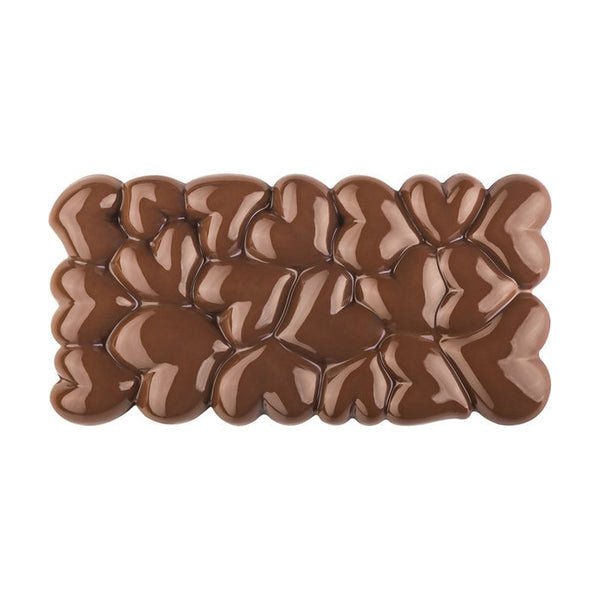
| A bar mould | Pavoni Italia Eros bar mould PC5028FR (Tritan) | $46.99 CAD |
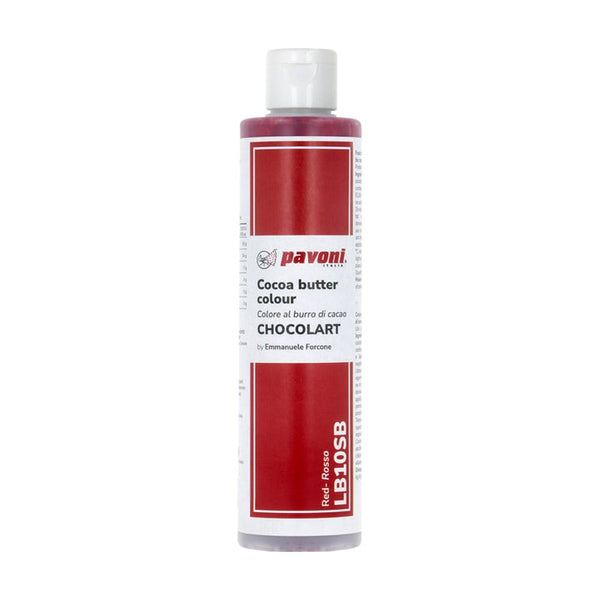
| Colour inside the mould | Pavoni Chocolart red cocoa butter, 200 g | $79.99 CAD |
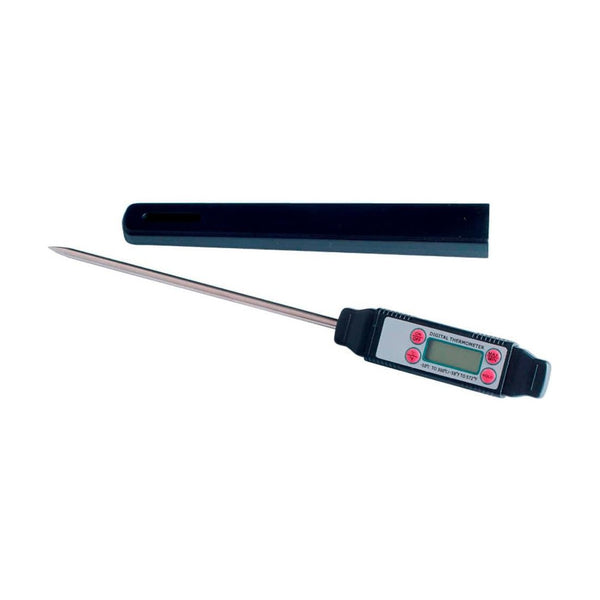
| Check chocolate temperature | Martellato digital thermometer 50T001 | $29.95 CAD |
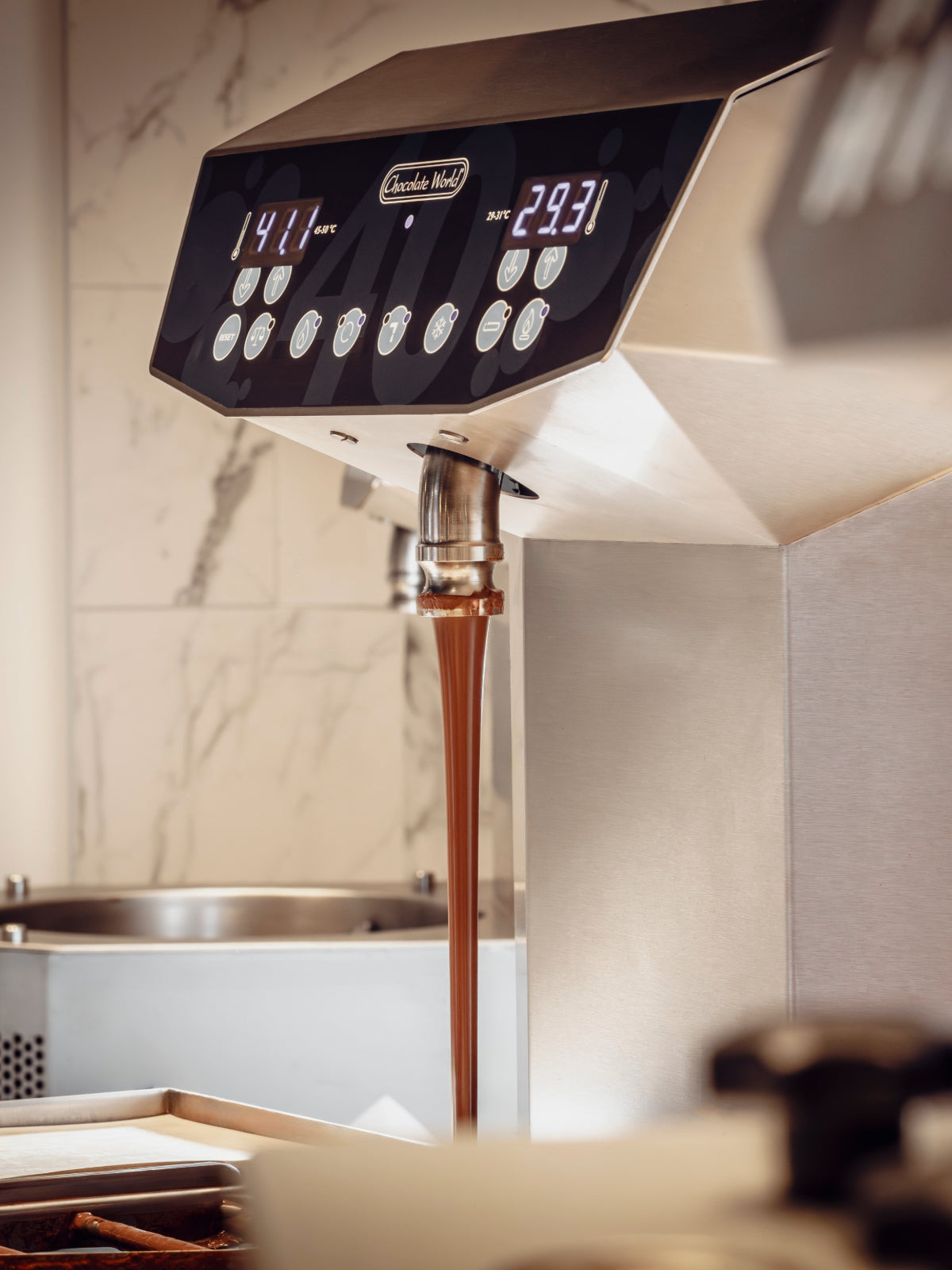
| Keep tempered chocolate at working temperature | Meltinchoc Digital melter, 3.6 L | $1,150.00 CAD |
Polycarbonate vs silicone molds: which for which job
Rigid polycarbonate (or Tritan) moulds are for glossy bonbons and bars in tempered chocolate; flexible silicone moulds are for pastry, inserts and frozen desserts.
| Polycarbonate / Tritan (Chocolate World, Pavoni Italia) | Silicone (Pavoni Italia Pavoflex) | |
|---|---|---|
| Best for | Pralines, bonbons, ganache-filled shells, bars | Individual desserts, baked and blast-chilled preparations |
| How the piece releases | Tempered chocolate contracts as it crystallises | The flexible mould peels away |
| Temperature range | 5°C to 80°C (41–176°F) for Chocolate World moulds | −40°C to +250°C (−40°F to 482°F) |
| Washing | Detergent for polycarbonate, about 60°C (140°F); CW1921 is dishwasher safe on the top rack | Dishwasher safe |
Choosing a mould? See how to choose a chocolate mold.
Before you start: tempered chocolate is not optional
Only tempered real chocolate releases cleanly from a rigid mould; compound coating and untempered chocolate do not.
Good tempering makes chocolate crystallise quickly with maximal contraction, which facilitates mould release, and gives a high gloss (Lonchampt and Hartel, 2004). BCcampus adds that compound coatings do not set firmly enough to come out of a mould, while properly tempered cocoa butter chocolate shrinks slightly. Follow your couverture's curve: our Bassan Sur del Lago 71% melts at 50°C (122°F) at most and is worked at 30–32°C (86–90°F); the FCH 55% is tempered at 31–32°C (88–90°F). The difference is explained in tempered vs untempered chocolate.
Step 1: Clean and dry the mould
Every new mould needs a wash before its first use, and every mould must be completely dry before chocolate goes in.
Chocolate World recommends cleaning polycarbonate moulds before first use (they can carry dust and oil), washing at about 60°C (140°F) with a detergent made for polycarbonate, rinsing with demineralised water and drying with warm air at no more than 70–80°C (158–176°F), or 65°C (149°F) for magnetic moulds. The full routine is in how to clean polycarbonate chocolate molds.
Step 2: Colour the mould (optional)
Coloured bonbons get their colour from tempered coloured cocoa butter applied inside the cavities before the chocolate.
- Apply a thin, even layer with a spray gun or airbrush, making sure every cavity is covered.
- Let the cocoa butter crystallise completely. Chocolate World's guideline: the mould should be around 20°C (68°F) before you fill it.
- For two-colour effects, Chocolate World sprays a second colour over the first once the decoration has crystallised.
Pavoni Italia's Chocolart cocoa butter colours come ready to use in 200 g, E171-free, in 14 shades for colouring in the mass, on the surface and in the mould, from $79.99 CAD; metallics such as Chocolart gold are $109.00 CAD. For plant-based colour, Pavoni's Seasons line uses natural plant extracts ($69.00–$83.00 CAD). Magnetic moulds are the other way to decorate: a transfer sheet is clamped between the frame and the metal base, and its print adheres to the chocolate as it cools (Chocolate World). See magnetic moulds.
Step 3: Fill the mould and remove the air
Fill every cavity completely with tempered chocolate, then vibrate or tap the mould to bring air bubbles to the surface.
If you temper by hand, Chocolate World suggests filling the cavities with a piping bag. In production, a vibrating table removes air bubbles and distributes the chocolate evenly (Pomati); the Bilait Adam K6 tempering machine has a heated vibrating table and a stop & go pedal for dosing.
Step 4: Make the shells (hollow bonbons)
For filled bonbons, empty the mould while the chocolate on the walls begins to set, leaving a thin shell.
- Overfill the cavities with tempered chocolate and shake or vibrate the mould for a short time; the chocolate starts to solidify from the cavity wall inward.
- Turn the mould over and shake out the surplus chocolate; collect it to re-temper and reuse.
- Scrape the top of the mould clean with a scraper so the rims are flat and neat.
- Let the shells crystallise before filling.
This is the conventional shell-moulding sequence described by Aasted-Mikroverk in its 1994 moulding patent. For solid pieces such as bars, skip the emptying: fill, scrape and let set.
Step 5: Fill the shells
Fill the shells to about three-quarters with a filling at the right temperature, then let it set before closing.
In Chocolate World's chef recipes, Buddy Trinidad fills cavities to three-quarters and lets the ganache set; Andrey Dubovik, for the CW1921 mould, makes his ganache by mixing melted chocolate with the cream at about 40°C (104°F) and fills the shells at 29–30°C (84–86°F). Chocolate World also warns not to pour fillings, such as sugar- or alcohol-based ones, straight into the mould: they go inside a chocolate shell.
Step 6: Seal the bonbons
Close each bonbon with a layer of tempered chocolate and scrape the mould flat.
Chocolate World's recipes cover and seal the pralines with tempered chocolate; Juliana Badaró finishes with an acetate sheet on top to get a smooth bottom.
Step 7: Crystallise and demould
Let the chocolate set completely, then turn the mould over and tap gently: well-tempered chocolate drops out.
- Setting: depending on the chocolate, the shape and the room, leave the mould at room temperature or place it briefly in a cool room or chocolate fridge at around 18°C (64°F) (Chocolate World). Bassan's sheet for its 71% says to crystallise at 16–18°C (61–64°F), then demould.
- Not too cold, not too fast: cooling too fast can create unstable crystals, hair cracks and pores on the surface, both of which promote bloom (Lonchampt and Hartel).
- Demoulding: minimise twisting, demould with a material softer than polycarbonate, and use several gentle taps rather than one hard strike (Chocolate World).
If the chocolate sticks, it is usually a tempering problem: see tempering chocolate troubleshooting. For maximum gloss, follow the shiny bonbons guide.
Molding chocolate in silicone molds
Silicone moulds release by flexing, so they suit pastry and frozen preparations; for chocolate pieces that must shine and snap, temper the chocolate anyway.
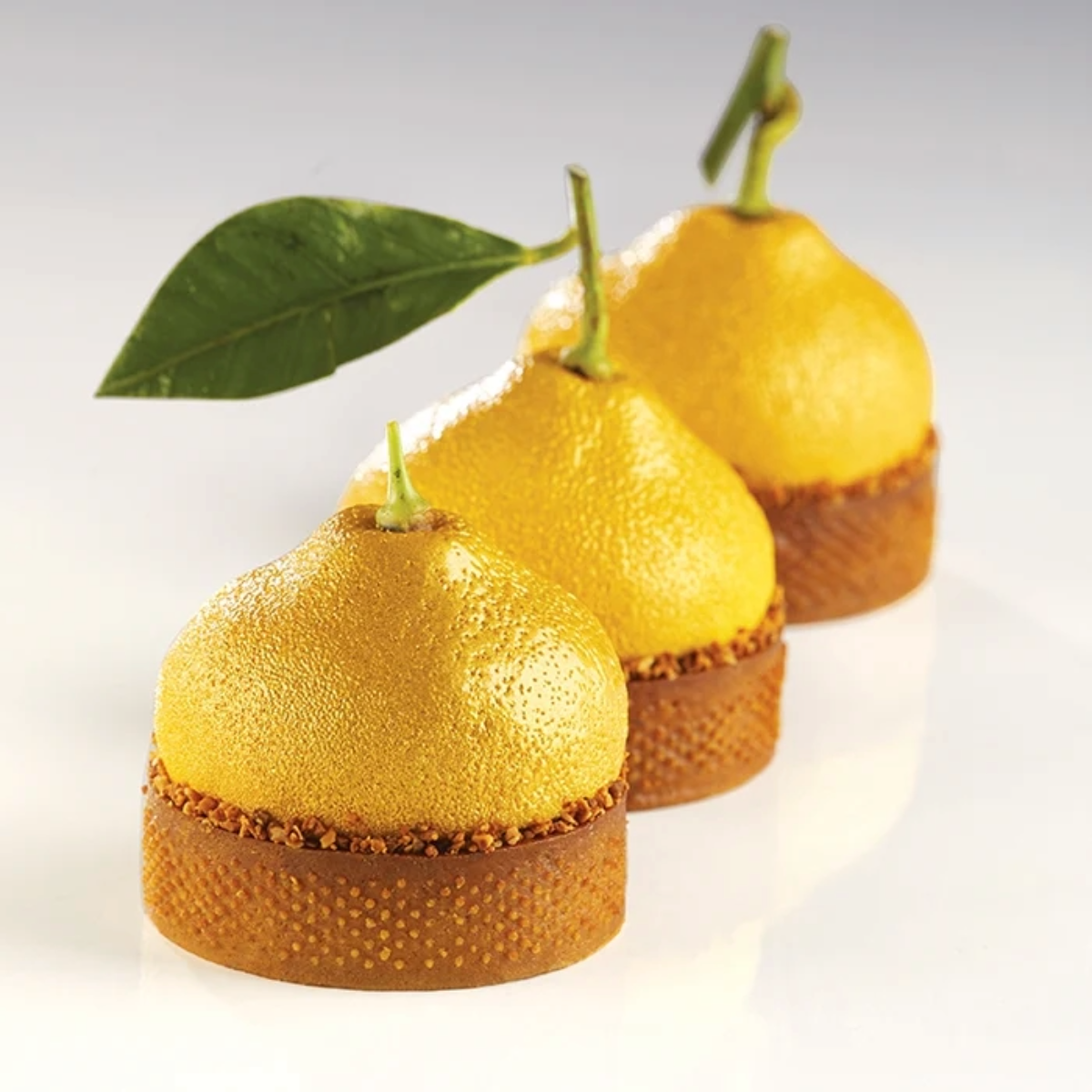
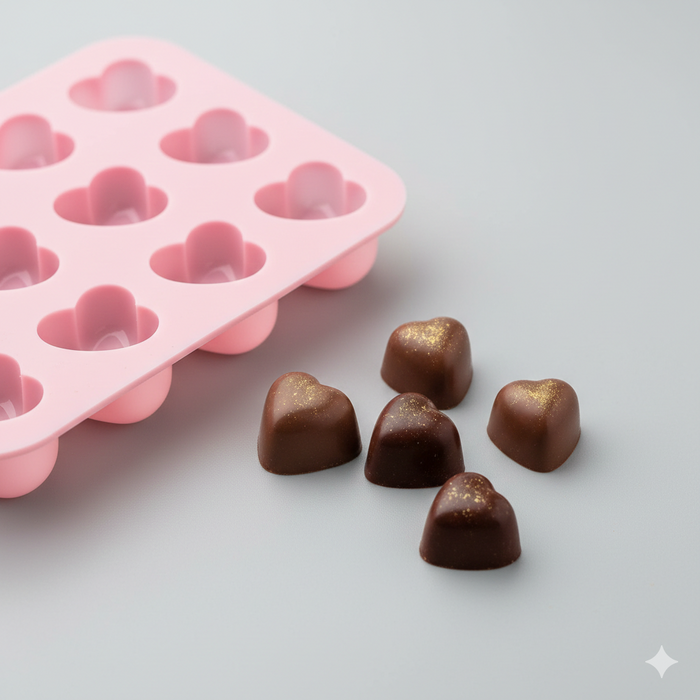
Pavoni Italia's Pavoflex moulds are platinum food-grade silicone, dishwasher safe and usable in the oven and blast chiller from −40°C to +250°C. Fill, chill or freeze, then peel the mould away. Shine and snap still come from tempering, not from the mould material (KREA Swiss; Greweling). Try a Pavoflex Heart mould by Gianluca Fusto ($40.50 CAD), and read how to use silicone molds and how to make chocolate hearts with a silicone mold.
Equipment by production size
Hand moulding works for small runs; as volume grows, the bottleneck is keeping chocolate tempered and filling moulds fast.
| Stage | Equipment | What it gives you |
|---|---|---|
| Starting out | Thermometer + hand tempering | Control of each step; KREA Swiss notes hand cooling works for a few hundred grams |
| Small lab | Meltinchoc Digital | Melts at 45°C (113°F), signals seeding, holds 31°C dark, 29°C milk, 28°C white (88/84/82°F) |
| Daily production | Pavoni MiniTemper ($3,350.00 CAD) | Runs the full curve, 3.5 kg, 5 programmable presets, interchangeable basin |
| Moulding at volume | Bilait Adam K6 ($10,990.00 CAD) | 6 kg; tempers 20 kg in 4.5 hours, up to 45 kg a day; heated vibrating table; 230 V single-phase |
How AI can help your production
Give an AI assistant your mould's cavity weight and count (the CW1921 makes 21 pieces of 10.5 g) and your recipe, and ask it to calculate how much chocolate and filling a run of 10 moulds needs, with a shopping list. Ask it to turn the seven steps above into a one-page SOP with temperatures and checkpoints, and to keep a batch log of room temperature, setting time and demoulding results so you see what works in your kitchen.
AI organises the information; tasting and the final decision stay with your chef.
Chocolate moulds at Zucchero Canada
We are an authorized distributor of Chocolate World, Pavoni Italia and Martellato. Each range has its job:
- Chocolate World polycarbonate moulds → Belgian moulds for bonbons, pralines and chef designs, including magnetic moulds for transfer sheets.
- Pavoni Italia chocolate moulds → including bar moulds in BPA-free Tritan such as the Eros, plus the Chocolart colours.
- Martellato chocolate moulds → alongside the Meltinchoc melters that keep your chocolate ready.
- Pavoni Italia silicone moulds → Pavoflex, Formaflex and more for pastry and frozen desserts.
Our moulds are stocked in Calgary and ship across Canada; moulds count toward free shipping on orders of CAD 300 or more (remote areas and the territories pay the actual carrier rate), and orders over CAD 500 get 5% off automatically. For couverture, the Bassan Sur del Lago 71%, made in Canada from Venezuelan cacao, is made for moulded bonbons and tablets ($273.00 CAD per 5 kg). Questions about which mould fits your production? Contact our team or call 587-774-8873 (toll free 877-741-8251); we work with chocolatiers and pastry chefs across Canada.
Chocolate moulds | Bonbon & praline moulds | Coloured cocoa butter | Cleaning polycarbonate moulds | How to temper chocolate
This article is for information only. Every business is different: draw your own conclusions based on your own expectations, budget and goals, and talk to qualified experts before you decide or invest.
Sources: Chocolate World, "How to Use Chocolate World × Makeat Silicone Stamps" and "Magnetic moulds" (chocolateworld.be, 2026) and Moulds catalogue Edition 15 ("Cleaning polycarbonate moulds", "Usage of the moulds", Chef's Signature recipes); Aasted-Mikroverk, EP 0 589 820 A1 (1994); P. Lonchampt and R. W. Hartel, Eur. J. Lipid Sci. Technol. 106 (2004); BCcampus, Understanding Ingredients for the Canadian Baker, §7.03; KREA Swiss Knowledge; P. Greweling, Pastry Arts Magazine (2024); Pavoni Italia Food Equipment 2026 catalogue and product data; Bilait catalogue 2026; Martellato Digital Meltinchoc manual; Bassan and FCH technical data.
Good to know
Frequently asked questions
How do you mold chocolate in a polycarbonate mold?
Use tempered chocolate and a clean, dry mould at about 20°C (68°F). Fill the cavities, vibrate or tap out the air, turn the mould over to empty it for shells, scrape the top, let the shells crystallise, fill to three-quarters, seal with tempered chocolate, let it set, then turn the mould over and tap gently to release.
Do you have to temper chocolate for molds?
Yes, for rigid polycarbonate or Tritan moulds. Well-tempered chocolate crystallises with maximal contraction, which is what releases it from the mould and gives it gloss. Compound coatings and untempered chocolate do not set firmly enough to come out cleanly.
Why is my chocolate sticking to the mold?
Usually it is a tempering problem: well-tempered chocolate contracts as it crystallises, and that contraction is what frees it from the mould. Let it crystallise completely before demoulding, at room temperature or briefly at around 18°C (64°F), then demould with several gentle taps rather than one hard strike.
What temperature should a chocolate mold be?
Chocolate World's guideline is a mould at around 20°C (68°F) before you fill it, for example after the coloured cocoa butter has crystallised. Its polycarbonate moulds can be used between 5°C and 80°C (41–176°F).
Can you use silicone molds for chocolate?
Yes. Silicone moulds release by flexing; temper the chocolate anyway if you want shine and snap. Pavoni Italia's Pavoflex silicone moulds work from −40°C to +250°C and are dishwasher safe.
Do chocolate molds qualify for free shipping?
Yes. Moulds count toward free shipping on orders of $300 CAD or more within Canada; remote areas and the territories pay the actual carrier rate. Orders over $500 CAD also get 5% off automatically at checkout. Chocolate and machines are excluded from free shipping.
Shop this article
Products mentioned in this guide
For professionals
Equipping a chocolate shop, bakery or kitchen?
Tell us what you produce and how much. We will recommend the right machine, moulds and ingredients, and send you a quote.
For home bakers
Professional tools for your own kitchen
The same European moulds, tools and ingredients the professionals use.
5% off orders over $500 CAD, applied automatically at checkout.
Keep reading


Leave a comment
All comments are moderated before being published.
This site is protected by hCaptcha and the hCaptcha Privacy Policy and Terms of Service apply.