
Does Chocolate Help with Period Cramps? What the Science Says
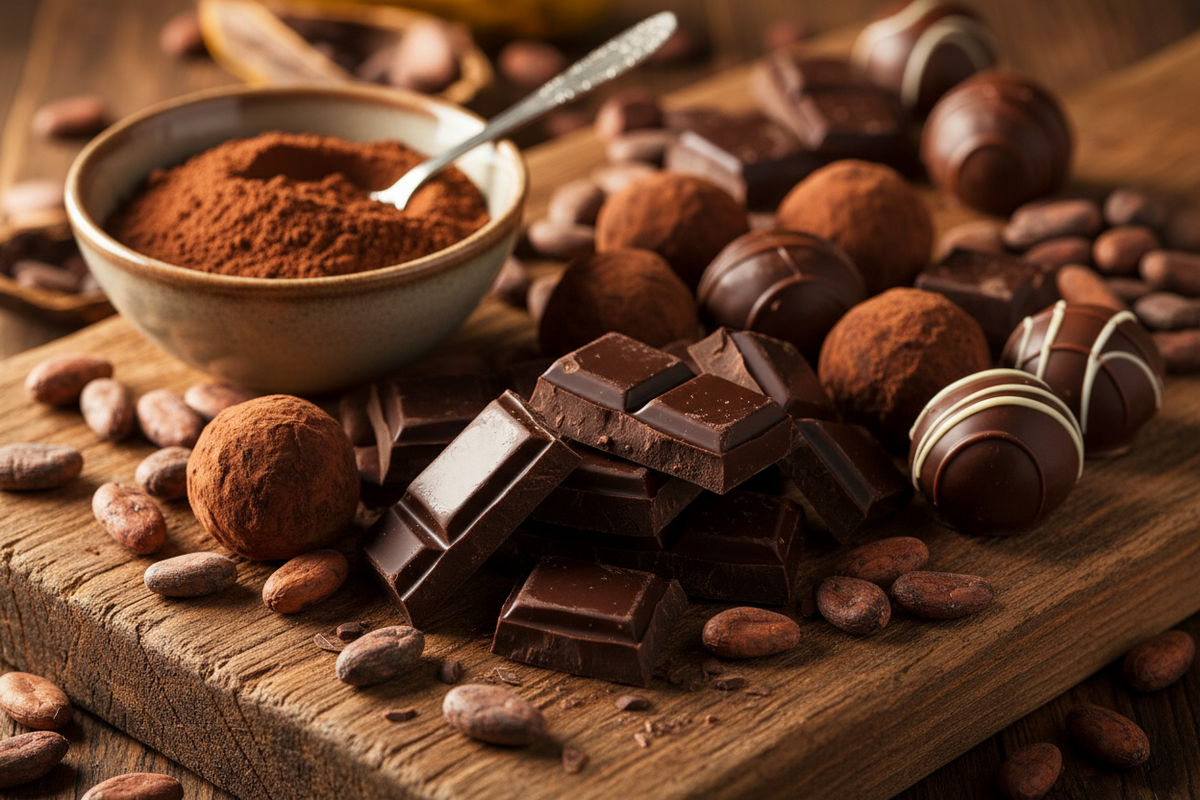
Short answer: the evidence that chocolate helps with period cramps is limited. In one small randomized trial, 15 young women who ate 35 g of 70% dark chocolate on the first day of their period reported less pain two hours later, but ibuprofen was the most effective treatment and the participants knew what they were taking. Dark chocolate does contain magnesium, about 65 mg per ounce at 70–85% cacao according to USDA data, yet a Cochrane review found no high-quality evidence that any dietary supplement relieves period pain. Enjoy chocolate if it comforts you, but do not rely on it as a treatment.
This article is for general information only and is not medical or nutritional advice. Always consult your doctor, pharmacist or a registered dietitian about your own situation, especially during pregnancy or breastfeeding, or if you have diabetes, allergies or a medical condition.
Does chocolate help with period cramps? What the studies show
Only a handful of studies have looked at chocolate and period pain directly, and they are small; none shows that chocolate works as well as a painkiller.
| Study | What was tested | What it found |
|---|---|---|
| Nuha et al., International Journal of Environmental Research and Public Health, 2023 (randomized, 45 women aged 17–21) | A single dose of 35 g of 70% dark chocolate, 330 ml of green coconut water or 400 mg of ibuprofen on the first day of the period; pain measured before and 2 hours after | In the chocolate group, 7 of 15 women reported severe pain before and none after; 5 reported no pain after. Ibuprofen was the most effective of the three. Participants could not be blinded and only one dose was tested. |
| Pattanittum et al., Cochrane review "Dietary supplements for dysmenorrhoea", 2016 (27 randomized trials, 3,101 women) | Herbal and non-herbal supplements (including vitamins, zinc and fish oil) against placebo, no treatment or painkillers | "There is no high quality evidence to support the effectiveness of any dietary supplement for dysmenorrhoea, and evidence of safety is lacking." |
| Küçük et al., BMC Complementary Medicine and Therapies, 2026 (survey of 199 women) | Which non-drug methods women with period pain actually use | 32.8% of the women using non-drug methods ate dark chocolate. The authors stress that their design cannot show whether any method works. |
In short, chocolate is a popular comfort during periods, and one small trial is encouraging, but the research is not strong enough to call it a remedy.
Why chocolate is linked to period cramps
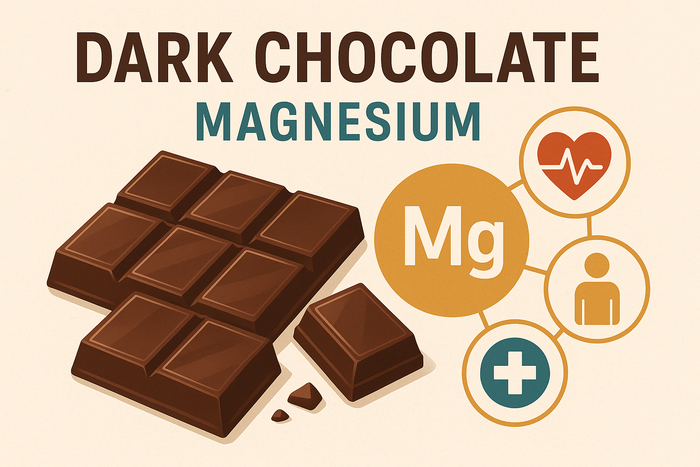
The usual explanation is magnesium: dark chocolate is a real source of it, although there is no proof that the amount in chocolate eases cramps.
| Per USDA FoodData Central | Magnesium per 100 g | Magnesium per 1 oz (28 g)* |
|---|---|---|
| Dark chocolate, 70–85% cacao | 228 mg | about 65 mg |
| Dark chocolate, 60–69% cacao | 176 mg | about 50 mg |
| Dark chocolate, 45–59% cacao | 146 mg | about 41 mg |
| Milk chocolate | 63 mg | about 18 mg |
| Cocoa powder, unsweetened | 499 mg | about 141 mg |
*Calculated by us from USDA values per 100 g (1 oz = 28.35 g).
For comparison, the U.S. National Institutes of Health sets the Recommended Dietary Allowance of magnesium at 310 mg a day for women aged 19–30 and 320 mg for women aged 31–50, so an ounce of 70–85% dark chocolate provides about a fifth of it (our calculation). A 2020 review of 16 clinical trials of micronutrient supplements listed magnesium among those reported to help with period pain, but its authors concluded that more studies are needed to confirm their safety and effectiveness (Saei Ghare Naz et al., Journal of Caring Sciences, 2020). Those trials tested supplements, not chocolate.
For the full picture of magnesium in chocolate, read how much magnesium is in dark chocolate.
Why do I crave chocolate on my period?
Research points more to culture than to the body: a study of 275 women found that menstrual chocolate craving was significantly less common among women born outside the United States.
The authors note that almost 50% of American women crave chocolate around the start of their period, and that research does not support the popular explanations based on physiological factors. In their sample, 17.3% of foreign-born women reported menstrual chocolate craving, against 32.7% of women born to U.S.-born parents and 40.9% of second-generation immigrants (Hormes and Niemiec, PLoS One, 2017).
Dark or milk chocolate: what is in an ounce
If you reach for chocolate during your period, 70–85% dark chocolate gives you more magnesium and less sugar per ounce than milk chocolate, but also more caffeine.
| Per 1 oz (28 g)* | Dark chocolate 70–85% | Milk chocolate |
|---|---|---|
| Magnesium | about 65 mg | about 18 mg |
| Total sugars | about 6.8 g | about 14.6 g |
| Caffeine | about 23 mg | about 6 mg |
| Energy | about 170 kcal | about 152 kcal |
*Calculated by us from USDA FoodData Central values per 100 g: dark 70–85% 228 mg magnesium, 24.0 g total sugars, 80 mg caffeine, 598 kcal; milk chocolate 63 mg, 51.5 g, 20 mg, 535 kcal.
Health Canada recommends a maximum of 400 mg of caffeine a day for adults. More detail in our articles on caffeine in dark chocolate and sugar in dark chocolate.
What actually relieves period pain, and when to see a doctor
The NHS lists simple self-help measures for period pain: a warm bath or shower, a heat pad or hot water bottle wrapped in a tea towel on your tummy, gentle exercise such as yoga, swimming, walking or cycling, and painkillers such as paracetamol or ibuprofen.
It advises seeing a doctor if your periods become more painful, heavier or irregular, or if period pain stops you doing your usual daily activities, and getting urgent advice if pelvic or period pain is severe or worse than usual and painkillers have not helped. Ask your pharmacist which painkiller suits you.
For producers: dark chocolate bars and tablets
Dark chocolate is one of the comforts people reach for during their period, as the survey above shows, so a dark tablet with its cacao percentage clearly on the label has a place in your range; sell it on taste and origin, never as a remedy.
| What you need | Product | Price |
|---|---|---|
| A 71% single-origin couverture for tablets | Bassan Sur del Lago 71%, 5 kg | $273.00 |
| Classic 100 g retail tablets | Chocolate World Tablet 100 g mould CW2162 (3 tablets) | $44.95 |
| A designer bar for gift ranges | Pavoni Hexa bar mould by Vincent Vallée, PC5029FR | $46.99 |
| Your own bean-to-bar chocolate | Sur del Lago cocoa beans, Venezuela, 1.5 kg | $80.00 |
- Bassan Sur del Lago 71%: made in Canada from Venezuelan Trinitario cacao with ancestral Criollo lineage, with notes of fruit, wood and nuts, low in acidity and astringency; for tablets, moulded bonbons, ganaches and entremets.
- Chocolate World CW2162: polycarbonate mould that casts 3 tablets of 100 g, for retail bars and gift products.
- Pavoni Hexa PC5029FR: bar mould designed by Vincent Vallée, in BPA-free Tritan, for a glossy, sharply defined bar.
- Sur del Lago beans: Trinitario cacao with 10–30% ancestral Criollo lineage from the southern basin of Lake Maracaibo.
View chocolate bar and tablet moulds →
How AI can help your production
Give an AI assistant your tablet recipe in grams and the nutrition data from your couverture's technical sheet, and ask it to calculate magnesium, sugar and caffeine per tablet and per serving as a draft for your own records. Ask it to plan a weekly moulding schedule from your tablet sales, mould count and cavities per mould. Have nutrition figures you print checked against lab results or your supplier's data.
AI organises the information; tasting and the final decision stay with your chef.
Dark chocolate and moulds at Zucchero Canada
We stock couverture, cacao beans and Chocolate World, Pavoni and Martellato moulds for chocolatiers and pastry chefs across Canada. Bassan's Sur del Lago 71% is made in Canada from Venezuelan cacao, and our Venezuelan beans come through Canada Cacao Co. Food products ship within Canada only, and moulds count toward our free shipping on selected products within Canada (details in the FAQ below).
Buying for a chocolate shop or production kitchen? Contact us for volume orders, write to sales@zuccherocanada.ca or call 587-774-8873 (toll free 877-741-8251).
Dark couverture | Bar & tablet moulds | Raw cocoa beans | Magnesium in dark chocolate | Caffeine in dark chocolate
This article is for information only. Every business is different: draw your own conclusions based on your own expectations, budget and goals, and talk to qualified experts before you decide or invest.
Sources: Nuha K, Rusmil K, Ganiem AR, Permadi W, Diah Herawati DM, "Single-blind randomized controlled trial: comparative efficacy of dark chocolate, coconut water, and ibuprofen in managing primary dysmenorrhea", International Journal of Environmental Research and Public Health 20(16):6619, 2023; Pattanittum P et al., "Dietary supplements for dysmenorrhoea", Cochrane Database of Systematic Reviews 2016, CD002124; Küçük S, Avcı S, Sevil Ü, BMC Complementary Medicine and Therapies 26:276, 2026; Saei Ghare Naz M et al., "The effect of micronutrients on pain management of primary dysmenorrhea", Journal of Caring Sciences 9(1):47–56, 2020; Hormes JM, Niemiec MA, "Does culture create craving? Evidence from the case of menstrual chocolate craving", PLoS One 12(7):e0181445, 2017; USDA FoodData Central, entries 170271, 170272, 170273, 167587 and 169593; NIH Office of Dietary Supplements, "Magnesium — Fact Sheet for Health Professionals"; Health Canada, "Caffeine in foods"; NHS, "Period pain"; Zucchero Canada product data.
Good to know
Frequently asked questions
Does chocolate help with period cramps?
The evidence is limited. In one small randomized trial, women who ate 35 g of 70% dark chocolate on the first day of their period reported less pain two hours later, but ibuprofen worked best and the women knew what they were taking. A Cochrane review found no high-quality evidence that any dietary supplement relieves period pain.
Why does chocolate help with period cramps?
The usual explanation is magnesium: USDA lists about 65 mg per ounce of 70–85% dark chocolate, about a fifth of the daily allowance for adult women. Some supplement trials report magnesium among the micronutrients that may help with period pain, but reviewers say more studies are needed, and those trials tested supplements, not chocolate.
Why do I crave chocolate on my period?
Research points more to culture than to biology. A 2017 study found that menstrual chocolate craving was reported by 17.3% of foreign-born women in the study, against 32.7% of women born to U.S.-born parents, and its authors note that research does not support the popular physiological explanations.
Is dark or milk chocolate better during your period?
Per ounce, USDA data give 70–85% dark chocolate about 65 mg of magnesium and 6.8 g of sugar, against about 18 mg and 14.6 g for milk chocolate. Dark chocolate also has more caffeine, about 23 mg per ounce against 6 mg.
What helps period pain if chocolate does not?
The NHS lists a warm bath or shower, a heat pad or hot water bottle on your tummy, gentle exercise such as yoga, swimming or walking, and painkillers such as paracetamol or ibuprofen. See a doctor if your periods become more painful, heavier or irregular, or if the pain stops your usual activities.
Does chocolate qualify for free shipping at Zucchero Canada?
No. Cacao and chocolate are excluded from our free shipping on orders of $300 CAD or more, and food products ship within Canada only. Moulds do count toward free shipping. Orders over $500 CAD get 5% off automatically at checkout.
Shop this article
Products mentioned in this guide
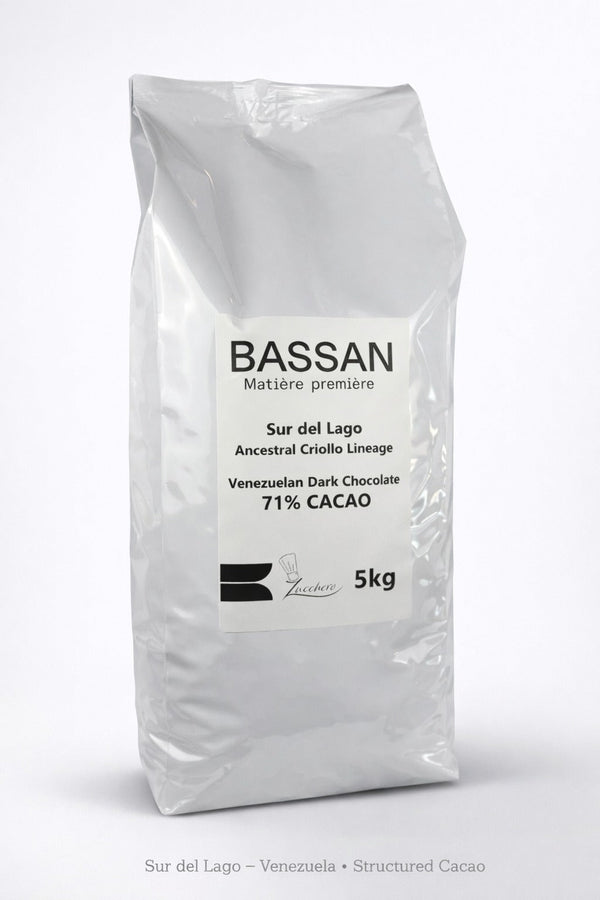 Bassan ChocolateSur del Lago Ancestral Criollo Lineage Dark Chocolate 71%From $69.95 CADView product →
 Chocolate WorldTablet 100 g Chocolate Mold CW2162From $44.95 CADView product →
 Pavoni ItaliaHexa Chocolate Bar Mold – Vincent Vallée PC5029FR$46.99 CADView product →
 Canada Cacao Co.Sur del Lago Ancestral Criollo Lineage Cocoa Beans · VenezuelaFrom $80.00 CADView product →
For professionals
Equipping a chocolate shop, bakery or kitchen?
Tell us what you produce and how much. We will recommend the right machine, moulds and ingredients, and send you a quote.
For home bakers
Professional tools for your own kitchen
The same European moulds, tools and ingredients the professionals use.
5% off orders over $500 CAD, applied automatically at checkout.
Keep reading


Leave a comment
All comments are moderated before being published.
This site is protected by hCaptcha and the hCaptcha Privacy Policy and Terms of Service apply.