What Is Dark Chocolate? Definition, Cacao Percentage and Uses
Short answer: dark chocolate is chocolate made from cocoa liquor, or cocoa butter with cocoa powder, plus a sweetener, with little or no milk. In Canada, "dark", "bittersweet", "semi-sweet" and plain "chocolate" share one standard: at least 35% total cocoa solids, of which at least 18% is cocoa butter and at least 14% fat-free cocoa solids, and less than 5% milk solids. The percentage on the label is the total cocoa solids; the rest is the sweetener and any minor ingredients.
| What you need dark chocolate for | Product | Price |
|---|---|---|
| Ganache, mousse, glazes, hot chocolate | FCH 55% dark chocolate minibars, Venezuela, 10 kg | $299.00 CAD |
| Breads, croissants, brioche | FCH 55% dark chocolate sticks, 2.27 kg | $62.50 CAD |
| Cookies, brownies, chocolate bark | Organic dark chocolate chips 70%, 1 kg | $45.95 CAD |
| Single-origin bonbons, tablets, entremets | Bassan Sur del Lago 71% dark couverture, 5 kg | $273.00 CAD |
| Raising the cacao percentage without adding sugar | Natural cocoa liquor wafers, 100% Peruvian cocoa, 1 kg | $29.99 CAD |
What is dark chocolate? The definition
Dark chocolate is defined by law, not by taste. Canada's food compositional standard gives one definition for "chocolate", "bittersweet chocolate", "semi-sweet chocolate" and "dark chocolate": cocoa liquor, cocoa liquor with cocoa butter, or cocoa butter with cocoa powder, combined with a sweetening ingredient. It may also contain less than 5% milk solids, spices, flavouring (other than flavourings that imitate chocolate or milk) and salt. The United States and the European Union also set a 35% minimum, measured slightly differently (see the table).
| Rule | Canada | United States | European Union |
|---|---|---|---|
| Names covered | Chocolate, bittersweet, semi-sweet, dark chocolate | Semisweet or bittersweet chocolate | Chocolate |
| Minimum cocoa | 35% total cocoa solids | 35% chocolate liquor | 35% total dry cocoa solids |
| Of which cocoa butter | At least 18% | Not set separately | At least 18% |
| Of which fat-free cocoa solids | At least 14% | Not set separately | At least 14% |
| Milk | Less than 5% total milk solids | Less than 12% total milk solids (sweet chocolate rule) | Not set in the chocolate definition |
What the cacao percentage means
The percentage is the share of everything that comes from the cocoa bean: cocoa liquor plus any added cocoa butter or cocoa powder. A published research recipe for a 60% dark chocolate shows the arithmetic: 45% cocoa liquor plus 15% cocoa butter makes 60% cocoa content, and the other 40% is sugar (Guckenbiehl et al., 2024).
Two chocolates with the same percentage can still behave differently. The standard only sets minimums for cocoa butter and fat-free cocoa solids, so one 70% chocolate can carry more cocoa butter and another more fat-free cocoa solids. Research on dark chocolate found that viscosity falls as the fat content rises (Afoakwa et al., 2008, as cited by Guckenbiehl et al., 2024), so the one with more cocoa butter will usually flow more easily. For a full explanation, read what chocolate percentages really mean.
Dark, milk and white chocolate compared
The difference is how much cocoa and how much milk each one must contain. The Canadian standard:
| Type | Total cocoa solids | Cocoa butter | Fat-free cocoa solids | Milk |
|---|---|---|---|---|
| Dark chocolate | At least 35% | At least 18% | At least 14% | Less than 5% milk solids |
| Milk chocolate | At least 25% | At least 15% | At least 2.5% | At least 12% milk solids and 3.39% milk fat |
| White chocolate | Not set | At least 20% | Not set | At least 14% milk solids and 3.5% milk fat |
What is in dark chocolate
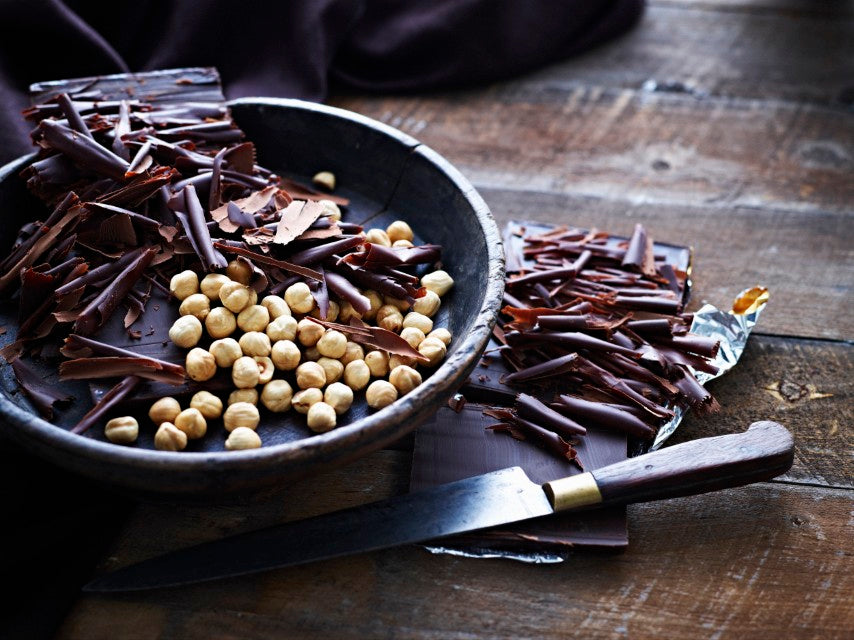
A dark chocolate ingredient list is short. Our FCH 55% dark chocolate, for example, lists cocoa liquor, cocoa fat, sugar and soy lecithin. Each part has a job:
- Cocoa liquor (cocoa mass): the ground cocoa nib, with not less than 50% cocoa butter under the Canadian standard.
- Cocoa butter: the fat of the bean; more of it makes the chocolate flow more easily. Read more in our guide to buying cocoa butter in Canada.
- Sugar: the sweetening ingredient; the higher the cacao percentage, the less room is left for it.
- Emulsifier, flavouring, salt: optional, depending on the recipe.
The cocoa solids also bring theobromine and caffeine: in non-fat cocoa bean solids they are about 4% and 0.2% of dry weight, and the amounts vary with fermentation and bean type (Barišić et al., 2019). See does dark chocolate have caffeine?
How dark chocolate is made
Dark chocolate goes from bean to bar in a fixed order (Barišić et al., 2019):
| Step | What happens | Read more |
|---|---|---|
| Fermentation and drying | Forms the flavour precursors that later steps need | Our cacao beans |
| Roasting | Maillard reactions form aroma compounds | How to roast cacao beans |
| Grinding and refining | Nibs become cocoa liquor; sugar and cocoa butter are mixed in and the particle size is reduced | What is chocolate liquor |
| Conching | Coats the particles with fat, removes moisture and volatile acids, sets the viscosity | What is conching |
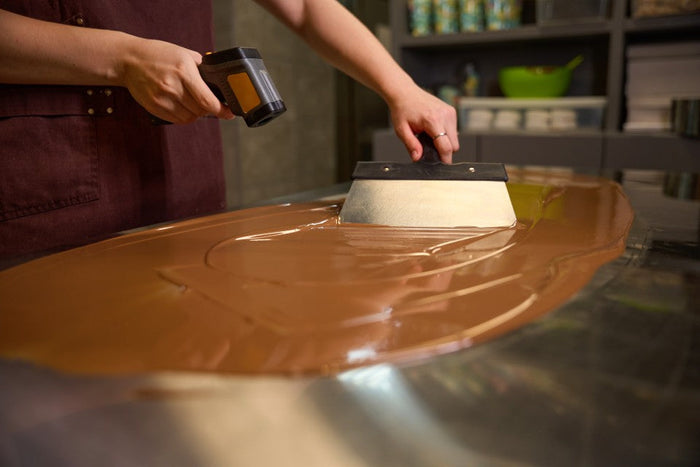
| Tempering | Forms stable, consistently sized cocoa butter crystals | How to temper chocolate |
Semi-sweet vs bittersweet: is there a difference?
Not in the rules. In Canada, semi-sweet, bittersweet and dark chocolate share one standard, and in the United States semisweet and bittersweet share the same 35% chocolate liquor minimum. Because the rules do not separate them, compare the cacao percentage and the ingredient list instead of the name.
What is dark chocolate good for?
In the kitchen, what a dark chocolate is good for depends on its format and percentage. The product data of the dark chocolates we sell maps each to its job:
| Dark chocolate | Recommended uses (product data) |
|---|---|
| FCH 55%, Venezuelan Trinitario, minibars | Coating fillings, moulding inclusions, airbrush spraying, glazes, ganaches, mousse, sponge cakes, baking creams, ice cream, hot chocolate |
| FCH 55% sticks, 5 g each (about 450 per 2.27 kg) | Breads, croissants, brioches |
| Organic chips 70%, Peru | Cookies, brownies, cakes, muffins, chocolate bark, coating fruit |
| Bassan Sur del Lago 71%, made in Canada | Ganaches, moulded bonbons, tablets, entremets, chocolate beverages |
For what research says about dark chocolate and health, read is dark chocolate good for you?
View dark chocolate couverture →
Working with dark chocolate: tempering
Every dark chocolate has its own tempering curve, so follow the maker's sheet. FCH gives these working conditions for its 55% dark chocolate:
| Step | FCH 55% dark chocolate |
|---|---|
| Melt | 45–50°C (113–122°F) |
| Crystallisation | 28–29°C (82–84°F) |
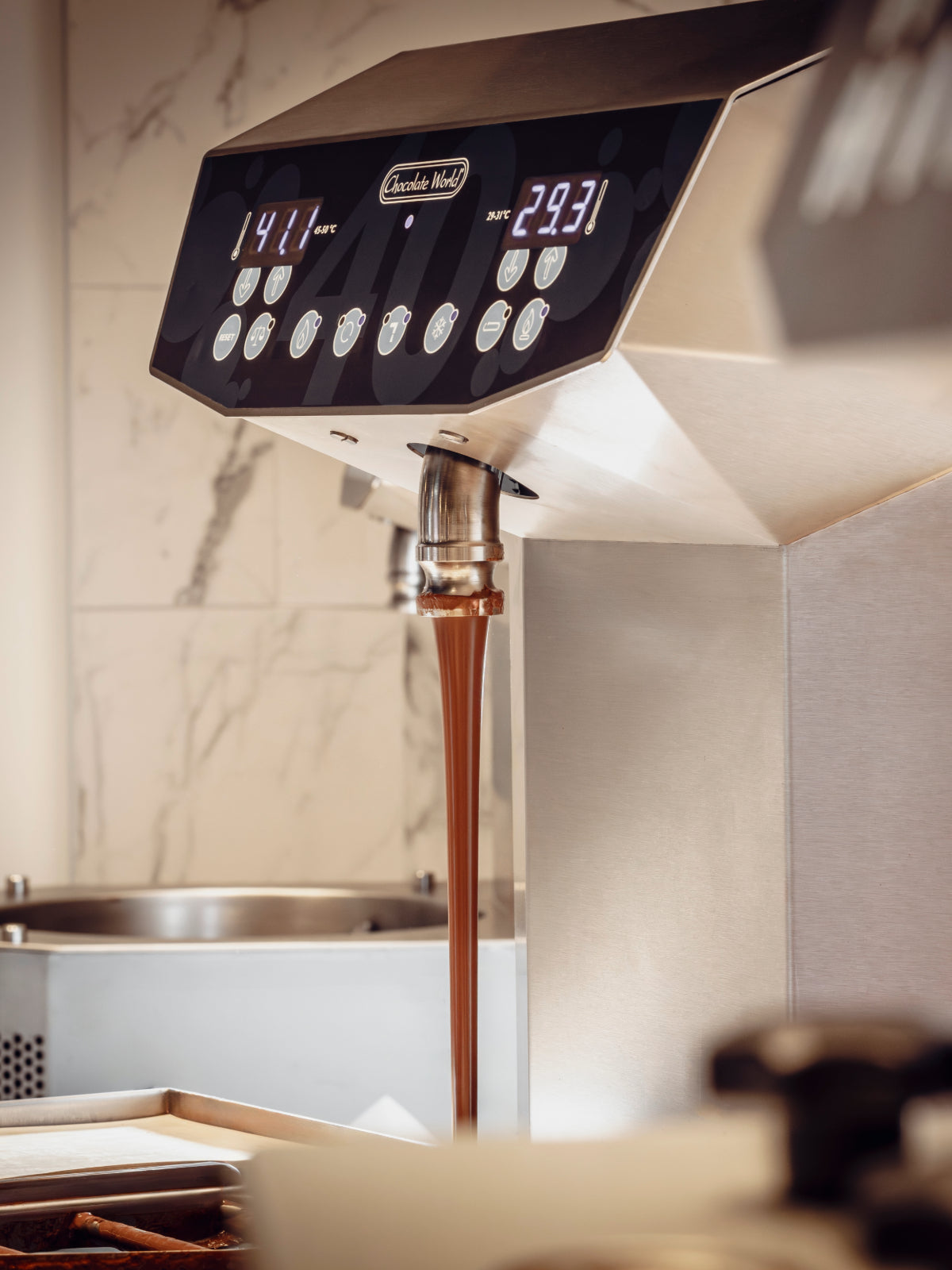
| Tempering (working temperature) | 31–32°C (88–90°F) |
Bassan's Sur del Lago 71% comes with a bilingual technical sheet. For volume work, a tempering machine holds the working temperature for you.
View chocolate tempering machines →
Making your own dark chocolate
To set your own percentage and origin, start from the bean or from cocoa liquor. Sur del Lago cocoa beans, Venezuela → from $80.00 CAD are Trinitario with 10–30% ancestral Criollo lineage, with fruity, woody and nutty notes and low acidity and astringency. Our natural cocoa liquor wafers are 100% Peruvian cocoa mass with no added fat or sugar.
For the theory and recipes, Chocolate by Ramon Morató → $160.00 CAD covers chocolate as a product, confectionery and chocolate making in 416 pages.
How AI can help your production
Give an AI assistant the cacao percentage of each chocolate you stock and ask it to calculate blends: for example, 900 g of a 55% chocolate plus 100 g of 100% cocoa liquor gives 1 kg at 59.5% cocoa solids. Ask it to scale ganache recipes, cost each recipe from your purchase prices, and keep a tempering log per chocolate with its melt, crystallisation and working temperatures.
AI organises the information; tasting and the final decision stay with your chef.
Dark chocolate at Zucchero Canada
From Calgary, we supply dark chocolate for professionals across Canada: FCH 55% Venezuelan minibars and sticks, organic 70% chips, and Bassan's Sur del Lago 71% single-origin couverture, plus cocoa liquor and cacao beans for those who make their own. Food products ship within Canada only. For volume and standing B2B orders, contact our team or call 587-774-8873 (toll free 877-741-8251).
Dark couverture | Cacao beans | Chocolate percentages | What is couverture? | Is dark chocolate good for you?
This article is for information only. Every business is different: draw your own conclusions based on your own expectations, budget and goals, and talk to qualified experts before you decide or invest.
Sources: CFIA, Canadian Food Compositional Standards, Volume 4 (Cocoa and Chocolate Products), 4.1.3, 4.1.6, 4.1.8 and 4.1.9; US 21 CFR 163.123 (sweet, semisweet and bittersweet chocolate); Directive 2000/36/EC, Annex I(A)(3); Barišić V. et al., "The Chemistry behind Chocolate Production", Molecules 24 (2019) 3163; Guckenbiehl Y. et al., Current Research in Food Science 9 (2024) 100909; FCH Origins, Bassan Chocolate and Canada Cacao Co. product data; Vilbo product data (Chocolate, Ramon Morató).
Good to know
Frequently asked questions
What is dark chocolate made of?
Cocoa liquor (ground cocoa nibs), or cocoa butter with cocoa powder, plus a sweetener. Recipes may add extra cocoa butter and an emulsifier such as soy lecithin; our FCH 55% dark chocolate, for example, lists cocoa liquor, cocoa fat, sugar and soy lecithin. Under the Canadian standard it may also contain less than 5% milk solids, spices, flavouring and salt.
What percentage of cacao makes chocolate dark?
In Canada, dark chocolate must contain at least 35% total cocoa solids, including at least 18% cocoa butter and at least 14% fat-free cocoa solids. The US sets 35% chocolate liquor for semisweet and bittersweet chocolate, and the EU 35% total dry cocoa solids for chocolate. The percentage on the label is the total cocoa solids; the rest is the sweetener and any minor ingredients.
Is semi-sweet chocolate the same as dark chocolate?
In Canada, yes: chocolate, bittersweet, semi-sweet and dark chocolate share one standard. In the US, semisweet and bittersweet share the same 35% chocolate liquor minimum. Because the rules do not separate them, compare the cacao percentage and the ingredient list.
Does dark chocolate contain milk?
It can contain a little: the Canadian standard allows less than 5% total milk solids in dark chocolate. Always read the label. Among our dark chocolates, Bassan Sur del Lago 71% is described as vegan, and the organic 70% chips as vegan and dairy-free; the chips' allergen statement says they may contain peanuts, tree nuts and soy.
Does dark chocolate have caffeine?
Yes. The caffeine and theobromine come from the cocoa solids: in non-fat cocoa bean solids they are about 0.2% and 4% of dry weight, and the amounts vary with fermentation and bean type (Barišić et al., 2019). For details, read our article on caffeine in dark chocolate.
Where can I buy dark chocolate for baking and chocolate work in Canada?
Zucchero Canada sells dark chocolate for professionals from Calgary: FCH 55% Venezuelan minibars and sticks, organic 70% chips and Bassan Sur del Lago 71% couverture. Chocolate is excluded from our free shipping on orders of $300 CAD or more; orders over $500 CAD get 5% off automatically at checkout. Food products ship within Canada only.
Shop this article
Products mentioned in this guide
 FCH Origins55% DARK CHOCOLATE MINIBARS 10 kg box - Origin Venezuela$299.00 CADView product →
 FCH OriginsDark Chocolate Venezuelan Blend 55% Sticks 2.27 Kg (5 lb)$62.50 CADView product →
 Canada Cacao Co.Organic Dark Chocolate Chips 70% Cacao 1 kg$45.95 CADView product →
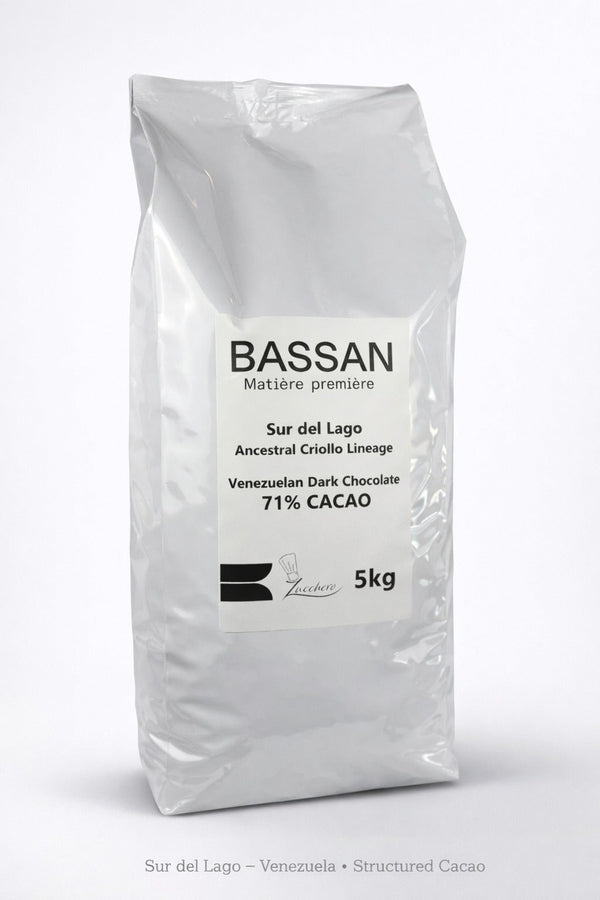 Bassan ChocolateSur del Lago Ancestral Criollo Lineage Dark Chocolate 71%From $69.95 CADView product →
For professionals
Equipping a chocolate shop, bakery or kitchen?
Tell us what you produce and how much. We will recommend the right machine, moulds and ingredients, and send you a quote.
For home bakers
Professional tools for your own kitchen
The same European moulds, tools and ingredients the professionals use.
5% off orders over $500 CAD, applied automatically at checkout.
Keep reading

Leave a comment
All comments are moderated before being published.
This site is protected by hCaptcha and the hCaptcha Privacy Policy and Terms of Service apply.