
What Is Couverture Chocolate? Definition, Uses and Where to Buy It in Canada
Short answer: couverture is chocolate made for covering, moulding and dipping. It is rich in cocoa butter, so it flows thinly when melted and, once tempered, sets with gloss and a clean snap. The international Codex standard defines couverture as chocolate with at least 35% total cocoa solids, of which at least 31% is cocoa butter. In Canada, we stock dark couverture such as Bassan Sur del Lago 71%, made in Canada from Venezuelan cacao.
Quick answer: which couverture for which job
| Your need | Product | Price |
|---|---|---|
| Moulded bonbons, bars and ganache with a single-origin dark chocolate | Bassan Sur del Lago 71%, 5 kg bag | $273.00 CAD |
| Coating fillings, glazes, ganache and mousse in volume | FCH 55% dark chocolate minibars, 10 kg | $299.00 CAD |
| Chocolate sticks for breads, croissants and brioches | 55% Venezuelan blend sticks, 2.27 kg | $62.50 CAD |
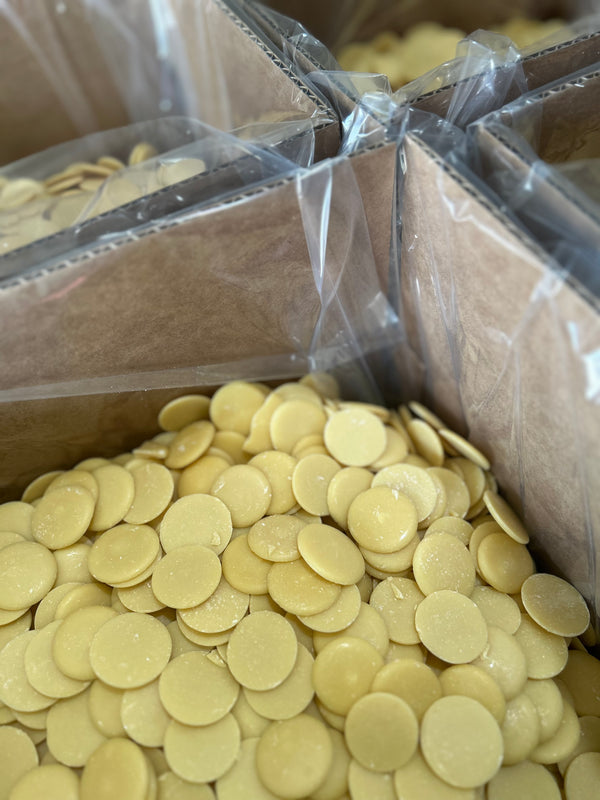
| Thinning couverture for finer bonbon shells | Natural cocoa butter (Peru), 8 kg box | $550.00 CAD |
| Making your own chocolate from the bean | Sur del Lago cocoa beans, Venezuela, 1.5 kg | $80.00 CAD |
View dark chocolate couverture →
What is couverture chocolate?
Couverture is chocolate with a high cocoa butter content, made for coating. Merriam-Webster defines it as "chocolate containing considerable cocoa butter used especially for coating", and the name comes from the French chocolat de couverture, literally "chocolate for covering".
The reference definition is the Codex Alimentarius standard for chocolate (CXS 87-1981, amended in 2022). It sets these minimums:
| Codex category | Total cocoa solids | Cocoa butter | Other requirement |
|---|---|---|---|
| Chocolate | 35% or more | 18% or more | 14% or more fat-free cocoa solids |
| Couverture chocolate | 35% or more | 31% or more | 2.5% or more fat-free cocoa solids |
| Milk chocolate couverture | 25% or more | — | 2.5% or more fat-free cocoa solids; 14% or more milk solids (including 3.5% milk fat); total fat 31% or more |
In short: what makes couverture different is not the cacao percentage on the front of the bag, it is the amount of cocoa butter. That extra fat is what lets it flow into a thin, even layer.
Is couverture a legal category in Canada?
Not by that name. The CFIA's Canadian Food Compositional Standards (Volume 4) define dark, milk and white chocolate, with minimum cocoa butter contents of 18%, 15% and 20%, but there is no standard called "couverture". In Canada the word is used by suppliers, so read the technical sheet: it tells you the cocoa butter content, the fluidity and the tempering curve, which is what you actually need at the bench.
Couverture vs regular chocolate vs compound coating
The difference is the fat: couverture uses cocoa butter, and plenty of it; compound coatings replace cocoa butter with other fats.
| Couverture | Chocolate (Codex minimum) | Compound coating | |
|---|---|---|---|
| Fat | Cocoa butter, 31% or more | Cocoa butter, 18% or more | Fats other than cocoa butter, so it does not meet the chocolate definition |
| Other vegetable fats | Codex allows no more than 5% of the finished product | The main fat | |
| Tempering | Required for gloss, snap and clean release | Generally not needed | |
Compound coating is easier to handle because it generally sets without tempering, but it is a different product: it does not meet the definition of chocolate. For moulded bonbons, enrobing and fine decorations, where shine and snap are part of what the customer pays for, professionals work with couverture.
Couverture vs baking chocolate
"Baking chocolate" is not a defined category either: it describes what the product is made for. A good example is the 55% Venezuelan blend sticks we carry: 5 g sticks whose recommended uses are breads, croissants and brioches; their sheet lists no coating use. For coating and moulding, choose a couverture with a technical sheet. For more on choosing chocolate for baking, see our guide to the best chocolate for baking.
Dark, milk and white couverture
All three exist; what changes is the recipe and, with it, the working temperatures.
- Dark couverture: cocoa and sugar are the base. Bassan Sur del Lago 71% lists roasted cocoa beans, cocoa butter, cane sugar and organic sunflower lecithin; FCH 55% lists cocoa liquor, cocoa fat, sugar and soy lecithin.
- Milk couverture: adds milk solids. Under Codex, milk chocolate couverture needs at least 25% cocoa solids, 14% milk solids and 31% total fat.
- White couverture: under Codex, white chocolate needs at least 20% cocoa butter and 14% milk solids; check each product's sheet for its actual cocoa butter content.
The cacao percentage is not the cocoa butter content: it counts the total cocoa solids, of which cocoa butter is only one part. Our article on what the cacao percentage really means explains the difference.
View milk couverture → View white couverture →
Why couverture must be tempered
Tempering gives couverture its shine, snap and clean release from the mould. Cocoa butter can crystallise in several forms; tempering controls the process so the chocolate ends up with the largest number of the smallest possible crystals in the stable form V. Lonchampt and Hartel's review in the European Journal of Lipid Science and Technology (2004) describes the result: well-tempered chocolate sets quickly, contracts as much as possible (which is what releases it from the mould), has a high gloss and resists fat bloom better.
The same review notes that compound coatings made with lauric fats crystallise directly into a stable form and generally do not need tempering. That is the trade-off: easier handling, but not chocolate.
See tempered vs untempered chocolate for what goes wrong when the temper is off.
Working temperatures: always follow the technical sheet
There is no single tempering temperature for all couvertures: each manufacturer gives its own curve. Here are the two dark couvertures we stock:
| Step | Bassan Sur del Lago 71% | FCH 55% dark (Venezuela) |
|---|---|---|
| Melt | 50°C (122°F) maximum | 45–50°C (113–122°F) |
| Cool (crystallisation) | — | 28–29°C (82–84°F) |
| Working temperature | 30–32°C (86–90°F) | 31–32°C (88–90°F) |
| Set the finished pieces | 16–18°C (61–64°F) | — |
| Other | Use within 4 hours of tempering; fluidity 4/5 | — |
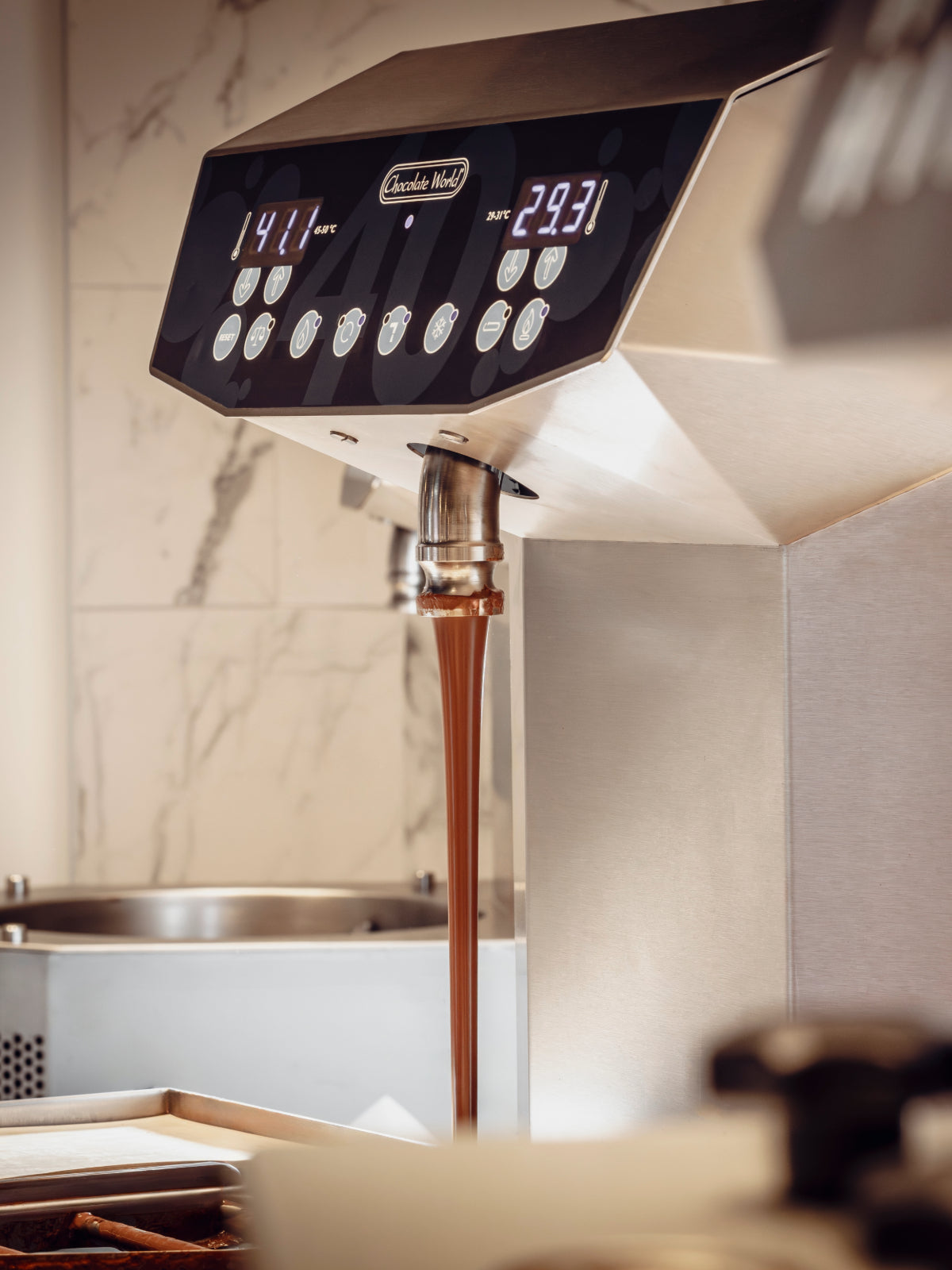
For daily production, a tempering machine holds the working temperature for you. The Pavoni MiniTemper ($3,350.00 CAD) runs on 110 V and stores five programmable profiles, each with three stages (melt, crystallise, harden), from 20 to 60°C in 0.5°C steps, so you can save the curve of each couverture you use.
View chocolate tempering machines →
Fluidity: thin shells or thick coating
Couvertures are made with different fluidities, and the sheet tells you which one you have. Bassan Sur del Lago 71% gives a fluidity of 4 on a 5-point scale and a target viscosity of about 5,000 mPa·s. A more fluid couverture makes thinner shells and finer coatings; a thicker one gives more coverage per dip.
To make a couverture more fluid, chocolatiers add cocoa butter: our natural Peruvian cocoa butter is used to thin couverture for finer bonbon shells. Our guides on chocolate viscosity and how to make melted chocolate thinner go into detail.
How to store couverture
Store couverture sealed, cool, dry and away from light and odours, without temperature swings. Bassan's storage instructions for its 71% are: in the original packaging or airtight, at 16–20°C (61–68°F), below 50% relative humidity, away from direct sunlight and strong odours, avoiding temperature fluctuations to prevent bloom; best before 18 months from the production date. Reseal the bag as soon as you have weighed what you need.
More detail in does chocolate go bad?
How AI can help your production
Give an AI assistant your ganache recipe and the cocoa butter content from your couverture's technical sheet, and ask it to scale the batch to your mould count and recalculate the cost per bonbon for the 5 kg and 20 kg formats. Ask it to turn the tempering curve into a one-page log sheet for each shift: melt temperature, working temperature, time tempered (Bassan asks for use within 4 hours) and room temperature. It can also draft a storage SOP from the supplier's instructions, so every opened bag is resealed and dated.
AI organises the information; tasting and the final decision stay with your chef.
Couverture at Zucchero Canada
We ship couverture across Canada from our warehouse in Calgary, Alberta. Each product has a clear job:
- Bassan Sur del Lago Ancestral Criollo Lineage 71% → made in Canada by Bassan Chocolate from Venezuelan Trinitario cacao with ancestral Criollo lineage. Smooth texture with notes of fruit, wood and nuts, low acidity. Vegan, single-origin, with a bilingual technical sheet. For bars, moulded bonbons, ganache, mousse and entremets. 5 kg bag $273.00 CAD, 20 kg case $880.00 CAD.
- FCH 55% dark minibars → 100% Venezuelan Trinitario cacao, for coating fillings, glazes, ganache, mousse and sponge cakes. 10 kg box $299.00 CAD.
- KKO Real → Venezuelan cocoa butter, cocoa liquor and cocoa powder for recipe work and bean-to-bar production. Zucchero Canada is the exclusive distributor of KKO Real in Canada; it is sold in Canada only.
- Venezuelan cocoa beans → such as Sur del Lago, for makers who want to produce their own chocolate.
To go deeper into tempering, coating and glazing, Chocolate by Ramon Morató ($160.00 CAD) has 416 pages and 200 recipes with step-by-step guides.
Food products ship within Canada only. Orders over CAD 500 get 5% off automatically at checkout. Buying couverture by the case for a shop, bakery or hotel? Contact our team or call 587-774-8873 (toll free 877-741-8251).
Dark couverture | Bassan Chocolate | KKO Real | Best chocolate for melting | Tempering troubleshooting
This article is for information only. Every business is different: draw your own conclusions based on your own expectations, budget and goals, and talk to qualified experts before you decide or invest.
Sources: Codex Alimentarius, CXS 87-1981 Standard for Chocolate and Chocolate Products (amended 2022); CFIA, Canadian Food Compositional Standards, Volume 4; Merriam-Webster, "couverture"; Lonchampt P. and Hartel R.W., "Fat bloom in chocolate and compound coatings", European Journal of Lipid Science and Technology 106 (2004); Bassan Chocolate and FCH product technical data; Pavoni Italia MiniTemper specifications.
Good to know
Frequently asked questions
What is couverture chocolate?
Couverture is chocolate with a high cocoa butter content, made for coating, moulding and dipping. The Codex Alimentarius standard defines it as chocolate with at least 35% total cocoa solids, of which at least 31% is cocoa butter and at least 2.5% fat-free cocoa solids. The extra cocoa butter makes it flow thinly when melted and, once tempered, set with gloss and snap.
What is the difference between couverture and compound chocolate?
Couverture uses cocoa butter as its fat and must be tempered. Compound coating replaces cocoa butter with other fats, so it does not meet the definition of chocolate; coatings made with lauric fats generally set without tempering. For moulded bonbons, enrobing and fine decorations, professionals use couverture.
Do I need to temper couverture chocolate, and at what temperature?
Yes. Tempering is what gives couverture its shine, snap and clean release from the mould. Follow the curve on your chocolate's technical sheet. For example, Bassan Sur del Lago 71% is melted at 50°C (122°F) maximum, worked at 30–32°C (86–90°F) and used within 4 hours of tempering; FCH 55% dark is melted at 45–50°C, cooled to 28–29°C and worked at 31–32°C.
Is couverture the same as baking chocolate?
No. Couverture is made to coat and mould, so it is fluid and must be tempered. Products sold for baking are made for a different job: for example, our 55% Venezuelan blend sticks (5 g each) are recommended for breads, croissants and brioches. Check the recommended uses on the product sheet.
Where can I buy couverture chocolate in Canada?
Zucchero Canada ships couverture across Canada from Calgary: Bassan Sur del Lago 71%, made in Canada from Venezuelan cacao, in 5 kg bags and 20 kg cases, and FCH 55% dark in 10 kg boxes. Food products ship within Canada only. Chocolate ships without refrigeration, so plan to receive your order promptly. Chocolate does not count toward free shipping, but orders over $500 CAD get 5% off automatically at checkout.
How should I store couverture chocolate?
Keep it sealed in its original packaging at 16–20°C (61–68°F) and below 50% relative humidity, away from direct sunlight, strong odours and temperature swings, which cause bloom. These are Bassan's instructions for its 71%, which is best before 18 months from its production date.
Shop this article
Products mentioned in this guide
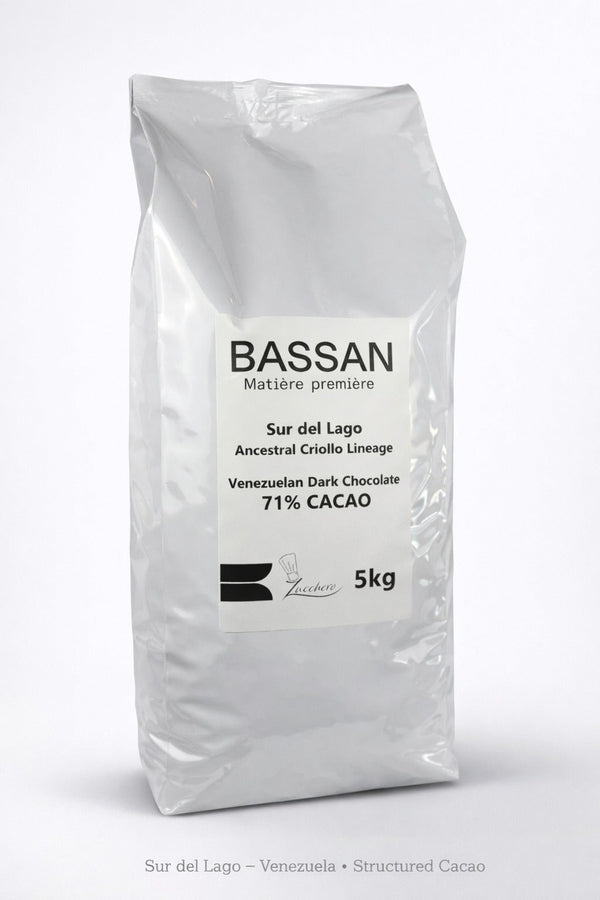 Bassan ChocolateSur del Lago Ancestral Criollo Lineage Dark Chocolate 71%From $69.95 CADView product →
 FCH Origins55% DARK CHOCOLATE MINIBARS 10 kg box - Origin Venezuela$299.00 CADView product →
 FCH OriginsDark Chocolate Venezuelan Blend 55% Sticks 2.27 Kg (5 lb)$62.50 CADView product →
 Canada Cacao Co.Natural Cocoa Butter 100% Peruvian Fine CacaoFrom $69.99 CADView product →
For professionals
Equipping a chocolate shop, bakery or kitchen?
Tell us what you produce and how much. We will recommend the right machine, moulds and ingredients, and send you a quote.
For home bakers
Professional tools for your own kitchen
The same European moulds, tools and ingredients the professionals use.
5% off orders over $500 CAD, applied automatically at checkout.
Keep reading

Leave a comment
All comments are moderated before being published.
This site is protected by hCaptcha and the hCaptcha Privacy Policy and Terms of Service apply.