
How to Make Melted Chocolate Thinner for Dipping, Coating and Moulding
Short answer: first find out why the chocolate is thick. If it has cooled or over-crystallised, warm it gently back to the working temperature on its technical sheet (Bassan's Sur del Lago 71% dark couverture, for example, is worked at 30–32°C / 86–90°F). If it is real couverture and you need it more fluid for thin shells or dipping, stir in a little melted cocoa butter. Keep water and steam away: even a little moisture makes the sugar in chocolate clump into a thick, grainy mass, and that chocolate is no longer fit for dipping or moulding.
Quick answer: what to do and what you need
| Your situation | What to do | Tool or ingredient | Price |
|---|---|---|---|
| Chocolate cooled and thickened in the bowl | Re-warm gently and hold it at a steady temperature | Martellato Mini Meltinchoc 1.8 L (dry heat, thermostat up to 50°C) | from $390.00 CAD |
| You are not sure of the temperature | Measure before you add anything | Martellato digital thermometer 50T001 | $29.95 CAD |
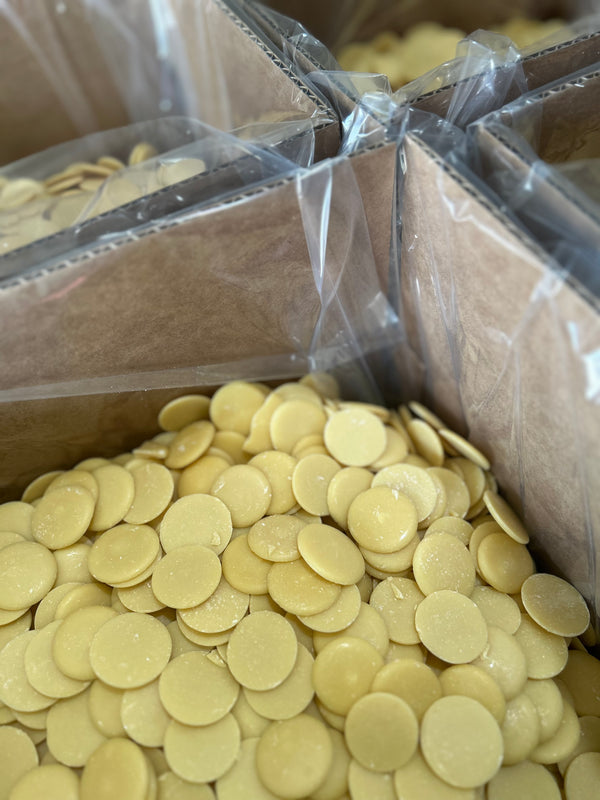
| Couverture too thick for thin shells or dipping | Add melted cocoa butter little by little | Natural cocoa butter, Peruvian fine cacao (8 kg box) | $550.00 CAD |
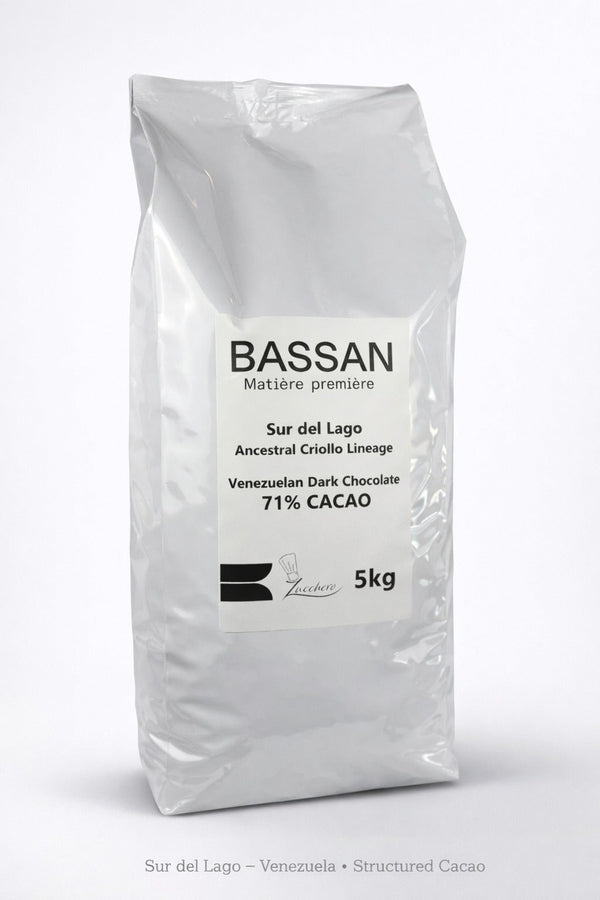
| You want a couverture that flows well from the start | Choose by its fluidity rating | Bassan Sur del Lago 71% (fluidity 4/5, 5 kg bag) | $273.00 CAD |
Why melted chocolate gets too thick
Melted chocolate thickens for three reasons: it is too cool or over-crystallised, the chocolate itself has a high viscosity, or moisture has made it seize. Each one has a different fix, so diagnose before you add anything.
Melted chocolate is not a simple liquid. It is solid particles of sugar, cocoa and, in milk chocolate, milk powder, dispersed in melted fat (Windhab, Physics Today, 2006). Those particles make up 65–70% of the chocolate's weight (Feichtinger, Scholten and Sala, Food & Function, 2020), and the cocoa butter is what lets them move. That is why the amount of cocoa butter is largely responsible for how a chocolate flows (Understanding Ingredients for the Canadian Baker, BCcampus).
| Cause | What you see | Fix |
|---|---|---|
| Too cool, or over-crystallised while you work | Tempered chocolate gets thicker in the bowl and starts to set | Gentle heat; if the temper is lost, melt and temper again |
| The chocolate's own viscosity | Melted at the right temperature but still too thick for the job | Add cocoa butter, or use a more fluid couverture |
| Moisture (water, steam, condensation) | A grainy mess instead of a smooth pool | Prevent it: dry tools, no steam (see Step 4) |
Melting chocolate chips?
Chocolate chips are developed to be more heat stable, so they keep their shape in cookies, and some chips replace part of the cocoa butter with another fat (BCcampus). For dipping and moulding, start with a couverture whose technical sheet gives its working temperature and fluidity, such as Bassan 71% (fluidity 4/5).
Step 1: Check the temperature first
Chocolate that has simply cooled is the easiest cause to rule out, so measure it before you add anything.
Work within the figures on your chocolate's technical sheet, because they differ from one maker to the next. Two examples from the couvertures we stock:
| Chocolate | Melt | Working temperature |
|---|---|---|
| Bassan Sur del Lago 71% dark | 50°C (122°F) maximum | 30–32°C (86–90°F) |
| FCH 55% dark, Venezuela | 45–50°C (113–122°F) | Tempering 31–32°C (88–90°F); crystallisation 28–29°C (82–84°F) |
If your chocolate is tempered, warm it slowly. KREA Swiss explains that above about 34°C (93°F) the stable cocoa butter crystals that give gloss and snap are destroyed, and that the chocolate keeps climbing after you remove the heat. If you are melting chocolate for a ganache or a batter, stay below the maker's maximum melting temperature.
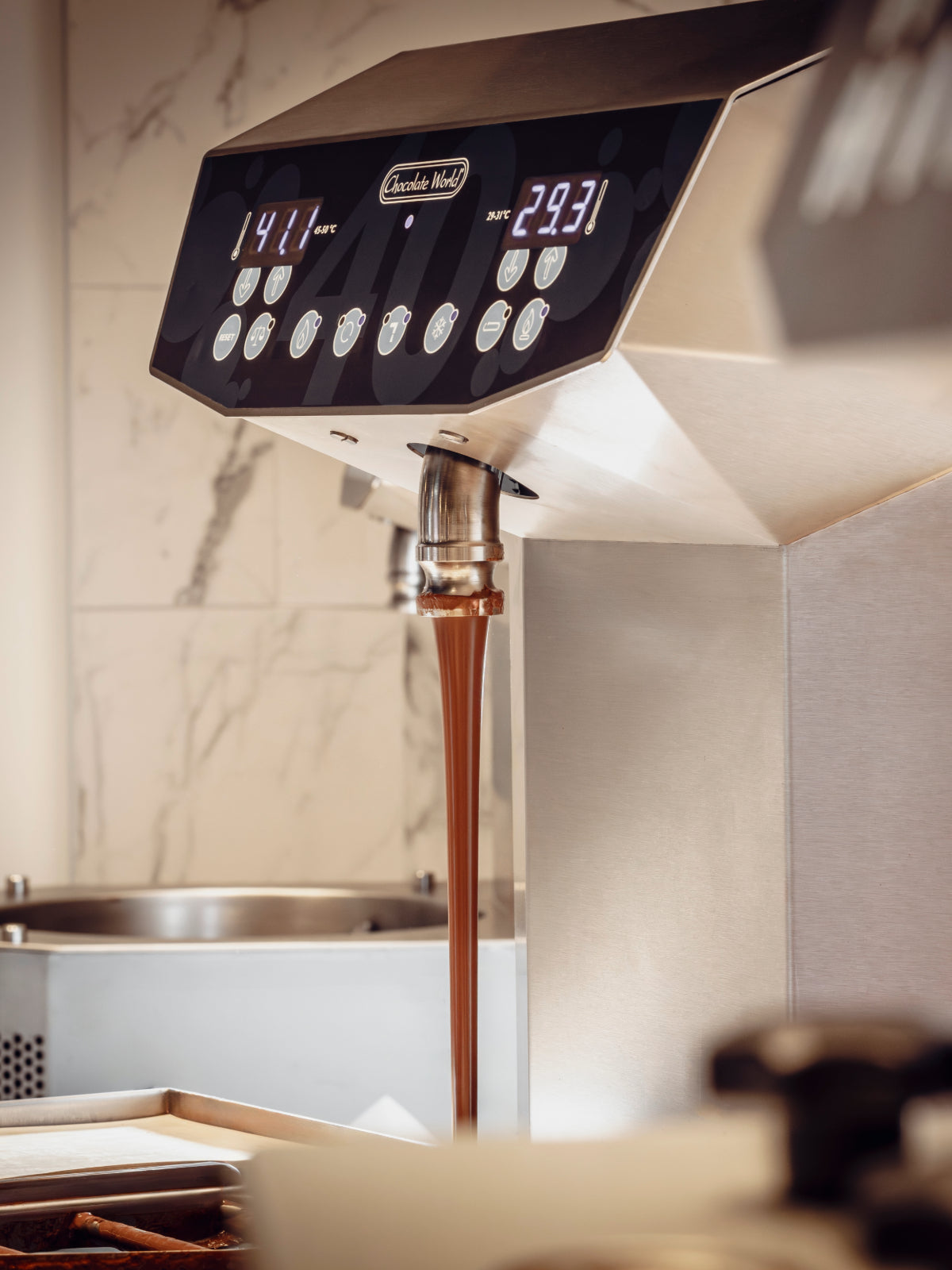
Bassan also advises using its chocolate within 4 hours of tempering. Holding couverture in a melter with a thermostat keeps it at one temperature instead of letting it cool and reheat on the bench.
Step 2: Recognise over-crystallised chocolate
If tempered chocolate thickens steadily while you dip or mould, it is over-crystallising: crystals keep forming until it sets in the bowl.
KREA Swiss names stirring too fast or too long as one cause: the chocolate turns thick and stiff. Gentle warming can loosen it, but stay below the 34°C (93°F) limit above. If the chocolate has gone past that point, the temper is gone: melt it completely and temper again. A tempering machine holds the working temperature for you; the Pavoni MiniTemper 110 V takes up to 3.5 kg and sets temperatures from 20°C to 60°C in 0.5°C steps ($3,350.00 CAD).
For a full method, see our guide on how to temper chocolate.
Step 3: Thin real chocolate with cocoa butter
To make couverture more fluid without changing what it is, add pure cocoa butter: it is the same fat that is already in the chocolate.
- Why it works: more cocoa butter means more fat around the particles, so the chocolate flows more easily (BCcampus; Feichtinger et al., 2020).
- How to add it: melt the cocoa butter separately, then stir it into the chocolate in small amounts, testing the flow after each addition. Weigh every addition and write it down, so you can repeat the same fluidity next time.
- Temper: if you are working with tempered chocolate, check the temper again after the additions.
- What it is used for: our natural Peruvian cocoa butter is used to thin couverture for thinner bonbon shells and easier dipping. It is a single ingredient, natural (not deodorised), with a melting point of 34–38°C (93–101°F).
Lecithin is the other ingredient chocolate makers use to thin chocolate; it is less expensive than cocoa butter for the same purpose (BCcampus). In a 2020 study, adding lecithin lowered the viscosity of the chocolate samples (Feichtinger et al.). Check your couverture's ingredient list: Bassan 71% already contains organic sunflower lecithin.
Can you thin chocolate with oil?
Yes, a vegetable oil will thin chocolate, but the result sets softer and is no longer pure chocolate.
BCcampus notes that bakers sometimes thin chocolate with a vegetable oil to coat certain squares, because it makes them easier to cut afterwards. In a 2019 study on cocoa powder and cocoa butter mixtures, coconut oil lowered the viscosity, but it also lowered the hardness and the temperature at which the mixture set, from 24°C to 20°C (75°F to 68°F) as the coconut oil went from 20% to 40% of the mix (Truong, Tran and Nguyen, Journal of Agriculture and Development, 2019).
So oil can work for a quick coating that will be sliced or eaten soon. For moulded pieces, shells and bars that need a clean set, gloss and snap, use cocoa butter.
Step 4: Keep water out, and what to do if chocolate seizes
A little water is enough to ruin melted chocolate. Moisture makes the sugar particles stick together into gritty lumps and raises the viscosity; around 3–4% water thickens chocolate markedly (Afoakwa, Paterson and Fowler, Trends in Food Science & Technology, 2007). This is what happens when chocolate "seizes".
- Use bowls, spatulas and moulds that are completely dry.
- Watch for condensation, for example under a lid or on a cold bowl.
- If you use a water bath, keep the steam away from the chocolate. KREA Swiss lists steam from a bain-marie, condensation, high humidity and bowls that are not fully dry among the common mistakes that disturb crystallisation.
- A dry-heat melter avoids the water bath altogether.
Seized chocolate is no longer fit for dipping or moulding, so prevention matters more than the cure. For rescue ideas, read how to fix overheated and seized chocolate.
How thin should it be? Match fluidity to the job
Different jobs need different fluidity: runny for moulds and thin coatings, thicker for ganache and fillings.
| Job | Fluidity | Source |
|---|---|---|
| Moulded pieces such as Easter eggs | Less viscous, somewhat runny, so it flows into the mould | BCcampus |
| Coating cookies and most cakes; enrobers | Thinner, for a thin, even coat | BCcampus |
| Ganache, flavouring creams and fillings | Somewhat thicker | BCcampus |
| Velvet spray finish | 50% chocolate + 50% cocoa butter, or 60% + 40%, sprayed at 28–35°C (82–95°F) onto a frozen surface | KREA Swiss |
Chocolate is also shear-thinning: the harder it is worked, the thinner it behaves (KREA Swiss). Judge the fluidity while you stir, and test on a real piece before you add anything.
For dipping, a deep bowl helps as much as fluidity. The Martellato Deep Meltinchoc MC10 has a deep 1.7 L round bowl built for coating on a stick ($669.00 CAD), and the Martellato dipping fork set is a set of 10 forks ($69.50 CAD). For velvet finishes, the KREA Swiss chocSPRAYER keeps pre-tempered chocolate workable in its heated nozzle and insulated 700 ml container ($1,250.00 CAD).
To understand the science behind fluidity in more depth, see our article on chocolate viscosity. For dipping fruit, read what chocolate is best for chocolate-covered strawberries.
How AI can help your production
Give an AI assistant your chocolate's technical sheet and ask it to write a one-page working card for each couverture: melting maximum, working temperature and the fluidity you want for each product. Log every cocoa butter addition by weight, and ask the assistant to turn the log into a standard recipe for each use, so every shift gets the same shell thickness. It can also scale those additions to a new batch size in seconds.
AI organises the information; tasting and the final decision stay with your chef.
Chocolate, cocoa butter and melters at Zucchero Canada
Each product has a distinct job in getting chocolate to the right fluidity:
- Couverture that flows from the start: Bassan Sur del Lago 71%, made in Canada from Venezuelan cacao, with a fluidity of 4/5 and a bilingual technical sheet. 5 kg bag: $273.00 CAD.
- Adjusting fluidity: natural cocoa butter from our cocoa butter and cacao range.
- Holding the temperature: chocolate melters, including the Martellato Meltinchoc range from 1.7 L to 13.7 L, all 110 V.
- Holding the temper: the Pavoni MiniTemper for up to 3.5 kg, or the larger chocolate tempering machines.
- Learning the craft: Chocolate, 6th edition, by Ramon Morató, 416 pages with tempering, coating and glazing techniques ($160.00 CAD).
Buying couverture or cocoa butter for a production kitchen? Contact our team for volume pricing, or call 587-774-8873 (toll free 877-741-8251). Food products ship within Canada only.
Chocolate melters | Natural cocoa butter | Tempering machines | Chocolate viscosity | Best chocolate for melting
This article is for information only. Every business is different: draw your own conclusions based on your own expectations, budget and goals, and talk to qualified experts before you decide or invest.
Sources: BCcampus, Understanding Ingredients for the Canadian Baker, chapter 7 (compound chocolate, viscosity); KREA Swiss Knowledge, "Tempering, what it really is and where it goes wrong" and "Spraying chocolate, and why the viscosity figures mislead" (kreaswiss.com); Afoakwa, E. O., Paterson, A. and Fowler, M., "Factors influencing rheological and textural qualities in chocolate – a review", Trends in Food Science & Technology 18(6), 2007; Windhab, E. J., "What makes for smooth, creamy chocolate?", Physics Today 59(6), 2006; Feichtinger, A., Scholten, E. and Sala, G., "Effect of particle size distribution on rheological properties of chocolate", Food & Function 11, 2020; Truong, U. N. H., Tran, G. T. and Nguyen, B. T., "Effect of coconut oil, milk powder on the viscosity and hardness of mixtures of cocoa powder and cocoa butter", Journal of Agriculture and Development 18(4), 2019; Bassan and FCH technical data and Martellato, Pavoni and KREA Swiss product specifications on zuccherocanada.ca.
Good to know
Frequently asked questions
How do you thin melted chocolate for dipping?
Check the temperature first: chocolate that has cooled or over-crystallised thickens, so warm it gently back to the working temperature on its technical sheet (for example 30–32°C / 86–90°F for Bassan 71% dark). If real couverture is still too thick at the right temperature, stir in small amounts of melted cocoa butter and test on a real piece after each addition.
Why is my melted chocolate so thick?
There are three usual causes: the chocolate is too cool or over-crystallised (tempered chocolate keeps thickening in the bowl), the chocolate itself has a high viscosity, or water or steam has made it seize into a grainy mass. Temperature and over-crystallisation can be fixed with gentle heat or re-tempering; moisture has to be prevented, because seized chocolate is no longer fit for dipping or moulding.
Can I add oil to melted chocolate to make it thinner?
Yes, a vegetable oil thins chocolate, and bakers sometimes use it for coatings that will be cut. But oil makes the chocolate set softer: in a 2019 study, coconut oil lowered both the viscosity and the setting temperature of cocoa butter mixtures. For moulded pieces, shells and bars that need gloss and snap, use cocoa butter instead.
Can I add water or milk to thin melted chocolate?
No. Moisture makes the sugar particles in chocolate clump into gritty lumps and raises its viscosity; around 3–4% water is enough to thicken chocolate markedly, and steam or condensation can supply it. That is also why chocolate makers add milk as dry milk solids rather than liquid milk (Afoakwa, Paterson and Fowler, 2007). To thin couverture, use melted cocoa butter.
How much cocoa butter should I add to thin chocolate?
There is no single dose: it depends on the couverture and on the job. Add melted cocoa butter in small, weighed amounts, test after each one, and record the total so you can repeat it. For a velvet spray finish, KREA Swiss gives working ratios of 50% chocolate and 50% cocoa butter, or 60% and 40%, at 28–35°C.
How do you thin melted chocolate chips?
Chocolate chips are developed to be more heat stable so they keep their shape in baking, and some replace part of the cocoa butter with another fat (BCcampus). Warm them gently and check the temperature first; if the chips are pure chocolate, a little melted cocoa butter makes them more fluid. For dipping and moulding, a couverture with a stated working temperature and fluidity is the better starting point.
Do melters, cocoa butter and chocolate qualify for free shipping?
No. Machines such as melters, and cacao products such as cocoa butter and chocolate, are excluded from our free shipping on selected products for orders of $300 CAD or more within Canada. Orders over $500 CAD get 5% off automatically at checkout, and food products ship within Canada only.
Shop this article
Products mentioned in this guide
 Martellato"Mini Meltinchoc" Chocolate Melter 1.8 L – MC09GUSAFrom $390.00 CADView product →
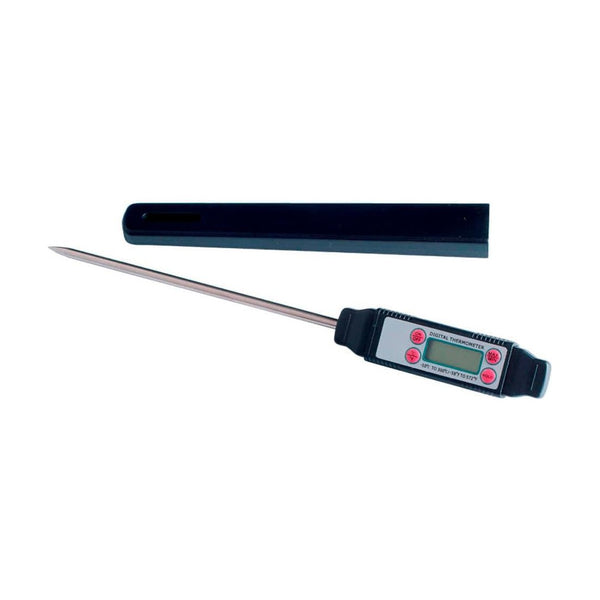 MartellatoDigital Thermometer for Chocolate 50T001$29.95 CADView product →
 Canada Cacao Co.Natural Cocoa Butter 100% Peruvian Fine CacaoFrom $69.99 CADView product →
 Bassan ChocolateSur del Lago Ancestral Criollo Lineage Dark Chocolate 71%From $69.95 CADView product →
For professionals
Equipping a chocolate shop, bakery or kitchen?
Tell us what you produce and how much. We will recommend the right machine, moulds and ingredients, and send you a quote.
For home bakers
Professional tools for your own kitchen
The same European moulds, tools and ingredients the professionals use.
5% off orders over $500 CAD, applied automatically at checkout.
Keep reading


Leave a comment
All comments are moderated before being published.
This site is protected by hCaptcha and the hCaptcha Privacy Policy and Terms of Service apply.