Best Chocolate for Baking: How to Choose by Type, Percentage and Recipe
Short answer: the best chocolate for baking is the one made for the job. Use unsweetened chocolate (pure cocoa mass) when the recipe adds its own sugar, as in many brownies and cakes; a dark chocolate when you want sweetness built in; heat-stable chips or baking sticks when the pieces must stay whole; and couverture, which has extra cocoa butter, for dipping, coating and moulding. The percentage on the pack tells you the total cocoa content, not how it splits between cocoa butter and cocoa solids, so compare technical sheets when you switch brands.
Quick answer: which chocolate for which bake
| You are baking… | Choose | Our product | Price |
|---|---|---|---|
| Brownies, cakes and sauces where you control the sugar | Unsweetened chocolate (100% cocoa mass) | Natural Cocoa Liquor Wafers, 100% Peruvian | from $29.99 CAD |
| Cookies, muffins and brownies with chocolate pieces | 70% dark chocolate chips | Organic Dark Chocolate Chips 70%, 1 kg | $45.95 CAD |
| Pain au chocolat, croissants, brioche and breads | 55% dark baking sticks | FCH Venezuelan Blend 55% Sticks, 2.27 kg | $62.50 CAD |
| Ganache, mousse, entremets and moulded pieces | Dark couverture | Bassan Sur del Lago 71%, 5 kg | $273.00 CAD |
| Cakes and bakes in bakery volume | Alkalised (Dutch-process) cocoa powder | Dutched 20/22 cacao powder, Peru, 25 kg | $710.00 CAD |
Types of baking chocolate, explained
Baking chocolates differ in how much cocoa liquor, cocoa butter, sugar and milk they contain; in decreasing order of cocoa liquor, the main types are unsweetened, dark, milk and white (BCcampus, Understanding Ingredients for the Canadian Baker).
| Type | What it is | Typical baking uses |
|---|---|---|
| Unsweetened (bitter, "baking" or cooking chocolate) | Pure cocoa liquor, no sugar; strong, deep chocolate flavour | With sugar added in the recipe, the base for cakes, brownies, confections and cookies |
| Dark (sweet, semi-sweet, bittersweet) | Cocoa liquor, cocoa butter and sugar; no milk solids | Eaten as is or baked; semi-sweet is frequently used for cooking; fillings often use 60–99% chocolates |
| Milk | Chocolate made with milk powder; higher fat and a slightly lower melting point | Mainly as a flavouring, in candies and moulded pieces |
| White | Mostly sugar, then cocoa butter and milk powder; no cocoa liquor | Flavouring in desserts, candies, and chunks in cookies |
| Compound (coating) chocolate | Cocoa butter replaced by another hard fat; about 35–40% fat and 8–18% cocoa | Coatings without tempering; not suited to moulding |
Descriptions from BCcampus, chapter 7.
What is baking chocolate?
Strictly, baking chocolate is another name for unsweetened chocolate: pure cocoa liquor, also called bitter or cooking chocolate (BCcampus). More broadly, the chocolates produced for the baking industry are unsweetened, dark, milk and white chocolate, plus formats such as chips, baking sticks and cocoa powder. Careful with the trade name "baker's chocolate": in the industry it means compound coating, while the supermarket brand of that name is generally pure chocolate (BCcampus).
Is unsweetened chocolate the same as dark chocolate?
No. Unsweetened chocolate has no added sugar; dark chocolate is cocoa liquor and cocoa butter with sugar. BCcampus also warns that bittersweet chocolate is not sugarless: only "unsweetened" on the label tells you no sugar was added. If you swap one for the other, the sugar in your recipe has to change too.
Semi-sweet, bittersweet or milk chocolate?
Bittersweet has less sugar and more cocoa liquor than semi-sweet, and the two are often interchangeable in baking (BCcampus). Milk chocolate contains milk powder and is mainly used as a flavouring and in candies. The names are not precise: in the United States, the federal standard only requires semi-sweet and bittersweet chocolate to contain at least 35% chocolate liquor, against at least 10% for milk chocolate (21 CFR 163.123 and 163.130). In Canada, the regulations do not define the amounts of cocoa butter and sugar, so some semi-sweet chocolate may be sweeter than so-called sweet chocolate (BCcampus). Read the cocoa percentage and the ingredient list rather than the name.
What the percentage tells you, and what it doesn't
The percentage is the total cocoa content, cocoa butter and cocoa solids together; the higher it is, the less sweet the chocolate.
What the percentage does not tell you is the split between cocoa butter and cocoa solids. Two chocolates with the same percentage from different makers can have very different amounts of each and different flavours, so substituting one for the other can change your recipe (BCcampus). The technical sheet or the nutrition table gives you the fat content. Compare the ingredient lists of three dark chocolates we stock:
- FCH 55% dark, Venezuela: cocoa liquor, cocoa fat, sugar, soy lecithin.
- Bassan Sur del Lago 71%: roasted cocoa beans, cocoa butter, cane sugar, organic sunflower lecithin.
- Organic Dark Chocolate Chips 70%: organic cocoa mass, organic cane sugar, organic cocoa butter, organic natural cocoa powder.
For a deeper look, read what chocolate percentages really mean.
Couverture vs baking chocolate
Couverture is chocolate with extra cocoa butter, used by professionals for dipping, coating, moulding and garnishing; compound "baker's" chocolate replaces the cocoa butter with another fat so it needs no tempering.
- Couverture: to be labelled couverture under European Union rules, it must contain at least 35% total dry cocoa solids, including at least 31% cocoa butter and at least 2.5% dry non-fat cocoa solids. With proper tempering, the extra cocoa butter gives more sheen, a firmer snap and a creamy, mellow flavour (BCcampus).
- Compound chocolate: the most common chocolate in the baking industry, also sold as coating chocolate or baker's chocolate. It saves tempering time, but it does not set as firmly as cocoa butter chocolate, which makes it hard to unmould; it is best used for coating at about 40°C (104°F) (BCcampus).
Bassan Sur del Lago 71% is a dark couverture made in Canada from Venezuelan cacao, recommended by its maker for ganaches, moulded bonbons, tablets, entremets and chocolate drinks, with a working temperature of 30–32°C (86–90°F). More in our guide what is couverture chocolate.
View dark chocolate couverture →
Chips, chunks and baking sticks
Chips and chunks are made to be more heat stable, so they stay whole in cookies and other bakes; baking sticks are meant to be baked inside croissants.
BCcampus notes that chips and chunks may be pure chocolate or may use another fat instead of cocoa butter, and that chips with more than about 40% chocolate liquor tend to smear in baking. Many makers sell chips by count size: the number of pieces in 1 kg, so a higher count means smaller chips.
- Organic Dark Chocolate Chips 70% → $45.95 CAD. For cookies, brownies, cakes and muffins; organic, kosher, vegan, dairy-free and gluten-free according to the product data; may contain peanuts, tree nuts and soy. Origin: Peru.
- FCH Venezuelan Blend 55% Sticks → $62.50 CAD. Ready-to-use 5 g sticks, about 450 per 2.27 kg (5 lb) pack, made from fermented Venezuelan Trinitario cacao, for breads, croissants and brioches.
Looking for organic chocolate for baking? The organic chips above are our organic option, with cocoa mass, cane sugar, cocoa butter and natural cocoa powder as their only ingredients.
Cocoa powder for baking: natural or Dutch-process?
Use what the recipe calls for: natural cocoa is acidic and helps baking soda work, while Dutch-process cocoa is neutral and belongs in recipes leavened with baking powder.
Cocoa beans have a pH of about 5.2; alkali treatment, usually with potassium carbonate, raises the finished product to pH 6.8 or more. It lowers acidity, increases solubility, enhances colour and smooths flavour. Because Dutch-process cocoa is not acidic, it cannot be used in recipes that rely on the cocoa's acidity to activate baking soda (BCcampus). Our Dutched 20/22 cacao powder from Peru is alkalised with potassium carbonate and sold in 25 kg bags for bakeries.
What can you make with baking chocolate?
Unsweetened chocolate is the base for cakes, brownies, confections and cookies once sugar is added; dark chocolate goes into fillings and bakes; white chocolate into desserts, candies and cookie chunks; baking sticks into croissants (BCcampus).
- Brownies: see our guide to the best chocolate for brownies.
- Cookies: try our chocolate chip cookies without baking soda.
- Cakes and fillings: mousse-filled chocolate cake and chocolate cupcake fillings.
- Texture: Venezuelan cacao nibs are suited to desserts and baked goods (from $69.95 CAD).
Melting and storing chocolate for baking
Melt chocolate gently and keep water out; store it cool, dry and away from odours, not in the fridge.
- Melting: follow the maker's maximum. Bassan 71% is melted at 50°C (122°F) at most; FCH 55% at 45–50°C (113–122°F). Keep water and steam out: moisture makes the sugar particles clump into gritty lumps and raises the viscosity sharply (Afoakwa, Paterson and Fowler, 2007). A dry-heat melter such as the Martellato Mini Meltinchoc (1.8 L, thermostat up to 50°C, from $390.00 CAD) avoids the water bath. More in what chocolate is best for melting.
- Storing: BCcampus gives 18–20°C (64–68°F) at 60% relative humidity as ideal, for up to a year, and notes the refrigerator is not the ideal place because of odours and humidity. Bassan specifies 16–20°C and below 50% relative humidity, best before 18 months from production.
How AI can help your production
Give an AI assistant your recipe by weight and the technical sheets of the chocolates you use, and ask it to scale the recipe to your batch size, cost each batch from your price per kilo, and flag where a substitution (for example 55% for 71%, or unsweetened for dark) changes the sugar in the recipe. Ask it to keep a one-page card per product with the chocolate, its melting maximum and its storage conditions. A written standard keeps every baker using the same chocolate the same way.
AI organises the information; tasting and the final decision stay with your chef.
Baking chocolate at Zucchero Canada
Each chocolate we stock for bakers has its own job, so you can match the product to the bake:
- Unsweetened, for sugar control: Natural Cocoa Liquor Wafers, 100% Peruvian cocoa mass with no added fat or sugar, in 1 kg, 5 kg and 18 kg.
- Chips, for cookies and muffins: Organic Dark Chocolate Chips 70%, 1 kg.
- Sticks, for viennoiserie: FCH Venezuelan Blend 55%, 2.27 kg of 5 g sticks.
- Couverture, for ganache, mousse and moulding: Bassan Sur del Lago 71%, made in Canada, in 5 kg bags and 20 kg cases, with a bilingual technical sheet; it ships across Canada from Calgary.
- Cocoa powder, for bakery volume: Dutched 20/22 cacao powder, 25 kg.
To go further with chocolate as an ingredient, Chocolate, 6th edition, by Ramon Morató covers chocolate as a product, with studies on mousses, fillings and raw materials across 416 pages ($160.00 CAD).
View baking and confectionery chocolate →
Buying for a bakery, pastry shop or hotel? Contact our team for volume pricing and standing B2B orders, or call 587-774-8873 (toll free 877-741-8251). Food products ship within Canada only.
Baking chocolate | Dark couverture | Cocoa powder | Best chocolate for brownies | What is couverture
This article is for information only. Every business is different: draw your own conclusions based on your own expectations, budget and goals, and talk to qualified experts before you decide or invest.
Sources: BC Cook Articulation Committee, Understanding Ingredients for the Canadian Baker, BCcampus, chapter 7 "Chocolate and Other Cocoa Products" (sections 7.2–7.8); US Code of Federal Regulations, 21 CFR 163.123 (sweet chocolate) and 163.130 (milk chocolate), eCFR; Afoakwa, E. O., Paterson, A. and Fowler, M., "Factors influencing rheological and textural qualities in chocolate – a review", Trends in Food Science & Technology 18(6), 2007; Bassan, FCH and Canada Cacao Co. product and technical data and Martellato product specifications on zuccherocanada.ca.
Good to know
Frequently asked questions
What is the best chocolate for baking?
It depends on the bake. Use unsweetened chocolate (pure cocoa mass) when the recipe adds its own sugar, such as many brownies and cakes; heat-stable chips or baking sticks when the pieces must stay whole; and a dark couverture for ganache, mousse and moulded pieces. Check the maker's recommended uses on the technical sheet.
What is baking chocolate?
Strictly, baking chocolate is another name for unsweetened chocolate: pure cocoa liquor, also called bitter or cooking chocolate. With sugar added in the recipe, it is the base for cakes, brownies, confections and cookies (BCcampus). More broadly, the term covers the chocolates made for baking: unsweetened, dark, milk and white chocolate, chips, baking sticks and cocoa powder.
Is unsweetened chocolate the same as dark chocolate?
No. Unsweetened chocolate is pure cocoa liquor with no sugar added, while dark chocolate contains sugar. Bittersweet chocolate is not sugarless either: only "unsweetened" on the label means no sugar was added. If you swap one for the other, adjust the sugar in your recipe.
What is the difference between semi-sweet and milk chocolate for baking?
Semi-sweet is a dark chocolate with no milk solids and is frequently used for cooking. Milk chocolate is made with milk powder, has a slightly lower melting point and is mainly used as a flavouring and in candies. In the US, semi-sweet must contain at least 35% chocolate liquor and milk chocolate at least 10%.
Can I use chocolate chips instead of baking chocolate?
Chips and chunks are made to be more heat stable so they stay whole in cookies and other bakes, and some use another fat instead of cocoa butter, so check the ingredient list. When a recipe melts chocolate into a ganache, mousse or batter, choose a chocolate whose maker lists that use.
Should I use natural or Dutch-process cocoa for baking?
Follow the recipe. Natural cocoa is acidic and helps activate baking soda. Dutch-process cocoa has been treated with alkali to a pH of 6.8 or more, so it cannot replace natural cocoa in recipes that rely on its acidity to activate baking soda; use it in recipes leavened with baking powder.
Does baking chocolate qualify for free shipping at Zucchero Canada?
No. Chocolate and cacao are excluded from our free shipping on orders of $300 CAD or more, and food products ship within Canada only. Orders over $500 CAD get 5% off automatically at checkout, and bakeries can contact us for volume pricing.
Shop this article
Products mentioned in this guide
 Canada Cacao Co.Natural Cocoa Liquor Wafers - 100% Peruvian Fine CocoaFrom $29.99 CADView product →
 Canada Cacao Co.Organic Dark Chocolate Chips 70% Cacao 1 kg$45.95 CADView product →
 FCH OriginsDark Chocolate Venezuelan Blend 55% Sticks 2.27 Kg (5 lb)$62.50 CADView product →
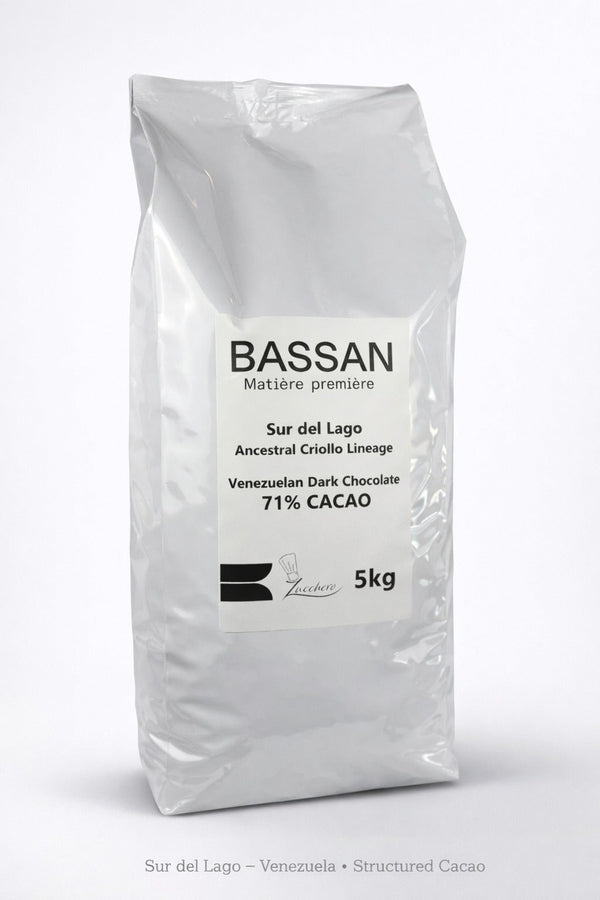 Bassan ChocolateSur del Lago Ancestral Criollo Lineage Dark Chocolate 71%From $69.95 CADView product →
For professionals
Equipping a chocolate shop, bakery or kitchen?
Tell us what you produce and how much. We will recommend the right machine, moulds and ingredients, and send you a quote.
For home bakers
Professional tools for your own kitchen
The same European moulds, tools and ingredients the professionals use.
5% off orders over $500 CAD, applied automatically at checkout.
Keep reading

Leave a comment
All comments are moderated before being published.
This site is protected by hCaptcha and the hCaptcha Privacy Policy and Terms of Service apply.