
What Makes Belgian Chocolate Special? History, Rules and Technique
Short answer: Belgian chocolate is special because of a tradition and a definition, not a secret law. Belgium gave the world the filled praline (Neuhaus, Brussels, 1912) and its gift box, the ballotin (1915). The Belgian industry's own code reserves the name "Belgian chocolate" for chocolate that is mixed, refined, conched and moulded in Belgium, and Belgian mould makers such as Chocolate World make the polished polycarbonate moulds used for praline shells. The composition rules, on the other hand, are the same EU rules every member state follows.
Belgian chocolate at a glance
| Question | What the sources say |
|---|---|
| Where the reputation started | Jean Neuhaus opened a pharmacy in the Galerie de la Reine, Brussels, in 1857; his grandson created the Belgian praline in 1912 |
| The gift box | The ballotin, created in 1915 by Louise Agostini, wife of Jean Neuhaus Jr. |
| What "Belgian chocolate" means | Belgian Chocolate Code (voluntary, 2008): mixed, refined, conched and moulded in Belgium |
| Stricter recipe than other countries? | No. Belgium follows EU Directive 2000/36/EC, which does not let member states add their own rules for these products |
| Vegetable fats | EU law allows up to 5% vegetable fats other than cocoa butter, with a label statement |
| Label rules in Canada | CFIA: "Belgian chocolate" implies the chocolate was produced in Belgium |
Where the Belgian reputation comes from
The Belgian story is the story of the praline. Jean Neuhaus, a Swiss pharmacist, settled in Brussels in 1857 and opened a pharmacy in the Galerie de la Reine, where he coated his medicines in a fine layer of chocolate to please his customers. In 1912 his grandson, Jean Neuhaus Jr., turned the idea into the Belgian praline as we know it: a chocolate shell with a filling. In 1915 Louise Agostini, his wife, created the ballotin, the gift box that protects the chocolates and presents them.
A praline is still the product Belgium is known for. EU law even defines it: "a chocolate or a praline" is a single-mouthful product made of filled chocolate, or of chocolate combined with other edible ingredients, where chocolate is at least 25% of the weight.
What "Belgian chocolate" means on a label
In Belgium, the term is defined by industry, not by a special law. In 2008 Choprabisco, the Belgian association of the chocolate, praline, biscuit and confectionery industry, published the Belgian Chocolate Code. It is a voluntary code of practice: products labelled "Belgian Chocolate" or "Chocolate from Belgium" must have their chocolate mixed, refined, conched and moulded in Belgium. A product finished elsewhere with Belgian chocolate may say "made with Belgian chocolate", not "Belgian chocolate".
In Canada, the Canadian Food Inspection Agency (CFIA) treats "Belgian chocolate" as a claim that the chocolate was produced in Belgium, by mixing Belgian chocolate liquor with sweetening agents and the other ingredients the chocolate standard allows. CFIA describes Belgian chocolate liquor as the result of a Belgian process: an intensive crushing of selected cocoa beans into a soft cocoa mass with a fine texture and a pale colour.
Chocolate made outside Belgium from Belgian chocolate liquor should not be called "Belgian chocolate" in Canada, because adding ingredients elsewhere changes the origin of the product. CFIA accepts wording such as "Belgian style chocolate", "chocolate made in (country) using the Belgian process" or "contains Belgian chocolate liquor" for that case.
Is Belgian chocolate made to stricter rules?
No. Belgium is an EU member, and EU Directive 2000/36/EC sets the composition of chocolate for every member state; its Article 4 says member states shall not adopt national provisions for these products beyond the directive. Belgian chocolate meets the same minimums as chocolate made anywhere else in the EU. Canada has its own standards, very close on dark chocolate, published in the Canadian Food Compositional Standards (Volume 4).
| Product | EU (Directive 2000/36/EC) | Canada (CFCS Volume 4) |
|---|---|---|
| Chocolate / dark chocolate | At least 35% total dry cocoa solids, including 18% cocoa butter and 14% dry non-fat cocoa solids | At least 35% total cocoa solids, of which 18% cocoa butter and 14% fat-free cocoa solids |
| Couverture chocolate | At least 35% total dry cocoa solids, including 31% cocoa butter and 2.5% dry non-fat cocoa solids | No separate standard |
| Milk chocolate | At least 25% total dry cocoa solids, 14% dry milk solids, 3.5% milk fat, 25% total fat | At least 25% total cocoa solids (15% cocoa butter), 12% milk solids, 3.39% milk fat |
| White chocolate | At least 20% cocoa butter, 14% dry milk solids, 3.5% milk fat | At least 20% cocoa butter, 14% milk solids, 3.5% milk fat |
| Vegetable fats other than cocoa butter | Up to 5% of the finished product, with the statement "contains vegetable fats in addition to cocoa butter" | A product with added vegetable fats does not meet the standard and cannot use the name "chocolate" unmodified |
So the "Belgian chocolate contains only cocoa butter" idea is not a legal rule. If cocoa butter as the only fat matters to you, read the ingredient list and look for the vegetable-fat statement on European products.
Why the praline shell matters
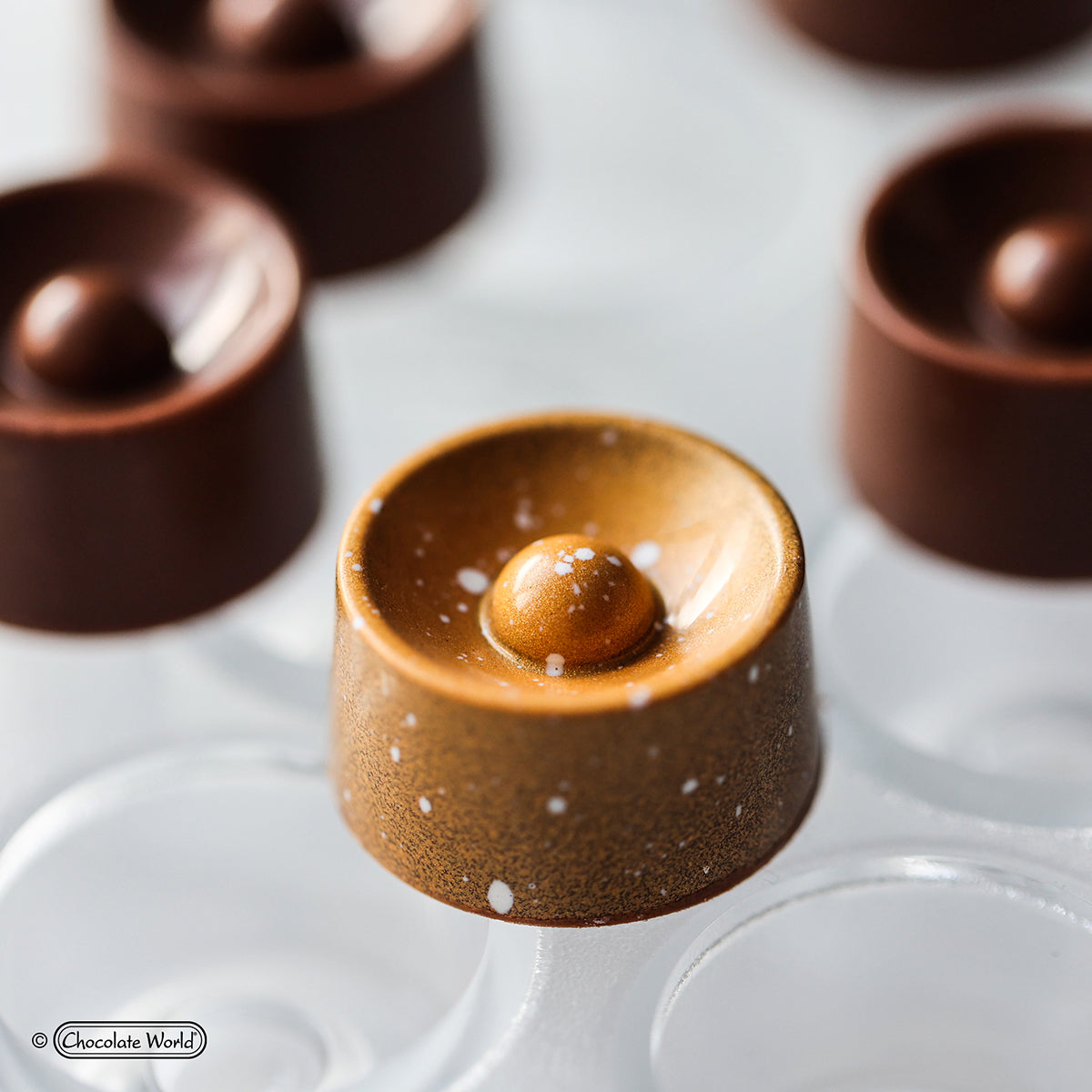
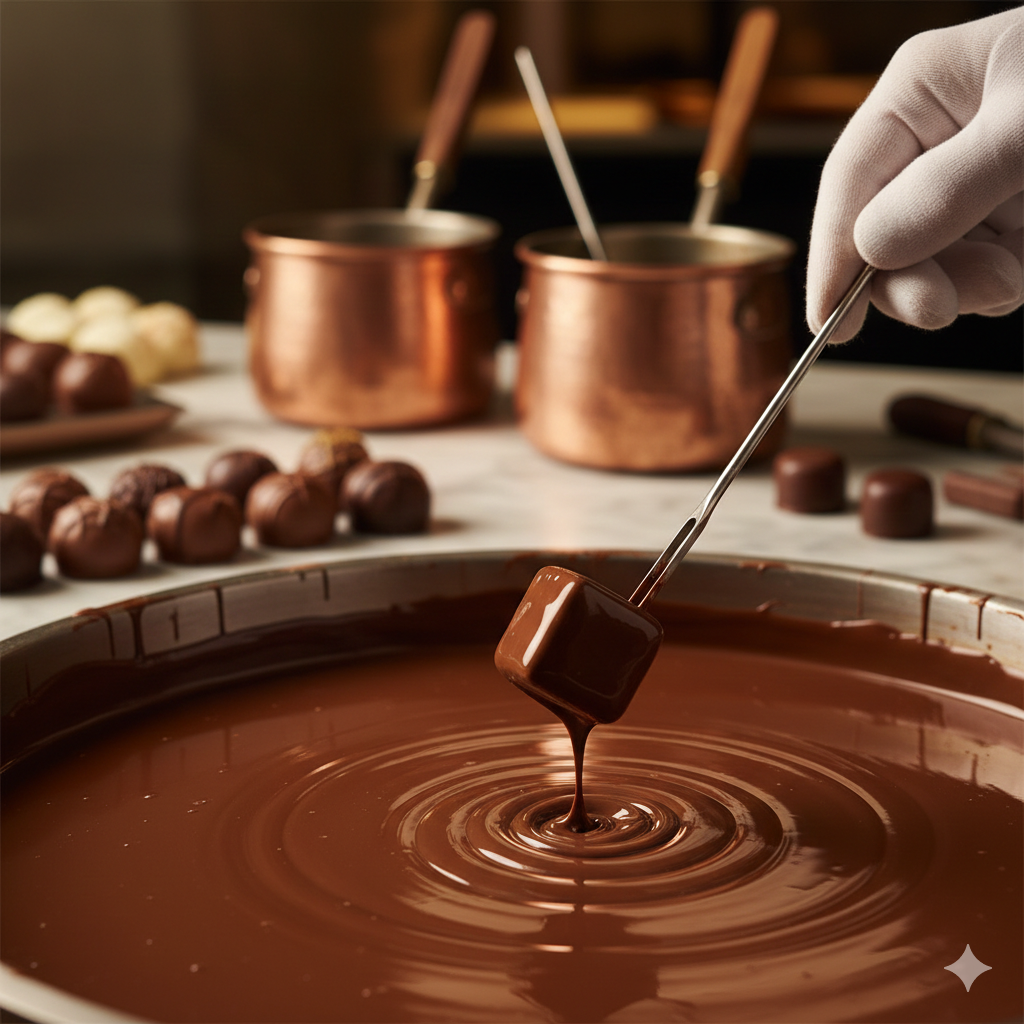
A Belgian praline lives or dies by its shell: thin, glossy, clean-breaking. That comes from tempering. In their review of fat bloom, Lonchampt and Hartel describe well-tempered chocolate as chocolate that crystallises quickly with maximal contraction, which makes it release from the mould, and gives a high gloss with good resistance to fat bloom and to fat migration in filled chocolates.
The steps are the same wherever you work: temper the couverture, fill the mould, empty it to leave a shell, let it set, pipe the filling, seal with a chocolate cap and demould. To see each one in detail, follow our step-by-step guide to shiny chocolate bonbons and our guide to moulding chocolate.
Belgian moulds: Chocolate World
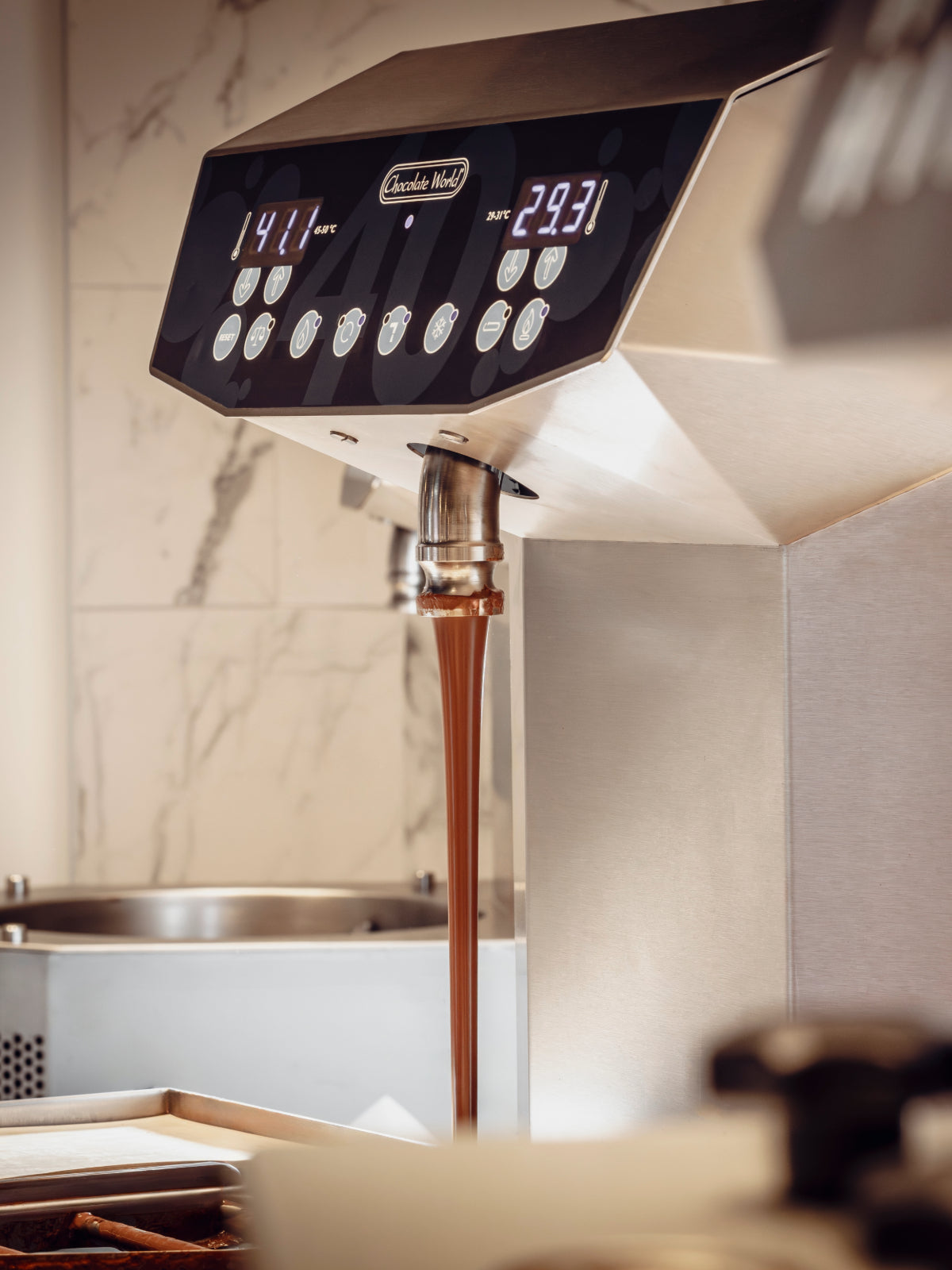
The mould is part of the Belgian tradition too. Chocolate World, based in Hoboken, Antwerp, makes its polycarbonate moulds in Belgium. Its Moulds catalogue (Edition 15) lists 100% virgin polycarbonate, polished tooling, high-precision CNC milling, more than 1,500 standard shapes and over 30 years of manufacturing experience. The company also runs the Belgian Chocolate School, with classes on chocolate-making skills.
Three Chocolate World praline moulds in stock for Belgian-style work:
- View the Ballotin mould CW1025 → from $39.95 CAD
- View the Diamond mould CW1024 → from $39.95 CAD
- View the Praline Drop mould CW1904 by Frank Haasnoot → from $39.95 CAD
View all bonbon and praline moulds →
Making Belgian-style pralines in Canada
You can work with the Belgian method anywhere; what you cannot do is borrow the origin. Here is a practical set-up with products we stock:
| Need | Product | Price |
|---|---|---|
| Couverture for shells and ganache | Bassan Sur del Lago 71%, 5 kg | $273.00 CAD |
| Praline mould | Chocolate World Diamond CW1024 | from $39.95 CAD |
| Cacao beans for bean-to-bar | Sur del Lago beans, Venezuela, 1.5 kg | from $80.00 CAD |
| Reference book | Chocolate, 6th edition, by Ramon Morató | $160.00 CAD |
Bassan Sur del Lago 71% is made in Canada from Venezuelan Trinitario cacao with ancestral Criollo lineage. Its ingredient list is short: roasted cocoa beans, cocoa butter, cane sugar and organic sunflower lecithin. Bassan's working method: melt at no more than 50°C (122°F), temper to 30–32°C (86–90°F), pour into moulds, let it crystallise at 16–18°C (61–64°F), then demould and store at 16–20°C (61–68°F).
A note on labels: CFIA's examples of acceptable "Belgian" wording all concern chocolate made with Belgian chocolate liquor. If your pralines contain no Belgian chocolate, describe your technique without a Belgian origin claim, and check with CFIA before putting the word "Belgian" on a package.
How AI can help your production
Paste your praline recipe into an AI assistant and ask it to scale it to the number of cavities in your mould, to cost each piece from your ingredient prices, and to write a one-page procedure for your team with the tempering temperatures above. Ask it to turn the composition table in this article into a label checklist for each product you sell. A written routine keeps every batch of shells the same.
AI organises the information; tasting and the final decision stay with your chef.
Belgian moulds and Venezuelan cacao at Zucchero Canada
We are an authorized distributor of Chocolate World moulds, made in Belgium. For the chocolate itself we carry Venezuelan cacao: Bassan couverture made in Canada, Venezuelan cocoa beans for bean-to-bar makers, and KKO Real cocoa products, for which we are the exclusive distributor in Canada.
Each tool has its job: Chocolate World moulds give the shell its shape and shine, Bassan couverture gives it its flavour, and Sur del Lago beans are for makers who want to control the chocolate from the bean. For the recipes, Chocolate by Ramon Morató covers tempering, coating and balanced bonbon fillings, with 24 bonbons among its 200 recipes.
Producing for a shop, a hotel or wholesale? Contact us for volume orders, or call 587-774-8873 (toll free 877-741-8251).
Chocolate World moulds | Bonbon & praline moulds | Bassan Chocolate | Shiny bonbons guide | What the cacao % means
This article is for information only. Every business is different: draw your own conclusions based on your own expectations, budget and goals, and talk to qualified experts before you decide or invest.
Sources: Neuhaus, "History" (neuhauschocolates.com) and Caobisco, "Neuhaus, inventor of the praline and the ballotin"; L. Crowley, "New code to protect image of Belgian chocolate", ConfectioneryNews, 14 August 2008, and O. Nieburg, "Special EU protection proposed for Belgian chocolate", FoodNavigator, 2 April 2013; Directive 2000/36/EC of 23 June 2000 (Official Journal L 197, 3 August 2000), Articles 2 and 4 and Annex I; Canadian Food Compositional Standards, Volume 4; CFIA, "Labelling requirements for confectionery, chocolate and snack food products"; P. Lonchampt and R. W. Hartel, "Fat bloom in chocolate and compound coatings", Eur. J. Lipid Sci. Technol. 106 (2004); Chocolate World, Moulds catalogue Edition 15 and Equipment catalogue 2023; Bassan Chocolate product data.
Good to know
Frequently asked questions
What makes Belgian chocolate special?
Its tradition and its definition. The filled praline was created in Brussels in 1912 by Jean Neuhaus Jr., and the ballotin gift box in 1915 by Louise Agostini. The Belgian industry's voluntary Belgian Chocolate Code (2008) reserves "Belgian chocolate" for chocolate mixed, refined, conched and moulded in Belgium. The composition minimums are the EU rules that apply in every member state.
Is Belgian chocolate made only with cocoa butter?
Not by law. EU Directive 2000/36/EC, which Belgium applies, allows up to 5% vegetable fats other than cocoa butter in chocolate, provided the label says "contains vegetable fats in addition to cocoa butter". Read the ingredient list to know what a given chocolate contains. In Canada, a product with added vegetable fats cannot use the standard name "chocolate" without modification.
Who invented the Belgian praline?
Jean Neuhaus Jr., in Brussels, in 1912. His grandfather, the pharmacist Jean Neuhaus, had opened his shop in the Galerie de la Reine in 1857 and coated medicines in chocolate. In 1915 Louise Agostini, wife of Jean Neuhaus Jr., created the ballotin box.
Can chocolate made in Canada be called Belgian chocolate?
No. CFIA treats "Belgian chocolate" as a claim that the chocolate was produced in Belgium. Chocolate made in Canada from Belgian chocolate liquor may use wording such as "Belgian style chocolate", "chocolate made in Canada using the Belgian process" or "contains Belgian chocolate liquor".
Are Chocolate World molds made in Belgium?
Yes. Chocolate World makes its polycarbonate moulds in Belgium, at Hoboken, Antwerp, from 100% virgin polycarbonate, according to its Moulds catalogue (Edition 15).
Do chocolate molds and couverture qualify for free shipping?
Moulds count toward free shipping on orders of CAD 300 or more within Canada; remote areas and the territories pay the actual carrier rate. Chocolate and cacao are excluded from free shipping and are sold within Canada only. Orders over CAD 500 get 5% off automatically at checkout.
Shop this article
Products mentioned in this guide
 Chocolate WorldBallotin Chocolate Mold CW1025From $39.95 CADView product →
 Chocolate WorldDiamond Chocolate Mold CW1024From $39.95 CADView product →
 Chocolate WorldPraline Drop - Frank Haasnoot Chocolate Mold CW1904From $39.95 CADView product →
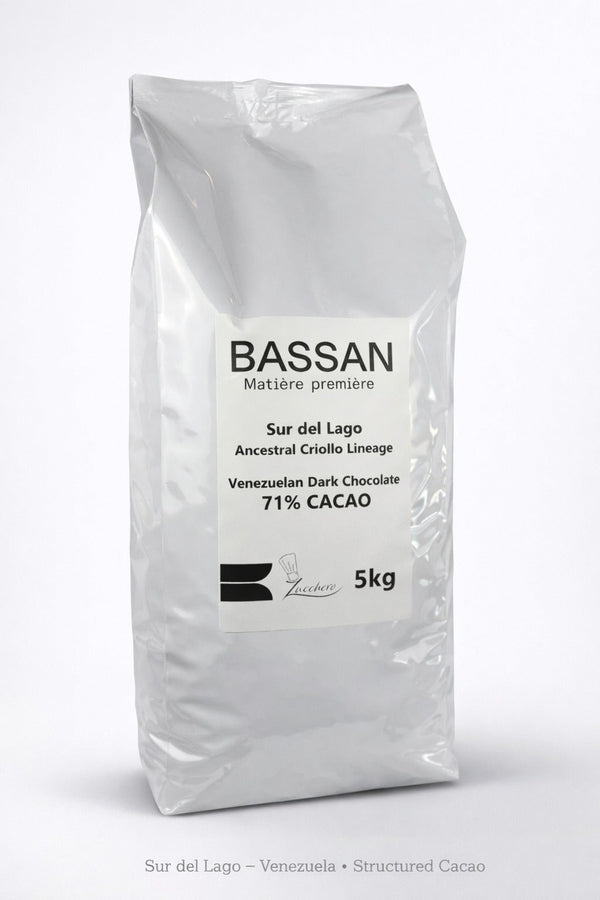 Bassan ChocolateSur del Lago Ancestral Criollo Lineage Dark Chocolate 71%From $69.95 CADView product →
For professionals
Equipping a chocolate shop, bakery or kitchen?
Tell us what you produce and how much. We will recommend the right machine, moulds and ingredients, and send you a quote.
For home bakers
Professional tools for your own kitchen
The same European moulds, tools and ingredients the professionals use.
5% off orders over $500 CAD, applied automatically at checkout.
Keep reading

Leave a comment
All comments are moderated before being published.
This site is protected by hCaptcha and the hCaptcha Privacy Policy and Terms of Service apply.