



How to Make Shiny Chocolate Bonbons: A Step-by-Step Guide
Short answer: shiny bonbons come from three things working together: a clean, unscratched mould, chocolate that is properly tempered and kept at its working temperature, and a shell that sets and contracts so it releases cleanly. In practice: wash and dry the mould, temper the chocolate (dark close to 32°C / 90°F, milk and white close to 30°C / 87°F, or your chocolate maker's figures), fill, vibrate, drain and scrape the shell, fill and seal, then demould with light taps. Below is each step with the numbers and the fixes for a dull finish.
Quick answer: what you need for shiny bonbons
| Need | Product | Price |
|---|---|---|
| Temper and hold chocolate automatically, 110 V | Pavoni MiniTemper 110V | $3,350.00 CAD |
| Melt and hold chocolate while you seed by hand, 110 V | Martellato Digital Meltinchoc 6 L | $1,259.99 CAD |
| Check the working temperature | Martellato Digital Thermometer 50T001 | $29.95 CAD |
| Scrape the mould surface clean | Martellato Professional Chocolate Scraper 145 mm | $36.95 CAD |
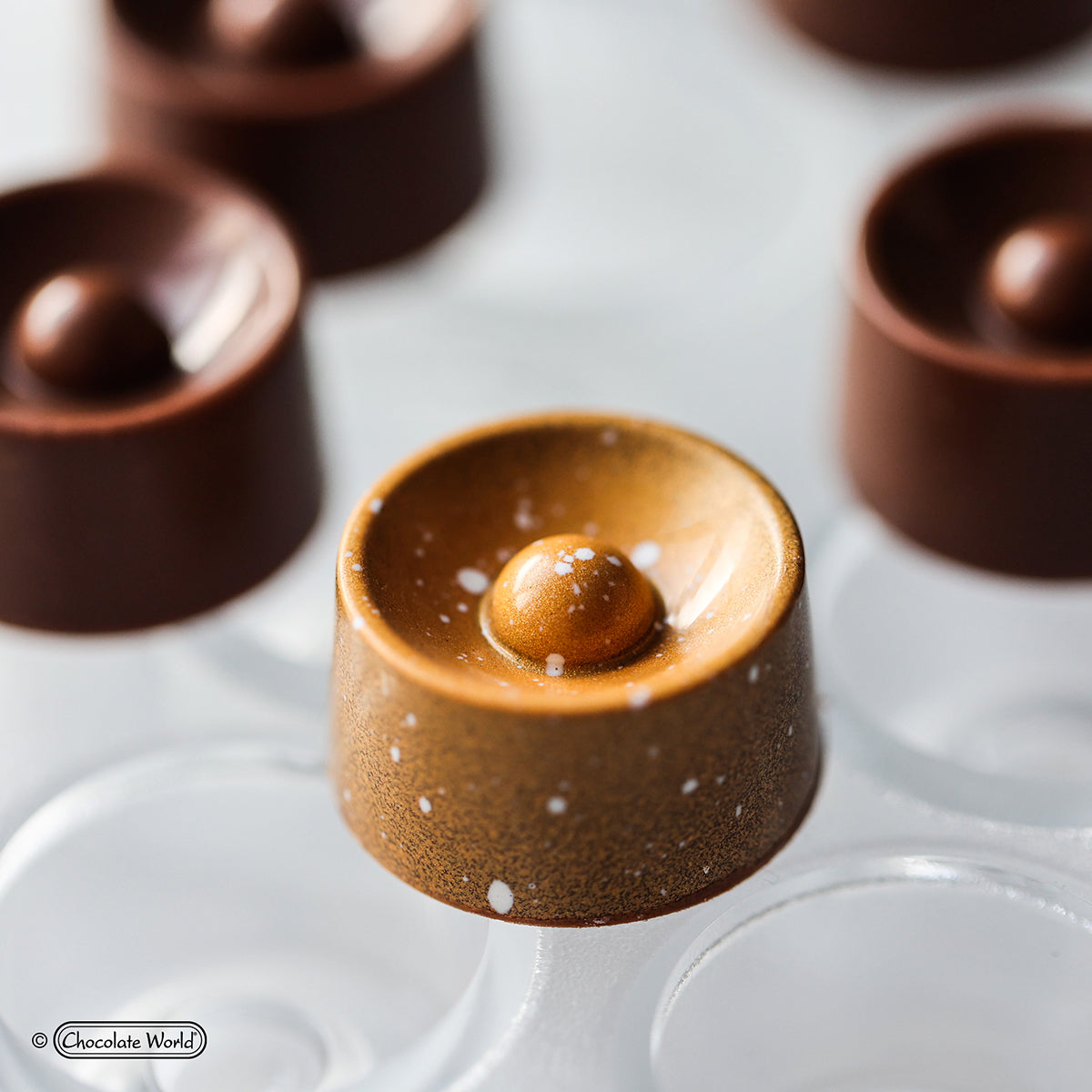
| Polycarbonate bonbon mould | Chocolate World CW1921 by Andrey Dubovik | from $39.95 CAD |
| BPA-free Tritan praline mould | Pavoni Italia Kapsule PC36FR | $39.95 CAD |
Why some bonbons shine and others don't
Gloss is a sign that the cocoa butter set in the right crystal form, against a clean mould surface. Cocoa butter can crystallise in six forms; only form V (Beta-5) gives a glossy surface, a clean snap and a longer shelf life with less risk of bloom. Badly tempered chocolate sets in unstable forms and turns out soft, dull or streaky.
The mould matters as much as the chocolate. Chocolate World, the Belgian maker of the polycarbonate moulds we stock, warns that hard-water traces left in the polycarbonate after washing can show on the finished chocolate, and that removing them by machine or abrasive scratches the mould.
The chocolate itself matters too. Couverture carries extra cocoa butter; combined with proper tempering, that gives more sheen and a firmer snap. Compound chocolate, where other fats replace the cocoa butter, is not suited to moulding: it does not set as firmly and is hard to release from a mould. Properly tempered cocoa butter chocolate shrinks slightly as it sets, and that is what lets it drop out of the mould.
Step 1: Clean and dry the mould
Start with a clean, completely dry mould. Clean new moulds before their first use too: Chocolate World notes they can carry dust and oil from manufacturing and transport.
- Wash at about 60°C (140°F) with a detergent suitable for polycarbonate, then rinse with demineralised water.
- Dry with warm air at no more than 70–80°C (158–176°F), the underside included, so no moisture transfers to the next mould.
- After washing, mould a first batch on its own. Chocolate World says it brings back part of the shine, and the full gloss returns over the following productions.
The full washing procedure is in our guide to how to clean polycarbonate chocolate moulds.
Step 2: Temper the chocolate and hold it there
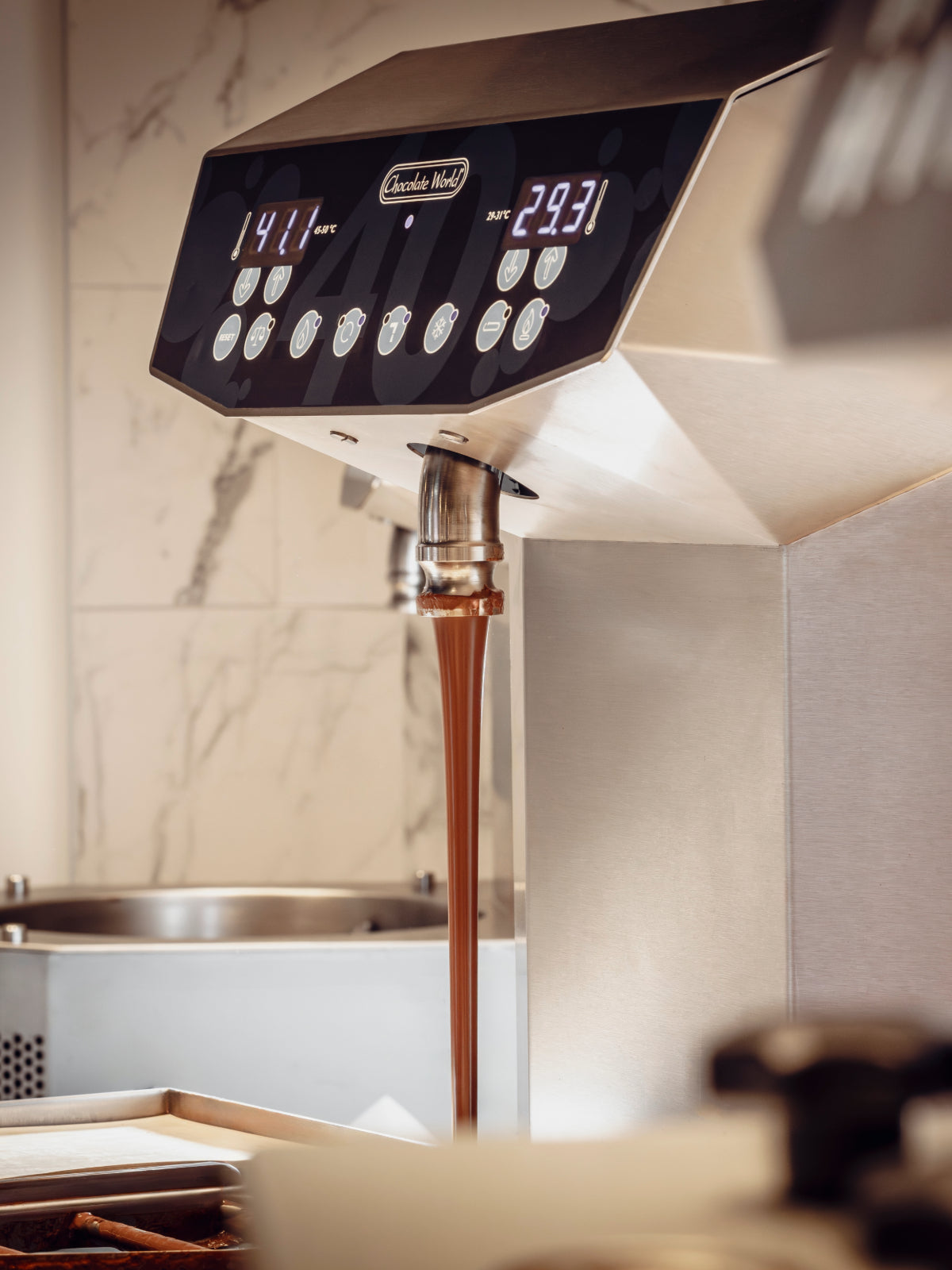
Tempering has three stages and a fourth that lasts the whole session: melt, seed and cool, reheat to working temperature, then hold it there.
- Melt completely, to erase every existing crystal.
- Seed and cool: bring the temperature down and add stable crystals, usually by stirring in pre-tempered chocolate.
- Reheat gently to the working temperature.
- Hold the chocolate in that narrow window while you mould. Too warm and the temper is lost; over-crystallised and it thickens in the bowl.
Follow your chocolate maker's figures, because they vary by brand and recipe. Two examples from chocolates we stock:
| Chocolate | Melt | Crystallisation | Working / tempering |
|---|---|---|---|
| FCH 55% dark, Venezuelan Trinitario | 45–50°C (113–122°F) | 28–29°C (82–84°F) | 31–32°C (88–90°F) |
| Bassan Sur del Lago 71% dark | 50°C (122°F) maximum | — | 30–32°C (86–90°F) |
If you have no maker's figures, Peter Greweling, professor of baking and pastry arts at the Culinary Institute of America, gives the optimum working temperature as very close to 32°C (90°F) for dark chocolate and 30°C (87°F) for milk or white.
Three checks before you fill
- Temper test: dip a palette knife and watch it set. Dark chocolate should set within about seven minutes with no streaks or grainy texture; milk and white take a little longer. If it fails, the chocolate needs more seed crystals, not more heat.
- Viscosity: tempered chocolate should not be clearly thicker than the melted, untempered chocolate. If it is, it is overseeded.
- Temperature: only then check the thermometer and bring the chocolate to its working temperature.
Watch the heat. Taking tempered chocolate much above about 34°C (93°F) destroys the stable crystals, and the chocolate keeps climbing after you stop heating. Temperature swings in and out of the working window also destabilise the temper, which is why a melter or tempering machine that holds a set temperature makes such a difference over a long moulding session. Hand tempering by passive cooling also stops working past roughly 500 g, because the air cannot pull the chocolate down to the ~26°C (79°F) the process needs.
View chocolate tempering machines →
Step 3: Fill, vibrate, drain and scrape the shell
For shells, the chocolate should flow easily: moulded pieces need a less viscous, somewhat runny chocolate so it fills every detail of the cavity.
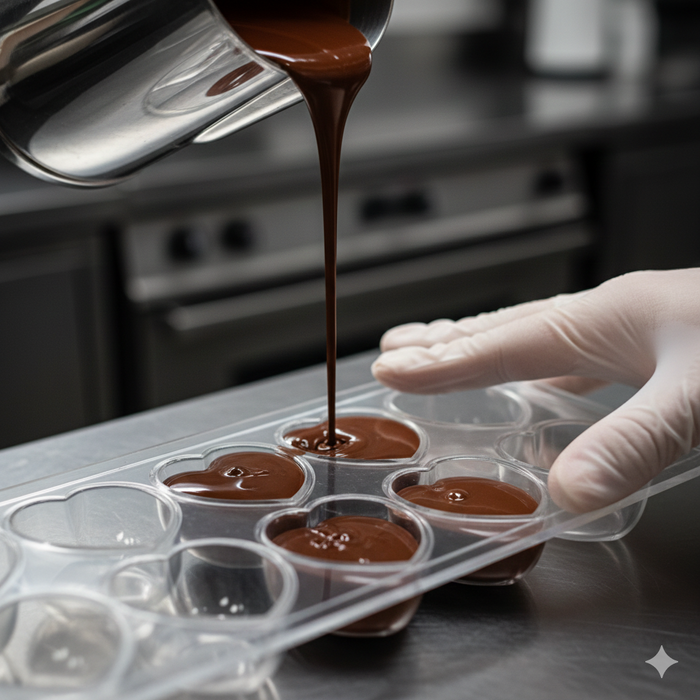
- Fill the cavities with tempered chocolate.
- Tap or vibrate the mould to release air bubbles. A vibrating table does this for you; Chocolate World makes one for exactly this job, to remove air bubbles after filling moulds.
- Turn the mould over and let the excess chocolate drain back into the bowl, leaving a thin shell.
- Scrape the mould surface clean with a stainless-steel scraper so the edges of every shell are sharp.
- Let the shells set before you fill them.
Want thinner shells? Chocolatiers add cocoa butter to couverture to make it more fluid, which gives thinner bonbon shells and easier dipping. Our natural Peruvian cocoa butter comes in an 8 kg box: $550.00 CAD (natural cocoa butter).
Step 4: Fill the shells
Pipe the filling into the set shells, leaving room for the closing layer. The chef recipes in Chocolate World's moulds catalogue give the temperatures they use: Andrey Dubovik fills his yuzu and matcha ganaches into the shells of the CW1921 mould at 29–30°C (84–86°F) and 29°C (84°F). Stéphane Leroux lets his filled Bamboo moulds crystallise for 12 hours at 18°C (64°F) and 60% humidity before closing them.
Use the temperatures given in your own filling recipe.
Step 5: Seal the bonbons
Close each bonbon with a layer of tempered chocolate and scrape the mould surface clean again. For a perfectly smooth, flat base, Juliana Badaró's recipe in the same catalogue finishes the closing layer with an acetate sheet before the chocolate sets.
Step 6: Demould without damaging the shine
When the chocolate has set and contracted, turn the mould over and release the bonbons. Chocolate World's advice for polycarbonate moulds:
- Several softer taps are better than one hard strike.
- Minimise twisting of the mould.
- Demould with materials softer than polycarbonate, and keep sharp objects out of the cavities: every scratch shows on the next batch.
- Use the moulds between 5°C and 80°C (41–176°F).
Troubleshooting: why are my bonbons dull?
| What you see | Likely cause | What to do |
|---|---|---|
| Matt or rough surface right after demoulding | Chocolate taken above about 34°C (93°F), stable crystals destroyed | Re-temper; heat slowly and hold a steady working temperature |
| Streaks, or a temper test that will not set | Underseeded chocolate | Add more seed (pistoles or tabling) before touching the heat |
| Chocolate thick and stiff in the bowl | Overseeded or over-crystallised | Carefully melt some crystals out; re-check viscosity |
| Grey bloom weeks later, loss of shine | Beta-6 crystals from an incomplete temper or temperature swings | Keep the chocolate in its working window for the whole session |
| Bonbons stick and will not release | Chocolate not tempered, or compound coating used | Use tempered couverture; it shrinks slightly as it sets |
| White marks copied from the mould | Hard-water traces or detergent left on the polycarbonate | Rinse with demineralised water; never scrub with an abrasive |
| Sugar bloom, sticky or spotted surface | Moisture: condensation, steam from a bain-marie, a damp bowl | Work dry; melt with dry heat |
More fixes in our guide to troubleshooting chocolate tempering.
Choosing moulds for shiny bonbons
Both mould materials we sell give a glossy finish; they suit different needs.
- Chocolate World polycarbonate (Belgium): the classic rigid frame mould, with chef-signature designs and magnetic moulds that print a transfer sheet onto the chocolate as it cools. Chocolate World states that its polycarbonate moulds contain BPA and are fully EU-compliant for professional chocolate work. The CW1921 by Andrey Dubovik is a 275 × 135 × 24 mm frame with 21 cavities of 10.5 g.
- Pavoni Italia Tritan (Italy): for kitchens that want BPA-free moulds. Pavoni describes its Tritan praline moulds as BPA-free and highly resistant to impacts, scratches and washing cycles.
View bonbon and praline moulds →
View Tritan chocolate moulds →
To compare designs and cavity sizes, see our top chocolate moulds for shiny bonbons.
How AI can help your production
Give an AI assistant your chocolate's melt, crystallisation and working temperatures and ask it to write a one-page tempering sheet for your team, with a log for the temper test, the working temperature at each fill and the room temperature. Ask it to scale a ganache recipe to the exact number of cavities you are filling (21 cavities of 10.5 g in the CW1921, for example), or to build a cleaning and drying checklist for your moulds. Written routines are what keep the shine the same from one shift to the next.
AI organises the information; tasting and the final decision stay with your chef.
Bonbon equipment and chocolate at Zucchero Canada
We are an authorized distributor of Chocolate World, Pavoni Italia and Martellato in Canada, and each brand has its own job on the bonbon bench:
- Moulds: Chocolate World polycarbonate for the classic frame mould and magnetic transfers; Pavoni Tritan when you want BPA-free.
- Tempering: the Pavoni MiniTemper tempers automatically on 110 V; Pavoni's catalogue lists a 5 L / 3 kg bowl. View the Pavoni MiniTemper 110V → $3,350.00 CAD
- Melting and holding: Martellato's Digital Meltinchoc melts to 45°C (113°F), signals when to seed, then holds 31°C (88°F) for dark, 29°C (84°F) for milk and 28°C (82°F) for white. Martellato table-top melters come with a free spatula. View the Digital Meltinchoc 6 L → $1,259.99 CAD
- Chocolate: Bassan Sur del Lago 71%, made in Canada from Venezuelan Trinitario cacao with ancestral Criollo lineage and listed for moulded bonbons and pralines. View Bassan Sur del Lago 71% → 5 kg bag $273.00 CAD
- Reference book: Ramon Morató's Chocolate (6th edition) covers tempering, coating and bonbon fillings, with 24 bonbon recipes. View the book → $160.00 CAD
Moulds count toward free shipping on orders of 300 CAD or more within Canada (remote areas and the territories pay the actual carrier rate; chocolate and machines are excluded), and orders over 500 CAD get 5% off automatically at checkout. Producing bonbons in volume? Contact us or call 587-774-8873 (toll free 877-741-8251).
Bonbon & praline moulds | Chocolate World | Tritan moulds | Tempering machines | Chocolate crystallization | Cleaning polycarbonate moulds | Choosing a chocolate mould
This article is for information only. Every business is different: draw your own conclusions based on your own expectations, budget and goals, and talk to qualified experts before you decide or invest.
Sources: KREA Swiss, "Tempering, what it really is and where it goes wrong" (kreaswiss.com); Peter Greweling, "Tempering Chocolate", Pastry Arts Magazine (2024); Chocolate World Moulds catalogue, Edition 15 ("Cleaning polycarbonate moulds" and chef recipes); Chocolate World, FAQ (chocolateworld.be); Chocolate World Equipment catalogue, Edition 9 (vibrating table M1215); Pavoni Italia, Food Equipment catalogue 2026 and Machines catalogue 2022; Martellato, Digital Meltinchoc user manual; BC Cook Articulation Committee, Understanding Ingredients for the Canadian Baker, ch. 7 (BCcampus, CC BY 4.0); product data from Bassan Chocolate, FCH Origins and Vilbo.
Good to know
Frequently asked questions
Why are my chocolate bonbons not shiny?
The usual causes are chocolate that lost its temper (taken above about 34°C / 93°F, or drifting in and out of its working temperature), a mould with scratches or hard-water marks, or moisture from condensation or steam. Temper properly, hold a steady working temperature, and keep moulds clean, dry and free of scratches.
What temperature should chocolate be for shiny bonbons?
Use your chocolate maker's working temperature. Our FCH 55% dark is tempered at 31–32°C (88–90°F) and Bassan Sur del Lago 71% works at 30–32°C (86–90°F). Without maker's figures, Peter Greweling of the Culinary Institute of America gives about 32°C (90°F) for dark and 30°C (87°F) for milk or white chocolate.
Why do my bonbons stick in the mold?
Properly tempered couverture shrinks slightly as it sets, which is what releases it from the mould. Sticking usually means the chocolate was not tempered, was demoulded before it set, or was a compound coating, which does not set as firmly as cocoa butter chocolate.
Are Chocolate World polycarbonate molds BPA-free?
No. Chocolate World states that its polycarbonate moulds contain BPA and are fully EU-compliant for professional chocolate work. If you want BPA-free moulds, Pavoni Italia's Tritan praline moulds are BPA-free.
Can I use candy melts or compound chocolate in bonbon molds?
It is not recommended. Compound chocolate replaces cocoa butter with other fats, so it does not set as firmly and can be difficult or impossible to remove from a mould. For shiny, clean-releasing bonbons, use tempered couverture.
Do bonbon molds qualify for free shipping?
Yes. Moulds count toward free shipping on orders of $300 CAD or more within Canada; remote areas and the territories pay the actual carrier rate, and chocolate and machines are excluded. Orders over $500 CAD also get 5% off automatically at checkout.
Shop this article
Products mentioned in this guide
 Pavoni ItaliaPavoni MiniTemper 110V Chocolate Tempering Machine MINITEMPER-110V$3,350.00 CADView product →
 MartellatoMeltinchoc Digital Melter 6 L – MCD102110V$1,259.99 CADView product →
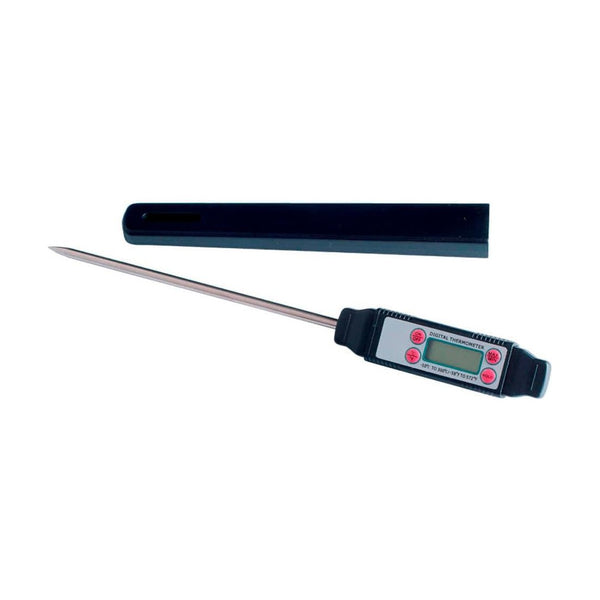 MartellatoDigital Thermometer for Chocolate 50T001$29.95 CADView product →
 MartellatoProfessional Chocolate Scraper 145 mm - Zucchero – 50RAS5ZUC$36.95 CADView product →
For professionals
Equipping a chocolate shop, bakery or kitchen?
Tell us what you produce and how much. We will recommend the right machine, moulds and ingredients, and send you a quote.
For home bakers
Professional tools for your own kitchen
The same European moulds, tools and ingredients the professionals use.
5% off orders over $500 CAD, applied automatically at checkout.
Keep reading



Leave a comment
All comments are moderated before being published.
This site is protected by hCaptcha and the hCaptcha Privacy Policy and Terms of Service apply.