



Short answer: remove leftover chocolate with a palette knife, wash the moulds at a steady 60°C (140°F) with a detergent made for polycarbonate (pH 9.5–10.5), rinse with demineralised water, dry with warm air at no more than 70–80°C (158–176°F), and run a first batch to bring the shine back. This is the procedure Chocolate World, the Belgian maker of the polycarbonate moulds we stock under its name, gives for its moulds. Below, each step is explained in plain terms, with the numbers your team needs at the sink.
Watch: how Chocolate World cleans its moulds
Why cleaning decides the shine of your bonbons
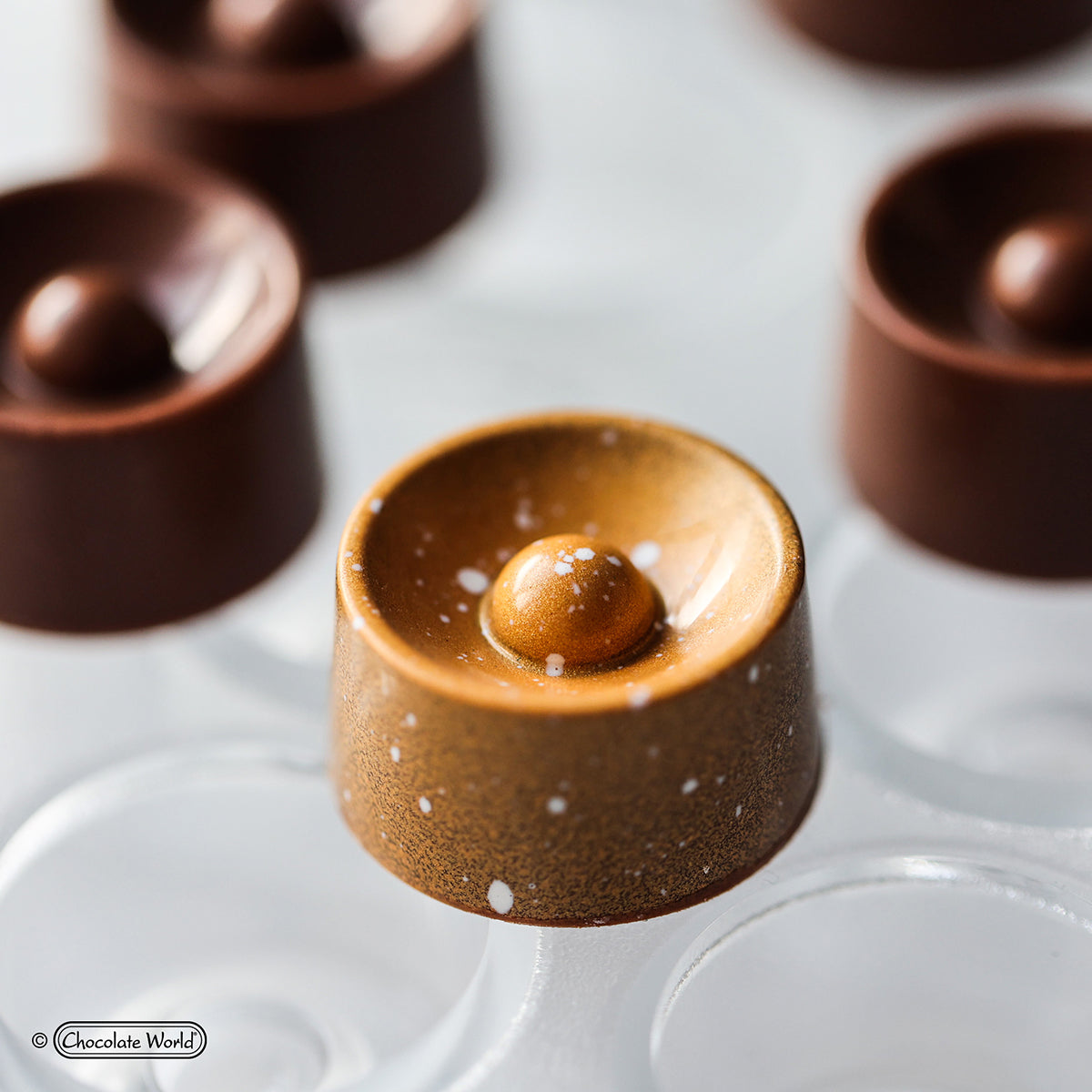
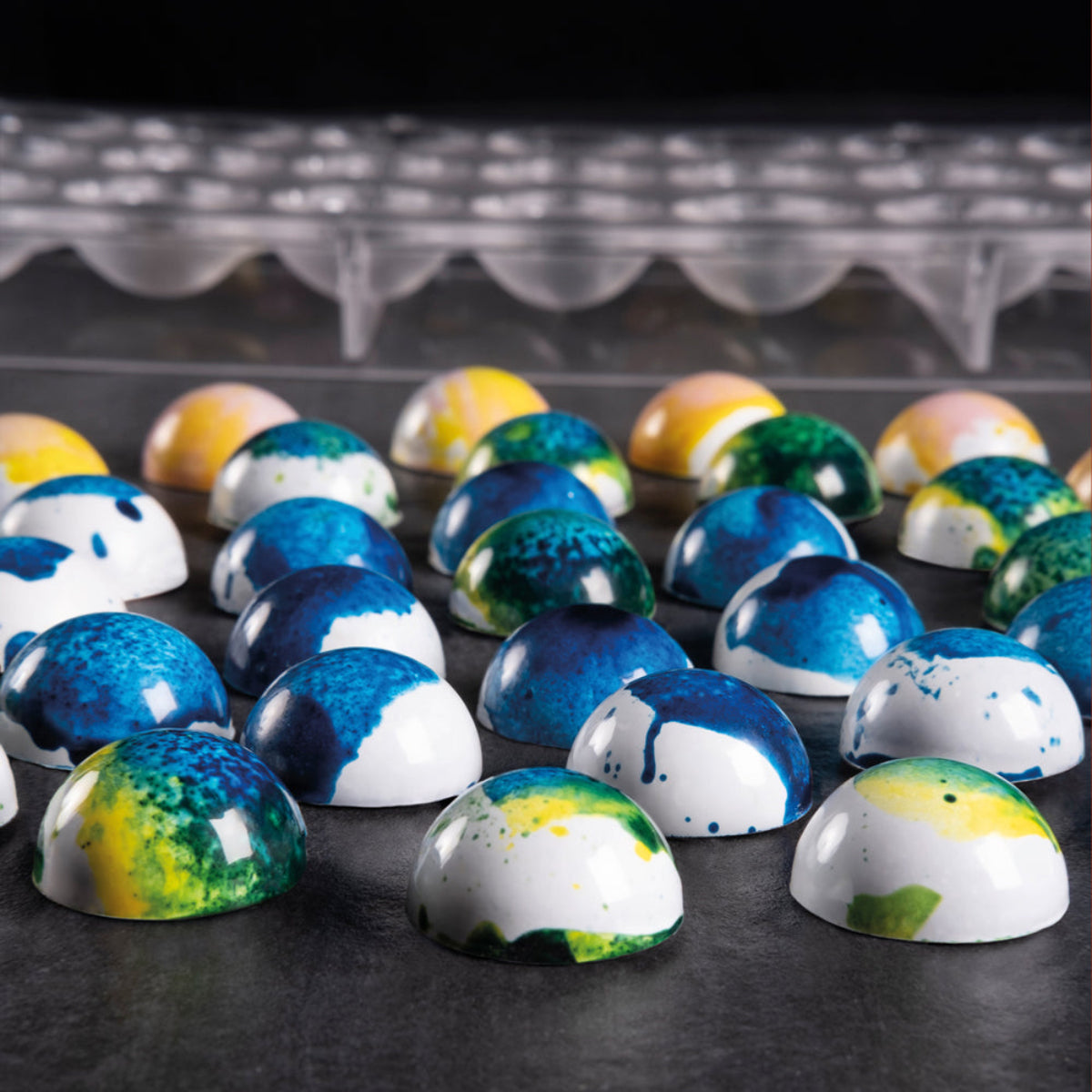
A polycarbonate mould gives back exactly what is on its surface. Chocolate takes its gloss from the polished cavity, so a film of grease, a hard-water mark or a fine scratch shows up on every piece you make. Chocolate World warns that cleaning outside its limits can crack a mould or leave it swollen or dull, which shortens its life and costs you production.
Clean every new mould before its first use as well: Chocolate World notes that new moulds can carry dust and oil from manufacturing and transport.
The numbers at a glance
| Stage | Chocolate World guideline |
|---|---|
| Washing water | Constant, about 60°C (140°F) |
| Detergent | Suitable for polycarbonate, pH 9.5–10.5; never a caustic alkaline detergent |
| Water pressure | Low, 3 bar (43.5 psi) maximum |
| Rinsing | Demineralised water, about 60°C (140°F); rinse aid pH 7 or lower |
| Drying | Warm air, 70–80°C (158–176°F) maximum; magnetic moulds 65°C (149°F) maximum |
| Working temperature of the mould | Between 5°C and 80°C (41–176°F) |
Step 1: Remove the excess chocolate
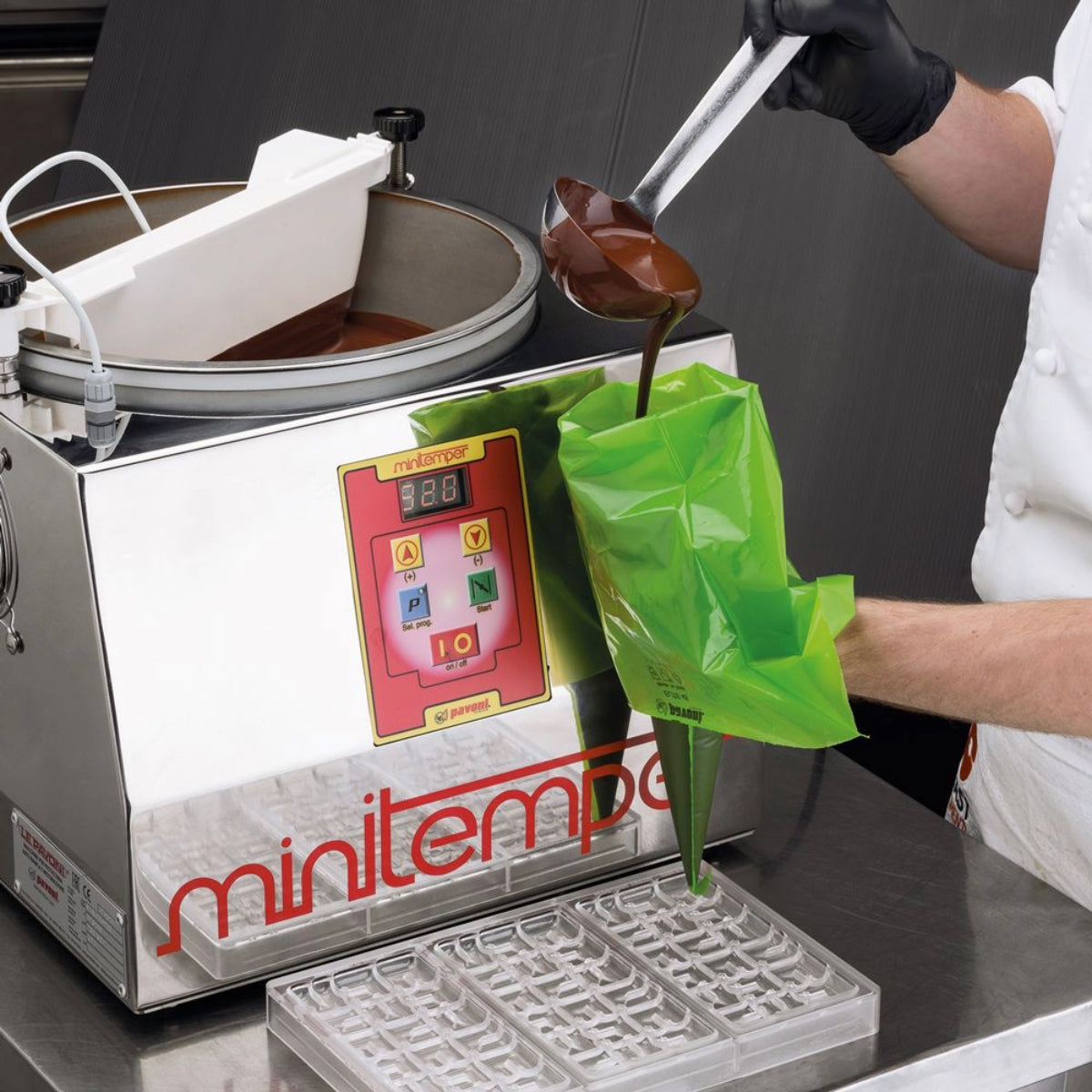
Before anything touches water, scrape off as much chocolate as you can with a palette knife or a small knife, working on the flat surface around the cavities. Less chocolate in the machine means a cleaner wash and less load on the detergent. Use a tool that will not scratch the polished surface, and never dig into the cavities with sharp objects.
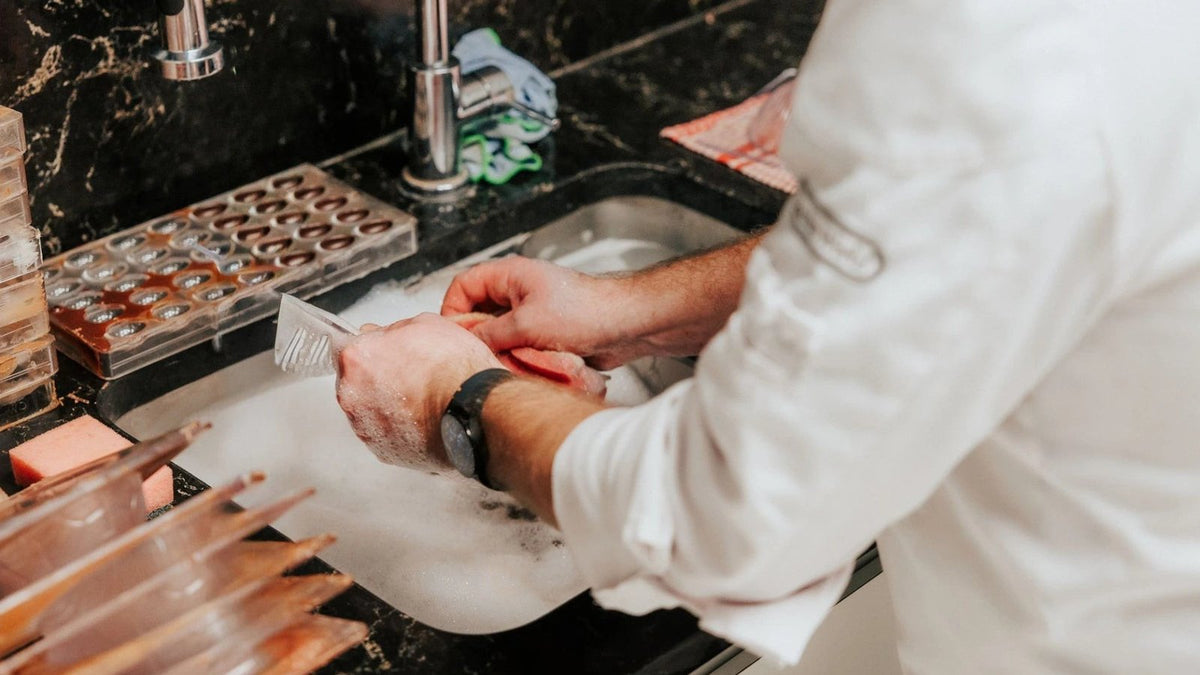
Step 2: Wash at a steady 60°C
- Temperature: keep the water at about 60°C (140°F) the whole time. Chocolate World advises checking it regularly: swings and excess heat break down polycarbonate over time.
- Detergent: only a product labelled suitable for polycarbonate, with a pH between 9.5 and 10.5, dosed as the label says. Caustic detergents with an alkaline reaction in water must not be used.
- Pressure: low, 3 bar (43.5 psi) at most. Under high pressure, any loose part in the machine can hit and mark the moulds.
- The machine: clean and service your dishwasher on its maker's schedule. In a household dishwasher, do not overdose detergent: chocolate only leaves greasy residue, never stubborn stains.
Step 3: Rinse with demineralised water
Rinse every mould so no detergent stays on the surface; leftover detergent can react with the next batch. Use demineralised water at about 60°C (140°F) and, if you use a rinse aid, one suitable for polycarbonate with a pH of 7 or lower.
Hard water is the usual cause of white marks. Chocolate World's catalogue lists soft water at 12–35 °fH; harder water can leave traces in the polycarbonate that show on the chocolate. Do not try to remove those traces with a machine or an abrasive: it will scratch the mould.
Step 4: Dry with warm air
Dry the moulds with a warm-air blower set no higher than 70–80°C (158–176°F); for magnetic moulds the limit is 65°C (149°F). Dry the underside too: moisture left on the back transfers to the mould stacked below and marks its cavities.
Step 5: Run a first batch
After washing, mould and demould a first batch on its own. It prepares the surface again and brings back part of the shine; the full gloss returns over the following productions, improving with each use.
To get the most shine from a clean mould, follow our step-by-step guide to shiny chocolate bonbons.
Using and storing your moulds between washes
- Work between 5°C and 80°C (41–176°F).
- Do not pour fillings, such as sugar- or alcohol-based fillings, straight into the mould.
- Avoid twisting the moulds, and demould with materials softer than polycarbonate. Several light taps are better than one hard strike.
- Keep sharp items out of the cavities, and on production lines avoid high pressure from the upper scrapers.
- Store moulds clean and completely dry, not under weight, and away from direct sunlight. Coloured moulds are less strong than clear ones, so handle them with extra care.
- Check moulds regularly and take damaged ones out of production.
How AI can help your production
Paste the table above into an AI assistant and ask it to write a one-page cleaning procedure for your team, with a sign-off line for water temperature, detergent dose and drying temperature at each wash. Ask it to build a weekly checklist for dishwasher service and water hardness checks. A written routine keeps every shift washing moulds the same way, which is what protects their shine.
AI organises the information; tasting and the final decision stay with your chef.
Chocolate World moulds and tools at Zucchero Canada
We stock Chocolate World polycarbonate moulds, made in Belgium, including magnetic moulds for transfer sheets. Every Chocolate World mould page lists its washing and drying limits.
View polycarbonate chocolate moulds →
For the moulding itself, Chocolate World scrapers with stainless-steel blades clear the excess chocolate from the mould surface:
- View the M1190 scraper 150 mm → $19.95
- View the M1191 scraper 200 mm → $24.95
- View the M1185 trapezium scraper 180 mm → $35.95
Questions about a specific mould? Write to sales@zuccherocanada.ca or call 587-774-8873 (toll free 877-741-8251).
Chocolate World | Bonbon & praline moulds | Magnetic moulds | How to choose a chocolate mould | Shiny bonbons guide
This article is for information only. Every business is different: draw your own conclusions based on your own expectations, budget and goals, and talk to qualified experts before you decide or invest.
Sources: Chocolate World, "How to clean moulds" (chocolateworld.be, 2026) and Chocolate World Moulds catalogue, Edition 15, "Cleaning polycarbonate moulds"; video: Chocolate World, "How to clean your moulds" (YouTube).







Leave a comment
All comments are moderated before being published.
This site is protected by hCaptcha and the hCaptcha Privacy Policy and Terms of Service apply.