Sugar-Free Chocolate for Diabetics: What You Need to Know
Short answer: sugar-free chocolate can be part of a diabetes meal plan, but sugar-free does not mean carbohydrate-free. In Canada, a "sugar-free" claim means less than 0.5 g of sugars per reference amount and serving, and the food must also meet the conditions for "low in energy". The sweetness comes from sugar alcohols such as maltitol, isomalt or erythritol, or from sweeteners such as steviol glycosides, sucralose or monk fruit extract. Diabetes Canada says sugar alcohols can still raise blood sugar, though not as much as regular sugar, and that more than 10 g a day may cause gas, bloating or diarrhea. Read the carbohydrate, fibre and sugar alcohol lines on the label, and ask your health care team how a product fits your plan.
This article is for general information only and is not medical or nutritional advice. Always consult your doctor, pharmacist or a registered dietitian about your own situation, especially during pregnancy or breastfeeding, or if you have diabetes, allergies or a medical condition.
What "sugar-free" means on a Canadian label
A "sugar-free" claim in Canada has two conditions: less than 0.5 g of sugars per reference amount and per serving, and the food must meet the conditions for "low in energy".
Health Canada's Table of Permitted Nutrient Content Statements and Claims lists the accepted wordings, including "sugar-free", "free of sugar", "no sugar", "0 sugar", "zero sugar", "without sugar" and "sugarless". The energy condition was changed in 2022 from "free of energy" (less than 5 calories) to "low in energy" (40 calories or less, with a density criterion for small reference amounts), to let products with low-calorie sweeteners use the claim.
"No added sugars" is a different claim. The Canadian Food Inspection Agency (CFIA) allows it only when no sugars-based ingredients, or ingredients containing them, were added and the sugars content was not increased by other means. It tells you what was added, not how much sugar or carbohydrate the food contains.
| Label wording | What it means in Canada | What to check next |
|---|---|---|
| Sugar-free, zero sugar, no sugar | Less than 0.5 g of sugars per reference amount and serving, and low in energy | Carbohydrate, fibre and sugar alcohols in the Nutrition Facts table |
| No added sugars | No sugars-based ingredients added; sugars not increased by other means | "Sugars" in the Nutrition Facts table: the food can still contain sugars from its ingredients |
| Contains sugar alcohols | The total sugar alcohol content must be declared in grams per serving | The grams per serving, against the 10 g a day that Diabetes Canada mentions for side effects |
What sweetens sugar-free chocolate
Sugar-free and no-added-sugar foods are sweetened with sugar alcohols (polyols) or with non-nutritive sweeteners, according to Diabetes Canada.
Health Canada lists the sugar alcohols permitted as sweeteners and their energy values:
| Sugar alcohol | Energy (kcal per gram) |
|---|---|
| Erythritol | 0.2 |
| Mannitol | 1.6 |
| Isomalt | 2 |
| Lactitol | 2 |
| Sorbitol | 2.6 |
| Sorbitol syrup | 3 |
| Maltitol and maltitol syrup | 3 |
| Xylitol | 3 |
Hydrogenated starch hydrolysates are also on Health Canada's list. The non-nutritive sweeteners Diabetes Canada lists as approved in Canada include acesulfame potassium, advantame, aspartame, monk fruit extract, neotame, saccharin, steviol glycosides and sucralose. Diabetes Canada describes them as safe when used in moderation.
Is sugar-free chocolate good for diabetics?
Diabetes Canada describes sugar-free products as safe when used in moderation, but sugar-free chocolate still brings carbohydrate and fat: count it as a treat in your meal plan, not as a health food.
Diabetes Canada's guidance is that people with diabetes can enjoy sugar in small amounts, and that up to 10% of daily calories can come from added sugar, ideally after talking to your health care team. A sugar-free bar lowers the sugar, but the cocoa and the other ingredients still bring carbohydrate and fat. Even chocolate with no sugar at all has carbohydrate: USDA FoodData Central lists unsweetened baking chocolate at 28.4 g of carbohydrate per 100 g, of which 16.6 g is fibre, and 52.3 g of fat.
If you are comparing with plain dark chocolate, its sugar content falls as the cacao percentage rises: USDA lists 24.0 g of sugars per 100 g for dark chocolate with 70–85% cacao solids, against 47.9 g at 45–59%. Our guide Can diabetics eat dark chocolate? compares carbohydrate and fibre by cacao percentage.
Does sugar-free chocolate raise blood sugar?
It can, but less than regular chocolate: the sugar alcohols raise blood sugar less than sugar, and the other ingredients still count.
- Diabetes Canada: sugar alcohols "can still raise your blood sugar, but not as much as regular sugar". They are only partly absorbed and have fewer calories than sugar.
- Health Canada: its fact sheet on sugar alcohols states that they do not produce significant changes in blood glucose, and advises people with diabetes to consult their physician or another health professional before increasing their intake of foods that contain them.
- Carbohydrate counting: sugar alcohols are listed separately under "Carbohydrate" in the Nutrition Facts table. Diabetes Canada recommends talking to a dietitian if you count carbohydrate and want to use foods sweetened with sugar alcohols. Fibre does not raise blood sugar and is subtracted from total carbohydrate to get the available carbohydrate.
How your own blood sugar responds depends on you and on the product. Your health care team can tell you how to check it.
Sugar-free chocolate side effects
The main known side effect is digestive: sugar alcohols can cause gas, bloating, discomfort or a laxative effect when you eat too much of them.
- Amount: Diabetes Canada says that more than 10 g of sugar alcohols a day may cause gas, bloating or diarrhea. Check the grams of sugar alcohols per serving on the label.
- Sensitivity: Health Canada notes that sensitivity varies from person to person and that tolerance can develop with frequent consumption.
- Erythritol research: a 2023 study by Witkowski and colleagues in Nature Medicine found that higher blood levels of erythritol were associated with a higher three-year risk of major cardiovascular events in people undergoing cardiac evaluation. It shows an association, not proof of cause; ask your doctor if you have heart disease or are at risk.
How to choose a sugar-free chocolate
Compare products on the Nutrition Facts table and the ingredient list, not on the front-of-pack claim.
- Total carbohydrate and fibre: subtract fibre from total carbohydrate to get the available carbohydrate per serving.
- Sugar alcohols: note the grams per serving and keep your daily total in mind.
- The sweetener: the ingredient list names it (for example maltitol, erythritol or steviol glycosides).
- Serving size: compare two products on the same weight.
- Cacao content: in sweetened dark chocolate, a higher cacao percentage leaves less room for sugar. Our guide to chocolate percentages explains what the number measures.
For sugar content by cacao percentage, see how much sugar is in dark chocolate.
For producers: making low-sugar and no-added-sugar chocolate products
If you make chocolate, desserts or hot chocolate for customers who watch their sugar, start from unsweetened cacao or a higher-percentage couverture, and decide the sweetening yourself.
| What you need | Product | Price |
|---|---|---|
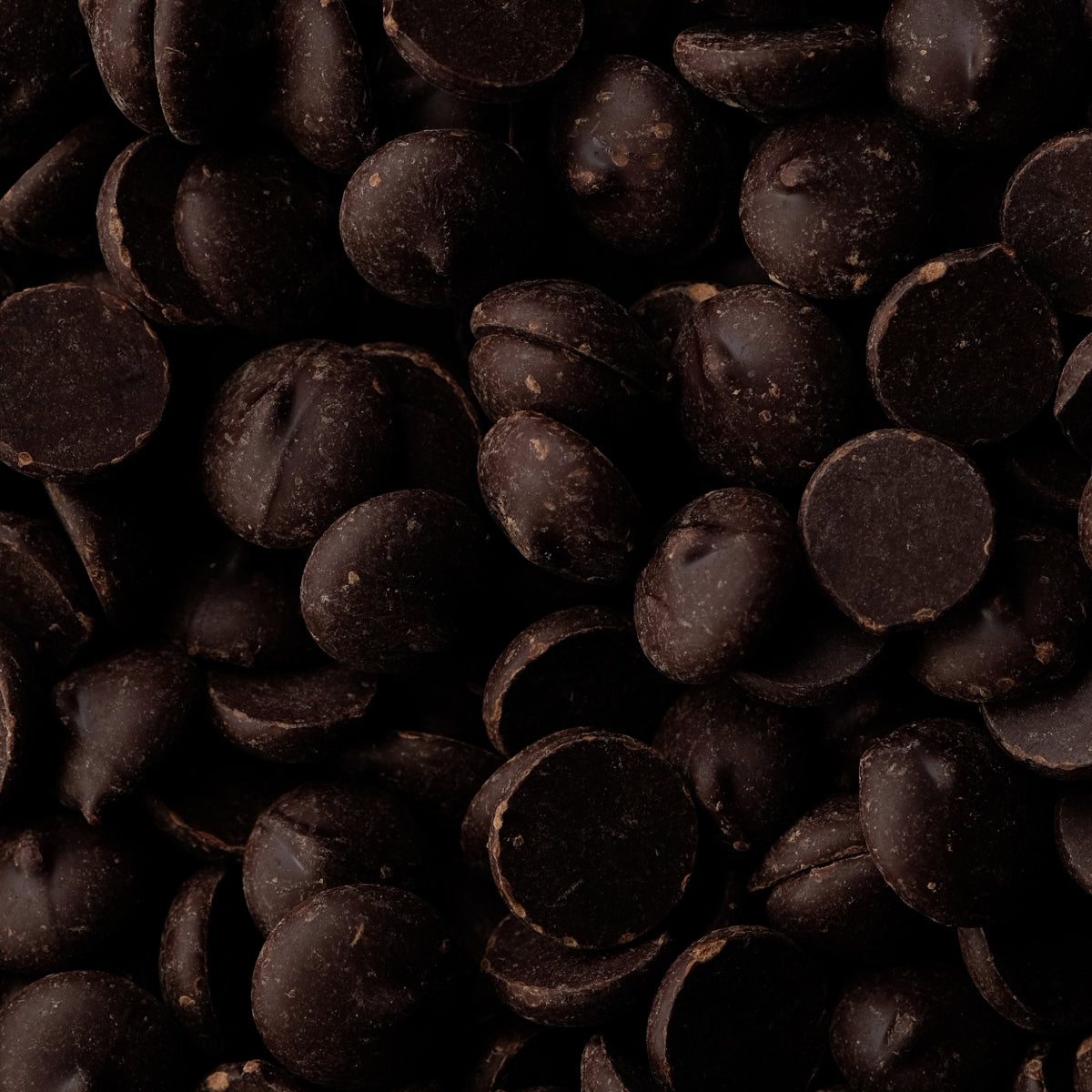
| Cocoa mass with no added sugar or fat, for cakes, brownies, sauces and fillings | Natural Cocoa Liquor Wafers, 100% Peruvian cocoa, 1 kg | $29.99 CAD |
| A 71% couverture for bonbons, tablets and ganache | Bassan Sur del Lago 71%, 5 kg | $273.00 CAD |
| Cacao crunch and flavour for toppings and inclusions | Venezuelan cacao nibs, 1 kg | $69.95 CAD |
| Beans for your own bean-to-bar recipe | Sur del Lago cocoa beans, Venezuela, 1.5 kg | $80.00 CAD |
| Bulk cocoa powder for bakeries, ice cream and drinks | Dutched 20/22 cacao powder, 25 kg | $710.00 CAD |
Start from unsweetened cacao
Our Natural Cocoa Liquor Wafers are natural cocoa mass from Peruvian fine cocoa with no added fat or sugar, in easy-melt wafers. KKO Real, the Venezuelan cocoa we distribute exclusively in Canada, makes Repostería, an alkalized baking cocoa with 10–14% cocoa butter, and Taza, a drinking cocoa with 18–22% cocoa butter, both with no sugar added and a bilingual Canadian Nutrition Facts label. Taza is made to be whisked into hot milk and sweetened to taste, so your customer or your recipe decides the sweetener.
Choose a higher cacao percentage
Where the product is sweetened with sugar, a higher cacao percentage is the simplest lever. Bassan's Sur del Lago 71% is made in Canada from Venezuelan Trinitario cacao with ancestral Criollo lineage; its ingredients are roasted cocoa beans, cocoa butter, cane sugar and organic sunflower lecithin, and it comes with a bilingual technical sheet.
View dark chocolate couverture →
Control the recipe from the bean
In bean-to-bar, the sweetener in your bar is whatever you put in the refiner, so you set the recipe and the label. Our Sur del Lago beans come from the southern basin of Lake Maracaibo in western Venezuela, Trinitario cacao with 10–30% ancestral Criollo lineage, in 1.5 kg, 5 kg, 20 kg and 60 kg formats.
Label it correctly
If you add sugar alcohols, Health Canada requires their total content in grams per serving on the label, and the Nutrition Facts table must show the amount added. Before you print "sugar-free" or "no added sugars", check the conditions above with a labelling specialist.
Go further on healthier pastry
Ramon Morató's Files treats pastry as research across 15 projects, covering technique, science, nutrition and trends such as healthier pastry, in 529 bilingual English/Spanish pages.
- View Files by Ramon Morató → $150.00 CAD
How AI can help your production
Give an AI assistant your recipe in grams and the nutrition values from each supplier's label or technical sheet. Ask it to calculate carbohydrate, fibre, sugars and sugar alcohols per 100 g and per piece, and to compare two versions of the recipe, for example a 55% couverture against a 71%, or sugar against a sugar alcohol. It can lay out the figures your labelling specialist will need for the Nutrition Facts table and draft a checklist of the conditions for "sugar-free" and "no added sugars" claims.
AI organises the information; tasting and the final decision stay with your chef.
Cacao ingredients at Zucchero Canada
We stock unsweetened cacao, couverture and cacao beans for chocolatiers, pastry chefs, cafés and bean-to-bar makers across Canada. We do not sell sugar-free chocolate; we sell the ingredients to make your own recipe. Food products ship within Canada only.
- No added sugar or fat: Natural Cocoa Liquor Wafers, in 1 kg, 5 kg and 18 kg formats.
- Bonbons, tablets and ganache: Bassan Sur del Lago 71%, in 1 kg, 5 kg and 20 kg formats.
- Bakeries, ice cream and drinks in volume: Dutched 20/22 cacao powder in 25 kg bags.
- Bean-to-bar: raw cocoa beans from Venezuela, Peru and Ecuador.
Buying for a bakery, café or production kitchen? Contact us for volume pricing, write to sales@zuccherocanada.ca or call 587-774-8873 (toll free 877-741-8251).
Cacao | Dark couverture | KKO Real | Dark chocolate and diabetes | Sugar in dark chocolate
This article is for information only. Every business is different: draw your own conclusions based on your own expectations, budget and goals, and talk to qualified experts before you decide or invest.
Sources: Health Canada, "Proposal to modify the Table of Permitted Nutrient Content Statements and Claims (free of sugars)" (January 2025) and "Sugar Alcohols (Polyols) and Polydextrose Used as Sweeteners in Foods"; Canadian Food Inspection Agency, "Criteria for the nutrient content claim no added sugars"; Diabetes Canada, "Sugars and sweeteners" and "Basic carbohydrate counting"; USDA FoodData Central, entries 170271, 170273 and 167568; Witkowski M. et al., "The artificial sweetener erythritol and cardiovascular event risk", Nature Medicine 29 (2023): 710–718; Zucchero Canada product data for Natural Cocoa Liquor Wafers, Bassan Sur del Lago 71%, Venezuelan cacao nibs, Sur del Lago cocoa beans, Dutched 20/22 cacao powder, KKO Real Repostería and Taza, and Files.
Good to know
Frequently asked questions
Can diabetics eat sugar-free chocolate?
Diabetes Canada describes sugar-free products as safe when used in moderation, but sugar-free chocolate still contains carbohydrate and fat from the cocoa and other ingredients, and its sugar alcohols can still raise blood sugar, though not as much as regular sugar. Count it in your carbohydrate plan and ask your doctor or dietitian how it fits your own situation.
Does sugar-free chocolate raise blood sugar?
It can, but less than regular chocolate. Diabetes Canada says sugar alcohols can still raise blood sugar, but not as much as regular sugar; Health Canada's fact sheet says they do not produce significant changes in blood glucose and advises people with diabetes to consult a health professional before eating more of them. The cocoa and other ingredients also bring carbohydrate, so check total carbohydrate and fibre on the label.
What are the side effects of sugar-free chocolate?
The main one is digestive. Diabetes Canada says more than 10 g of sugar alcohols a day may cause gas, bloating or diarrhea, and Health Canada notes that sensitivity varies from person to person. Check the grams of sugar alcohols per serving on the label.
Is sugar-free chocolate really sugar-free?
Not necessarily zero. In Canada, a "sugar-free" claim means less than 0.5 g of sugars per reference amount and serving, and the food must also meet the conditions for "low in energy". It can still contain carbohydrate from cocoa, fibre and sugar alcohols.
What is the difference between "sugar-free" and "no added sugar" chocolate?
"Sugar-free" limits the sugars in the food: less than 0.5 g per reference amount and serving. "No added sugars" means no sugars-based ingredients were added and the sugars content was not increased by other means, but the food can still contain sugars from its ingredients. Check "Sugars" in the Nutrition Facts table in both cases.
Does Zucchero Canada sell sugar-free chocolate?
No. We sell ingredients to make your own recipes, such as Natural Cocoa Liquor Wafers with no added fat or sugar, KKO Real cocoa with no sugar added, couverture and cacao beans. Food products ship within Canada only, and cacao and chocolate are excluded from our free shipping on orders of $300 CAD or more. Orders over $500 CAD get 5% off automatically at checkout.
Shop this article
Products mentioned in this guide
 Canada Cacao Co.Natural Cocoa Liquor Wafers - 100% Peruvian Fine CocoaFrom $29.99 CADView product →
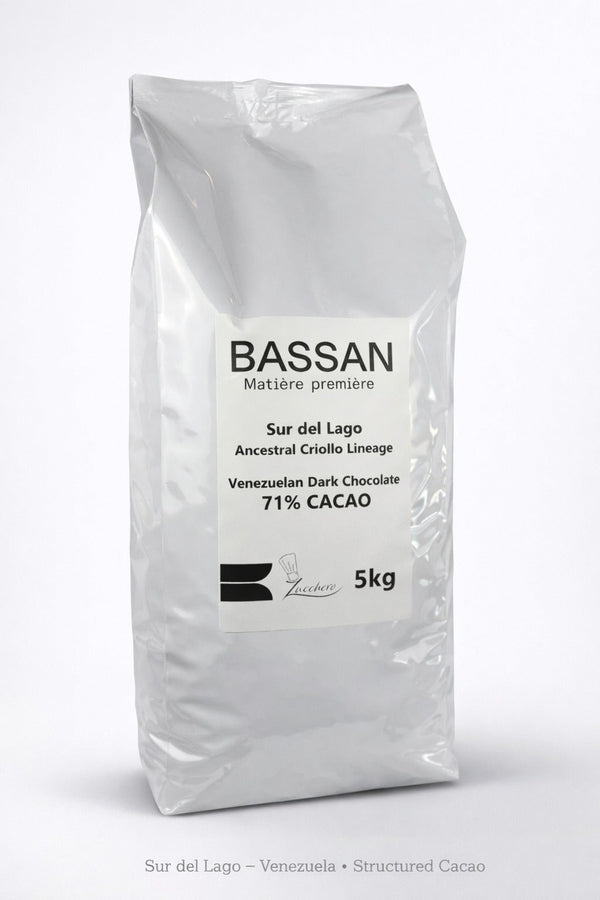 Bassan ChocolateSur del Lago Ancestral Criollo Lineage Dark Chocolate 71%From $69.95 CADView product →
 Canada Cacao Co.Venezuelan Cacao Nibs – Single Origin – 1 kg Bag$69.95 CADView product →
 Canada Cacao Co.Sur del Lago Ancestral Criollo Lineage Cocoa Beans · VenezuelaFrom $80.00 CADView product →
For professionals
Equipping a chocolate shop, bakery or kitchen?
Tell us what you produce and how much. We will recommend the right machine, moulds and ingredients, and send you a quote.
For home bakers
Professional tools for your own kitchen
The same European moulds, tools and ingredients the professionals use.
5% off orders over $500 CAD, applied automatically at checkout.
Keep reading


Leave a comment
All comments are moderated before being published.
This site is protected by hCaptcha and the hCaptcha Privacy Policy and Terms of Service apply.