How to Make Milk Chocolate: Ingredients, Formula and Step-by-Step Process
Short answer: milk chocolate is made by mixing cocoa liquor and cocoa butter with sugar and milk powder, refining the mixture until the particles are too small to feel (under 30 microns), conching it to develop flavour and flow, then tempering and moulding it. A textbook formula is 12% cocoa mass, 19% cocoa butter, 48.5% sugar, 20% whole milk powder and 0.5% soy lecithin. To be sold as milk chocolate in Canada, the result needs at least 25% total cocoa solids, 12% milk solids and 3.39% milk fat.
Quick answer: what you need to make milk chocolate
| Step | What to use | Price |
|---|---|---|
| Cocoa base (no roasting or grinding) | Natural cocoa liquor wafers, 100% Peruvian fine cocoa, 1 kg | $29.99 CAD |
| Added cocoa butter | Natural cocoa butter, 100% Peruvian fine cacao, 8 kg box | $550.00 CAD |
| Cocoa base from the bean | Sur del Lago cocoa beans, Venezuela, 1.5 kg | $80.00 CAD |
| Refining and conching, small batches | Chocolate World M1025 tabletop refiner, 4.5 kg, 110 V | $1,750.00 CAD |
| Tempering | Martellato Digital Meltinchoc MCD101, 3.6 L, milk program | $1,150.00 CAD |
| Moulding bars | Chocolate World Tablet 100 g mould CW2162 | $44.95 CAD |
What makes chocolate "milk chocolate"
Milk chocolate is a legal name with minimum contents, and they differ by market. In Canada, the CFIA's compositional standard says milk chocolate is cocoa liquor (or cocoa liquor and cocoa butter, or cocoa butter and cocoa powder) combined with a sweetening ingredient and milk ingredients, with these minimums:
| Minimum content | Canada (CFCS 4.1.8) | European Union (Directive 2000/36/EC) | United States (21 CFR 163.130) |
|---|---|---|---|
| Total cocoa solids | 25%, of which at least 15% cocoa butter and 2.5% fat-free cocoa solids | 25% dry cocoa solids, of which at least 2.5% dry non-fat cocoa solids | 10% chocolate liquor |
| Milk solids | 12% | 14% | 12% |
| Milk fat | 3.39% | 3.5% | 3.39% |
| Total fat | Not set | 25% (cocoa butter and milk fat) | Not set |
The Canadian standard also allows less than 5% whey or whey products, spices, salt and flavourings that do not imitate chocolate or milk. If you sell in Canada, this is the table your recipe and label must meet. For the background on the category, read what milk chocolate is.
Milk chocolate ingredients and a textbook formula
The classic milk chocolate formula has five ingredients. This one comes from Ghent University Cacaolab's course "Production of chocolate" (C. Delbaere, 2013), whose recipe slide cites Timms (2003):
| Ingredient | % by weight | Per 1 kg batch |
|---|---|---|
| Sugar | 48.5% | 485 g |
| Whole milk powder | 20% | 200 g |
| Cocoa butter | 19% | 190 g |
| Cocoa mass (cocoa liquor) | 12% | 120 g |
| Soy lecithin | 0.5% | 5 g |
The same source gives this formula a total fat content of 30.8%, calculating cocoa mass at 55% fat and whole milk powder at 26% fat. On those values it clears the Canadian minimums: 31% total cocoa solids, about 25.6% cocoa butter, about 5.4% fat-free cocoa solids, 20% milk powder and about 5.2% milk fat. Your own cocoa liquor and milk powder will have their own fat contents, so redo the check with the figures on your suppliers' specification sheets before you print a label. Milk and soy are both on Health Canada's list of priority food allergens.
How milk chocolate is made, step by step
Chocolate production runs through fermentation, drying, roasting and grinding of the beans, then mixing of all ingredients, conching and tempering. Fermentation is carried out at the plantations, and beans such as our Sur del Lago arrive fermented and sun-dried; everything after that can happen in your workshop.
1. Prepare the cocoa base
Starting from beans, you roast them, crack them and winnow the shells away to get nibs, then grind the nibs into cocoa liquor. Our guide on how to roast cacao beans covers the first step. To skip roasting and winnowing, start from Venezuelan cacao nibs ($69.95 CAD for 1 kg), made from Carenero Superior, Río Caribe Superior and Sur del Lago beans with 54–56% fat. To skip grinding too, start from cocoa liquor wafers, which contain no added fat or sugar.
2. Mix and refine
Refining is what turns the mix into smooth chocolate. The sugar and milk particles have to be ground until the chocolate does not feel gritty: under 30 microns, with 15–22 microns typical for continental European chocolate and 20–30 microns for North American chocolate.
For trial batches, the Chocolate World M1025 is a tabletop refiner with natural granite stones that runs 1.3 to 4.5 kg per batch on 110 V, refines particles to under 20 microns, and has a motor rated for up to 72 hours of continuous running. For production batches of up to about 15 kg, the Bilait R15 refines and conches in the same closed chamber, heating to 70°C (158°F) and holding the temperature, so you never transfer the mass between machines.
- View the Chocolate World M1025 refiner → $1,750.00 CAD
- View the Bilait R15 refiner → $12,370.00 CAD
3. Conche
Conching is a long mixing and heating stage. It coats every solid particle with fat, drives off volatile acids and excess moisture, brings the chocolate to the right viscosity and develops its colour and flavour. In milk chocolate, the lactose caramelises and the milk proteins take part in Maillard reactions during conching.
Industrial reference times for milk chocolate made with milk powder are 16–24 hours at up to 60°C (140°F); crumb milk chocolate is conched 10–16 hours at 49–52°C (120–126°F). Above 70°C (158°F) the cooked flavours change. These are factory figures: on a tabletop refiner, follow its manual and taste as you go. Our article on conching explains the stage in more depth.
4. Temper
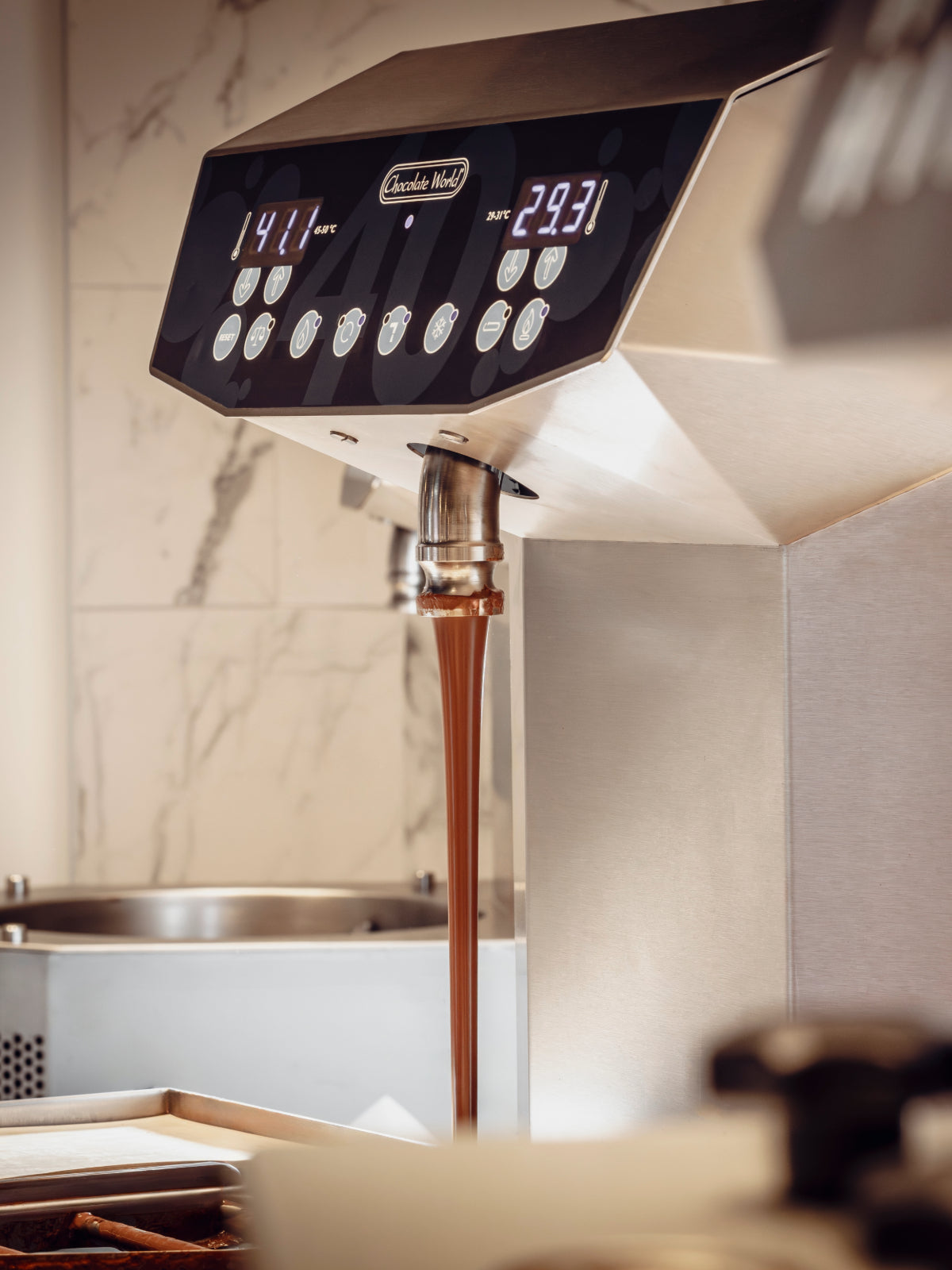
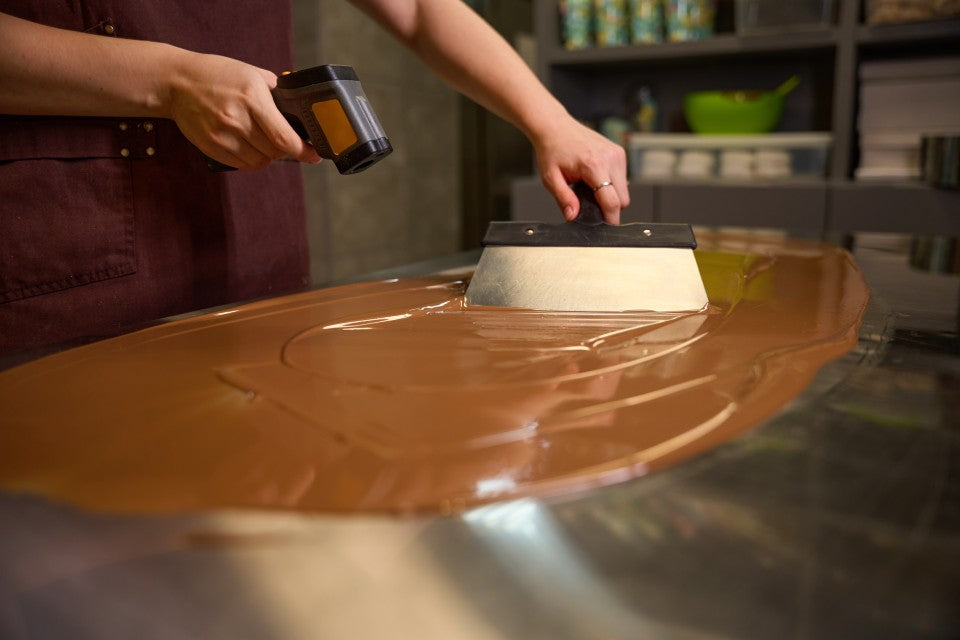
Tempering gives the cocoa butter stable crystals, and milk chocolate has to be cooled to a lower temperature than dark chocolate to crystallise to the same extent. The Martellato Digital Meltinchoc shows the difference in its presets: it melts the chocolate to 45°C (113°F), signals when to add seed chocolate, then holds 29°C (84°F) for milk chocolate against 31°C (88°F) for dark. Step-by-step methods are in our guide on how to temper chocolate.
5. Mould and set
Mould the tempered chocolate into bars; our guide to moulding chocolate covers the technique. The Chocolate World Tablet 100 g polycarbonate mould casts three 100 g bars at a time.
View chocolate bar and tablet moulds →
Making milk chocolate at home or in a small lab
The fastest small-scale route is to start from cocoa liquor and cocoa butter instead of beans, then weigh the formula above, refine, conch and temper. Two things decide the result:
- A refiner. Sugar and milk particles must be ground below 30 microns or the chocolate feels gritty; that is the refiner's job.
- Your ingredient sheets. The fat content of your cocoa liquor and milk powder changes the totals, so recalculate the formula with your own figures.
For a deeper technical reference, Ramon Morató's Chocolate, 6th edition ($160.00 CAD) runs to 416 pages and 200 recipes, with sections on chocolate as a product, tempering and chocolate making.
How AI can help your production
Give an AI assistant your formula and the fat and milk-solid figures from your suppliers' specification sheets, and ask it to check the result against the Canadian milk chocolate minimums in the table above. Ask it to scale the formula to your refiner's batch size, cost each 100 g bar from your purchase prices, and build a batch log for refining time, conching time, temperatures and tasting notes. A written log is what lets you repeat a good batch.
AI organises the information; tasting and the final decision stay with your chef.
Milk chocolate ingredients and equipment at Zucchero Canada
We supply the cocoa side of milk chocolate through Canada Cacao Co.: Venezuelan cocoa beans such as Sur del Lago, Venezuelan nibs, and Peruvian cocoa liquor and cocoa butter, alongside the KKO Real Venezuelan range, for which we are the exclusive distributor in Canada. Food products ship within Canada only.
For equipment, each machine has its own job: the Chocolate World M1025 for recipe trials on 110 V, the Bilait R15 for batches up to about 15 kg (we are Bilait's exclusive distributor in Canada), Martellato Meltinchoc melters for tempering small quantities, and Chocolate World polycarbonate moulds for the bars. Orders over $500 CAD get 5% off automatically at checkout. Producing for retail or wholesale? Contact our team for volume orders of cocoa liquor, cocoa butter and beans.
View cocoa liquor and cocoa mass →
Natural cocoa butter | Bean-to-bar machines | Bar & tablet moulds | What is chocolate liquor | Where to buy cocoa butter in Canada
This article is for information only. Every business is different: draw your own conclusions based on your own expectations, budget and goals, and talk to qualified experts before you decide or invest.
Sources: CFIA, Canadian Food Compositional Standards, Volume 4, §4.1.8 Milk Chocolate; Directive 2000/36/EC, Annex I; 21 CFR 163.130; C. Delbaere, "Production of chocolate", Ghent University Cacaolab (2013), citing Timms (2003), Beckett (2009) and Afoakwa (2010); V. Barišić et al., Molecules 24 (2019) 3163; P. Lonchampt and R. W. Hartel, Eur. J. Lipid Sci. Technol. 106 (2004) 241–274; Health Canada, "Food allergies"; Chocolate World Equipment catalogue (M1025); Bilait catalogue 2026 and product page (R15); Martellato Digital Meltinchoc manual; Zucchero Canada product pages.
Good to know
Frequently asked questions
How is milk chocolate made?
Cocoa liquor and cocoa butter are mixed with sugar and milk powder, refined until the particles are under 30 microns, conched to develop flavour and the right viscosity, then tempered and moulded. Starting from beans adds roasting, cracking, winnowing and grinding before the mixing.
What are the ingredients of milk chocolate?
Cocoa mass (cocoa liquor), cocoa butter, sugar and milk solids, usually whole milk powder, often with soy lecithin as an emulsifier. A reference formula taught by Ghent University's Cacaolab (citing Timms, 2003) is 48.5% sugar, 20% whole milk powder, 19% cocoa butter, 12% cocoa mass and 0.5% soy lecithin.
How much cocoa and milk does milk chocolate need in Canada?
Under the CFIA's Canadian Food Compositional Standards (4.1.8), milk chocolate needs at least 25% total cocoa solids (of which at least 15% cocoa butter and 2.5% fat-free cocoa solids), 12% milk solids from milk ingredients and 3.39% milk fat. The EU sets 14% dry milk solids and 3.5% milk fat.
Can I make milk chocolate at home without a refiner?
Not with a smooth texture. The sugar and milk particles have to be ground below 30 microns or the chocolate feels gritty, and that is the refiner's job. A tabletop refiner such as the Chocolate World M1025 takes 1.3 to 4.5 kg per batch on 110 V.
At what temperature do you temper milk chocolate?
Milk chocolate is tempered at a lower temperature than dark. The Martellato Digital Meltinchoc, for example, melts the chocolate to 45°C (113°F), signals when to add seed chocolate, then holds 29°C (84°F) for milk chocolate against 31°C (88°F) for dark. Always follow your chocolate maker's curve when it gives one.
Where can I buy cocoa liquor, cocoa butter and cacao beans in Canada?
Zucchero Canada stocks Venezuelan cacao beans and nibs, and Peruvian cocoa liquor and cocoa butter, through Canada Cacao Co. Food products ship within Canada only. Orders over $500 CAD get 5% off automatically at checkout; cacao and chocolate are not part of the $300 free-shipping offer.
Shop this article
Products mentioned in this guide
 Canada Cacao Co.Natural Cocoa Liquor Wafers - 100% Peruvian Fine CocoaFrom $29.99 CADView product →
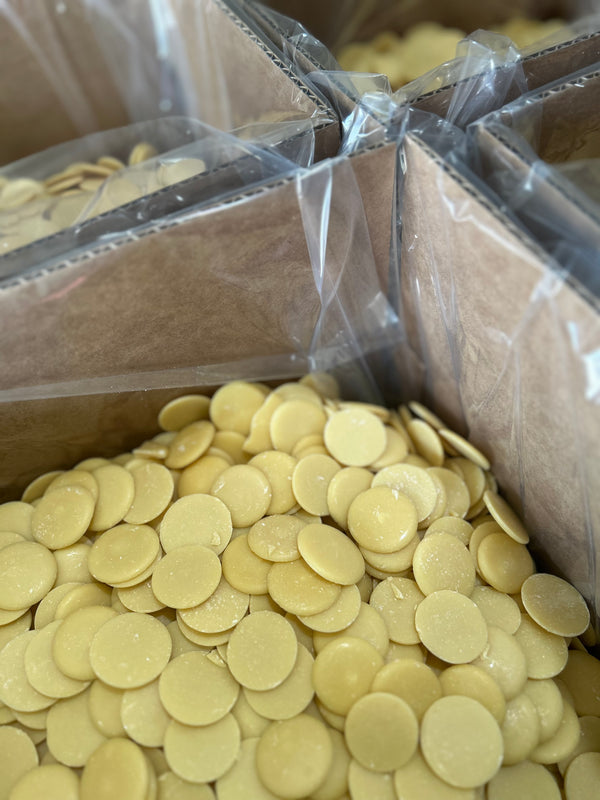 Canada Cacao Co.Natural Cocoa Butter 100% Peruvian Fine CacaoFrom $69.99 CADView product →
 Canada Cacao Co.Sur del Lago Ancestral Criollo Lineage Cocoa Beans · VenezuelaFrom $80.00 CADView product →
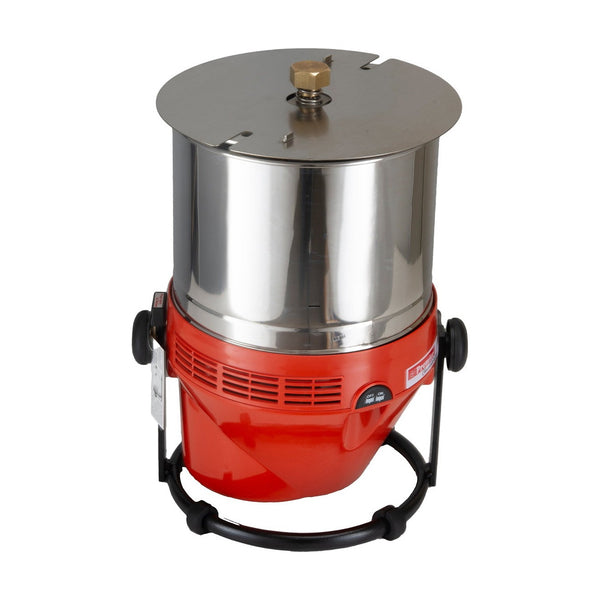 Chocolate WorldChocolate World M1025 Conching Device – 4.5kg Tabletop Refiner 110V$1,750.00 CADView product →
For professionals
Equipping a chocolate shop, bakery or kitchen?
Tell us what you produce and how much. We will recommend the right machine, moulds and ingredients, and send you a quote.
For home bakers
Professional tools for your own kitchen
The same European moulds, tools and ingredients the professionals use.
5% off orders over $500 CAD, applied automatically at checkout.
Keep reading


Leave a comment
All comments are moderated before being published.
This site is protected by hCaptcha and the hCaptcha Privacy Policy and Terms of Service apply.