
Oil vs Butter in Chocolate Baking: Which Fat to Use and How to Substitute
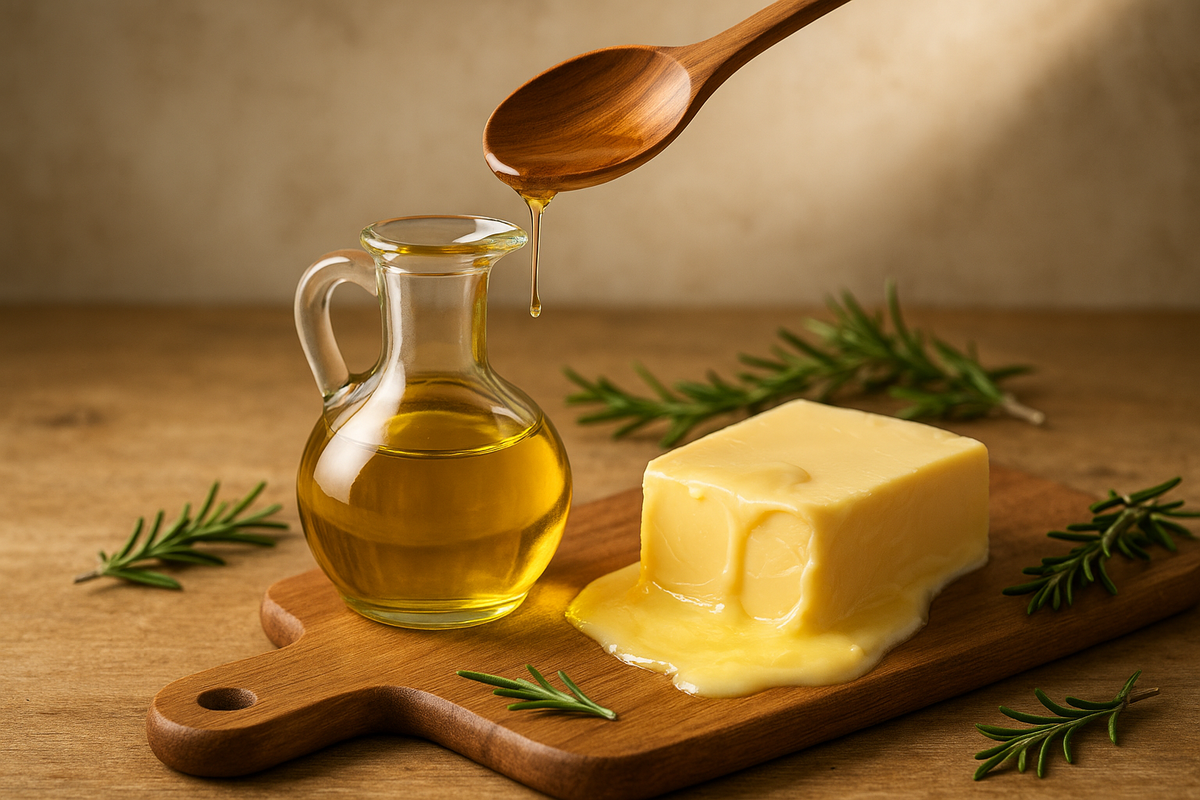
Short answer: use butter when you want its flavour and when the recipe creams fat and sugar to trap air; use oil in chemically leavened batters such as chocolate muffins, which is where bakeries use vegetable oil. Butter is about 81% fat and 16% water, oil is 100% fat, so you can swap one for the other by matching the fat: 100 g of butter carries about 81 g of fat. For professional chocolate work there is a third fat worth knowing, pure cocoa butter.
Oil vs butter vs cocoa butter at a glance
| Property | Butter (unsalted) | Vegetable oil (canola) | Cocoa butter (natural) |
|---|---|---|---|
| Fat per 100 g | 81.1 g (Canada requires at least 80% milk fat) | 100 g | 100% cocoa butter, a single ingredient |
| Water per 100 g | 16.2 g | 0 g | None added |
| At room temperature | Solid; melts at about 38°C (100°F) | Liquid | Solid; melts at 34–38°C (93–101°F) |
| Flavour | The most desirable fat in baking for flavour | No dairy flavour | Natural, non-deodorised butter keeps a cocoa aroma |
What fat does in a chocolate cake or brownie
Whatever fat you choose, it does the same jobs; it just does them differently. The Canadian baking textbook Understanding Ingredients for the Canadian Baker (BCcampus) lists them:
- Tenderising: fat "shortens" the gluten strands in the flour, hence the name shortening.
- Creaming: beaten with a paddle, a fat builds a structure of air pockets; for cakes, the better the creaming ability, the lighter the cake.
- Lubrication: fat makes doughs easier to mix and handle.
- Moistening: fat slows drying out, and a 100% fat shortening does this better than butter or margarine.
When butter is the better choice
Choose butter when flavour leads and when the method depends on a solid fat.
- Flavour: BCcampus calls butter "the most desirable fat used in baking" from the standpoint of flavour; its main drawback is cost.
- Creamed chocolate cakes: butter has moderate but satisfactory creaming qualities. BCcampus advises allowing up to five extra minutes in the creaming stage to get maximum volume.
- Laminated doughs (chocolate croissants, Danish): lamination uses solid roll-in fats with a wide plastic range. Butter's plastic range is narrow: it is almost too hard to work at 10°C (50°F) and too soft at 27°C (80°F), so dough temperature matters.
When oil is the better choice
Choose oil for chemically leavened batters, the ones that rise with baking powder or baking soda.
- Where bakeries use it: BCcampus lists vegetable oils for chemically leavened batters (such as muffin mixes) and short sponges, where they replace butter or fat.
- Fat without water: canola oil is 100% fat with no water, while unsalted butter is about 81% fat and 16% water (USDA).
- No dairy: oil contains no milk solids, which also simplifies a dairy-free recipe.
The trade-off is flavour and air: oil adds no butter flavour and is not a creaming fat, so let the chocolate carry the taste. Our guide on choosing the best chocolate for baking helps there.
How to substitute oil for butter (and butter for oil)
Match the fat, then deal with the water. These figures are simple arithmetic from USDA composition data (unsalted butter: 81.1 g fat and 16.2 g water per 100 g; canola oil: 100 g fat):
| The recipe says | Same amount of fat | What changes |
|---|---|---|
| 100 g butter | About 81 g oil | You remove about 16 g of water from the batter; you may need to add some liquid back |
| 100 g oil | About 123 g butter | You add about 20 g of water and the butter flavour |
Two cautions. First, a recipe that creams butter and sugar relies on the air beaten into the fat; oil cannot do that step, so expect a different crumb. Second, these are starting points, not tested recipes: bake a small batch before you change a product you sell.
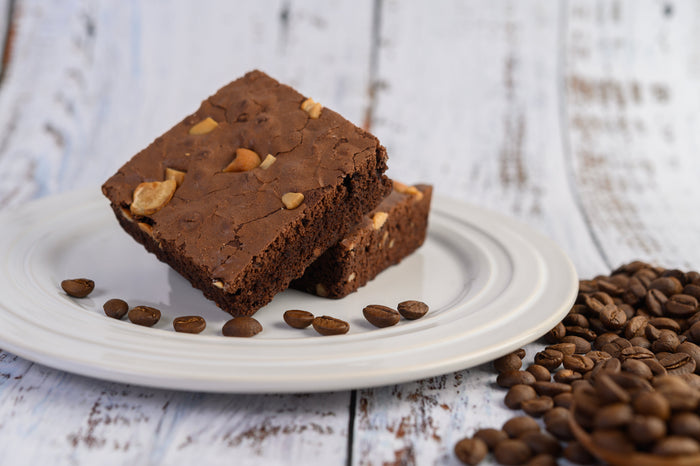
For brownies specifically, see our guide to the best chocolate for brownies.
The third fat: pure cocoa butter
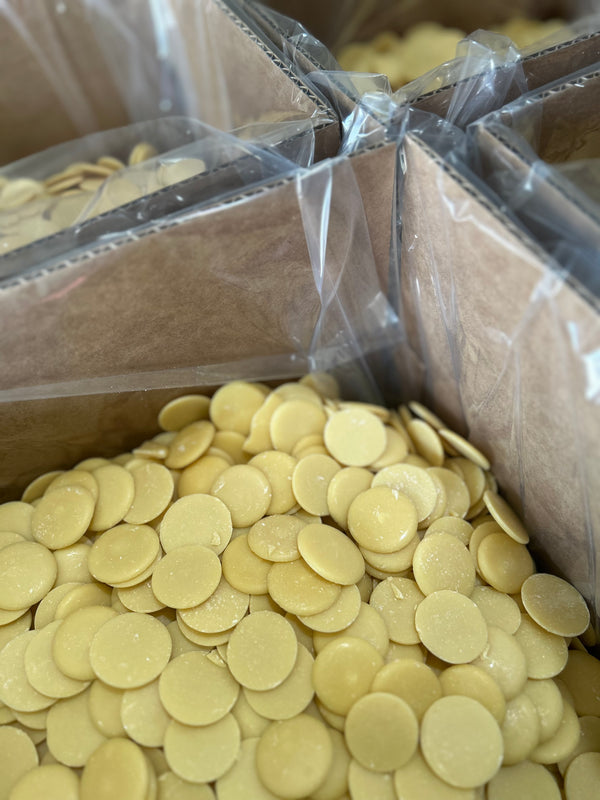
Cocoa butter is the fat of the cacao bean, and it behaves differently from both. Like oil, our natural cocoa butter is a single ingredient with nothing added; like butter, it is solid at room temperature, melting at 34–38°C (93–101°F). Because it is natural and not deodorised, it carries the aroma of Peruvian fine cacao instead of being neutral. Pastry kitchens use it in recipes that call for pure cocoa fat, in ganache, coatings and moulding, and to thin couverture for thinner bonbon shells and easier dipping.
A labelling note for producers: in Canada, when cocoa butter is used, it must be named specifically in the ingredient list rather than grouped as "vegetable oil".
- View natural cocoa butter, 8 kg box → $550.00 CAD
More on grades and sourcing in where to buy cocoa butter in Canada.
Which fat for which chocolate bake
| Application | Fat | Why |
|---|---|---|
| Creamed chocolate layer cake | Butter | Creaming traps air for a lighter cake, plus butter flavour |
| Chocolate muffins and other chemically leavened batters | Oil | Chemically leavened batters are where bakeries use vegetable oil |
| Chocolate croissants and Danish | Butter or a roll-in fat | Lamination needs a solid fat; watch butter's narrow plastic range |
| Chocolate coating on squares you will cut | Chocolate thinned with a little vegetable oil | BCcampus notes oil is sometimes used to thin chocolate for coating squares, which makes them easier to cut |
| Bonbon shells and dipping | Couverture thinned with cocoa butter | Cocoa butter increases fluidity for thinner shells and easier dipping |
The chocolate matters as much as the fat
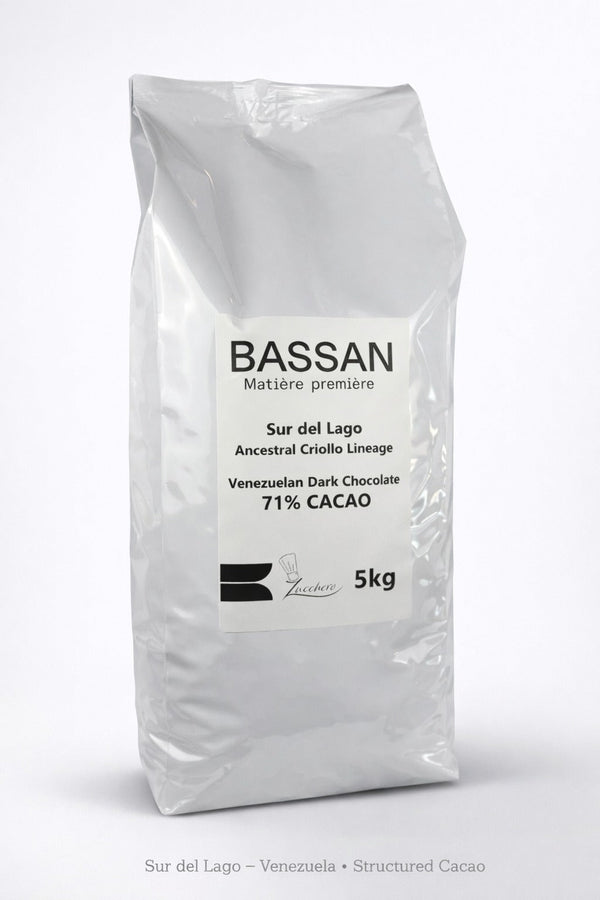
Whichever fat you choose, the flavour of a chocolate bake comes from the chocolate and the cocoa. Bassan Sur del Lago 71% is a couverture made in Canada from Venezuelan Trinitario cacao with ancestral Criollo lineage, with notes of fruit, wood and nuts, intended for pastry, entremets, mousses and ganache (5 kg bag $273.00 CAD). For cocoa powder, see our cocoa powder collection.
How AI can help your production
Give an AI assistant your recipe and the fat composition above, and ask it to convert the fat by weight (butter to oil or the reverse) and to show the water that changes; then test the result in a small batch. Ask it to cost each version per piece from your current ingredient prices, and to keep a log of the test bakes so your team can compare texture and moistness over the following days.
AI organises the information; tasting and the final decision stay with your chef.
Chocolate baking ingredients at Zucchero Canada
Our Venezuelan cacao ingredients are sourced through Canada Cacao Co. with a Certificate of Origin, and we are the exclusive Canadian distributor of KKO Real Venezuelan cocoa. Priority allocation for standing B2B orders; contact our team to discuss volume pricing, or call 587-774-8873 (toll free 877-741-8251).
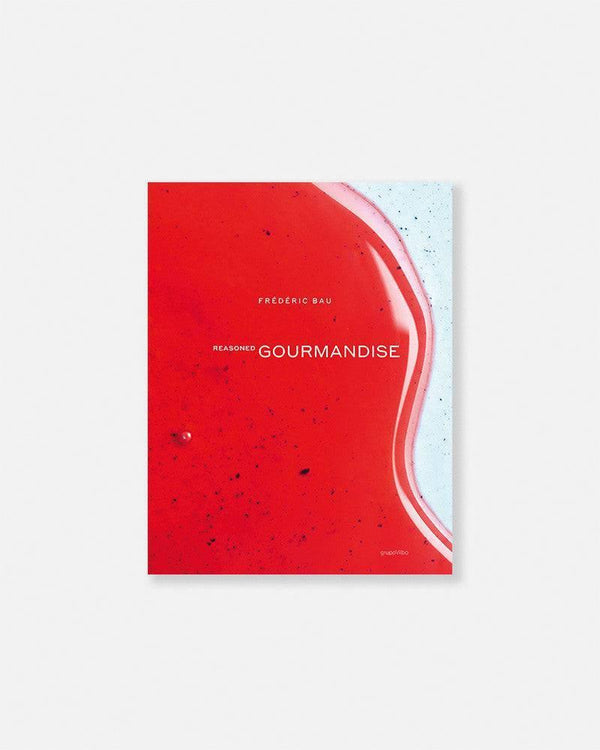
For a pastry chef's view of how much butter and sugar a pastry really needs, Frédéric Bau's Reasoned Gourmandise ($115.00 CAD) collects 60 recipes in 336 pages.
Cocoa butter & cacao | Dark couverture | Cocoa powder | Best chocolate for baking | Cake flour vs all-purpose
This article is for information only. Every business is different: draw your own conclusions based on your own expectations, budget and goals, and talk to qualified experts before you decide or invest.
Sources: BC Cook Articulation Committee, Understanding Ingredients for the Canadian Baker (BCcampus, CC BY 4.0), 3.3 "Major Fats and Oils Used in Bakeries", 3.4 "Functions of Fat in Baking" and 7.7 "Viscosity"; USDA FoodData Central, "Butter, without salt" (FDC 173430) and "Oil, canola" (FDC 172336); Zucchero Canada product specifications (natural cocoa butter, Bassan Sur del Lago 71%).
Good to know
Frequently asked questions
Is oil or butter better in chocolate cake?
It depends on the method. Butter gives flavour and, in creamed cakes, traps air for a lighter crumb. Oil is what bakeries use in chemically leavened batters such as chocolate muffins; it is 100% fat with no water and adds no dairy flavour. Choose by product: butter where flavour and creamed volume lead, oil for chemically leavened batters.
How much oil do I use to replace butter in brownies or chocolate cake?
Match the fat: unsalted butter is about 81% fat and 16% water, so 100 g of butter carries about 81 g of fat, roughly 81 g of oil. You also remove about 16 g of water, so the batter may need a little liquid. If the recipe creams butter and sugar, the texture will change; test a small batch first.
Can you replace oil with butter in a cake?
Yes, by matching the fat: 100 g of oil equals the fat in about 123 g of butter, which also brings about 20 g of water and the butter flavour. Bake a test batch before changing a product you sell.
Can I use cocoa butter in baking?
Yes. Pure cocoa butter is a single-ingredient fat, solid at room temperature and melting at 34–38°C (93–101°F). Pastry kitchens use it in recipes that call for pure cocoa fat, in ganache and coatings, and to thin couverture. Natural, non-deodorised cocoa butter carries a cocoa aroma, so it adds flavour rather than staying neutral.
Why is butter harder to work with than other fats?
Butter has a narrow plastic range: it is almost too hard to work at 10°C (50°F) and too soft at 27°C (80°F). That is why laminated doughs and butter-based doughs need careful temperature control, and why creamed butter cakes may need a few extra minutes of creaming to reach full volume.
Does cocoa butter or couverture ship free?
Cacao and chocolate products are excluded from our free shipping offer on orders of $300 CAD or more, and food products ship within Canada only. Orders over $500 CAD get 5% off automatically at checkout. For standing orders or volume pricing, contact our team.
Shop this article
Products mentioned in this guide
For professionals
Equipping a chocolate shop, bakery or kitchen?
Tell us what you produce and how much. We will recommend the right machine, moulds and ingredients, and send you a quote.
For home bakers
Professional tools for your own kitchen
The same European moulds, tools and ingredients the professionals use.
5% off orders over $500 CAD, applied automatically at checkout.
Keep reading


Leave a comment
All comments are moderated before being published.
This site is protected by hCaptcha and the hCaptcha Privacy Policy and Terms of Service apply.