



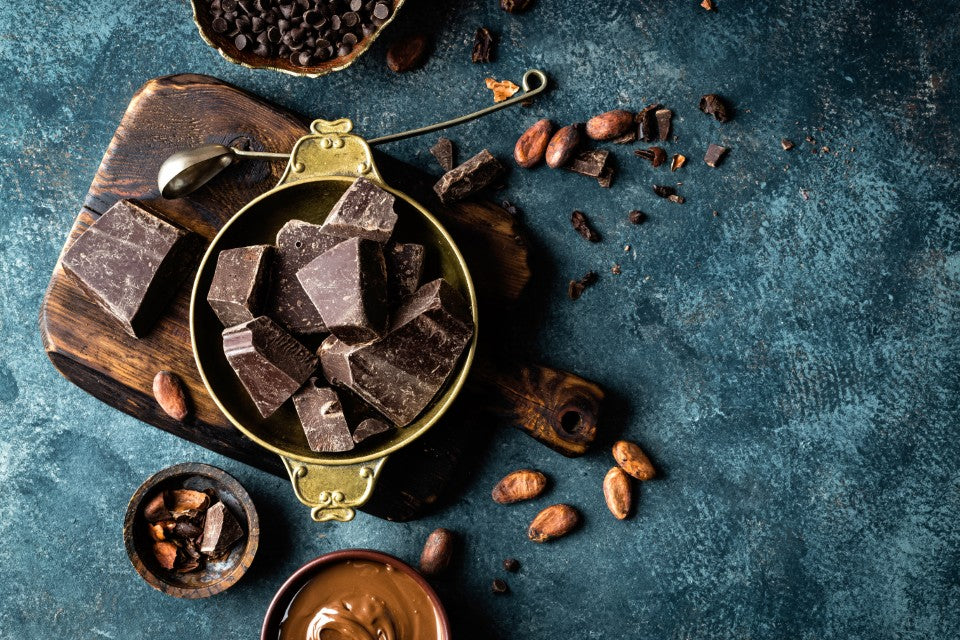
Yes — dark chocolate is genuinely good for you, and the research behind it is solid. The key word is dark: the health benefits come from the cacao solids, not the sugar. The higher the cacao percentage and the less processed the chocolate, the more you get out of it.
What makes dark chocolate beneficial
The nutritional value of dark chocolate comes from three main compound categories, all concentrated in the cacao solids:
Flavonoids (flavan-3-ols)
Cacao is one of the richest dietary sources of flavonoids — specifically epicatechin, catechin, and procyanidins. These compounds have been studied extensively for cardiovascular benefits: they support nitric oxide production, which helps regulate blood pressure and vascular function. The European Food Safety Authority (EFSA) has approved a health claim for cocoa flavanols and normal blood flow. The research typically uses 200–400mg of cocoa flavanols per day — roughly equivalent to 10–20g of high-flavonoid dark chocolate.
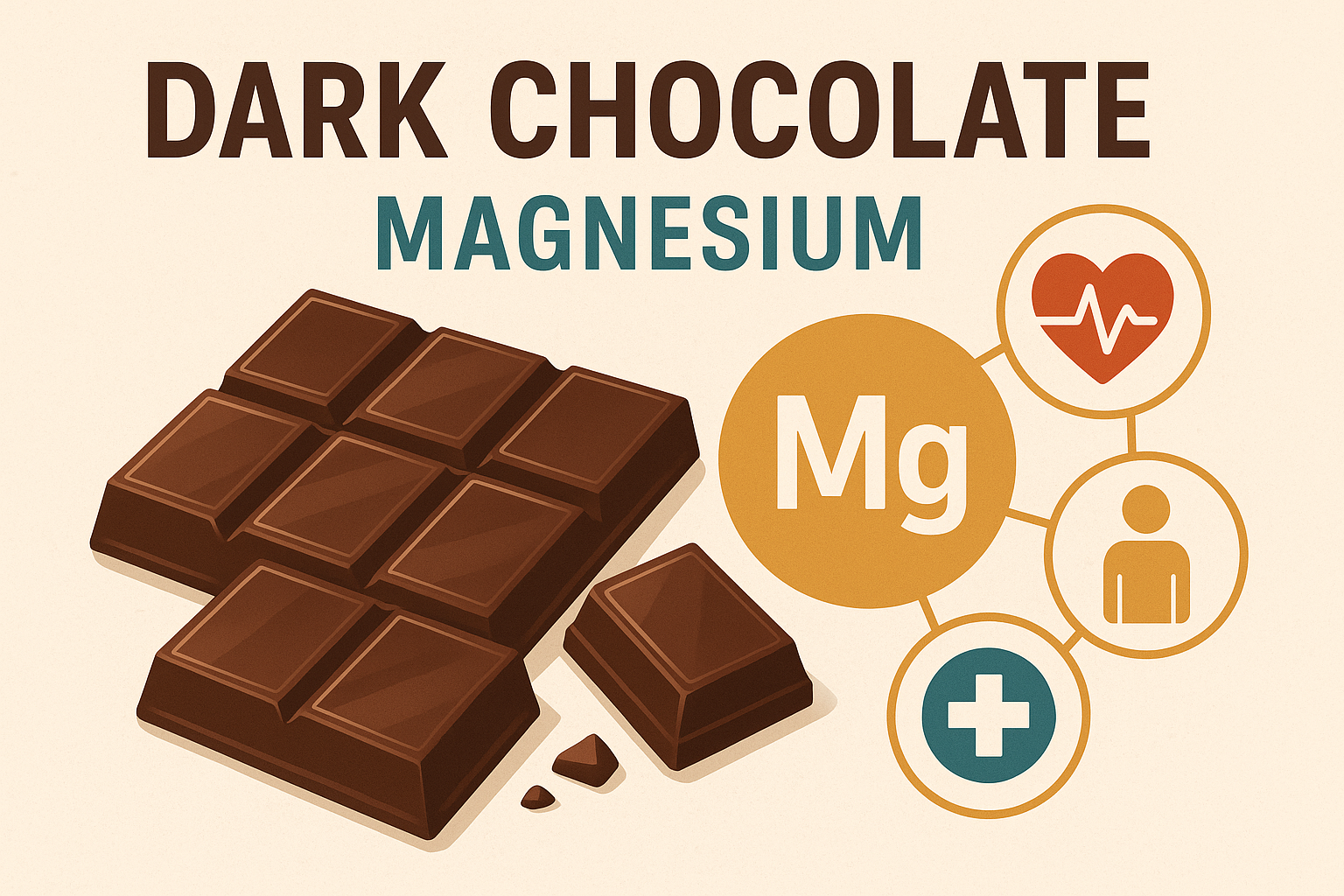
Magnesium
A 100g serving of 70–85% dark chocolate contains roughly 170–230mg of magnesium — more magnesium-dense than most nuts, legumes, or leafy greens by weight. Magnesium lives in the cacao solids, so high-percentage dark chocolate delivers significantly more than milk chocolate.
Theobromine
Cacao's primary stimulant is theobromine — a mild methylxanthine with a longer, gentler effect than caffeine. A 40g serving of 70%+ dark chocolate contains approximately 200–300mg of theobromine and 20–30mg of caffeine. The ratio produces a sustained, mild alertness without the sharp peak and crash of coffee.
How much percentage actually matters
All the benefits above scale with cacao percentage. More cacao solids = more flavonoids, more magnesium, more theobromine — and less sugar per gram. A 70% dark chocolate has roughly twice the flavonoid content of a 35% milk chocolate at the same serving size.
| Percentage | Flavonoid content | Sugar content | Best for |
| 55–65% | Moderate | Higher | Gateway dark chocolate, accessible flavor |
| 70–75% | High | Moderate | Optimal balance of benefit and palatability |
| 80–85% | Very high | Low | Maximum benefit, intense flavor |
| 90%+ | Highest | Very low | Acquired taste, small portions |
Processing destroys more than most people realize
Not all 70% dark chocolate delivers the same nutritional profile. How the cacao was processed after harvest has a major effect:
- Alkalization (Dutch processing): Neutralizes acidity but destroys up to 60–90% of flavonoid content. A heavily Dutched 70% bar has a fraction of the health benefits of a natural-process 70% bar at the same percentage.
- Over-roasting: Degrades volatile aromatics and reduces antioxidant activity. Light to medium roasting preserves more of the bean's original nutritional profile.
- Poor fermentation: Commodity cacao with incomplete fermentation has lower bioavailability of minerals and a less developed flavonoid precursor profile. Well-fermented, traceable single-origin cacao starts from a higher baseline.
This is why origin and sourcing matter as much as percentage for nutritional quality — not just for flavor.
Fine-flavor cacao: why Venezuelan origin is different
Venezuela is the only country the ICCO (International Cocoa Organization) classifies as 100% fine-flavor origin. The ancestral Criollo genetics found in Venezuelan cacao — particularly in Sur del Lago and Ocumare — produce a naturally lower bitterness, cleaner acidity, and complex aromatic profile. For chocolatiers, this means the finished product has a more nuanced flavor story to tell customers alongside the nutritional one.
Our Bassan Sur del Lago Dark 71% ($69.95 CAD) is made from Venezuelan Ancestral Criollo Lineage cacao — natural process, traceable to origin, with Certificate of Origin co-signed by Agrícola Lamboean and Canada Cacao Company. For pastry chefs and chocolatiers building a product story around provenance and quality, this is the couverture that lets you say something specific about what is in the bar.
For maximum nutritional density: cocoa nibs and natural cocoa powder
If you or your customers want maximum cacao benefit with minimum sugar, two ingredients stand out:
- Venezuelan single-origin cocoa nibs — roasted, cracked cacao beans with no additives. Maximum fiber, flavonoids, magnesium, and theobromine. Zero sugar. Used as inclusions, in granola, trail mix, or infusions.
- Natural Venezuelan cocoa powder — non-alkalized, maximum flavonoid retention. For ganaches, drinking chocolate, baking, or dusting applications where you want the nutritional benefit alongside the flavor.
For a full breakdown of the science behind cacao nutrition — including the research on flavonoids, magnesium bioavailability, theobromine vs caffeine, and how processing affects each — see our detailed guide: Is Cacao Good for You? The Science Behind Fine Cacao.
For chocolatiers and pastry chefs: the product story angle
Customers increasingly ask what is in their food and where it comes from. A 71% dark chocolate made from Venezuelan fine-flavor cacao with a Certificate of Origin is a meaningfully different product than a generic 70% bar — in flavor, in traceability, and in the story you can tell. That story has real commercial value in a market where provenance matters.
All Venezuelan cacao we carry is sourced through Canada Cacao Co. with full traceability and Certificate of Origin on every lot. Priority allocation available for standing B2B orders. Contact our team to discuss volume pricing.
Bassan Sur del Lago Dark 71% | Venezuelan cocoa nibs | Natural cocoa powder | Single-origin cacao beans








Leave a comment
All comments are moderated before being published.
This site is protected by hCaptcha and the hCaptcha Privacy Policy and Terms of Service apply.