



Conching is one of the most critical — and most misunderstood — stages in chocolate making. While traditional high-energy conching prioritizes speed and aggressive acid removal, low-impact conching prioritizes flavor preservation, gentle refinement, and respect for the cacao's natural character. For artisan chocolatiers and bean-to-bar makers working with fine-flavor origins, this approach delivers cleaner taste, greater aromatic complexity, and a chocolate that expresses what the bean actually is.
What low-impact conching actually means
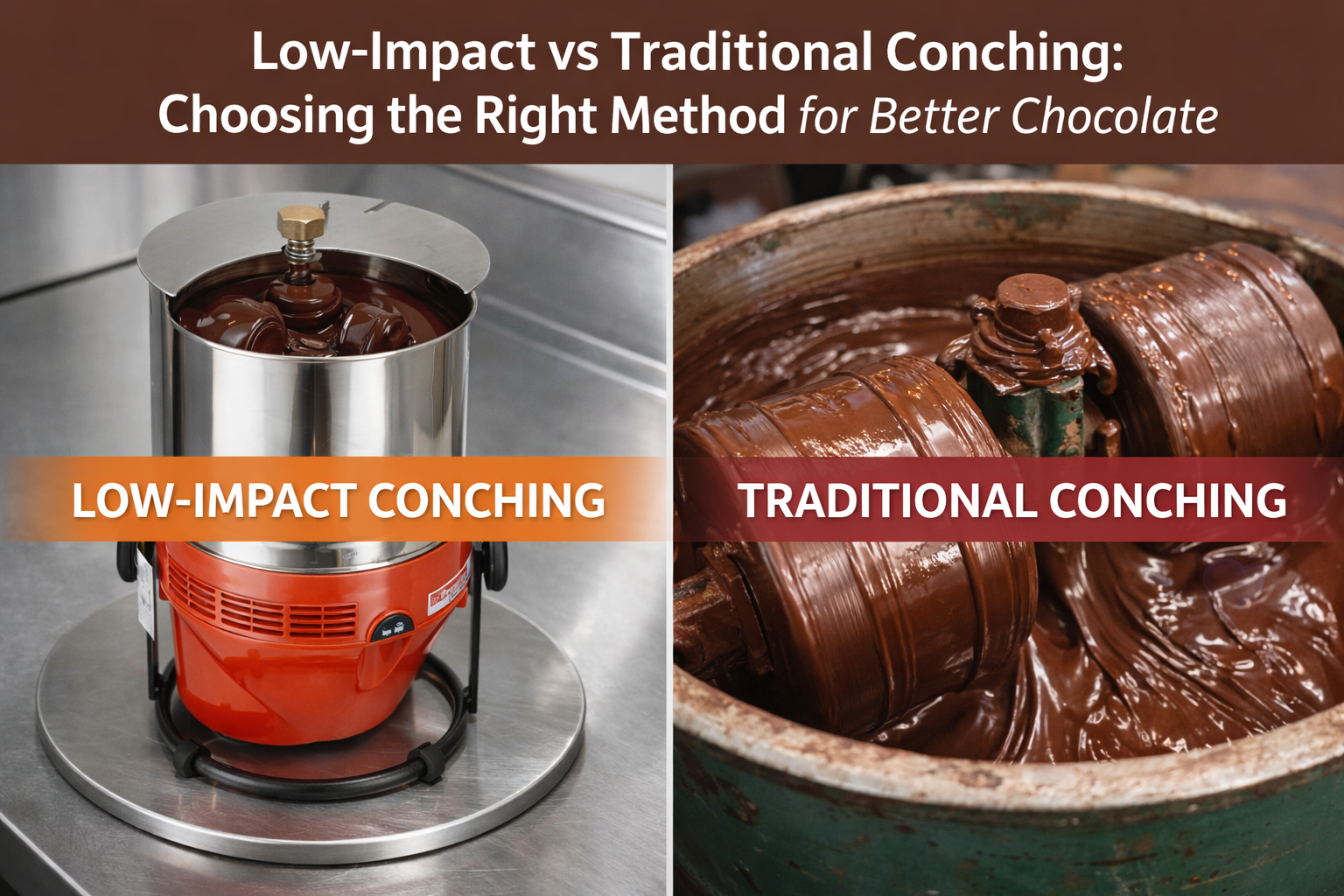
Low-impact conching is not a specific machine or brand — it is a process philosophy. It refers to conching at lower shear forces, moderate and stable temperatures, and longer processing times. Instead of aggressively stripping volatile compounds through high mechanical energy and heat, the mass develops gradually.
The practical result: delicate fruity, floral, and nutty notes that are present in well-fermented fine-flavor cacao are preserved rather than driven off. The chocolate retains more of its origin character — which is precisely the point when you are working with Venezuelan Criollo-dominant beans that cost significantly more than commodity Forastero.
Why it matters for fine-flavor cacao specifically
Not all cacao benefits equally from low-impact conching. Commodity cacao — the bulk Forastero that makes up 90%+ of global production — is often conched aggressively to drive off the off-flavors and residual acids from incomplete fermentation. High-energy conching masks defects.
Fine-flavor cacao — Venezuelan origins like Sur del Lago Ancestral Criollo Lineage and OCUMARE Criollo Blood — is the opposite: well-fermented, expressive, with aromatic complexity that took careful farming and post-harvest work to develop. Aggressive conching destroys that complexity. Low-impact conching respects it.
This is also why sourcing well-fermented fine-flavor cacao matters before the conching decision. You cannot conch your way to a great chocolate if the fermentation was poor. But you can conch your way to a mediocre one if the fermentation was excellent and you processed it too aggressively.
Key parameters
| Parameter | Low-impact approach | Traditional high-energy |
| Mechanical shear force | Low, controlled | High, aggressive |
| Temperature | 45–55°C, stable | 55–80°C, often higher |
| Time | Longer (8–24h+) | Shorter (4–8h typical) |
| Acid removal | Gradual, targeted | Rapid, complete |
| Volatile aromatics | Preserved | Partially or fully driven off |
| Flavor outcome | Expressive, origin-driven | Neutralized, uniform |
Practical tips for better results
- Start with well-fermented, properly roasted cacao. Low-impact conching amplifies what is already there — if the fermentation was poor, no conching approach will fix it.
- Monitor temperature continuously. Even a brief temperature spike above your target range drives off volatile compounds. Use equipment with active temperature control, not passive holding.
- Adjust conching time rather than increasing speed. If flavor development is incomplete, extend the time before increasing mechanical intensity.
- Taste frequently. Conching is as much sensory as technical. The endpoint is when the flavor profile is right, not when the clock hits a preset number of hours.
- Match conching parameters to roast level and origin. A lightly roasted Criollo needs different parameters than a medium-roasted Trinitario. Keep records of time, temperature, and sensory notes so you can repeat successful batches.
Equipment for low-impact conching
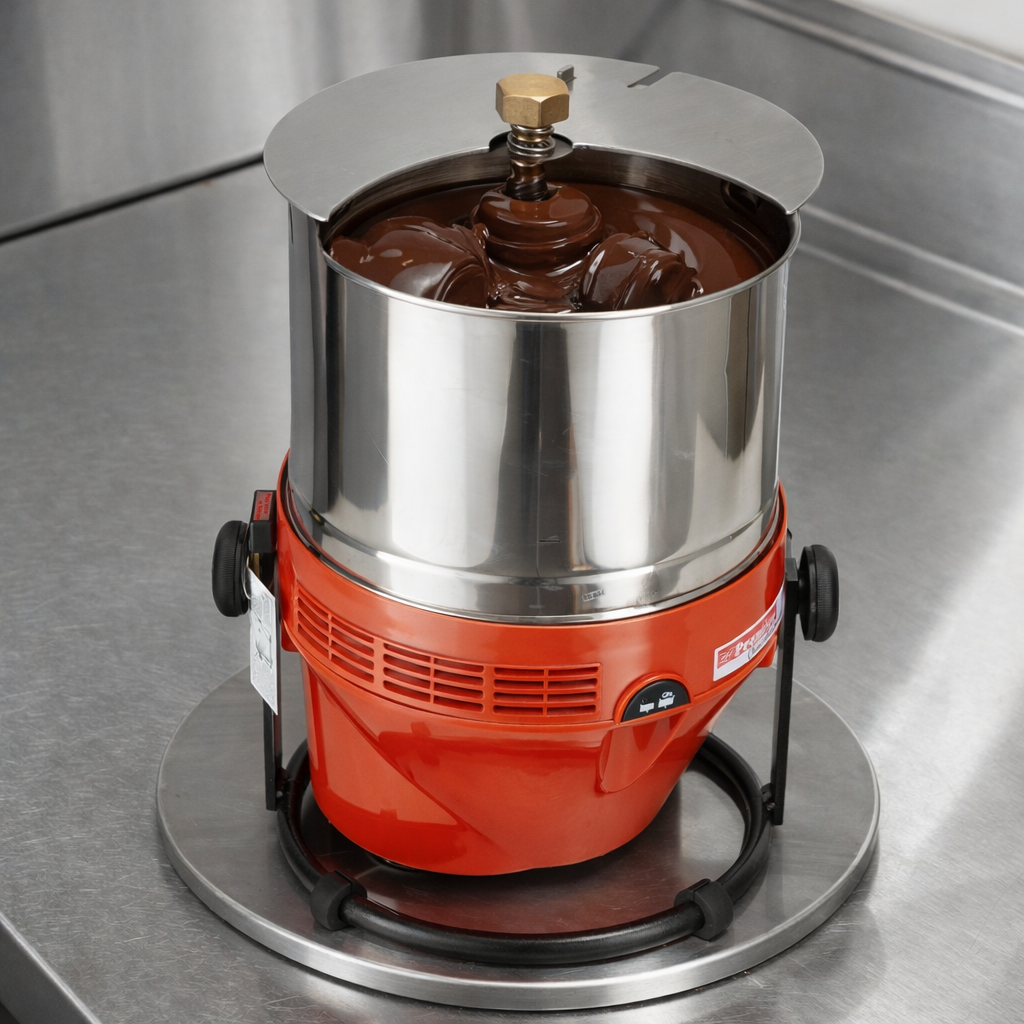
Precise temperature control and adjustable mechanical action are the equipment requirements for low-impact conching. The FBM KLEEGO 50 ($23,899 CAD) is the professional solution we carry — a combined 50 kg melting tank and 35 kg conche from FBM Boscolo (Italy). It handles both melting and conching in one unit, with active temperature control and adjustable parameters for different origins and roast profiles.
For the full FBM bean-to-bar production flow — from cracking and winnowing through refining, conching, and tempering — see our bean-to-bar production guide.
Questions about equipment or cacao sourcing for your bean-to-bar operation? Contact our team.
FBM KLEEGO 50 Melter and Conche | Sur del Lago beans | OCUMARE beans | All cacao beans






Leave a comment
All comments are moderated before being published.
This site is protected by hCaptcha and the hCaptcha Privacy Policy and Terms of Service apply.