



Chocolate Melter vs Chocolate Temperer: The Differences and Which One You Need
Short answer: a chocolate melter melts chocolate and holds it fluid at the temperature you set; it does not temper on its own. A chocolate temperer (tempering machine) runs the whole tempering curve for you: it melts, cools the chocolate so the right cocoa butter crystals form, and holds it at working temperature, so your bonbons and bars set glossy with a clean snap. Choose a melter for dipping, coating, ganache and glazes, or if you temper by hand with seed chocolate; choose a tempering machine when you mould chocolate every day and want the same result on every batch.
Quick answer: which machine for which job
| Your need | Machine | Price |
|---|---|---|
| Melt and hold small batches for dipping and decorations | Martellato Mini Meltinchoc 1.8 L (melter) | $390.00 |
| Two chocolates side by side, such as dark and milk | Martellato Meltinchoc Multi-Tank 2 × 1.5 L (melter) | $865.00 |
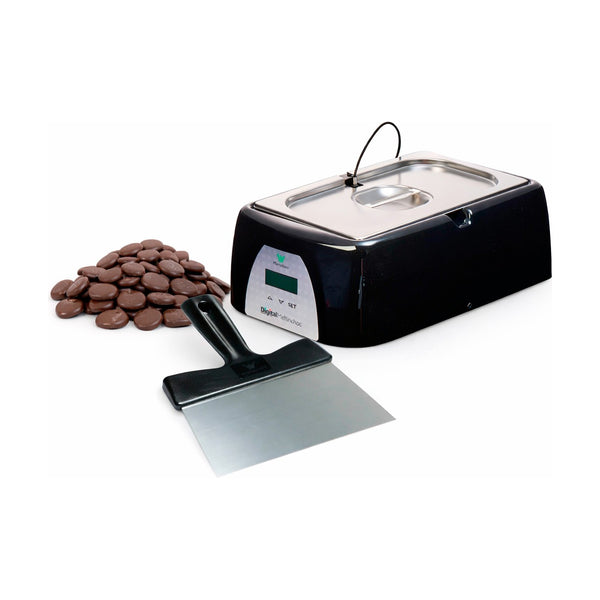
| Melt, then temper by seeding with programs for dark, milk and white | Martellato Digital Meltinchoc 3.6 L (melter) | $1,150.00 |
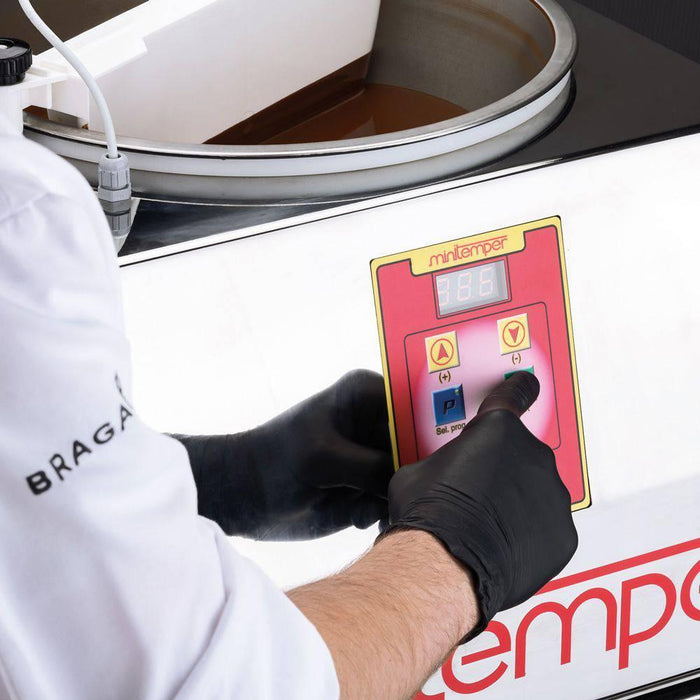
| Automatic tempering of small batches on a 110 V outlet | Pavoni MiniTemper 110V (temperer) | $3,350.00 |
| Continuous tempering through the shift on a 110 V outlet | Pomati T5 (temperer) | $11,650.00 |
| Daily moulding on a 230 V outlet, with enrobing as an option | Bilait Adam K6 (temperer) | $10,990.00 |
Melter vs temperer: the differences side by side
The difference is the cooling and crystallising step: a melter only heats, a tempering machine also brings the chocolate down and holds it in temper. The table compares the machines named above, using the makers' data and our product specifications.
| Chocolate melter | Chocolate tempering machine | |
|---|---|---|
| What it does | Melts chocolate and holds it fluid | Melts, crystallises and holds chocolate in temper |
| Tempering | By hand, with seed chocolate and a thermometer; the Digital Meltinchoc guides you through it | The machine runs the curve: three programmable stages on the MiniTemper; continuous on the Pomati T5 and Adam K6 |
| Heating and cooling | Dry heat from the base (Meltinchoc); no refrigeration | Air-cooled refrigerating unit (Pomati T5); integrated refrigeration (Adam K6) |
| Temperature control | Manual thermostat up to 50°C (122°F) on analogue Meltinchoc; probe and three programs on the digital model | MiniTemper: 20–60°C (68–140°F) in 0.5°C steps, five programmable presets |
| Capacity (models above) | 1.8 L to 3.6 L; Meltinchoc tanks go up to 13.7 L | 3 kg (MiniTemper), 5 kg (T5), 6 kg (Adam K6) |
| Power supply | 110 V, standard grounded outlet | 110 V (MiniTemper, our T5) or 230 V (Adam K6) |
| Price (models above) | $390.00–$1,150.00 CAD | $3,350.00–$11,650.00 CAD |
What a chocolate melter does
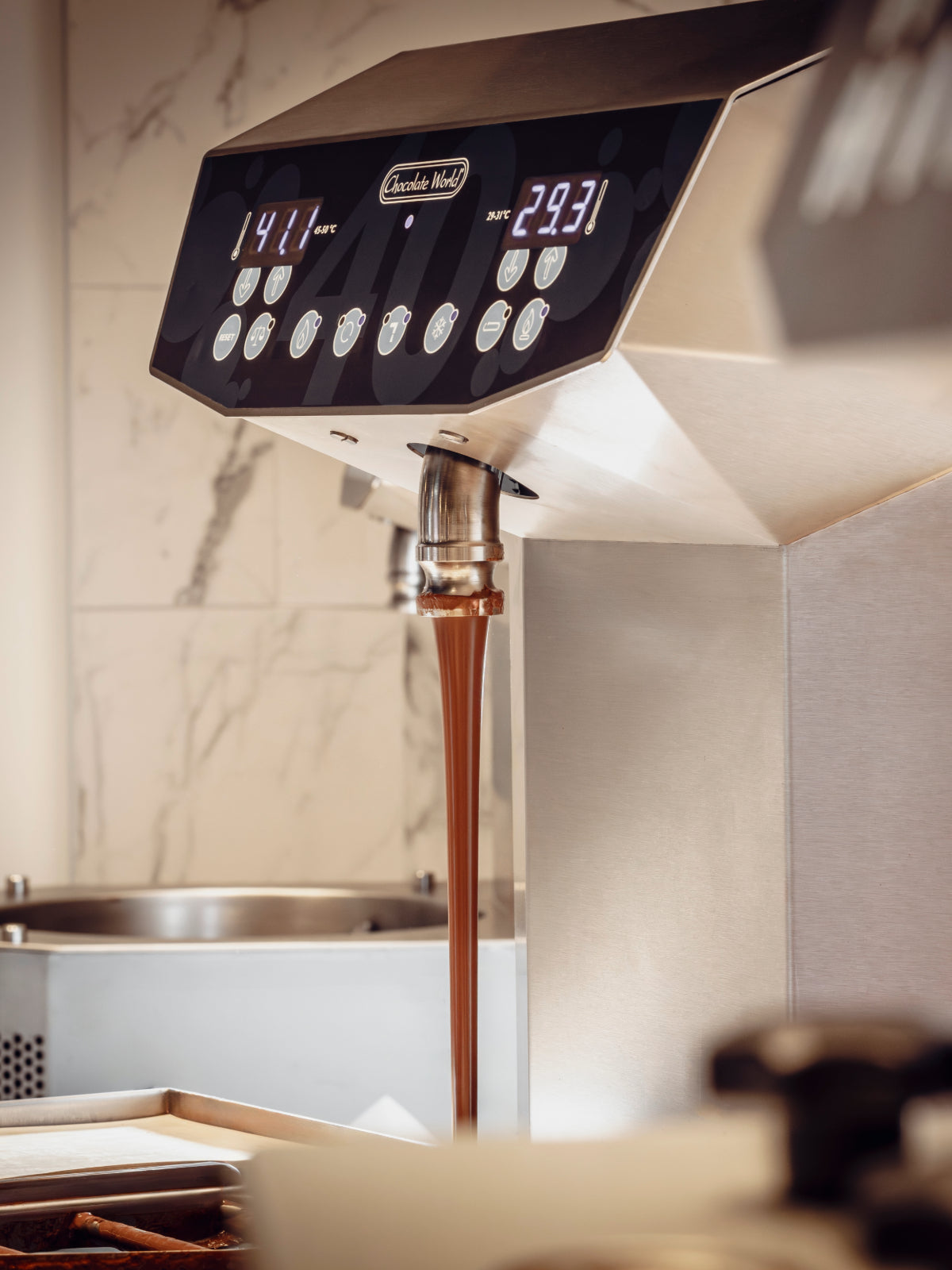
A melter turns solid chocolate into liquid and keeps it at a steady temperature, ready to use. Martellato describes its Digital Meltinchoc as an appliance made "to melt solid chocolate and hold it in a fluid state". Every Meltinchoc heats dry, with no water bath, and its removable tank lifts out for cleaning.
That makes a melter the right tool when the chocolate does not need to set with gloss and snap, or when you temper it yourself:
- Dipping, coating and enrobing by hand: Martellato built the Mini Meltinchoc for small productions of pralines and shapes and for coating ice cream on sticks.
- Ganache, glazes, mousses and drinks: the chocolate is mixed into a recipe, so it only needs to be melted.
- Compound coatings: compound chocolate replaces cocoa butter with a hard fat, usually hydrogenated palm kernel oil, and needs no tempering; it coats best at about 40°C (104°F). It is not suited to moulding, because it does not set as firmly as real chocolate.
- Two chocolates at once: the Multi-Tank MC108 holds two removable 1.5 L tanks side by side.
Mol d'Art, the Belgian maker, also builds tabletop melters: its 6 kg model has a removable stainless-steel bowl and a mechanical thermostat that sets from 25°C to 50°C (77–122°F). Check the Mol d'Art collection for current availability.
What a chocolate tempering machine does
A tempering machine automates tempering: it guides the cocoa butter into its one stable crystal form, the form that gives gloss, snap and shelf life. KREA Swiss, the Swiss chocolate-sprayer maker we carry, breaks the process into four steps: melt every crystal, seed and cool, warm back to working temperature, then hold it there. Take the chocolate much above about 34°C (93°F) and the stable crystals are destroyed, which is why holding the working window matters as much as reaching it.
- Pavoni MiniTemper: a bowl machine with five programmable presets, each with three stages (melt, crystallise, harden), set from 20°C to 60°C in 0.5°C steps. Pavoni rates it at 3 kg and says it keeps chocolate tempered for hours. The bowl is interchangeable, so each chocolate can have its own.
- Pomati T5: a 5 kg continuous machine with a double heating circuit (tank and screw) and a refrigerating unit with forced-air cooling. The screw is removable and runs in reverse to discharge the chocolate.
- Bilait Adam K6: a continuous machine that, according to Bilait, tempers 20 kg of chocolate in 4.5 hours and up to 45 kg a day, with a heated vibrating table and a stop & go pedal included.
For a full comparison of these machines, see MiniTemper vs Pomati T5 vs Adam K6 vs Easy Temp.
Can you temper chocolate in a melter?
Yes, by seeding: you melt the chocolate, add tempered chocolate to bring it down, then hold it at working temperature. The Martellato Digital Meltinchoc guides you through it. According to its user manual, each program melts at 45°C, signals when to add the seed chocolate, then lowers the temperature and keeps it constant:
| Digital Meltinchoc program | Melting | Holding (after seeding) |
|---|---|---|
| Dark | 45°C (113°F) | 31°C (88°F) |
| Milk | 45°C (113°F) | 29°C (84°F) |
| White | 45°C (113°F) | 28°C (82°F) |
| Manual | 45°C (113°F) | You set it |
The manual asks you to stir during use (a symbol and a sound remind you every 10 minutes). Temperatures vary from one chocolate maker to the next, so follow your couverture's datasheet and use the manual program when the figures differ. With an analogue melter, the same method works with a probe thermometer such as the Martellato 50T001 ($29.95 CAD). Step by step: how to temper chocolate.
Which one do you need?
Match the machine to what you make, not to the size of the business:
- You dip, coat, glaze or make ganache: a melter. Pick the size by how much chocolate you need ready at once.
- You work with compound coatings: a melter; compound needs no tempering.
- You mould bonbons or bars a few times a week: a Digital Meltinchoc with seeding, or a MiniTemper if you want the machine to run the curve and save your profiles.
- You mould every day, for hours: a continuous machine, the Pomati T5 on 110 V or the Adam K6 on 230 V.
- You do both: the two machines work side by side. The tempering machine keeps the moulding chocolate in temper while a melter holds a second chocolate, a coating or the chocolate for ganache.
The cost side: what automation buys you
The melters above cost from $390.00 CAD; the tempering machines from $3,350.00 CAD. With a melter, tempering is labour: someone seeds, measures, tests and corrects every batch, and a batch that goes out of temper has to be melted and started again. A tempering machine moves that work to the machine and makes the result repeatable from one operator to the next. To judge the payback in your kitchen, compare the price difference with the hours your team spends tempering by hand each week and with the pieces you reject; those figures are yours, and they decide whether automation pays.
Check your outlet before you choose: the melters, the MiniTemper and our North American T5 plug into a standard grounded 110 V outlet; the Adam K6 needs 230 V single-phase with a NEMA L6-15 plug. If you have no 230 V receptacle, ask a licensed electrician before you order.
How AI can help your production
List your products for a typical week with the pieces per batch and the grams of chocolate in each piece, and ask an AI assistant to total how much chocolate you melt, how much of it must be tempered and how many hours you spend tempering by hand. Compare the totals with the capacities in the tables above. Ask it to turn your couverture's datasheet into a one-page temperature card for your melter or tempering machine, and to draft a temper log with set point, thermometer reading and test result for each batch.
AI organises the information; tasting and the final decision stay with your chef.
Melters and tempering machines at Zucchero Canada
We are an authorized distributor of Martellato, Pavoni Italia and Pomati, and the exclusive Bilait distributor in Canada. Each machine has its own job: the Martellato Meltinchoc range melts and holds chocolate, from the 1.8 L Mini to the 13.7 L tanks; the Pavoni MiniTemper tempers small programmable batches on 110 V; the Pomati T5 tempers continuously on a standard outlet; the Bilait Adam K6 is built for daily production on 230 V. Our Martellato melters are stocked in Calgary and ship across Canada.
- Martellato, Mol d'Art and Bilait table-top melters come with a free spatula.
- Customers who buy their machine from us get 15% off genuine spare parts with the code PARTS15.
- Orders over CAD 500 get 5% off automatically at checkout.
Equipping a chocolate shop, a hotel or several kitchens? Contact our team or call 587-774-8873 (toll free 877-741-8251), and we will help you match capacity, voltage and workflow.
View tabletop tempering machines →
Chocolate melters | Tempering machines | Best chocolate melting machines | Best tempering machines | Tempered vs untempered chocolate
This article is for information only. Every business is different: draw your own conclusions based on your own expectations, budget and goals, and talk to qualified experts before you decide or invest.
Sources: Martellato, General Catalogue 2026 (Meltinchoc pages) and Digital Meltinchoc user manual (programs table, directions for use); Pavoni Italia, Machines catalogue (MiniTemper); Pomati, T5 tempering machine page (pomati.it); Bilait, General catalogue 2026 (Adam K6); KREA Swiss Knowledge, "Tempering, what it really is and where it goes wrong"; BC Cook Articulation Committee, Understanding Ingredients for the Canadian Baker (BCcampus), "Compound chocolate"; Zucchero Canada product specifications for the Meltinchoc, Mol d'Art, MiniTemper, Pomati T5 and Adam K6.
Good to know
Frequently asked questions
Can a chocolate melter temper chocolate?
Not on its own: a melter melts chocolate and holds it fluid. You can temper in a melter by seeding: melt the chocolate, add tempered chocolate to bring it down, then hold it at working temperature. The Martellato Digital Meltinchoc guides you through this: it melts at 45°C (113°F), signals when to add the seed chocolate, then holds 31°C (88°F) for dark, 29°C (84°F) for milk or 28°C (82°F) for white. Always check your couverture's datasheet first.
What is the difference between a chocolate melter and a chocolate temperer?
A melter only heats: it melts chocolate and keeps it at a set temperature. A temperer, or tempering machine, also cools the chocolate so the stable cocoa butter crystals form, then holds it in temper. Tempered chocolate sets with gloss and a clean snap, which is what moulded bonbons and bars need.
Do I need a tempering machine for compound chocolate or candy melts?
No. Compound coatings replace cocoa butter with a hard fat, usually hydrogenated palm kernel oil, and need no tempering; they coat best at about 40°C (104°F). A melter is enough. Compound is not suited to moulding, because it does not set as firmly as real chocolate.
Which chocolate tempering machines run on a standard 110 V outlet?
The Pavoni MiniTemper (3 kg, five programmable presets) and our North American version of the Pomati T5 (5 kg, continuous) plug into a standard grounded 110 V outlet. The Bilait Adam K6 needs 230 V single-phase with a NEMA L6-15 plug. The Martellato Meltinchoc melters in this article are 110 V models.
What temperature should a chocolate melter be set to?
It depends on the chocolate and on what you are doing. Analogue Meltinchoc melters set up to 50°C (122°F); the Mol d'Art 6 kg melter sets from 25°C to 50°C (77–122°F). For tempered work, the Digital Meltinchoc programs hold 31°C for dark, 29°C for milk and 28°C for white after seeding. Temperatures vary from one chocolate maker to the next, so follow your couverture's datasheet.
Do melters and tempering machines qualify for free shipping?
No. Machines are excluded from our free-shipping offer on orders of $300 CAD or more. Orders over $500 CAD get 5% off automatically at checkout, Martellato, Mol d'Art and Bilait table-top melters come with a free spatula, and customers who buy their machine from us get 15% off genuine spare parts with the code PARTS15.
Shop this article
Products mentioned in this guide
 Martellato"Mini Meltinchoc" Chocolate Melter 1.8 L – MC09GUSAFrom $390.00 CADView product →
 MartellatoMeltinchoc Analogue Melter Multi-Tank 3 L – MC108$865.00 CADView product →
 MartellatoMeltinchoc Digital Melter 3.6 L – MCD101110V$1,150.00 CADView product →
 Pavoni ItaliaPavoni MiniTemper 110V Chocolate Tempering Machine MINITEMPER-110V$3,350.00 CADView product →
For professionals
Equipping a chocolate shop, bakery or kitchen?
Tell us what you produce and how much. We will recommend the right machine, moulds and ingredients, and send you a quote.
For home bakers
Professional tools for your own kitchen
The same European moulds, tools and ingredients the professionals use.
5% off orders over $500 CAD, applied automatically at checkout.
Keep reading

Leave a comment
All comments are moderated before being published.
This site is protected by hCaptcha and the hCaptcha Privacy Policy and Terms of Service apply.