




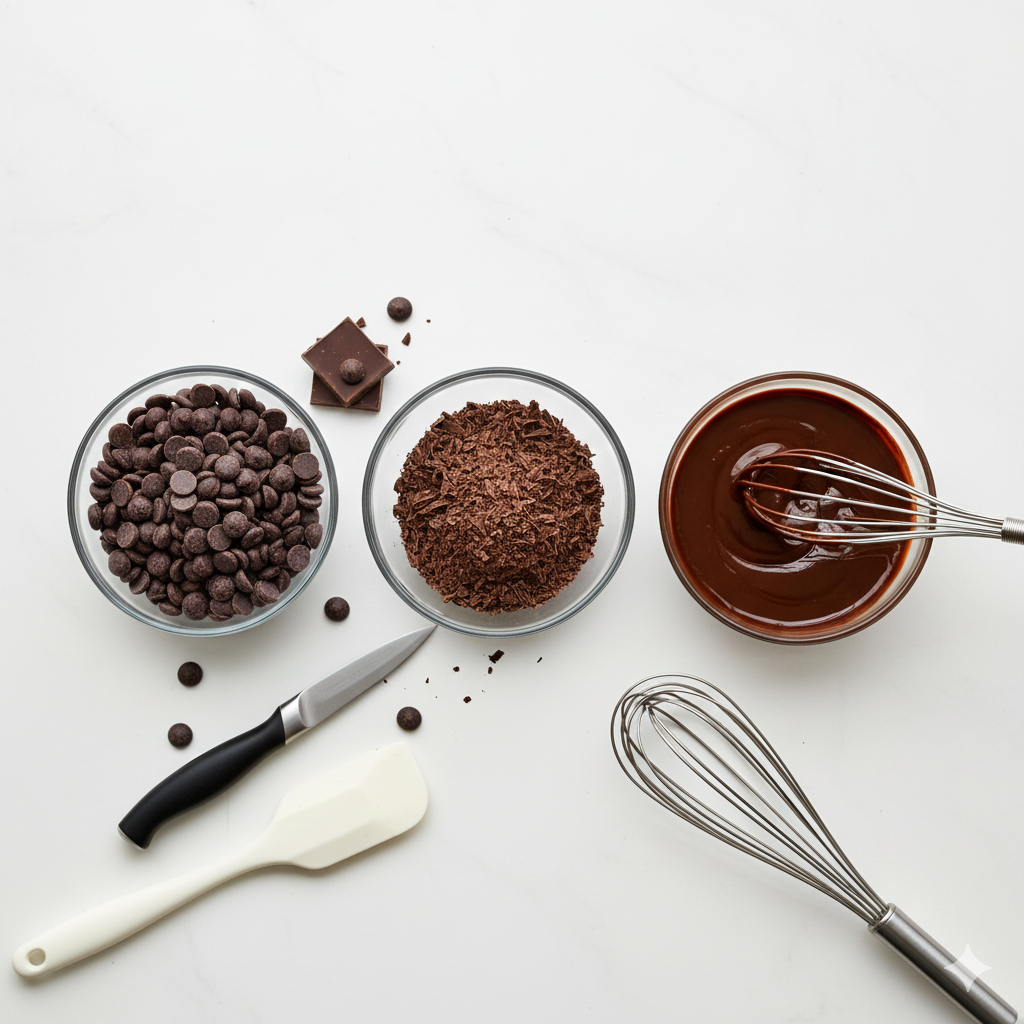
The short answer: couverture chocolate is the professional standard for melting. It has a higher cocoa butter content than regular chocolate (typically 32–39% for dark couverture vs 18–25% in standard chocolate), which gives it better flow when melted, cleaner snap when set, and a glossier finish. For home bakers melting a small amount for drizzling or dipping, good-quality dark chocolate works. For anyone producing chocolate professionally — bonbons, dipped products, enrobed pastry, molded bars — couverture is the only real option.
Why cocoa butter content is the key variable
When you melt chocolate, you're primarily working with cocoa butter — the fat that gives chocolate its texture, flow, and crystalline structure. Higher cocoa butter content means:
- Better fluidity: Lower viscosity at working temperature — critical for thin shells, clean dipping, and filling molds completely without air pockets
- Better snap: Properly tempered couverture sets with a clean, sharp snap. Lower-cocoa-butter chocolate sets soft or waxy
- Better gloss: Stable Form V cocoa butter crystals (the result of proper tempering) create the mirror finish that distinguishes professional work
- Longer working time: Couverture stays fluid at working temperature longer, giving you more time between reheating cycles
Compound chocolate and candy melts substitute cocoa butter with vegetable fats. They melt easily and don't require tempering — which is why they're popular for quick applications — but they produce a softer, less glossy finish with a distinctly different mouthfeel. For professional production, there's no substitute for real couverture.
Dark, milk, or white: working temperatures by type
Each chocolate type has a different cocoa butter content and therefore a different working temperature range. Getting this right is the difference between chocolate that sets with a snap and bloom-free finish, and chocolate that stays soft, streaks, or develops a white film.
| Type | Melt to | Cool to | Working temp |
| Dark couverture (70%+) | 45–50°C | 28–29°C | 31–32°C |
| Dark couverture (55–70%) | 45–50°C | 28–29°C | 31–32°C |
| Milk couverture | 40–45°C | 27–28°C | 29–30°C |
| White couverture | 40°C | 26–27°C | 28–29°C |
These temperature curves are for tempering — the controlled crystallization of cocoa butter into stable Form V crystals. If you're only melting for ganaches, fillings, or sauces (not molding or dipping), you don't need to temper — you just need to melt gently without overheating, which degrades flavor and can cause separation.
Couverture we recommend for professional melting
For chocolatiers and pastry chefs who want a traceable, origin-specific couverture with genuine flavor character, our Bassan Sur del Lago Ancestral Criollo Dark 71% ($69.95 CAD) is the professional option. Made from Venezuelan Ancestral Criollo Lineage cacao from the Sur del Lago region — the same origin as our single-estate beans — it delivers a complex flavor profile with low bitterness and clean finish. Ideal for bonbons, dipped products, bars, and any application where the chocolate is the story.
The equipment problem: why most melting goes wrong
Most inconsistency in melted chocolate — bloom, soft set, uneven gloss, overheated batches — comes down to equipment, not the chocolate itself. The most common issues:
- Overheating: Microwaving or double-boiling without precise temperature control is the fastest way to destroy cocoa butter structure and degrade flavor. Above 55°C, you start losing volatile aromatics. Above 60°C, you risk fat separation.
- Temperature fluctuation: Chocolate held in a bain-marie or on a heated surface will cycle above and below working temperature, causing unstable crystal formation and inconsistent results batch to batch.
- No dedicated holding temperature: Even if you temper perfectly, if your chocolate cools below working temperature while you're using it, you need to re-temper. Without dedicated equipment, this happens constantly.
The solution at every production level is a dedicated melter or tempering machine that holds chocolate at a precise, stable temperature for as long as you need it.
Martellato Meltinchoc — professional melters for every production size
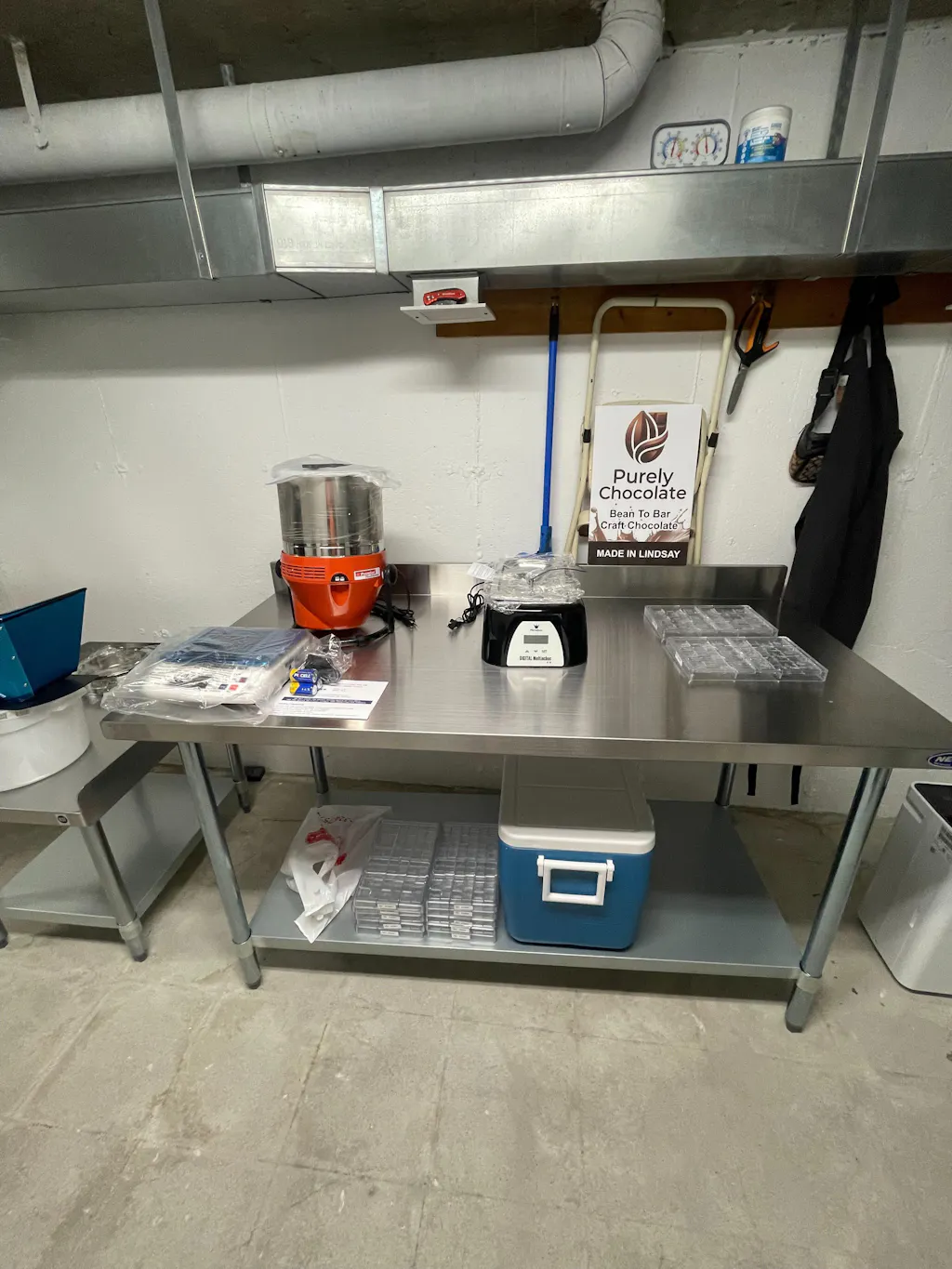
For applications that don't require tempering — ganaches, fillings, coating, chocolate fountains, drinking chocolate, or holding chocolate at dipping temperature — a dedicated melter is the right tool. We carry the full Martellato Meltinchoc range: analogue-controlled stainless steel melters with removable bowls, built for daily professional use at 110V standard outlet.
- Meltinchoc 3L Multi-Tank — $865 CAD · Three independent 1L tanks. Work with dark, milk, and white simultaneously, or three different colors of cocoa butter. Ideal for small chocolate shops and pastry kitchens running multiple products at once.
- Meltinchoc 6L — $925 CAD · Single bowl, countertop. The workhorse for ganache work, fillings, and small-batch dipping. Standard starting point for most professional kitchens.
- Meltinchoc 9L — $1,150 CAD · Mid-volume for busier pastry and chocolate kitchens running ganache or coating production daily.
- Meltinchoc 13.7L — $1,369 CAD · Large-format for high-volume ganache, glazing, and enrobing preparation. For kitchens where the melter runs all day.
All Meltinchoc units run on standard 110V — no dedicated circuit, no electrician. Stainless steel construction, removable bowls for cleaning, analogue temperature control up to 55°C.
When you need tempering, not just melting
If your application requires a glossy finish, clean snap, or professional shell (bonbons, molded bars, dipped products), you need a tempering machine — not just a melter. A melter holds chocolate at temperature; a tempering machine controls the crystallization process that creates Form V cocoa butter crystals.
For tabletop tempering, our top options:
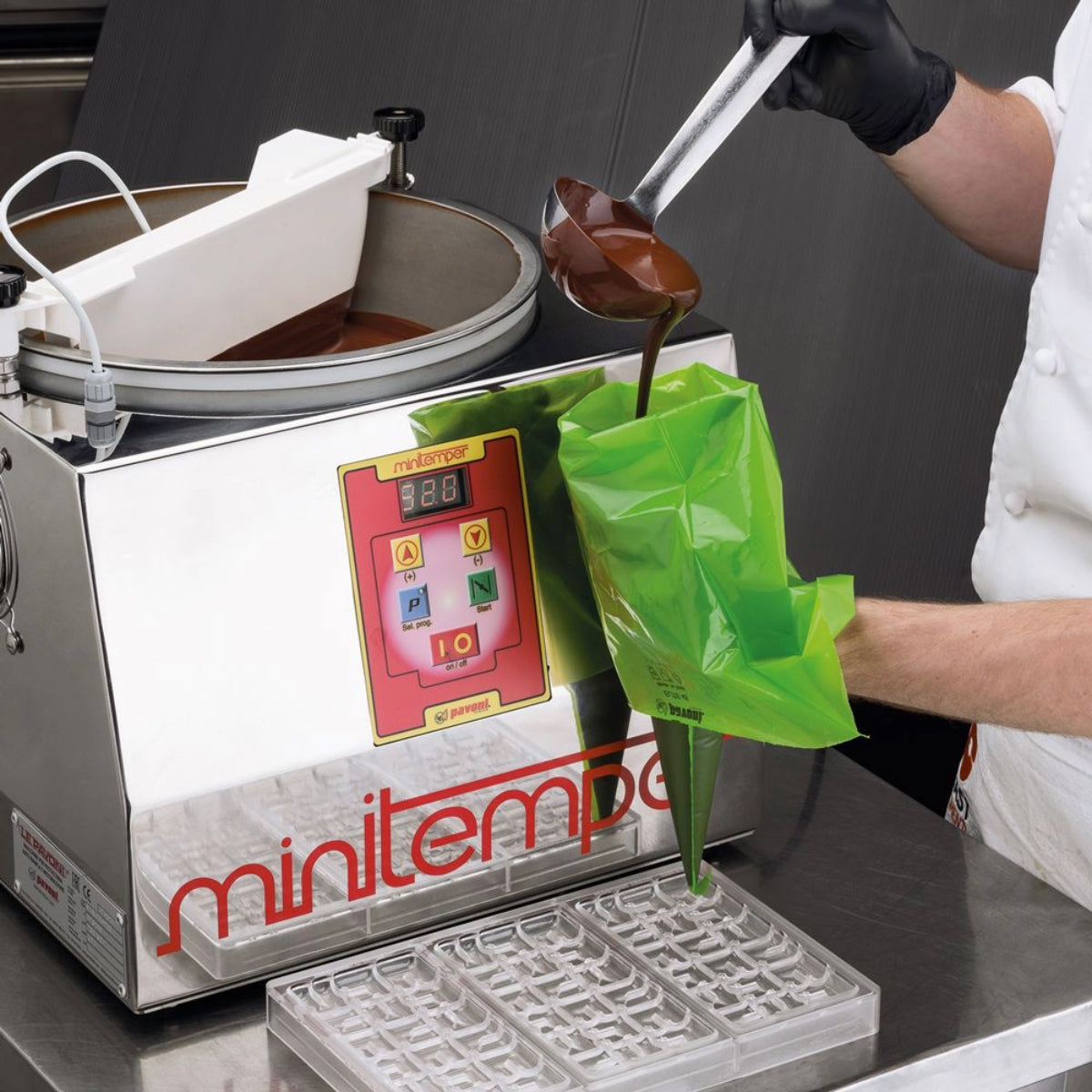
- Pavoni MiniTemper 110V — 3.5 kg, 5 programmable presets, standard 110V outlet — $3,350 CAD
- Bilait Adam K6 — 6 kg continuous, touchscreen, 230V dedicated circuit — $9,899 CAD
- Pomati T5 — 5 kg continuous, 110V universal, no dedicated circuit needed — $11,650 CAD
Not sure whether you need a melter or a tempering machine? The answer depends on your application. Contact our team — we'll recommend the right equipment for your production without the upsell.
→ Browse all Martellato Meltinchoc melters · → Browse tempering machines









Leave a comment
All comments are moderated before being published.
This site is protected by hCaptcha and the hCaptcha Privacy Policy and Terms of Service apply.