





How to Use Polycarbonate Chocolate Molds: Temperatures, Handling and Care
Short answer: a polycarbonate chocolate mould works between 5°C and 80°C (41–176°F), must be clean and completely dry, and is filled only with tempered chocolate: fillings, such as sugar- or alcohol-based ones, never go straight into the mould. Clean every new mould before its first use, demould with several light taps rather than one hard strike, wash at about 60°C (140°F), dry at no more than 70–80°C (158–176°F) and store it clean, dry and away from sunlight. These are Chocolate World's own limits for the Belgian polycarbonate moulds we stock. The moulding technique itself, step by step, is in how to mold chocolate; this guide is about handling the mould so it keeps its shine for years.
| Your need | What we recommend | Price |
|---|---|---|
| A classic bonbon mould to start with | Chocolate World CW1921 by Andrey Dubovik, 21 cavities of about 10.5 g | $29.00 USD |
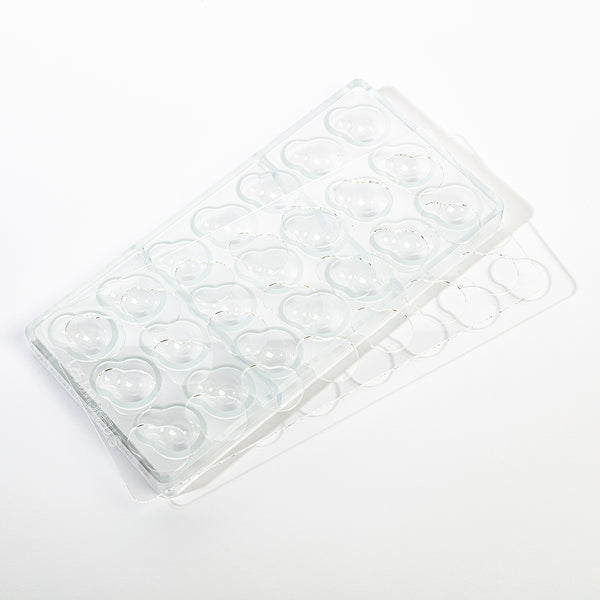
| Colour only inside the cavities | Chocolate World stencil for CW1921 | $29.00 USD |
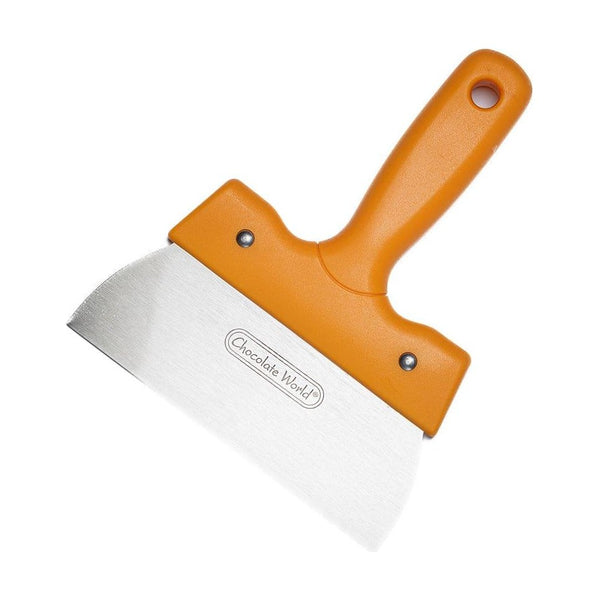
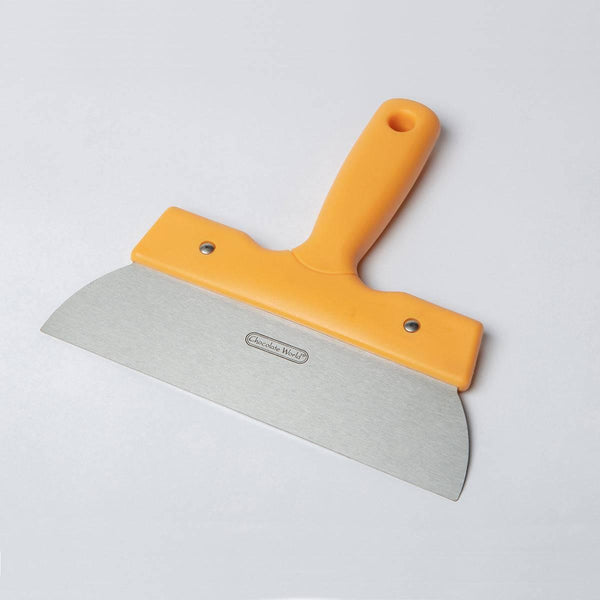
| Scrape the mould clean without scratching it | Chocolate World scraper M1190, 150 mm | $15.00 USD |
| Print a design on every piece | Chocolate World magnetic mould CW1000L01, 15 cavities | $29.00 USD |
The limits of a polycarbonate mould
Polycarbonate is rigid, polished and strong, but it has a temperature window and dislikes twisting, sharp tools and hard knocks.
| What | Chocolate World guideline |
|---|---|
| Working temperature of the mould | Minimum 5°C (41°F), maximum 80°C (176°F) |
| What goes in the mould | Tempered chocolate; do not pour fillings (for example sugar- or alcohol-based) straight into the mould |
| Handling | Minimise torsion; keep sharp items out of the cavities |
| Demoulding | Use material softer than polycarbonate; several softer strikes instead of one hard strike |
| Washing | About 60°C (140°F), detergent compatible with polycarbonate |
| Drying | 70–80°C (158–176°F) maximum; magnetic moulds 65°C (149°F) |
Chocolate World warns that going outside these limits can crack a mould or leave its surface swollen or dull, which shows on every piece you make.
Before the first batch
Wash every new mould before you use it: Chocolate World notes that new moulds can carry dust and oil.
- Wash, rinse and dry it as described below, including the back of the mould.
- Make sure it is completely dry: moisture marks the chocolate.
- Run a first moulding on its own. Chocolate World advises a preliminary moulding after each wash to prepare the mould for production; part of the shine comes back with it, and the full gloss returns over the following batches.
While you work
The mould gives back exactly what is on its surface, so how you colour, fill and scrape it decides the finish.
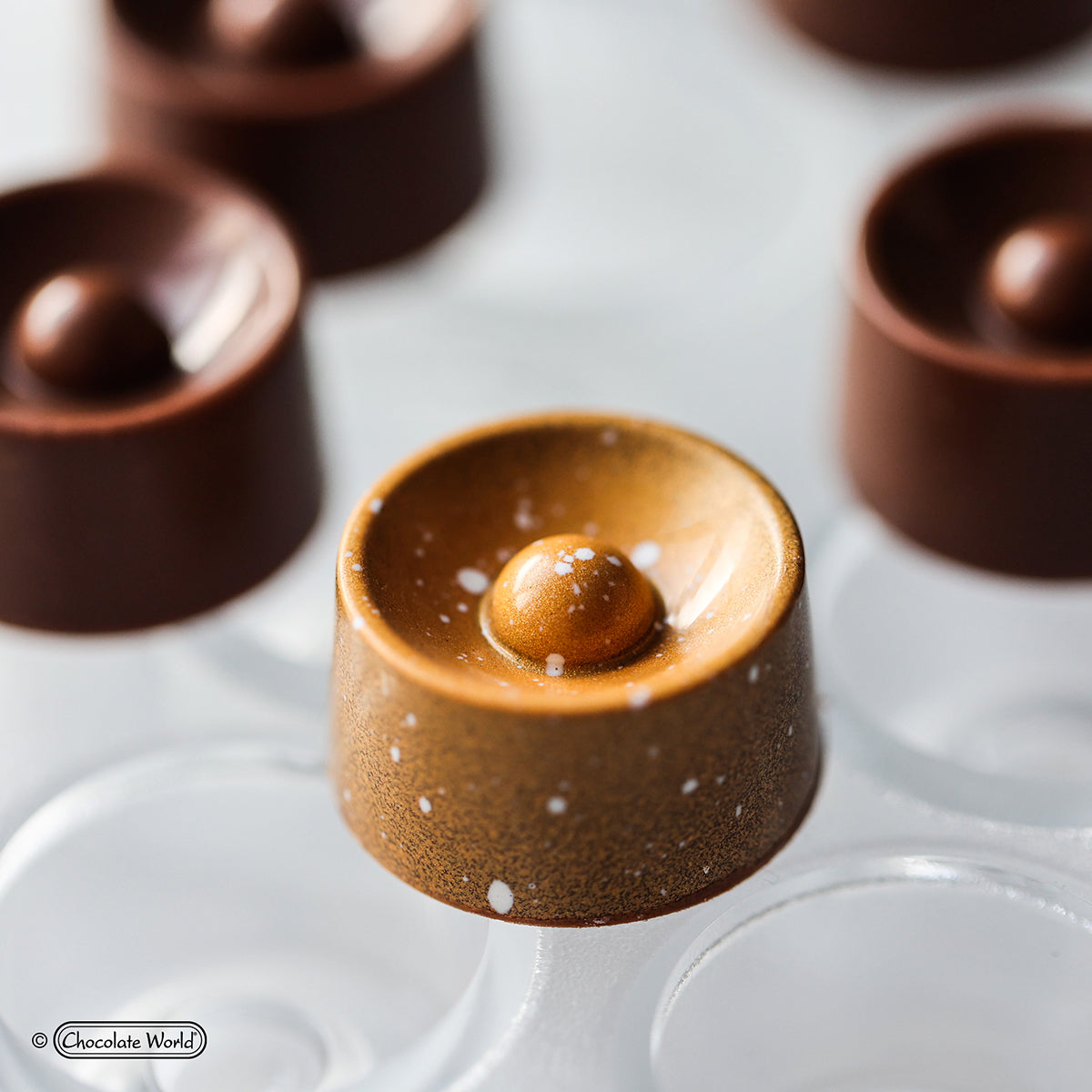
- Colour inside the cavities only. Chocolate World stencils cover the mould surface so sprayed colour ends up only in the cavities; they are reusable and dishwasher safe, and there is one per mould design, such as the stencil for CW1921 (275 × 135 mm, the same frame as the mould).
- Fill with tempered chocolate. Fillings go inside a chocolate shell, never straight into the cavity.
- Scrape, don't press. Clear the top of the mould with a stainless-steel scraper held flat; on production lines, Chocolate World asks to avoid high pressure on the upper scrapers. The M1190 (150 mm) and M1191 (200 mm) scrapers are made for this.
- Magnetic moulds: place the pre-cut transfer sheet on the stainless-steel base with the printed cocoa butter side up, close the mould (the magnets hold both parts together), fill as you would any mould, and after cooling and demoulding the design stays on top of the piece (Chocolate World).
For tempering, shells, filling and sealing, follow how to mold chocolate step by step.
Demoulding without damaging the mould
Turn the mould over and release the pieces with several light taps on a soft surface; one hard strike is what cracks moulds.
- Demould with a material softer than polycarbonate, never with a knife or a metal edge in the cavities.
- Avoid twisting the mould to free the pieces.
- If the chocolate does not release, the cause is usually the tempering, not the mould: see tempering chocolate troubleshooting.
Washing, drying and storing
Wash at a steady 60°C (140°F), rinse with demineralised water, dry with warm air and store the moulds clean and dry.
- Wash: remove chocolate remnants first, then wash at about 60°C (140°F) with a detergent compatible with polycarbonate. In a household dishwasher, do not use too much detergent: chocolate only leaves greasy stains.
- Rinse: demineralised water at about 60°C (140°F); hard water can leave traces in the polycarbonate that show on the chocolate.
- Dry: warm air at 70–80°C (158–176°F) maximum, 65°C (149°F) for magnetic moulds, and dry the back too.
- Store: clean and dry, not under pressure, out of direct sunlight; avoid twisting magnetic moulds; let the moulds rest between uses.
- Check: inspect the moulds regularly and take damaged ones out of production. Coloured moulds are not as strong as clear ones.
The full routine, with the numbers for your team at the sink, is in how to clean polycarbonate chocolate molds.
How AI can help your production
Paste the limits table above into an AI assistant and ask it to write a one-page mould-handling procedure for your team: first use, filling, scraping, demoulding, washing and storage, with a checkbox for each step. Ask it to keep a simple mould register (code, date bought, number of washes, condition) so worn moulds leave production before they mark your bonbons.
AI organises the information; tasting and the final decision stay with your chef.
Chocolate World moulds at Zucchero Canada
We are an authorized distributor of Chocolate World, the Belgian maker of polycarbonate chocolate moulds. Each mould page lists its cavity size, number of cavities, weight per piece and frame size.
- View Chocolate World moulds → bonbons, pralines, bars, spheres and chef designs.
- View magnetic moulds → for transfer sheets.
- View the CW1782 Davide Comaschi mould → 18 cavities of about 11 g on a 30 mm frame, $29.00 USD.
Moulds ship across Canada from our Calgary warehouse and count toward free shipping on eligible orders of CAD 300 or more (remote areas and the territories pay the carrier rate; boxes of 30 moulds always pay the shipping rate). Orders over CAD 500 get 5% off automatically. Choosing your next mould? Read how to choose polycarbonate chocolate molds, or contact our team.
FAQ
What temperature can a polycarbonate chocolate mould take?
Chocolate World gives a working range of 5°C to 80°C (41–176°F). Wash at about 60°C (140°F) and dry at no more than 70–80°C (158–176°F), or 65°C (149°F) for magnetic moulds.
Do I need to wash a new mould before using it?
Yes. New moulds can carry dust and oil; wash, rinse and dry them, then run a first batch to prepare the surface.
Can polycarbonate moulds go in the dishwasher?
Chocolate World allows a household dishwasher if you do not overdose the detergent and use one compatible with polycarbonate, at about 60°C (140°F). Rinse with demineralised water if your water is hard.
Why does my chocolate stick to the mould?
Usually because the chocolate was not properly tempered or the mould was not completely dry. Check your tempering with our troubleshooting guide.
Can I pour ganache or caramel straight into the mould?
No. Chocolate World advises against pouring fillings, such as sugar- or alcohol-based ones, straight into the mould: make a chocolate shell first.
Do moulds qualify for free shipping?
Single moulds count toward free shipping on eligible orders of CAD 300 or more in Canada (remote areas and territories excluded). Boxes of 30 moulds always pay the shipping rate. Orders over CAD 500 get 5% off automatically.
Chocolate World moulds | Bonbon & praline moulds | How to mold chocolate | Cleaning polycarbonate moulds | How to choose polycarbonate moulds
This article is for information only. Every business is different: draw your own conclusions based on your own expectations, budget and goals, and talk to qualified experts before you decide or invest.
Sources: Chocolate World Moulds catalogue, Edition 15 ("Cleaning polycarbonate moulds", "Usage of the moulds", "Storage of the moulds", "Instructions for magnetic moulds"); Chocolate World Equipment catalogue, Edition 9 (stencils, scrapers); Chocolate World product data for CW1921, CW1782, CW1000L01 and STENCW1921 on zuccherocanada.ca.
Shop this article
Products mentioned in this guide
For professionals
Equipping a chocolate shop, bakery or kitchen?
Tell us what you produce and how much. We will recommend the right machine, moulds and ingredients, and send you a quote.
For home bakers
Professional tools for your own kitchen
The same European moulds, tools and ingredients the professionals use.
5% off orders over $500 CAD, applied automatically at checkout.
Keep reading


Leave a comment
All comments are moderated before being published.
This site is protected by hCaptcha and the hCaptcha Privacy Policy and Terms of Service apply.