

Cake Flour vs All-Purpose Flour: Which to Choose for Chocolate Cake
Short answer: cake flour is a very fine, low-protein flour milled from soft wheat, at about 7% protein in Canadian bakers' references; all-purpose flour is usually a blend of hard spring wheats at about 12%. Less protein means less gluten can form when the batter is mixed, which is why soft, low-protein wheat goes into cake and pastry flours. For a chocolate cake, use the flour your recipe was written for; if you have to swap, 1 cup of cake flour equals 1 cup minus 2 tablespoons of sifted all-purpose flour.
Quick answer: what to buy for a chocolate cake
| Your need | Product | Price |
|---|---|---|
| French-style chocolate génoise, cakes, madeleines | Foricher Terroir T55 Pâtissière flour | $12.50 CAD (1 kg) |
| Dark chocolate for sponge cakes, ganache and mousse | FCH 55% dark chocolate, Venezuela, 10 kg | $299.00 CAD |
| Cocoa powder for a bakery | Dutched 20/22 cocoa powder, Peru, 25 kg | $710.00 CAD |
| Moulds and rings to shape the cake | Pavoni Pavoflex silicone baking moulds (madeleine, muffin, savarin…) | See collection |
Cake flour vs all-purpose flour: the difference is protein
The main difference is how much protein the flour carries, which comes from the type of wheat. Understanding Ingredients for the Canadian Baker, an open textbook published by BCcampus, describes them this way:
| Flour | Wheat | Protein (Canadian reference) | Protein (USDA, per 100 g) |
|---|---|---|---|
| Cake flour | Soft winter wheat; so fine and uniform it feels satiny | About 7% | 8.2 g |
| Pastry flour | Usually soft wheat; finely milled, but not as fine as cake flour | Fairly low (no figure given) | Not listed |
| All-purpose flour | Usually a blend of hard spring wheats | About 12% | 10.3 g |
| Bread flour | Blends of hard spring and hard winter wheats | About 13% | 12.0 g |
The two columns come from different sources and do not match exactly: the Canadian figures describe typical flours, and the USDA FoodData Central figures are laboratory values for enriched American flours. Both show the same order, from cake flour at the bottom to bread flour at the top. The protein printed on your own bag is the number that counts for your recipe.
Why protein changes your cake
Protein matters because it becomes gluten. Wheat flour holds two proteins, gliadin and glutenin, and gluten only develops once the flour is moistened and mixed. Soft wheats are low in gluten-producing protein and are milled into cake and pastry flours; hard wheats carry more and are used for bread and all-purpose flours.
Protein also changes how much liquid the flour takes up: hard wheat flour absorbs more liquid than soft flour. So a swap changes the batter, not only the crumb, and the standard conversions below are not cup for cup.
There is one exception worth knowing: some cake flours are made with more protein on purpose, for fruited pound cakes, so the fruit does not sink.
What is cake flour in Canada?
In Canada, cake and pastry flours come from soft wheat. The Canadian Grain Commission lists three soft wheat classes with low protein and cakes and pastry among their end uses:
- Canada Western Soft White Spring (CWSWS): cookies, cakes, pastry, flat breads, noodles, steamed breads, chapatis.
- Canada Eastern Soft Red Winter (CESRW): cakes, pastry, cereal, crackers, biscuits and filling.
- Canada Eastern White Winter (CEWW): cakes, pastry, cereal, crackers, biscuits and filling.
Canada's main hard wheat, Canada Western Red Spring, goes instead into high-volume pan bread and, in blends, other breads and pasta.
Which flour for chocolate cake?
Use the flour your recipe was written for. If you need to swap, Utah State University Extension gives these equivalents:
| Recipe calls for | Replace with |
|---|---|
| 1 cup sifted cake flour | 1 cup minus 2 tablespoons sifted all-purpose flour (7/8 cup) |
| 1 cup sifted all-purpose flour | 1 cup plus 2 tablespoons cake flour |
| 1 cup sifted self-rising flour | 1 cup sifted all-purpose flour plus 1½ teaspoons baking powder and ½ teaspoon salt |
Bake one test cake after any swap before you change a production recipe. Check the rise, the crumb and how the layers hold under frosting or ganache, and note the result.
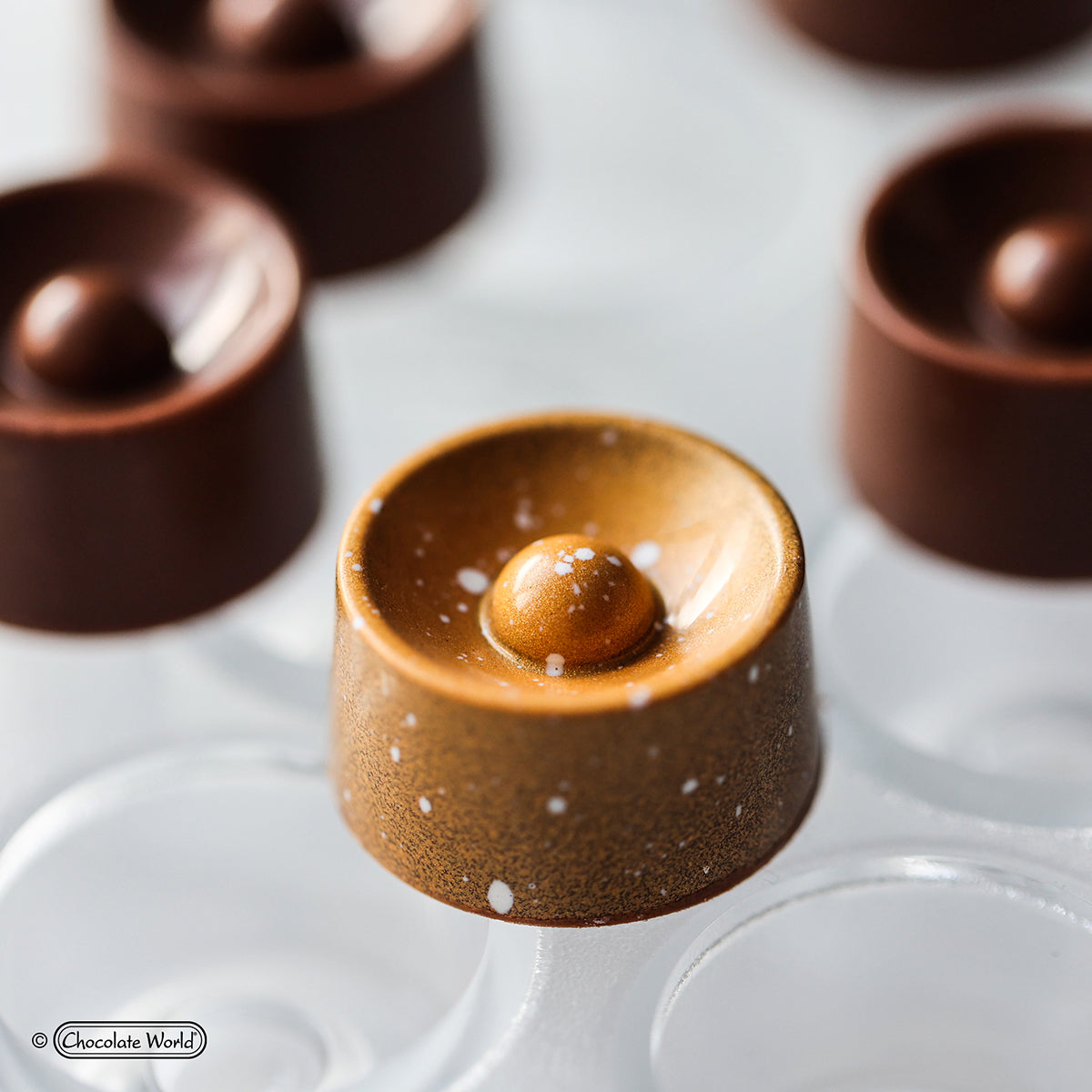
The chocolate itself matters as much as the flour. For sponges, ganache and mousse, our FCH 55% dark chocolate is made from fermented 100% Venezuelan Trinitario cacao and lists sponge cakes, ganaches and mousse among its recommended uses. For a darker ganache layer, the Bassan Sur del Lago 71% couverture is made from Venezuelan cacao and is described for ganaches and entremets.
- View FCH 55% dark chocolate, Venezuela → $299.00 CAD
- View Bassan Sur del Lago 71% → $273.00 CAD (5 kg bag)
For the cocoa in the batter, our KKO Real Venezuelan cocoa powders are in the KKO Real collection, and bakeries buying by the bag can use the 25 kg Peruvian dutched 20/22 powder, listed for baked goods.
French flour is not cake flour: what the T number means
A French T number measures ash, the mineral content left after burning the flour, not protein. In the French Label Rouge specification for flour, T45 is listed at 0.50% ash and is used mainly for pâtisserie, and T55 is ash from 0.50% to 0.60%, used for bread, rusks and viennoiserie. So the whitest French flour is not automatically the softest:
| Foricher flour | Protein | What Foricher makes it for |
|---|---|---|
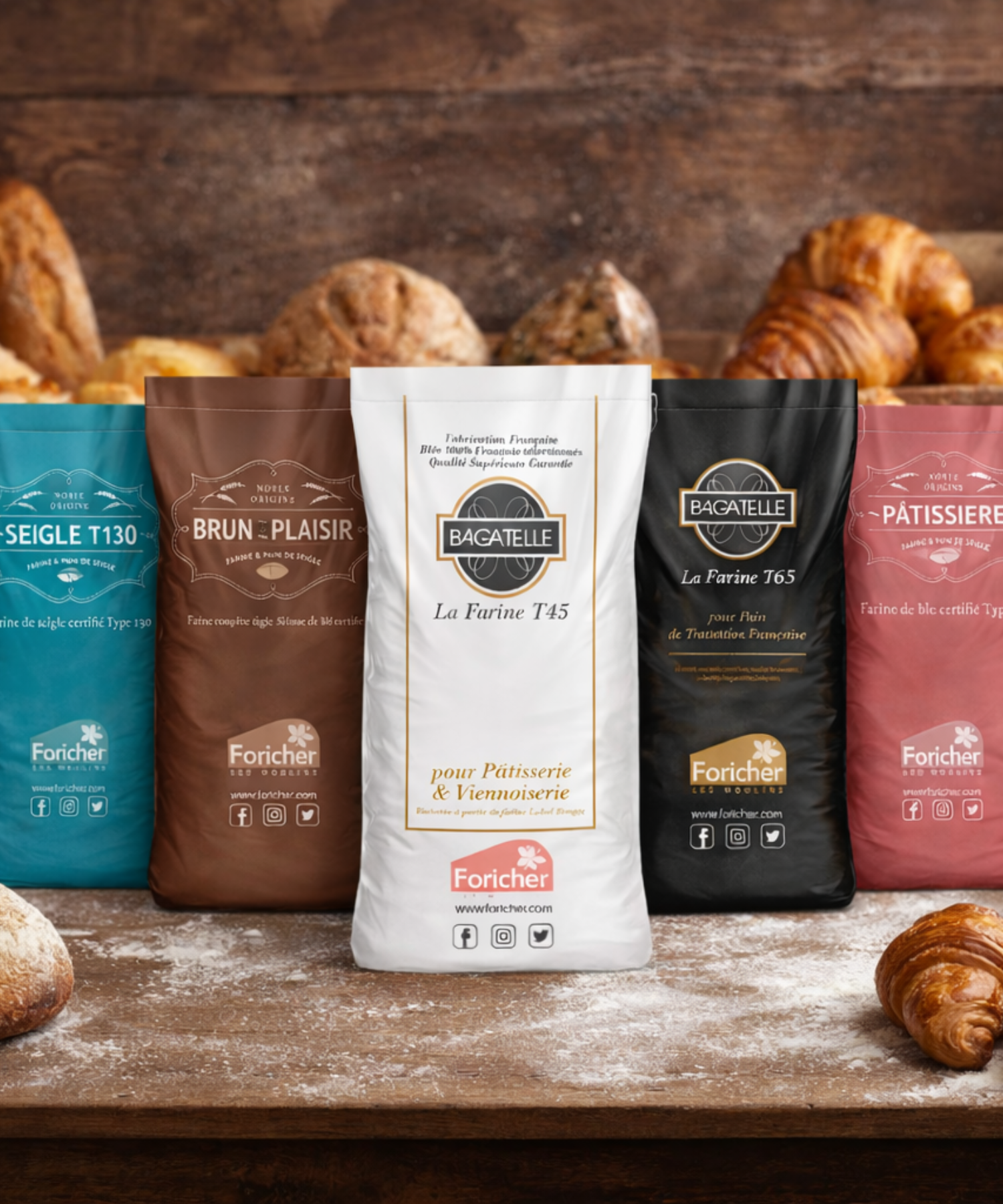
| Bagatelle T45 | 14.0% (±0.3), mill datasheet | Viennoiserie and pastry: croissants, brioche, laminated doughs |
| Terroir T55 Pâtissière | 12.5% on our product page; Foricher has not published a datasheet | Choux pastry, tart doughs, and batters made by beating sugar and eggs, such as cakes, génoises, madeleines and quatre-quarts |
Neither is a low-protein cake flour. The Pâtissière is the flour Foricher recommends for French sponges and cakes, so use it for French-style recipes, such as a chocolate génoise, written for French flour, not as a cup-for-cup swap in a North American cake-flour recipe.
View Foricher Terroir T55 Pâtissière → $12.50 CAD (1 kg bag)
To compare every Foricher flour by application, see T45 vs T55 vs T65: which French flour for which application.
How AI can help your production
Paste your chocolate cake recipe into an AI assistant and ask it to convert every cup measure to grams for your scale, to apply the flour swap from the table above if you change flours, and to scale the batch to your pan sizes or your weekly production. Ask it to cost each cake with your own ingredient prices and to set up a test log for rise, crumb and layer stability, so every trial is recorded the same way.
AI organises the information; tasting and the final decision stay with your chef.
Flour, chocolate and moulds at Zucchero Canada
As Canada's premier baking ingredient specialists, we understand the science behind flour selection – and we're here to help you make the right choice every time. From French artisan flours to premium chocolate-making supplies, we provide Canadian bakers with the tools needed for exceptional results.
We are an authorized distributor of Foricher, the French mill, and of Pavoni Italia, and the exclusive distributor of KKO Real Venezuelan cocoa in Canada. Each one has its job in a chocolate cake:
- Foricher Terroir T55 Pâtissière for French-style sponges and cakes, in 1 kg, 10 × 1 kg and 25 kg formats.
- FCH and Bassan Venezuelan chocolate for the sponge, the ganache and the mousse.
- KKO Real and Peruvian cocoa powders for the cocoa in the batter.
- Pavoni silicone moulds and layer cake rings to shape and assemble.
For 200 recipes including 18 cakes, with step-by-step guides on working with chocolate, Chocolate, 6th edition, by Ramon Morató ($160.00 CAD) is the reference book on our shelf.
Buying flour or chocolate for a bakery, café or hotel? Contact our team for volume orders, or call 587-774-8873 (toll free 877-741-8251). Orders over CAD 500 get 5% off automatically at checkout.
Foricher flours | Flour for pastry | KKO Real cocoa | What is T55 flour? | Oil vs butter in chocolate baking
This article is for information only. Every business is different: draw your own conclusions based on your own expectations, budget and goals, and talk to qualified experts before you decide or invest.
Sources: BC Cook Articulation Committee, Understanding Ingredients for the Canadian Baker (BCcampus, 2015), chapters "Classification of Wheat", "Flour Streams and Types of Wheat Flour" and "Flour in Baking"; USDA FoodData Central, SR Legacy entries 169723, 168894 and 168896; Canadian Grain Commission, "Canadian wheat classes" (2026); Utah State University Extension, "Ingredient Substitution" FN 255 (Lauritzen, 1992); INAO, Label Rouge specification LA 05/14 "Farine de meule", flour type table; Foricher, technical sheet FT208A (Bagatelle T45) and foricher.com "Pâtissière"; Zucchero Canada product pages.
Good to know
Frequently asked questions
What is the difference between cake flour and all-purpose flour?
Protein. Cake flour is milled from soft wheat and is very fine, at about 7% protein in Canadian bakers' references (USDA lists 8.2 g per 100 g). All-purpose flour is usually a blend of hard spring wheats at about 12% (USDA: 10.3 g per 100 g). More protein means more gluten can form when the batter is mixed, and hard wheat flour absorbs more liquid than soft flour.
What is cake flour in Canada?
A finely milled, low-protein flour made from soft wheat. The Canadian Grain Commission lists three low-protein soft wheat classes with cakes and pastry among their end uses: Canada Western Soft White Spring, Canada Eastern Soft Red Winter and Canada Eastern White Winter.
Can I use all-purpose flour instead of cake flour?
Yes, with a correction. Utah State University Extension gives 1 cup minus 2 tablespoons of sifted all-purpose flour (7/8 cup) for 1 cup of sifted cake flour. Bake a test cake before you change a production recipe.
Can I use cake flour instead of all-purpose flour?
Utah State University Extension gives 1 cup plus 2 tablespoons of cake flour for 1 cup of sifted all-purpose flour. Because the two flours absorb liquid differently, test the recipe before scaling it up.
Is French T45 or T55 flour the same as cake flour?
No. A French T number measures ash (mineral content), not protein. Foricher's Bagatelle T45 has 14.0% protein on its mill datasheet and is made for viennoiserie. Foricher recommends its Terroir T55 Pâtissière for French sponges and cakes such as génoises and madeleines, but it is not a low-protein cake flour, so use it in recipes written for French flour.
Where can I buy French pastry flour for cakes in Canada?
Zucchero Canada stocks Foricher Terroir T55 Pâtissière in 1 kg, 10 × 1 kg and 25 kg formats. Orders over $500 CAD get 5% off automatically at checkout, and our team handles volume orders for bakeries and hotels through the contact page.
Shop this article
Products mentioned in this guide
 ForicherTerroir T55 French Pastry Flour for PâtisserieFrom $12.50 CADView product →
 FCH Origins55% DARK CHOCOLATE MINIBARS 10 kg box - Origin Venezuela$299.00 CADView product →
 Canada Cacao Co.Dutched (Alkalized) 20/22 Cacao Powder - 100% Peru Fine Cocoa – 25 kg Bag$710.00 CADView product →
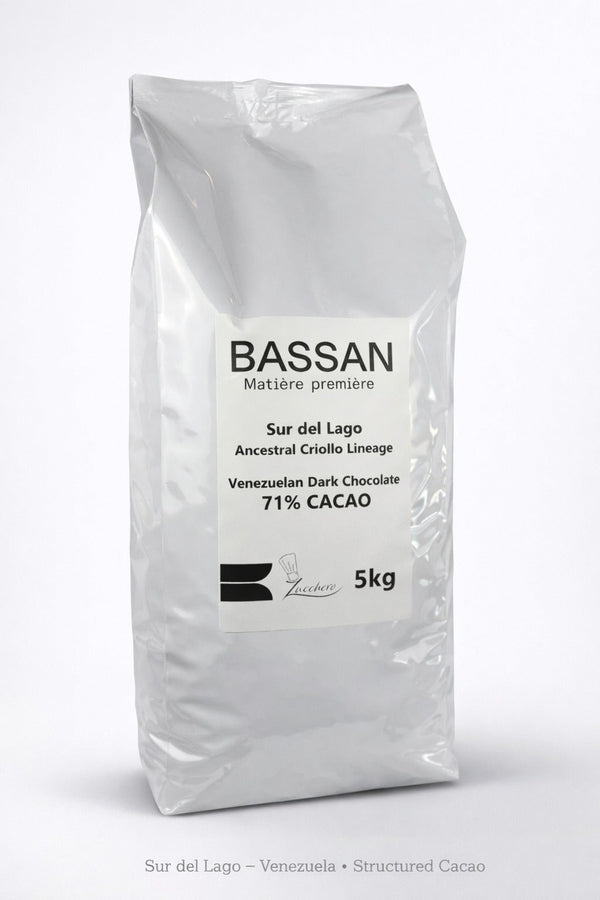 Bassan ChocolateSur del Lago Ancestral Criollo Lineage Dark Chocolate 71%From $69.95 CADView product →
For professionals
Equipping a chocolate shop, bakery or kitchen?
Tell us what you produce and how much. We will recommend the right machine, moulds and ingredients, and send you a quote.
For home bakers
Professional tools for your own kitchen
The same European moulds, tools and ingredients the professionals use.
5% off orders over $500 CAD, applied automatically at checkout.
Keep reading

Leave a comment
All comments are moderated before being published.
This site is protected by hCaptcha and the hCaptcha Privacy Policy and Terms of Service apply.