


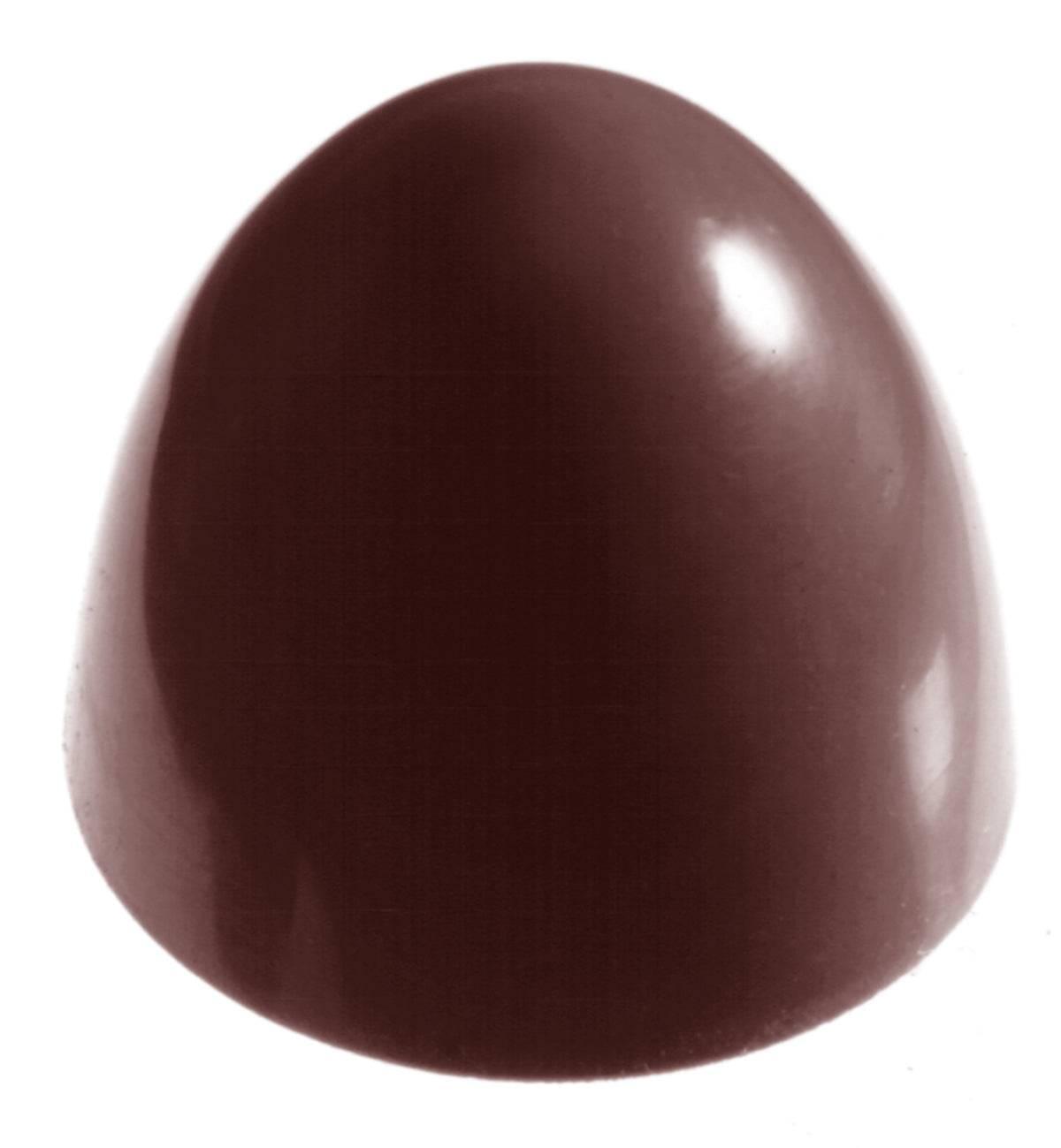
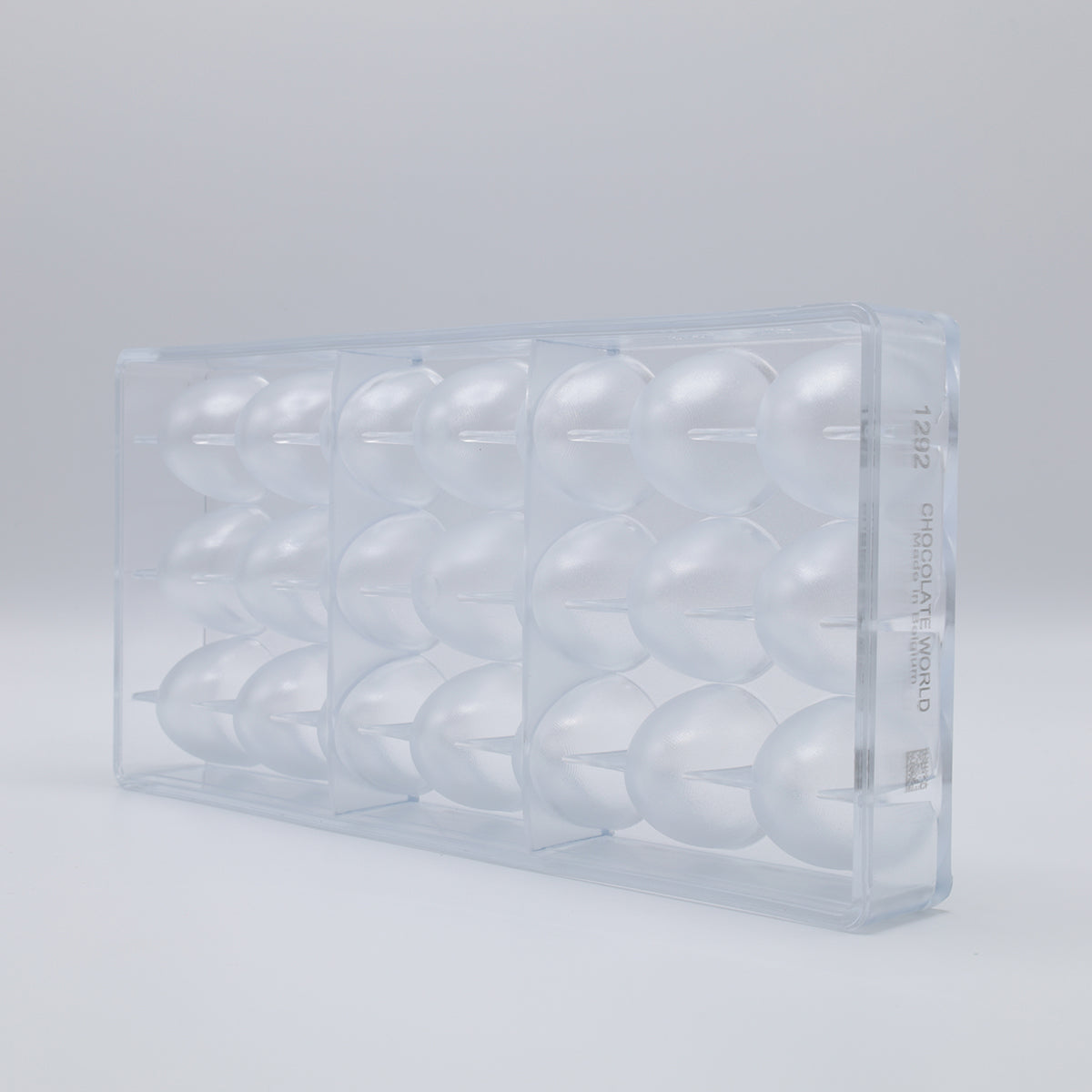
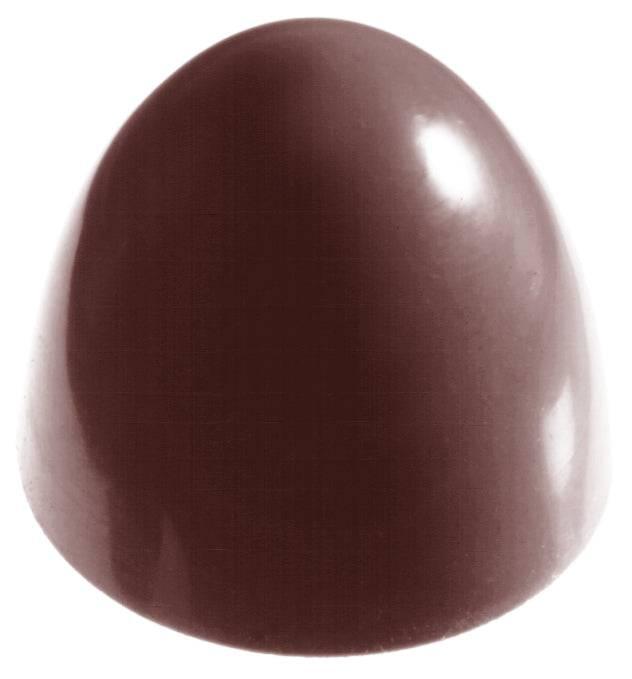
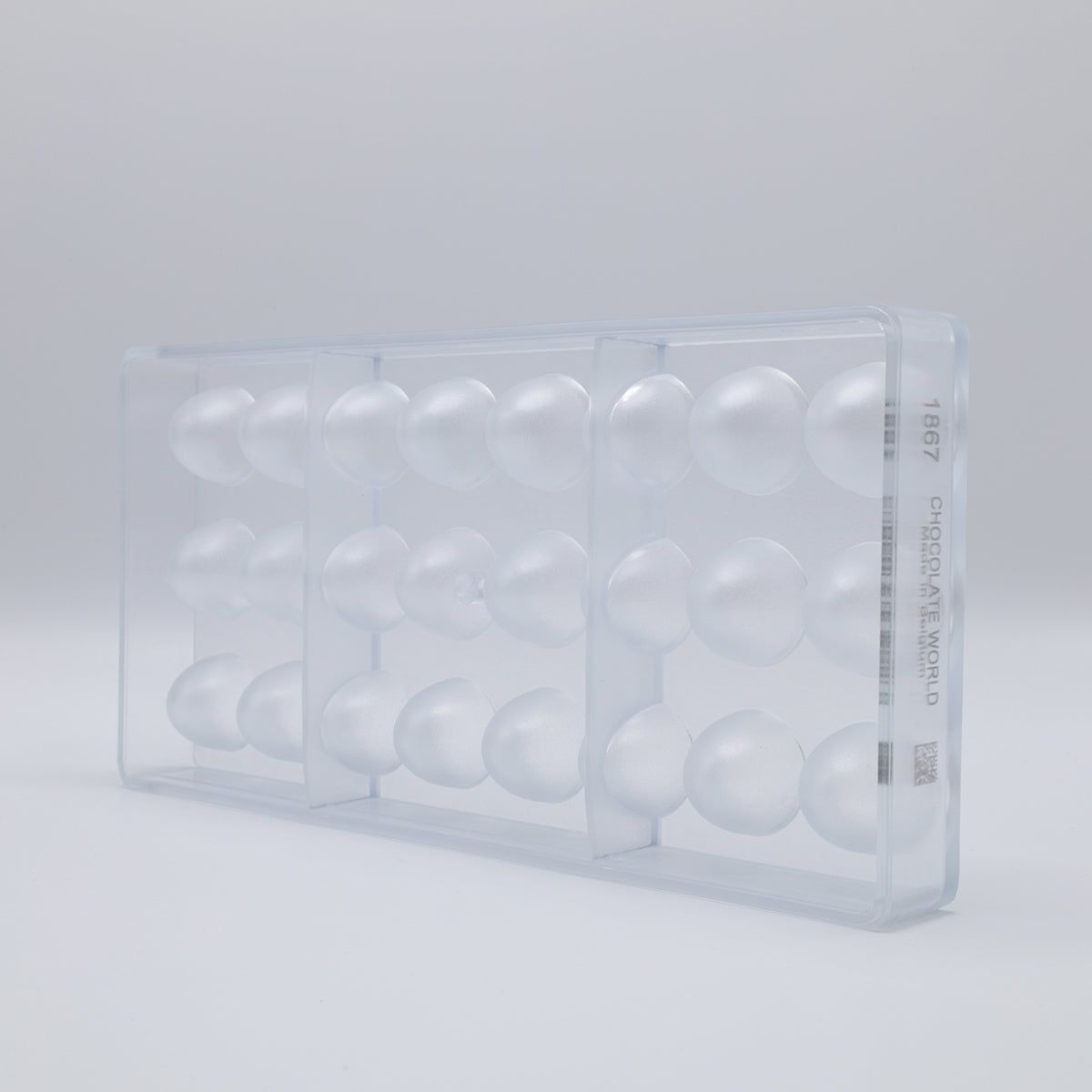
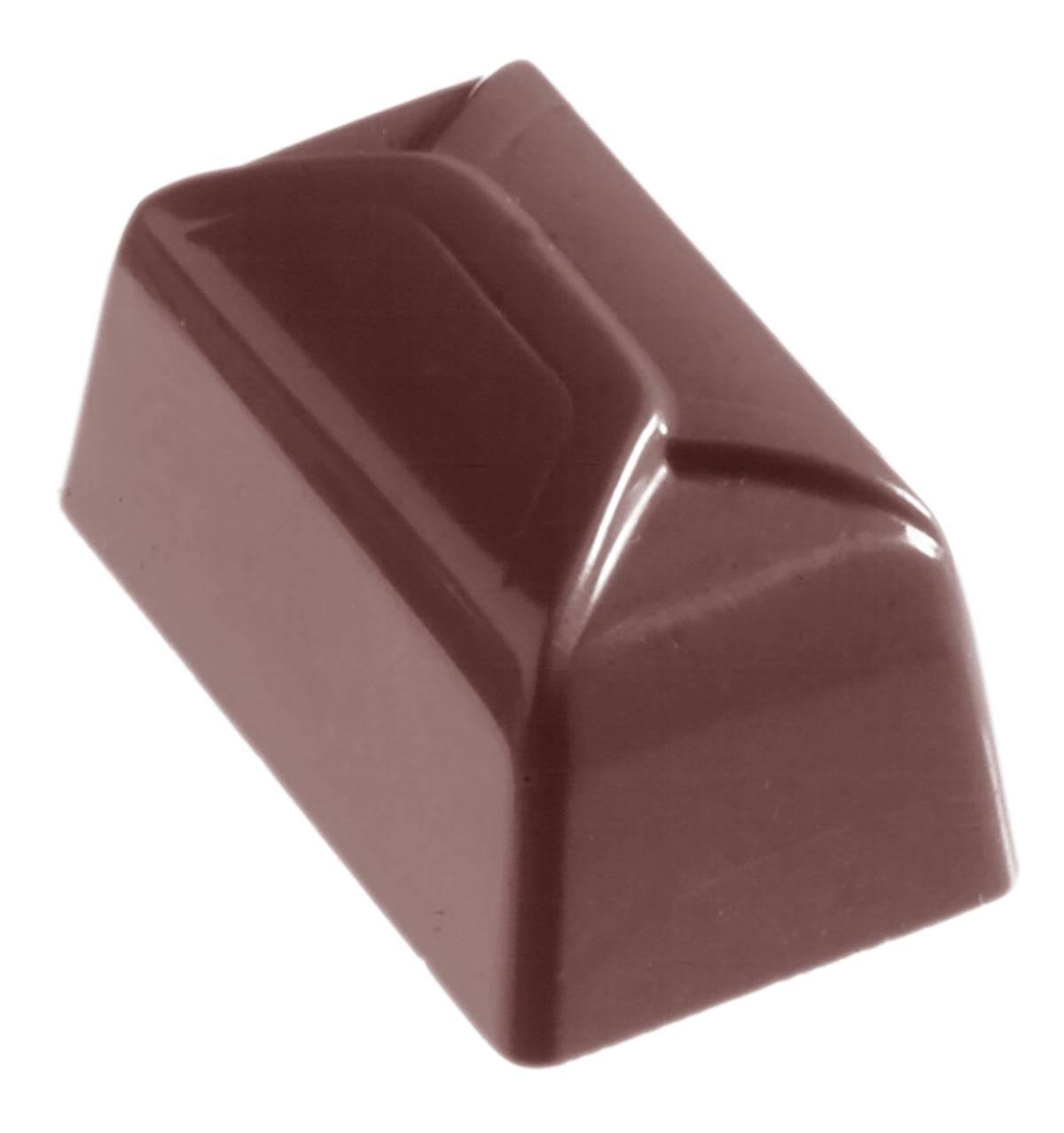
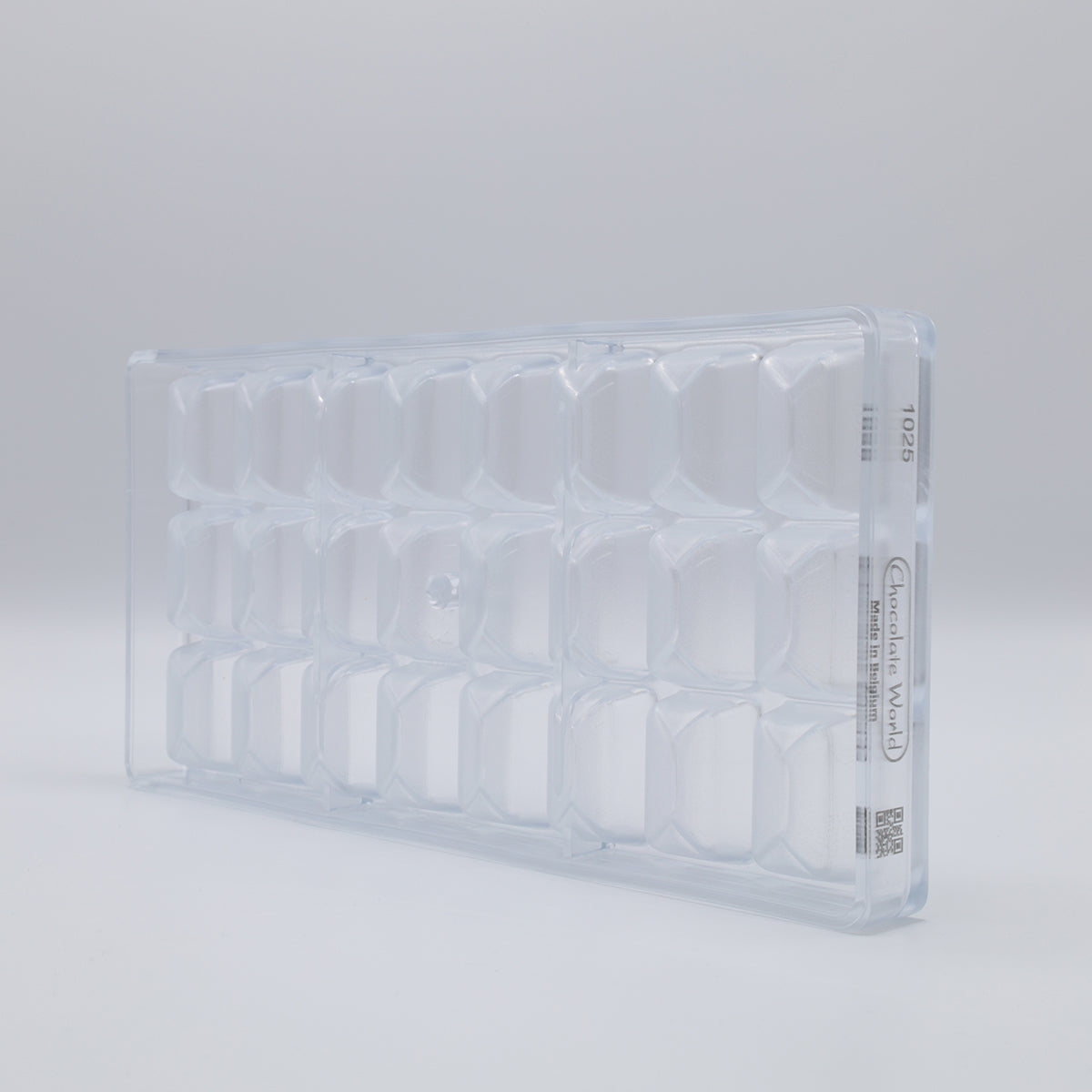
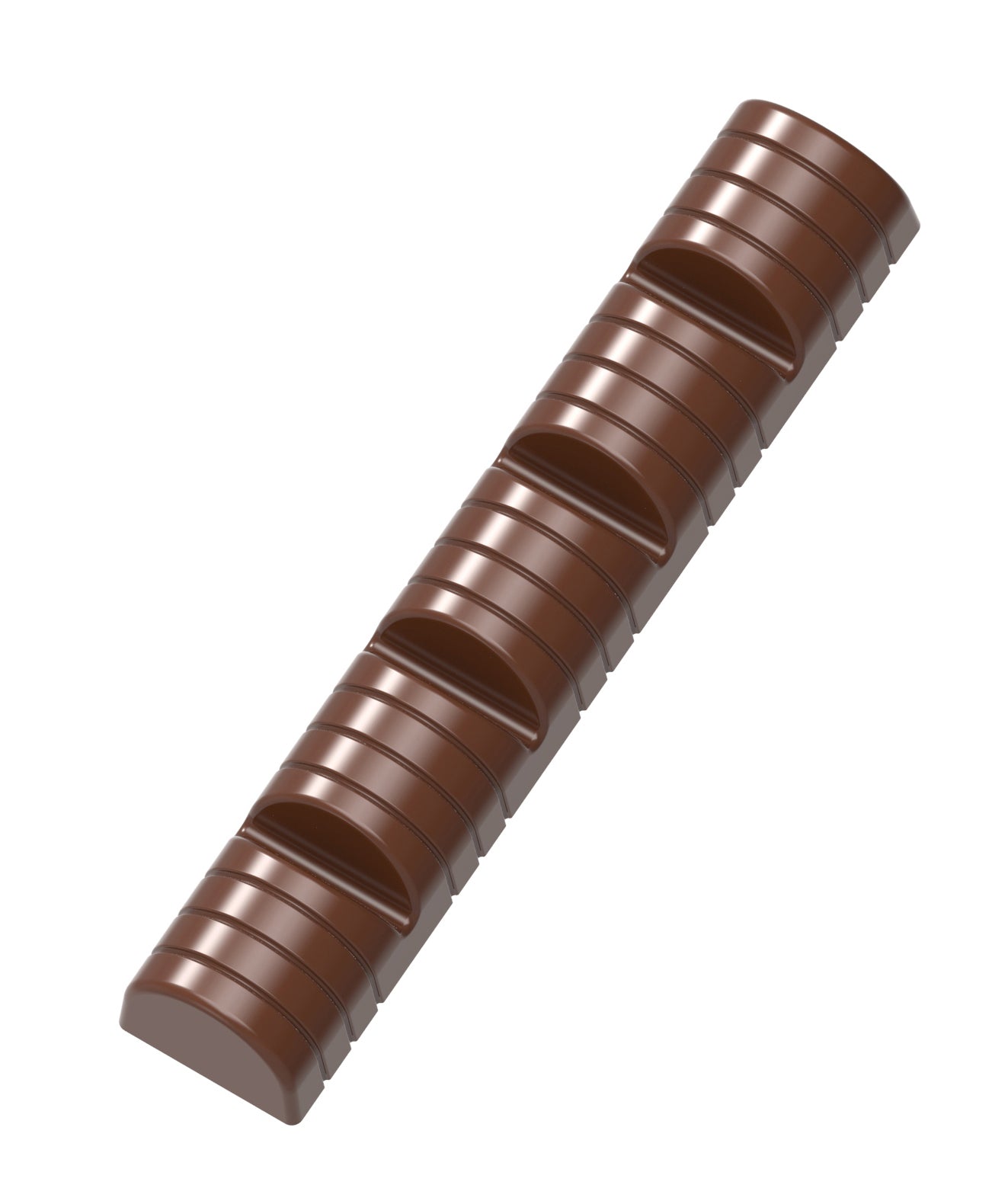
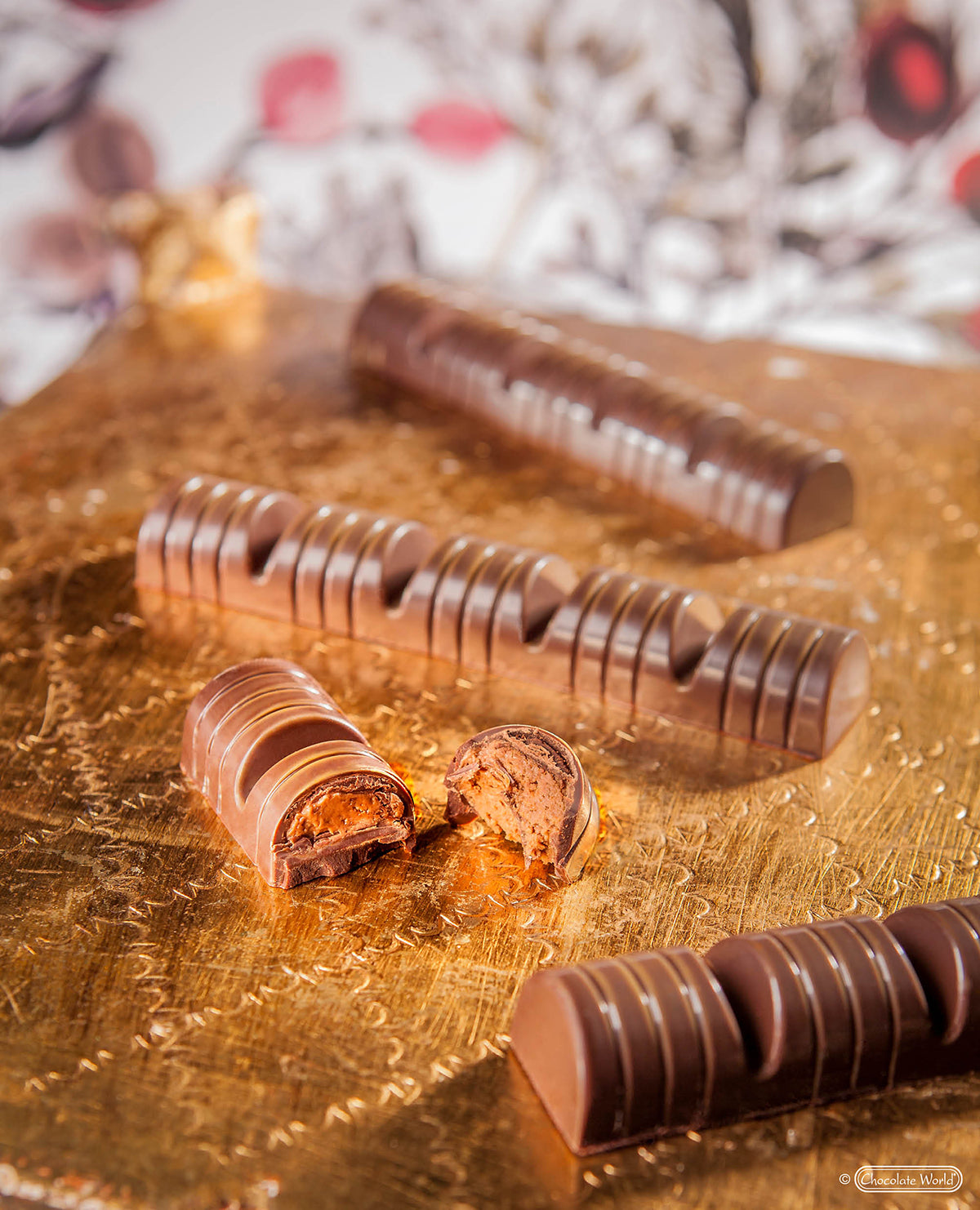
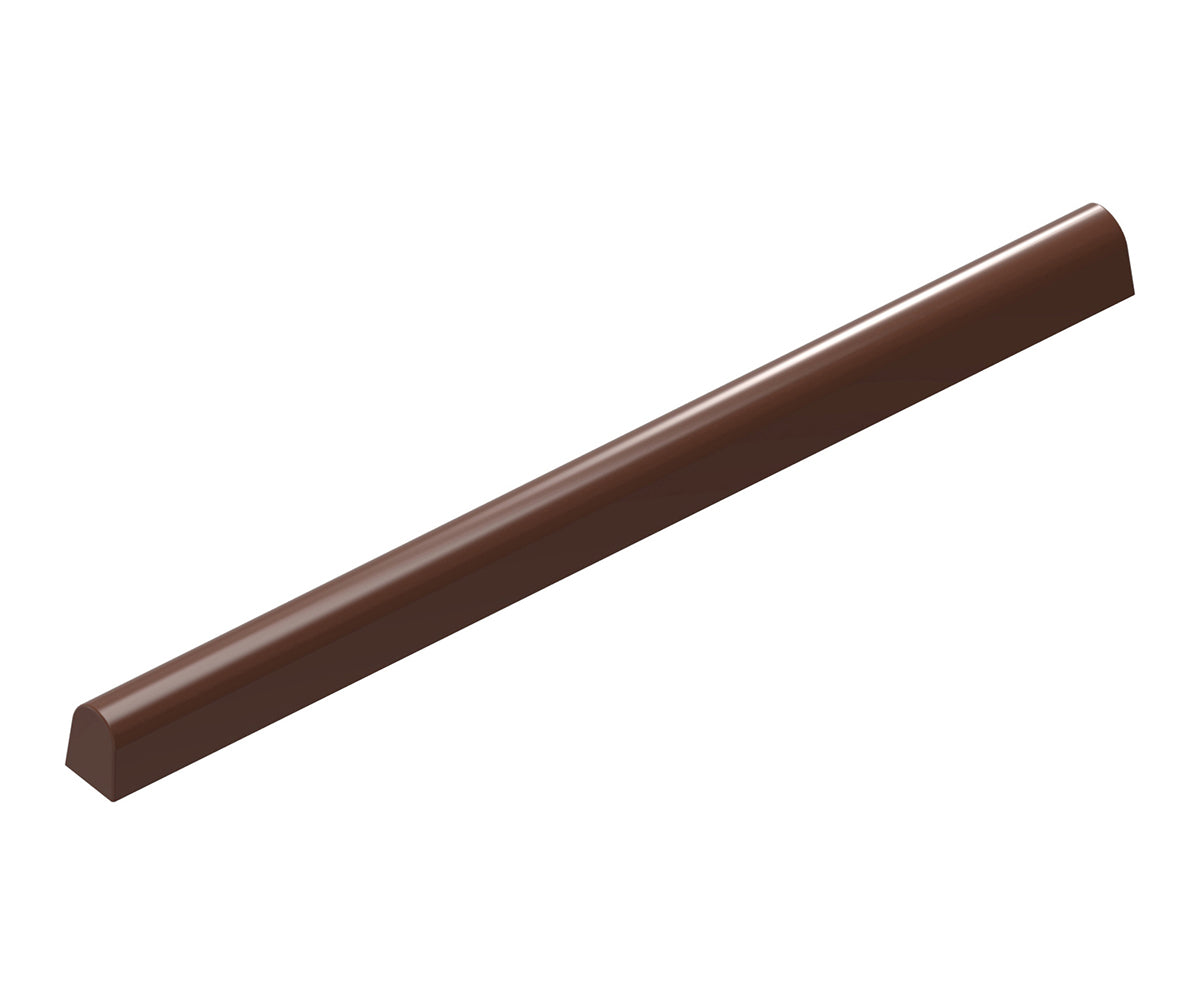
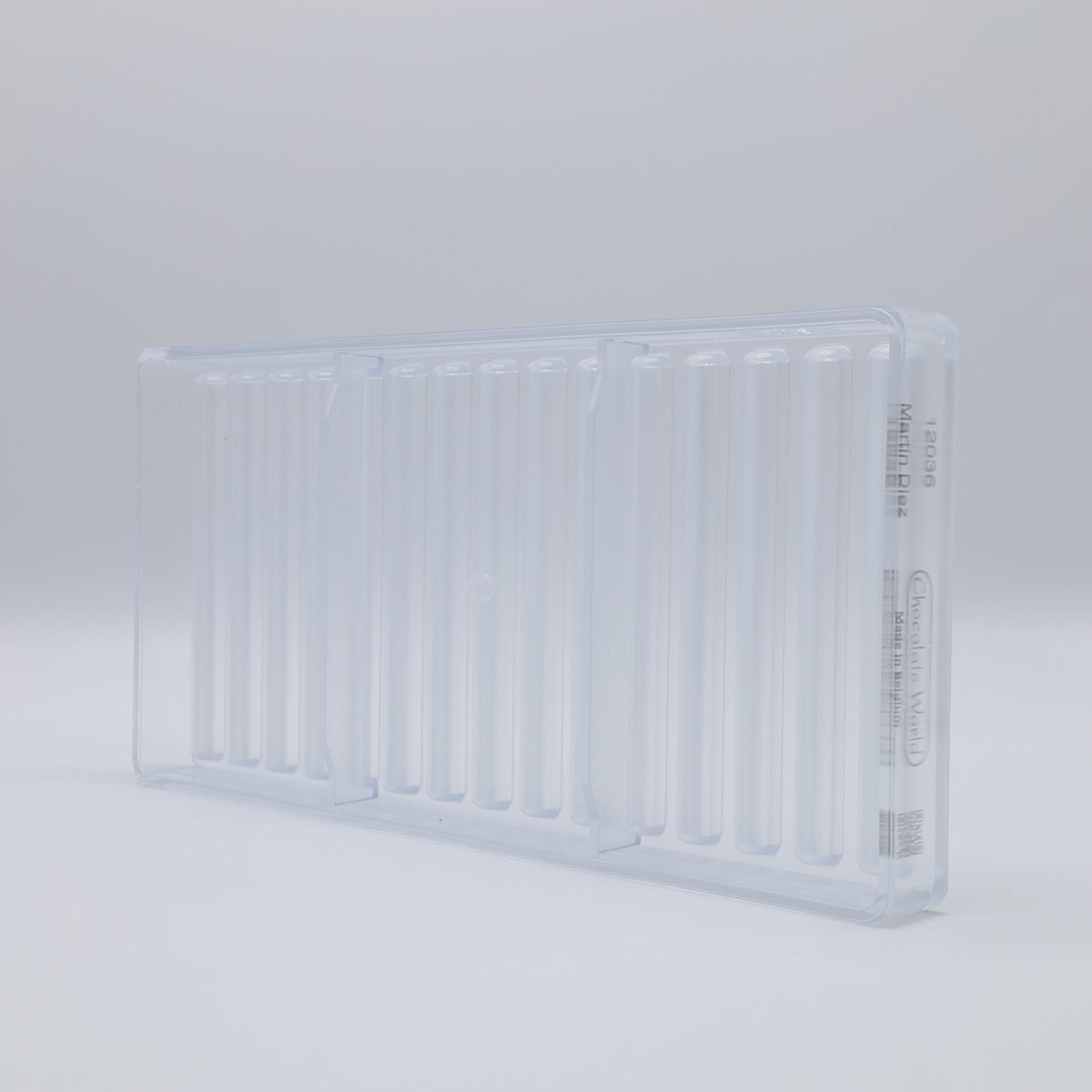
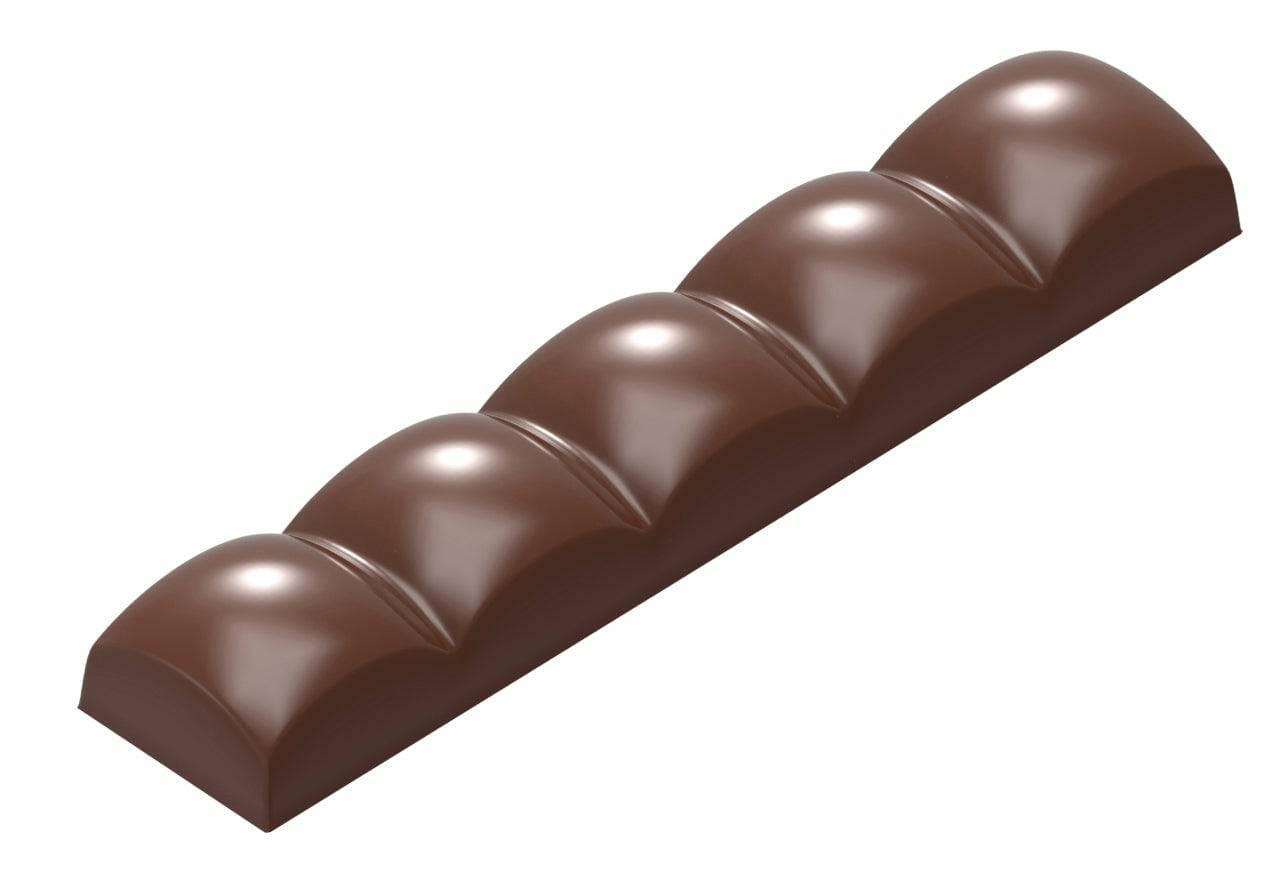
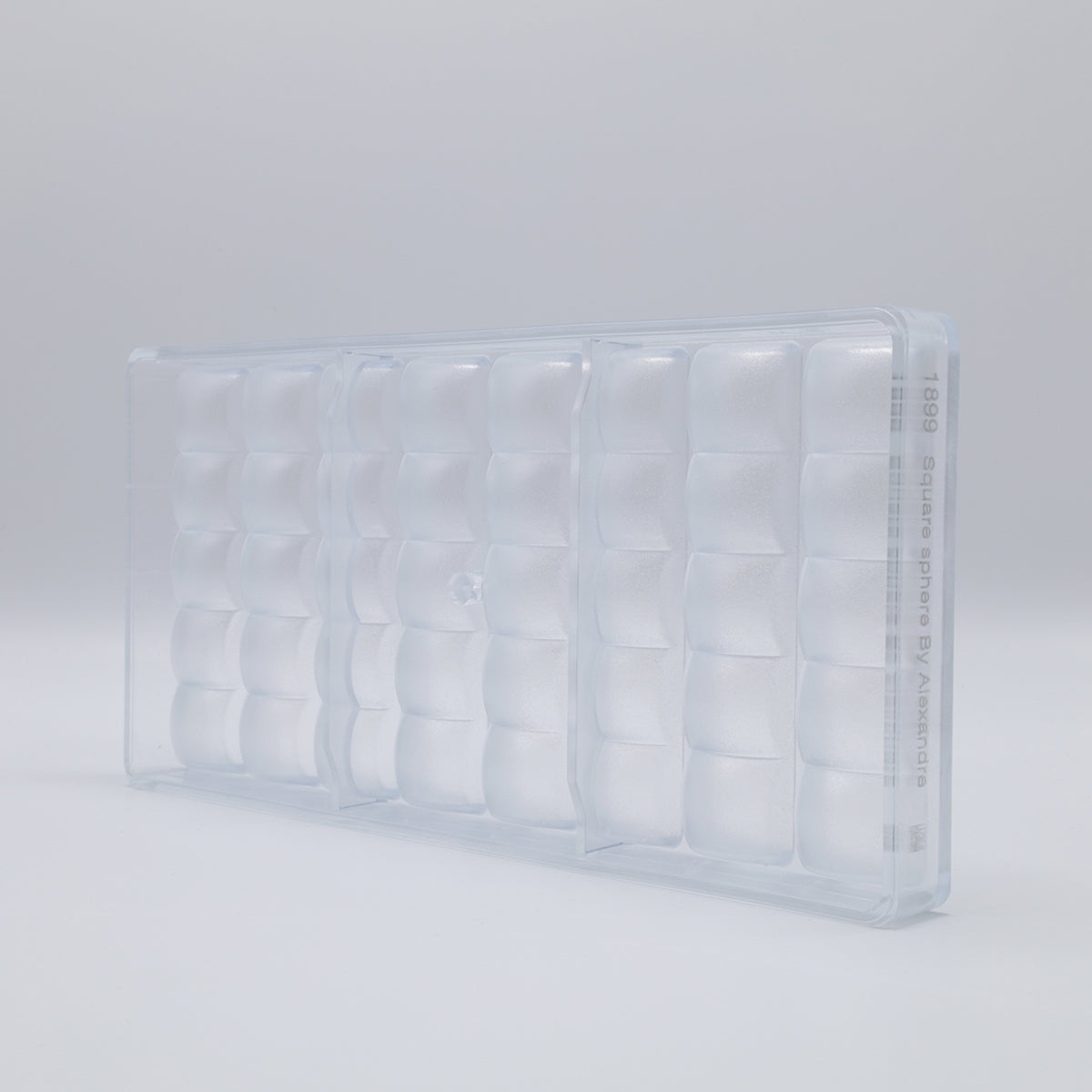
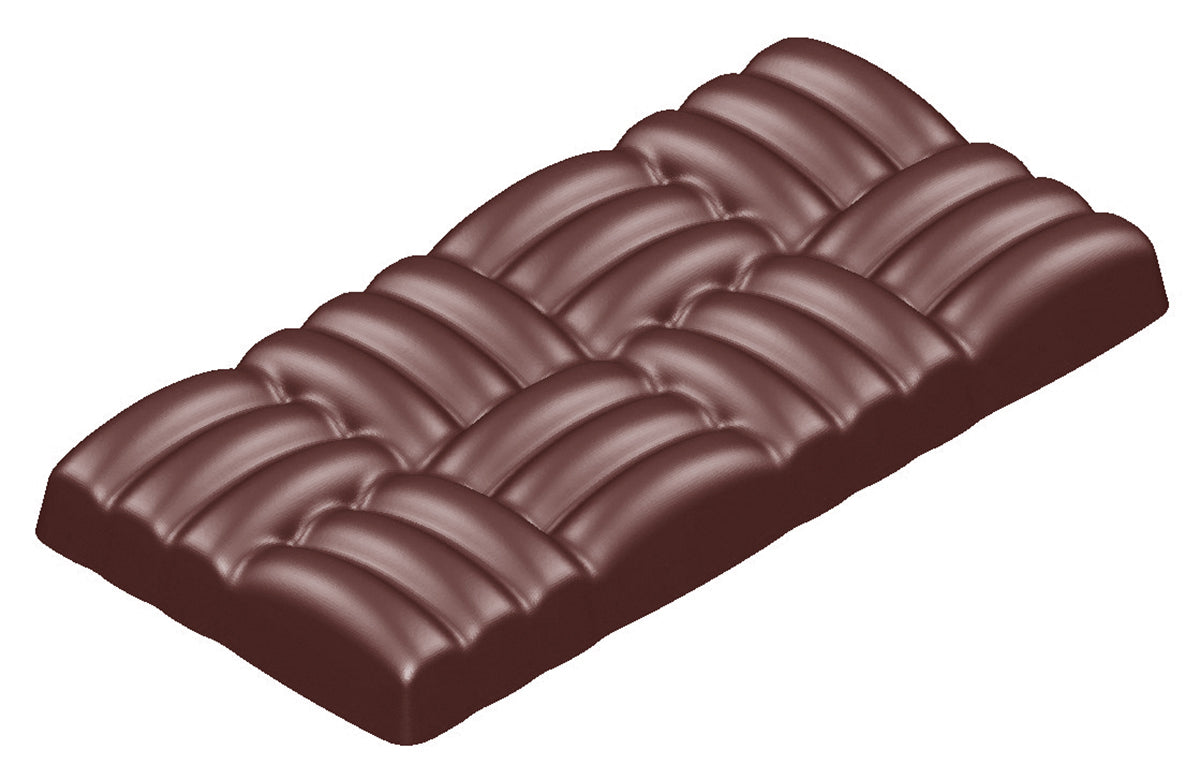

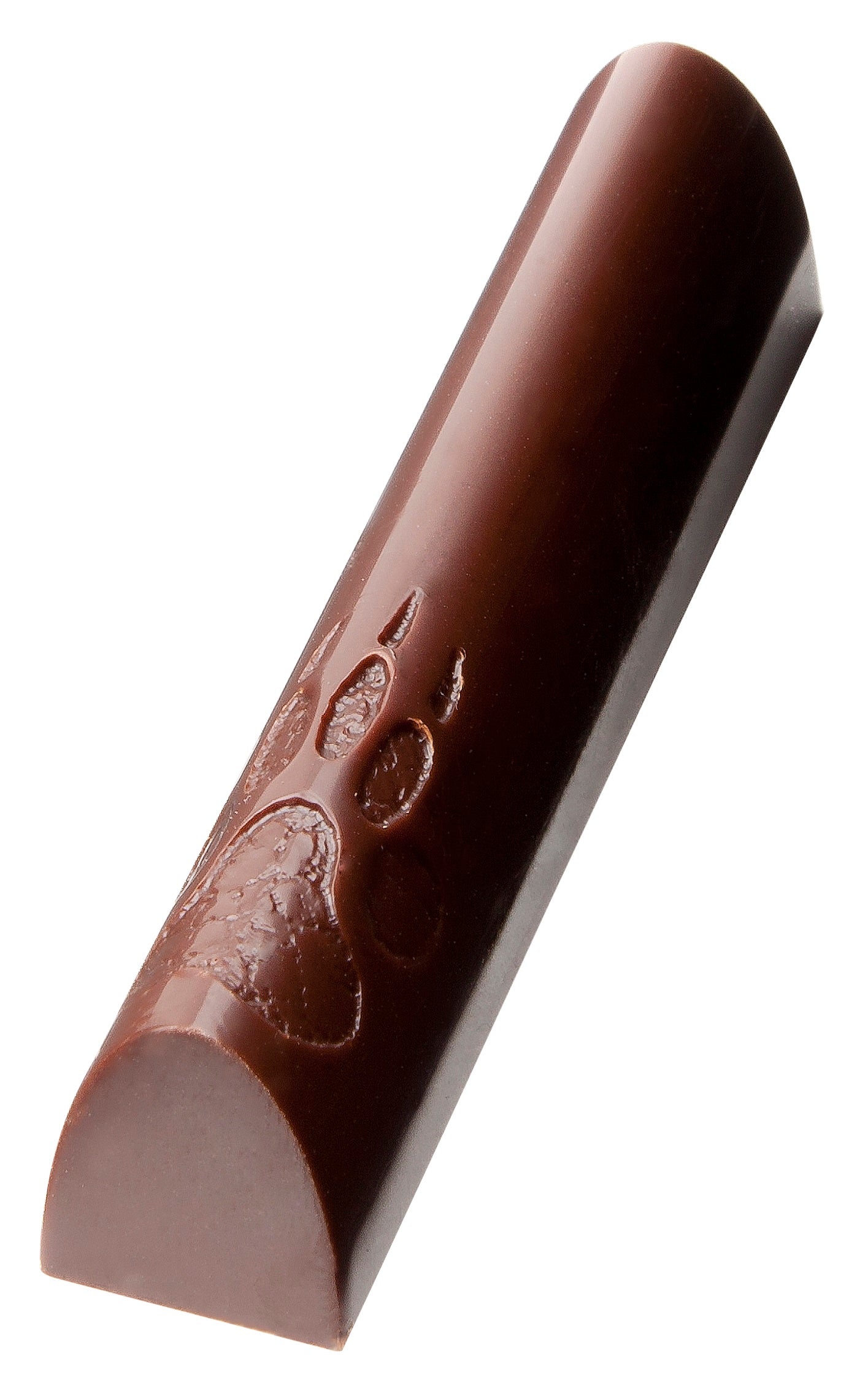
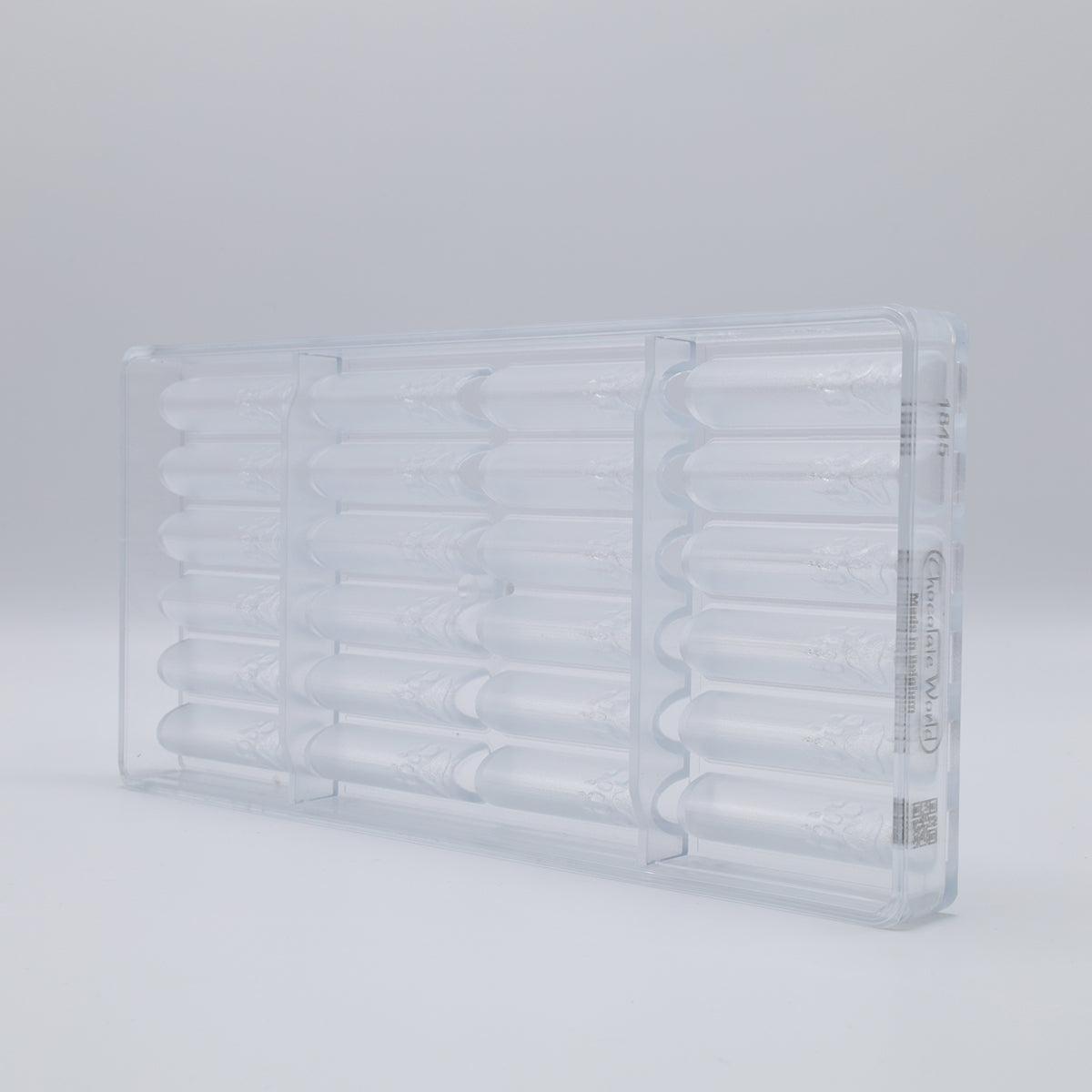
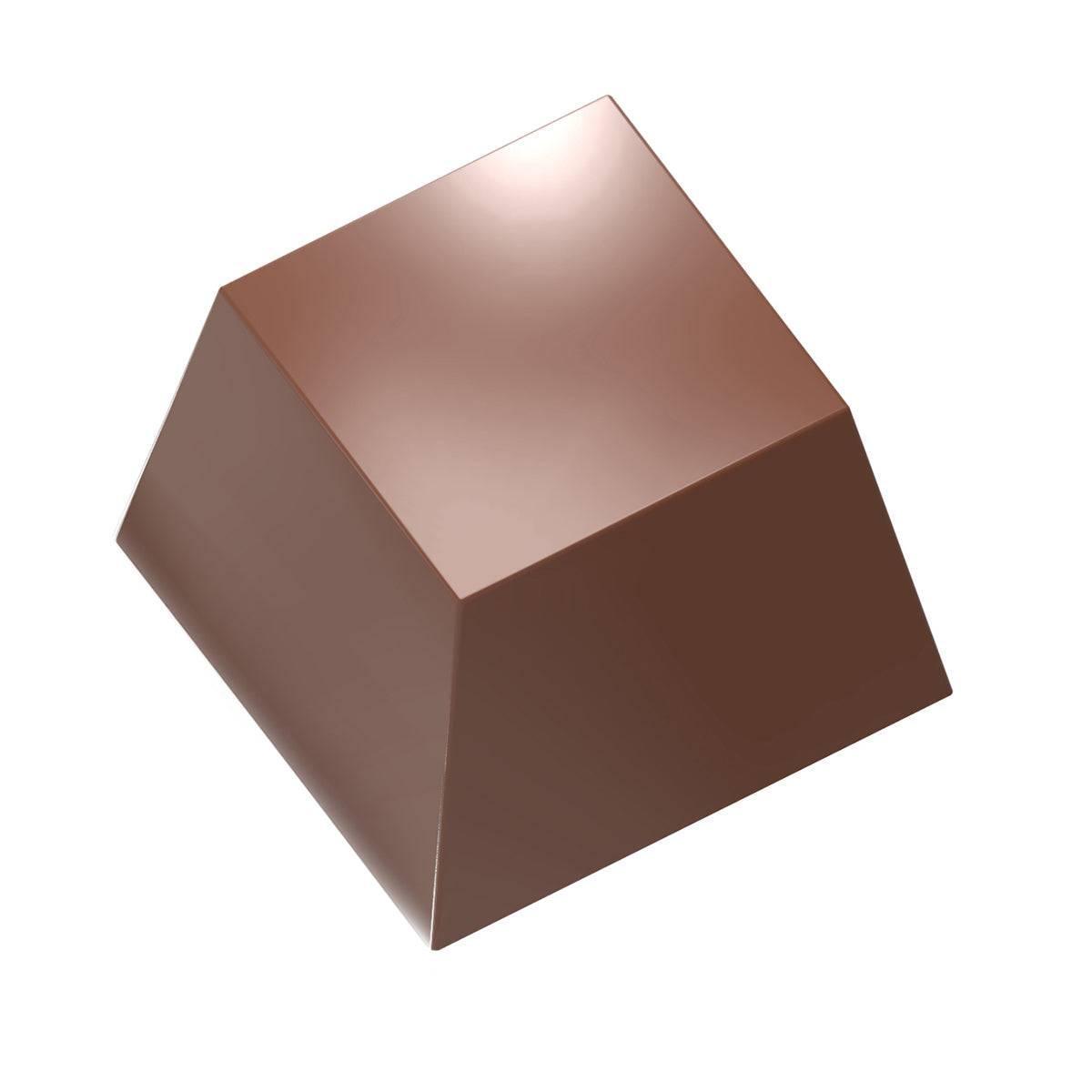
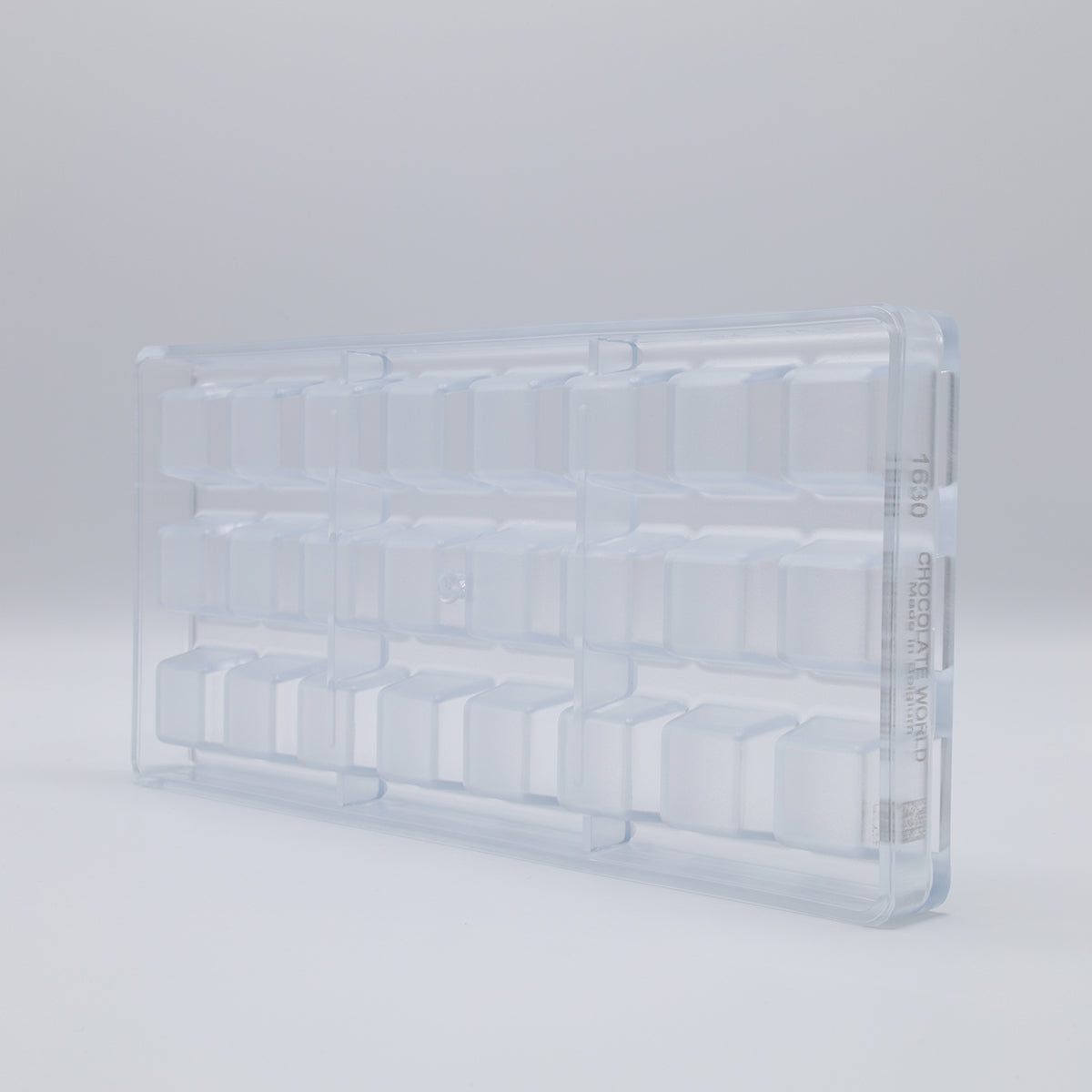
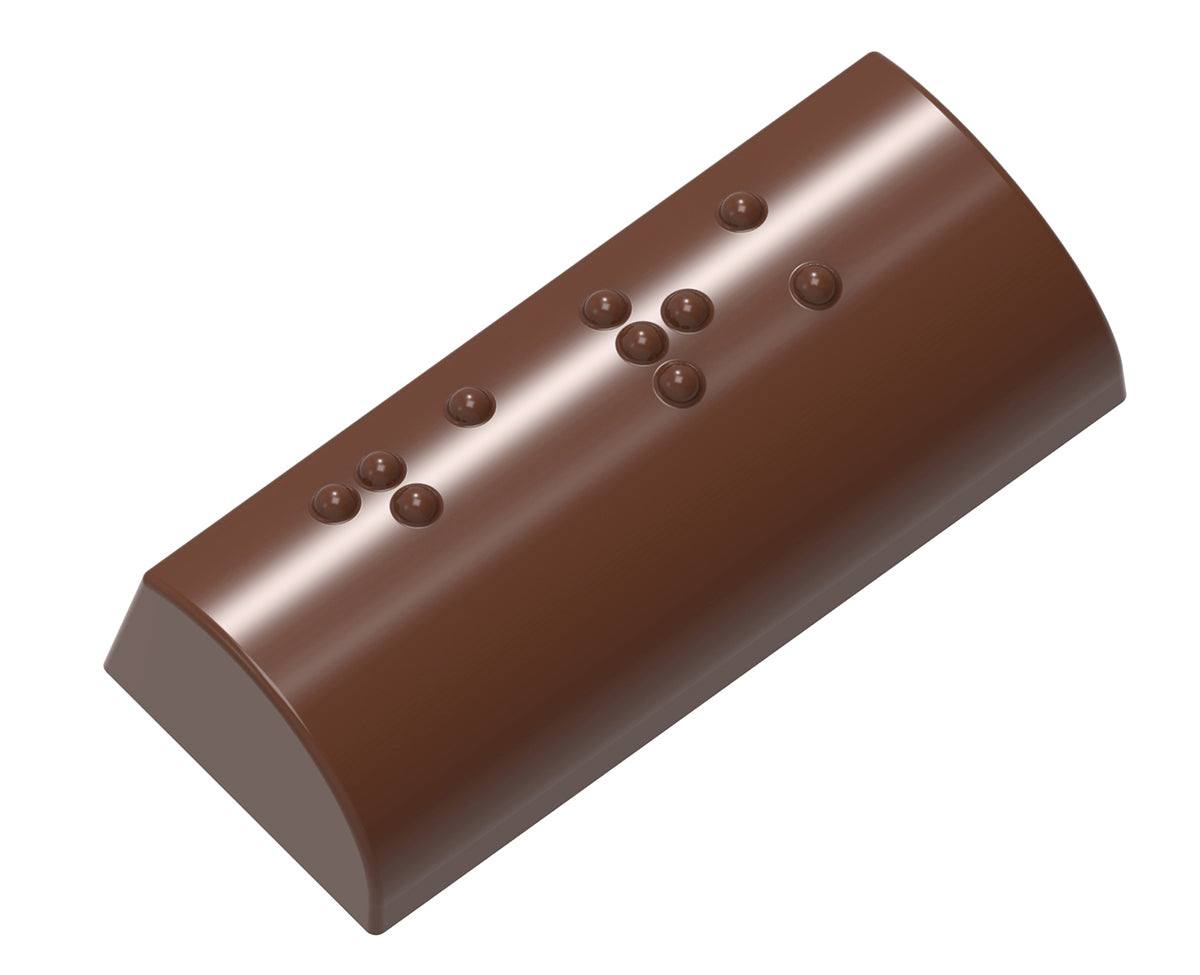
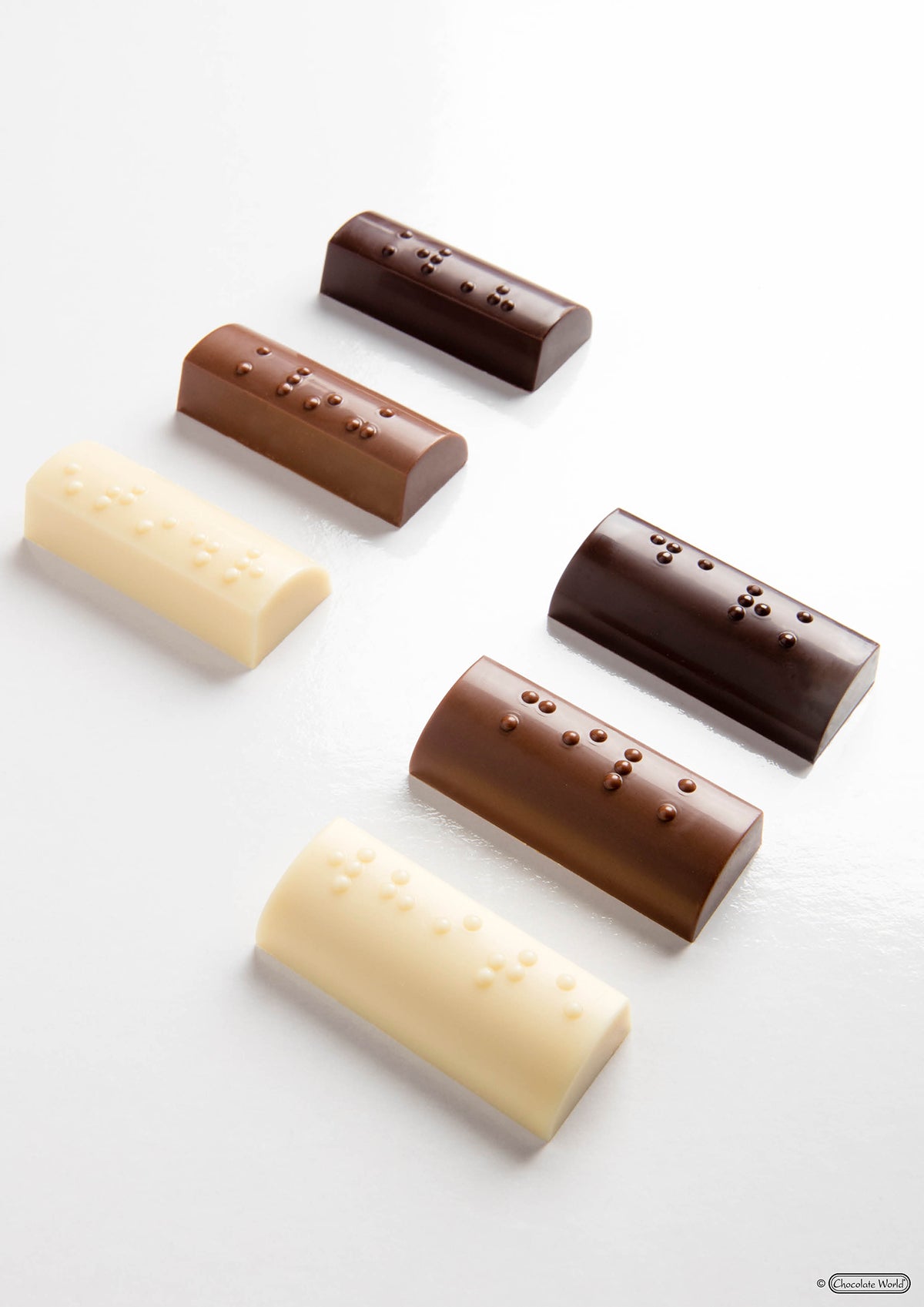
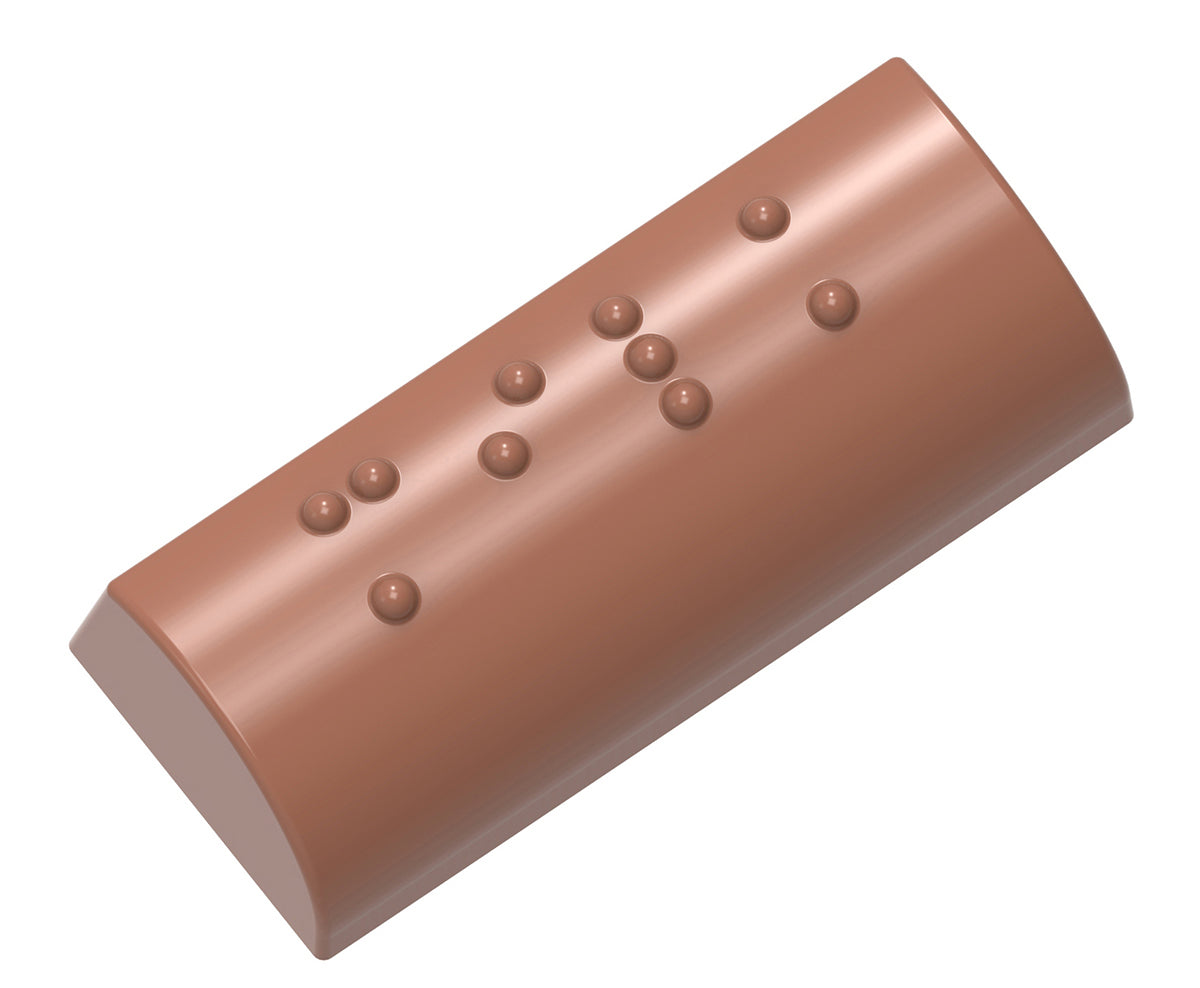

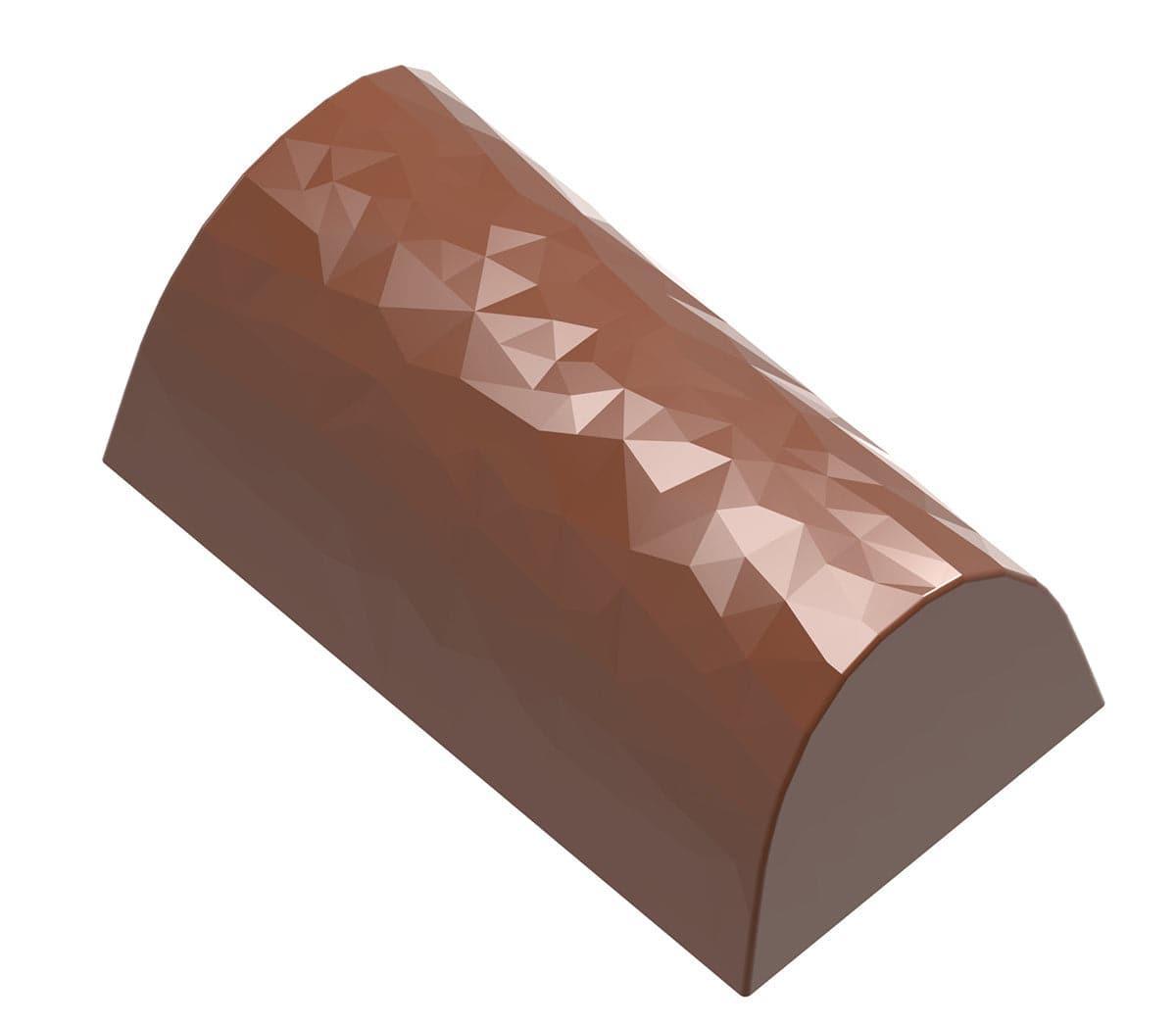
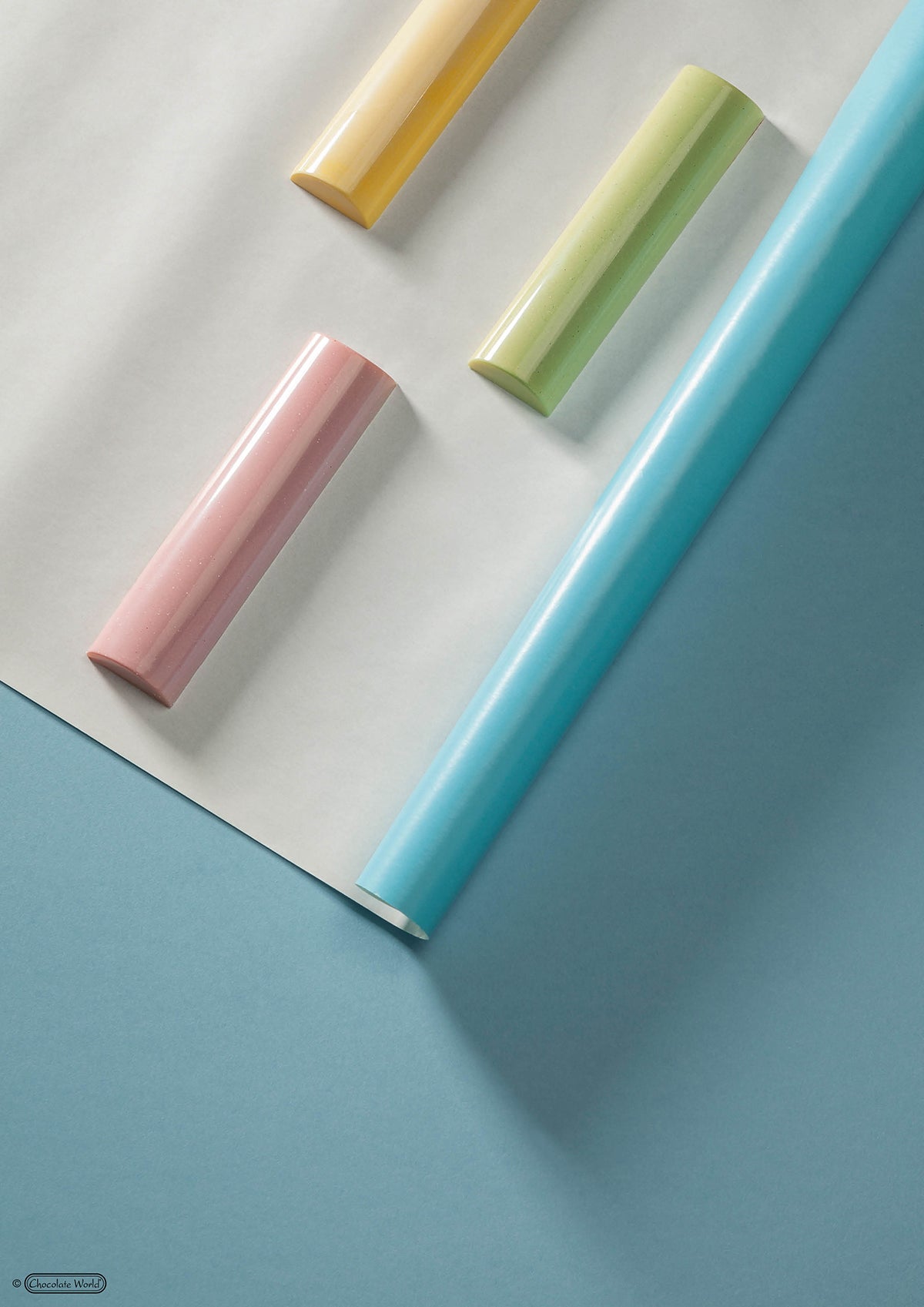
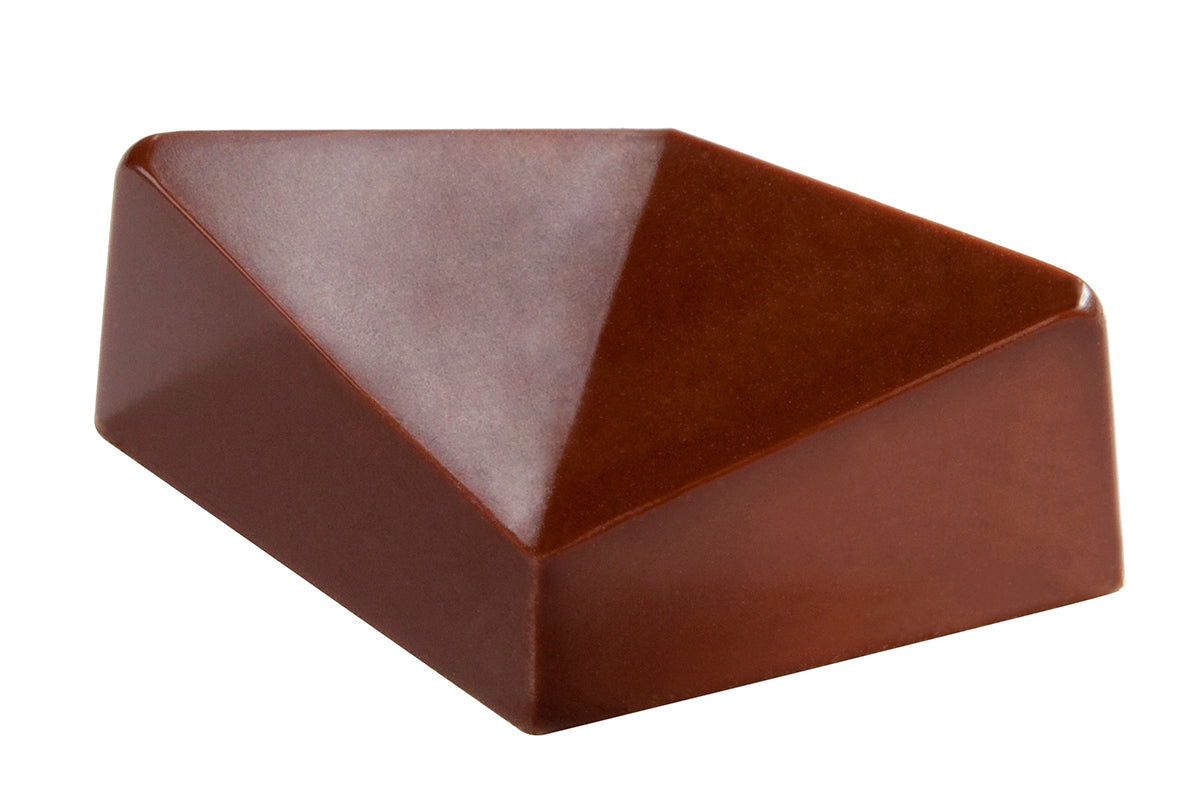
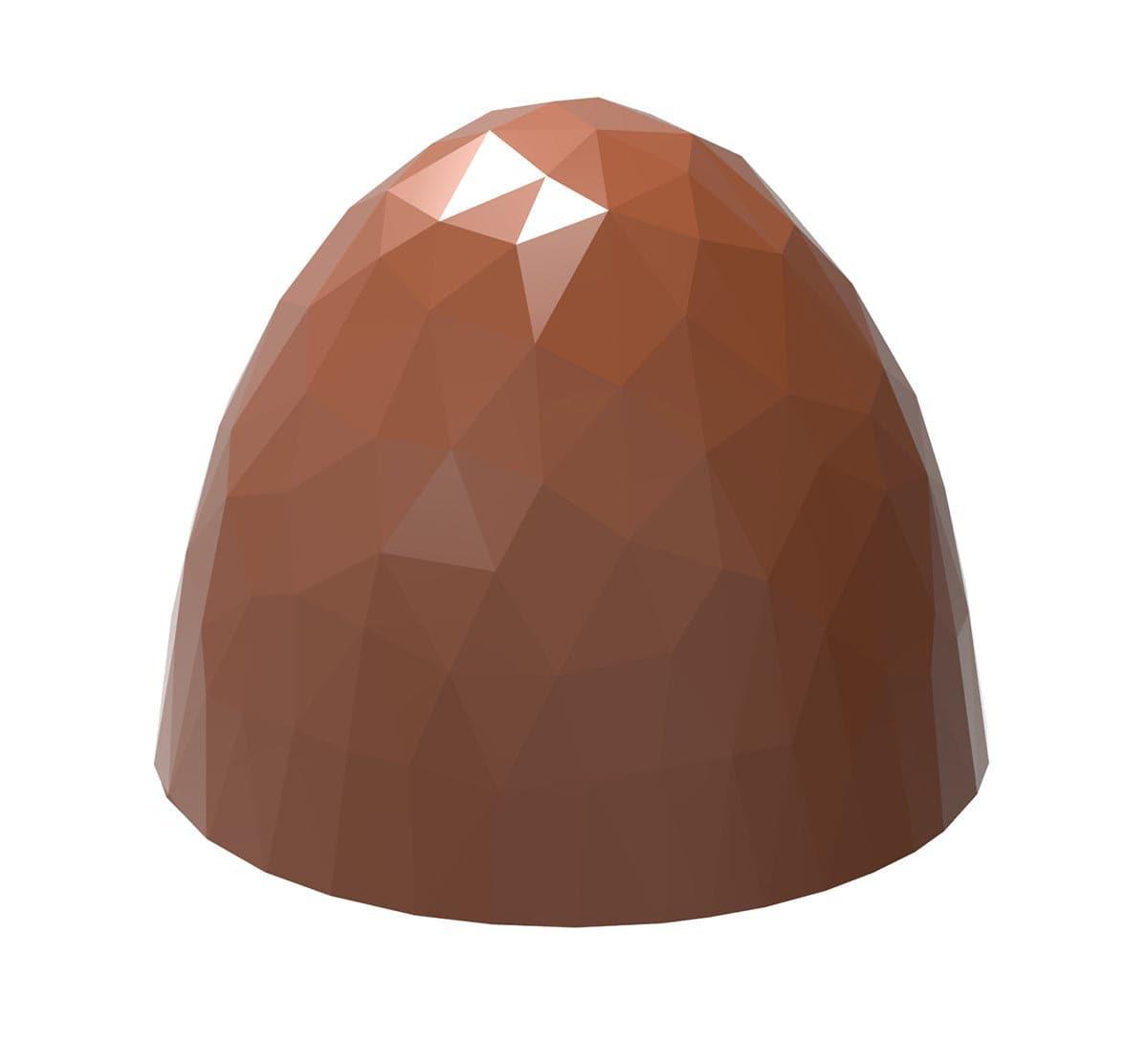
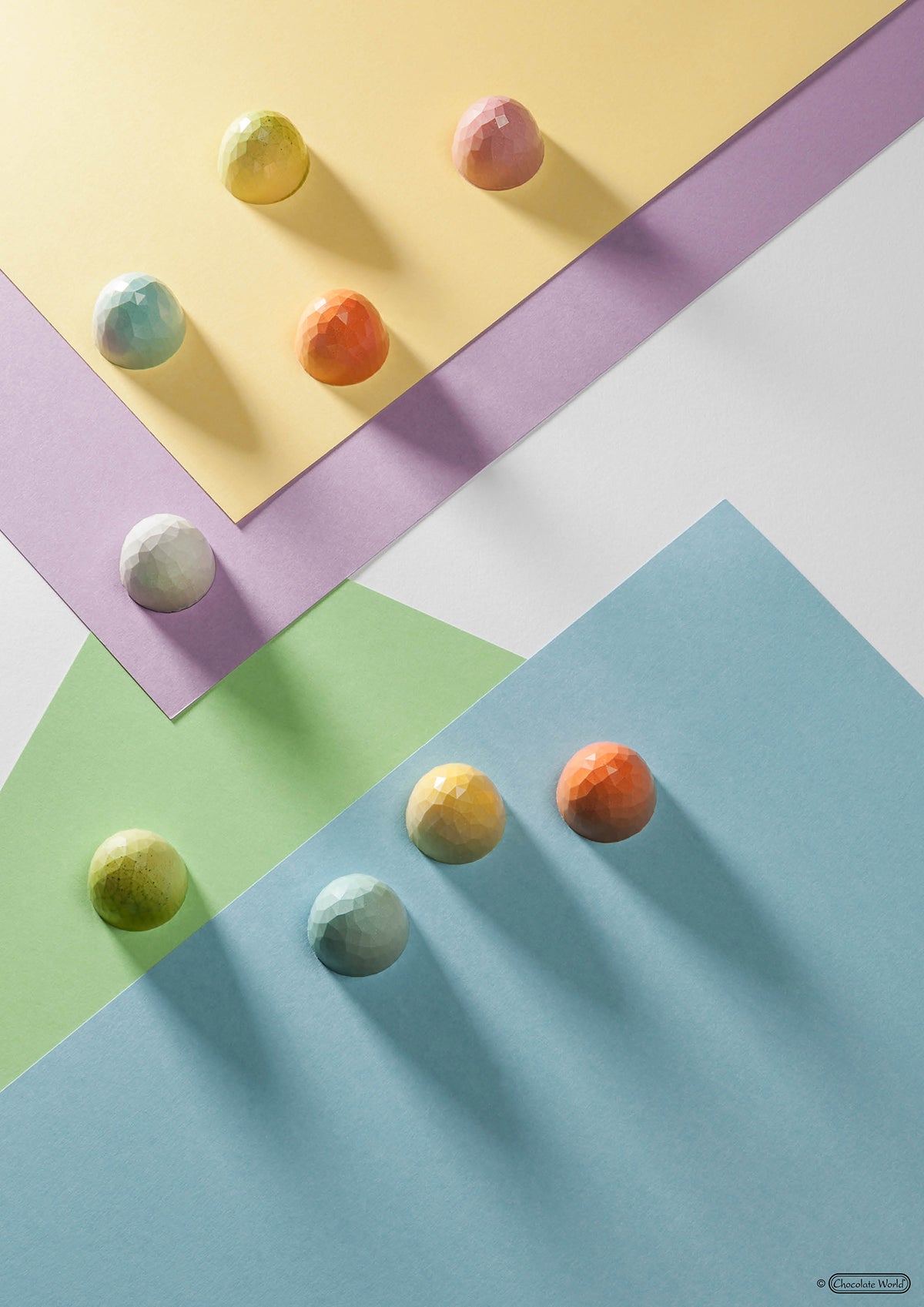
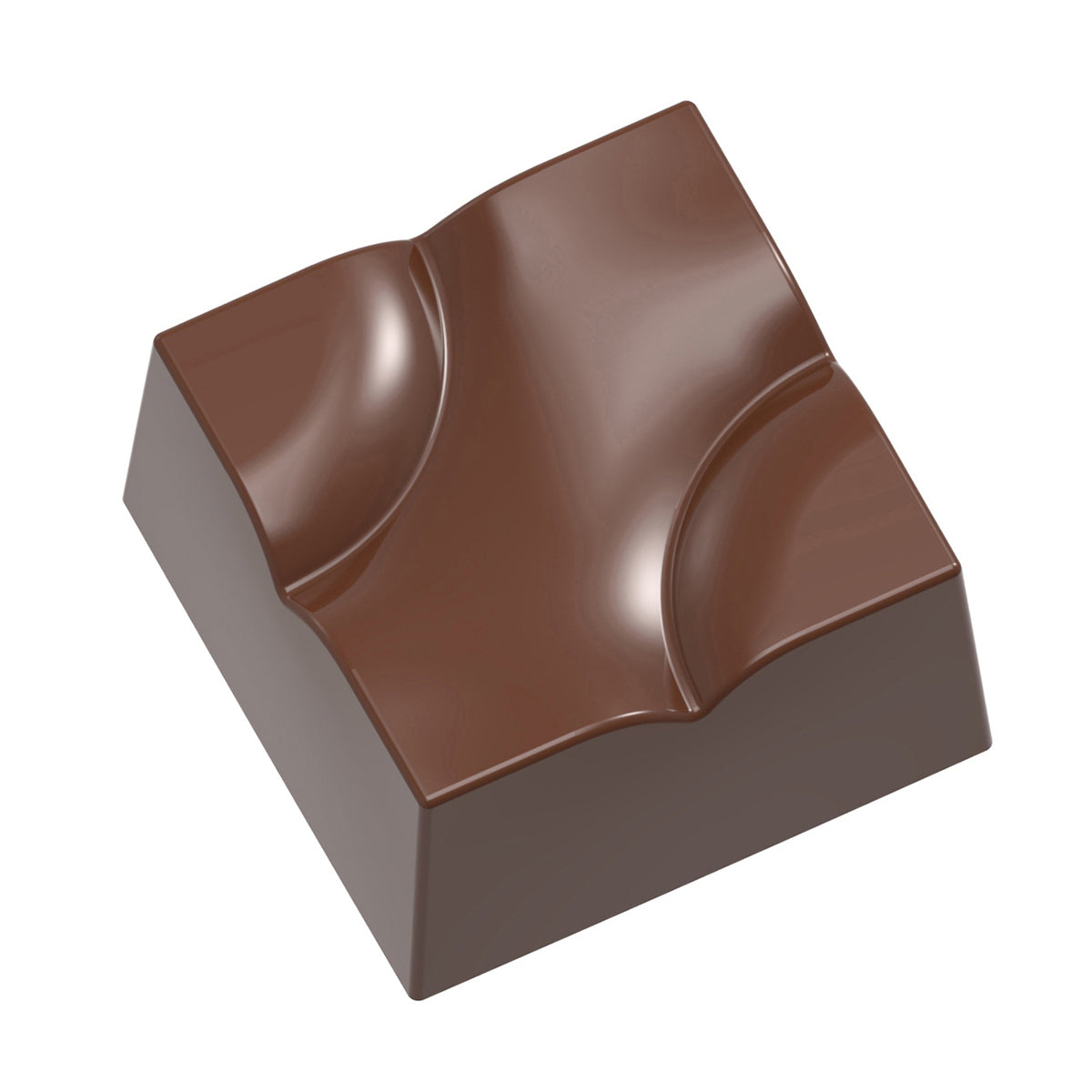
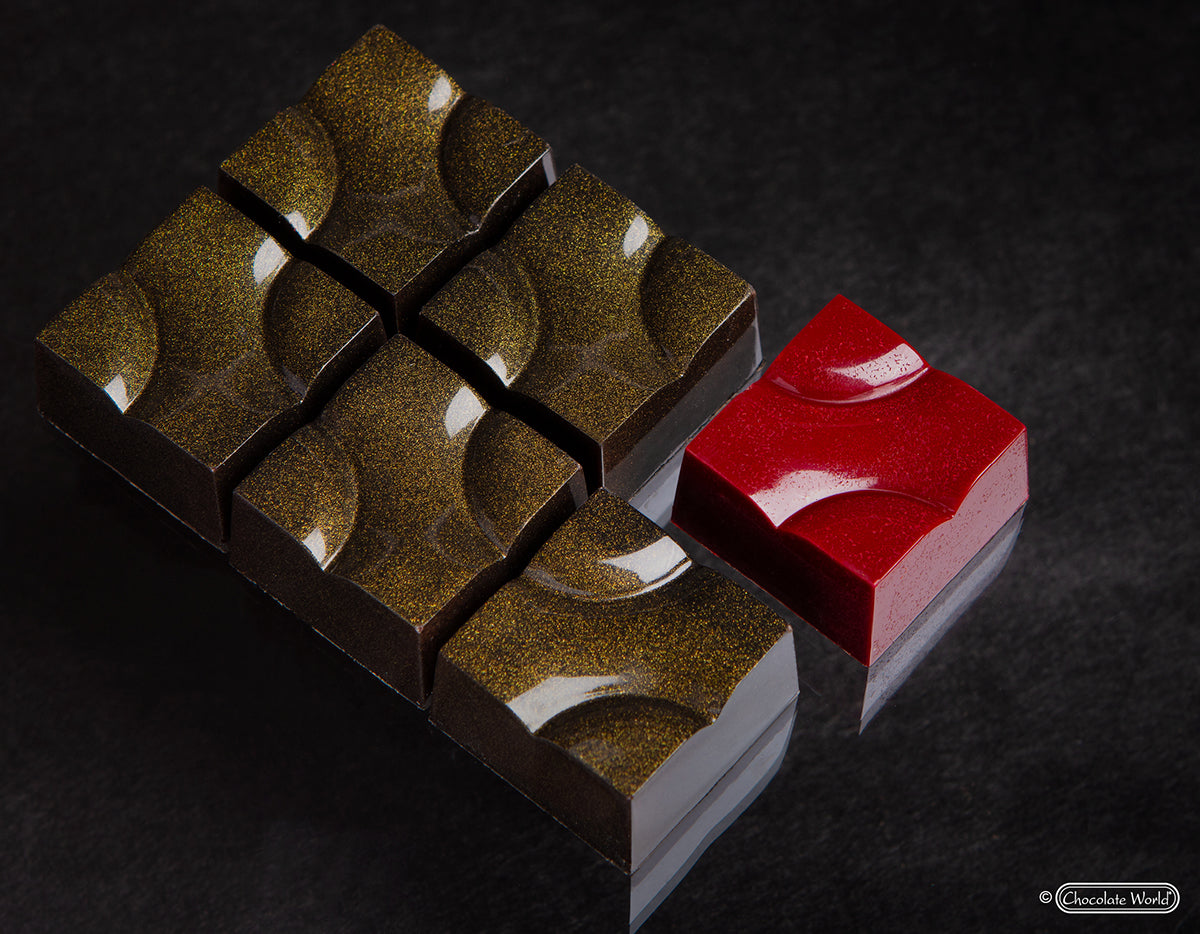
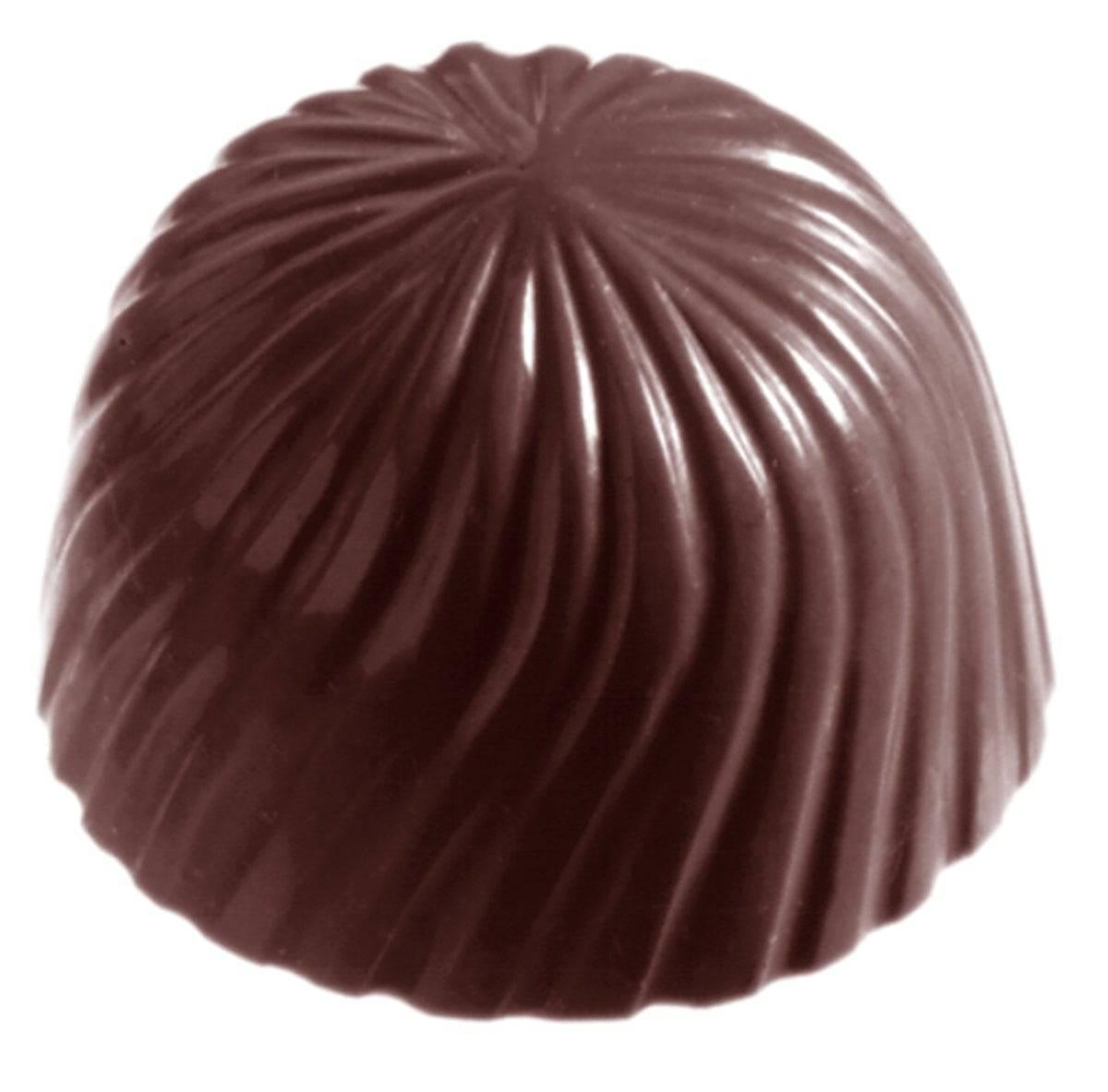

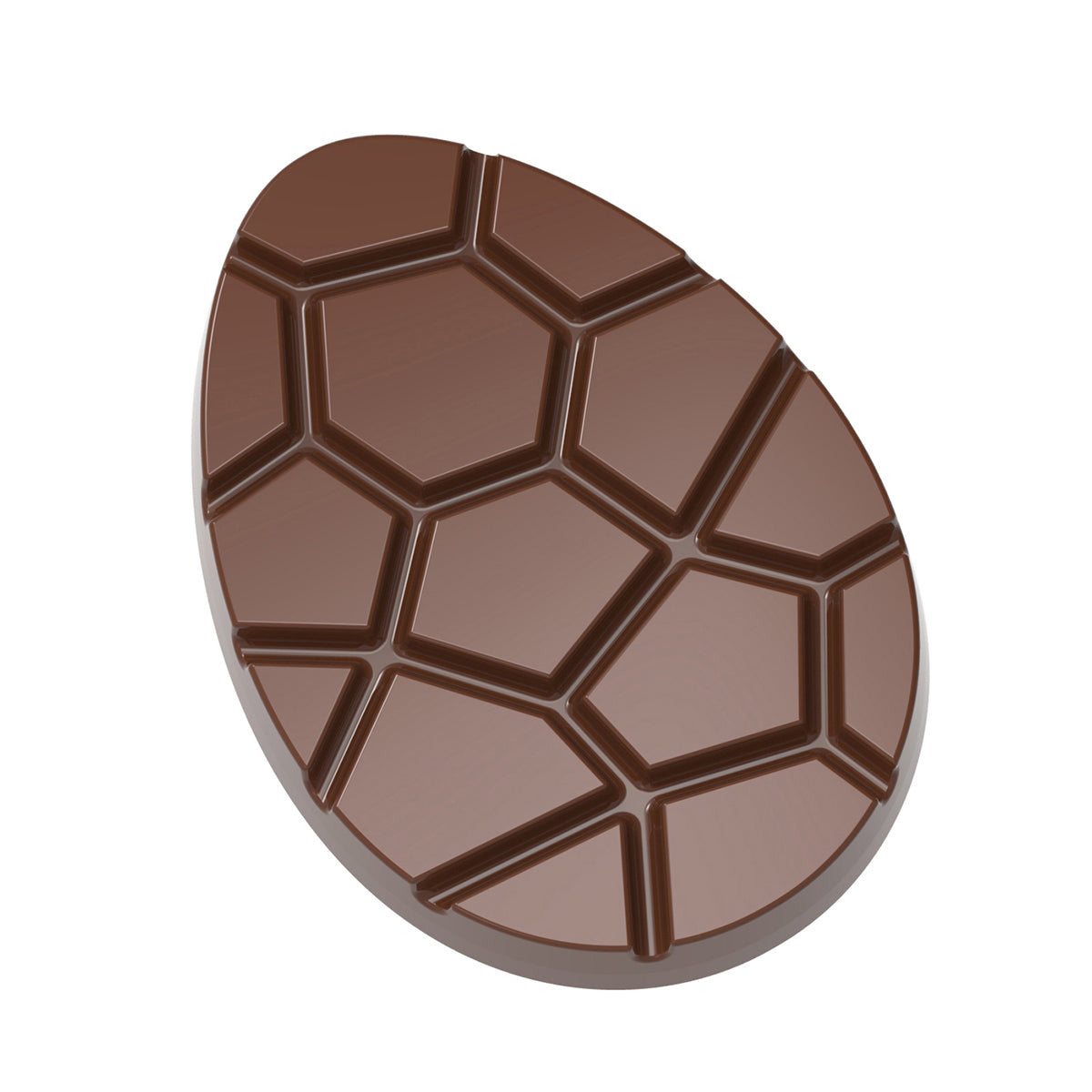
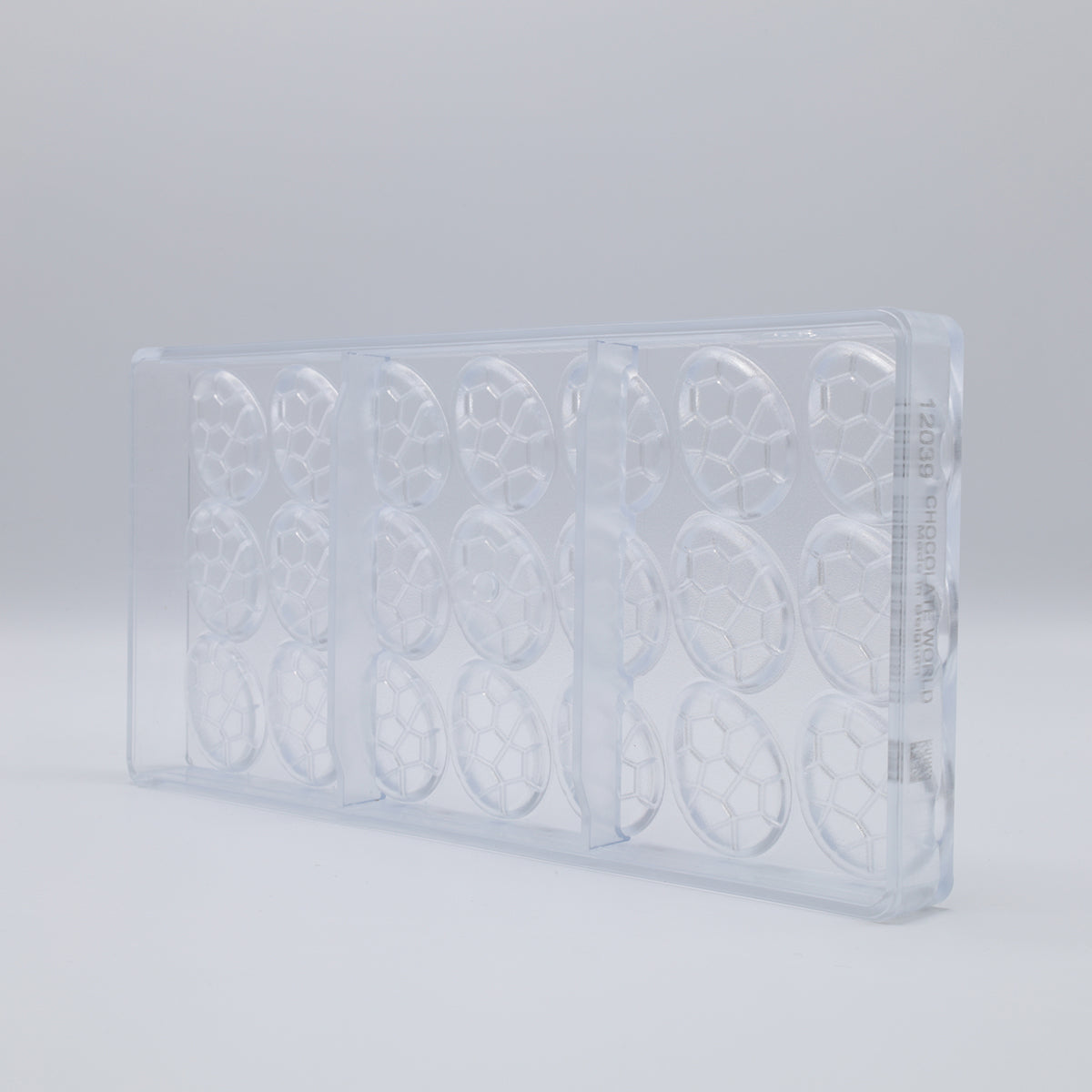
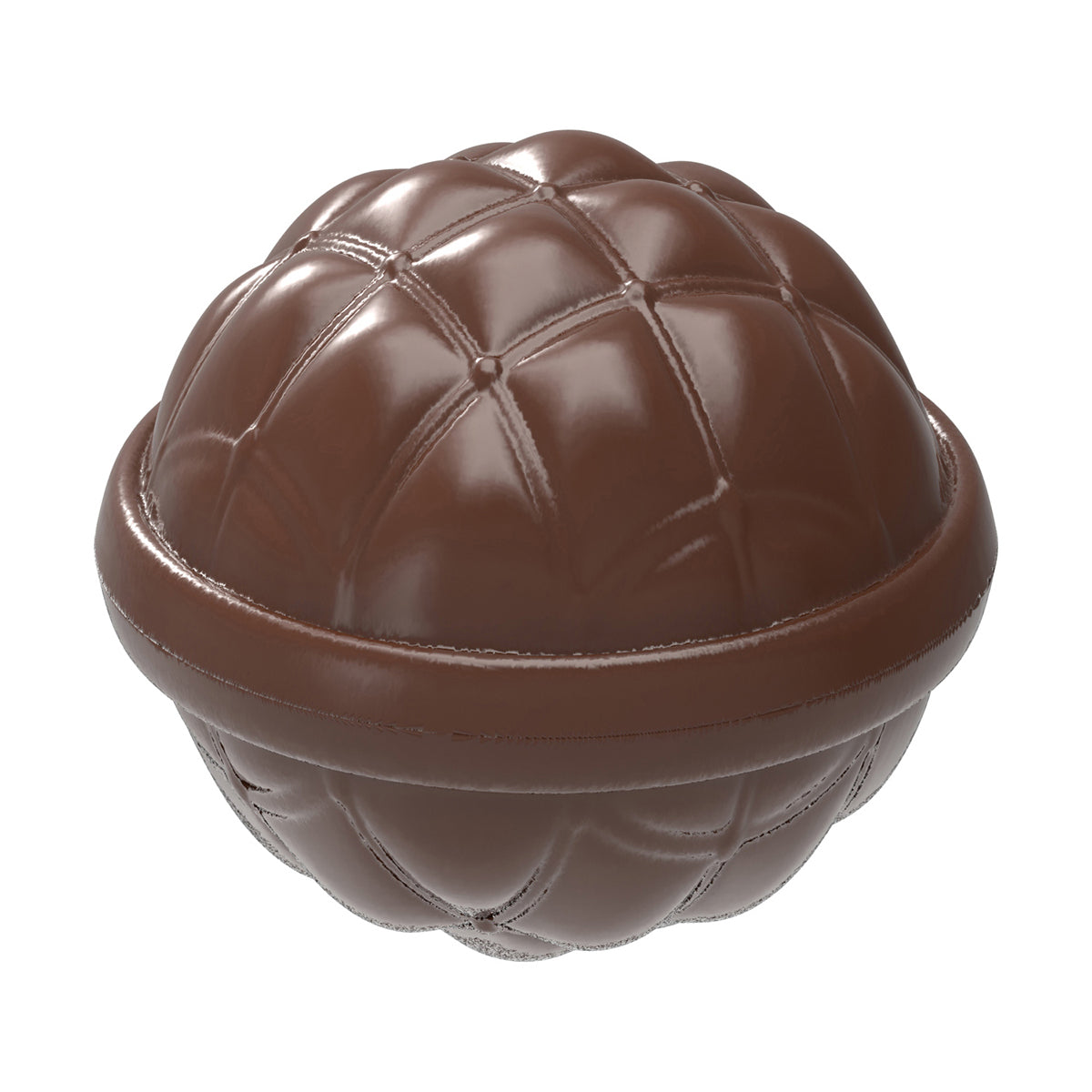

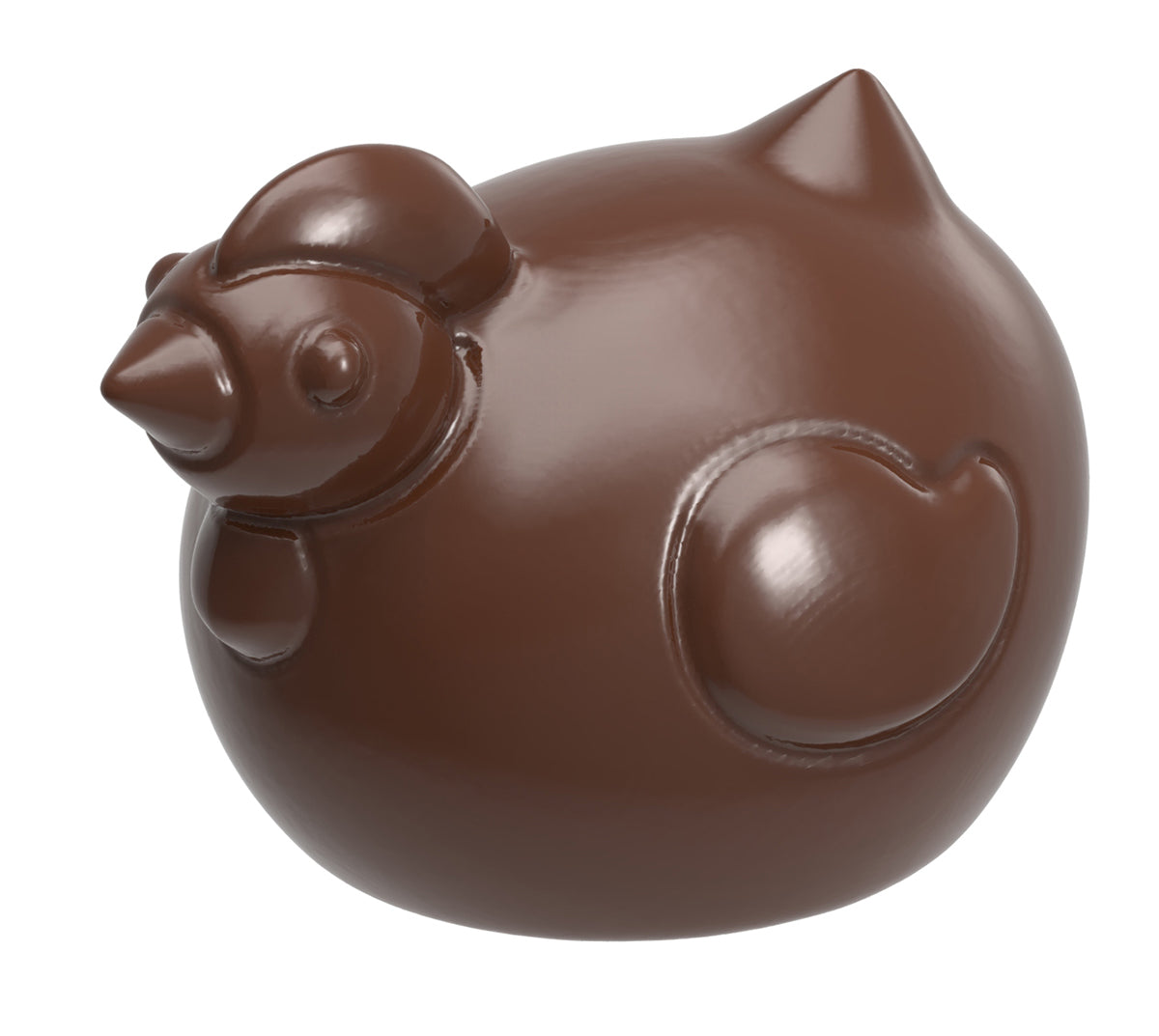

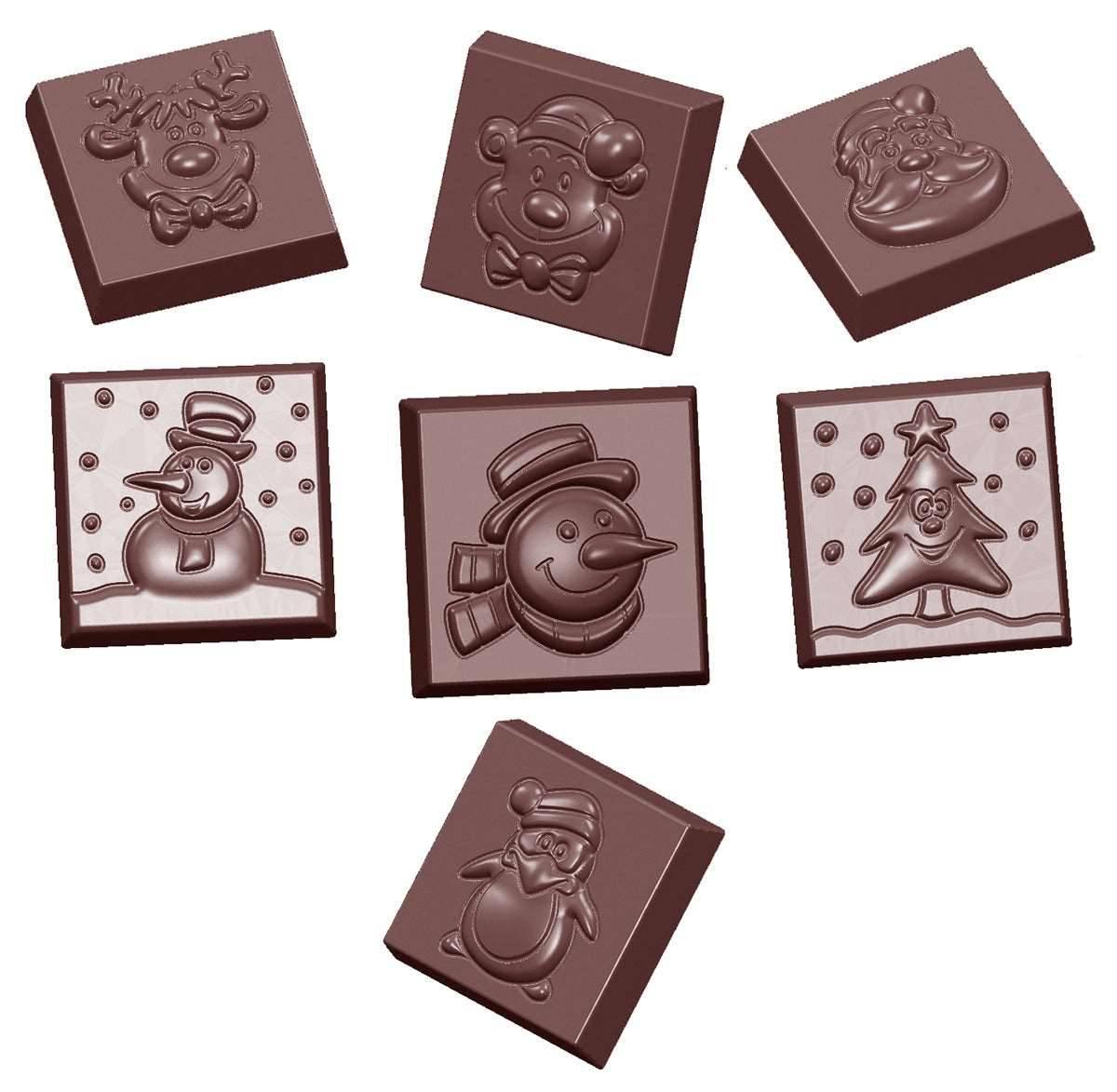
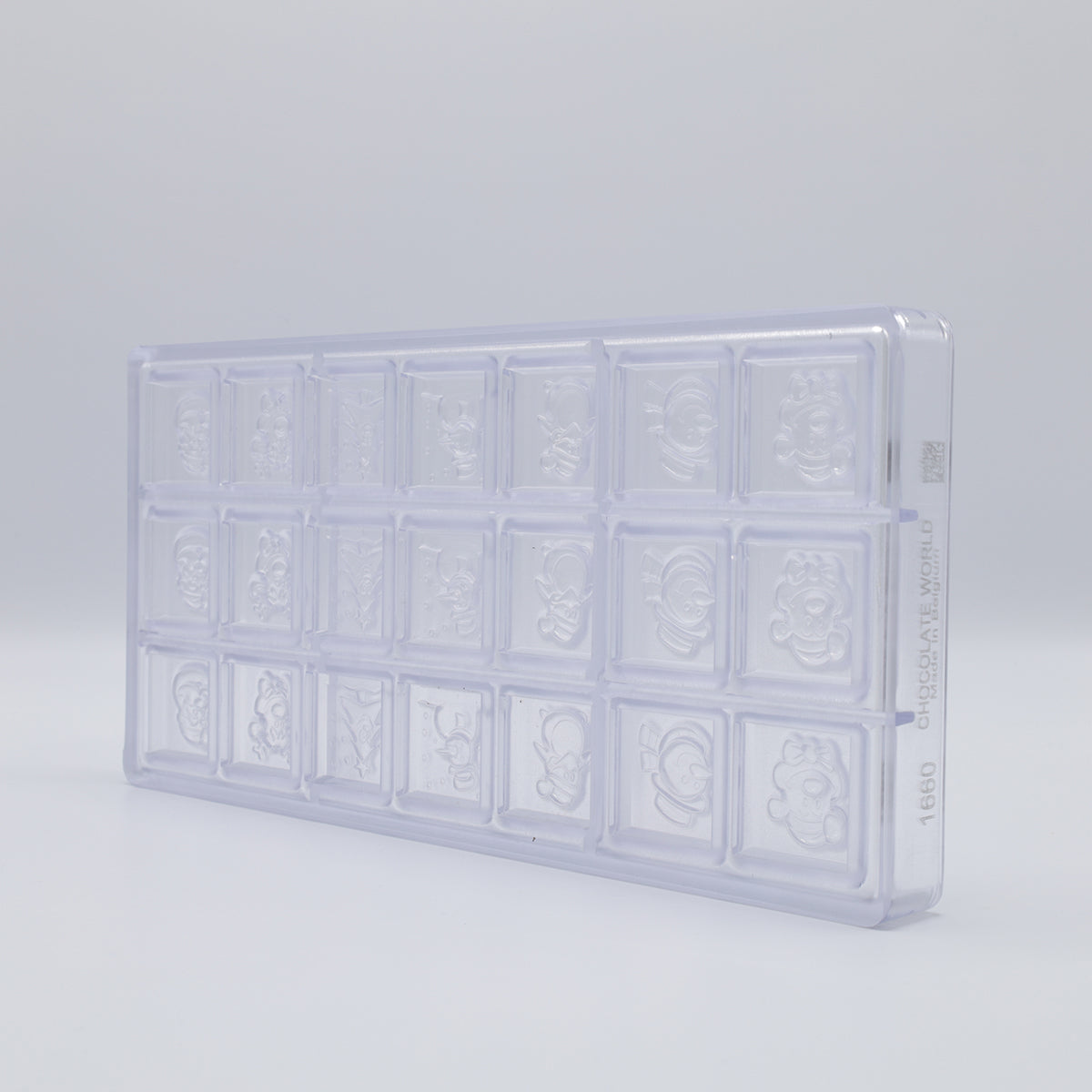

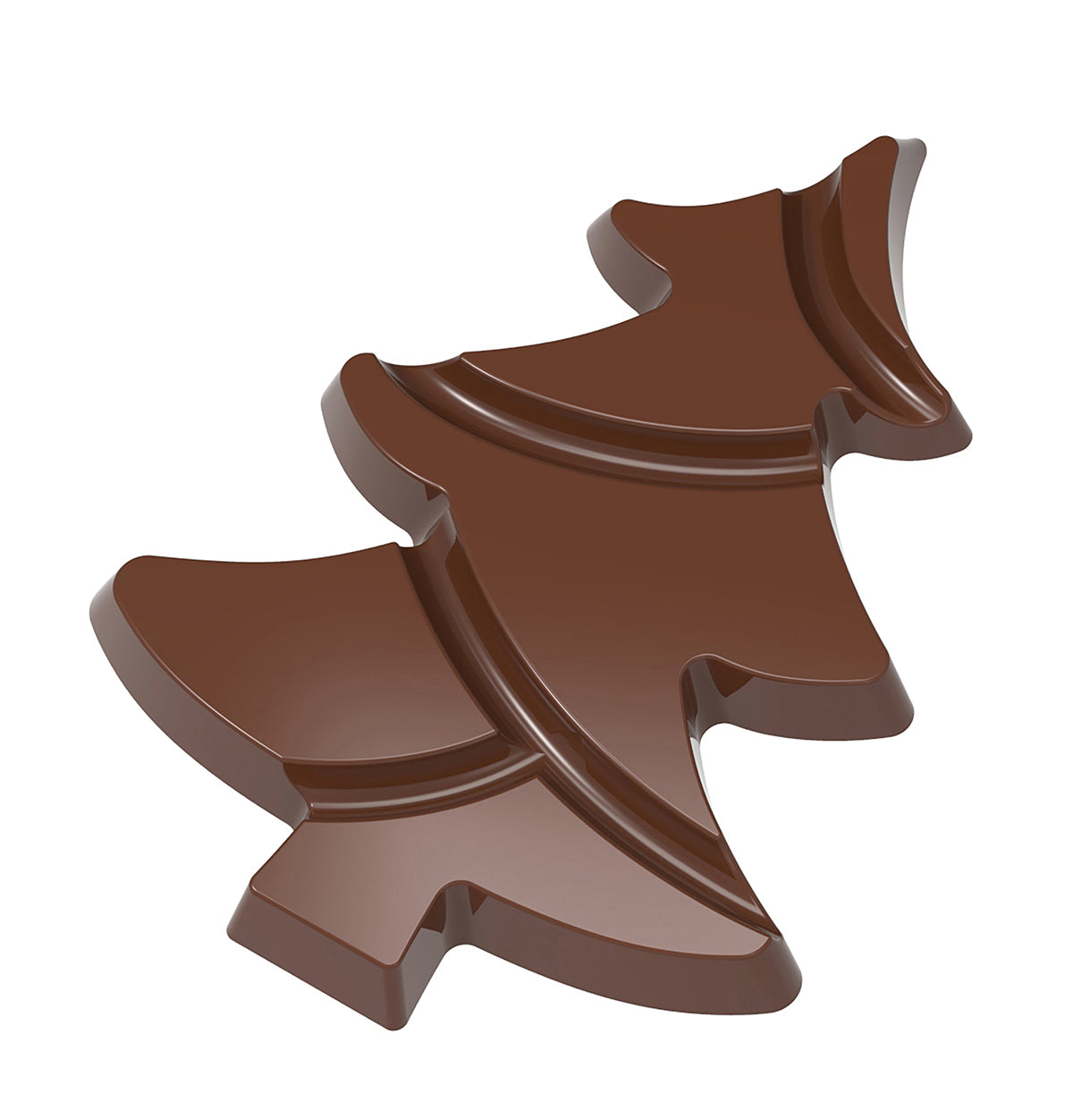
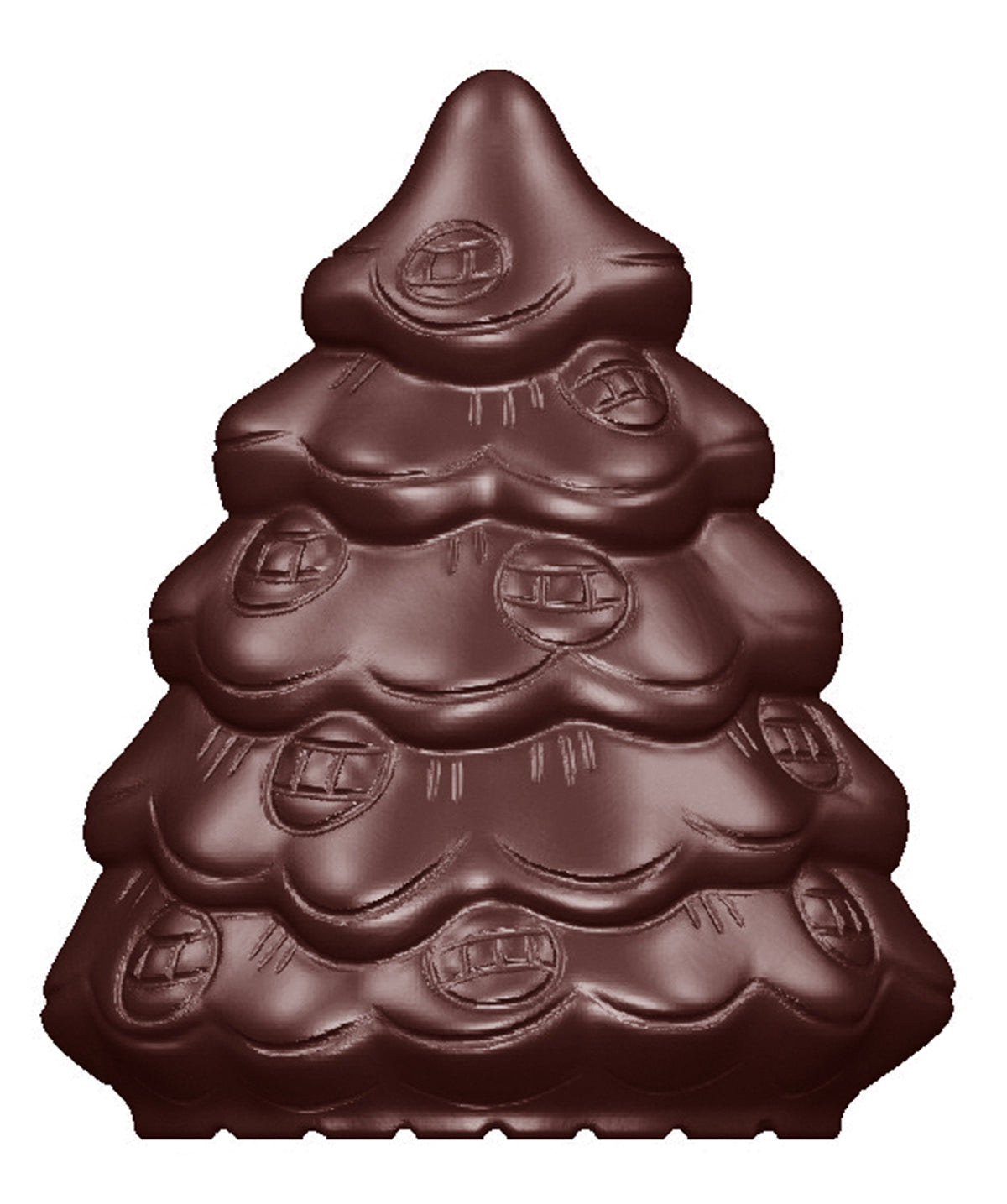
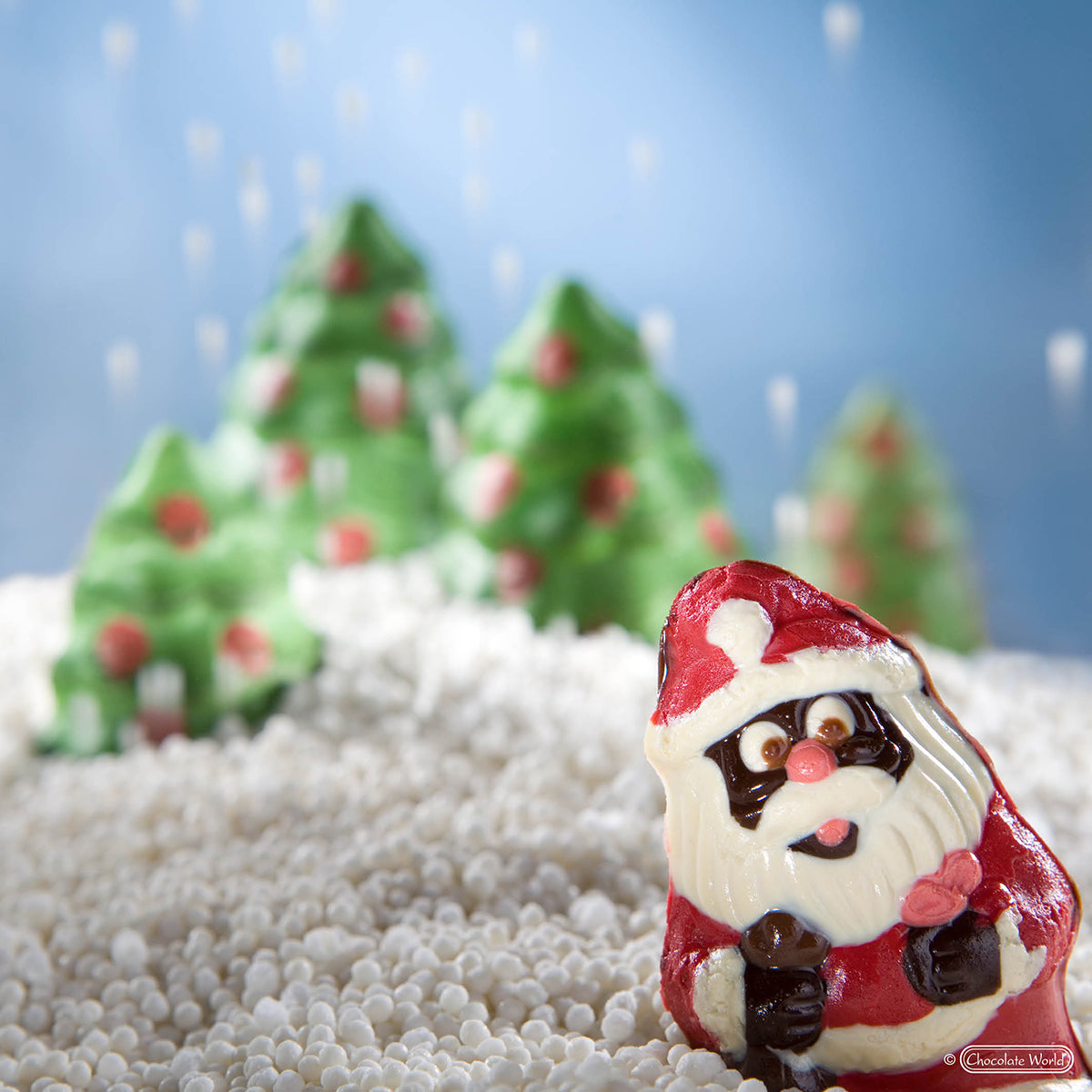
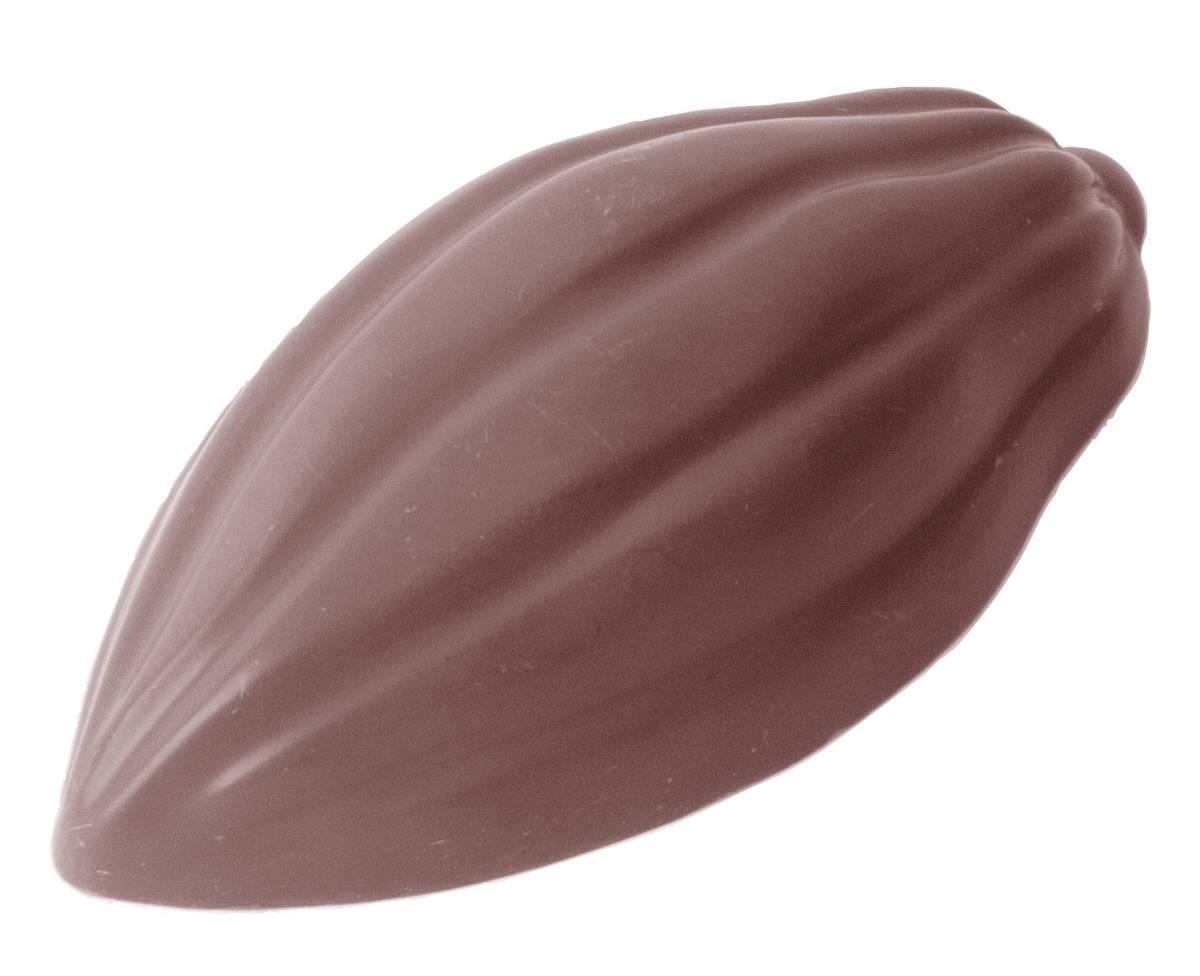
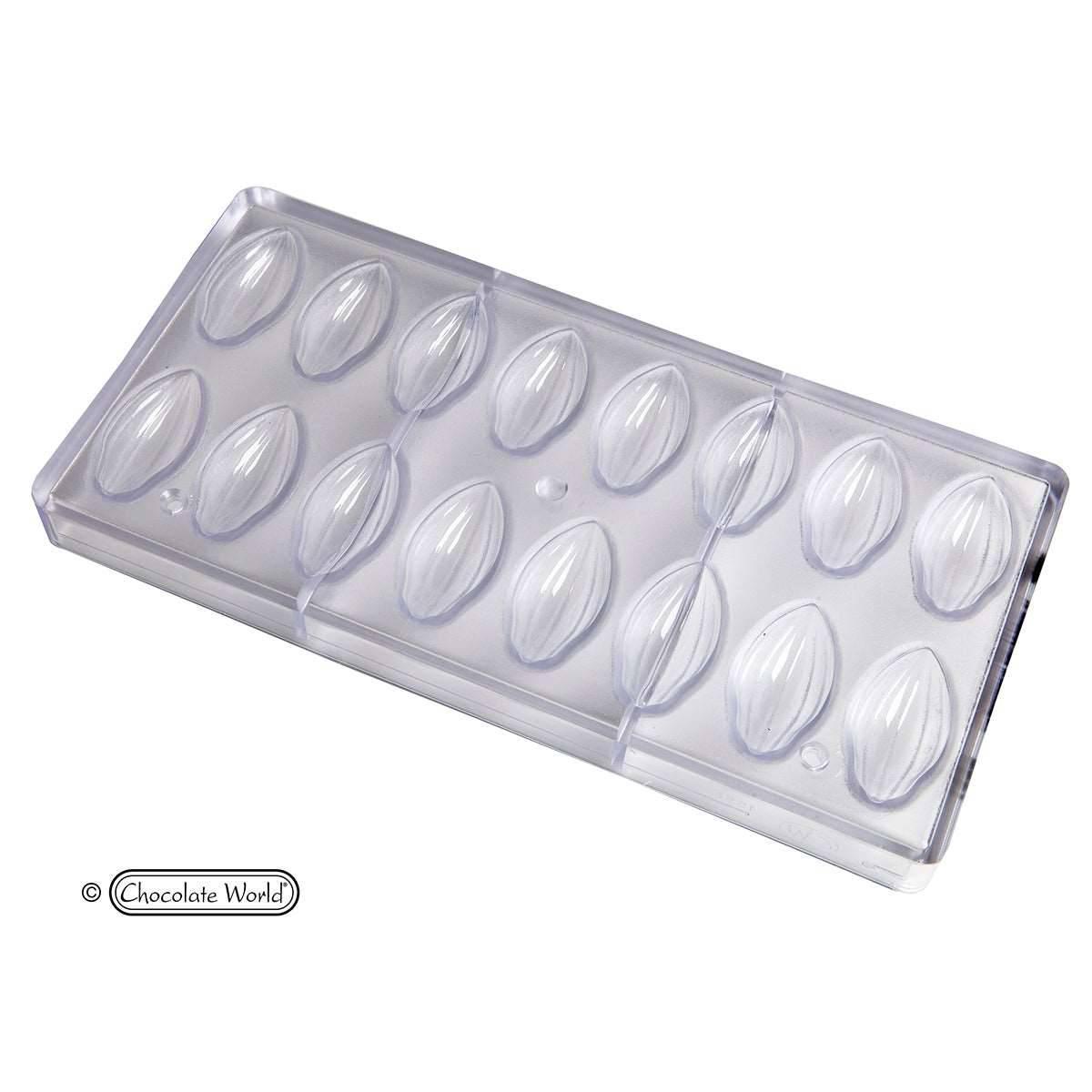
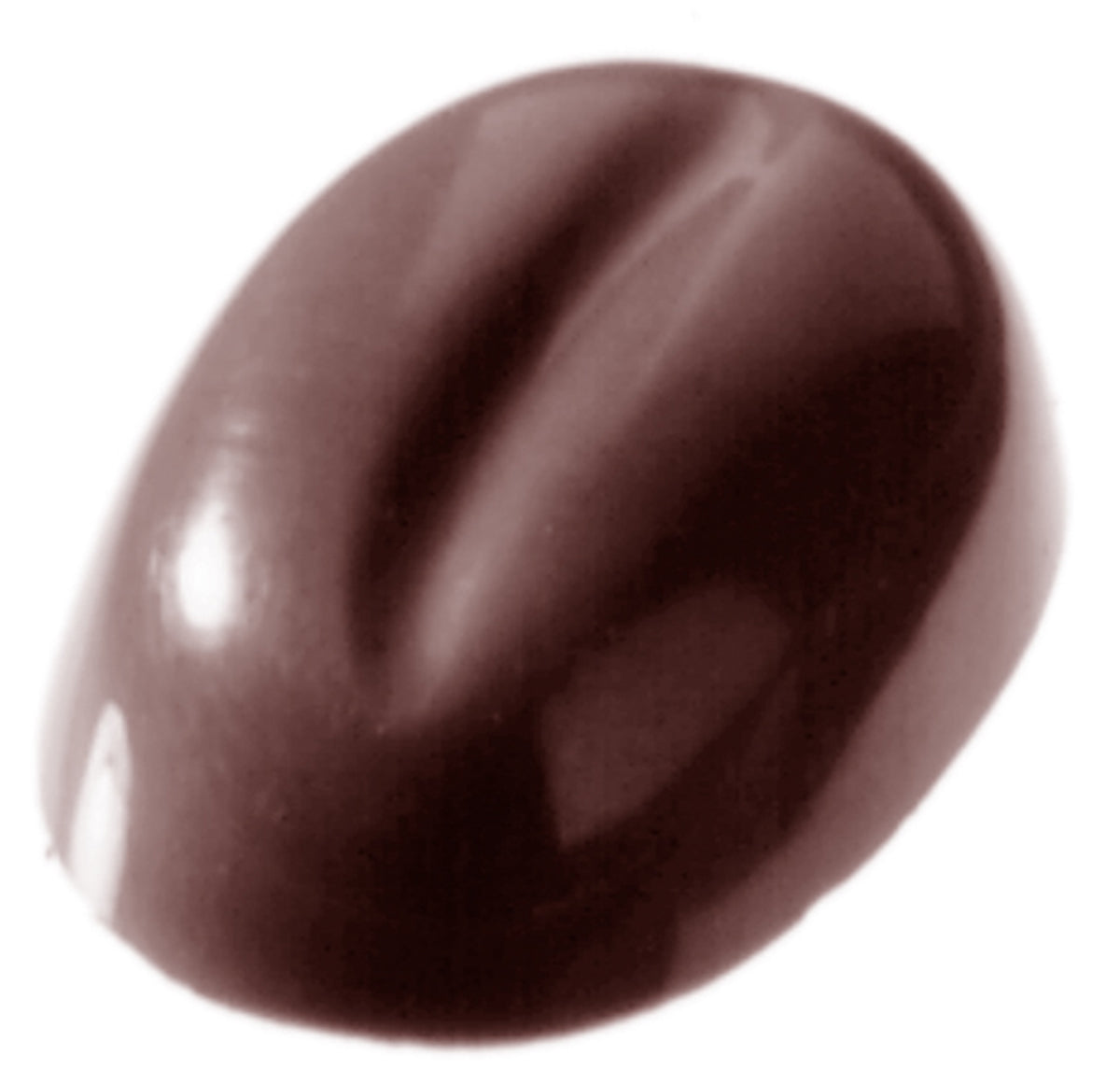
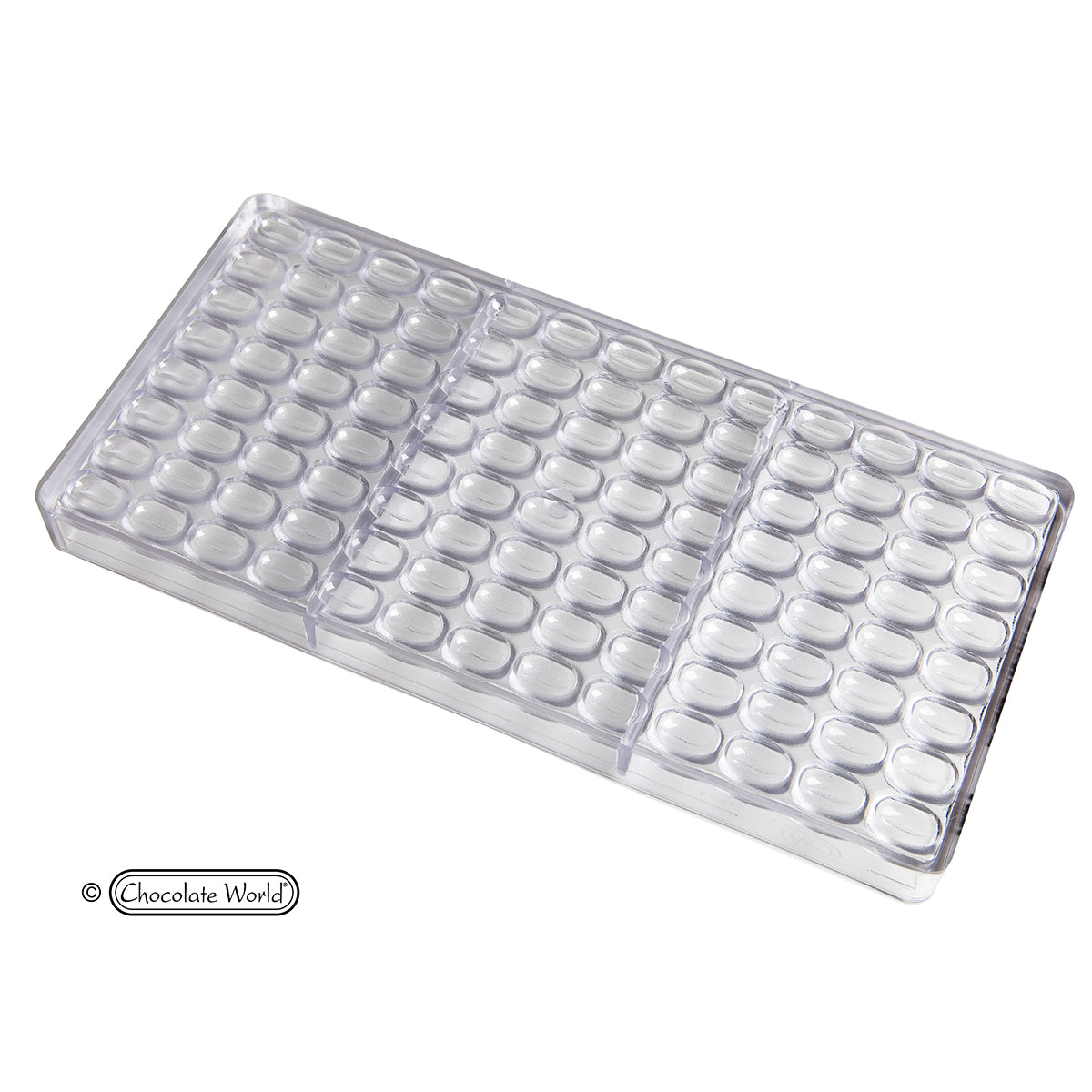
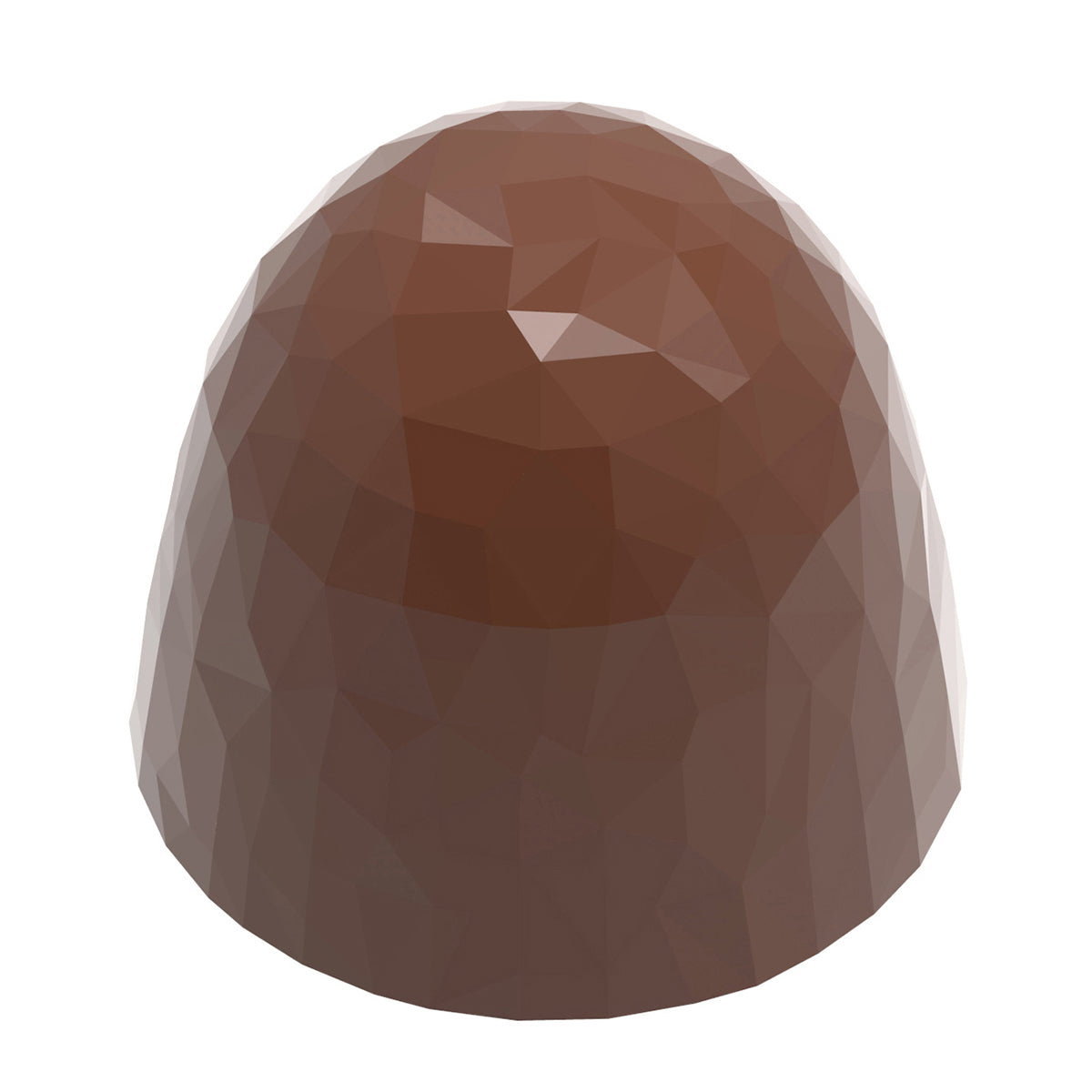
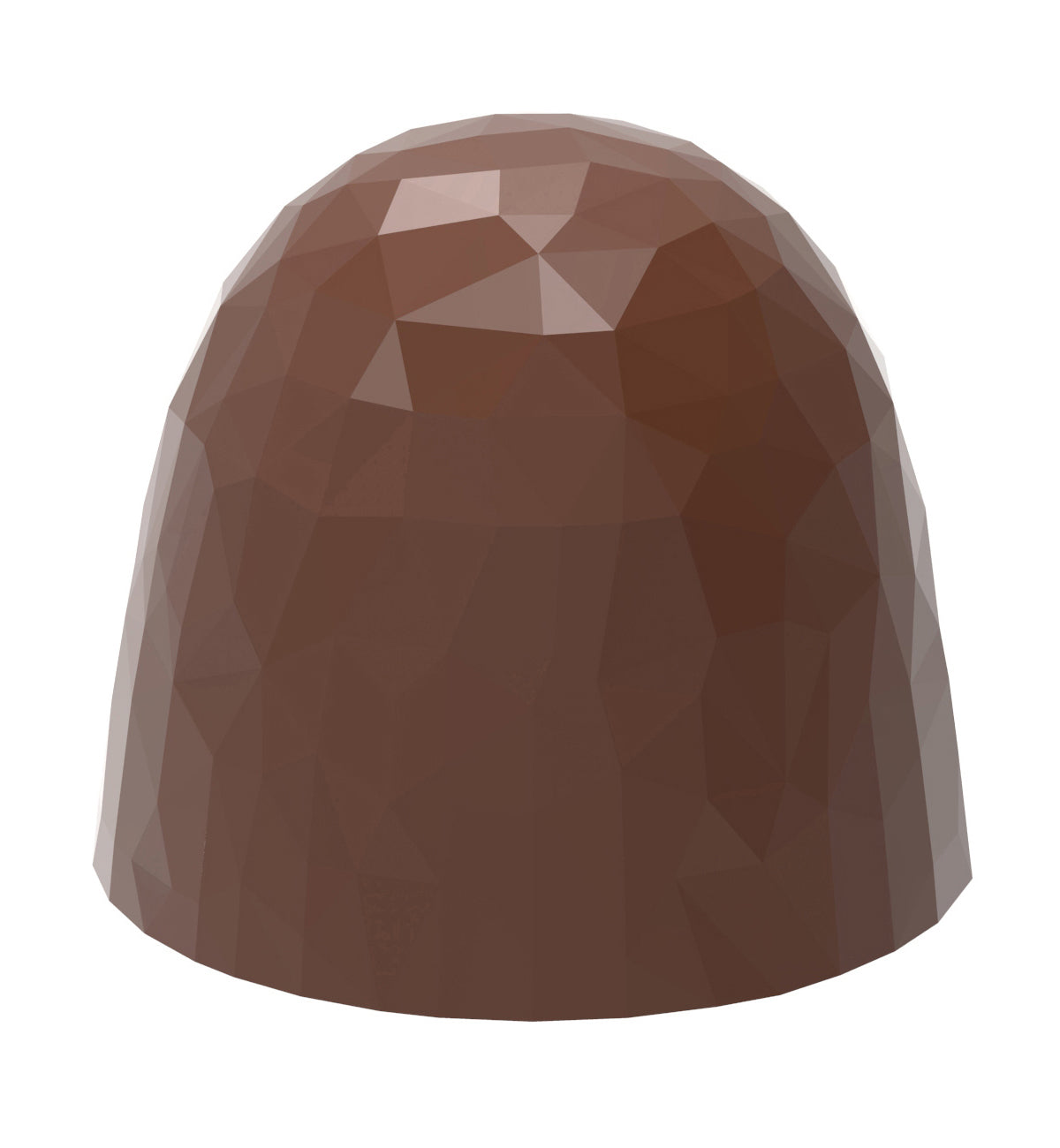
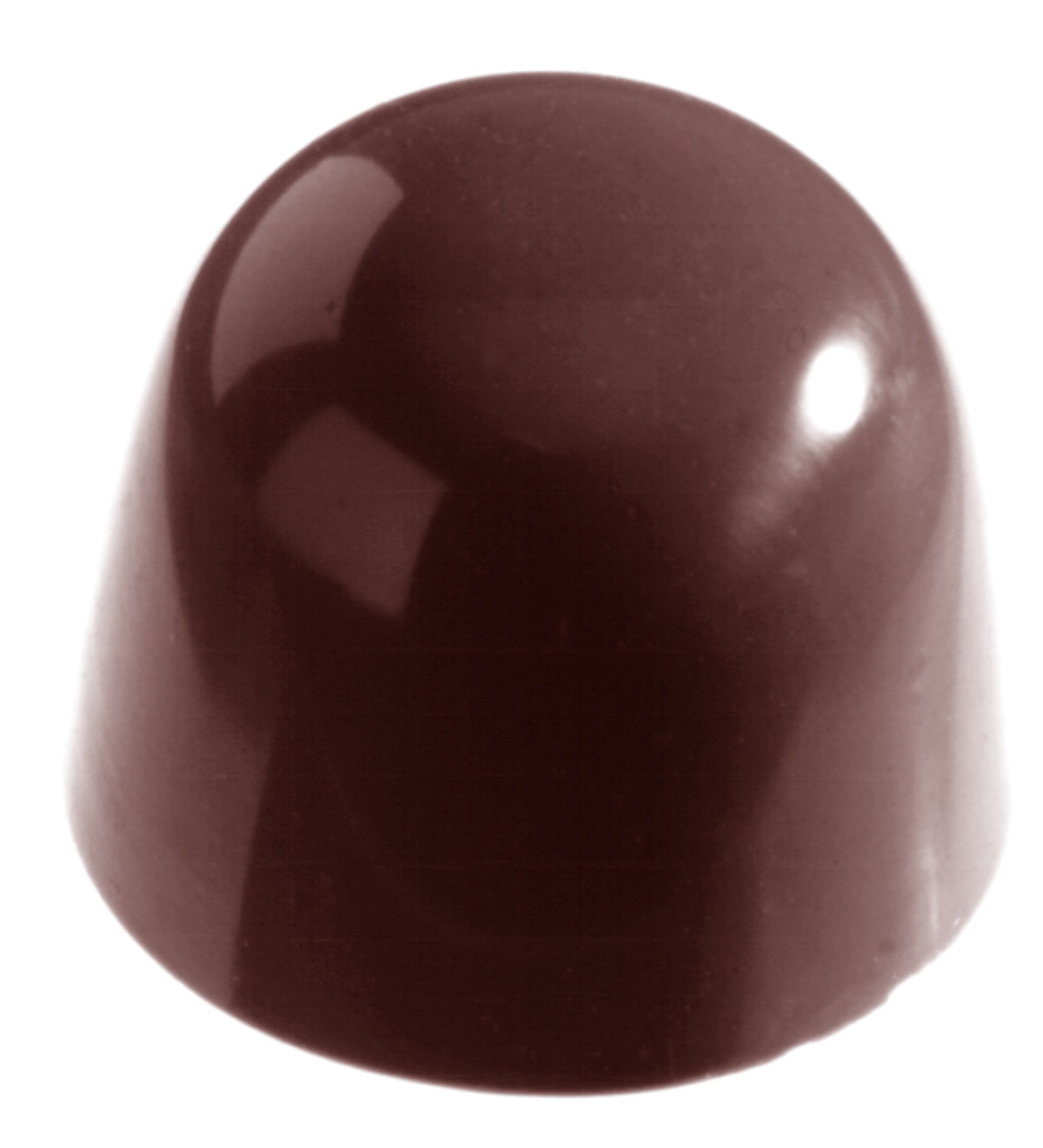
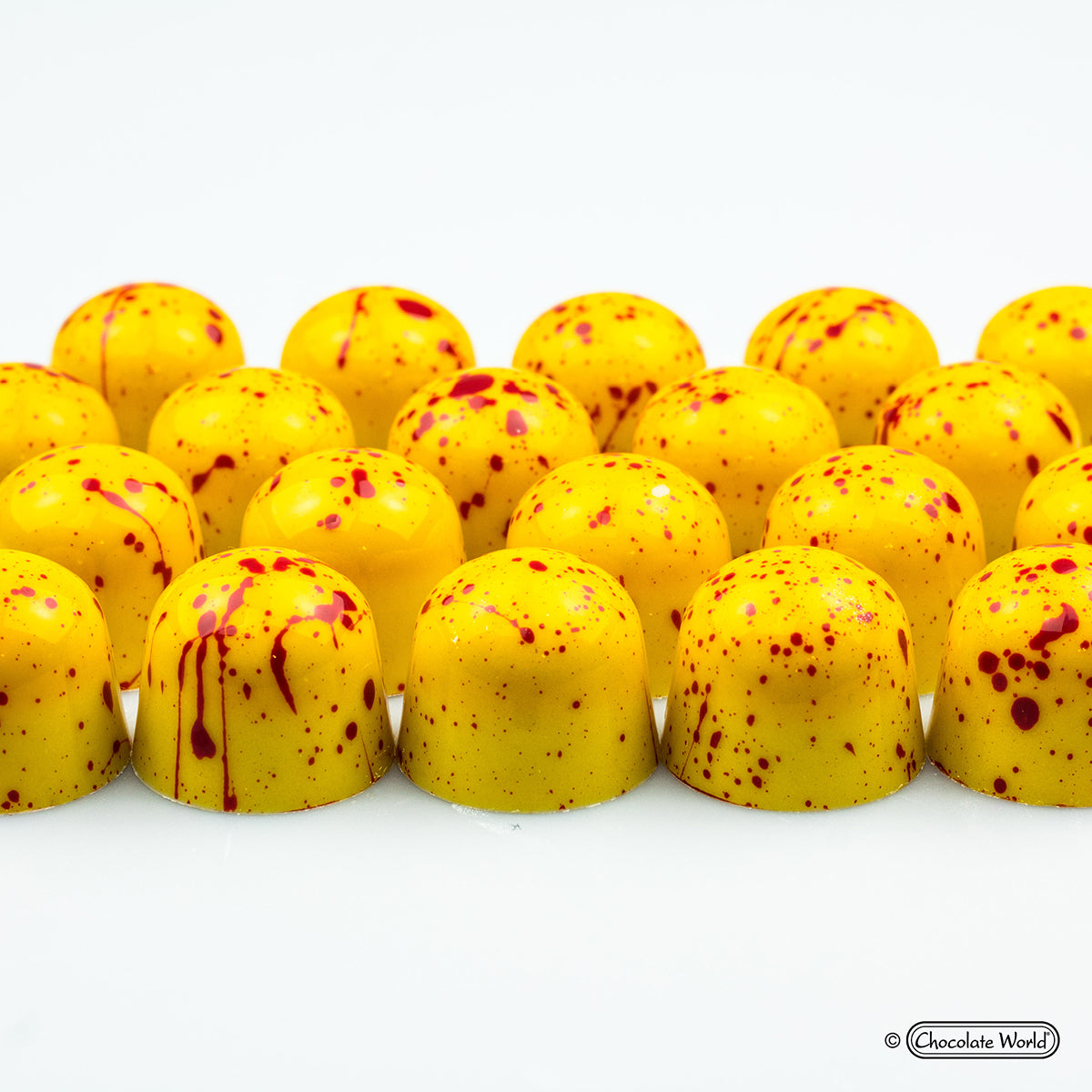
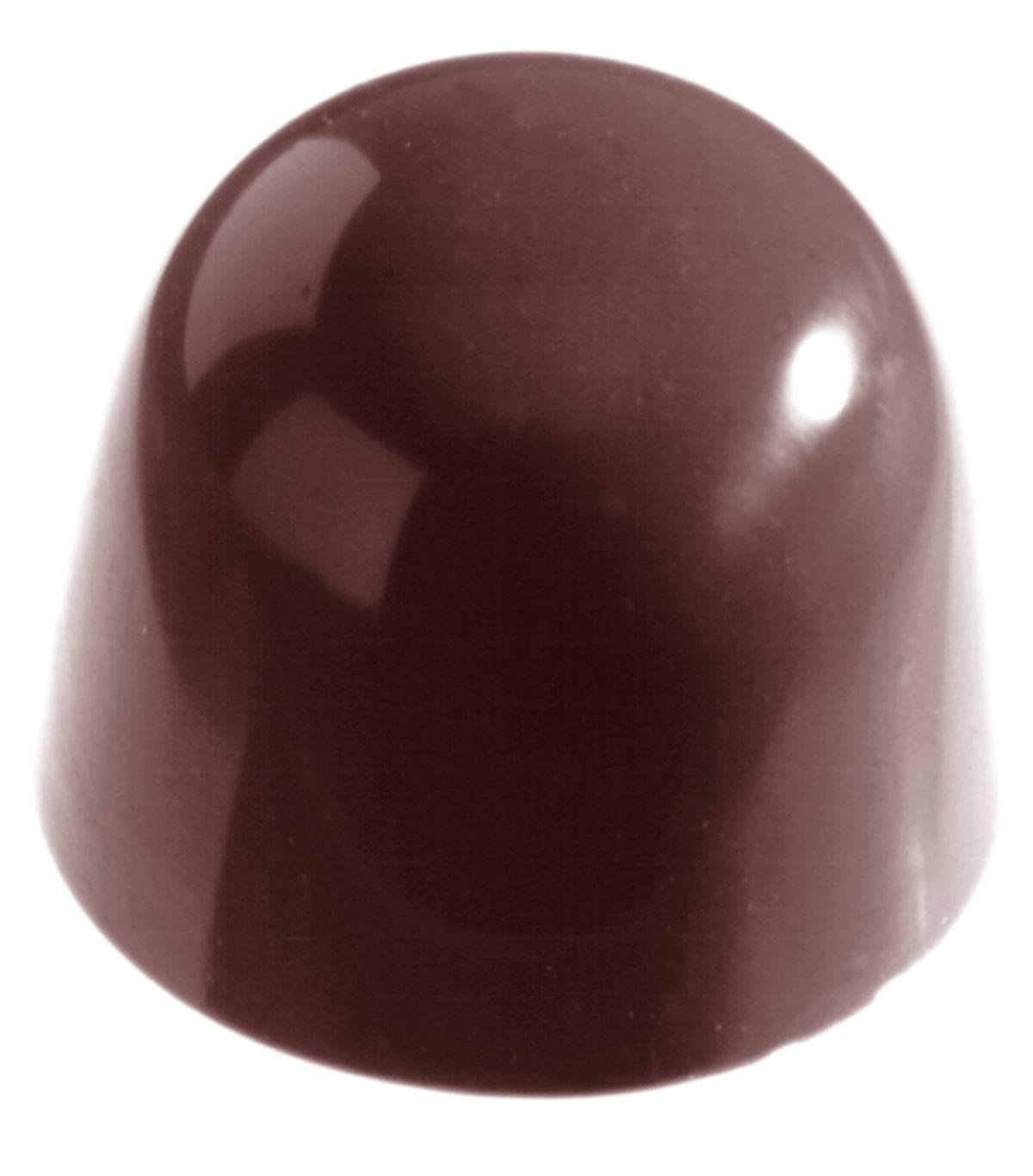
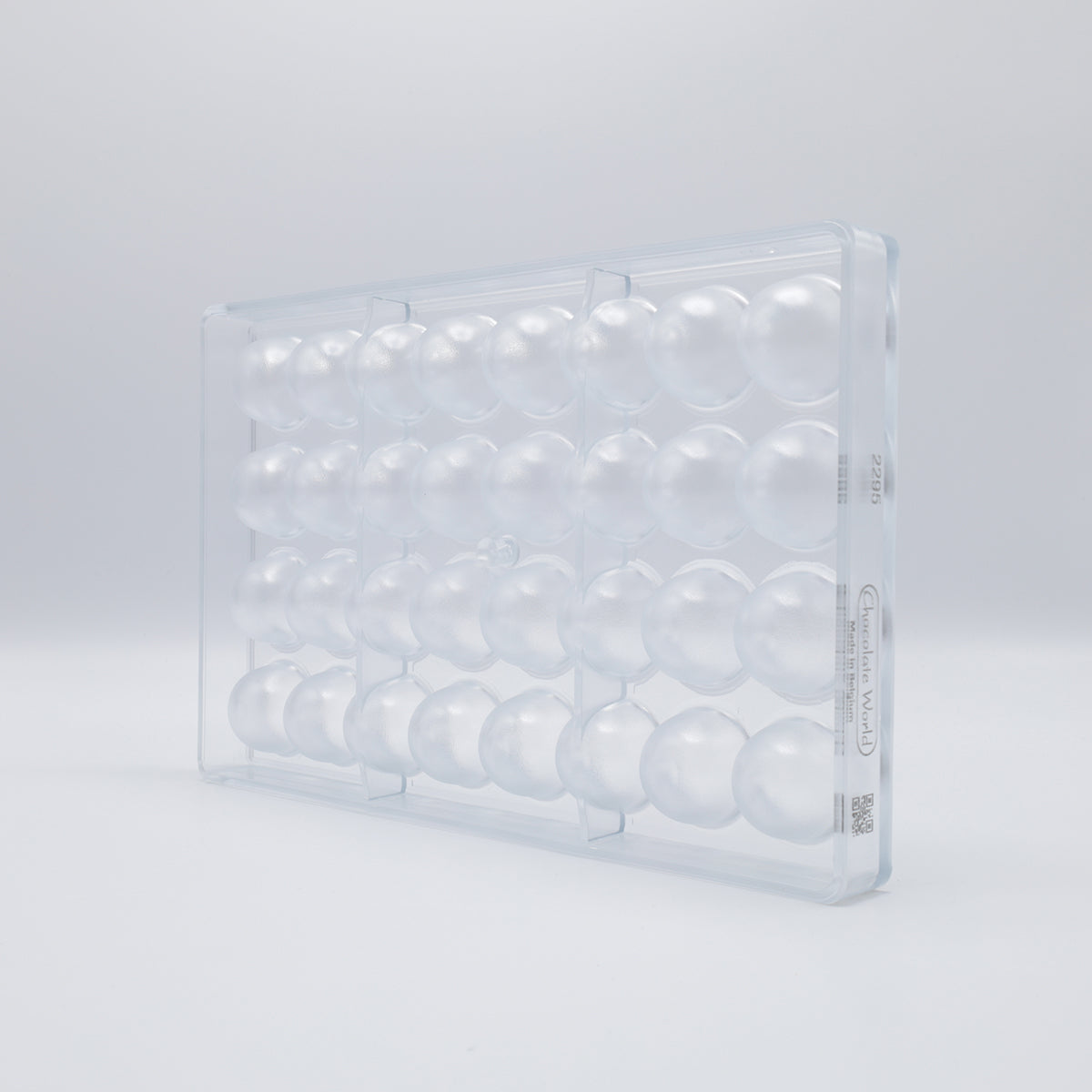
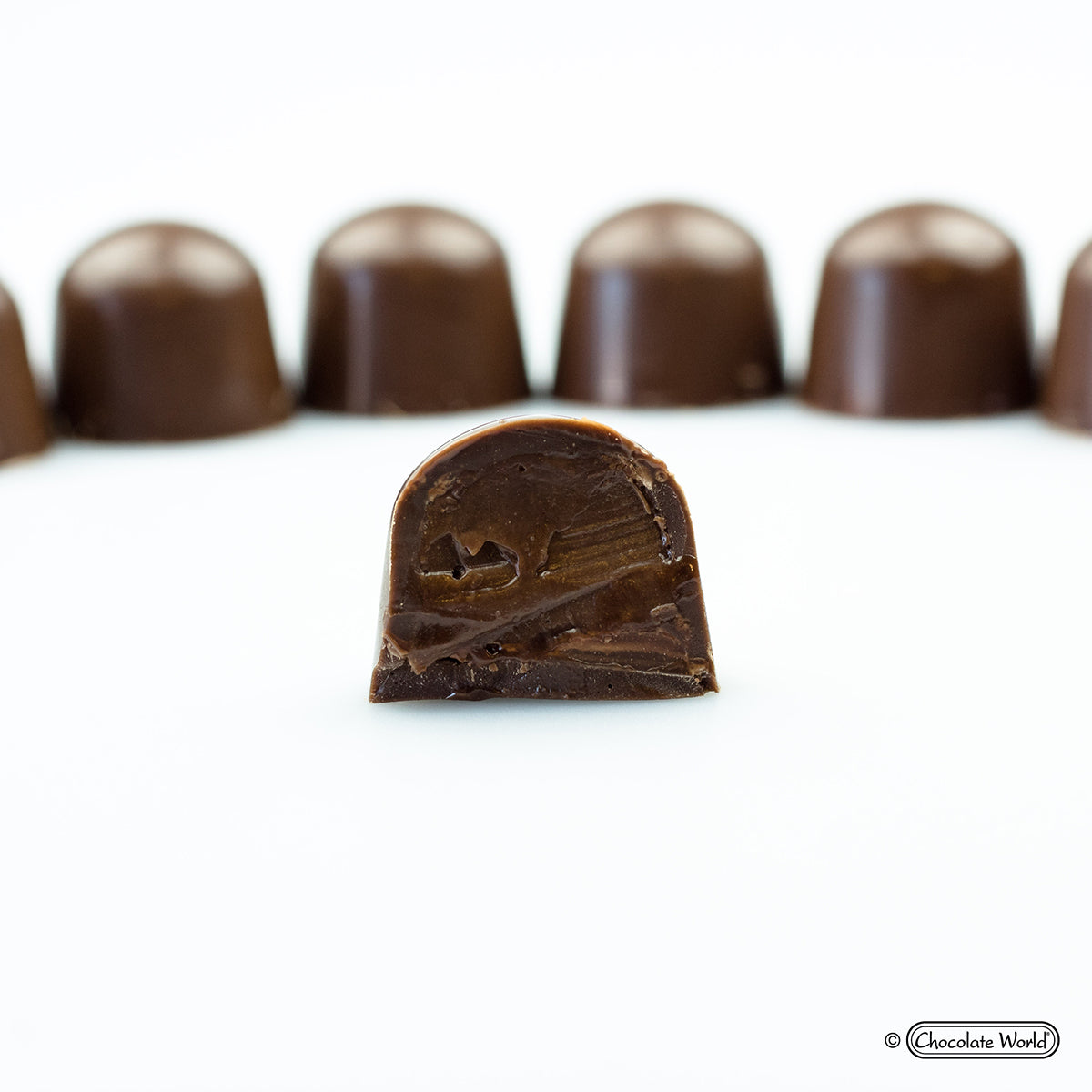
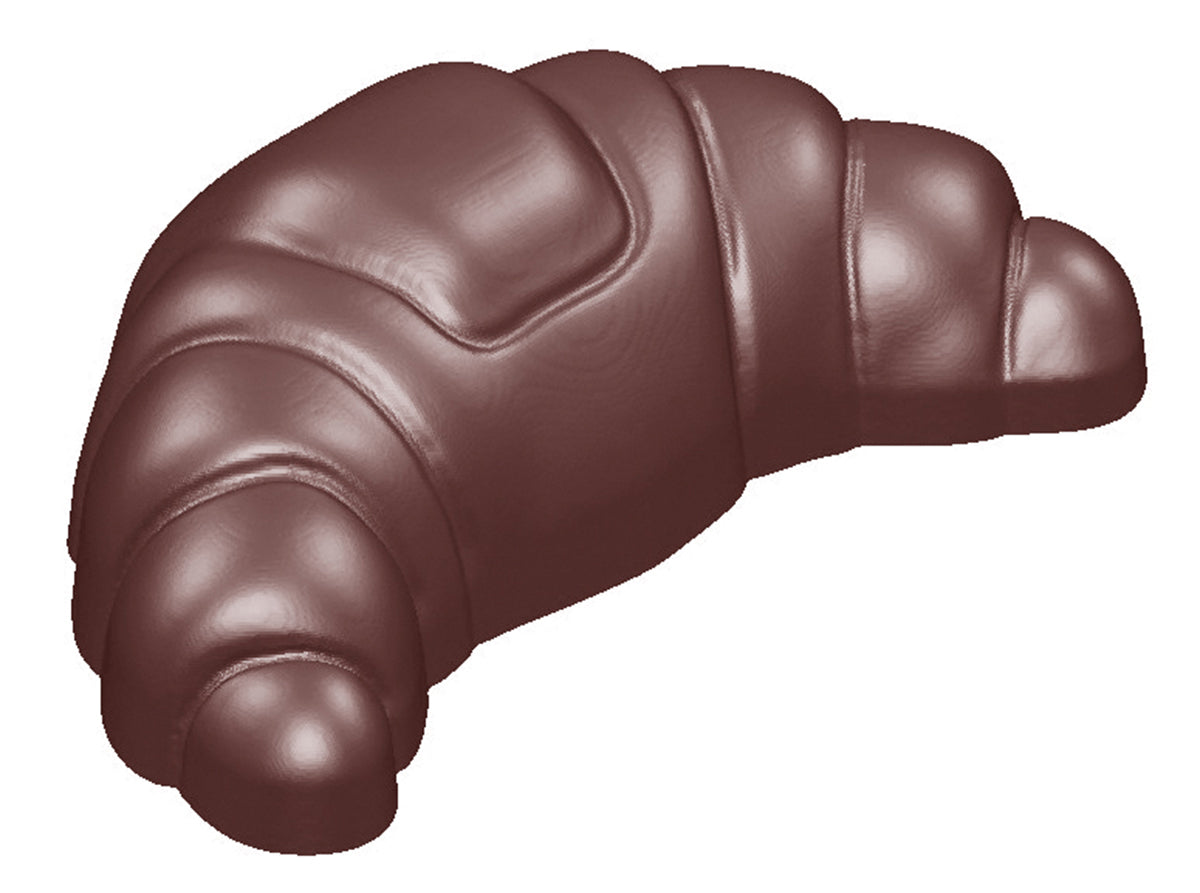
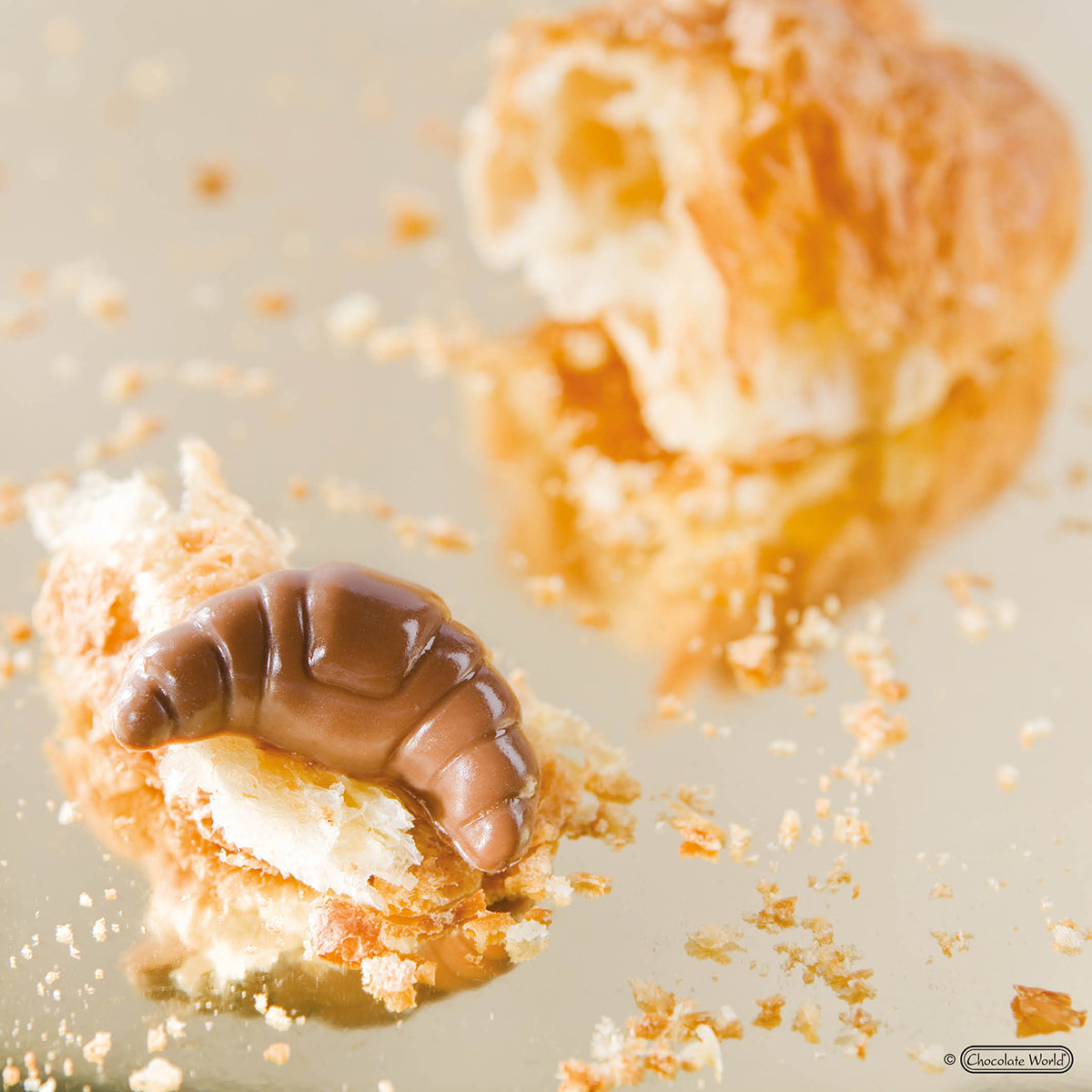
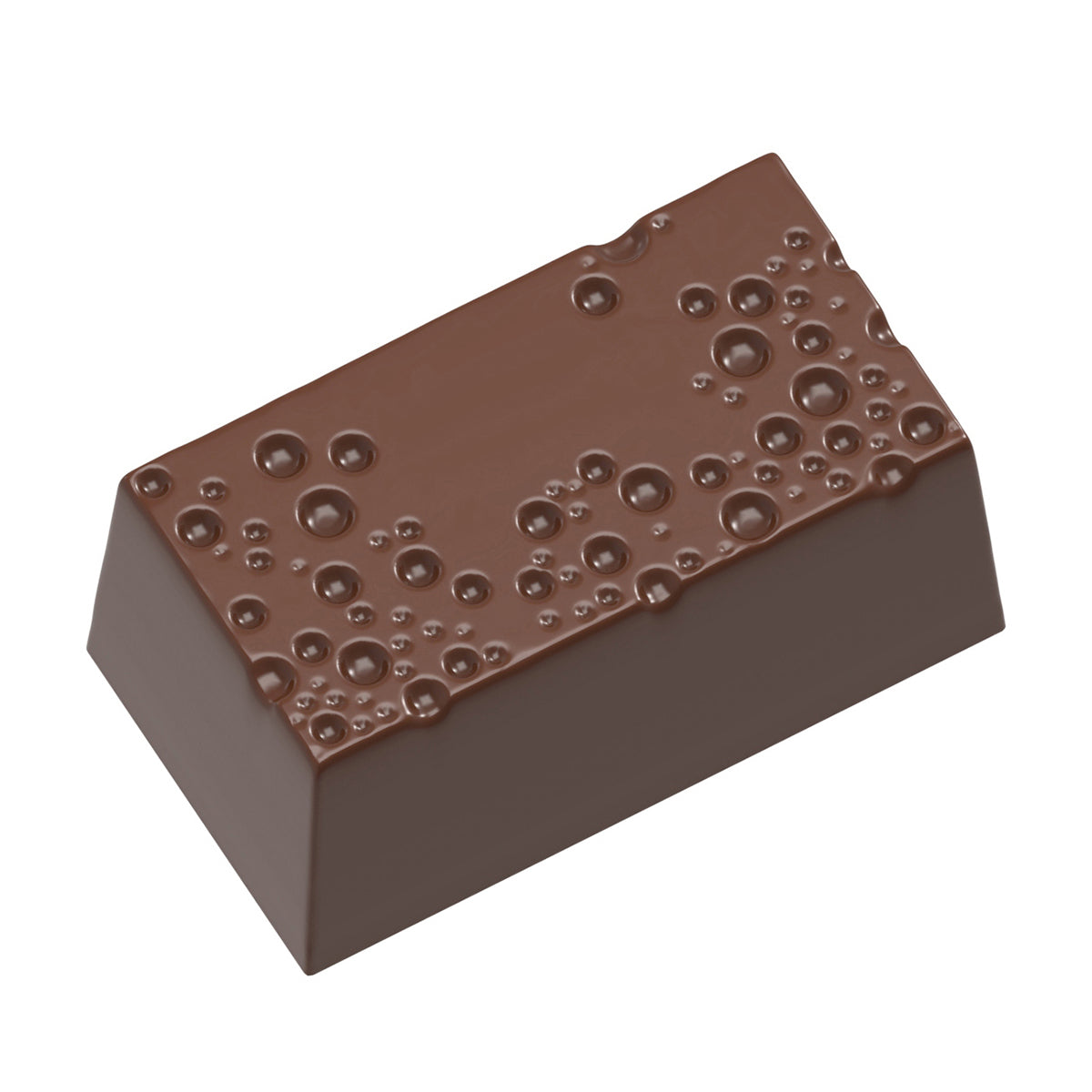



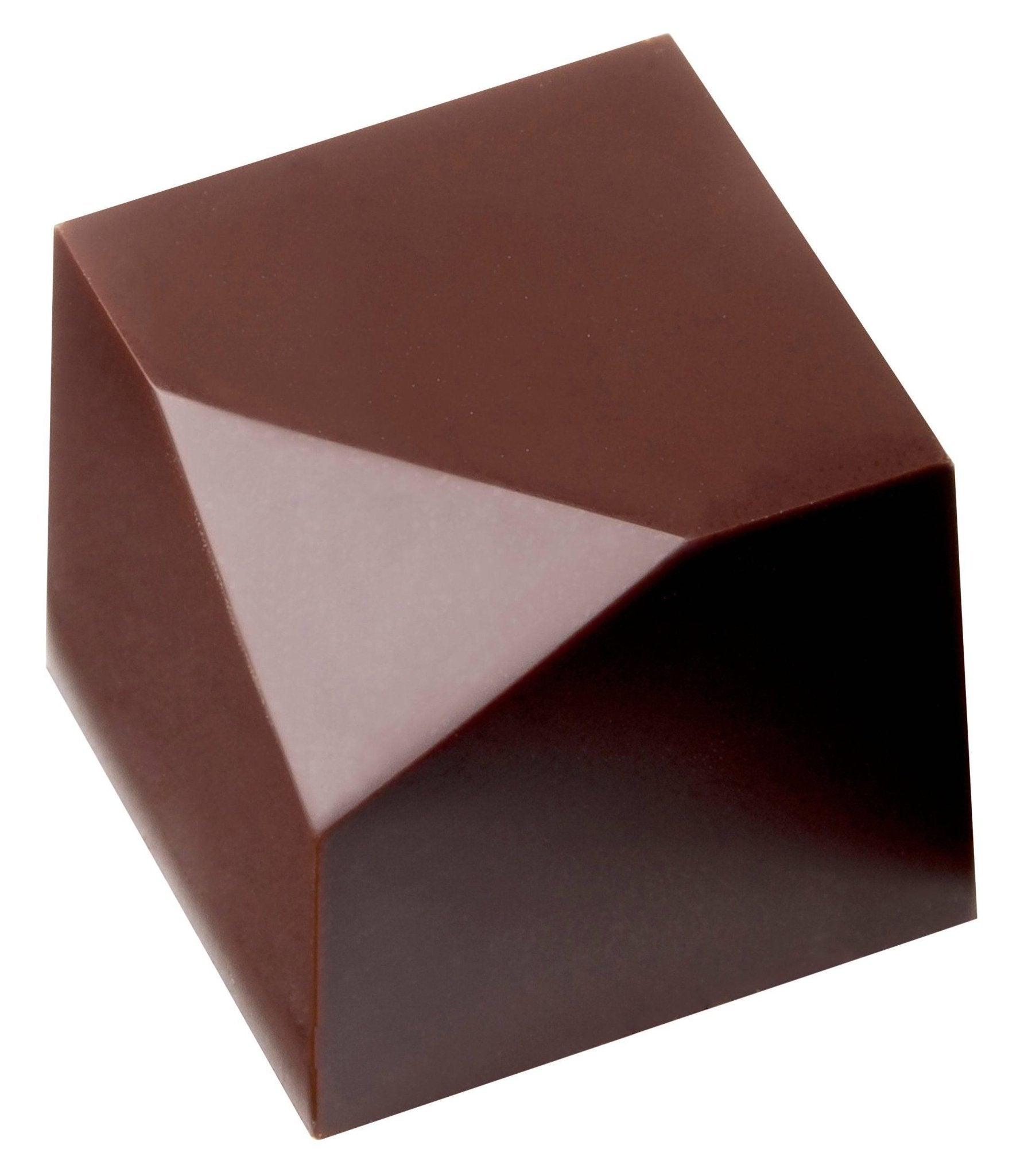
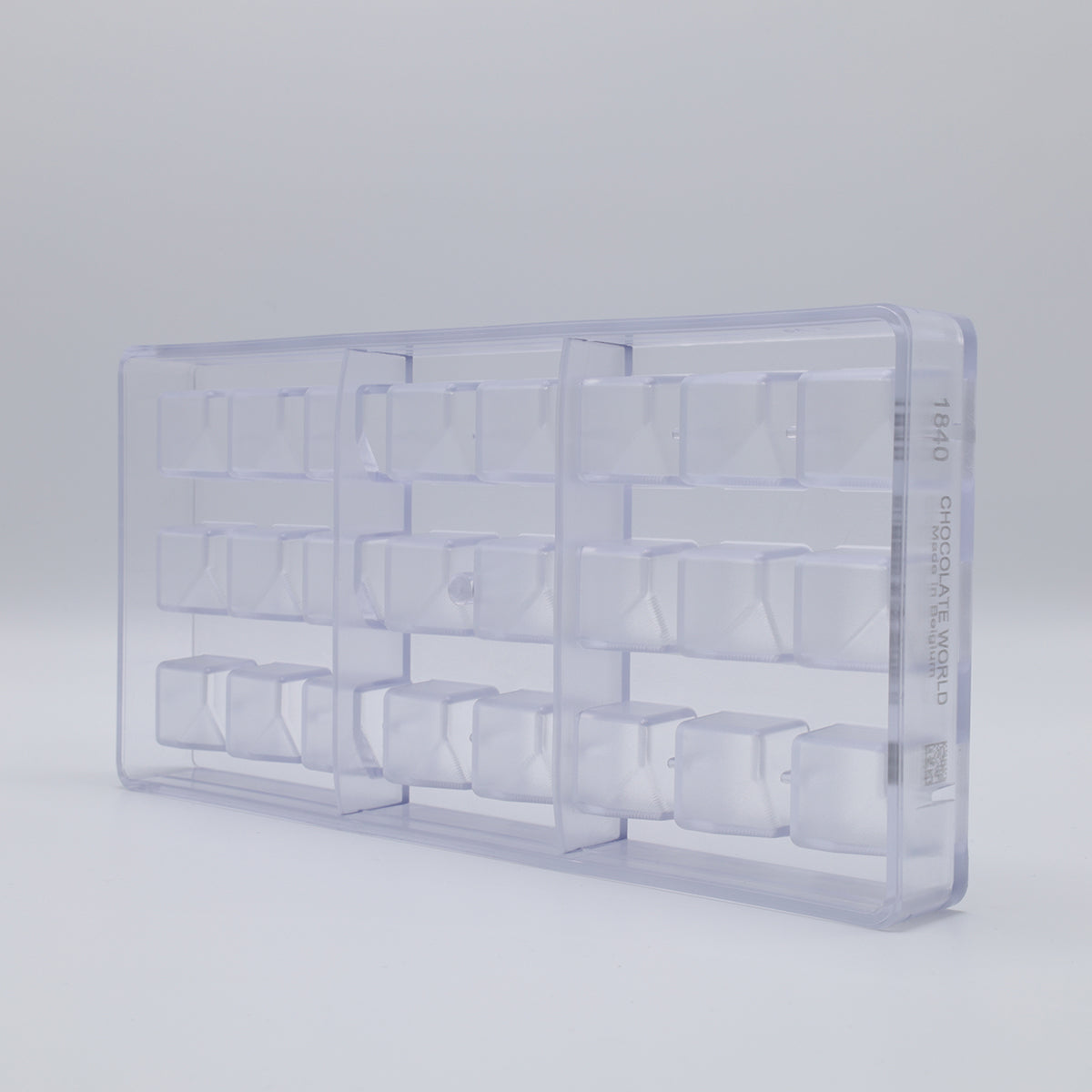
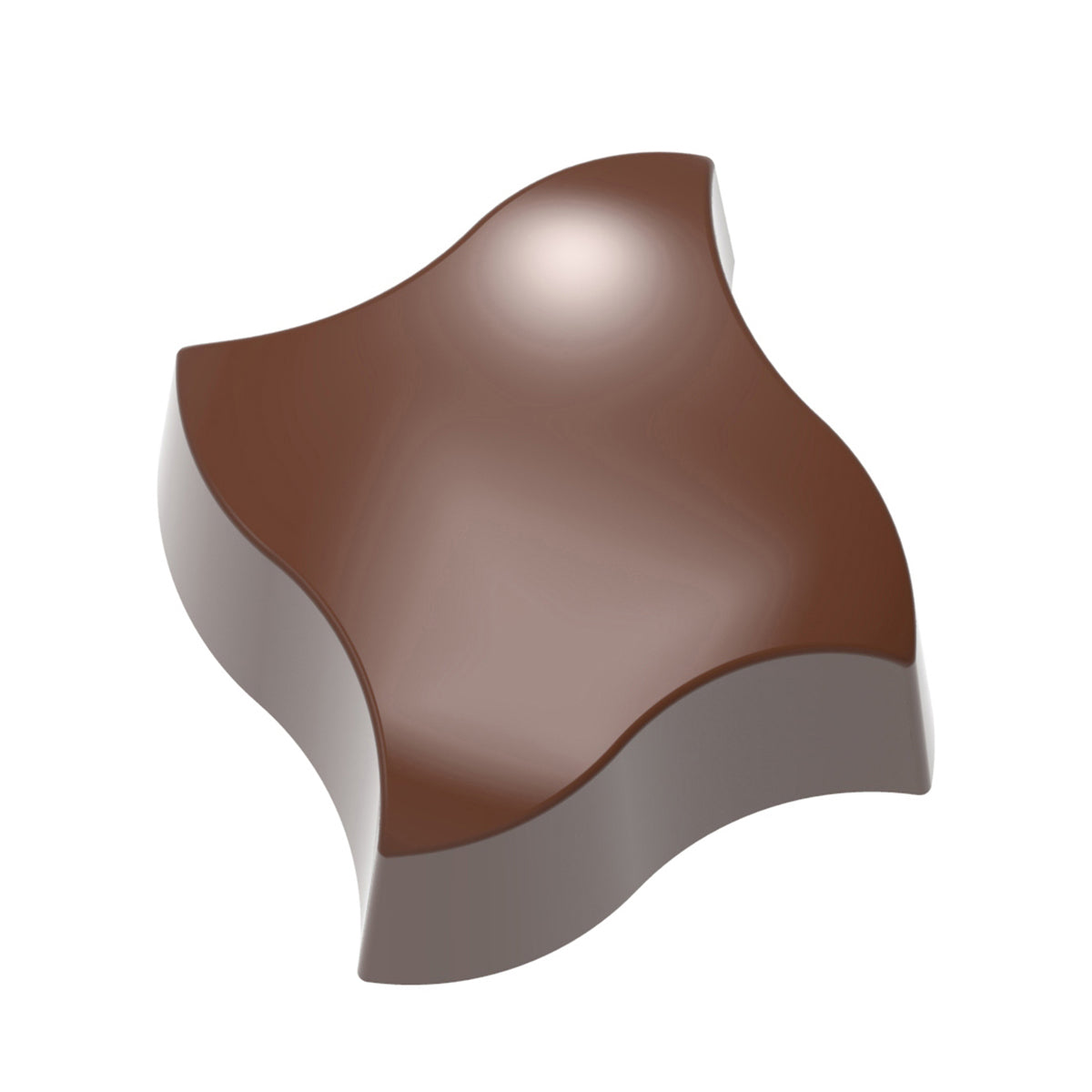
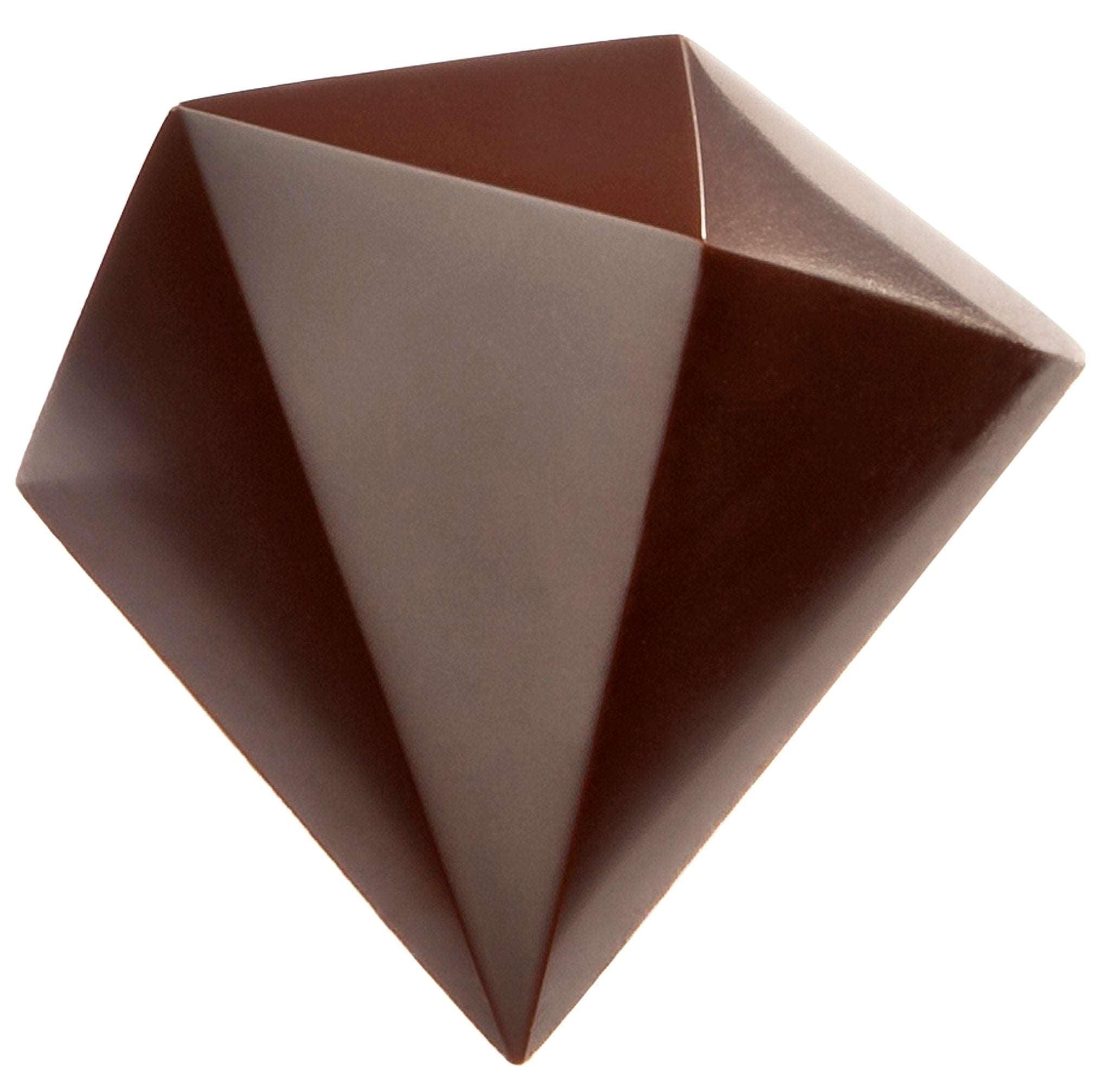
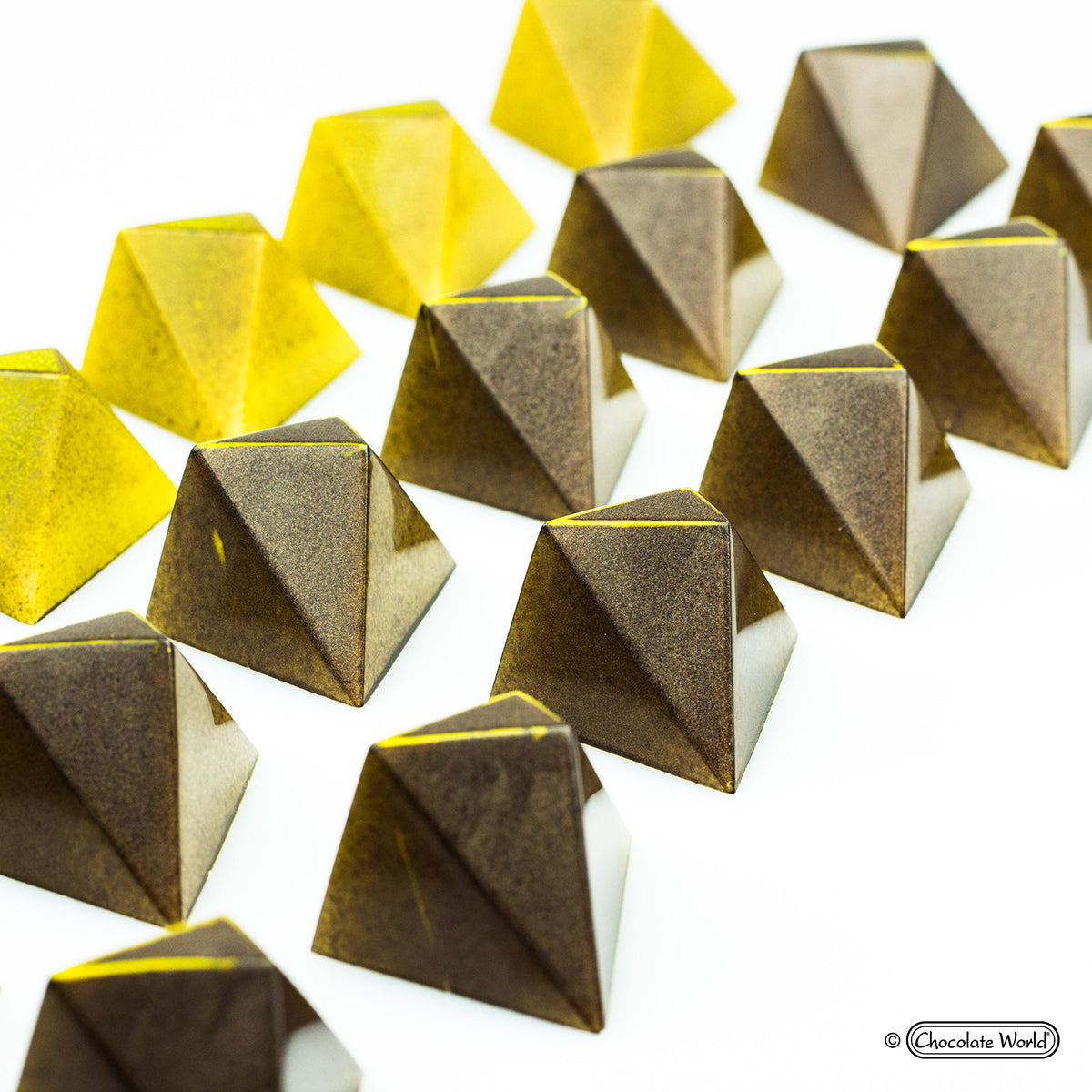
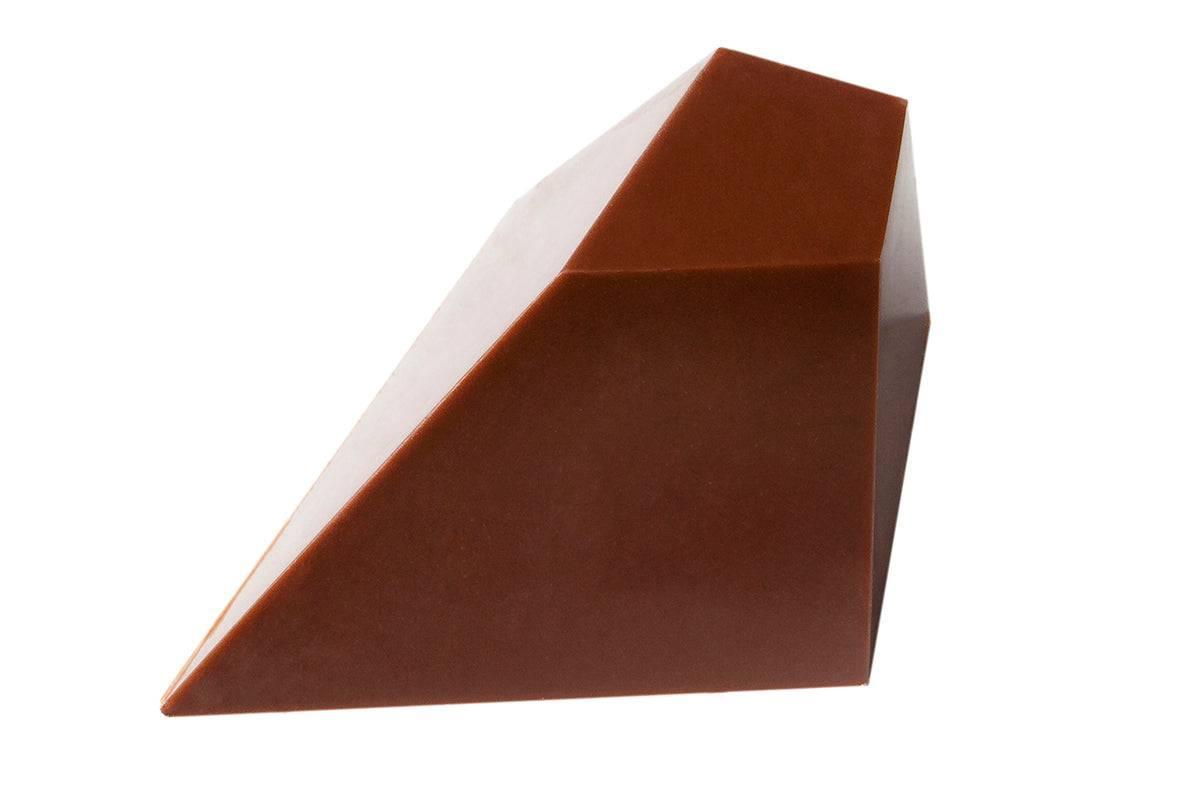
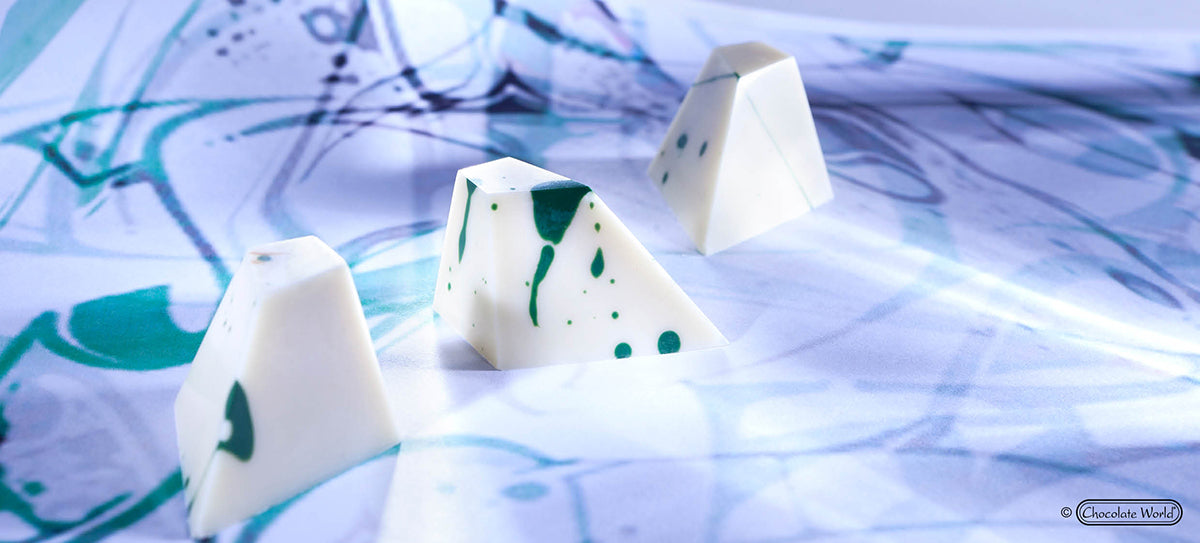
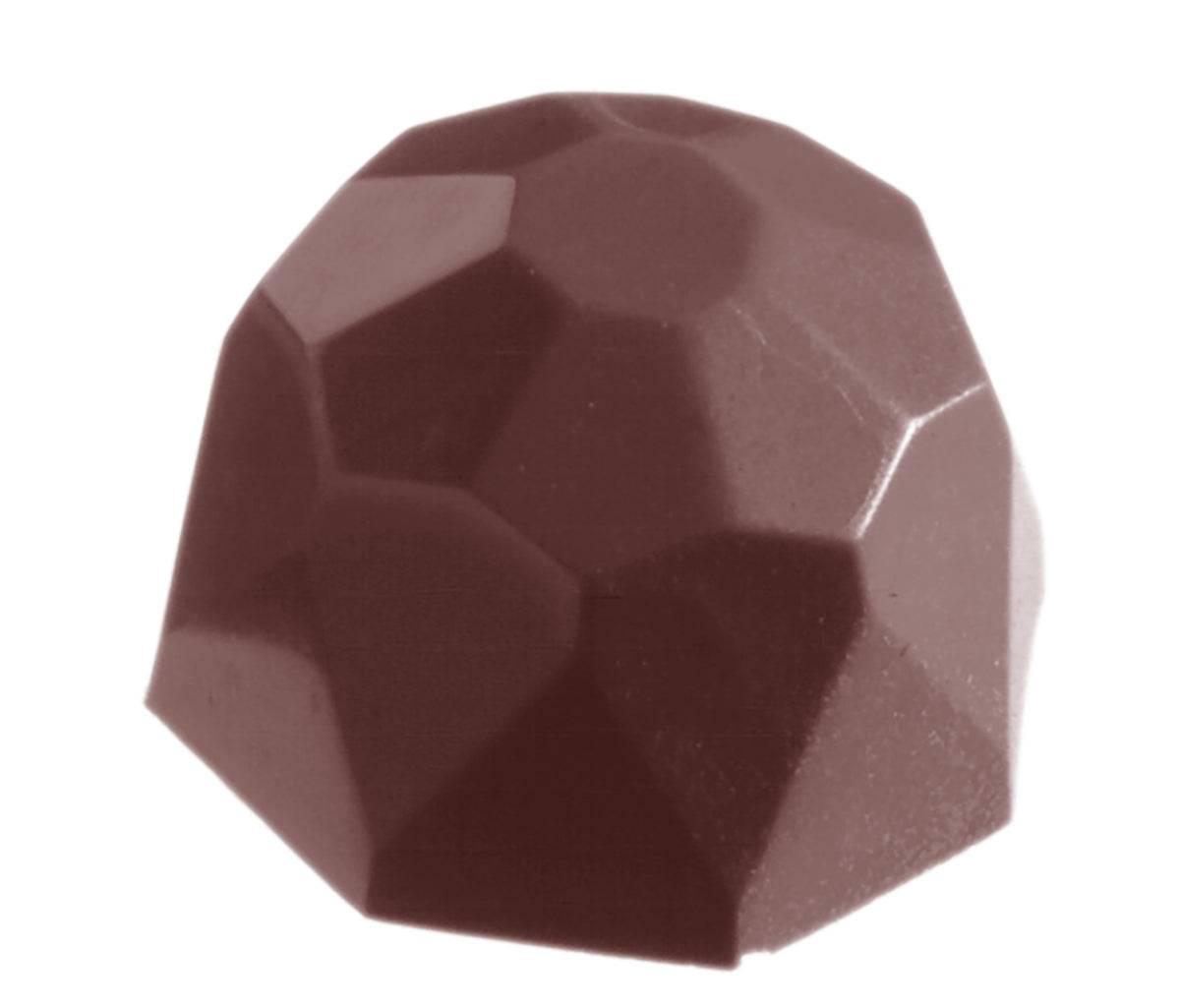
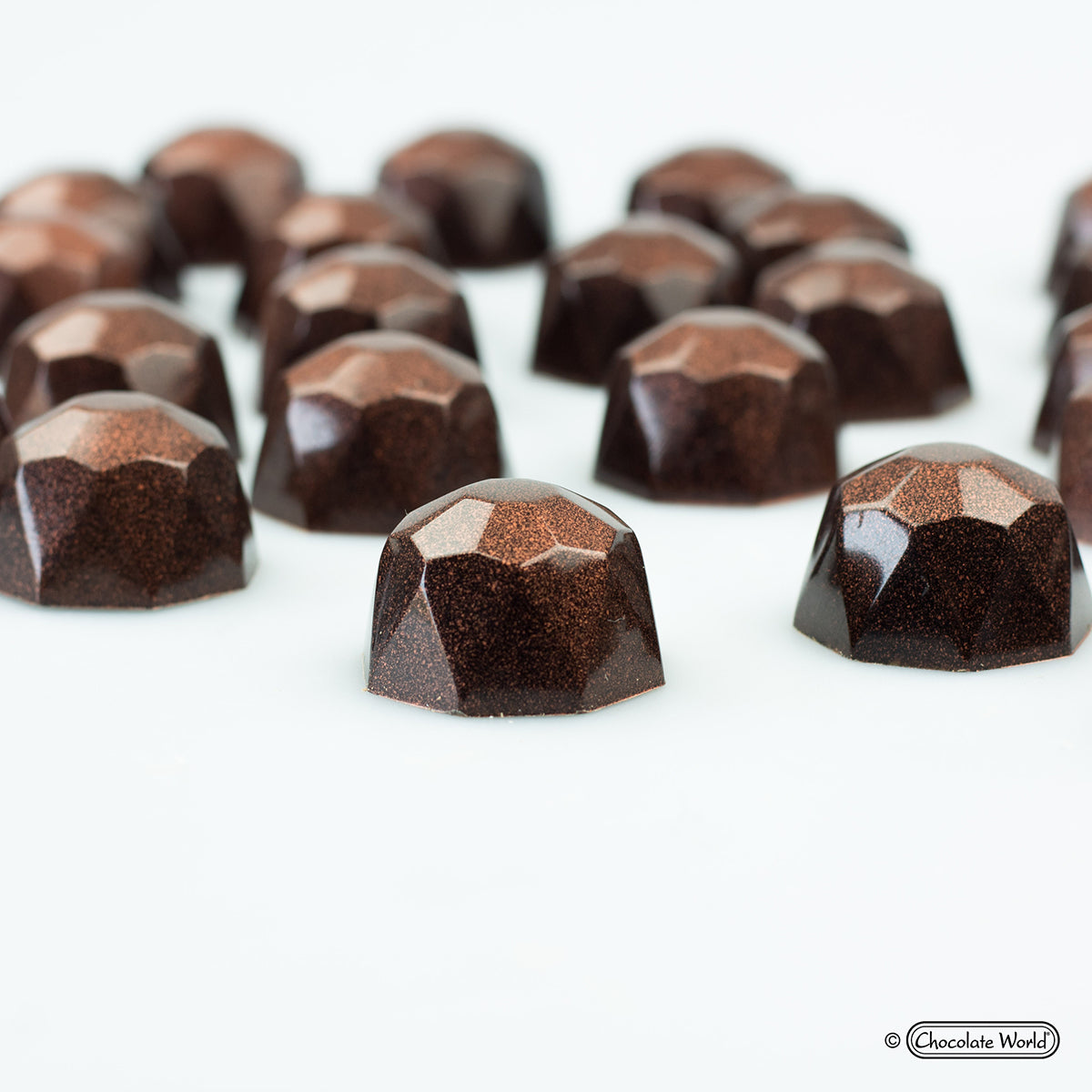
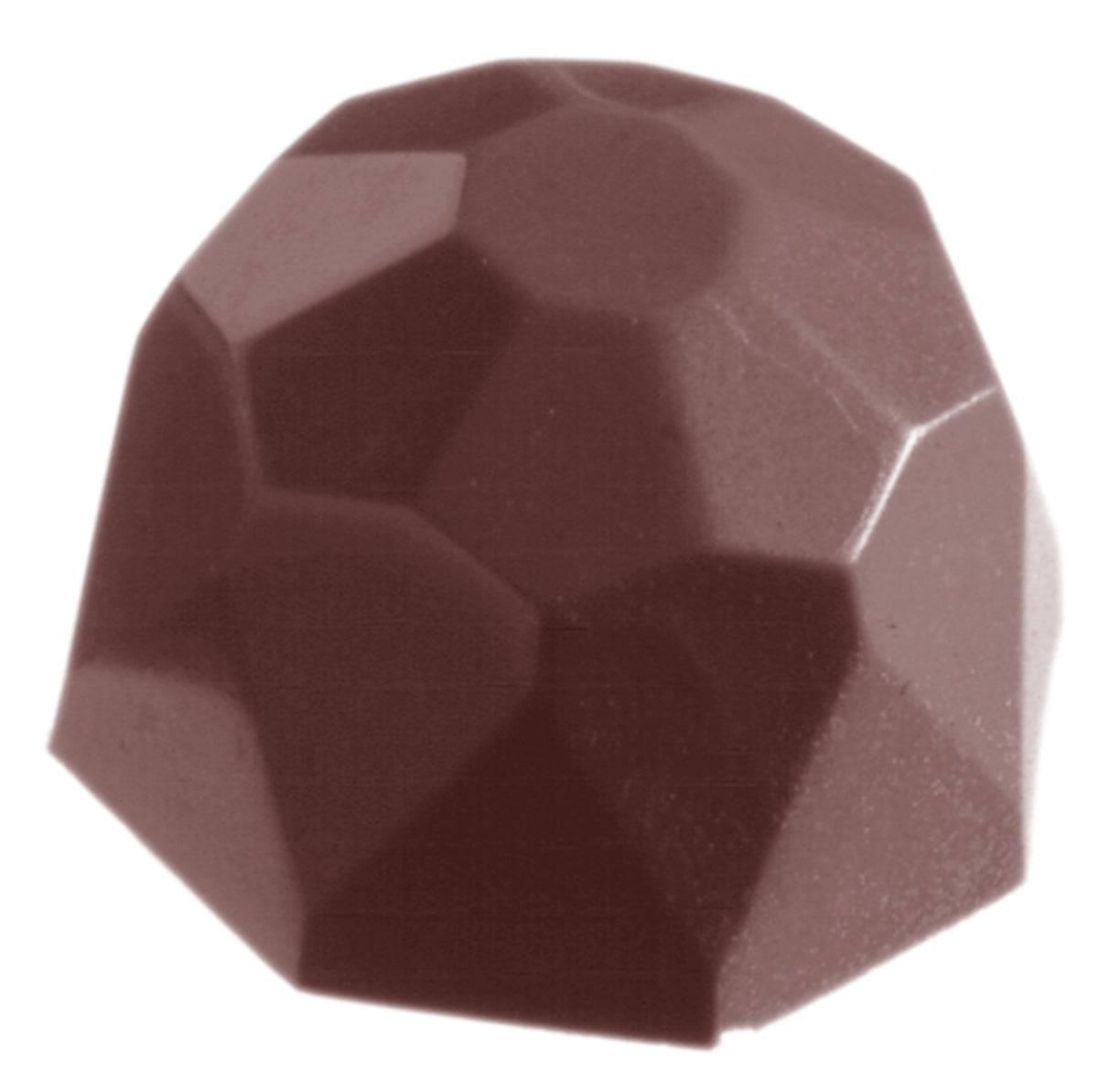
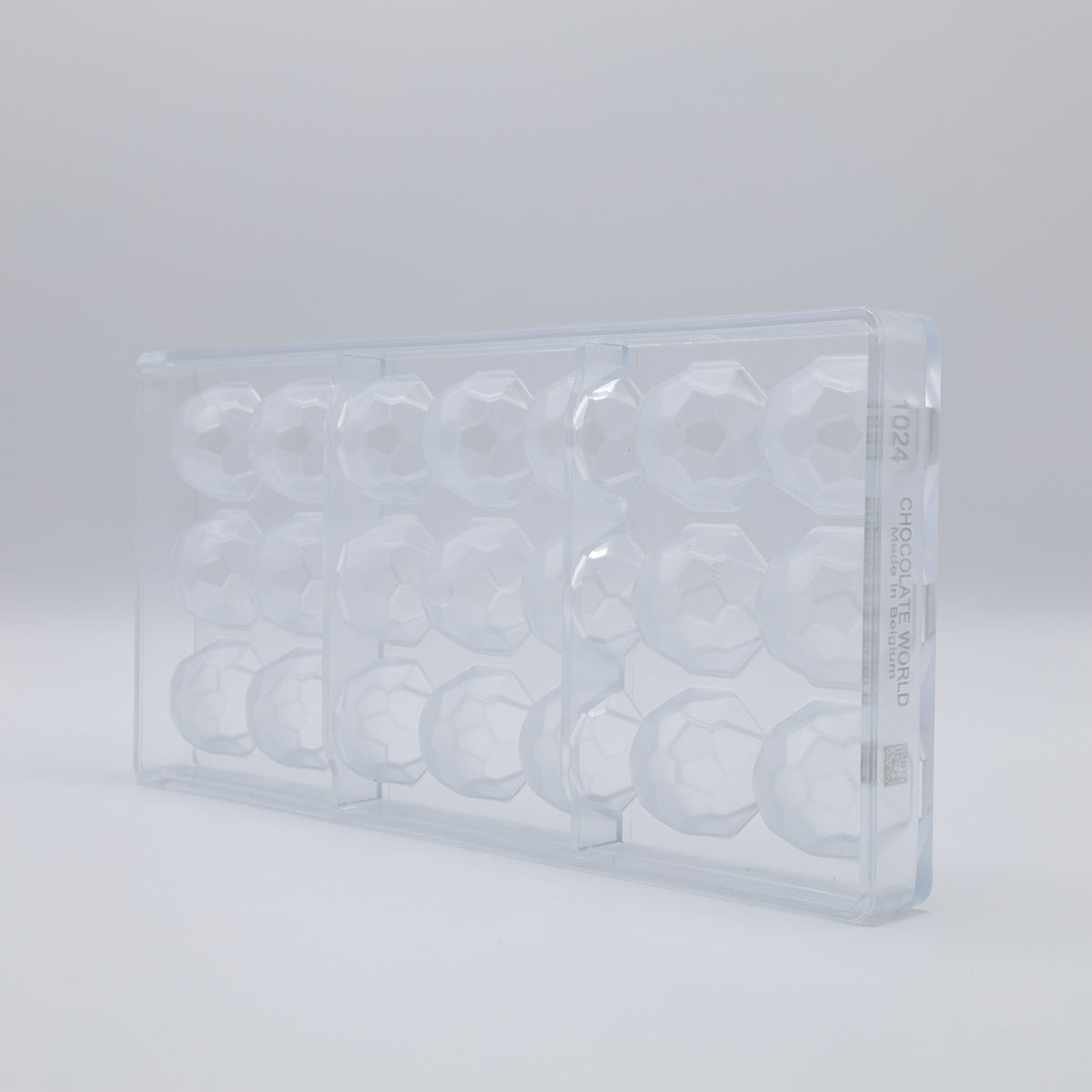


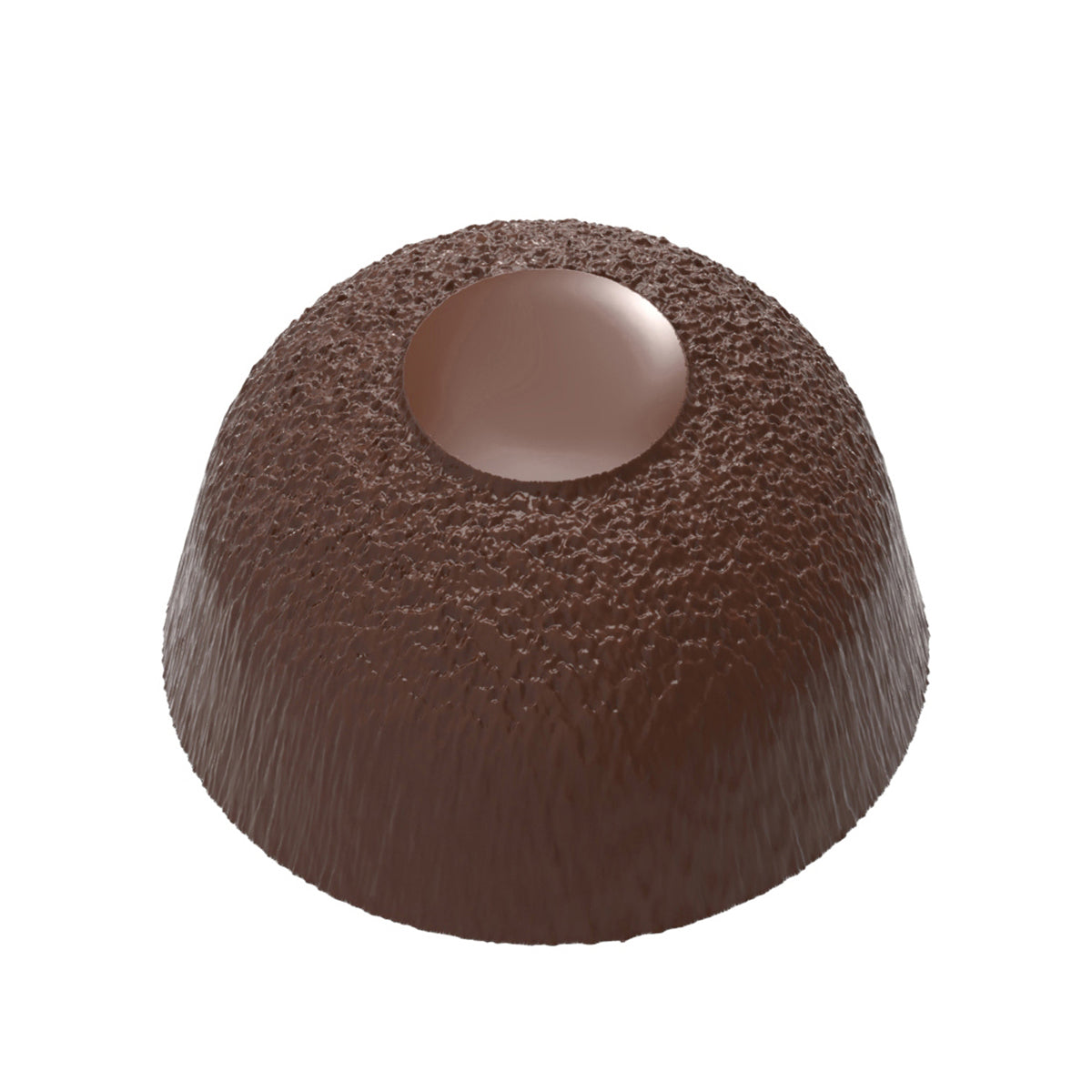
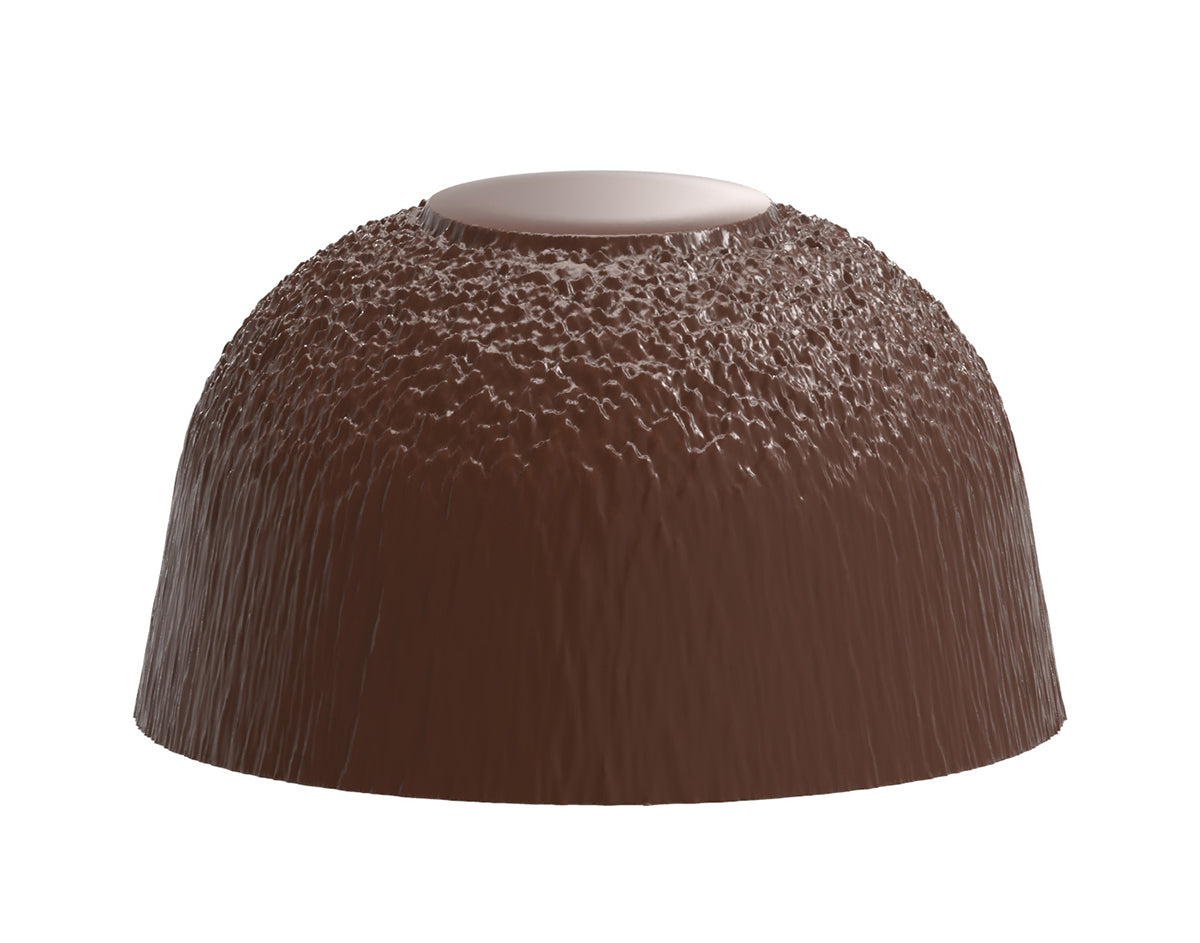
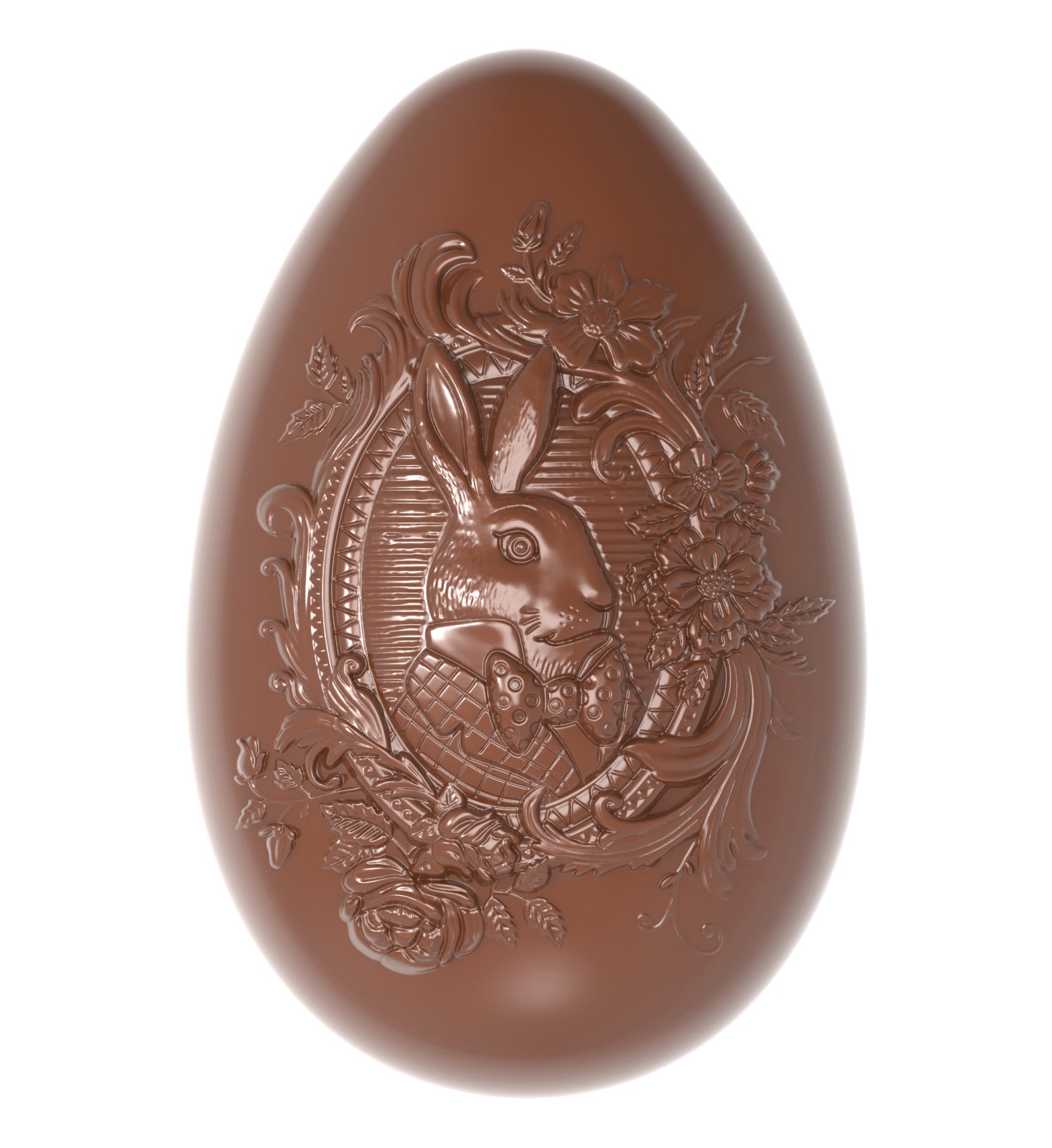
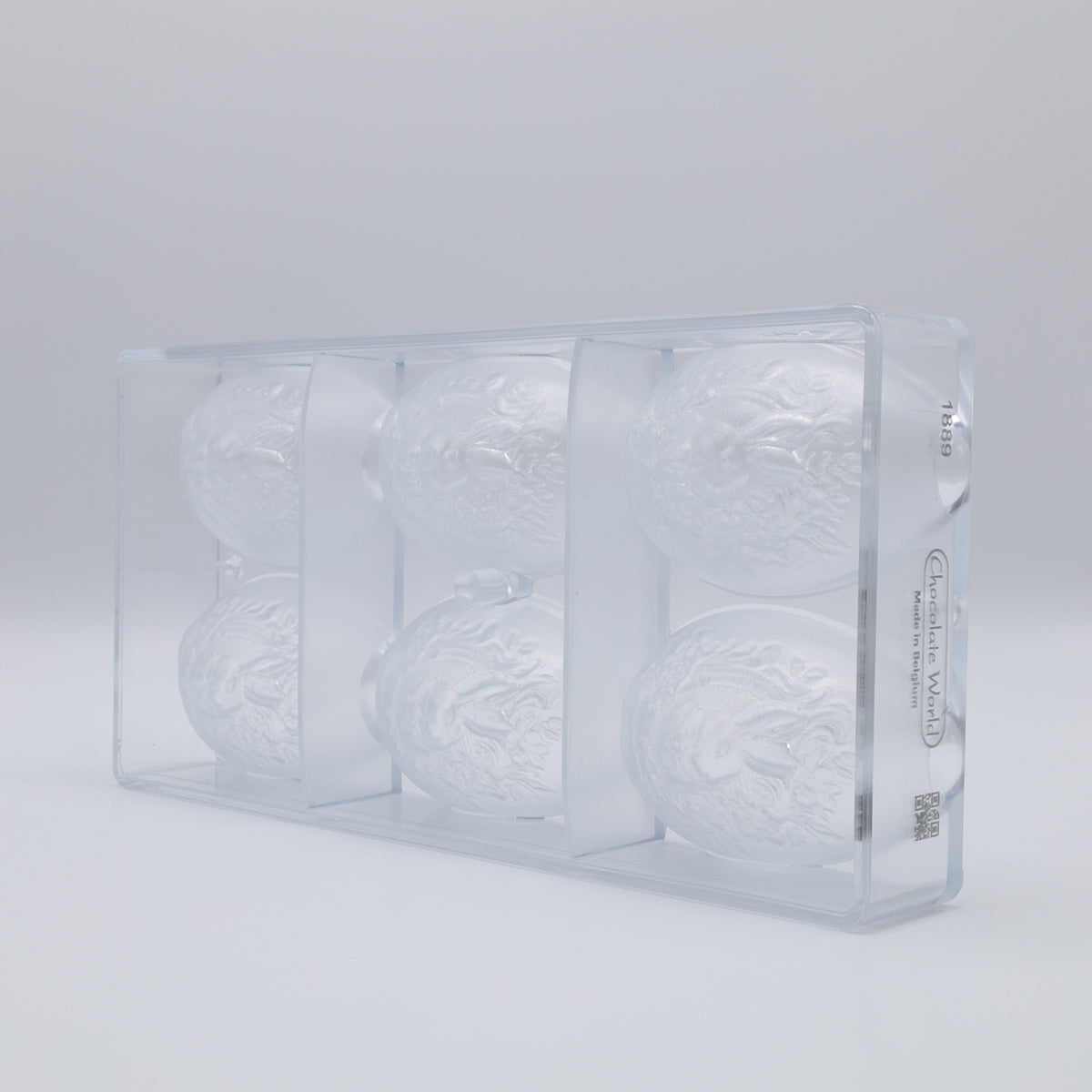

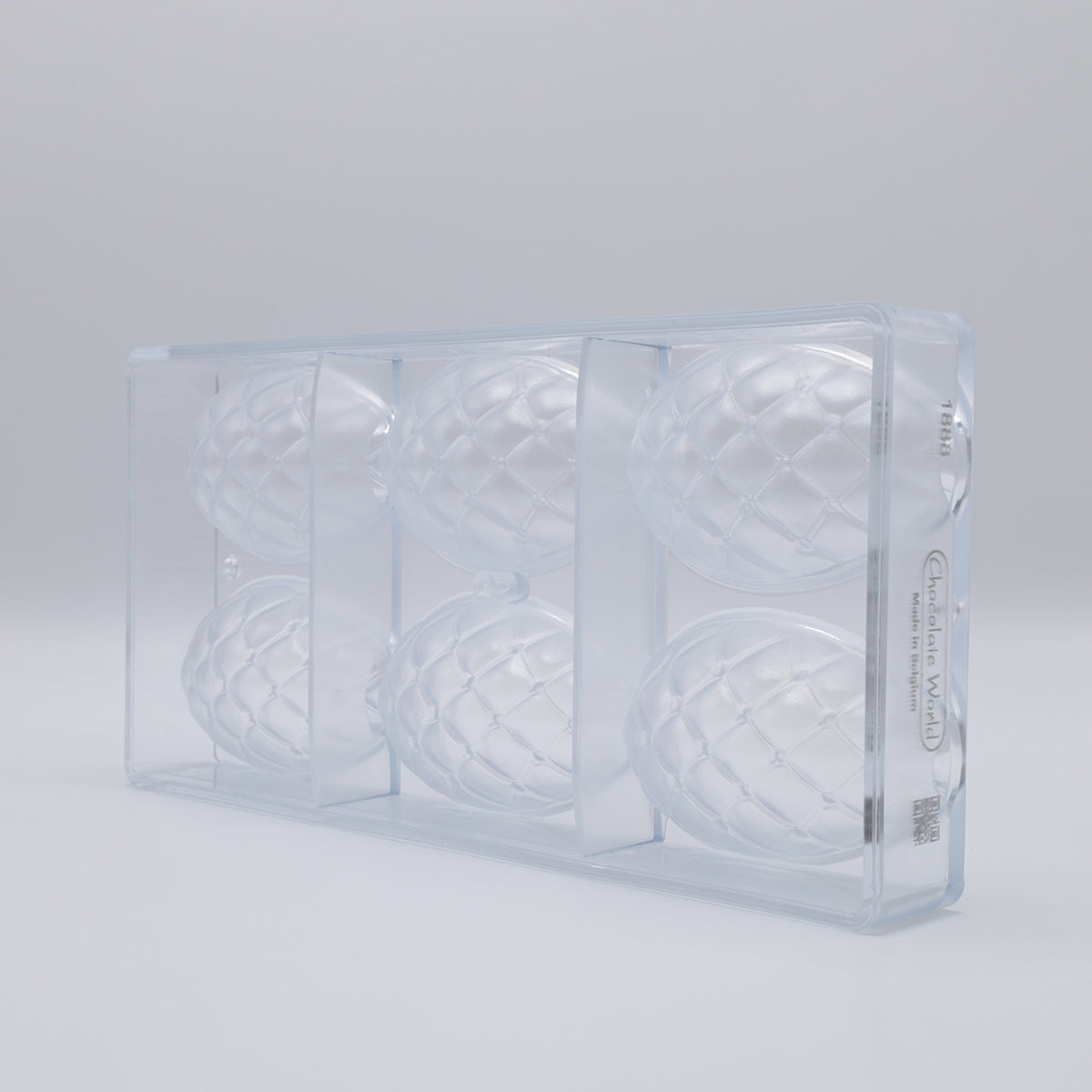
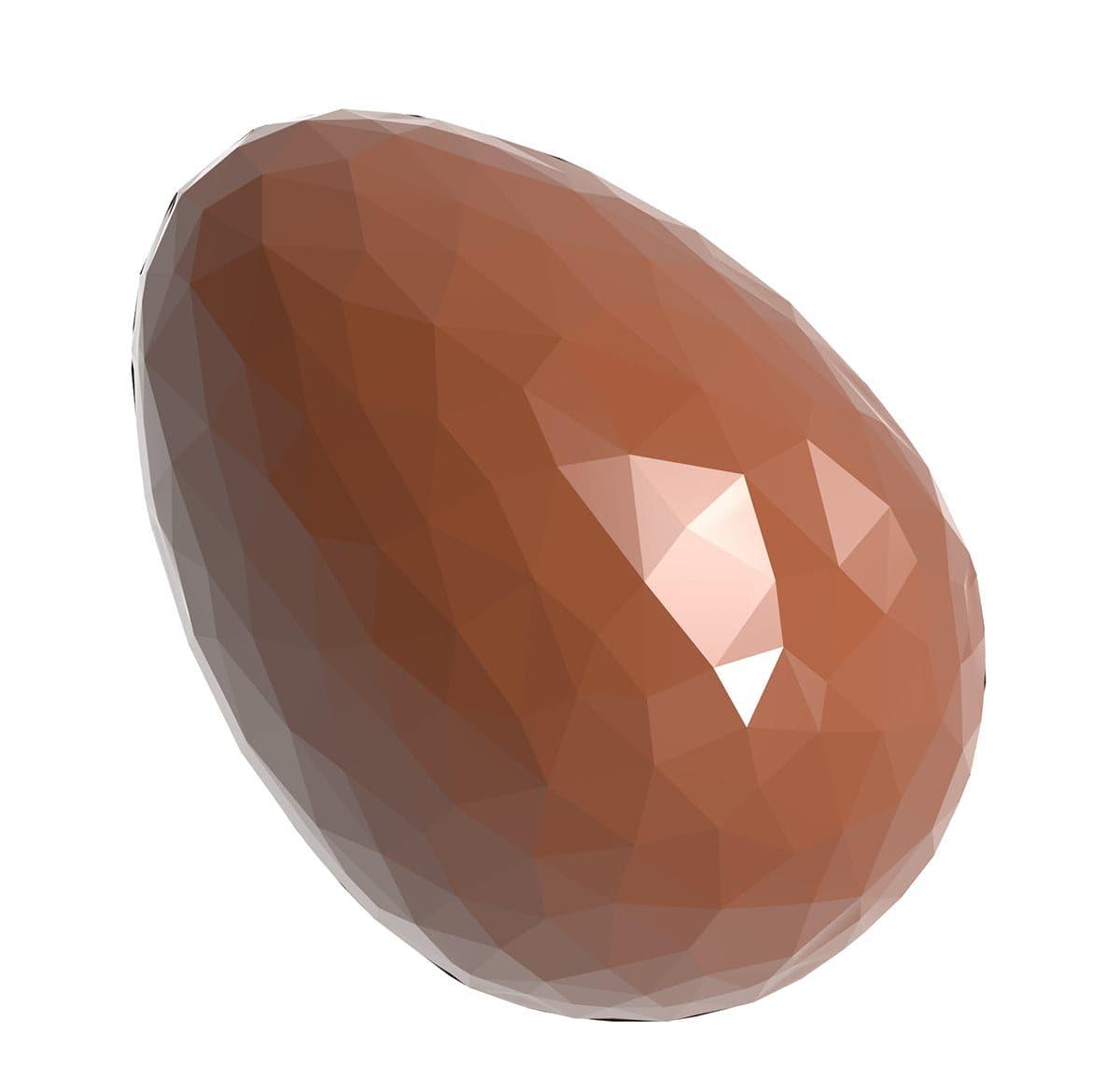
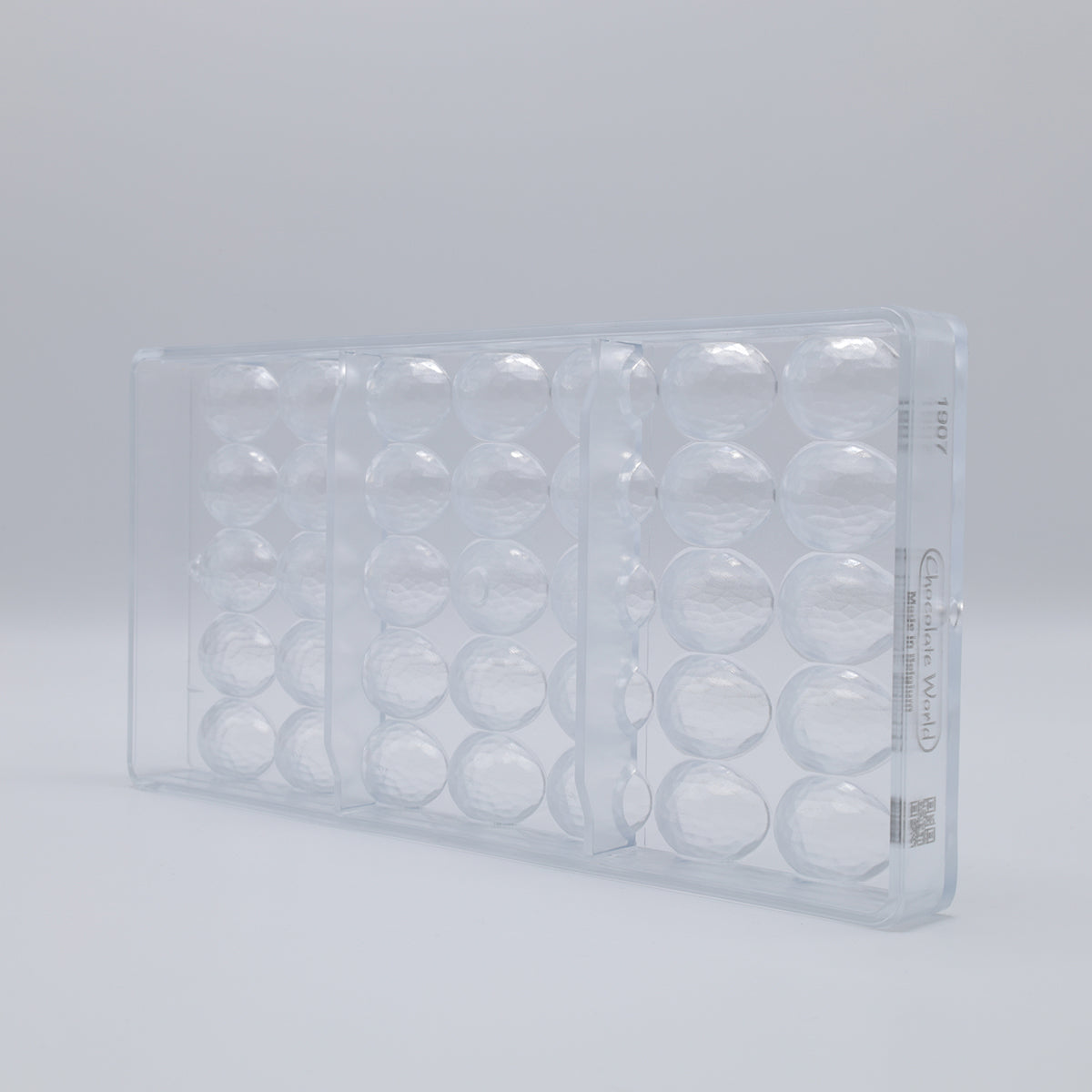
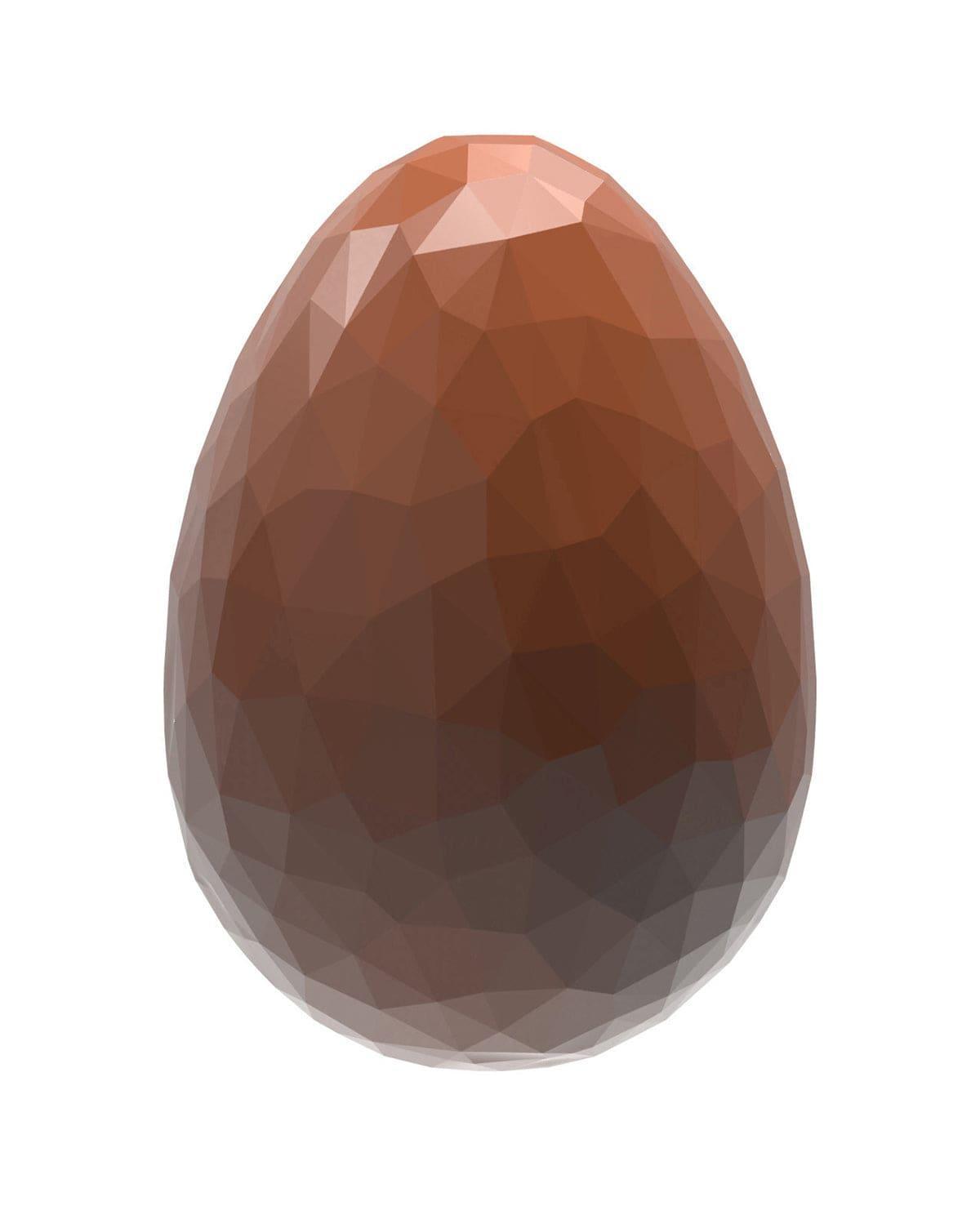
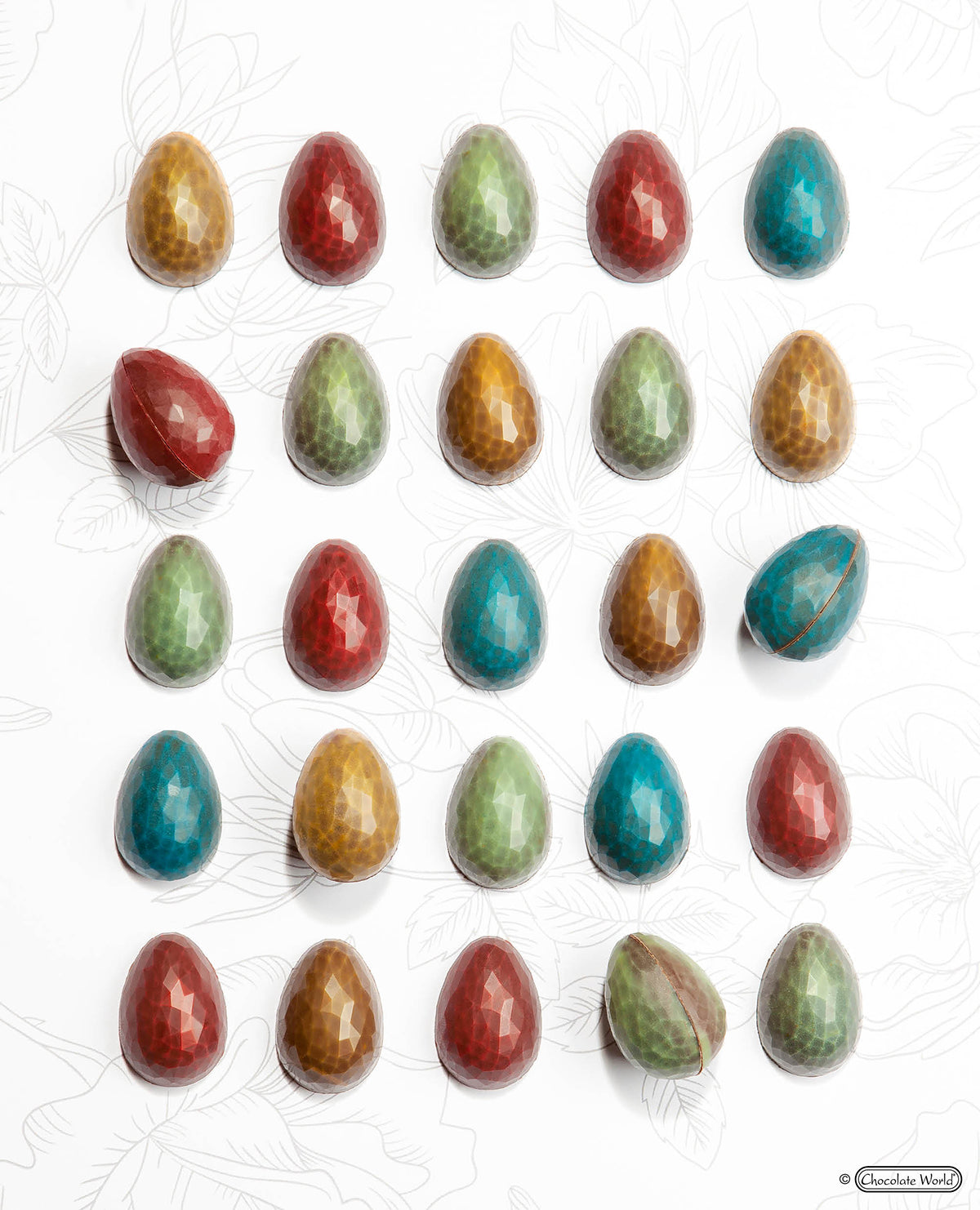
The mold is the last thing your chocolate touches before your customer sees it — and it decides the three things that signal quality: mirror gloss, a clean snap, and flawless release. This collection brings together professional chocolate molds in polycarbonate and Tritan from the European houses that define the craft: Chocolate World, Pavoni Italia and Martellato. Bonbons, bars, pralines, 3D and seasonal pieces, built for daily production.
Why the Mold Material Decides Your Result
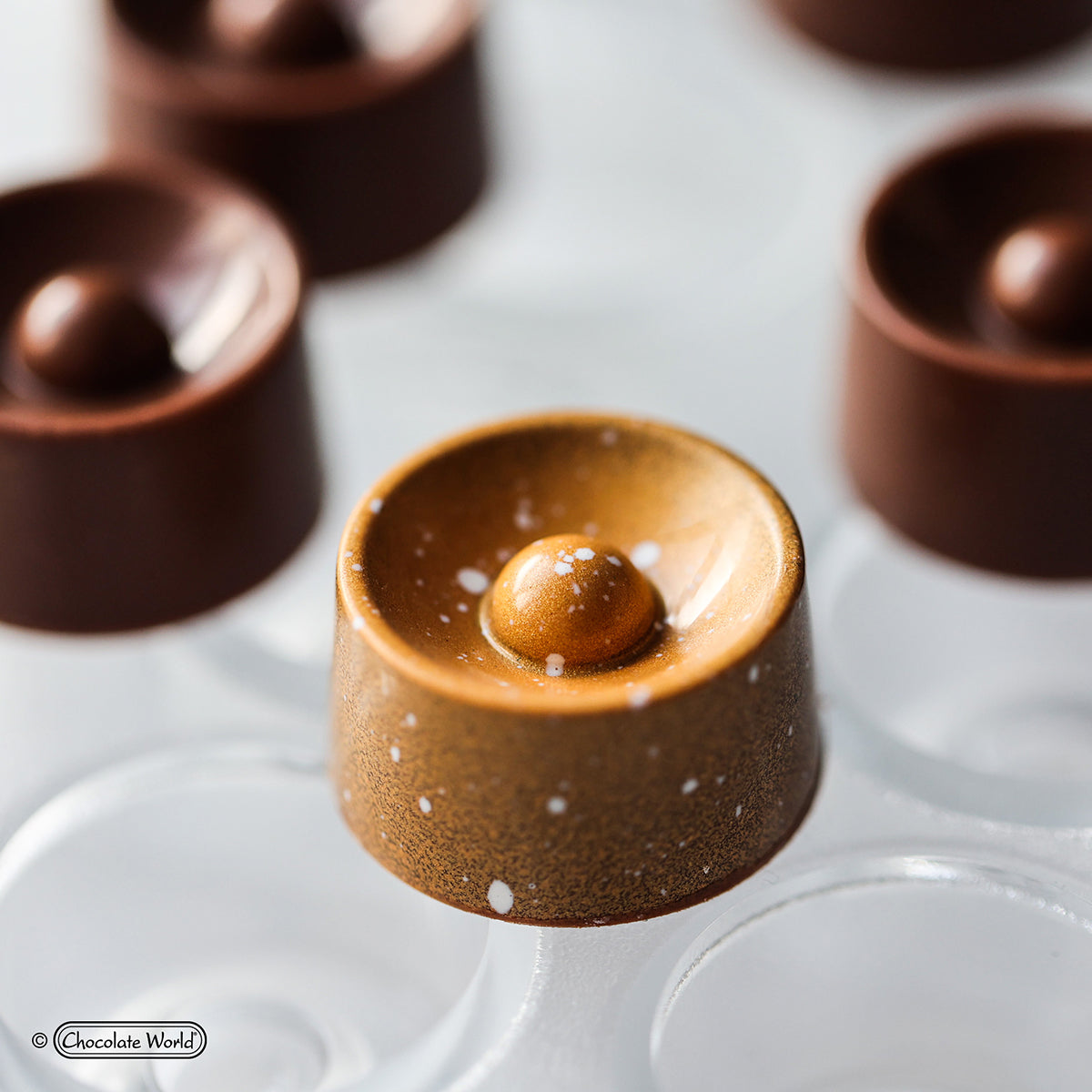
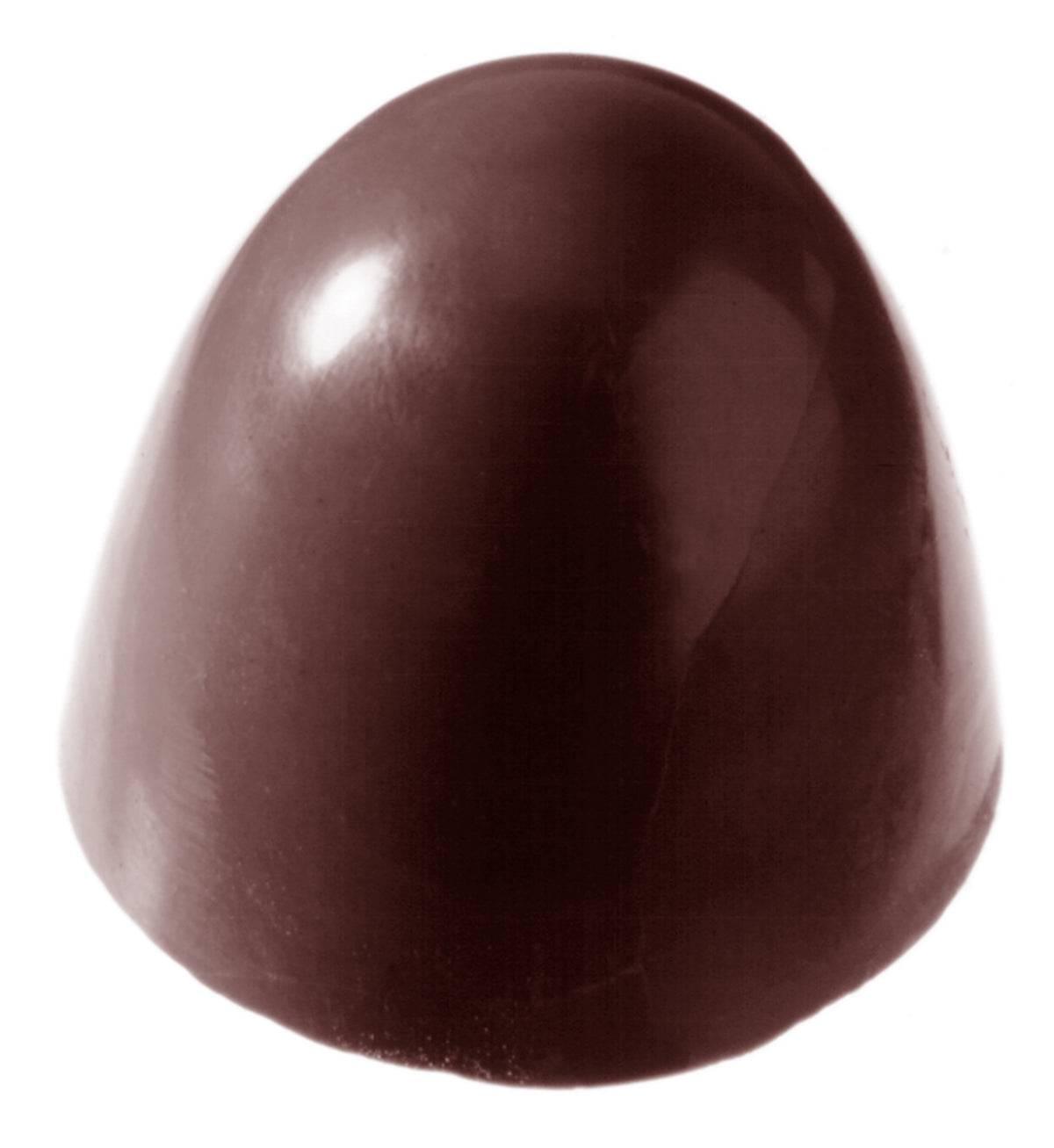
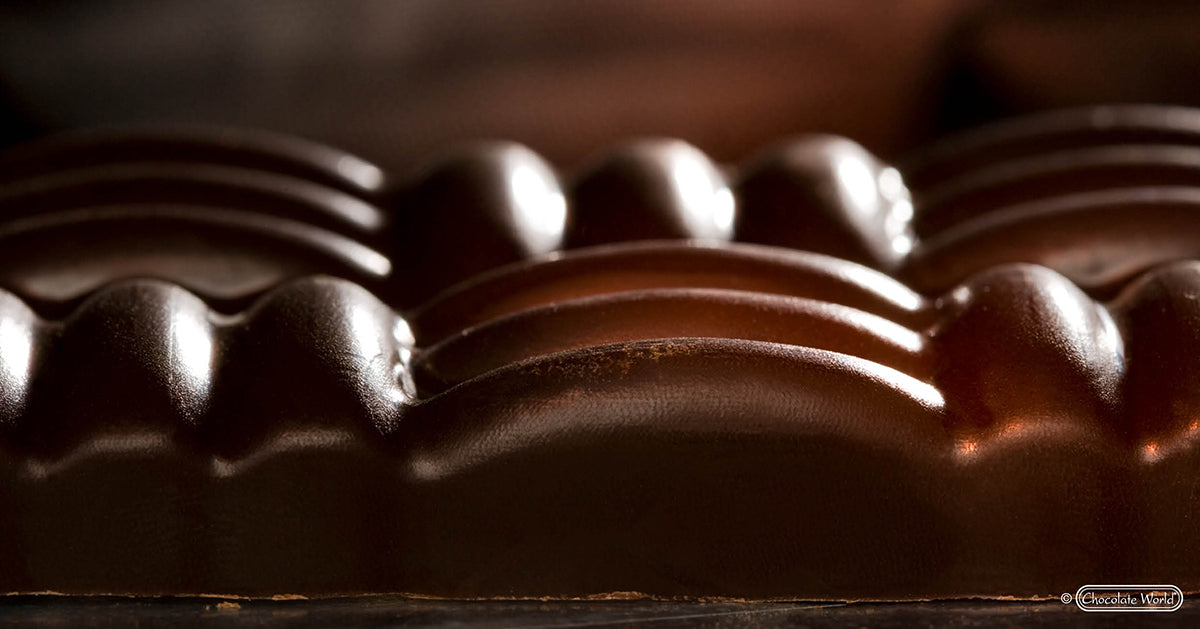
Well-tempered chocolate shrinks slightly as it crystallizes and pulls away from the mold wall — copying the surface it sat against in microscopic detail. A professional, ultra-polished, non-porous mold gives that contraction a perfect mirror to copy, so the finished piece releases with high gloss and sharp definition. A soft, scratched or porous mold copies its own flaws straight onto the chocolate, returning a dull, streaky finish that no amount of good tempering can fix. The material is not a detail — it is the difference between a bonbon that looks like it belongs in a display case and one that looks homemade.
Polycarbonate — The Professional Standard
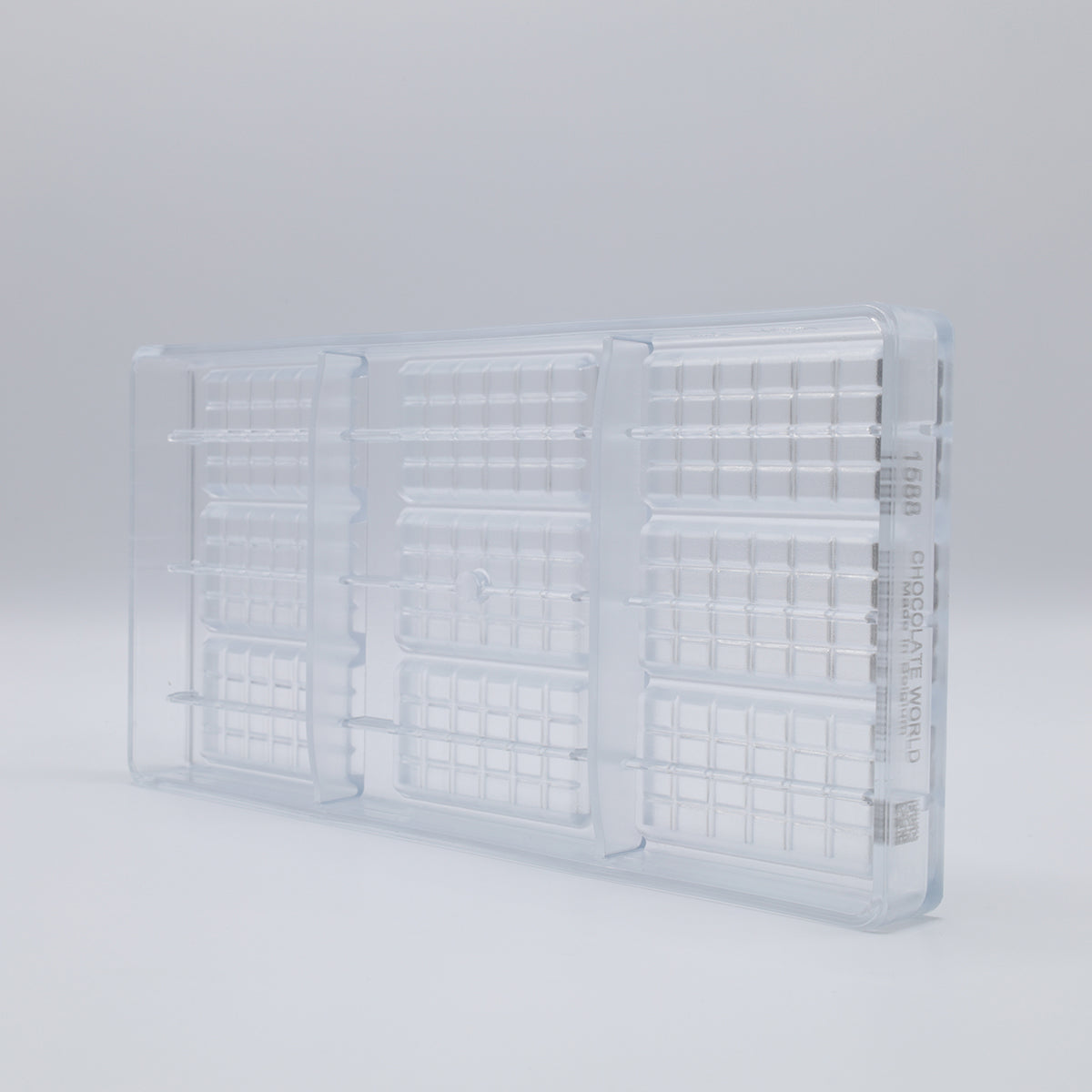
Polycarbonate is the material professional chocolatiers reach for, and for good reason. It is rigid, so every cavity holds its exact geometry under repeated use — meaning each bonbon, bar or praline comes out identical, batch after batch. Its surface is exceptionally smooth and non-porous, which is what produces that signature mirror shine when chocolate is properly tempered.
Because polycarbonate is clear, you can see the chocolate as you fill, scrape and cool — and you can watch it pull away from the walls, the visual cue that a piece is ready to release. It is food-safe and built to survive thousands of production cycles without clouding or warping. It is the material behind the Chocolate World Serie 1000 and 2000 ranges and the Martellato praline, cup and bar molds in this collection.
Tritan — Pavoni's Impact-Resistant Choice
Pavoni builds many of its author bar and praline molds in Tritan, a BPA-free copolyester that offers the same optical clarity as polycarbonate with noticeably higher impact resistance. In a busy kitchen that means molds that shrug off knocks and tapping without cracking or stress-marking — a longer working life under intensive production.
Tritan also holds fine detail crisply, which is why it suits the sculptural, geometric bar molds in Pavoni's chef-designed lines, such as the Vincent Vallée collection. You get gallery-grade definition on the face of the bar plus the durability to run it day after day.
Magnetic Molds — For Transfer-Sheet Decoration
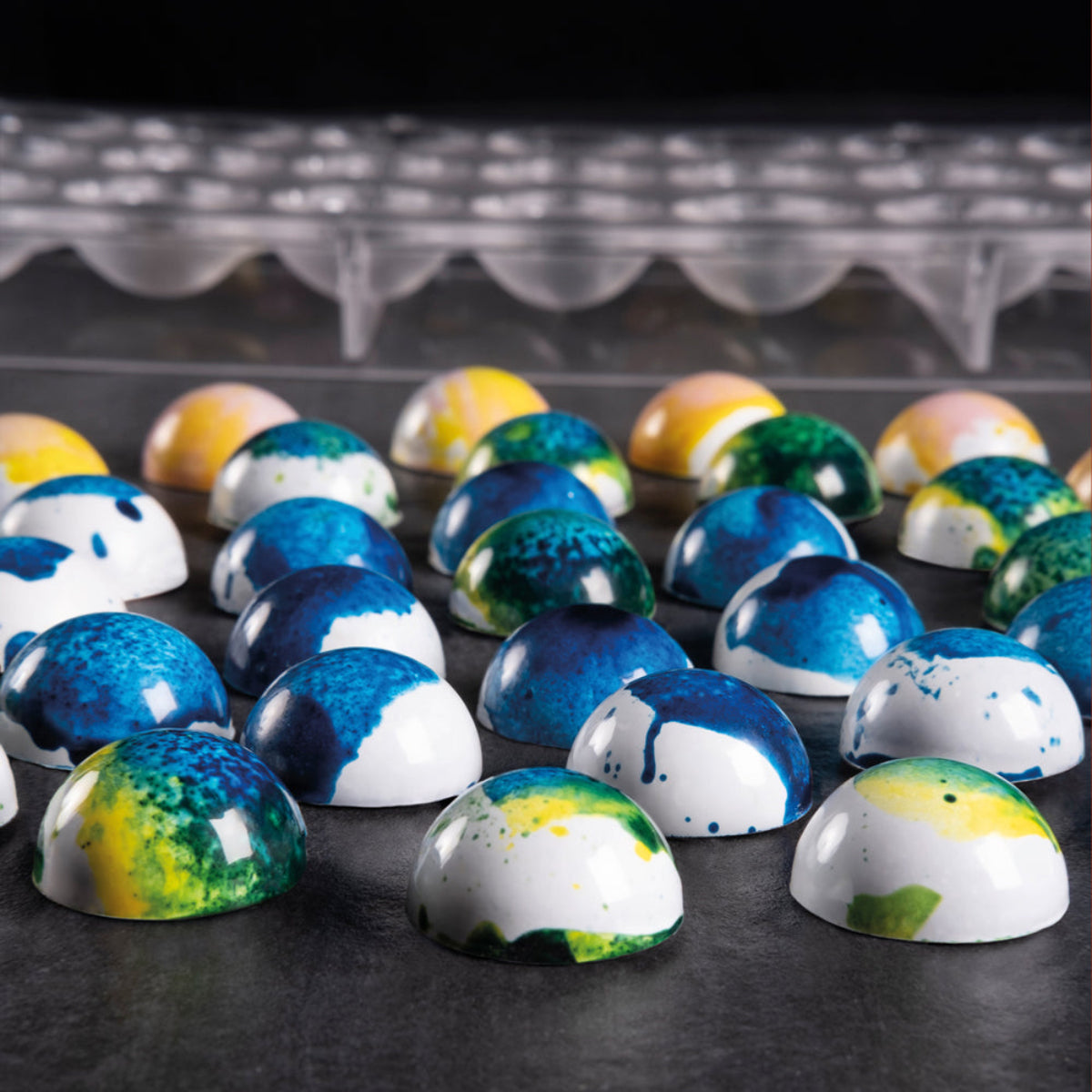
Magnetic molds add one capability the others cannot: a built-in magnet holds a transfer sheet or a decorated plate flat against the base of the cavity. When you cast the chocolate, the colored cocoa butter design or textured pattern transfers cleanly onto the flat face of the finished bonbon — the professional way to brand and decorate pieces. Pavoni (SH-series) and Chocolate World both offer magnetic molds in this collection.
Pair them with transfer sheets and colored cocoa butter to build a signature look across your range.
What High-Gloss, Clean-Release Chocolate Actually Requires
A professional mold is necessary but not sufficient. The single biggest factor in gloss, snap and clean release is tempering — guiding cocoa butter into the right crystal form. Skip it and even the finest mold returns dull, soft chocolate that sticks. The mold gives the chocolate a perfect surface to copy; tempering gives the chocolate the structure that lets it copy cleanly and shrink free.
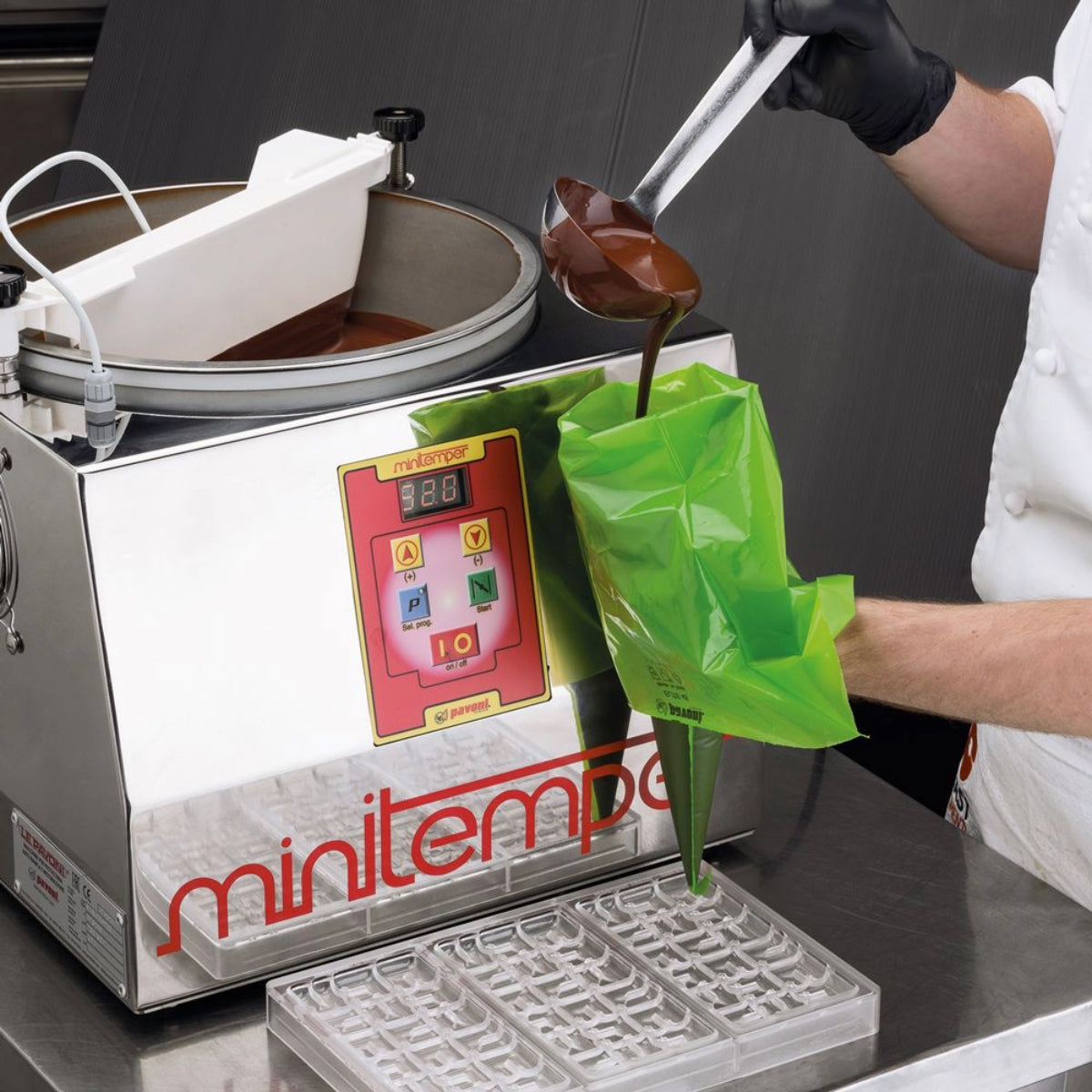
For consistent results, temper on a dedicated tempering machine, adjust fluidity with a touch of cocoa butter, and finish or color with chocolate tools. A cool, dry mold at room temperature — never warm — completes the setup.
Caring for Professional Molds
The gloss of a polycarbonate or Tritan mold lives entirely on its polished inner surface, so protecting that surface is everything. Never use hot water, dishwashers, abrasive sponges or scouring agents — a single scratch is permanent and prints onto every piece afterward.
Wipe the cavities clean with cotton wool or a soft, lint-free cloth; if you must wash, use lukewarm water and mild soap, then dry and buff with cotton. Never touch the inside of a cavity with bare fingers — skin oils leave matte fingerprints on the chocolate. Treated this way, a professional mold keeps casting flawless, glossy pieces for thousands of cycles.
Choosing the Right Mold for the Job
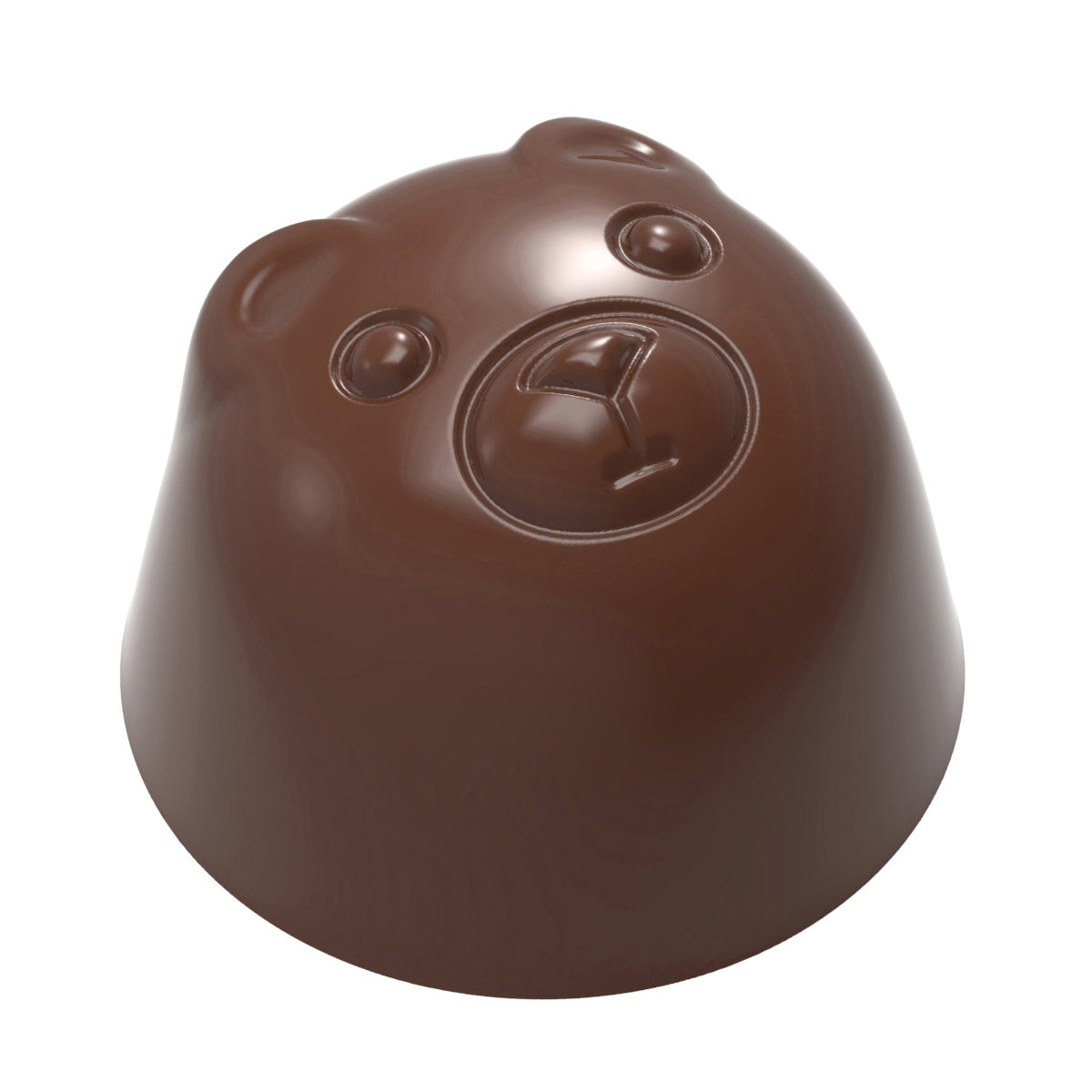
• Bonbons & pralines — small cavities for filled or solid one-bite pieces; choose magnetic when you want a transfer-sheet design on the face
• Bars & tablets — author bar molds (Pavoni Tritan, Chocolate World) for snap-perfect tablets and gifting formats
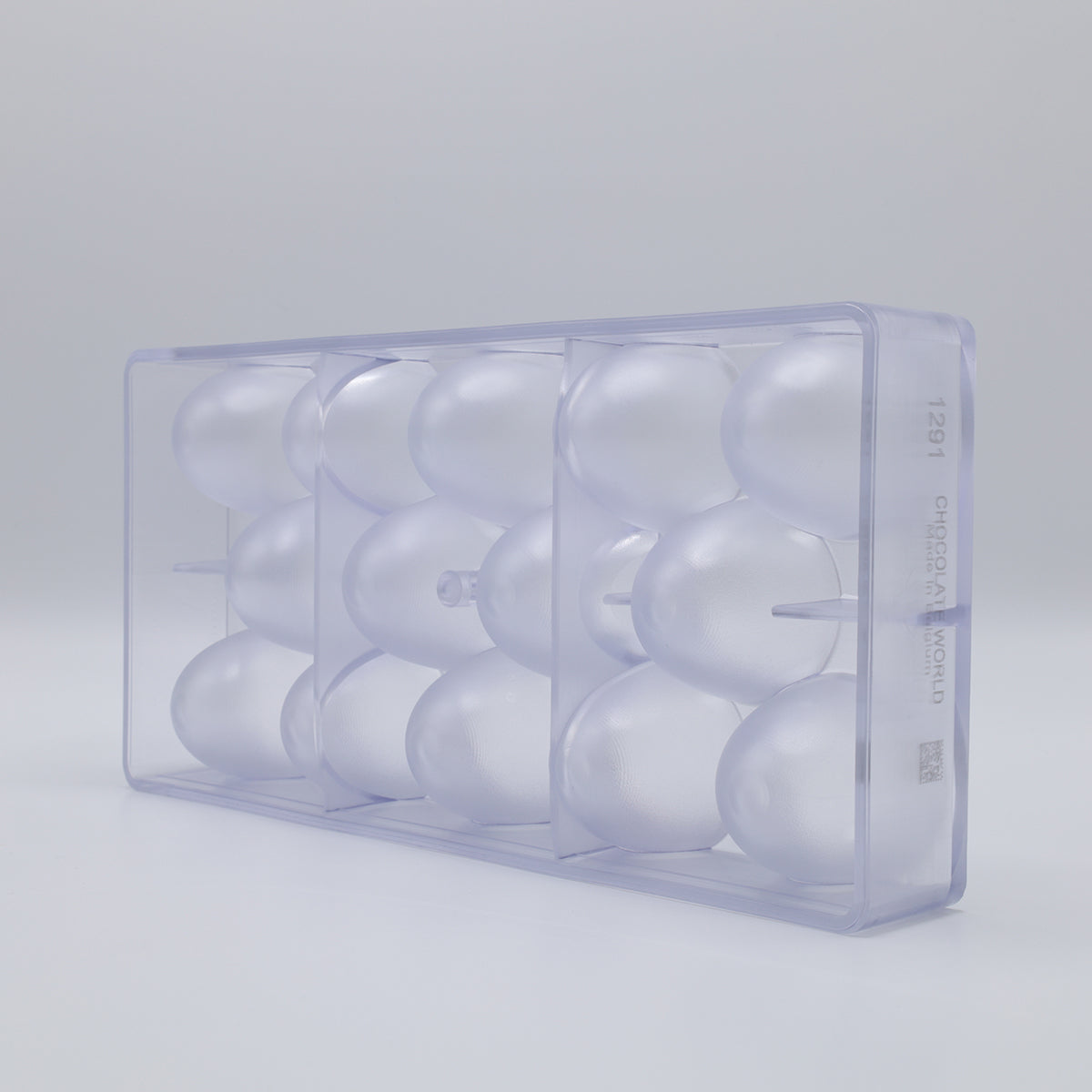
• 3D & seasonal — two-part molds for eggs, figures and holiday shapes, assembled from matching half-cavities
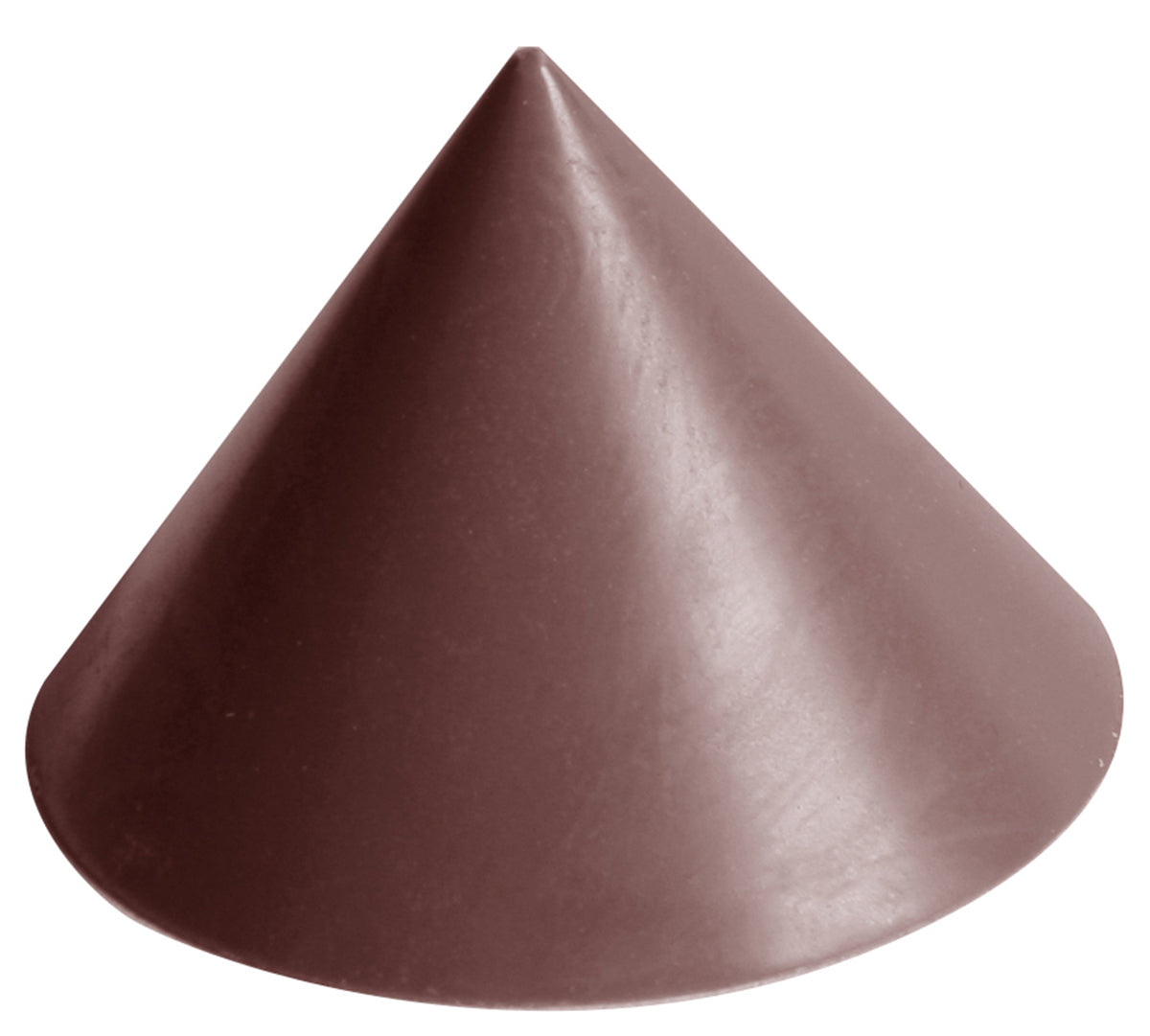
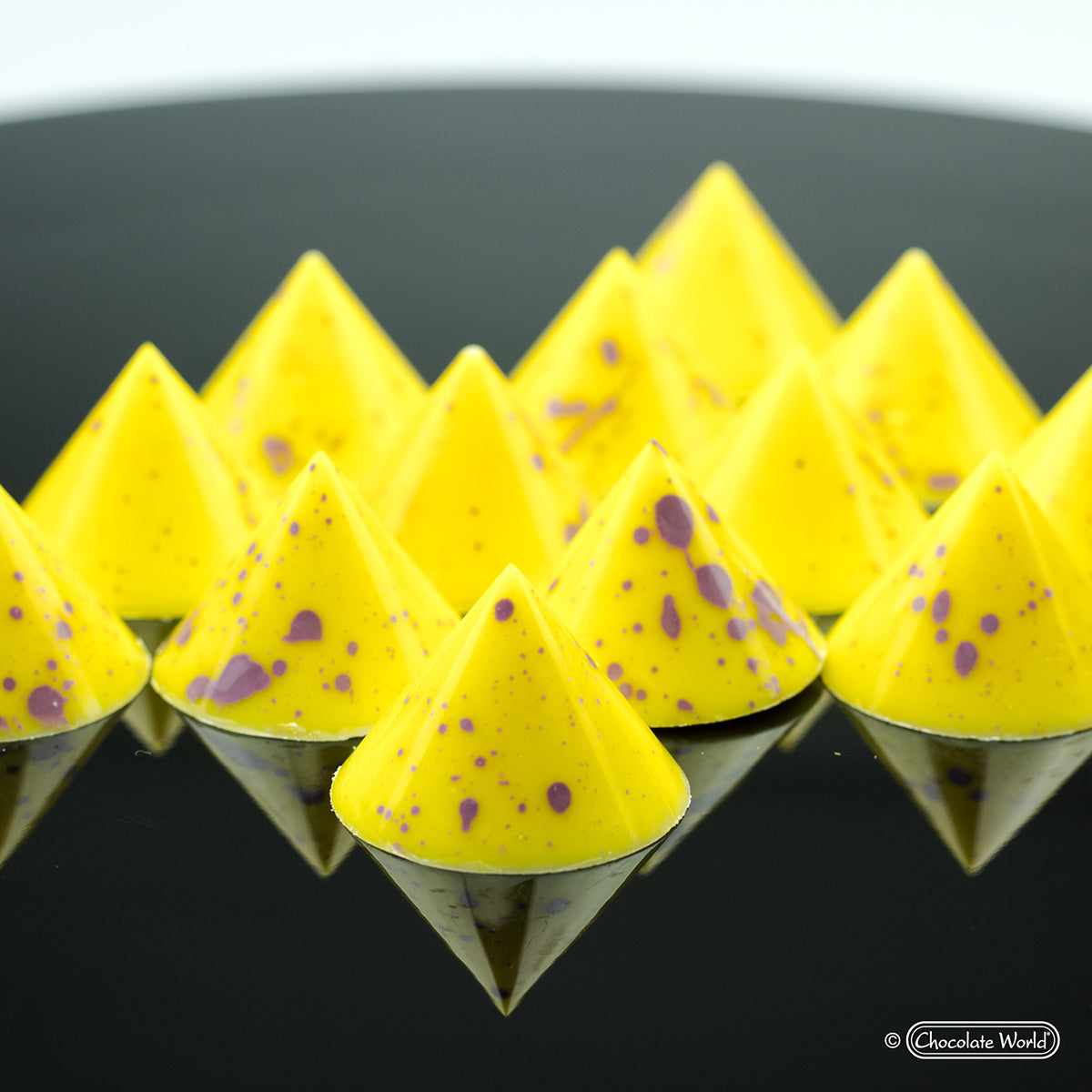
• Shapes & inserts — spheres, domes, cubes, cones and diamonds for plated desserts and showpieces
Frequently Asked Questions
What's the difference between polycarbonate and Tritan molds?
Both are clear, rigid, food-safe and give a high-gloss finish. Tritan is a BPA-free copolyester with higher impact resistance, so it resists cracking under heavy tapping and daily use; polycarbonate is the long-established professional standard. Pavoni uses Tritan for many author bar molds, while Chocolate World and Martellato use polycarbonate.
Why isn't my chocolate shiny, or why does it stick?
Almost always tempering, mold temperature or surface condition — not the mold design. Make sure the chocolate is properly tempered, the mold is clean, dry and at room temperature, and the inner surface is unscratched and free of fingerprints. Let the chocolate fully set and contract before unmolding.
How do I clean chocolate molds without ruining them?
Wipe with cotton wool or a soft cloth and avoid hot water, dishwashers and anything abrasive. If washing is needed, use lukewarm water and mild soap, dry fully, and buff with cotton. Scratches are permanent, so gentle care preserves the gloss.
Can I use these molds with candy melts or compound coating?
Yes — the molds work with any chocolate or compound. True mirror gloss and a crisp snap, though, come from properly tempered couverture; compound coatings set without tempering but give a softer finish.
Do you ship across Canada and to the US?
Yes. We ship across Canada and to the US (DDP), with free shipping on eligible molds, tools and accessories over a minimum order. See our shipping policy for the current threshold and full details.