

Cristallisation du chocolat : les formes cristallines du beurre de cacao et le rôle du tempérage
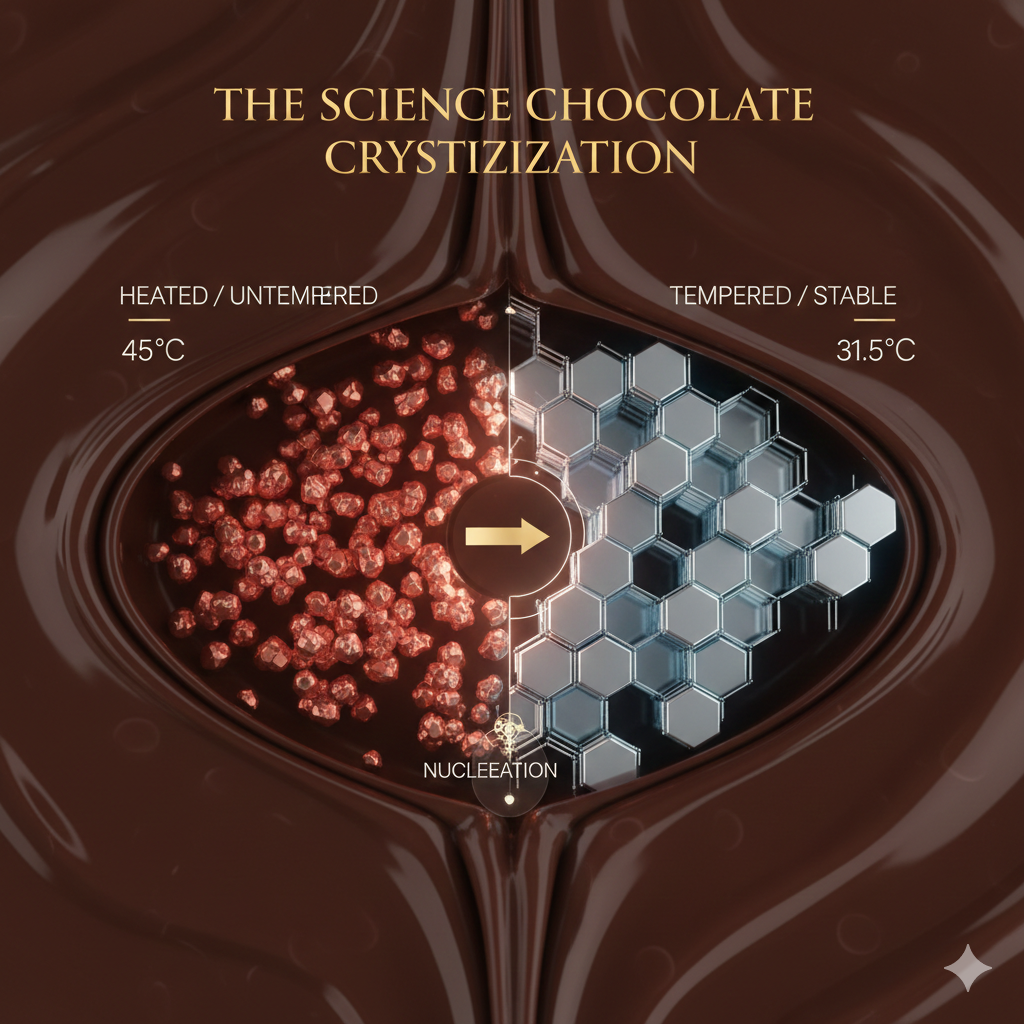
En bref : la cristallisation du chocolat est la façon dont le beurre de cacao devient solide, et elle peut se faire sous six formes cristallines, numérotées de I à VI, chacune avec sa propre plage de fusion. Seule la forme V donne au chocolat sa brillance, son cassant et sa résistance au blanchiment gras : le tempérage consiste donc à orienter le beurre de cacao vers la forme V. On fait fondre tous les cristaux, on refroidit en remuant pour former des cristaux d'ensemencement, puis on réchauffe légèrement pour faire fondre les cristaux instables. Pour notre chocolat noir vénézuélien FCH 55 %, cela signifie fondre à 45–50 °C (113–122 °F), cristalliser à 28–29 °C (82–84 °F) et travailler à 31–32 °C (88–90 °F).
En bref : l'équipement qui contrôle la cristallisation
| Votre besoin | Produit | Prix |
|---|---|---|
| Fondre, ensemencer et maintenir le chocolat à une température donnée | Martellato Meltinchoc Digital 3,6 L | $1,150.00 CAD |
| Tempérer en petites quantités avec des courbes programmables | Pavoni MiniTemper 110 V | $3,350.00 CAD |
| Tempérage de production, jusqu'à 45 kg par jour | Bilait Adam K6 (6 kg) | $10,990.00 CAD |
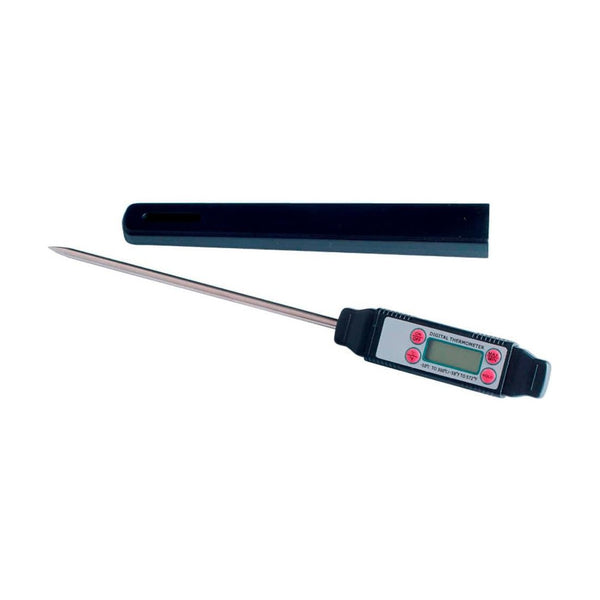
| Vérifier la température du chocolat | Thermomètre numérique Martellato 50T001 | $29.95 CAD |
| Une couverture avec une courbe de tempérage publiée | Chocolat noir FCH 55 %, Venezuela, 10 kg | $299.00 CAD |
Les six formes cristallines du beurre de cacao
Le beurre de cacao est polymorphe : la même matière grasse peut s'organiser en six structures cristallines différentes, et chacune fond à une température différente. Les formes I et II sont instables et se transforment facilement en formes supérieures ; les formes III, IV et V sont métastables, assez stables pour durer longtemps ; la forme VI est la seule forme thermodynamiquement stable.
| Forme | Autre nom | Plage de fusion | Dans le chocolat |
|---|---|---|---|
| I | sub-α | 13,0–18,0 °C (55–64 °F) | Instable |
| II | α | 17,1–24,0 °C (63–75 °F) | Instable |
| III | β′2 | 22,4–28,0 °C (72–82 °F) | Métastable |
| IV | β′1 | 21,0–33,0 °C (70–91 °F) | Métastable |
| V | β2 | 30,0–34,5 °C (86–94 °F) | La cible du tempérage |
| VI | β1 | 33,5–38,5 °C (92–101 °F) | La plus stable ; associée au blanchiment gras et à une texture cassante |
Les plages proviennent de la revue de Ghazani, Donnelly et Marangoni (2025). La littérature plus ancienne donne souvent un seul point de fusion par forme : 17,3, 23,3, 25,5, 27,5, 33,8 et 36,3 °C pour les formes I à VI, comme le résument Barišić et ses collègues (2019).
Pourquoi la forme V est le cristal recherché
La forme V fond près de la température du corps, à environ 30,0–34,5 °C (86–94 °F), et c'est elle qui donne au chocolat son cassant caractéristique, sa texture lisse et sa résistance au blanchiment gras. C'est pourquoi il a été établi il y a des décennies que, parmi les six formes, seule la forme V est souhaitable dans le chocolat, et pourquoi le tempérage est conçu pour cristalliser le beurre de cacao en forme V avec le bon nombre, la bonne forme et la bonne taille de cristaux.
Seule une petite partie du beurre de cacao doit cristalliser. Peter Greweling, dans Pastry Arts Magazine, décrit le tempérage comme la précristallisation d'une petite quantité, environ 1 %, du beurre de cacao fondu ; Ghazani et ses collègues indiquent environ 2 à 5 % de cristaux de forme V dans un chocolat bien tempéré. Ces cristaux d'ensemencement guident ensuite le reste du beurre de cacao vers la forme V pendant que le chocolat fige.
Comment le tempérage contrôle la cristallisation
Le tempérage se fait en trois paliers de température. Avec le chocolat noir comme exemple, Ghazani et ses collègues le décrivent ainsi :
- Fondre : chauffer au-delà de 50 °C (122 °F), souvent jusqu'à 60 °C (140 °F), jusqu'à ce que tous les cristaux soient fondus.
- Précristalliser : refroidir en remuant de façon contrôlée vers 27–29 °C (81–84 °F), pour former des cristaux d'ensemencement.
- Réchauffer : remonter doucement vers 31–32 °C (88–90 °F), juste sous le point de fusion de la forme V, pour éliminer les cristaux instables, surtout de forme IV, sans faire fondre les cristaux de forme V.
Ajouter du chocolat déjà tempéré, qui contient des cristaux de forme V, s'appelle l'ensemencement : cela accélère la formation des bons cristaux et rend le résultat plus régulier. Chaque fabricant de chocolat publie sa propre courbe, et les chiffres varient légèrement :
| Source | Fonte | Cristallisation | Travail |
|---|---|---|---|
| Chocolat noir FCH 55 %, Venezuela (fiche produit) | 45–50 °C (113–122 °F) | 28–29 °C (82–84 °F) | 31–32 °C (88–90 °F) |
| Programmes du Meltinchoc Digital (Martellato) | 45 °C (113 °F) | Ensemencement par ajout de chocolat | Noir 31 °C (88 °F), lait 29 °C (84 °F), blanc 28 °C (82 °F) |
| Greweling (Pastry Arts Magazine) | Non indiqué | Non indiqué | Noir environ 32 °C (90 °F) ; lait et blanc environ 30 °C (87 °F) |
Partez toujours de la courbe imprimée sur la fiche technique de votre chocolat ; le tableau montre à quel point elle peut varier d'un produit à l'autre.
Des machines qui cristallisent pour vous
Une machine maintient les températures pour que votre équipe n'ait pas à le faire. Chacune correspond à une étape différente de la production :
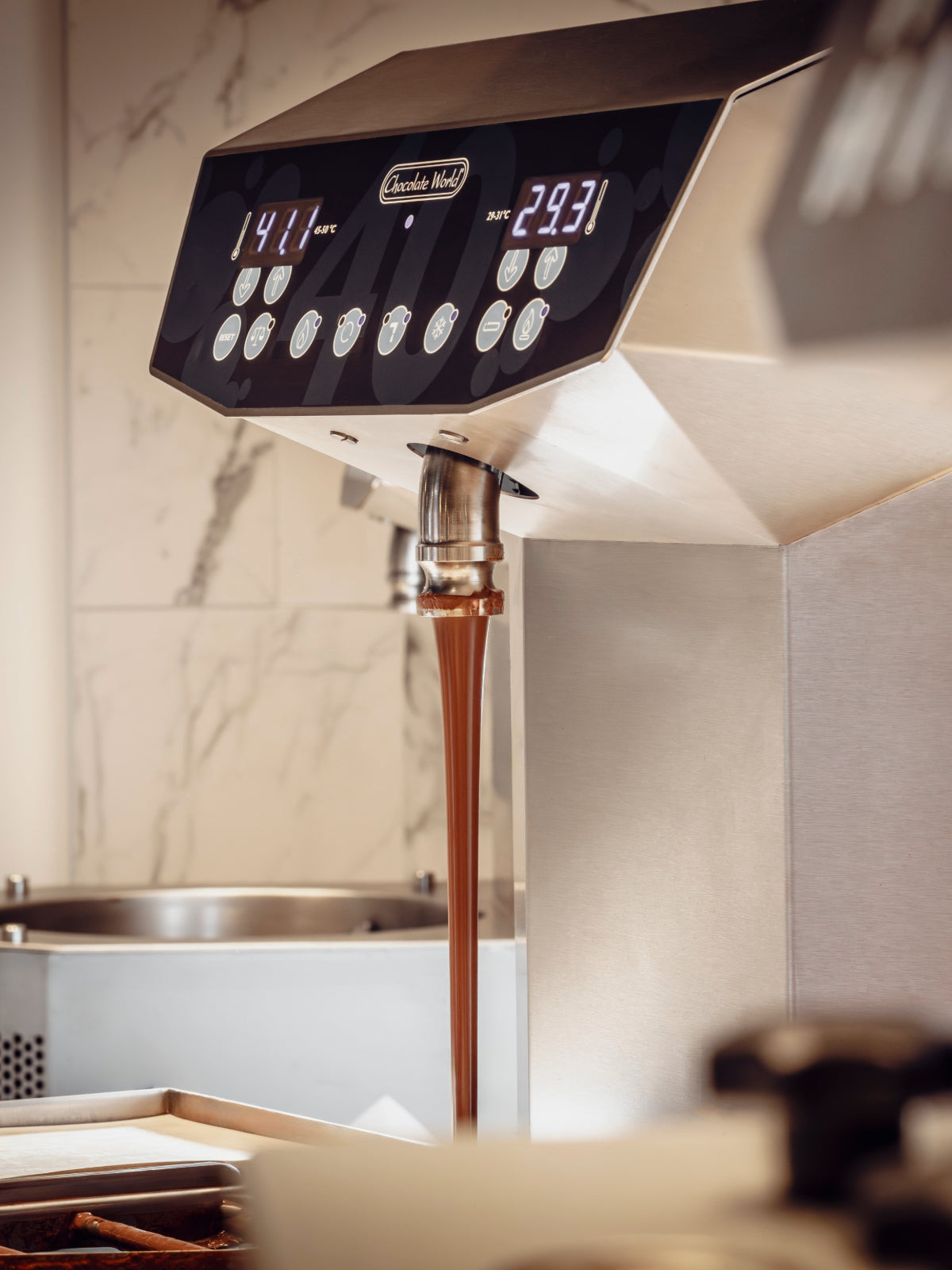
- Martellato Meltinchoc Digital : fait fondre le chocolat à 45 °C (113 °F), signale le moment d'ensemencer en ajoutant du chocolat, puis abaisse la température jusqu'au point de tempérage du programme noir, lait ou blanc et la maintient. Il émet un signal toutes les 10 minutes pour rappeler de remuer.
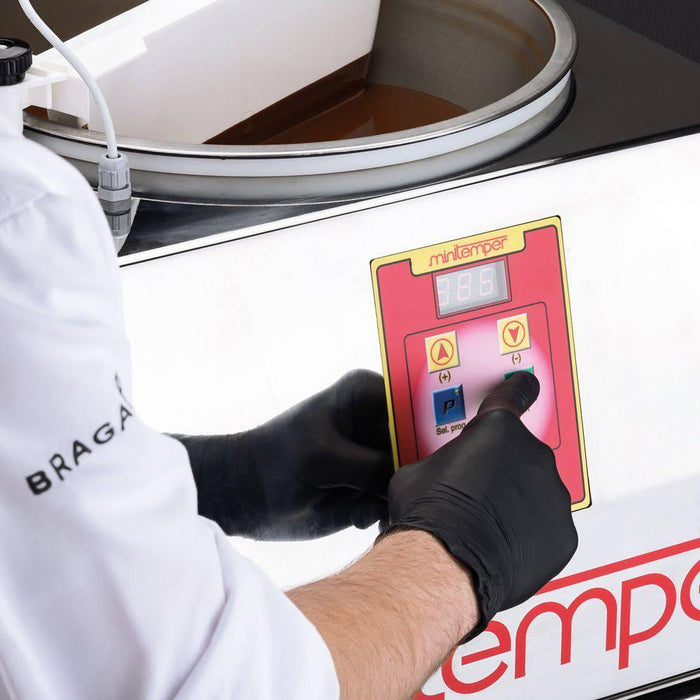
- Pavoni MiniTemper : Pavoni indique qu'elle garde le chocolat tempéré pendant plusieurs heures grâce à ses programmes personnalisables. Notre fiche produit indique 5 programmes, une plage de 20 à 60 °C (68–140 °F) par pas de 0,5 °C, et des bols interchangeables pour les changements de chocolat.
- Bilait Adam K6 : pour la production, Bilait annonce pour sa capacité de 6 kg 20 kg de chocolat tempéré en 4,5 heures, jusqu'à 45 kg par jour, avec une gestion automatique de tout type de chocolat.
- Voir le Meltinchoc Digital 3,6 L → $1,150.00 CAD
- Voir le Meltinchoc Digital 6 L → $1,259.99 CAD
- Voir la Pavoni MiniTemper 110 V → $3,350.00 CAD
- Voir la Bilait Adam K6 → $10,990.00 CAD
Voir toutes les tempéreuses, dont Bilait →
Comment vérifier que le chocolat a bien cristallisé
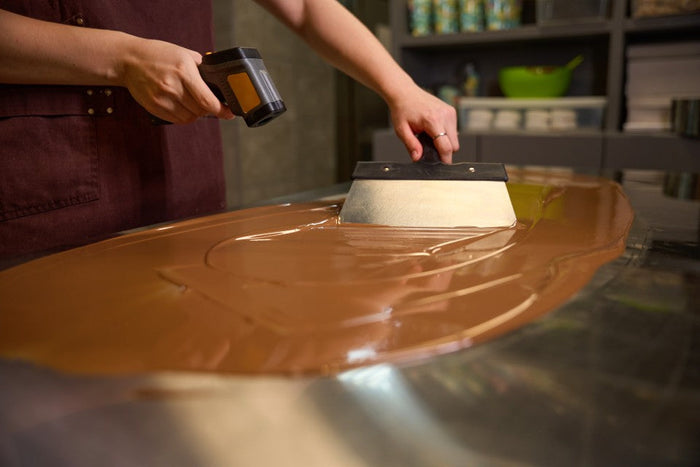
Testez avant de mouler : un test rapide sauve un lot entier. Le test de tempérage de Greweling est simple : trempez une spatule coudée dans le chocolat et regardez-le figer. Un chocolat noir bien tempéré doit figer en environ sept minutes, sans stries ni texture granuleuse ; le chocolat au lait et le chocolat blanc prennent un peu plus de temps.
- Si le test échoue, Greweling explique que le problème vient d'un ensemencement insuffisant : ajoutez du chocolat d'ensemencement, ou tablez un peu plus. Ne réchauffez pas le chocolat, car cela ferait fondre les cristaux déjà présents.
- Si le chocolat est beaucoup plus épais qu'à l'état fondu, il y a trop de cristaux : un chocolat bien tempéré ne doit pas être beaucoup plus épais qu'un chocolat non tempéré. Faites fondre une partie des cristaux avec précaution, en en gardant assez pour ensemencer.
Un thermomètre précis est ce qui rend la courbe reproductible :
- Voir le thermomètre numérique Martellato 50T001 → $29.95 CAD
- Voir le thermomètre infrarouge Martellato 50T002 → $76.50 CAD
Pour une méthode pas à pas, consultez notre guide comment tempérer le chocolat, et pour les solutions, résoudre les problèmes de tempérage.
Quand la cristallisation tourne mal : le blanchiment gras
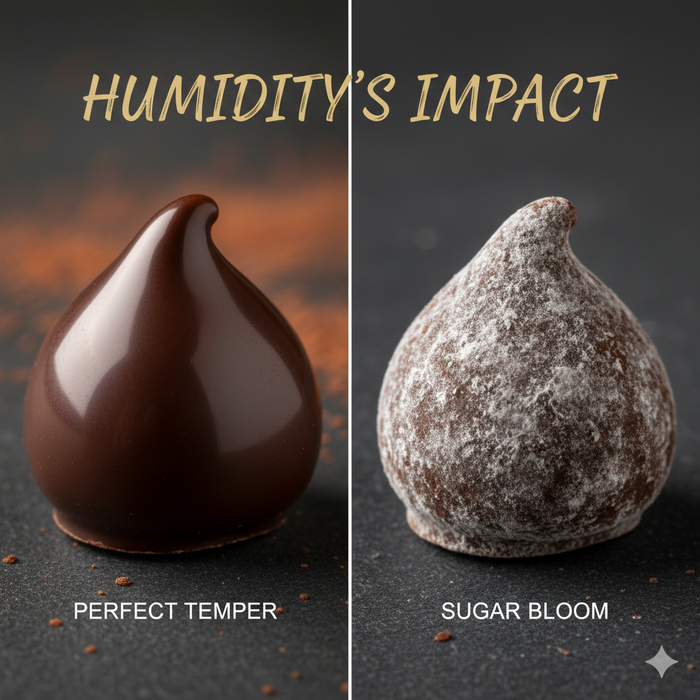
Le blanchiment gras, cette couche blanchâtre qui remonte à la surface du chocolat, est un problème de cristallisation : Bilait le relie à une cristallisation incorrecte, avec les graisses qui remontent en surface. Ghazani et ses collègues classent les principaux types selon leur cause :
| Type de blanchiment | Ce qui s'est passé |
|---|---|
| Type 2-A | Le chocolat a figé sans cristaux de forme V : chocolat non tempéré |
| Type 2-B | Des cristaux de forme V étaient présents, mais en quantité insuffisante : chocolat mal tempéré |
| Type 3 | Fusions partielles et recristallisations répétées, dues à de fortes variations de température pendant le tempérage ou à un mauvais stockage, qui favorisent la forme VI |
Même un chocolat bien tempéré peut blanchir avec le temps, lorsque la forme V se transforme lentement en forme VI, plus stable. Barišić et ses collègues notent que la matière grasse laitière freine le blanchiment gras et retarde ce changement. Pour la conservation, Bilait indique 12–18 °C (54–64 °F) avec une humidité d'environ 45 % comme valeurs optimales.
Pour distinguer le blanchiment de la moisissure et le corriger, lisez chocolat blanchi ou moisi et comment éviter le blanchiment du chocolat.
Au-delà de la couverture : le beurre de cacao coloré
Le beurre de cacao coloré doit lui aussi être tempéré. La consigne de Martellato pour ses beurres de cacao colorés est brève : tempérer le beurre de cacao avant chaque utilisation.
Voir les beurres de cacao colorés →
Comment l'IA peut aider votre production
Collez les courbes de tempérage de tous vos chocolats dans un assistant d'IA et demandez-lui une fiche de référence par chocolat, avec les températures de fonte, de cristallisation et de travail en °C et en °F. Demandez-lui un registre de températures pour chaque lot, avec l'heure, les températures à chaque étape, le résultat du test de tempérage et l'opérateur, afin de remonter un problème de blanchiment jusqu'au lot d'origine. Il peut aussi transformer le test et les corrections de Greweling en une liste de contrôle d'une page pour le poste de travail.
L'IA organise l'information ; la dégustation et la décision finale restent entre les mains de votre chef.
Équipement de tempérage et chocolat chez Zucchero Canada
Nous sommes distributeur autorisé de Martellato et Pavoni Italia, et distributeur exclusif de Bilait au Canada. Chacun a un rôle distinct :
- Martellato Meltinchoc Digital pour fondre, ensemencer et maintenir, de 3,6 L à 13,7 L. Les fondoirs de table Martellato, Mol d'Art et Bilait sont livrés avec une spatule offerte.
- Pavoni MiniTemper pour tempérer en petites quantités avec des programmes.
- Tempéreuses Bilait Adam pour les volumes de production.
- Chocolat vénézuélien : la couverture Bassan Sur del Lago 71 % ($273.00 CAD le sac de 5 kg) et, pour les chocolatiers bean-to-bar qui tempèrent leur propre chocolat, les fèves de cacao Sur del Lago ($80.00 CAD les 1,5 kg).
Pour les techniques de tempérage, d'enrobage et de glaçage expliquées pas à pas, Chocolate, 6e édition, de Ramon Morató ($160.00 CAD) est la référence de notre rayon.
Vous équipez une chocolaterie, une boulangerie ou un hôtel ? Contactez notre équipe, ou appelez le 587-774-8873 (sans frais 877-741-8251). Les commandes de plus de 500 $ CA obtiennent 5 % de rabais automatiquement à la caisse.
Tempéreuses | Fondoirs à chocolat | Thermomètres | Chocolat tempéré ou non tempéré | Viscosité du chocolat
Cet article est fourni à titre informatif seulement. Chaque entreprise est différente : tirez vos propres conclusions selon vos attentes, votre budget et vos objectifs, et consultez des experts qualifiés avant de décider ou d'investir.
Sources : Ghazani S.M., Donnelly M.-E., Marangoni A.G., « Chocolate Tempering: A Perspective », Crystal Growth & Design 25 (2025) 2764–2783 ; Barišić V. et al., « The Chemistry behind Chocolate Production », Molecules 24 (2019) 3163 ; Greweling P., « Tempering Chocolate », Pastry Arts Magazine (2024) ; Martellato, « Hand book of use and maintenance » du Digital Meltinchoc ; Martellato, catalogue Food Colours ; Pavoni Italia, page produit MiniTemper ; Bilait, catalogue 2026 (Adam K6, armoire réfrigérée à chocolat) ; fiches produits de Zucchero Canada.
Good to know
Frequently asked questions
Qu'est-ce que la cristallisation du chocolat ?
C'est la façon dont le beurre de cacao du chocolat devient solide. Le beurre de cacao peut cristalliser sous six formes, de I à VI, chacune avec sa propre plage de fusion. Le tempérage l'oriente vers la forme V, celle qui donne la brillance, le cassant et la résistance au blanchiment gras.
Quelles sont les formes cristallines du beurre de cacao ?
Six formes : I (sub-α, 13,0–18,0 °C), II (α, 17,1–24,0 °C), III (β′2, 22,4–28,0 °C), IV (β′1, 21,0–33,0 °C), V (β2, 30,0–34,5 °C) et VI (β1, 33,5–38,5 °C), selon la revue de 2025 de Ghazani, Donnelly et Marangoni. Les formes I et II sont instables, les formes III à V sont métastables, et la forme VI est la plus stable et est associée au blanchiment gras.
À quelle température fondent les cristaux de forme V ?
À environ 30,0–34,5 °C (86–94 °F), près de la température du corps. C'est pourquoi le tempérage réchauffe le chocolat vers 31–32 °C (88–90 °F) : juste sous le point de fusion de la forme V, pour que les cristaux instables fondent et que les cristaux de forme V survivent.
Pourquoi mon chocolat tempéré est-il mou, strié ou terne ?
En général, il n'y avait pas assez de cristaux de forme V pour l'ensemencement. Le test de Peter Greweling : trempez une spatule coudée dans le chocolat ; le chocolat noir doit figer en environ sept minutes, sans stries ni grain. Si le test échoue, ajoutez du chocolat d'ensemencement ou tablez un peu plus, et ne réchauffez pas le chocolat, ce qui ferait fondre les cristaux déjà présents.
Un chocolat bien tempéré peut-il quand même blanchir ?
Oui. Avec le temps, la forme V peut se transformer en forme VI, plus stable, qui est liée au blanchiment gras, et les variations de température pendant le tempérage ou le stockage favorisent ce passage. La matière grasse laitière freine le blanchiment gras et retarde ce changement. Bilait indique 12–18 °C (54–64 °F) et une humidité d'environ 45 % comme valeurs optimales de conservation du chocolat.
Les tempéreuses et les fondoirs donnent-ils droit à la livraison gratuite ou à des rabais ?
Les machines sont exclues de la livraison gratuite. Les commandes de plus de 500 $ CA obtiennent 5 % de rabais automatiquement à la caisse, et les fondoirs de table Martellato, Mol d'Art et Bilait sont livrés avec une spatule offerte. Les clients qui ont acheté leur machine chez Zucchero obtiennent 15 % de rabais sur les pièces de rechange d'origine avec le code PARTS15.
Shop this article
Products mentioned in this guide
 Martellato"Digital Meltinchoc" Fondoir à chocolat 3.6 L - Racloir offert & 1 kg de chocolat !$1,150.00 CADView product →
 Pavoni ItaliaTempéreuse à chocolat Pavoni MiniTemper 110V$3,350.00 CADView product →
 BilaitBilait Adam K6 — 6 kg Tabletop Chocolate Tempering Machine$10,990.00 CADView product →
 MartellatoThermomètre numérique pour chocolat 50T001$29.95 CADView product →
For professionals
Equipping a chocolate shop, bakery or kitchen?
Tell us what you produce and how much. We will recommend the right machine, moulds and ingredients, and send you a quote.
For home bakers
Professional tools for your own kitchen
The same European moulds, tools and ingredients the professionals use.
5% off orders over $500 CAD, applied automatically at checkout.
Keep reading

Laisser un commentaire
Tous les commentaires sont modérés avant d'être publiés.
Ce site est protégé par hCaptcha, et la Politique de confidentialité et les Conditions de service de hCaptcha s’appliquent.