
Comment faire des cœurs en chocolat avec un moule en silicone, pas à pas
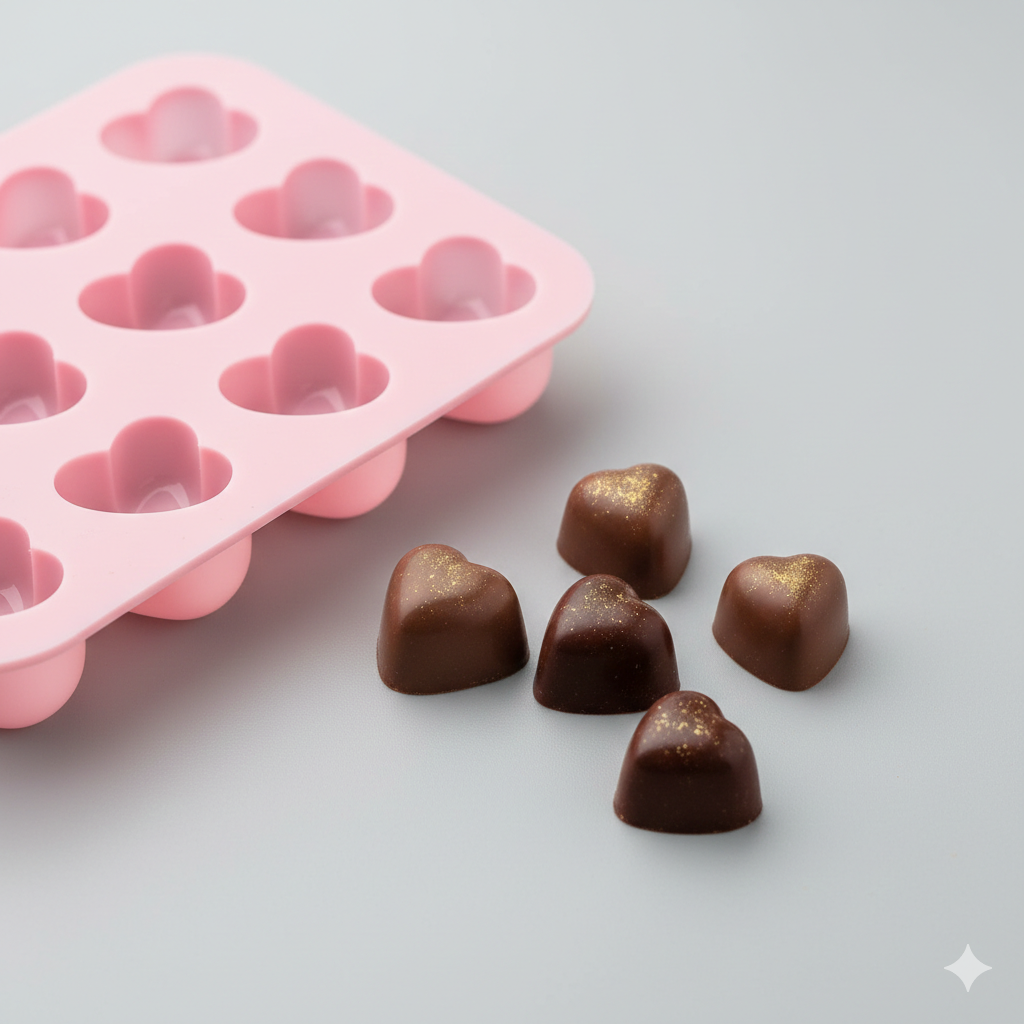
Réponse courte : tempérez votre chocolat, étalez-le dans un tapis de cœurs en silicone comme les Pavodecor Hearts de Pavoni (2 mm de profondeur), raclez à niveau, laissez cristalliser à 16–18 °C (61–64 °F), puis pliez le silicone pour libérer des cœurs en chocolat fins et réguliers. Pour des bonbons en cœur fourrés et brillants, utilisez plutôt un moule à pralines rigide en Tritan de Pavoni ; pour des desserts en cœur à la mousse, congelez-les dans un moule Pavoflex en cœur et finissez avec un spray velours. Ci-dessous : quel moule pour quel cœur, les températures et chaque étape.
Quel moule pour quel cœur en chocolat
Choisissez le moule selon le cœur à réaliser : tapis en silicone pour les décors fins, moules à pralines rigides pour les bonbons brillants, moules en silicone profonds pour les desserts.
| Vous voulez faire | Moule Pavoni | Dimensions (Pavoni) | Prix |
|---|---|---|---|
| Décors fins en cœur pour monoportions | Pavodecor Hearts 2 PR008S | 15 cœurs, Ø 50 × 2 mm | $40.50 CAD |
| Longues bandes de cœurs pour éclairs et barres | Pavodecor Hearts 3 PR009S | 10 bandes, 120 × 27 × 2 mm | $40.50 CAD |
| Bonbons en cœur fourrés et brillants | Iconic Heart PC55FR (Tritan) | 21 empreintes, 29 × 30 × 16 mm, environ 10 g | $39.95 CAD |
| Bonbons qui s'assemblent en cœurs entiers | Heart Design PC50FR de Davide Comaschi (Tritan) | 15 empreintes en 3 formes qui composent 5 cœurs entiers, environ 13 g | $39.95 CAD |
| Portions de mousse en cœur et inserts de tartelettes | Heart Pavoflex PX3206S de Gianluca Fusto | 8 empreintes, 65 × 60 × 21 mm, environ 46 ml | $40.50 CAD |
| Un entremets entier en cœur | Lovely KE060S d'Antonio Bachour | 200 × 126 × 50 mm, environ 1 000 ml | $46.99 CAD |
Voir tous les moules à chocolat Pavoni →
Pourquoi tempérer le chocolat, même dans le silicone
Le silicone libère le cœur parce qu'il plie ; le tempérage décide si le cœur sera brillant, cassant et s'il se conservera. KREA Swiss explique que le tempérage oriente le beurre de cacao vers sa forme cristalline stable (Bêta-5), qui donne une texture lisse, une surface brillante, une cassure nette, une plus longue conservation avec beaucoup moins de risque de blanchiment, et une fonte à la température du corps. Un chocolat mal tempéré reste mou ou blanchit, parfois des semaines plus tard. Lonchampt et Hartel ajoutent qu'un chocolat bien tempéré se contracte en cristallisant, ce qui l'aide à sortir du moule.
Utilisez les températures de travail de votre couverture. Bassan, le fabricant canadien du Sur del Lago 71 % que nous proposons, cite les moules en silicone parmi les moules compatibles et donne cette méthode :
| Étape | Bassan Sur del Lago 71 % |
|---|---|
| Fonte | 50 °C (122 °F) maximum |
| Tempérage (température de travail) | 30–32 °C (86–90 °F) |
| Cristallisation après moulage | 16–18 °C (61–64 °F) |
| Atelier et conservation | 16–20 °C (61–68 °F), humidité relative inférieure à 50 % |
| Utilisation après tempérage | Dans les 4 heures |
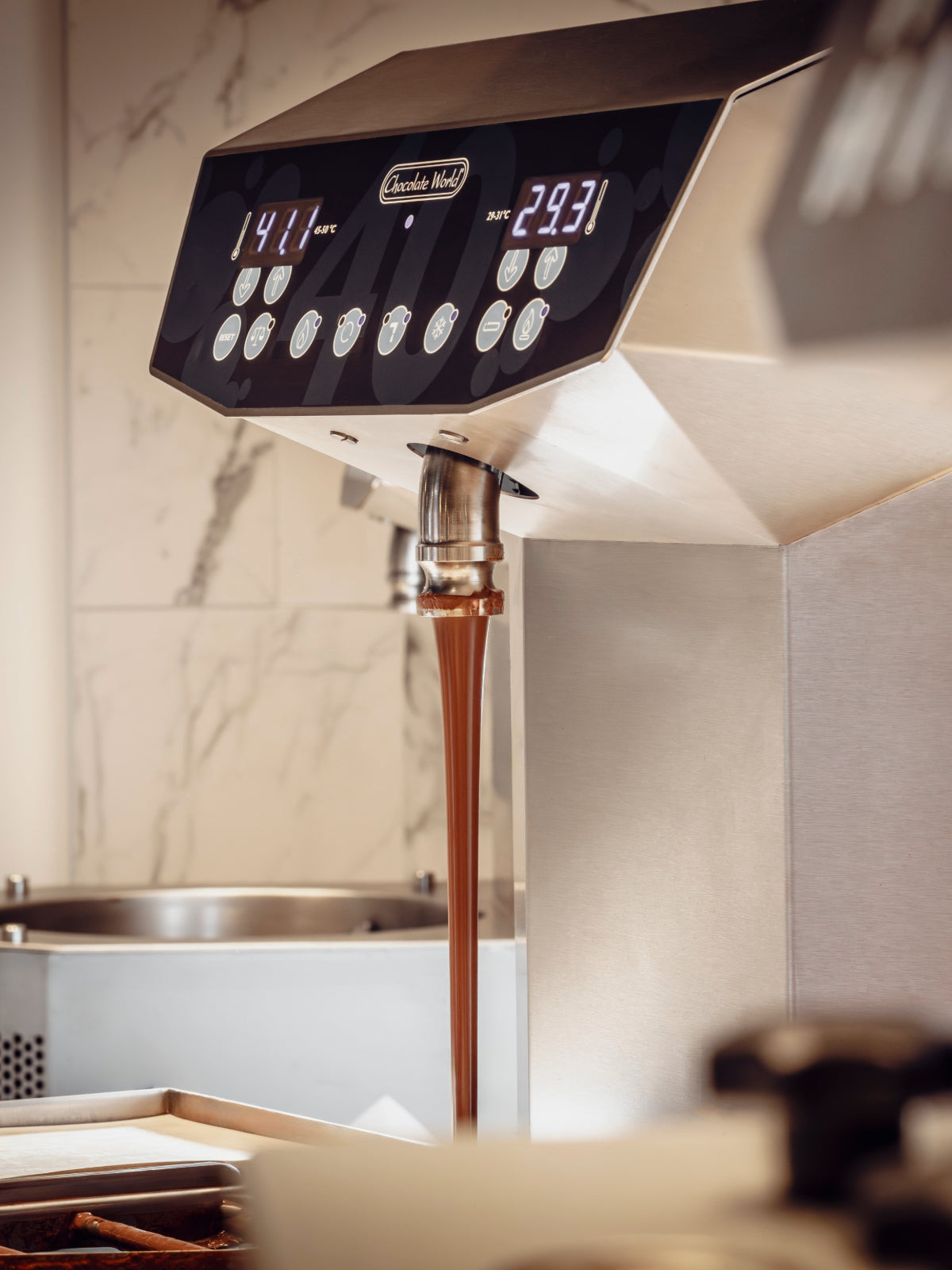
Vous débutez avec le tempérage ? Notre guide du tempérage du chocolat présente les méthodes. Si vous faites des cœurs chaque semaine, la Pavoni MiniTemper $3,350.00 CAD enregistre vos courbes de température dans cinq programmes, chacun avec des étapes de fonte, de cristallisation et de durcissement.
Pas à pas : des cœurs en chocolat fins pour décorer
Un tapis Pavodecor donne des cœurs plats de 2 mm d'épaisseur en un seul passage. Pavoni conçoit ces tapis pour le chocolat ou la pâte à cigarette, et ils ont été conçus en collaboration avec Frank Haasnoot pour décorer éclairs, monoportions et entremets.
- Préparez le tapis. Vérifiez qu'il est propre et parfaitement sec, et posez-le à plat sur une plaque.
- Colorez d'abord (facultatif). Pour des cœurs rouges ou roses, appliquez du beurre de cacao coloré au pinceau dans les empreintes et laissez figer avant d'ajouter le chocolat (voir la section couleur ci-dessous).
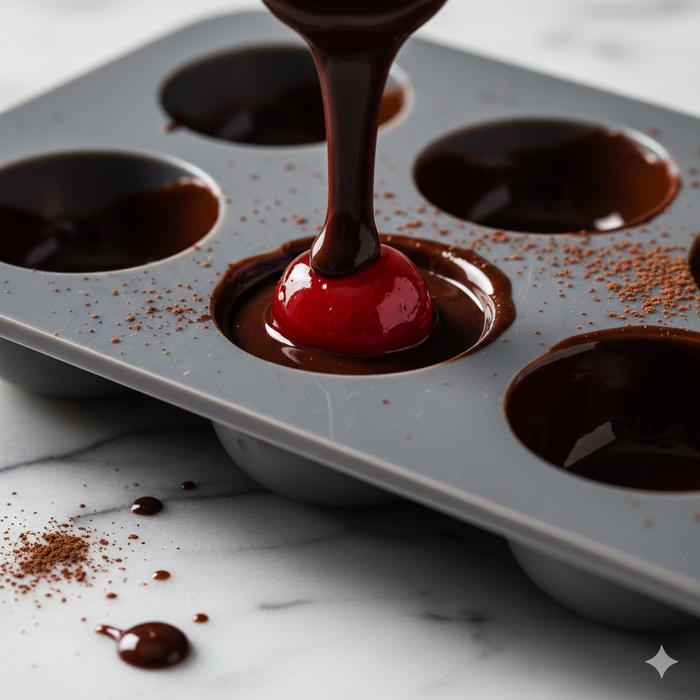
- Remplissez. Versez le chocolat tempéré sur le tapis et étalez-le dans les empreintes avec une spatule.
- Raclez. Raclez la surface pour que le chocolat ne reste que dans les cœurs ; les bords seront nets.
- Laissez cristalliser. Laissez la plaque à 16–18 °C (61–64 °F), la plage de cristallisation de Bassan, jusqu'à ce que le chocolat soit bien pris.
- Démoulez. Décollez doucement le tapis, ou pliez-le, et soulevez les cœurs. Tenez-les par les bords pour éviter les traces de doigts.
Utilisez-les sur des gâteaux mousse, des entremets et des éclairs ; les bandes PR009S sont dimensionnées pour les éclairs.
Bonbons en cœur brillants : prenez un moule rigide
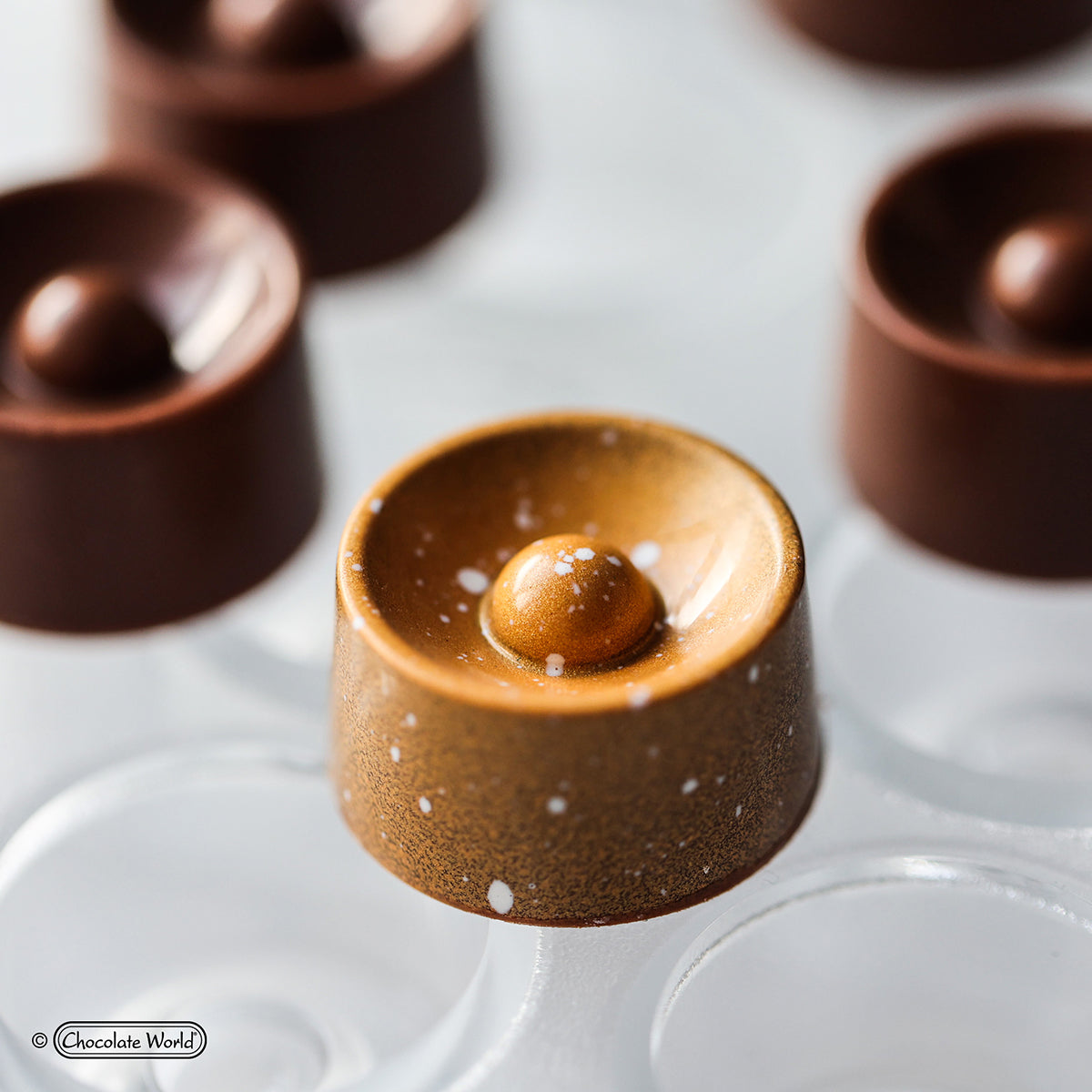
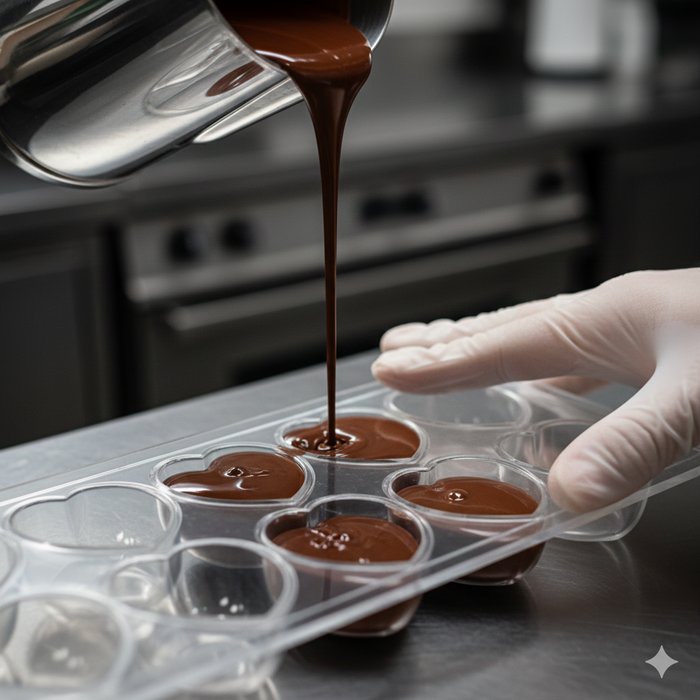
Pour un bonbon en cœur fourré à la brillance miroir, choisissez un moule à pralines rigide. Les moules à pralines en cœur PC55FR et PC50FR de Pavoni sont en Tritan sans BPA, et Pavoni les décrit comme donnant une finition très brillante. La méthode est celle du moulage en coque : remplir de chocolat tempéré, vider pour laisser une coque, laisser figer, pocher le fourrage, fermer et démouler.
Pour la méthode complète, suivez notre guide pas à pas des bonbons de chocolat brillants et notre guide du moulage du chocolat.
Desserts en cœur dans des moules en silicone
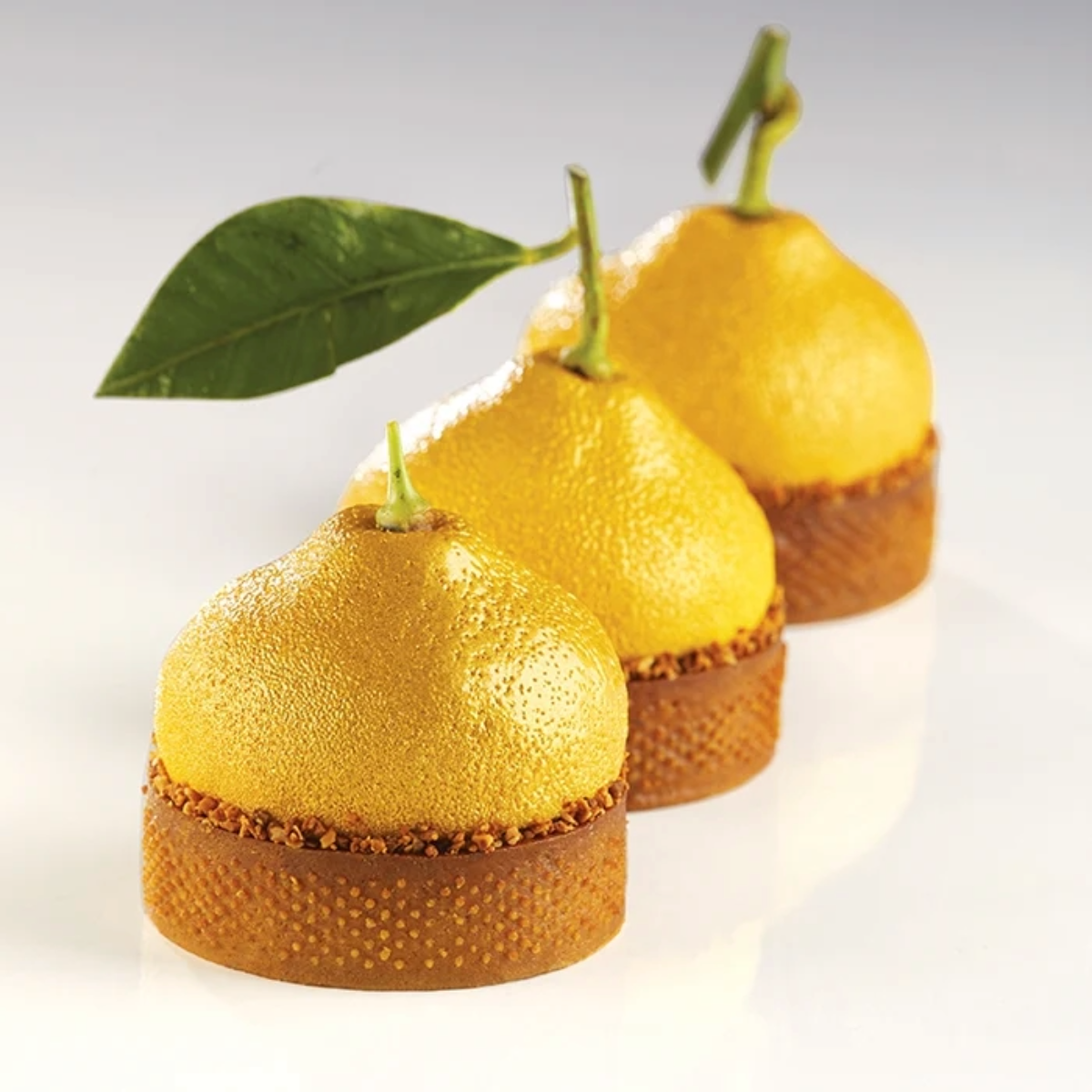
Les moules profonds Pavoflex et Pavocake sont conçus pour les mousses, les entremets et les portions cuites. La mise en œuvre de Pavoni pour le PX3206S : verser l'appareil ou la pâte, taper pour chasser les bulles, congeler (mousse, semifreddo) ou cuire jusqu'à 250 °C (482 °F), laisser prendre complètement, puis démouler et finir. Pavoni associe le PX3206S à son cercle à tarte en cœur XF14 (75 × 70 × 20 mm) pour des tartelettes en cœur avec un insert assorti.
- Voir le cercle à tarte en cœur XF14 → $23.50 CAD
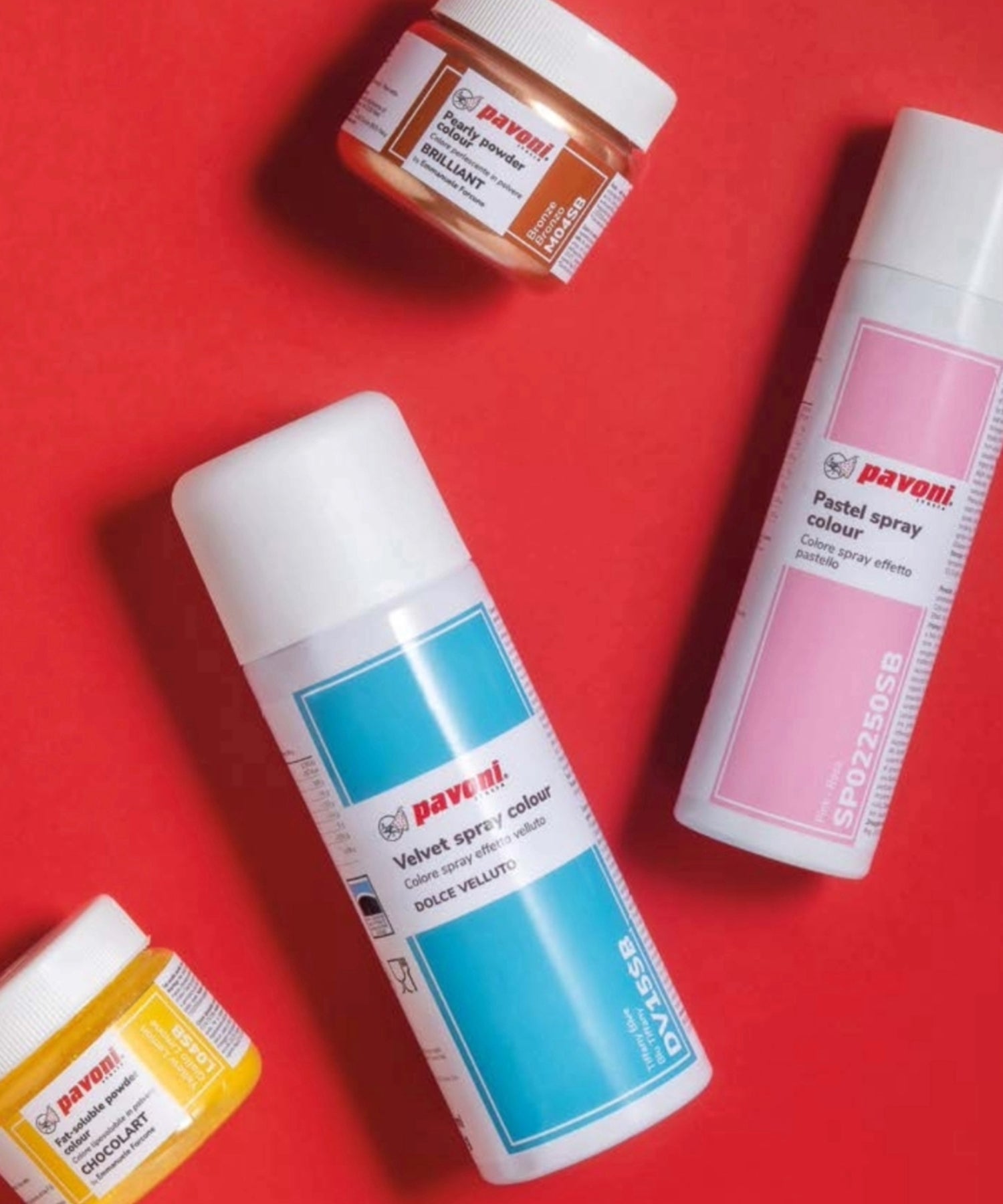
Pour donner un fini velours à un cœur congelé, utilisez un spray au beurre de cacao Dolce Velluto : Pavoni le conçoit pour être appliqué sur des surfaces froides.
- Voir le spray velours rouge DV1SB → from $56.99 CAD
- Voir le spray velours rose DV4SB → from $56.99 CAD
Notre guide d'utilisation des moules en silicone pour la pâtisserie et le chocolat présente d'autres formes et techniques.
Colorer et finir vos cœurs
Le rouge, le rose et l'or sont les finitions classiques des cœurs, et Pavoni a un produit pour chacune.
- Beurre de cacao coloré : les couleurs Chocolart de Pavoni sont prêtes à l'emploi pour colorer le chocolat dans la masse, en surface et dans les moules (200 g, sans E171). Rouge LB10SB $79.99 CAD · Rose LB09SB $79.99 CAD
- Or : la poudre Brilliant or M01SB $56.99 CAD de Pavoni s'applique à sec au pinceau ou diluée dans de l'alcool alimentaire pour peindre.
Voir tous les beurres de cacao colorés →
Entretenir les moules et conserver les cœurs
Les moules PX3206S et KE060S sont en silicone platine alimentaire à 100 %, vont au lave-vaisselle et résistent de -40 °C à +250 °C (-40 °F à 482 °F). Pour le PX3206S, Pavoni conseille de le ranger à plat dans un endroit frais et sec, sans rien de lourd posé dessus, à l'écart des objets tranchants, et de le nettoyer avant la première utilisation.
Conservez les cœurs en chocolat finis comme Bassan le conseille pour son chocolat : bien fermés, à 16–20 °C (61–68 °F), sous 50 % d'humidité relative, à l'abri du soleil et des odeurs fortes, et sans écarts de température, qui provoquent le blanchiment.
Comment l'IA peut aider votre production
Demandez à un assistant d'IA de calculer la quantité de chocolat nécessaire pour une commande de la Saint-Valentin : donnez-lui le nombre de cœurs, les dimensions des moules du tableau ci-dessus et votre marge de perte. Demandez-lui de transformer les étapes ci-dessus en procédure d'une page avec un relevé de température pour chaque fournée, et de planifier un calendrier de production pour que décors, bonbons et desserts soient prêts à temps.
L'IA organise l'information ; la dégustation et la décision finale restent entre les mains de votre chef.
Les moules en cœur Pavoni chez Zucchero Canada
Nous sommes distributeur autorisé de Pavoni Italia, et tous les produits de cet article sont des produits Pavoni, sauf la couverture. Chaque moule a son rôle : tapis Pavodecor pour les décors, moules à pralines en Tritan pour les bonbons brillants, Pavoflex et Pavocake pour les desserts. Associez-les à la couverture Bassan Sur del Lago 71 %, fabriquée au Canada avec du cacao vénézuélien : $273.00 CAD le sac de 5 kg.
Voir les moules en silicone Pavoflex →
Vous préparez la production de la Saint-Valentin pour une boutique, un hôtel ou un traiteur ? Contactez-nous pour les commandes en volume, ou appelez le 587-774-8873 (sans frais 877-741-8251).
Moules Pavocake | Tapis décoratifs en silicone | Moules à chocolat Pavoni | Guide des moules en silicone | Comment tempérer le chocolat
Cet article est fourni à titre informatif seulement. Chaque entreprise est différente : tirez vos propres conclusions selon vos attentes, votre budget et vos objectifs, et consultez des experts qualifiés avant de décider ou d'investir.
Sources : Pavoni Italia, catalogue Food Equipment 2026 (Pavodecor PR008–PR009, Pavoflex PX3206, Pavocake KE060, cercle XF14, moules à pralines Heart Design PC50 et Iconic PC55, sprays Dolce Velluto, couleurs Chocolart) et données produit Pavoni ; Bassan Chocolate, données produit et techniques du Sur del Lago 71 % ; KREA Swiss Knowledge, « Tempering, what it really is and where it goes wrong » ; P. Lonchampt et R. W. Hartel, « Fat bloom in chocolate and compound coatings », Eur. J. Lipid Sci. Technol. 106 (2004).
Good to know
Frequently asked questions
Comment faire des cœurs en chocolat avec un moule en silicone ?
Tempérez le chocolat, étalez-le dans les empreintes en cœur avec une spatule, raclez la surface, laissez cristalliser (Bassan indique 16–18 °C / 61–64 °F pour sa couverture 71 %), puis pliez ou décollez le silicone pour libérer les cœurs. Les tapis Pavodecor Hearts de Pavoni donnent des cœurs plats de 2 mm d'épaisseur.
Faut-il tempérer le chocolat pour les moules en silicone ?
Oui, si vous voulez des cœurs brillants, qui cassent net et se conservent à température ambiante. Le tempérage met le beurre de cacao dans sa forme cristalline stable ; un chocolat mal tempéré reste mou ou blanchit, parfois des semaines plus tard. Le silicone facilite le démoulage, mais ne remplace pas le tempérage.
Comment faire des cœurs en chocolat pour décorer un gâteau ?
Utilisez un tapis de décoration fin en silicone. Le Pavodecor Hearts 2 (PR008S) de Pavoni donne 15 cœurs de 50 mm de large et 2 mm d'épaisseur, conçus pour décorer les monoportions ; le Hearts 3 (PR009S) donne 10 bandes de 120 × 27 mm pour les éclairs. Étalez le chocolat tempéré, raclez, laissez figer et décollez le tapis.
Pourquoi mes cœurs en chocolat ne brillent-ils pas ?
La cause habituelle est le tempérage : un chocolat mal tempéré perd sa brillance et peut blanchir. Pour une brillance miroir sur des bonbons fourrés, utilisez un moule à pralines rigide comme les moules en cœur PC55FR ou PC50FR en Tritan de Pavoni, que Pavoni décrit comme donnant une finition très brillante, et conservez les cœurs finis à 16–20 °C (61–68 °F) sans écarts de température.
Comment faire des cœurs en chocolat rouges ou roses ?
Appliquez au pinceau du beurre de cacao coloré dans les empreintes propres et sèches, laissez figer, puis remplissez de chocolat tempéré. Les Chocolart rouge (LB10SB) et rose (LB09SB) de Pavoni sont des couleurs au beurre de cacao prêtes à l'emploi pour colorer le chocolat dans la masse, en surface et dans les moules. Pour un fini velours sur des desserts en cœur congelés, utilisez un spray Dolce Velluto sur la surface froide.
Les moules et les couleurs donnent-ils droit à la livraison gratuite ?
Oui. Les moules, les couleurs et les décors comptent pour la livraison gratuite sur les commandes de 300 $ CA ou plus au Canada ; les régions éloignées et les territoires paient le tarif réel du transporteur. Le chocolat et les machines sont exclus de la livraison gratuite. Les commandes de plus de 500 $ CA obtiennent 5 % de rabais automatiquement à la caisse.
Shop this article
Products mentioned in this guide
 Pavoni ItaliaMOULE EN SILICONE EN FORME DE CŒURS RONDS2 - Pavodecor$40.50 CADView product →
 Pavoni ItaliaMOULE EN SILICONE EN FORME DE CŒURS RONDS 3 - Pavodecor$40.50 CADView product →
 Pavoni ItaliaMoule à Pralinés Cœur Iconique en Chocolat – Fabrizio Fiorani PC55FR$39.95 CADView product →
 Pavoni ItaliaMoule à chocolat praliné en forme de cœur "PC50" – Davide Comaschi$39.95 CADView product →
For professionals
Equipping a chocolate shop, bakery or kitchen?
Tell us what you produce and how much. We will recommend the right machine, moulds and ingredients, and send you a quote.
For home bakers
Professional tools for your own kitchen
The same European moulds, tools and ingredients the professionals use.
5% off orders over $500 CAD, applied automatically at checkout.
Keep reading



Laisser un commentaire
Tous les commentaires sont modérés avant d'être publiés.
Ce site est protégé par hCaptcha, et la Politique de confidentialité et les Conditions de service de hCaptcha s’appliquent.