


How to Make Chocolate Letters With a Mold: Step-by-Step Guide
Short answer: to make chocolate letters with a mold, choose the mould by size (one large 135–200 g letter per mould for gifts and displays, or a full alphabet of small letters for decorating cakes and desserts), temper real couverture, fill the cavities, vibrate out the air, scrape the surface clean, let the chocolate set until it contracts, and demould with light taps. Compound coatings and candy melts are a poor choice for moulding: they do not set firmly and are hard to release. Below are the mould sizes, temperatures and steps.
Quick answer: what you need to make chocolate letters
| Need | Product | Price |
|---|---|---|
| Letters and numbers for cakes and desserts | Martellato Letters & Numbers mould MA3005 | $39.95 CAD |
| One large 200 g letter for gifts and monograms | Chocolate World Letter N, 200 g (CW1713) | from $39.95 CAD |
| Every other letter and number | Alphabet & number chocolate moulds | — |
| Melt and hold a small batch, 110 V | Martellato Mini Meltinchoc 1.8 L | from $390.00 CAD |
| Check the temperature | Martellato Digital Thermometer 50T001 | $29.95 CAD |
| Ready-made word decorations | Frank Haasnoot "Happy Birthday" chocolate stamp, 6 cm | $86.50 CAD |
Which letter mould should you use?
Pick the mould by the size of letter you need and how you will use it. The figures below are from the Chocolate World Moulds catalogue (Edition 15) and the Martellato General Catalogue 2026.
| Mould | Letter size | Pieces per mould | Good for |
|---|---|---|---|
| Chocolate World single letters, 200 g (CW1700–CW1725) | about 175.5 mm across | 1 letter of 200 g | Gifts, monograms, name sets, displays |
| Chocolate World single letters, 135 g (CW1800 series) | about 141 mm across | 1 letter of 135 g | Gifts and monograms in a smaller format |
| Chocolate World double letters, 135 g (CW2400 series) | about 141 mm across | 2 identical letters of 135 g, 275 × 175 mm frame | Two of the same letter per fill |
| Chocolate World alphabet A–Z (CW1426) | 39 × 35 × 6 mm | 26 letters of 5 g | A full alphabet in one mould |
| Chocolate World alphabet, parts 1 and 2 (CW1628, CW1629) | 26 × 26 × 18.5 mm | 24 figures of 12 g per mould | Small, deeper 3D letters |
| Chocolate World numbers 0–9 (CW1424) | 40 × 25 × 8 mm | 30 pieces of 3.5 g | Ages and dates |
| Martellato Letters & Numbers (MA3005) | Letters and numbers | Several per mould, 275 × 175 × 26 mm mould | Decorating cakes, semifreddi and desserts |
Martellato presents its letters and numbers mould for decorating semifreddi, cakes and chocolate pieces for occasions such as birthdays and anniversaries. Chocolate World's single-letter moulds make one large letter per mould, the format for personalised gifts and monograms.
View alphabet and number chocolate moulds →
Producing letters in volume? Chocolate World letter moulds are also sold by the box of 30 moulds, for example the A–Z alphabet CW1426: $1,090.00 CAD per box.
Which chocolate works best for letters?
Use couverture, tempered. Couverture contains extra cocoa butter; with proper tempering it gives more sheen and a firmer snap, and professionals use it for moulding. Under European Union rules, couverture contains at least 31% cocoa butter, at least 35% total dry cocoa solids and at least 2.5% dry non-fat cocoa solids.
Avoid compound chocolate (coating chocolate, candy melts) in moulds. Because other fats replace the cocoa butter, it does not set as firmly and can be difficult or impossible to remove from a mould. Properly tempered cocoa butter chocolate shrinks slightly as it sets, and that is what releases the letters cleanly.
Two couvertures we stock, with their makers' working figures:
| Chocolate | Melt | Working / tempering | Price |
|---|---|---|---|
| Bassan Sur del Lago 71% dark, 5 kg bag | 50°C (122°F) maximum | 30–32°C (86–90°F) | $273.00 CAD |
| FCH 55% dark, Venezuela, 10 kg box | 45–50°C (113–122°F) | 31–32°C (88–90°F) | $299.00 CAD |
Both are made from Venezuelan cacao. For milk or white chocolate letters, follow your chocolate maker's figures; without them, Peter Greweling of the Culinary Institute of America gives an optimum working temperature very close to 30°C (87°F) for milk and white, and 32°C (90°F) for dark.
Step 1: Prepare the mould
Start with a clean, completely dry polycarbonate mould. For Chocolate World moulds, the maker's cleaning procedure is to wash at about 60°C (140°F) with a polycarbonate-safe detergent, rinse with demineralised water and dry with warm air at no more than 70–80°C (158–176°F); clean new moulds before their first use as well. Use the moulds between 5°C and 80°C (41–176°F). The full procedure is in our guide to cleaning polycarbonate chocolate moulds.
Step 2: Temper the chocolate
Tempering guides the cocoa butter into its one stable crystal form, form V, which gives letters a glossy surface, a clean snap and less risk of bloom. The process: melt completely, seed and cool, reheat gently to working temperature, then hold it there while you mould.
- Temper test: dip a palette knife and watch it set. Dark chocolate should set within about seven minutes without streaks or a grainy texture; milk and white take a little longer.
- Watch the heat: above about 34°C (93°F) the stable crystals are destroyed and the temper is lost.
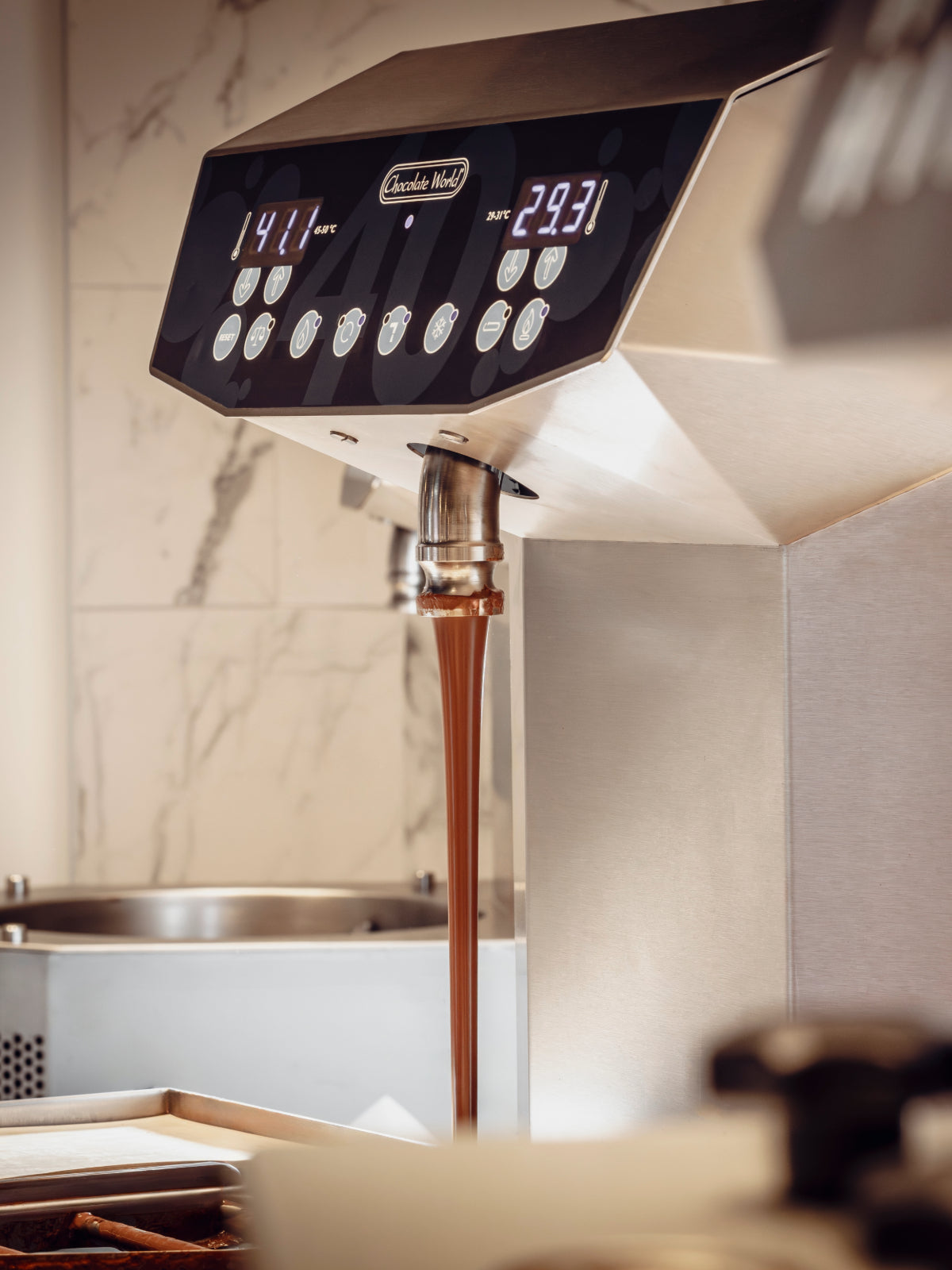
- Keep it steady: temperature swings in and out of the working window destabilise the temper. A melter that holds a set temperature helps over a long session.
For a step-by-step method, see our guide to how to temper chocolate.
Step 3: Fill, vibrate and scrape
For moulded pieces, the chocolate should be somewhat runny so it flows easily into the moulds.
- Fill each letter cavity with tempered chocolate.
- Tap or vibrate the mould to bring air bubbles to the surface. Chocolate World makes a vibrating table for exactly this job: removing air bubbles after filling moulds.
- Scrape the mould surface clean with a stainless-steel scraper so the back of every letter is flat and clean.
- Let the chocolate set completely. Tempered chocolate contracts as it sets, which frees it from the cavity walls.
Hollow letters
Large letters can also be made as shells: fill, vibrate, turn the mould over to drain the excess back into the bowl, scrape, and let the shell set. Chocolate World's magnetic moulds, for example, are filled "as a regular mould (solid or shell moulding)". A hollow letter can then be filled and closed like a bonbon; our step-by-step guide to shiny bonbons covers filling and sealing.
Step 4: Demould without breaking thin strokes
Turn the mould over a clean surface and release the letters. Chocolate World's advice for polycarbonate moulds protects both the letters and the mould:
- Several softer taps instead of one hard strike.
- Minimise twisting of the mould.
- Demould with materials softer than polycarbonate, and keep sharp objects out of the cavities: scratches show on every letter you make afterwards.
Decorating chocolate letters
- Coloured letters: brush or spray coloured cocoa butter into the clean cavities before you fill them. Pavoni's Chocolart coloured cocoa butters are made for colouring chocolate moulds and cavities, in mass or on the surface. View coloured cocoa butter →
- Metallic finish: Pavoni's Brilliant metallic powders can be brushed on dry or dissolved in food-grade alcohol and painted. View Brilliant Gold powder → $56.99 CAD
- Spraying: the KREA Swiss chocSPRAYER sprays coloured cocoa butter, velvet effects and glazes on 120 V without a compressor; it keeps pre-tempered chocolate workable but does not temper it. View the KREA chocSPRAYER → $1,250.00 CAD
- Printed names and logos: for full words, logos or photos rather than single letters, Chocolate World's magnetic moulds hold a printed transfer sheet that sticks to the chocolate as it cools.
- Ready-made words: Frank Haasnoot's chocolate stamps for Martellato make word decorations such as "Happy Birthday", "Love" and "Happy Valentine", in 3 cm and 6 cm diameters, to garnish desserts and cakes. View chocolate stamps →
Storing chocolate letters
Keep letters cool, dry and away from odours. As a reference for chocolate itself, ideal storage is 18–20°C (64–68°F) at 60% relative humidity; the refrigerator is not the ideal place because of humidity and odours. Bassan recommends storing its couverture at 16–20°C (61–68°F) below 50% relative humidity, away from sunlight and strong odours, and avoiding temperature swings that cause bloom.
How AI can help your production
Give an AI assistant your order list ("HAPPY 40TH MAYA", "MR & MRS") and ask it to count how many of each letter and number you need, how many moulds and fills that means, and how much chocolate: a word of five 200 g letters uses 1 kg of couverture. Ask it to cost each letter from your price per kilo, to plan which moulds to fill first, or to turn your tempering figures into a checklist for whoever is on the bench. That turns a custom order into a quote in minutes.
AI organises the information; tasting and the final decision stay with your chef.
Letter moulds and tools at Zucchero Canada
We are an authorized distributor of Chocolate World, Martellato, Pavoni Italia and KREA Swiss in Canada. Each brand has its own job in lettering:
- Chocolate World (Belgium): large single letters (135 g and 200 g), full alphabets and numbers in polycarbonate, plus magnetic moulds for printed names and logos.
- Martellato (Italy): the Letters & Numbers mould for cake and dessert decoration, Frank Haasnoot word stamps, thermometers and Meltinchoc melters. Martellato table-top melters come with a free spatula.
- Pavoni Italia and KREA Swiss: colour and finish, from coloured cocoa butter and metallic powders to a 120 V chocolate sprayer.
- Chocolate: Bassan Sur del Lago 71% and FCH 55%, both from Venezuelan cacao.
Moulds and tools count toward free shipping on orders of 300 CAD or more within Canada (remote areas and the territories pay the actual carrier rate; chocolate and machines are excluded), and orders over 500 CAD get 5% off automatically at checkout. Making lettered chocolates for corporate or event orders? Contact us or call 587-774-8873 (toll free 877-741-8251).
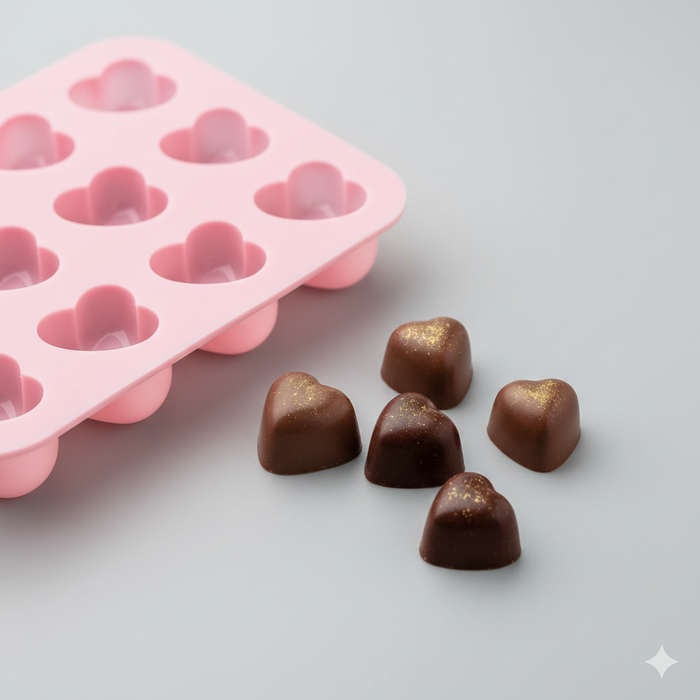
Alphabet & number moulds | Chocolate World | Martellato chocolate moulds | Coloured cocoa butter | How to mould chocolate | Chocolate hearts with a mould
This article is for information only. Every business is different: draw your own conclusions based on your own expectations, budget and goals, and talk to qualified experts before you decide or invest.
Sources: Chocolate World Moulds catalogue, Edition 15 ("Letters & Numbers" and "Cleaning polycarbonate moulds"); Chocolate World Equipment catalogue, Edition 9 (vibrating table, magnetic moulds); Martellato General Catalogue 2026 (Letters & Numbers 21MA3005, Frank Haasnoot stamps); BC Cook Articulation Committee, Understanding Ingredients for the Canadian Baker, ch. 7 (BCcampus, CC BY 4.0); KREA Swiss, "Tempering, what it really is and where it goes wrong" (kreaswiss.com); Peter Greweling, "Tempering Chocolate", Pastry Arts Magazine (2024); product data from Bassan Chocolate, FCH Origins, Pavoni Italia and KREA Swiss.
Good to know
Frequently asked questions
How do you make chocolate letters with a mold?
Temper couverture, fill the letter cavities, tap or vibrate the mould to release air bubbles, scrape the surface clean, and let the chocolate set completely. Tempered chocolate contracts as it sets, so the letters release with a few light taps when you turn the mould over.
What size are chocolate letter molds?
It depends on the mould. Chocolate World makes single letters of 200 g (about 175.5 mm across) and 135 g (about 141 mm across), an A–Z alphabet of 26 letters of 5 g (39 × 35 × 6 mm) and numbers 0–9 of 3.5 g. Martellato's Letters & Numbers mould (275 × 175 × 26 mm) is made for decorating cakes and desserts.
Can I use candy melts in chocolate letter molds?
It is not recommended. Candy melts and other compound coatings replace cocoa butter with other fats, so they do not set as firmly and can be difficult or impossible to remove from a mould. Tempered couverture shrinks slightly as it sets and releases cleanly.
At what temperature should chocolate be for letter molds?
Use your chocolate maker's working temperature: Bassan Sur del Lago 71% works at 30–32°C (86–90°F) and FCH 55% is tempered at 31–32°C (88–90°F). Do not let tempered chocolate go above about 34°C (93°F), or the stable crystals are destroyed.
How do I make colored or gold chocolate letters?
Brush or spray coloured cocoa butter into the clean cavities before filling them with tempered chocolate. For a metallic finish, brush a metallic powder on dry, or dissolve it in food-grade alcohol and paint it on the demoulded letters.
Do letter molds qualify for free shipping in Canada?
Yes. Moulds and tools count toward free shipping on orders of $300 CAD or more within Canada; remote areas and the territories pay the actual carrier rate, and chocolate and machines are excluded. Orders over $500 CAD also get 5% off automatically at checkout.
Shop this article
Products mentioned in this guide
 MartellatoLetters and Numbers Polycarbonate Chocolate Mold – MA3005$39.95 CADView product →
 Chocolate WorldLetter N Chocolate Mold CW1713From $39.95 CADView product →
 Martellato"Mini Meltinchoc" Chocolate Melter 1.8 L – MC09GUSAFrom $390.00 CADView product →
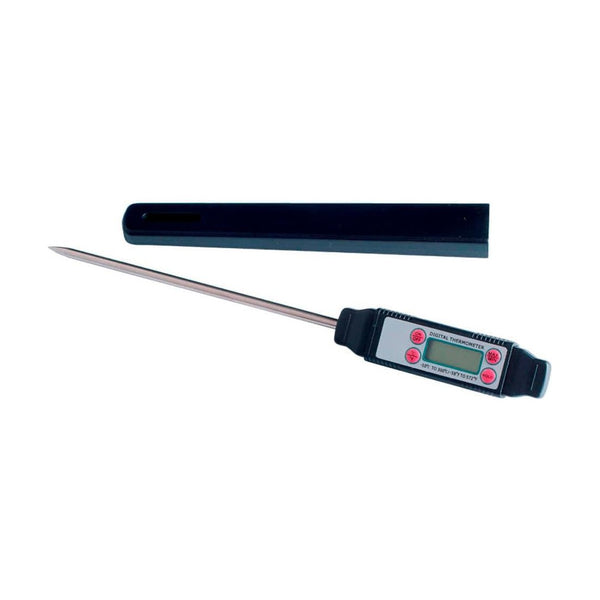 MartellatoDigital Thermometer for Chocolate 50T001$29.95 CADView product →
For professionals
Equipping a chocolate shop, bakery or kitchen?
Tell us what you produce and how much. We will recommend the right machine, moulds and ingredients, and send you a quote.
For home bakers
Professional tools for your own kitchen
The same European moulds, tools and ingredients the professionals use.
5% off orders over $500 CAD, applied automatically at checkout.
Keep reading



Leave a comment
All comments are moderated before being published.
This site is protected by hCaptcha and the hCaptcha Privacy Policy and Terms of Service apply.