


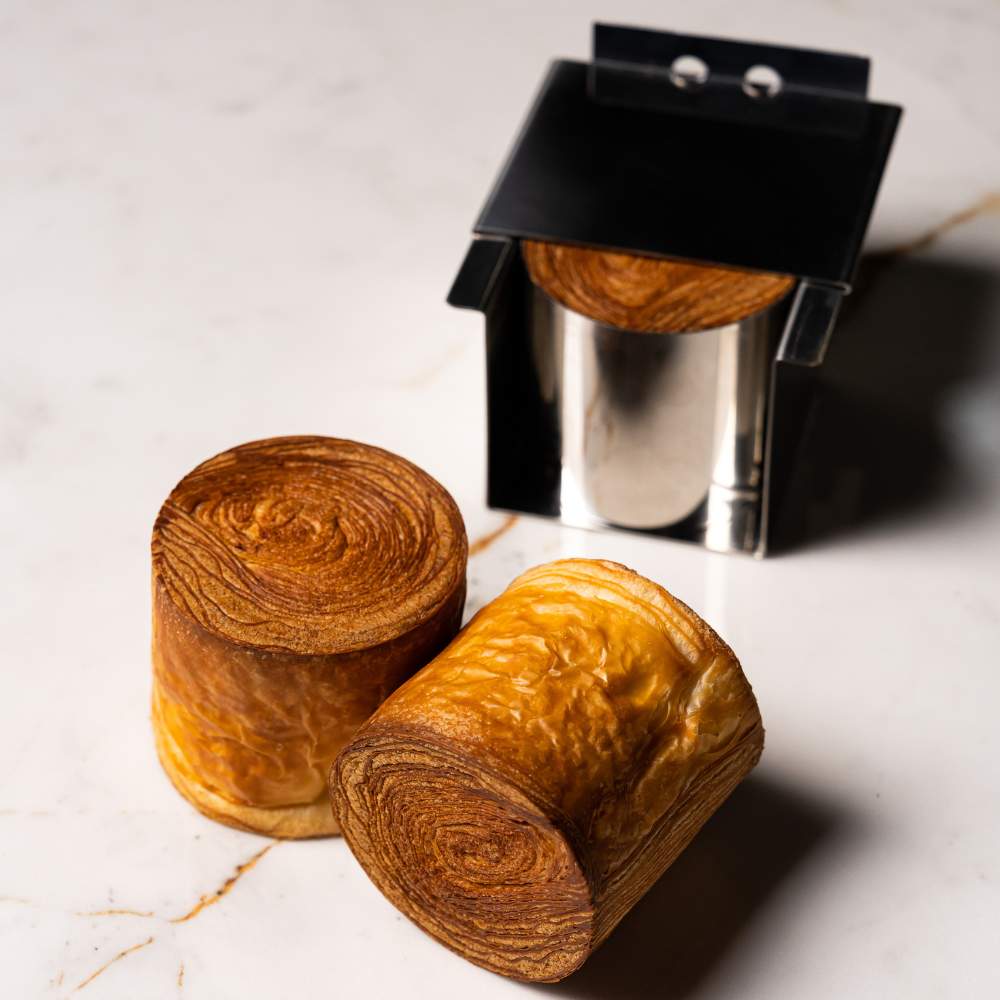
Croissants géométriques : techniques professionnelles pour croissants cubes et cylindres
Réponse courte : les croissants géométriques sont une pâte à croissant feuilletée façonnée et cuite dans un moule en acier inoxydable qui lui donne sa forme finale : cube, cylindre, pyramide, cœur ou sphère. Des formes nettes et régulières reposent sur trois éléments : une farine forte qui porte le beurre à chaque tour, un tourage régulier à température contrôlée, et un moule adapté à votre production. Ci-dessous : les moules et leurs dimensions, la farine, les chiffres du tourage et la façon de standardiser le procédé.
Réponse rapide : ce qu'il vous faut
| Besoin | Produit | Prix |
|---|---|---|
| Croissants cubes de 60 mm | Moule cube Pavoni Italia CV1 | $43.99 CAD |
| Croissants cylindres, cinq par barre | Martellato Mini Cylinder 5 par Frank Haasnoot | $145.00 CAD |
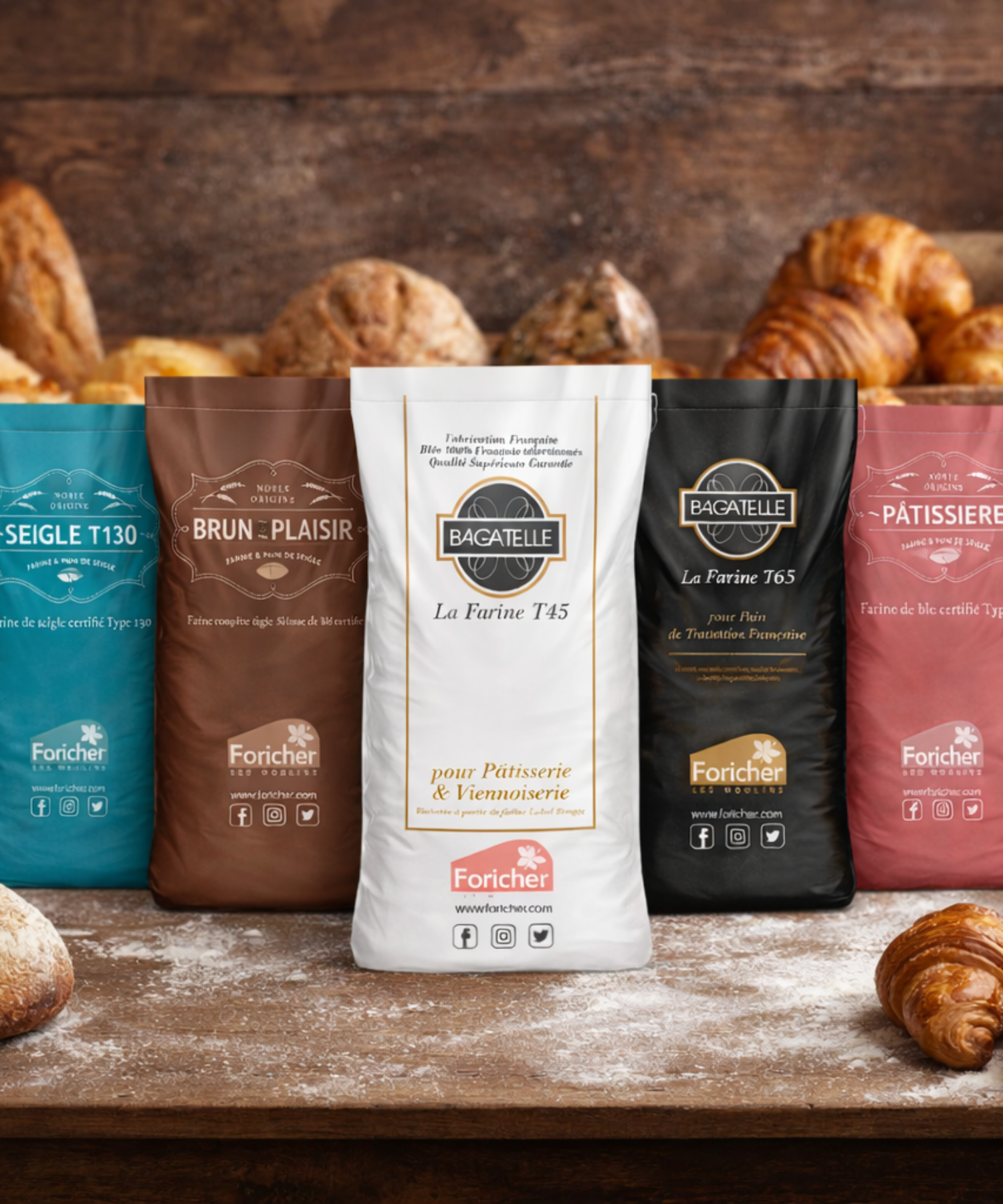
| Farine pour pâte feuilletée levée | Foricher Bagatelle T45, 1 kg ou 25 kg | $12.50 CAD / $175.00 CAD |
| Chocolat pour la garniture | Bâtonnets de chocolat noir Venezuelan Blend 55 %, 2,27 kg | $62.50 CAD |
| Référence pas à pas | Bachour – The New Era of Viennoiserie | $145.00 CAD |
Qu'est-ce qu'un croissant géométrique
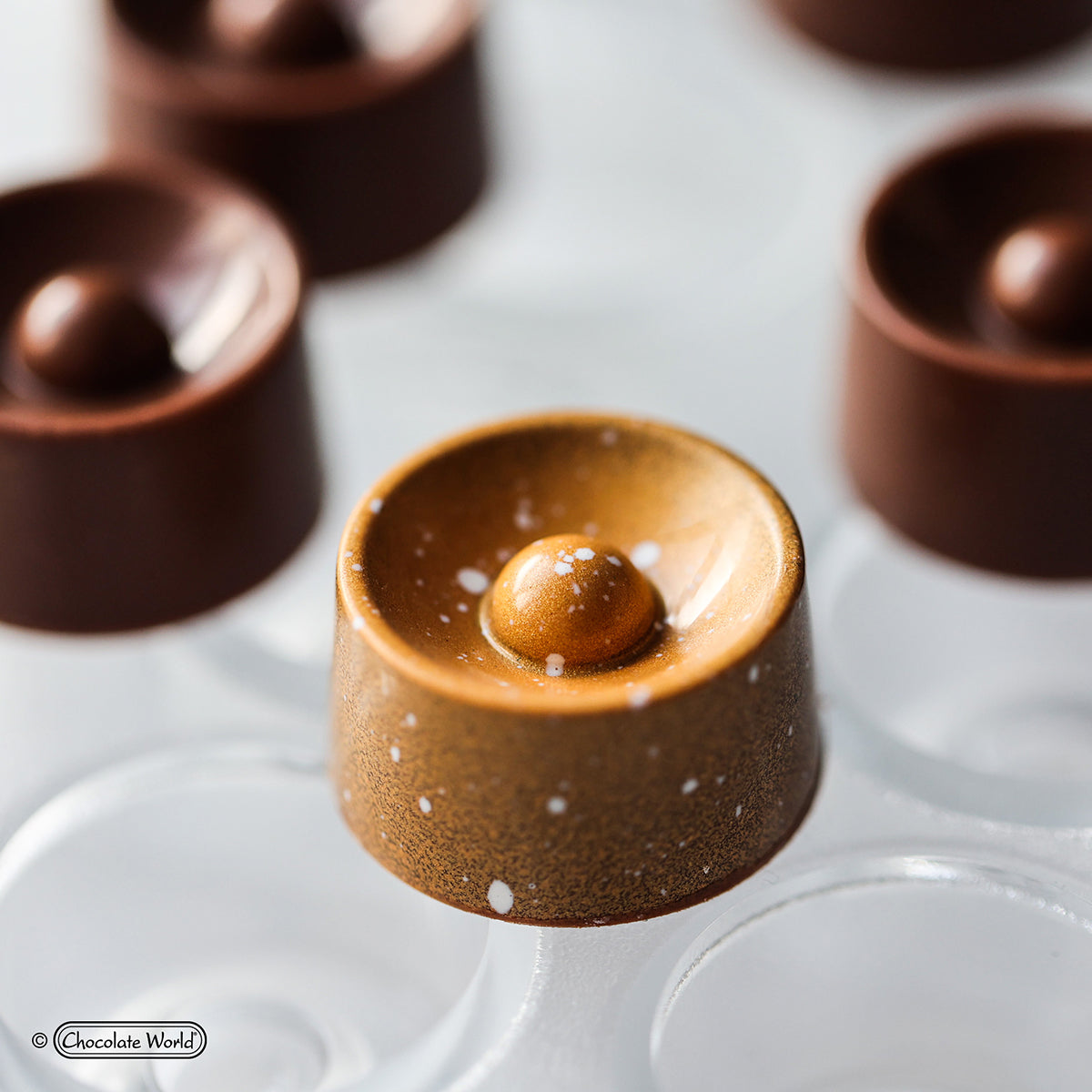
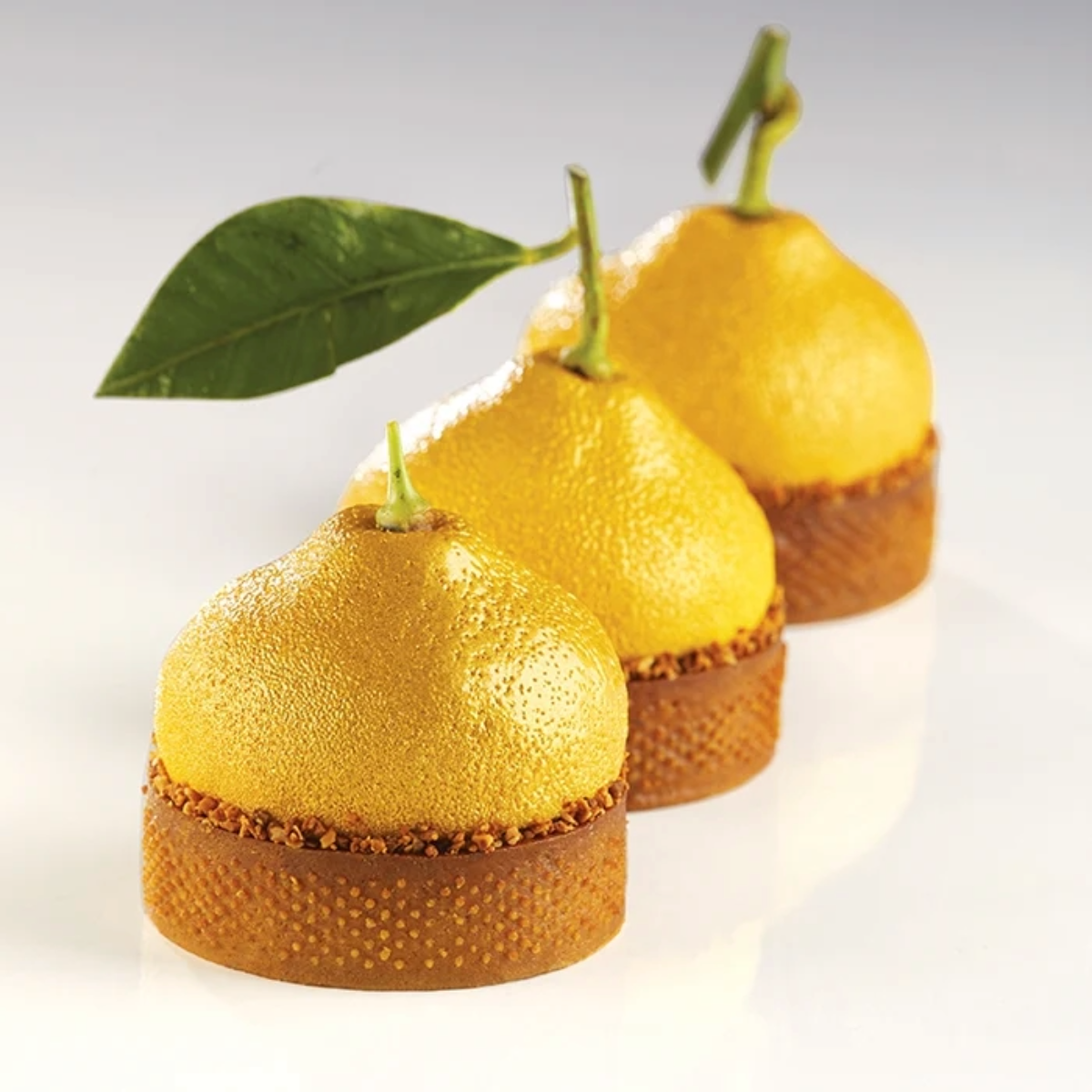
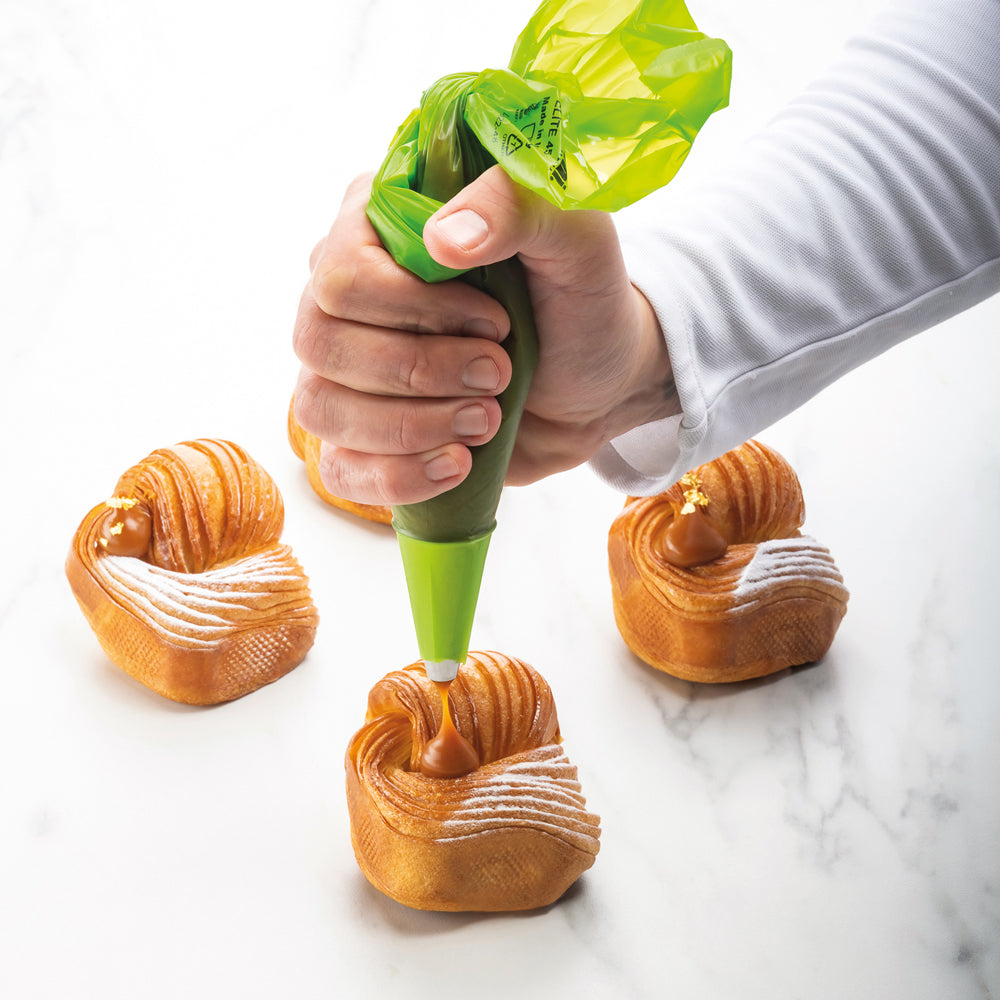
Un croissant géométrique est une pâte feuilletée levée classique à laquelle un moule donne une forme moderne et précise. Pavoni Italia présente sa gamme en acier inoxydable comme des moules « pour créer des croissants géométriques uniques », chacun conçu pour donner une forme géométrique aux croissants ou à d'autres préparations. Le moule fixe les arêtes et la taille finale de chaque pièce.
Les mêmes moules fonctionnent aussi avec d'autres pâtes et appareils : le livre de recettes Geometric Croissants de Pavoni comprend un cube feuilleté au cacao, un cylindre feuilleté, un cœur feuilleté, une pyramide au carrot cake et un cœur citron et graines de pavot.
Les moules et leurs dimensions
Choisissez la forme pour votre vitrine, puis le format pour votre volume.
| Moule | Forme | Dimensions |
|---|---|---|
| Pavoni CV1 | Cube | 60 × 60 × 60 mm |
| Pavoni CV2 | Cylindre | Ø 65 × 60 mm de haut |
| Pavoni CV3 | Cube | 70 × 70 × 70 mm |
| Pavoni CV4 | Cœur | 80 × 70 × 50 mm de haut |
| Pavoni CV5 | Pyramide | 85 × 85 × 85 mm de haut |
| Pavoni CV6, par Cesare Murzilli | Sphère | Ø 75 mm |
| Martellato Mini Cylinder 5 (30TCB58) | Cinq cylindres sur une barre | Chacun Ø 60 × 60 mm de haut, 170 ml ; barre 392 × 70 × 75 mm |
- Pavoni CV1 est un cube unique de 60 mm en acier inoxydable, fabriqué en Italie : la façon la plus simple de commencer, ou d'ajouter une ligne de cubes à une production de croissants existante. $43.99 CAD.
- Martellato Mini Cylinder 5 réunit cinq cylindres sur une barre et est conçu pour le travail sur plaque : Martellato indique 25 pièces par plaque de 60 × 40 cm, fournit des bandes en téflon (385 × 63 mm), et le moule va au lave-vaisselle. Choisissez-le quand les cylindres sont un produit quotidien. $145.00 CAD.
Voir tous les moules et découpoirs à croissants →
La farine : la force de porter le beurre
Une pâte feuilletée levée demande une farine assez forte pour retenir de fines couches de beurre à chaque tour. Foricher destine sa Bagatelle T45 à la viennoiserie et à la pâtisserie, et sa fiche technique (FT208A) indique 14,0 % de protéines (±0,3). Nos données produit ajoutent un W de 350 (±30) et un P/L de 0,8 (±0,2). Elle est moulue en France par Foricher Les Moulins à partir de blé certifié CRC®.
Si votre ligne géométrique repose sur la pâte feuilletée (les cubes et cylindres feuilletés), la farine Feuilletage de Foricher est moulue pour le tourage : Foricher la décrit comme un mélange de blés de force, plus régulier qu'un mélange de T45 et de T65. Nous la proposons sous le nom Terroir Feuilletage T55 en sacs de 25 kg ($175.00 CAD).
Pour comparer les types de farine française, lisez farine T45 ou T65.
Voir les farines pour croissants et viennoiserie →
Le tourage : les chiffres qui comptent
Le tourage enveloppe la pâte autour de la matière grasse, puis l'abaisse et la replie sur elle-même plusieurs fois. L'American Society of Baking, citant Advanced Bread and Pastry de Michel Suas, donne ces repères :
| Point | Repère |
|---|---|
| Couches de matière grasse dans un croissant | De 24 à 144 |
| Tour simple (pli en trois) | Pâte abaissée à ½ po (12,7 mm) ; deux tiers couverts de matière grasse et pliés en trois, soit 2 couches de matière grasse après le premier pli |
| Tour double (pli en quatre) | Les deux extrémités ramenées au centre, puis pliées en deux |
| Calcul des couches | 2 couches de départ × trois plis en trois = 54 couches (2 × 3 × 3 × 3) |
| Repos entre les tours | Généralement environ 30 minutes |
| Température | Réfrigérer entre les tours, ou maintenir la pièce à 15 °C (60 °F), pour que la matière grasse ne fonde pas |
Une pâte plus ferme (moins hydratée) donne plus de couches, et une température ambiante plus basse préserve les fines couches de matière grasse. Dans un croissant géométrique, les couches sont en vitrine : c'est là que se gagne ou se perd la régularité.
Le beurre
Au Canada, le beurre doit contenir au moins 80 % de matière grasse laitière. BCcampus note que le beurre a une faible plage de plasticité, de 18 à 20 °C (64–68 °F). Les matières grasses de tourage, à l'inverse, offrent une large plage de plasticité, une excellente extensibilité et un excellent pouvoir de développement, et s'utilisent pour la pâte feuilletée et la pâte danoise, là où le tourage est nécessaire.
Façonnage, apprêt et cuisson dans le moule
Le moule donne la forme ; votre travail est de rendre chaque pâton identique. Pavoni publie des recettes dans son livre Geometric Croissants, accessible depuis la page du CV1 sur pavonitalia.com : partez de celles-ci, puis notez vos propres chiffres.
- Poids de pâte par moule. Fixez un poids pour chaque taille de moule, pesez chaque pâton et notez-le.
- Coupez et roulez toujours de la même façon. Même largeur de bande, même longueur, même nombre de tours pour chaque pièce.
- Apprêt et cuisson selon le registre. Notez le temps, la température et l'humidité d'apprêt, ainsi que la température et le temps de cuisson pour chaque moule. Ne changez qu'une variable à la fois.
- Cuisez sur un tapis perforé. Le tapis microperforé FOROSIL43 ($35.99 CAD) laisse circuler l'air chaud sous le produit pour une coloration uniforme, et il est indiqué pour la viennoiserie et les pâtes feuilletées.
Garnitures et finitions
Deux chocolats ont ici un rôle clair :
- Bâtonnets de chocolat noir Venezuelan Blend 55 % → bâtonnets de 5 g, environ 450 pièces par paquet de 2,27 kg, issus de cacao Trinitario fermenté du Venezuela, avec des notes de caramel, de noix et d'épices ; recommandés pour les pains, croissants et brioches. $62.50 CAD.
- Bassan Sur del Lago 71 % → une couverture d'origine unique fabriquée au Canada à partir de cacao vénézuélien, pour les garnitures à la ganache et les finitions. Sac de 5 kg $273.00 CAD.
Pour une pâte au cacao comme le cube feuilleté au cacao de Pavoni, KKO Real Repostería est notre cacao de pâtisserie alcalinisé 100 % vénézuélien ; consultez la collection KKO Real pour la disponibilité.
Quand le tourage tourne mal
- La matière grasse fond dans la pâte : la pièce ou la pâte est trop chaude. Réfrigérez entre les tours ou travaillez à 15 °C (60 °F).
- La pâte se déchire à l'abaisse : l'American Society of Baking associe ce défaut à une farine trop forte et mal hydratée.
- Pièces inégales dans un même lot : fixez le poids de pâte par moule et pesez chaque pâton.
Comment l'IA peut aider votre production
Donnez à un assistant d'IA votre recette de croissants et demandez-lui de l'adapter au nombre de moules que vous remplissez chaque jour, avec le poids de pâte par moule et le beurre pour chaque bloc. Demandez-lui de créer un registre de tourage (tour, heure, température de la pâte, température de la pièce) et une fiche d'apprêt et de cuisson par forme de moule. Avec les 25 pièces par plaque de 60 × 40 cm indiquées par Martellato, il peut aussi calculer combien de plaques et de barres il vous faut pour une production de fin de semaine.
L'IA organise l'information ; la dégustation et la décision finale restent entre les mains de votre chef.
Les outils pour croissants géométriques chez Zucchero Canada
Nous avons les farines Foricher en stock à Calgary et les expédions partout au Canada, avec les moules Pavoni Italia et Martellato pour la viennoiserie. Chaque produit a son rôle : la Bagatelle T45 pour la pâte à croissant, la Terroir Feuilletage pour les formes en pâte feuilletée, le Pavoni CV1 pour les croissants cubes, le Martellato Mini Cylinder 5 pour la production de cylindres sur plaque.
Pour la méthode derrière la viennoiserie moderne, Bachour – The New Era of Viennoiserie ($145.00 CAD) présente 52 créations signature — croissants, brioches, pâte feuilletée et plus — avec des méthodes de production pas à pas et la technique de pliage d'Antonio Bachour, sur 410 pages en anglais et en espagnol.
Les commandes de plus de 500 $ CA bénéficient automatiquement de 5 % de rabais au paiement. Boulangeries et hôtels qui achètent farine ou moules en volume : contactez-nous ou appelez le 587-774-8873 (sans frais 877-741-8251).
Moules à croissants | Farines pour viennoiserie | Farines Foricher | Ingrédients pour croissants | Farine T45 ou T65
Cet article est fourni à titre informatif seulement. Chaque entreprise est différente : tirez vos propres conclusions selon vos attentes, votre budget et vos objectifs, et consultez des experts qualifiés avant de décider ou d'investir.
Sources : Pavoni Italia, catalogue Food Equipment 2026, « Geometric croissants moulds » (CV1–CV6), page produit du CV1 et sommaire du livre de recettes Geometric Croissants (pavonitalia.com, Issuu) ; Martellato, General Catalogue 2026, « Mini Cubò 5 & Mini Cylinder 5 » ; fiche technique Foricher FT208A (Bagatelle T45) et foricher.com « Feuilletage » ; American Society of Baking, « Dough Lamination » (citant M. Suas, Advanced Bread and Pastry, 2009) ; BC Cook Articulation Committee, Understanding Ingredients for the Canadian Baker (BCcampus), section 3.3 « Major Fats and Oils Used in Bakeries » ; données produits de Zucchero Canada.
Good to know
Frequently asked questions
Que sont les croissants géométriques ?
Les croissants géométriques sont une pâte à croissant feuilletée façonnée et cuite dans un moule en acier inoxydable qui lui donne sa forme finale : cube, cylindre, pyramide, cœur ou sphère. La gamme Pavoni Italia va du cube CV1 de 60 mm à la sphère CV6 (Ø 75 mm).
Quelle est la taille d'un moule à croissant cube ?
Le cube CV1 de Pavoni mesure 60 × 60 × 60 mm et le cube CV3, 70 × 70 × 70 mm. Pour les cylindres, le CV2 de Pavoni mesure Ø 65 × 60 mm de haut, et chaque cylindre du Mini Cylinder 5 de Martellato mesure Ø 60 × 60 mm de haut (170 ml).
Quelle farine choisir pour les croissants géométriques ?
Une farine de viennoiserie forte qui porte le beurre à chaque tour. Foricher destine la Bagatelle T45 à la viennoiserie et à la pâtisserie ; sa fiche technique indique 14,0 % de protéines (±0,3) et nos données produit un W de 350 (±30). Pour les formes en pâte feuilletée, la farine Feuilletage de Foricher est moulue pour le tourage.
Combien de couches a un croissant ?
L'American Society of Baking, citant Michel Suas, indique de 24 à 144 couches de matière grasse pour les croissants. Deux couches de départ pliées trois fois en trois donnent 54 couches (2 × 3 × 3 × 3).
Comment éviter que le beurre fonde pendant le tourage ?
Laissez reposer la pâte environ 30 minutes entre les tours et réfrigérez-la, ou maintenez la pièce à 15 °C. Une température ambiante plus basse préserve aussi les fines couches de matière grasse.
Où acheter des moules à croissants géométriques et de la farine française au Canada ?
Zucchero Canada propose le cube Pavoni CV1, le Mini Cylinder 5 de Martellato et les farines Foricher ; la farine est en stock à Calgary et expédiée partout au Canada. Les commandes de plus de 500 $ CA bénéficient automatiquement de 5 % de rabais au paiement. Pour les commandes en volume, contactez-nous.
Shop this article
Products mentioned in this guide
 Pavoni ItaliaMoule à croissant géométrique - CV1 "Cube"$43.99 CADView product →
 MartellatoMoule géométrique pour croissants - Ensemble de 5 mini cylindres - par Frank Haasnoot$145.00 CADView product →
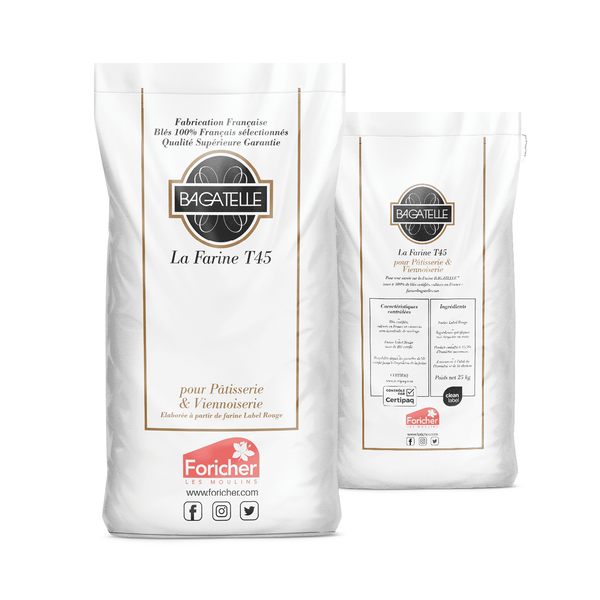 ForicherFarine française Bagatelle T45 pour croissants et viennoiserie 🇫🇷From $12.50 CADView product →
 FCH OriginsBâtons de mélange vénézuélien de chocolat noir 55 % 2,27 Kg (5 lb)$62.50 CADView product →
For professionals
Equipping a chocolate shop, bakery or kitchen?
Tell us what you produce and how much. We will recommend the right machine, moulds and ingredients, and send you a quote.
For home bakers
Professional tools for your own kitchen
The same European moulds, tools and ingredients the professionals use.
5% off orders over $500 CAD, applied automatically at checkout.
Keep reading
Related guides
 Où acheter de la farine T55 au Canada : le guide du boulanger professionnel sur la farine française
 Qu'est-ce que la farine T65 ? Le guide du boulanger professionnel sur la farine française à baguette
 Qu'est-ce que la farine T55 ? Le guide du boulanger professionnel sur la farine à tout faire de la France



Laisser un commentaire
Tous les commentaires sont modérés avant d'être publiés.
Ce site est protégé par hCaptcha, et la Politique de confidentialité et les Conditions de service de hCaptcha s’appliquent.