What Is Single-Origin Chocolate? Meaning, Terroir and How to Choose It
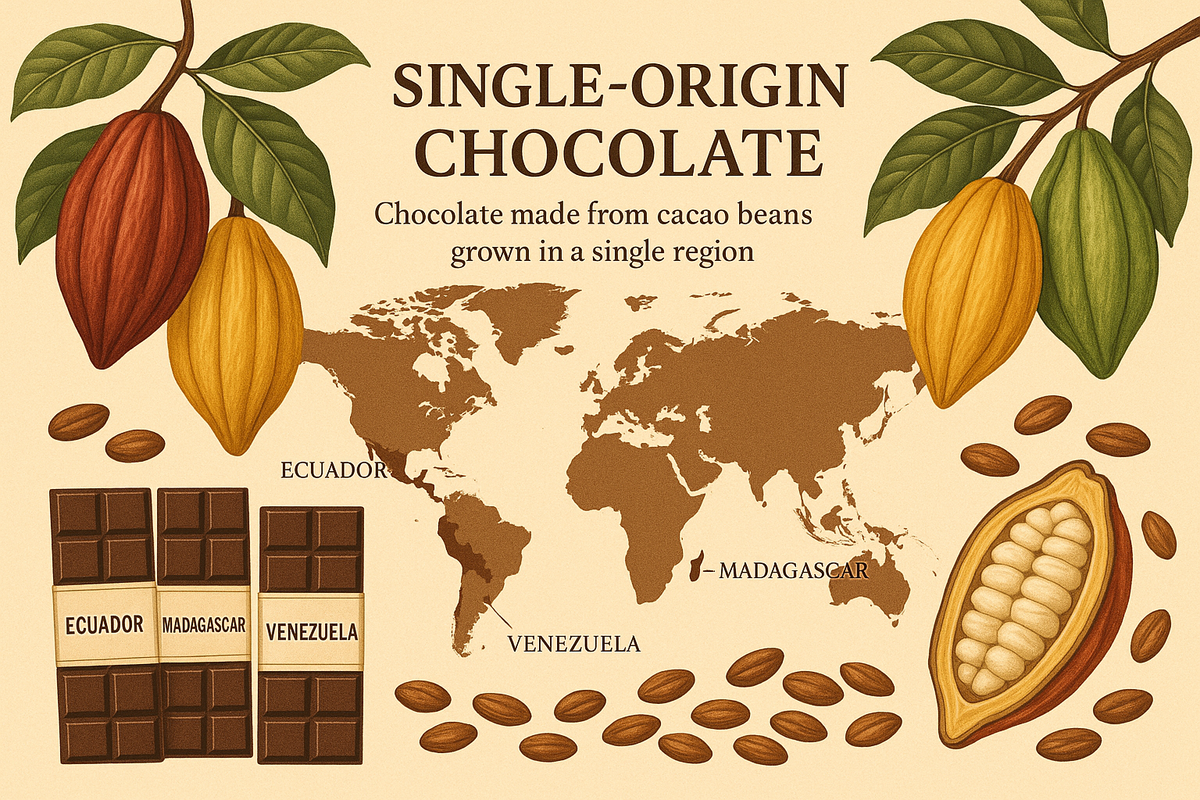
Short answer: single-origin chocolate is chocolate made with cacao beans from one origin, rather than a blend of beans from several places. The origin can be a country, a region within it or a single farm (single-estate), and the narrower it is, the more the label tells you. The term is not standardized or regulated, so read what the label actually names; the point of single origin is a traceable bean whose flavour reflects its genetics, its terroir and how it was fermented and dried.
Quick answer: single-origin chocolate and cacao for your production
| You want to… | Product | Price |
|---|---|---|
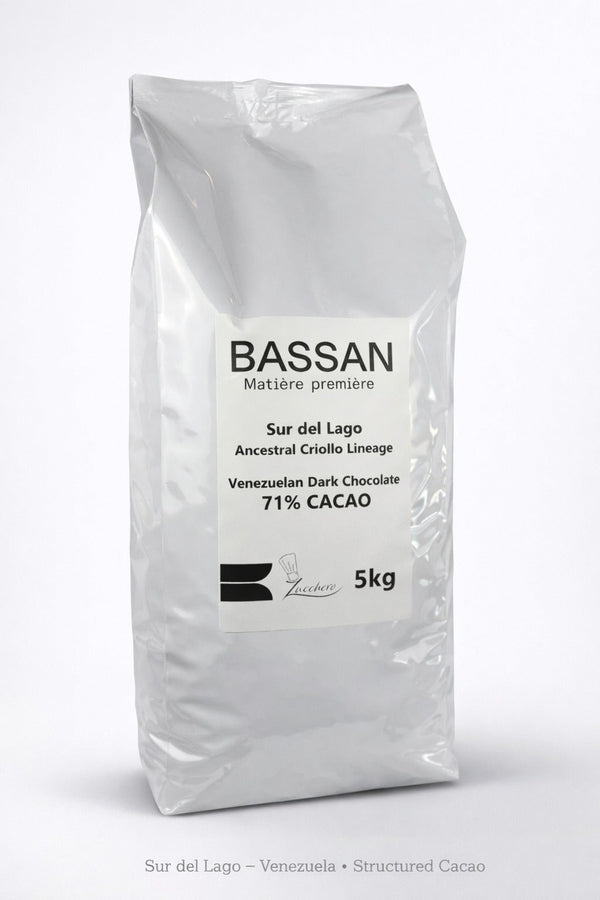
| Work a single-origin dark couverture: ganache, bonbons, tablets, drinks | Bassan Sur del Lago 71%, Venezuela, 5 kg bag | $273.00 CAD |
| Use Venezuelan-origin dark chocolate in pastry, baking and beverages | FCH Dark Chocolate 55% Venezuela, 10 kg box | $299.00 CAD |
| Make your own single-origin chocolate from Venezuelan beans | Sur del Lago cocoa beans, 1.5 kg bag | $80.00 CAD |
| Compare a second origin in your bean-to-bar range | Ucayali Peru cocoa beans, 1.5 kg bag | $80.00 CAD |
| Add origin cacao to desserts, baking or drinks | Venezuelan cacao nibs, 1 kg bag | $69.95 CAD |
What does single-origin chocolate mean?
It means the beans in the chocolate come from one named place instead of an anonymous blend. The Oxford Companion to Sugar and Sweets describes single origin as a promise of chocolate made with cacao beans from a verifiable source, and adds that the term is not standardized or regulated: makers apply it in different ways, some more meaningful than others. In practice the "origin" on a label works at three levels:
| Level | What the label names | Example from our range |
|---|---|---|
| Country | Beans from one country, possibly from several regions or farms | FCH Dark 55%: 100% Venezuelan Trinitario cacao, which its maker lists as a blend; our cacao nibs combine Carenero Superior, Río Caribe Superior and Sur del Lago beans, all Venezuelan |
| Region | Beans from one growing region within a country | Sur del Lago, the southern basin of Lake Maracaibo in western Venezuela (Zulia and Trujillo); Ucayali, in the Peruvian Amazon |
| Estate (single-estate) | Beans from one farm | Hacienda Victoria, a single-estate Arriba Nacional farm on the Ecuadorian coast |
The Oxford Companion calls a country-only label one of the least meaningful uses of the term, because each growing region of a country can have its own flavour profile: it gives Ecuador as the example, where Esmeraldas, Manabí, Guayas, Los Ríos, El Oro and the Amazon each have a distinct profile determined by genetics and terroir.
Single-origin vs blended chocolate
Neither is automatically better: single origin shows the character of one place, a blend is built for a consistent flavour. In her book Bean-to-Bar Chocolate, Megan Giller notes that blends of high-quality chocolate can be delicious, while single-origin chocolate made from poor beans may not taste good. The Oxford Companion adds that even a single plantation can be a mixed bag of hybrids and clones, and that few plantations can prove they grow pure, single cultivars of rare beans.
- Choose single origin when the origin is part of what you sell: a tasting bar, a signature bonbon, a menu that names where the cacao comes from.
- Choose a blend or a workhorse couverture when the chocolate supports other flavours and must taste the same in every batch.
Two more points Giller makes are worth knowing before you buy: a single-origin label does not mean the chocolate was made in the origin country, and not all bean-to-bar chocolate is single origin. Our Bassan Sur del Lago 71%, for example, is made in Canada from Venezuelan cacao.
What gives a single origin its flavour
Flavour comes from the bean's genetics, where it grows and how it is handled after harvest. The International Cocoa Organization (ICCO) says fine or flavour cocoa results from the interaction of a particular genetic composition, favourable growing conditions in a given terroir, specific plantation management, specific harvesting and post-harvest practices, and a stable, intact bean. Giller describes terroir the same way: the taste of the beans is affected by the soil, landscape and environment where they grow.
| Factor | What it means |
|---|---|
| Genetics | Fine or flavour beans generally come from Criollo or Trinitario trees, bulk beans from Forastero; Ecuador's Nacional is an exception that gives fine flavour (ICCO) |
| Terroir | Soil, landscape and environment of the growing area |
| Plantation management | How the trees are grown and cared for |
| Harvest and post-harvest | Fermentation, where the chemical reactions that develop chocolate flavour and colour take place, then careful drying to avoid acidic, bitter or mouldy off-flavours (ICCO) |
Fine or flavour cocoa is a small part of the market: the ICCO estimates it at about 12% of world cocoa bean exports. For a wider look at origins and varieties, read rare and specialty chocolate varieties and where the cocoa bean comes from.
Venezuela as a single origin
Venezuela is one of the origins most associated with fine cacao. When the ICCO panel published its 2016 list of fine and flavour exporters, it recognised Venezuela at 100% of its cocoa exports; the 2024 revision lists Venezuela as an exporter of fine or flavour cocoa without assigning a percentage. Giller names Ocumare and Maracaibo as examples of Venezuelan regions that makers put on their labels, and the Oxford Companion mentions the prized Criollos of Venezuela.
Our Sur del Lago selection comes from the southern basin of Lake Maracaibo. According to our product data, the beans are Trinitario cacao with 10–30% ancestral Criollo lineage, fermented to at least 65% uniformity, sun-dried over 7 days to about 5.4% moisture and packed in GrainPro bags, with fruity, woody and nutty notes and low acidity and astringency. Each lot comes with a Certificate of Origin & Authenticity. The same origin is available as finished couverture in Bassan's Sur del Lago 71%.
How to read a single-origin label
- Find the level of origin: country, region or estate. The narrower it is, the more the label tells you about the beans.
- Look for the variety (Criollo, Trinitario, Nacional) and the processing: fermentation is where chocolate flavour starts to develop.
- Check where it was made. The origin is where the beans grew, not necessarily where the chocolate was produced.
- Read the percentage as the share of the bar that comes from cocoa; our guide to chocolate percentages explains it.
- Ask for traceability when you buy for production: a lot number, a certificate of origin, a technical sheet. Bassan includes a bilingual technical sheet with its Sur del Lago 71%.
Working with single-origin couverture
Treat a single-origin couverture like any couverture: temper it to the maker's figures, then let its flavour lead the recipe. Working temperatures vary from one chocolate maker to the next, so use the datasheet of the couverture you work with. The FCH Dark 55% Venezuela datasheet, for example, gives:
| Stage | FCH Dark 55% Venezuela |
|---|---|
| Melting | 45–50°C (113–122°F) |
| Crystallisation | 28–29°C (82–84°F) |
| Tempering (working) | 31–32°C (88–90°F) |
Bassan lists ganaches, moulded bonbons, tablets, entremets and chocolate beverages as uses for its Sur del Lago 71%; FCH lists ganaches, mousse, baking, ice cream and beverages for its 55%. Use the single-origin couverture where its flavour shows, such as a tablet, a dark ganache or a hot chocolate, and taste it on its own before you pair it.
View dark chocolate couverture →
Making your own single-origin chocolate
Bean-to-bar is the surest way to control the origin: you choose the beans and every step after them. Raw beans such as our Ucayali beans are an agricultural product: they must be roasted and processed before eating. A refiner then grinds the nibs into chocolate; two machines in our range cover different batch sizes:
- Chocolate World M1025 → a tabletop stone-grinding conching device and refiner for batches from 1.3 to 4.5 kg, on 110 V, a size that suits small test batches of different origins. $1,750.00 CAD
- Bilait R15 refiner → from very small quantities up to about 15 kg, heated up to 70°C (158°F) so refining and conching can run in the same closed chamber, which Bilait says protects the batch from outside contamination and keeps the cocoa aromas; 230 V. $12,370.00 CAD
Start with how to roast cacao beans, then plan your line with our guide to starting a bean-to-bar chocolate business in Canada. If you are choosing between origins for production, compare them in the best single-origin cocoa beans for bean-to-bar.
How AI can help your production
Give an AI assistant the tasting notes, roast settings and yields of each origin you test, and ask it to keep them in one comparison table so you can see which bean suits which product. Ask it to draft the origin story for your label from your own lot documents (region, variety, fermentation, drying), and to calculate the cost per bar for each origin from your bean price, yield and bar weight.
AI organises the information; tasting and the final decision stay with your chef.
Single-origin cacao at Zucchero Canada
Zucchero Canada is the trade name of Canada Cacao Company, a Calgary company that brokers Venezuelan cacao, and we are the exclusive distributor of KKO Real, the Venezuelan cocoa brand, in Canada; see the KKO Real collection for current availability. Each product has a distinct job:
- Single-origin couverture: Bassan Sur del Lago 71%, made in Canada from Venezuelan cacao.
- Venezuelan dark chocolate for pastry, baking and drinks: FCH Dark 55%.
- Beans for bean-to-bar: Sur del Lago (Venezuela), Ucayali (Peru) and, by the pallet, Hacienda Victoria (Ecuador, single estate) in our raw cocoa beans collection.
- Origin cacao as an ingredient: Venezuelan cacao nibs.
Food products ship within Canada only, and cacao and chocolate are excluded from our free-shipping offer. Orders over CAD 500 get 5% off automatically at checkout. Need a steady volume of one origin for production? Priority allocation is available for standing B2B orders of Sur del Lago beans: contact us or call 587-774-8873 (toll free 877-741-8251).
Raw cocoa beans | Dark couverture | Refiners | Where cocoa beans come from | What is fair trade chocolate?
This article is for information only. Every business is different: draw your own conclusions based on your own expectations, budget and goals, and talk to qualified experts before you decide or invest.
Sources: The Oxford Companion to Sugar and Sweets (2015), entry "Chocolate, single origin"; Megan Giller, Bean-to-Bar Chocolate (Storey Publishing, 2017), excerpt "What is single-origin chocolate"; ICCO, "Fine or flavour cocoa", "ICCO Panel recognizes 23 countries as fine and flavour cocoa exporters" (2016) and "Revision of Annex C of the International Cocoa Agreement 2010" (2024); Bilait, General catalogue 2026 (R15 refiner); Zucchero Canada product data for Bassan Sur del Lago 71%, FCH Dark 55% Venezuela, Sur del Lago, Ucayali and Hacienda Victoria cocoa beans, Venezuelan cacao nibs, Chocolate World M1025 and Bilait R15.
Good to know
Frequently asked questions
What is single-origin chocolate?
Chocolate made with cacao beans from one origin instead of a blend of beans from several places. The origin can be a country, a region within it or a single farm. The term is not standardized or regulated, so check what the label actually names: a region or an estate tells you much more than a country alone.
Is single-origin chocolate better than blended chocolate?
Not automatically. Single origin shows the character of one place; a blend is built for a consistent flavour. Megan Giller, in Bean-to-Bar Chocolate, notes that blends of high-quality chocolate can be delicious and that single-origin chocolate made from poor beans may not taste good. Choose single origin when the origin is part of what you sell, and a blend when the chocolate must taste the same in every batch.
What is the difference between single-origin and single-estate chocolate?
Single origin can name a country or a region; single-estate means the beans come from one farm. Hacienda Victoria in Ecuador is an example of a single-estate origin; Sur del Lago in Venezuela is a regional origin.
Does single-origin chocolate have to be made in the country of origin?
No. The origin is where the beans grew, not where the chocolate was made. Our Bassan Sur del Lago 71%, for example, is made in Canada from Venezuelan cacao.
Why is Venezuelan cacao prized as a single origin?
Venezuela is closely associated with fine cacao: the ICCO panel's 2016 list recognised Venezuela at 100% fine or flavour cocoa exports, and the 2024 revision lists it as a fine or flavour exporter without a percentage. Our Sur del Lago beans, from the southern basin of Lake Maracaibo, are Trinitario cacao with 10–30% ancestral Criollo lineage and come with a certificate of origin for each lot.
Where can I buy single-origin chocolate and cocoa beans in Canada?
We sell Bassan Sur del Lago 71% couverture, FCH Dark 55% Venezuela, Sur del Lago and Ucayali cocoa beans and Venezuelan cacao nibs online, shipped within Canada. Orders over $500 CAD get 5% off automatically at checkout; cacao and chocolate are excluded from our free-shipping offer. For a regular volume of Sur del Lago beans, priority allocation is available for standing B2B orders.
Shop this article
Products mentioned in this guide
 Bassan ChocolateSur del Lago Ancestral Criollo Lineage Dark Chocolate 71%From $69.95 CADView product →
 FCH Origins55% DARK CHOCOLATE MINIBARS 10 kg box - Origin Venezuela$299.00 CADView product →
 Canada Cacao Co.Sur del Lago Ancestral Criollo Lineage Cocoa Beans · VenezuelaFrom $80.00 CADView product →
 Canada Cacao Co.Ucayali Peru Raw Cacao Beans - Fine Flavor Fermented & Sun-DriedFrom $80.00 CADView product →
For professionals
Equipping a chocolate shop, bakery or kitchen?
Tell us what you produce and how much. We will recommend the right machine, moulds and ingredients, and send you a quote.
For home bakers
Professional tools for your own kitchen
The same European moulds, tools and ingredients the professionals use.
5% off orders over $500 CAD, applied automatically at checkout.
Keep reading


Leave a comment
All comments are moderated before being published.
This site is protected by hCaptcha and the hCaptcha Privacy Policy and Terms of Service apply.