
How to Dip Peanut Butter Balls in Chocolate: Step-by-Step Guide
Short answer: roll firm, even peanut butter balls, make sure they are not ice-cold when they meet the chocolate, and dip them one at a time with a dipping fork in tempered couverture held at its working temperature (30–32°C / 86–90°F for the Bassan 71% dark we stock). Lift, tap off the excess, slide each ball onto parchment and let it set in a cool room. A centre that is too cold can crack the shell or leave moisture that turns it white, so temperature control matters more than speed.
Quick answer: what you need
| Job | What we recommend | Price |
|---|---|---|
| A coating that sets glossy and snaps | Bassan Sur del Lago 71% dark couverture, 5 kg | $273.00 |
| Small batches at home | Organic dark chocolate chips 70%, 1 kg | $45.95 |
| Dipping each ball cleanly | Martellato dipping fork set, 10 pieces | $69.50 |
| Holding the chocolate at temperature while you dip | Martellato Deep Meltinchoc MC10, 1.7 L | $669.00 |
| Checking the temperature | Martellato digital thermometer 50T001 | $29.95 |
Step 1: Make firm, even centres
Every ball should be the same size and firm enough to hold its shape on a fork. Use your usual peanut butter ball recipe; what matters for dipping is shape and temperature.
- Portion by weight: weigh each ball, or use a scoop, so every piece takes the same coating and sets at the same speed.
- Firm them up: chilling makes soft centres easier to roll and handle.
- Do not dip them ice-cold: in their review of chocolate bloom, Lonchampt and Hartel note that the centre of a filled chocolate must be slightly warm before enrobing, and that cooling that is too hot or too cold can melt the chocolate, encourage cracks or deposit moisture that leads to sugar bloom. Take chilled balls out early enough that they are firm but no longer fridge-cold when you dip them.
- Watch for condensation: cold balls in a warm, humid room collect moisture on the surface. KREA Swiss lists condensation and high humidity among the moisture problems that disturb chocolate; water is what makes melted chocolate seize.
Step 2: Choose the right chocolate
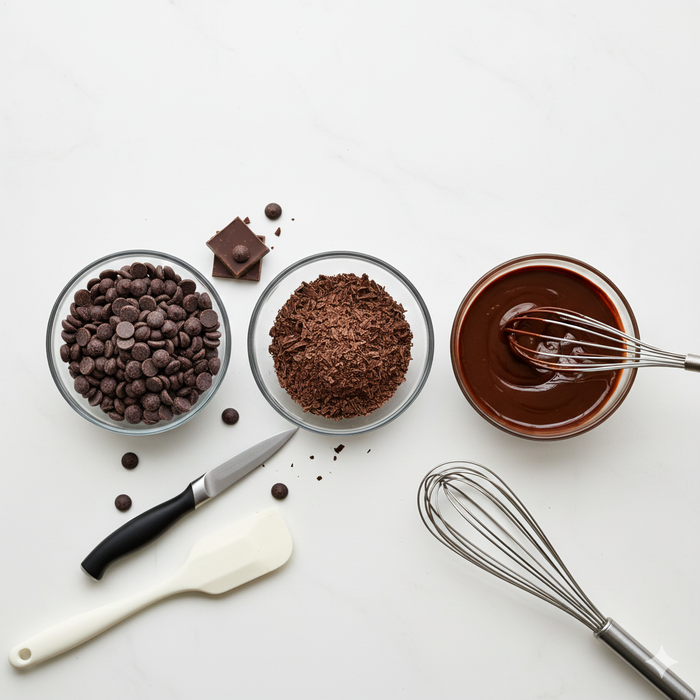
For a shell that sets firm and shiny at room temperature, use tempered couverture; compound coatings need no tempering but set less firmly.
| Option | Tempering? | What to expect |
|---|---|---|
| Couverture (real chocolate, cocoa butter) | Yes | Gloss and snap when well tempered; the classic professional coating |
| Compound coating ("candy melts") | No | A hard fat, usually hydrogenated palm kernel oil, replaces cocoa butter; applied at about 40°C (104°F); sets less firmly |
| Baking chips | Depends on the chips | Developed to be more heat stable for cookies and baking; check the ingredient list before dipping |
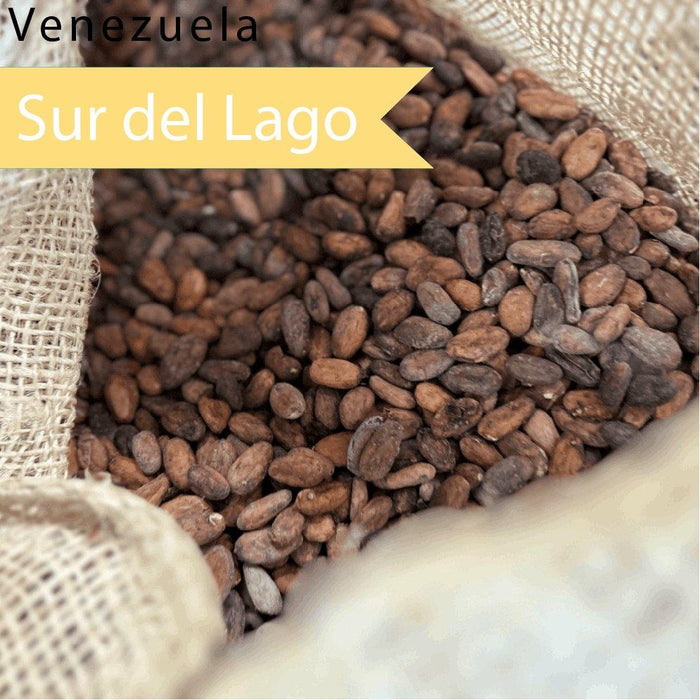
Our organic dark chocolate chips 70% are made from organic cocoa mass, cane sugar, cocoa butter and cocoa powder, and are listed for coating fruit and dipping. For production, Bassan Sur del Lago 71% is a couverture made in Canada from Venezuelan cacao, with a fluidity of 4 out of 5 and a working temperature of 30–32°C on its technical sheet.
View dark chocolate couverture →
Step 3: Melt, temper and hold the chocolate
Follow your chocolate's technical sheet: the figures differ from one maker to the next.
| Chocolate | Melt | Crystallise | Work at |
|---|---|---|---|
| Bassan Sur del Lago 71% dark | 50°C (122°F) maximum | — | 30–32°C (86–90°F) |
| FCH 55% dark, Venezuela | 45–50°C (113–122°F) | 28–29°C (82–84°F) | 31–32°C (88–90°F) |
- Do not overshoot: KREA Swiss explains that taking chocolate much above about 34°C (93°F) destroys the stable crystals that give gloss and snap, and that chocolate keeps climbing after you remove the heat.
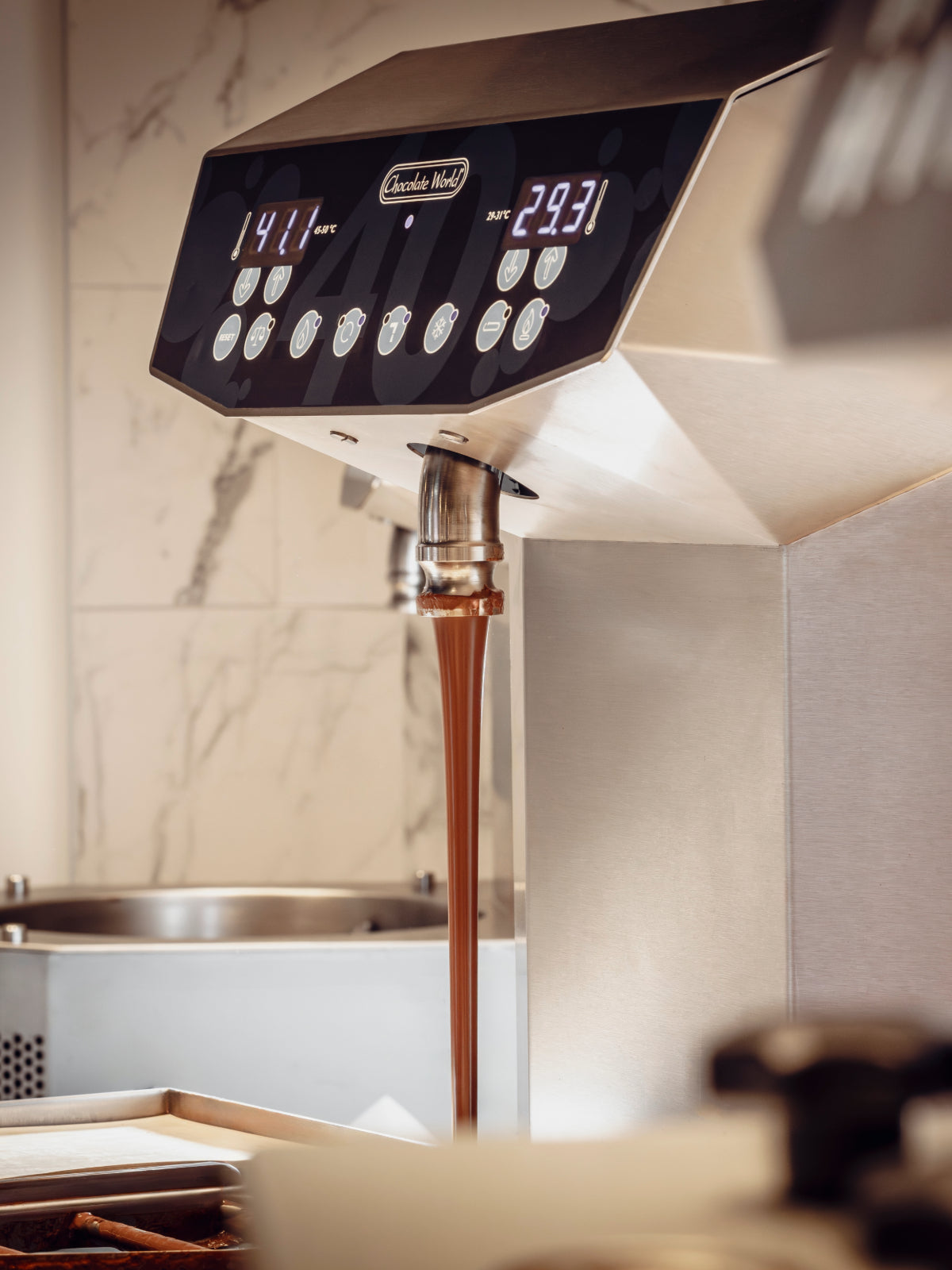
- Hold it steady: Bassan asks you to use its 71% within 4 hours of tempering. A melter with a thermostat keeps the bowl at one temperature through the whole dipping session; the Martellato Deep Meltinchoc MC10 has a deep 1.7 L round bowl and a thermostat up to 50°C, on 110 V.
- Too thick? Chocolate that thickens in the bowl has usually cooled or over-crystallised. To make good couverture more fluid, stir in a little melted cocoa butter: the amount of cocoa butter is largely what sets chocolate's viscosity (BCcampus). Our natural cocoa butter is used to thin couverture for easier dipping (8 kg box $550.00 CAD). See also how to make melted chocolate thinner.
Step 4: Dip with a fork
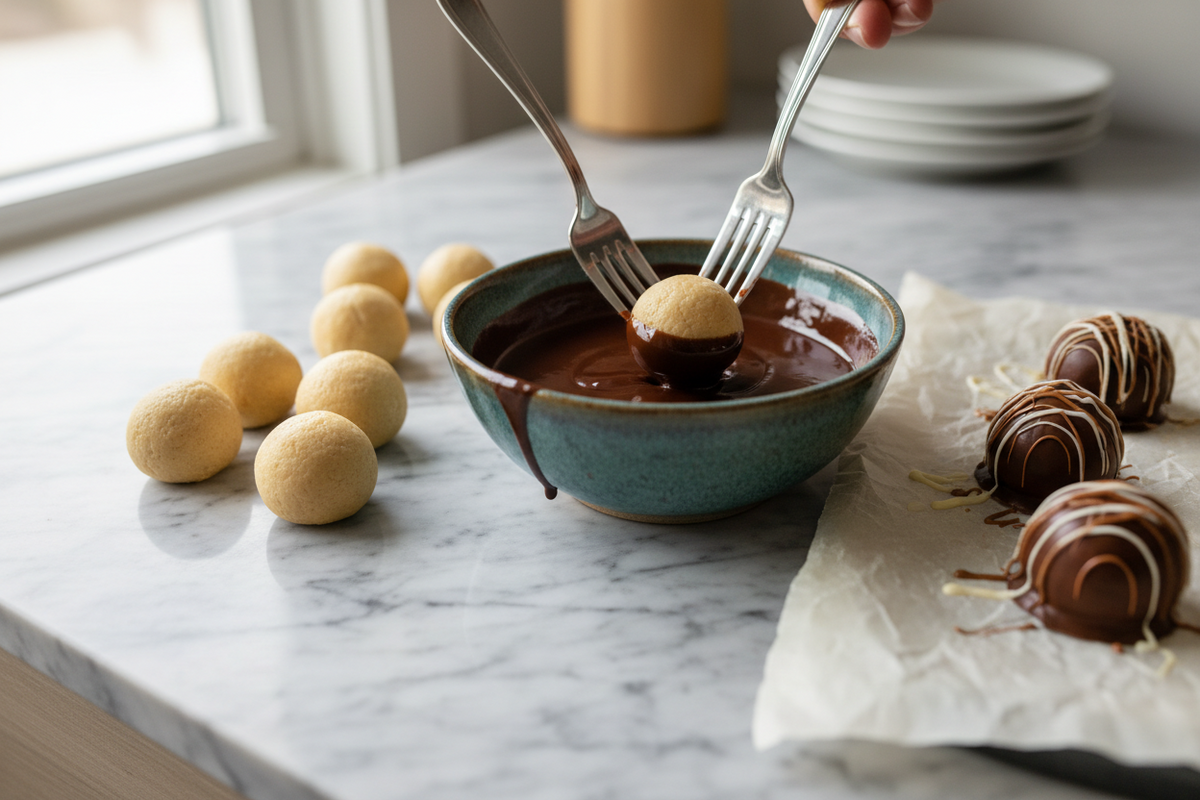
A dipping fork lets the excess chocolate drain away between its prongs before you set each ball down.
- Drop one ball into the chocolate and turn it over with the fork so it is fully covered.
- Lift it out on the fork and let the excess drip back, tapping the fork gently on the rim of the bowl.
- Draw the underside of the fork across the rim to remove the drip.
- Slide the ball off the fork onto parchment or acetate.
- Decorate straight away if you want toppings to stick, before the chocolate sets.
The Martellato dipping fork set has 10 stainless-steel forks, 18.5 cm long: $69.50 CAD. For more on the tools, read how to use chocolate dipping tools.
Step 5: Let them set, then store them well
Let the coating crystallise in a cool room rather than rushing it in a cold fridge. Bassan's sheet gives 16–18°C (61–64°F) for its 71% to crystallise, and a work room of 16–20°C (61–68°F).
For storage, Lonchampt and Hartel report that storing chocolate at 18°C (64°F) or below, without temperature fluctuations, best inhibits storage bloom. Keep the pieces in a closed container away from strong odours. If coated pieces go into the freezer, BCcampus advises wrapping them tightly and leaving the wrap on until they have thawed.
Common problems and their fixes
| Problem | Likely cause | Fix |
|---|---|---|
| Shell cracks as it sets | Centre too cold | Let chilled balls come up before dipping (Lonchampt and Hartel) |
| Chocolate thickens in the bowl | Cooled or over-crystallised; stirred too fast or too long | Warm gently, staying below about 34°C (93°F); re-temper if needed (KREA Swiss) |
| Grainy, seized chocolate | Water, steam or condensation | Prevent it: dry bowls and tools, keep steam and condensation away (KREA Swiss) |
| White streaks or spots within days | Under-tempered chocolate (fat bloom) or moisture (sugar bloom) | Temper correctly; under-tempered chocolate often blooms in less than two days (Lonchampt and Hartel) |
To understand the white marks, see how to prevent chocolate bloom.
Decorating
A drizzle of a contrasting chocolate from a piping bag, or a few decorations pressed on while the coating is still wet, makes the pieces look finished. We stock disposable piping bags in our piping bags and nozzles collection, and pearly chocolate grains for a crunchy finish.
A moulded alternative
If you want a uniform peanut-shaped bonbon with a peanut butter filling instead of a dipped ball, the Martellato peanut polycarbonate mould MA1036 has 20 cavities of about 11 g each ($39.95 CAD).
Selling them? Allergens come first
Peanuts are one of Canada's priority food allergens, and Canadian labelling rules require priority allergens on pre-packaged foods to be identified by their common names. Check the allergen statements of every ingredient too: our organic dark chips 70% may contain peanuts, tree nuts and soy, and Bassan 71% is produced in a facility that may handle tree nuts, dairy and gluten.
How AI can help your production
Give an AI assistant your recipe and the weight of one ball, and ask it to scale the batch to the number of pieces you need, including the couverture for the shells. Weigh ten coated balls against ten uncoated ones and give it the difference: it will turn that into chocolate per piece and a cost per piece. Ask it to write a one-page dipping procedure (chocolate temperature, centre temperature, room temperature, setting time) and a draft ingredient list for your label, which you then check against each supplier's specification.
AI organises the information; tasting and the final decision stay with your chef.
Dipping tools and couverture at Zucchero Canada
We are an authorized Martellato distributor and stock Bassan couverture, made in Canada, which ships across Canada from Calgary. Each product has a job: Bassan 71% for a glossy shell, the organic 70% chips for small batches, the Martellato fork set for clean dipping, and a Meltinchoc to hold the chocolate at temperature. For a smaller bench, the Mini Meltinchoc 1.8 L in silver costs $390.00 CAD. Every Martellato table-top melter comes with a free spatula.
For a full reference on tempering and coating, Ramon Morató's Chocolate, 6th edition (416 pages, 200 recipes) is on our shelf: $160.00 CAD.
Making peanut butter balls for a shop, café or events? Contact our team for volume couverture, or call 587-774-8873 (toll free 877-741-8251). Food products ship within Canada only.
Dark couverture | Chocolate melters | Chocolate tools | Melting chocolate chips for dipping | Best chocolate for dipping strawberries
This article is for information only. Every business is different: draw your own conclusions based on your own expectations, budget and goals, and talk to qualified experts before you decide or invest.
Sources: Lonchampt P. and Hartel R.W., "Fat bloom in chocolate and compound coatings", European Journal of Lipid Science and Technology 106 (2004) 241–274; KREA Swiss Knowledge, "Tempering, what it really is and where it goes wrong" (kreaswiss.com); BCcampus, Understanding Ingredients for the Canadian Baker, chapter 7 (compound chocolate, viscosity); Health Canada, "Common food allergens"; Bassan, FCH, Canada Cacao Co. and Martellato product data on zuccherocanada.ca.
Good to know
Frequently asked questions
Should peanut butter balls be frozen before dipping in chocolate?
Chill them so they are firm enough to roll and hold on a fork, but do not dip them ice-cold. Lonchampt and Hartel note that the centre of a filled chocolate must be slightly warm before enrobing, and that a centre that is too cold can encourage cracks or deposit moisture that leads to sugar bloom.
What is the best chocolate for dipping peanut butter balls?
Tempered couverture gives a shell that sets glossy and firm at room temperature, for example Bassan Sur del Lago 71% dark, worked at 30–32°C (86–90°F). Compound coatings ("candy melts") need no tempering because a hard fat replaces the cocoa butter, but they set less firmly. For small batches, our organic dark chocolate chips 70% are made with cocoa butter and listed for dipping.
Why does the chocolate crack on my peanut butter balls?
Lonchampt and Hartel name temperature as the cause: a centre or cooling that is too cold can encourage cracks in filled chocolates. Let chilled balls come up before dipping, and let the coating set in a cool room (Bassan gives 16–18°C / 61–64°F for its 71%) rather than in a cold fridge.
How do I thin chocolate for dipping peanut butter balls?
First check the temperature: chocolate that thickens in the bowl has usually cooled or over-crystallised. To make good couverture more fluid, stir in a little melted cocoa butter, the same fat that is already in the chocolate; the amount of cocoa butter largely sets chocolate's viscosity. Keep water and steam away, because moisture makes chocolate seize.
How should I store chocolate-covered peanut butter balls?
Keep them in a closed container in a cool place away from strong odours. Lonchampt and Hartel report that storing chocolate at 18°C (64°F) or below, without temperature fluctuations, best inhibits bloom. If you freeze them, wrap them tightly and leave the wrap on until they have thawed.
Do you ship couverture and dipping tools across Canada?
Yes. Bassan couverture ships across Canada from Calgary; food products ship within Canada only. Orders of $300 CAD or more ship free on selected products within Canada (chocolate is excluded from free shipping), and orders over $500 get 5% off automatically at checkout. Martellato table-top melters come with a free spatula.
Shop this article
Products mentioned in this guide
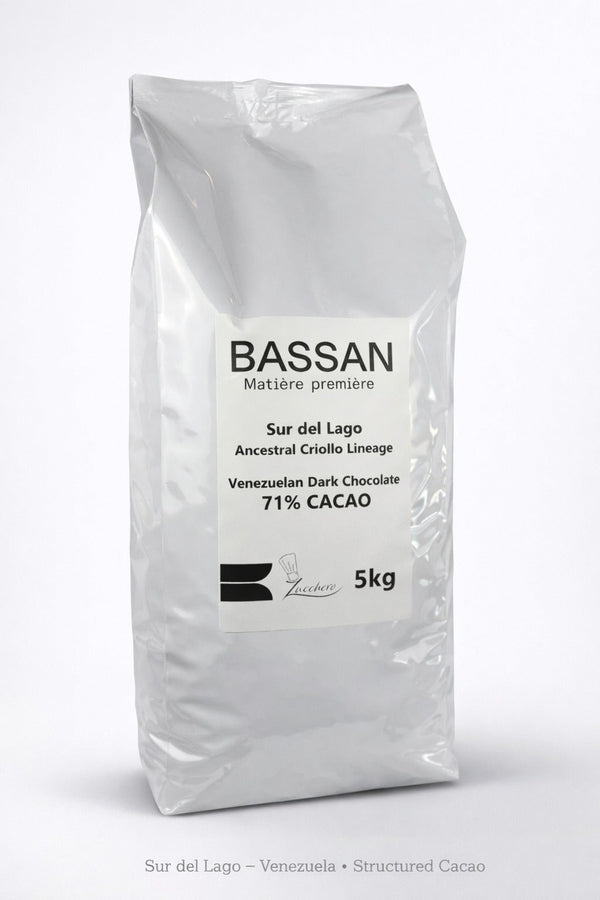 Bassan ChocolateSur del Lago Ancestral Criollo Lineage Dark Chocolate 71%From $69.95 CADView product →
 Canada Cacao Co.Organic Dark Chocolate Chips 70% Cacao 1 kg$45.95 CADView product →
 MartellatoDipping Fork Set - 10 Pcs – CHOCOFORK$69.50 CADView product →
 MartellatoDeep Meltinchoc Analogue Melter 1.7 L – MC10$669.00 CADView product →
For professionals
Equipping a chocolate shop, bakery or kitchen?
Tell us what you produce and how much. We will recommend the right machine, moulds and ingredients, and send you a quote.
For home bakers
Professional tools for your own kitchen
The same European moulds, tools and ingredients the professionals use.
5% off orders over $500 CAD, applied automatically at checkout.
Keep reading




Leave a comment
All comments are moderated before being published.
This site is protected by hCaptcha and the hCaptcha Privacy Policy and Terms of Service apply.