

How to Use Chocolate Dipping Tools: Forks, Temperature and a Clean Finish
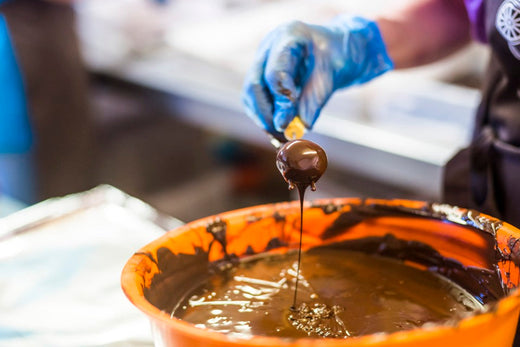
Short answer: drop the centre into tempered chocolate, push it under with the dipping fork, lift it out in one smooth movement, let the excess drain back into the bowl, clean the underside on the edge of the bowl and slide the piece onto parchment. Keep the chocolate at its working temperature the whole time, which Peter Greweling of the Culinary Institute of America puts very close to 32°C (90°F) for dark and 30°C (87°F) for milk or white chocolate, and work quickly. A set of forks in several shapes lets you pick the one that holds each centre steadily.
| Your need | What we recommend | Price |
|---|---|---|
| One fork of every shape, in stainless steel | Martellato dipping fork set, 10 pieces (CHOCOFORK) | $69.50 |
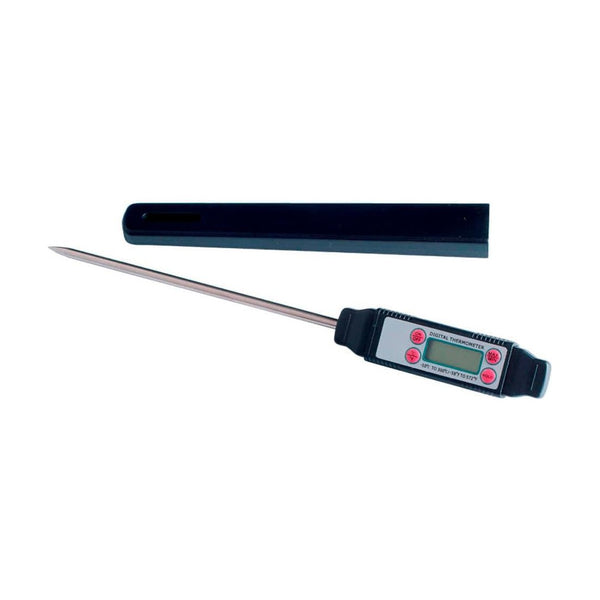
| Checking the working temperature | Martellato digital thermometer for chocolate 50T001 | $29.95 |
| Holding a small batch of chocolate warm while you dip | Martellato Mini Meltinchoc 1.8 L, silver | $390.00 |
| Dipping bars and pieces on a stick | Martellato Deep Meltinchoc 1.7 L (MC10) | $669.00 |
| A couverture for dipping and coating | Bassan Sur del Lago 71% dark couverture, 5 kg | $273.00 |
What chocolate dipping tools do you need?
You need a dipping fork, chocolate held at its working temperature, a thermometer to check it, and a lined tray to set the pieces on. The Culinary Institute of America's hand-dipping method uses exactly that station: a bowl of tempered chocolate, a dipping fork and a pan lined with parchment.
| Tool | What it does |
|---|---|
| Dipping fork | Pushes the centre under the chocolate, lifts it out and lets the excess drain without touching the coating |
| Bowl you can tilt, or a melter | Holds the chocolate; the CIA rests the bowl in a pan so it can be tilted towards you |
| Thermometer | Confirms the chocolate stays at its working temperature while you dip |
| Parchment or a silicone baking mat | Receives the dipped pieces while they set |
Dipping fork shapes: what is in a professional set
A professional set gives you one fork of each shape, so you can choose the fork that supports each centre best. Martellato's 2026 catalogue lists its stainless-steel forks in ten shapes, and its CHOCOFORK kit contains ten mixed forks, one of each type:
| Fork type | Shapes in the Martellato kit |
|---|---|
| Pronged forks | 2 teeth, 3 teeth, 4 teeth |
| Round loops | 14 mm, 16 mm, 18 mm, 20 mm |
| Shaped loops | Spiral, triangle, drop |
The set we stock is stainless steel and each fork is 18.5 cm long. Test each shape with your own centres: the right fork holds the piece level as you lift it, so the coating drains evenly.
View the Martellato dipping fork set → $69.50 CAD
What temperature should chocolate be for dipping?
Dip at the chocolate's working temperature: very close to 32°C (90°F) for dark and 30°C (87°F) for milk or white, according to Greweling, and always within the range the maker of your chocolate gives.
| Chocolate | Melt | Working (tempered) temperature |
|---|---|---|
| Dark chocolate (Greweling, CIA) | – | About 32°C (90°F) |
| Milk or white chocolate (Greweling, CIA) | – | About 30°C (87°F) |
| Bassan Sur del Lago 71% dark | Maximum 50°C (122°F) | 30–32°C (86–90°F); use within 4 hours of tempering |
| FCH 55% dark, Venezuela | 45–50°C (113–122°F) | 31–32°C (88–90°F) |
Check the chocolate in this order, as Greweling teaches: first the temper test, then the thickness, then the temperature. For the temper test, dip a palette knife and watch it set; dark chocolate should set within about seven minutes, free of streaks or a grainy texture, while milk and white take a little longer. If the test fails, do not warm the chocolate. If the chocolate is clearly thicker than it was when simply melted, it holds too many crystals: melt some out very carefully. If it is only too cool, warm it gently back to its working temperature.
Compound coating ("candy melts") is different: it is made with a hard fat instead of cocoa butter, needs no tempering and, according to the BCcampus textbook Understanding Ingredients for the Canadian Baker, coats best at about 40°C (104°F). Couverture, which the same textbook describes as chocolate with extra cocoa butter, is what professionals use for dipping and coating. For a full comparison, read what chocolate is best for melting and dipping.
How to use a dipping fork, step by step
The motion is always the same: submerge, lift, drain, clean the underside, set down. Set up your station to work from left to right, with the undipped centres, then the chocolate, then a parchment-lined pan for the dipped pieces, as the CIA recommends.
- Prepare the centres. They must be free of moisture and crumbs, which can spoil the chocolate (École Chocolat).
- Drop the centre into the chocolate. École Chocolat notes that this is much easier than trying to lower it in on the fork; the CIA places the centre upside down.
- Submerge it. Place the fork on top of the centre and push it under the chocolate.
- Lift it out. With one swift J-shaped motion, turn the centre over on the fork and lift it out of the chocolate.
- Drain the excess. Move the fork up and down so the bottom of the piece touches the surface of the chocolate, six to eight times (CIA); École Chocolat taps the fork three or four times against the surface.
- Clean the underside. Draw the bottom of the piece across the edge of the bowl to remove the excess chocolate. This prevents a "foot", the puddle of chocolate that forms around the base.
- Set it down. Let the front of the piece extend a little past the end of the fork, place it on the parchment and release it with a quick movement of the fork.
Work quickly: the chocolate starts to set on the centre and on the fork as you go. The CIA describes hand dipping as a technique that requires some precision and much practice to master, so dip a few test pieces before a full batch.
Common dipping problems and how to fix them
| Problem | Likely cause | What to do |
|---|---|---|
| A "foot" around the base | Too much chocolate left on the piece | Drain longer and clean the underside on the edge of the bowl before setting it down |
| Coating too thick, chocolate getting heavy | Too many crystals in the chocolate | Melt some crystals out very carefully, keeping enough to seed it (Greweling) |
| Coating sets streaky or grainy | Chocolate not properly tempered | Run the temper test; do not simply warm chocolate that fails it (Greweling) |
| Spots or a tacky surface after setting | Pieces left too long in the refrigerator (sugar bloom) | Set in a cool room instead (École Chocolat) |
If your couverture is simply too thick for the coating you want, adding cocoa butter increases its fluidity for thinner coatings and easier dipping. See how to make melted chocolate thinner for the method.
Setting and storing dipped chocolates
Let dipped pieces harden in a cool place; École Chocolat keeps the refrigerator for warm climates with no cool or air-conditioned room, because pieces left there too long can develop sugar bloom. Bassan gives 16–18°C (61–64°F) for crystallising its 71% couverture and 16–20°C (61–68°F), below 50% relative humidity, for storage. To store finished pieces, seal them with as little air as possible, and bring a cold container back to room temperature before opening it, so condensation forms on the outside of the box and not on the chocolate (École Chocolat).
Hand dipping or a machine?
Hand dipping with forks is the right tool for small batches, varied shapes and pieces you want to finish one by one; it costs little to start and needs only a fork set, a thermometer and a way to hold the chocolate warm. As volume grows, the time spent dipping each piece becomes the limit. Two steps up, without changing your recipes:
- Hold the chocolate at temperature for you: a melter keeps a set temperature so you can dip longer without reheating by hand. The Martellato Digital Meltinchoc ($1,150.00 CAD) melts at 45°C, signals when to seed and then holds 31°C for dark, 29°C for milk or 28°C for white chocolate.
- Coat in volume: tempering machines and enrobing lines cover pieces continuously. Read our chocolate enrobing guide and browse chocolate tempering machines.
How AI can help your production
Give an AI assistant the temperature table above and ask it to write a one-page dipping procedure for your team, with the station layout, the temper test and a line to record the chocolate temperature at regular intervals. Ask it to turn your centre recipe into batch sizes and to estimate how much couverture to temper for a given number of pieces, then check the estimate against a real test batch. A written routine keeps every shift dipping the same way, which is what keeps the finish consistent.
AI organises the information; tasting and the final decision stay with your chef.
Chocolate dipping tools at Zucchero Canada
We are an authorized distributor of Martellato in Canada, and its tools cover the whole dipping station:
- View the Martellato dipping fork set → $69.50 CAD
- View the Martellato digital thermometer 50T001 → $29.95 CAD
- View the Mini Meltinchoc 1.8 L → $390.00 CAD: dry heat, manual thermostat up to 50°C, 110 V
- View the Deep Meltinchoc MC10 → $669.00 CAD: a deep bowl for dipping bars and pieces on a stick, 110 V
For the chocolate, Bassan Sur del Lago 71% ($273.00 CAD for 5 kg) is a dark couverture made in Canada from Venezuelan cacao, and it ships across Canada from Calgary. To make a couverture more fluid for thin coatings, our natural cocoa butter ($550.00 CAD for 8 kg) is a single ingredient, pressed from Peruvian fine cacao.
Buying for a chocolate shop, bakery or hotel? Contact us for volume orders, or call 587-774-8873 (toll free 877-741-8251).
Chocolate tools | Chocolate melters | Martellato | How to melt chocolate chips for dipping | How to temper chocolate
This article is for information only. Every business is different: draw your own conclusions based on your own expectations, budget and goals, and talk to qualified experts before you decide or invest.
Sources: The Culinary Institute of America (CIA Foodies), hand-dipping technique for chocolates; P. Greweling, "Tempering Chocolate", Pastry Arts Magazine, 2024; École Chocolat, "Chocolate dipping"; BCcampus, Understanding Ingredients for the Canadian Baker, §7.3 Compound Chocolate and §7.4 Couverture; Martellato General Catalogue 2026 (dipping forks, CHOCOFORK) and Digital Meltinchoc user manual; Zucchero Canada product data for the Martellato fork set, thermometer and Meltinchoc melters, Bassan Sur del Lago 71%, FCH 55% Venezuela and natural cocoa butter.
Good to know
Frequently asked questions
How do you use a chocolate dipping fork?
Drop the centre into tempered chocolate, push it under with the fork, lift it out with one smooth J-shaped motion, let the excess drain by touching the bottom of the piece to the surface of the chocolate a few times, clean the underside on the edge of the bowl and slide the piece onto parchment. Work quickly, because the chocolate starts to set on the fork.
What temperature should chocolate be for dipping?
Use the chocolate's working temperature. Peter Greweling of the Culinary Institute of America puts it very close to 32°C (90°F) for dark and 30°C (87°F) for milk or white chocolate. Always follow your chocolate's own data: Bassan Sur del Lago 71% is worked at 30–32°C (86–90°F) after melting at no more than 50°C (122°F).
How do I stop a foot forming on dipped chocolates?
A foot is the puddle of chocolate that forms around the base when too much coating stays on the piece. Drain the piece longer over the bowl, then draw its underside across the edge of the bowl before you set it down.
Do I need to temper chocolate for dipping?
Yes, if you dip in real chocolate (couverture) and want a glossy coating that sets firm at room temperature. Compound coating, or candy melts, is made with a hard fat instead of cocoa butter and needs no tempering; it coats best at about 40°C (104°F).
Which fork should I use for which chocolate?
Use the fork that holds the piece level as you lift it, so the coating drains evenly. The Martellato CHOCOFORK set includes one of each of its ten shapes (2, 3 and 4 teeth, four round loops from 14 to 20 mm, spiral, triangle and drop), so you can test them with your own centres.
Is there free shipping or a discount when I order dipping tools?
Orders of $300 CAD or more on selected products ship free within Canada; remote areas and the territories pay the actual carrier rate, and cacao, chocolate and machines are excluded. Orders over $500 CAD get 5% off automatically at checkout. Martellato table-top melters come with a free spatula.
Shop this article
Products mentioned in this guide
 MartellatoDipping Fork Set - 10 Pcs – CHOCOFORK$69.50 CADView product →
 MartellatoDigital Thermometer for Chocolate 50T001$29.95 CADView product →
 Martellato"Mini Meltinchoc" Chocolate Melter 1.8 L – MC09GUSAFrom $390.00 CADView product →
 MartellatoDeep Meltinchoc Analogue Melter 1.7 L – MC10$669.00 CADView product →
For professionals
Equipping a chocolate shop, bakery or kitchen?
Tell us what you produce and how much. We will recommend the right machine, moulds and ingredients, and send you a quote.
For home bakers
Professional tools for your own kitchen
The same European moulds, tools and ingredients the professionals use.
5% off orders over $500 CAD, applied automatically at checkout.
Keep reading



Leave a comment
All comments are moderated before being published.
This site is protected by hCaptcha and the hCaptcha Privacy Policy and Terms of Service apply.