

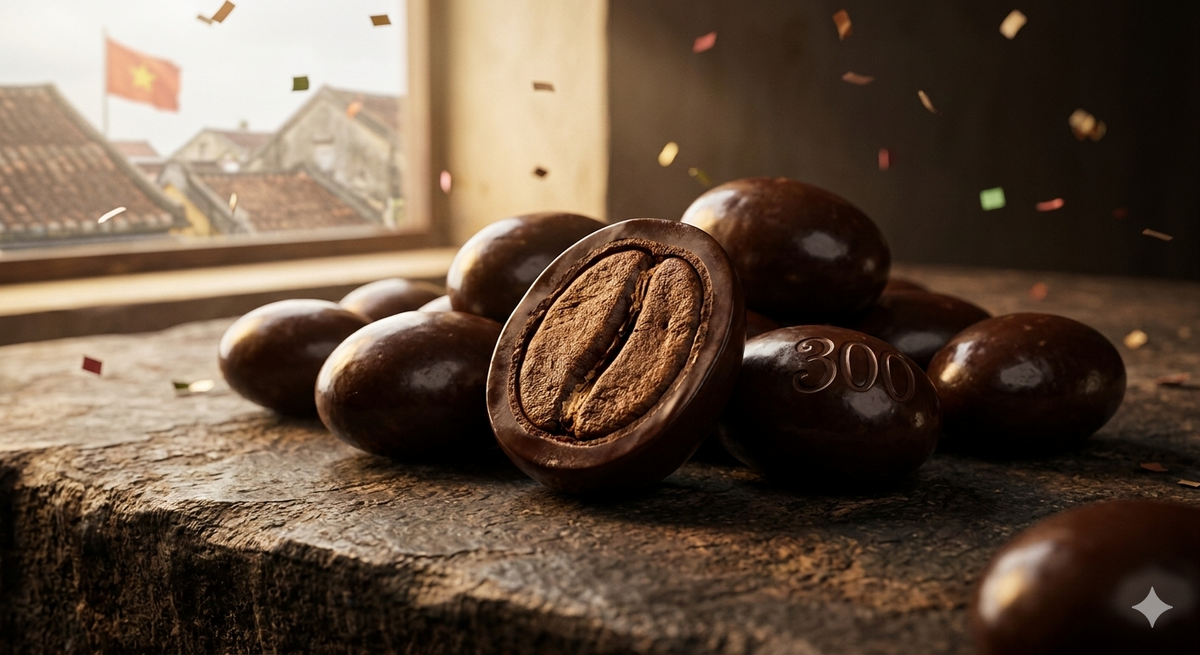
Combien de caféine dans les grains de café enrobés de chocolat ? Par grain et par portion
Réponse courte : environ 12 mg de caféine par grain. L'USDA FoodData Central indique 839 mg de caféine par 100 g pour les grains de café enrobés de chocolat noir, avec une portion de 40 g correspondant à 28 pièces : cela donne environ 336 mg par portion et environ 12 mg par pièce. À ce rythme, le maximum de Santé Canada pour les adultes, 400 mg par jour, est atteint avec environ 33 pièces.
Cet article est fourni à titre d'information générale uniquement et ne constitue pas un avis médical ou nutritionnel. Consultez toujours votre médecin, votre pharmacien ou un diététiste professionnel au sujet de votre situation, en particulier pendant la grossesse ou l'allaitement, ou si vous êtes diabétique, avez des allergies ou un problème de santé.
Caféine par grain de café enrobé de chocolat
Un grain de café enrobé de chocolat noir contient environ 12 mg de caféine selon les chiffres de l'USDA, et une once de la version au chocolat au lait environ 227 mg.
| Produit | Portion | Caféine | Théobromine |
|---|---|---|---|
| Grains de café enrobés de chocolat noir | 1 pièce (environ 1,4 g) | environ 12 mg* | environ 5 mg* |
| Grains de café enrobés de chocolat noir | 28 pièces (40 g) | environ 336 mg* | environ 147 mg* |
| Grains de café enrobés de chocolat noir | 1 oz (28,35 g) | environ 238 mg* | environ 104 mg* |
| Grains de café enrobés de chocolat au lait | 1 oz (28,35 g) | environ 227 mg* | environ 50 mg* |
*Calculé par nos soins à partir des valeurs de l'USDA pour 100 g : 839 mg de caféine et 368 mg de théobromine pour les grains de café enrobés de chocolat noir (portion de 28 pièces = 40 g), 800 mg de caféine et 178 mg de théobromine pour les grains de café enrobés de chocolat au lait.
Ce sont des estimations, pas des résultats de laboratoire. L'USDA a établi la fiche du chocolat noir à partir de la liste d'ingrédients et de l'étiquette d'un produit, et celle du chocolat au lait à partir de proportions de recette approximatives. La caféine du sachet que vous achetez dépend de sa recette : vérifiez l'étiquette lorsqu'elle donne un chiffre.
Presque toute cette caféine vient du café. L'USDA indique 80 mg de caféine par 100 g pour le chocolat noir (70–85 % de cacao) : même si une pièce entière de 1,4 g était du chocolat noir, elle n'apporterait qu'environ 1 mg. Le reste des 12 mg provient du grain torréfié.
Combien de grains de café enrobés de chocolat équivalent à une tasse de café ?
Environ 8 grains de café enrobés de chocolat noir équivalent à une tasse de café infusé de 8 oz liq. selon les chiffres de l'USDA, et environ 11 à la moyenne de 135 mg de Santé Canada pour la même tasse.
| Aliment ou boisson | Portion | Caféine | Autant de caféine que |
|---|---|---|---|
| Café infusé (USDA) | 8 oz liq. (237 ml) | environ 95 mg | environ 8 grains* |
| Café infusé (Santé Canada) | 8 oz (237 ml) | 135 mg (moyenne) | environ 11 grains* |
| Espresso (USDA) | 1 oz liq. | environ 63 mg | environ 5 grains* |
| Thé noir ou vert, infusé (Santé Canada) | 8 oz (237 ml) | 30–50 mg | environ 2½ à 4 grains* |
| Chocolat noir, 70–85 % de cacao (USDA) | 1 oz (28,35 g) | environ 23 mg | environ 2 grains* |
| Bonbon au chocolat au lait (Santé Canada) | 1 oz (28 g) | 7 mg (moyenne) | moins de 1 grain* |
*Calculé par nos soins à environ 12 mg par grain de café enrobé de chocolat noir. Les valeurs de l'USDA pour le café, l'espresso et le chocolat noir sont calculées à partir de ses chiffres pour 100 g, comme dans notre article sur la caféine dans le chocolat noir et dans le café.
La différence, c'est la vitesse et le volume : une poignée de grains se mange en une minute, alors qu'une tasse de café est une boisson qu'on remarque. Comptez les pièces si vous surveillez votre consommation de caféine.
Combien de grains de café enrobés de chocolat peut-on manger ? Les limites de Santé Canada
Santé Canada recommande un maximum de 400 mg de caféine par jour pour les adultes, de 300 mg pour les personnes qui prévoient une grossesse, sont enceintes ou allaitent, et de 2,5 mg par kg de poids corporel pour les enfants et les adolescents.
| Groupe | Maximum de Santé Canada par jour | À peu près l'équivalent de |
|---|---|---|
| Adultes (18 ans et plus) | 400 mg | 33 grains de café enrobés de chocolat noir* |
| Projet de grossesse, grossesse ou allaitement | 300 mg | 25 grains* |
| Enfants et adolescents (jusqu'à 18 ans) | 2,5 mg par kg de poids corporel | un enfant de 30 kg (66 lb) : 75 mg, environ 6 grains* |
*Calculé par nos soins à environ 12 mg par grain ; l'enfant de 30 kg n'est qu'un exemple.
Ces chiffres supposent que les grains sont votre seule source de caféine de la journée. Le café, le thé et le chocolat contiennent aussi de la caféine, comme le montre le tableau ci-dessus : leur caféine s'ajoute à celle des grains. Si l'on vous a conseillé de limiter la caféine, ou si vous êtes enceinte ou allaitez, demandez à votre médecin ou à votre pharmacien comment les intégrer. Nos articles sur le chocolat pendant la grossesse et le chocolat pendant l'allaitement traitent ces questions séparément.
La torréfaction ou le type de café change-t-il la caféine ?
L'espèce de café compte davantage que la torréfaction, selon une étude de laboratoire.
Des chercheurs ont torréfié des grains d'Arabica et de Robusta à 220 ± 10 °C (428 ± 18 °F) pendant 7, 9 et 11 minutes et analysé les boissons préparées avec ces grains. La teneur en caféine n'a pas varié avec la durée de torréfaction, tandis que la caféine faisait partie des mesures qui distinguaient les deux espèces (Bicho et al., International Journal of Food Sciences and Nutrition, 2011). En pratique, une torréfaction plus foncée n'est pas un moyen fiable d'obtenir moins de caféine : ce sont les grains eux-mêmes qui la déterminent.
Calories et sucre dans les grains de café enrobés de chocolat
Une portion de 40 g, soit 28 grains de café enrobés de chocolat noir, contient environ 216 calories et 17 g de sucres selon les chiffres de l'USDA.
Ces chiffres sont calculés par nos soins à partir des valeurs de l'USDA pour 100 g : 540 kcal, 42,5 g de sucres totaux et 30 g de lipides. Cela fait environ 8 calories par pièce. Comme pour la caféine, c'est l'étiquette du produit que vous achetez qui fait foi.
Pour les producteurs : comment on fabrique les grains de café enrobés de chocolat
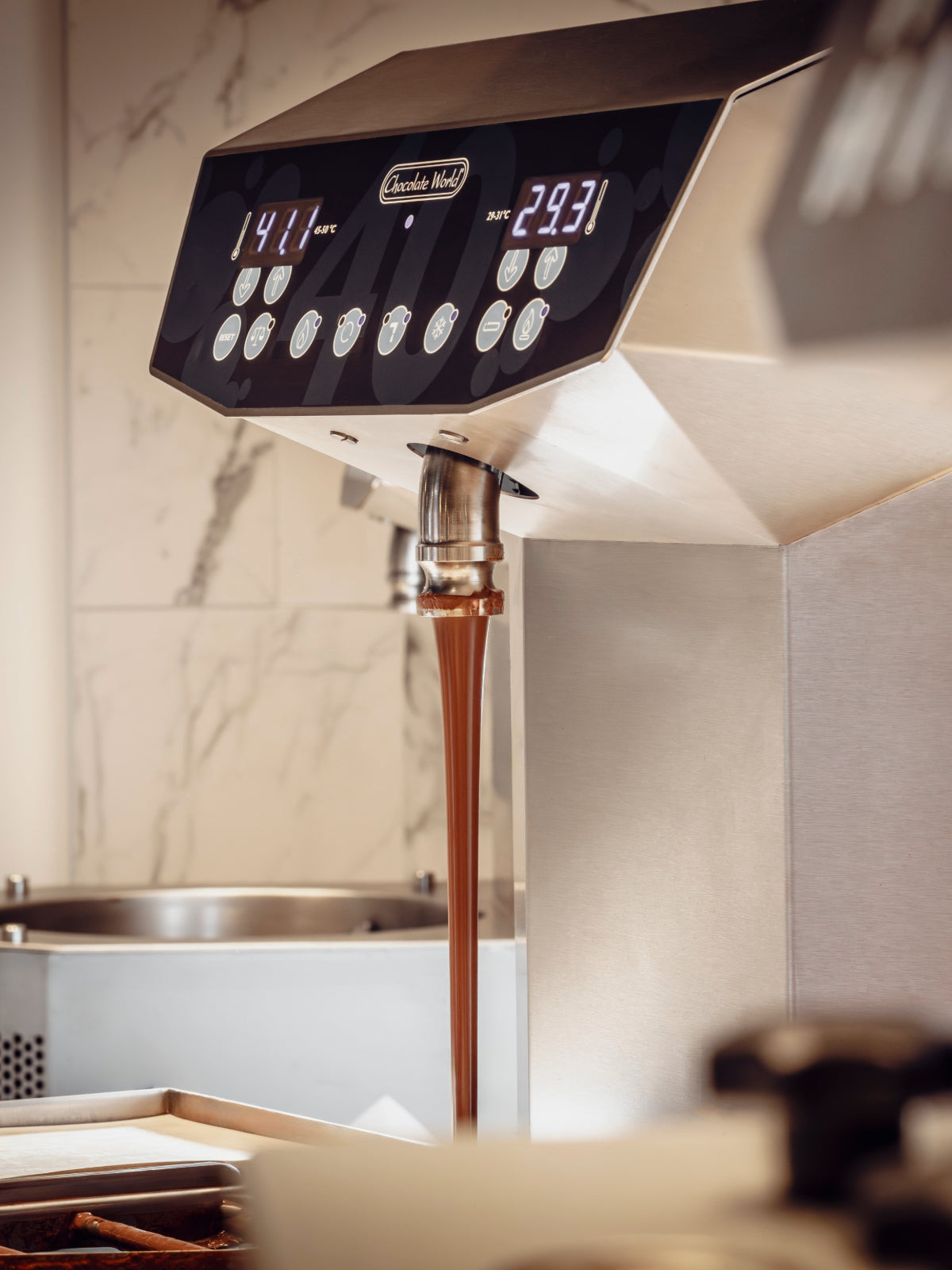
Les grains de café enrobés de chocolat se fabriquent par dragéification : les grains tournent dans une turbine pendant qu'on ajoute peu à peu du chocolat tempéré, et de l'air frais fige chaque couche jusqu'à obtenir l'épaisseur d'enrobage voulue.
C'est ainsi que Chocolate World décrit le procédé pour ses turbines à dragéifier, conçues pour enrober noix, grains de café et fruits secs. Pour un premier essai, on peut aussi tremper les grains de café un à un à la main avec une fourchette à tremper.
| Votre production | Produit | Prix |
|---|---|---|
| Essais à la main | Jeu de fourchettes à tremper Martellato, 10 pièces | $69.50 |
| Petits et moyens lots sur une prise de 110 V | Turbine à dragéifier Chocolate World, 7 L, 110 V | $10,775.00 |
| Lots moyens sur une prise de 110 V | Turbine à dragéifier Chocolate World, 16 L, 110 V | $12,995.00 |
| Turbine de table avec air chaud et froid, 240 V | Pomati Bassina Mini, cuve de 4,5 kg | $14,550.00 |
| Lots plus importants avec air chaud et froid, 240 V | Pomati Bassina, cuve de 16 kg | $21,450.00 |
Quelle machine pour quel atelier. Les deux machines Chocolate World fonctionnent en 110 V monophasé, l'alimentation standard en Amérique du Nord, avec vitesse variable et un ventilateur qui souffle de l'air frais par un tube en silicone amovible ; choisissez 7 L ou 16 L selon la taille de vos lots. Les deux Pomati Bassina fonctionnent en 240 V et ont une pompe à chaleur intégrée qui fournit de l'air chaud et de l'air froid, un écran tactile et une vitesse de cuve réglable de 10 à 60 tr/min ; la Mini prend 4,5 kg par cycle et la Bassina des lots de 8 ou 16 kg.
Voir les turbines à dragéifier et les machines d'enrobage →
Le chocolat pour l'enrobage
Utilisez une couverture que vous pouvez tempérer et maintenir à une température de travail stable :
- Bassan Sur del Lago 71 %, sac de 5 kg → $273.00. Fabriqué au Canada à partir de cacao Trinitario vénézuélien de lignée Criollo ancestrale ; température de travail 30–32 °C (86–90 °F), cristallisation à 16–18 °C (61–64 °F), fluidité 4 sur l'échelle de 5 de Bassan.
- Chocolat noir FCH 55 % en minibarres, boîte de 10 kg → $299.00. Cacao Trinitario 100 % vénézuélien ; fonte à 45–50 °C (113–122 °F), cristallisation à 28–29 °C (82–84 °F), travail à 31–32 °C (88–90 °F).
L'allure du grain de café, sans la caféine
Si vous voulez la forme d'un grain de café sans café, moulez-la en chocolat. Le moule grain de café Chocolate World CW1281 (from $39.95) compte 104 empreintes d'environ 1 g chacune. Une pièce de 1 g de chocolat noir à 70–85 % apporte environ 0,8 mg de caféine selon le chiffre de l'USDA (80 mg par 100 g), soit environ un quinzième d'un vrai grain de café enrobé de chocolat.
Si vous vendez l'un ou l'autre de ces produits et souhaitez indiquer sa teneur en caféine, utilisez une analyse de laboratoire ou un calcul à partir des données de vos fournisseurs, et présentez-le comme une estimation s'il ne vient pas d'un laboratoire.
Comment l'IA peut aider votre production
Donnez à un assistant d'IA la teneur en caféine fournie par votre torréfacteur, le poids de vos grains avant et après la dragéification et le pourcentage de cacao de votre couverture. Demandez-lui d'estimer la caféine par pièce et par sachet, et de montrer comment le chiffre change si vous épaississez l'enrobage ou changez de grains. Il peut aussi transformer vos étapes de dragéification en procédure écrite pour chaque lot : poids chargé, chocolat ajouté à chaque passage, vitesse de la cuve et temps de prise.
L'IA organise l'information ; la dégustation et la décision finale restent entre les mains de votre chef.
Turbines à dragéifier et couverture chez Zucchero Canada
Zucchero Canada est distributeur autorisé des machines Chocolate World et Pomati et des outils Martellato. Le Bassan Sur del Lago 71 % est fabriqué au Canada et expédié partout au Canada depuis Calgary ; les turbines à dragéifier Chocolate World sont expédiées partout au Canada par transport de fret. Les fiches produits indiquent la tension, la puissance et la capacité de la cuve : vous pouvez vérifier votre alimentation électrique avant de commander.
Les commandes de plus de 500 $ CA bénéficient automatiquement de 5 % de rabais à la caisse. Le chocolat et les machines ne font pas partie de notre offre de livraison gratuite, et les produits alimentaires sont expédiés au Canada seulement. Vous achetez de la couverture à la caisse ou équipez un atelier de production ? Contactez-nous ou appelez le 587-774-8873 (sans frais 877-741-8251).
Turbines et machines d'enrobage | Couverture noire | Fourchettes à tremper | Caféine : chocolat noir ou café | Le chocolat noir contient-il de la caféine ? | Cacao ou café
Cet article est fourni à titre informatif seulement. Chaque entreprise est différente : tirez vos propres conclusions selon vos attentes, votre budget et vos objectifs, et consultez des experts qualifiés avant de décider ou d'investir.
Sources : USDA FoodData Central, « Candies, dark chocolate coated coffee beans » (FDC 169634, SR Legacy 19268), « Candies, milk chocolate coated coffee beans » (FDC 169637, SR Legacy 19279), « Chocolate, dark, 70–85% cacao solids » (FDC 170273), café infusé (FDC 171890) et espresso (FDC 171891) ; Santé Canada, « La caféine dans les aliments » (modifié le 2025-04-02) ; Bicho NC, Leitão AE, Ramalho JC, De Alvarenga NB, Lidon FC, « Identification of nutritional descriptors of roasting intensity in beverages of Arabica and Robusta coffee beans », International Journal of Food Sciences and Nutrition 62(8):865–871, 2011 ; données produits Zucchero Canada pour les turbines à dragéifier Chocolate World 7 L et 16 L, les Pomati Bassina et Bassina Mini, les fourchettes à tremper Martellato, le moule Chocolate World CW1281, le Bassan Sur del Lago 71 % et le FCH 55 %.
Good to know
Frequently asked questions
Combien de caféine contient un grain de café enrobé de chocolat ?
Environ 12 mg. L'USDA FoodData Central indique 839 mg de caféine par 100 g pour les grains de café enrobés de chocolat noir, avec une portion de 28 pièces pesant 40 g, soit environ 12 mg par pièce et environ 336 mg par portion. Le chiffre de l'USDA est une estimation tirée de l'étiquette d'un produit : c'est l'étiquette du sachet que vous achetez qui fait foi.
Combien de grains de café enrobés de chocolat équivalent à une tasse de café ?
Environ 8 grains de café enrobés de chocolat noir équivalent à une tasse de café infusé de 8 oz liq. (237 ml) selon les chiffres de l'USDA (environ 95 mg), et environ 11 à la moyenne de 135 mg de Santé Canada pour la même tasse. Un espresso (environ 63 mg, USDA) correspond à environ 5 grains.
À partir de combien de grains de café enrobés de chocolat est-ce trop ?
Santé Canada recommande un maximum de 400 mg de caféine par jour pour les adultes, soit environ 33 grains de café enrobés de chocolat noir, et de 300 mg pour les personnes qui prévoient une grossesse, sont enceintes ou allaitent, soit environ 25 grains. Pour les enfants et les adolescents, le maximum est de 2,5 mg par kg de poids corporel. Ces chiffres supposent aucune autre caféine dans la journée ; le café, le thé et le chocolat s'y ajoutent. Parlez de votre situation à votre médecin ou à votre pharmacien.
Les grains de café enrobés de chocolat au lait contiennent-ils moins de caféine que ceux au chocolat noir ?
À peine. L'USDA indique 800 mg de caféine par 100 g pour les grains de café enrobés de chocolat au lait et 839 mg pour ceux au chocolat noir : environ 227 mg et 238 mg par once. Presque toute la caféine vient du grain de café, pas du chocolat.
Une torréfaction plus foncée donne-t-elle moins de caféine ?
Pas selon une étude de laboratoire sur des grains d'Arabica et de Robusta torréfiés pendant 7, 9 et 11 minutes : la teneur en caféine n'a pas varié avec la durée de torréfaction, alors qu'elle différait entre les deux espèces (Bicho et al., 2011). L'espèce de café compte davantage que la torréfaction.
Puis-je acheter chez Zucchero Canada l'équipement et le chocolat pour fabriquer des grains de café enrobés de chocolat ?
Oui. Nous proposons les turbines à dragéifier Chocolate World de 7 L et 16 L en 110 V, les turbines Pomati Bassina et Bassina Mini en 240 V, les fourchettes à tremper Martellato et des couvertures comme le Bassan Sur del Lago 71 % et le FCH 55 %. Les commandes de plus de 500 $ CA bénéficient automatiquement de 5 % de rabais. Le chocolat et les machines ne sont pas inclus dans notre offre de livraison gratuite, et les produits alimentaires sont expédiés au Canada seulement. Pour les commandes en volume, contactez-nous ou appelez le 587-774-8873.
Shop this article
Products mentioned in this guide
 MartellatoEnsemble de fourchettes à tremper - 10 pièces$69.50 CADView product →
 Chocolate WorldMachine de enrobage de chocolat 7L - 110V$10,775.00 CADView product →
 Chocolate WorldMachine de enrobage de chocolat 16 L - 110V$12,995.00 CADView product →
 PomatiEnrobeuse de comptoir Pomati Mini Bassina$14,550.00 CADView product →
For professionals
Equipping a chocolate shop, bakery or kitchen?
Tell us what you produce and how much. We will recommend the right machine, moulds and ingredients, and send you a quote.
For home bakers
Professional tools for your own kitchen
The same European moulds, tools and ingredients the professionals use.
5% off orders over $500 CAD, applied automatically at checkout.
Keep reading



Laisser un commentaire
Tous les commentaires sont modérés avant d'être publiés.
Ce site est protégé par hCaptcha, et la Politique de confidentialité et les Conditions de service de hCaptcha s’appliquent.