
Comment faire fondre des pépites de chocolat pour le trempage : micro-ondes, bain-marie ou fondoir
En bref : pour faire fondre des pépites de chocolat pour l'enrobage par trempage, mettez-les dans un bol parfaitement sec et chauffez-les doucement, au micro-ondes par courtes séquences en remuant entre chacune, ou au bain-marie à l'abri de la vapeur, et arrêtez avant que les derniers morceaux soient fondus : la chaleur continue de monter après l'arrêt. Vérifiez la température et ne dépassez jamais le maximum du fabricant (50 °C / 122 °F pour la couverture Bassan 71 % que nous proposons). Des pépites fondues non tempérées peuvent figer molles, ternes ou striées : pour des fraises ou des bretzels trempés qui doivent figer brillants à température ambiante, tempérez le chocolat, à la main ou avec un fondoir qui guide l'ensemencement et maintient la température de travail pour vous.
| Votre besoin | Notre recommandation | Prix |
|---|---|---|
| Des pépites qui fondent bien pour tremper des fruits | Pépites de chocolat noir biologique 70 %, 1 kg | $45.95 |
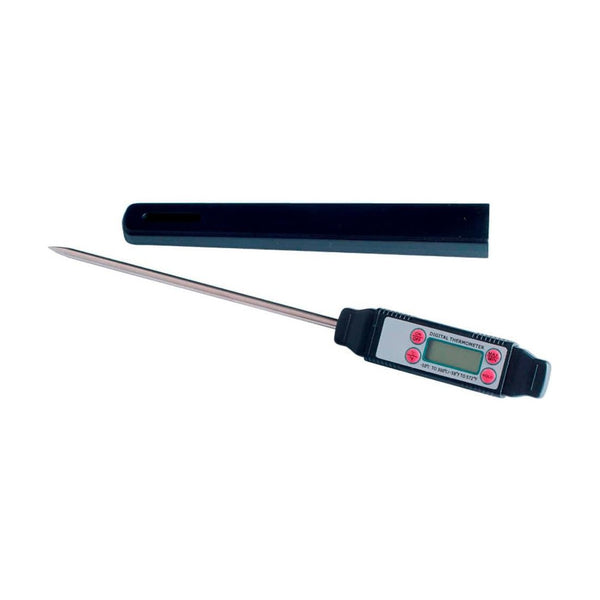
| Vérifier la température pendant la fonte | Thermomètre numérique Martellato pour chocolat 50T001 | $29.95 |
| Tremper proprement, pièce après pièce | Jeu de 10 fourchettes à tremper Martellato | $69.50 |
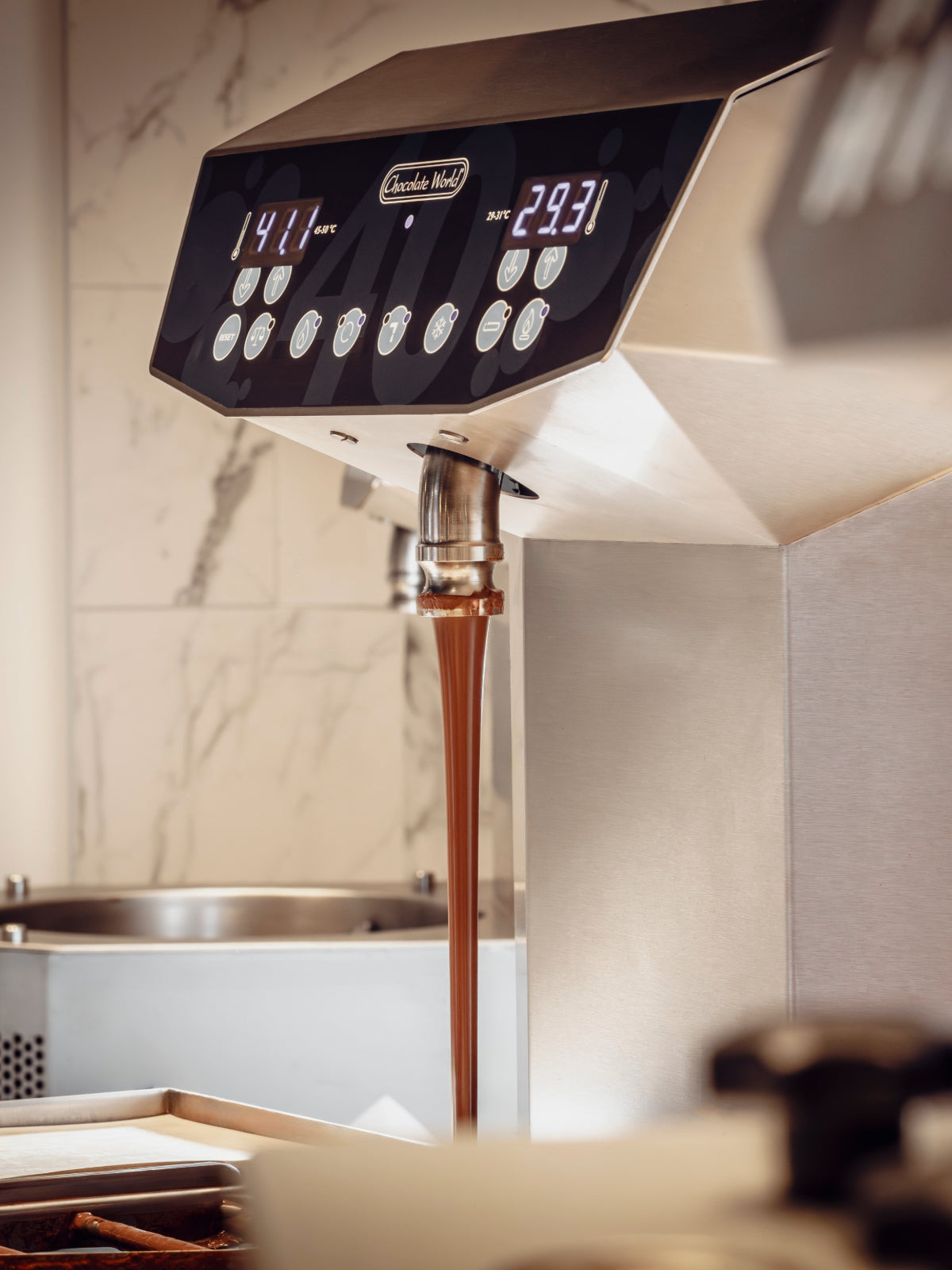
| Maintenir le chocolat fondu pour les petites séries | Martellato Mini Meltinchoc 1,8 L, argent | $390.00 |
| Fondre, ensemencer et maintenir à la température de tempérage | Martellato Digital Meltinchoc 3,6 L | $1,150.00 |
Quelles pépites de chocolat conviennent au trempage ?
Les pépites faites avec du beurre de cacao peuvent être fondues pour le trempage, mais beaucoup de pépites sont conçues pour garder leur forme au four : lisez la liste d'ingrédients avant d'acheter.
- Pépites de cuisson : selon Understanding Ingredients for the Canadian Baker (BCcampus), les pépites et morceaux sont développés pour mieux résister à la chaleur afin de rester entiers dans les biscuits, et certains remplacent le beurre de cacao par une autre matière grasse.
- Couverture : le même manuel décrit la couverture comme un chocolat contenant plus de beurre de cacao, utilisé par les professionnels pour le trempage, l'enrobage, le moulage et la décoration.
- Chocolat de couverture composé (« candy melts ») : généralement fait avec une autre matière grasse que le beurre de cacao, il ne demande pas de tempérage ; il fond vers 35–37 °C (95–99 °F), enrobe le mieux vers 40 °C (104 °F), et le chauffer à 50 °C (122 °F) ou plus peut réduire sa viscosité.
Nos pépites de chocolat noir biologique 70 % sont faites de masse de cacao, de sucre de canne, de beurre de cacao et de poudre de cacao naturelle biologiques, et les données du produit les indiquent pour enrober des fruits et pour le trempage. Pour une comparaison complète des chocolats à fondre, lisez quel chocolat choisir pour fondre et tremper.
Avant de commencer : tout doit être sec
Même un peu d'eau peut rendre le chocolat en train de fondre épais et granuleux : le bol, la spatule et tout ce que vous trempez doivent être parfaitement secs.
L'humidité fait s'agglomérer les particules de sucre du chocolat en grumeaux granuleux et augmente sa viscosité (Afoakwa et al., 2007). KREA Swiss cite la condensation, une forte humidité, un bol mal séché et la vapeur d'un bain-marie parmi les causes fréquentes d'échec. Séchez soigneusement les fraises lavées avant de les tremper.
Faire fondre des pépites de chocolat au micro-ondes
Le micro-ondes est la méthode la plus rapide pour de petites quantités, mais sa chaleur est inégale : faites fondre par courtes séquences et remuez entre chacune.
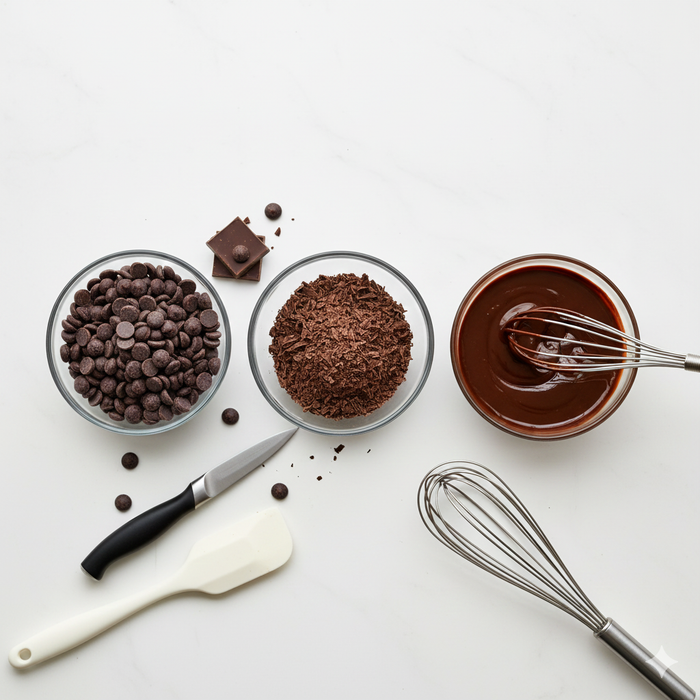
- Mettez les pépites dans un bol sec allant au micro-ondes.
- Chauffez brièvement, puis remuez bien, même si les pépites semblent encore entières ; remuer répartit la chaleur des points chauds.
- Répétez par courtes séquences en remuant à chaque fois.
- Arrêtez quand il reste encore quelques morceaux solides et remuez jusqu'à ce qu'ils fondent : le chocolat continue de chauffer après l'arrêt.
- Vérifiez au thermomètre et restez sous le maximum du fabricant (50 °C / 122 °F pour le Bassan 71 %).
KREA Swiss avertit que le chauffage au micro-ondes est inégal et peut apporter de l'humidité, et que le chocolat continue de monter au-delà de votre cible après l'arrêt. C'est pourquoi de courtes séquences et un thermomètre comptent plus qu'un temps fixe : chaque micro-ondes et chaque bol sont différents.
Faire fondre des pépites de chocolat au bain-marie
Le bain-marie chauffe plus doucement que le micro-ondes, à condition que ni vapeur ni eau n'atteignent le chocolat.
- Choisissez un bol sec et résistant à la chaleur qui s'ajuste bien sur la casserole, pour que la vapeur ne puisse pas monter autour et atteindre le chocolat.
- Chauffez l'eau doucement, mettez les pépites dans le bol sec et remuez pendant qu'elles fondent.
- Retirez le bol avant que tout soit fondu et terminez en remuant.
- Essuyez le fond du bol en le soulevant, pour qu'aucune goutte d'eau ne tombe dans le chocolat.
La vapeur est le principal risque : KREA Swiss cite la vapeur d'un bain-marie comme l'une des façons dont l'humidité entre dans le chocolat. Pour une comparaison des deux méthodes, voyez bain-marie ou micro-ondes.
Fondu n'est pas tempéré : ce que cela change pour le trempage
Un chocolat fondu non tempéré peut figer mou, terne ou strié ; pour un enrobage brillant au cassant net, le chocolat doit être tempéré.
KREA Swiss l'explique ainsi : le beurre de cacao peut cristalliser sous six formes, et seule la forme V (bêta-5) donne la brillance, le cassant et une longue conservation. Tempérer, c'est faire fondre le chocolat, l'ensemencer et le refroidir pour que la forme bêta-5 se forme, le réchauffer à la température de travail et l'y maintenir. Si le chocolat est déjà tempéré et que vous le réchauffez seulement à la température de travail, le monter bien au-delà d'environ 34 °C (93 °F) détruit les cristaux stables. Un chocolat mal tempéré peut sembler correct au début et développer un blanchiment gris des semaines plus tard.
| Chiffres de travail publiés | Fonte | Travail |
|---|---|---|
| Bassan Sur del Lago 71 % noir (fiche produit) | 50 °C (122 °F) maximum | 30–32 °C (86–90 °F) |
| Martellato Digital Meltinchoc, programme noir | 45 °C (113 °F), puis ensemencement | 31 °C (88 °F) |
| Martellato Digital Meltinchoc, programme lait | 45 °C (113 °F), puis ensemencement | 29 °C (84 °F) |
| Martellato Digital Meltinchoc, programme blanc | 45 °C (113 °F), puis ensemencement | 28 °C (82 °F) |
Les recettes diffèrent : KREA conseille de suivre les chiffres du fabricant de votre chocolat. La fiche de Bassan demande aussi de laisser cristalliser le 71 % à 16–18 °C (61–64 °F) et de l'utiliser dans les 4 heures suivant le tempérage. Pour la méthode complète, lisez comment tempérer le chocolat.
Trop épais, granuleux ou brûlé : solutions rapides
La plupart des problèmes de trempage viennent de la chaleur, de l'humidité ou d'une surcristallisation, et chacun a sa solution.
- Trop épais pour tremper : il refroidit peut-être et surcristallise ; KREA note que remuer trop vite ou trop longtemps rend le chocolat tempéré épais et raide. Notre guide comment rendre le chocolat fondu plus fluide explique les options, dont l'ajout de beurre de cacao.
- Épais et granuleux après un contact avec l'eau ou la vapeur : le chocolat a tourné. Voyez comment récupérer un chocolat surchauffé ou tourné.
- Surchauffé : gardez un thermomètre dans le bol et restez sous le maximum du fabricant ; le même guide explique ce que vous pouvez encore sauver.
Tremper fraises, bretzels et autres gourmandises
Trempez des pièces parfaitement sèches dans un chocolat maintenu à sa température de travail, laissez égoutter l'excédent et déposez-les sur du papier sulfurisé dans une pièce fraîche.
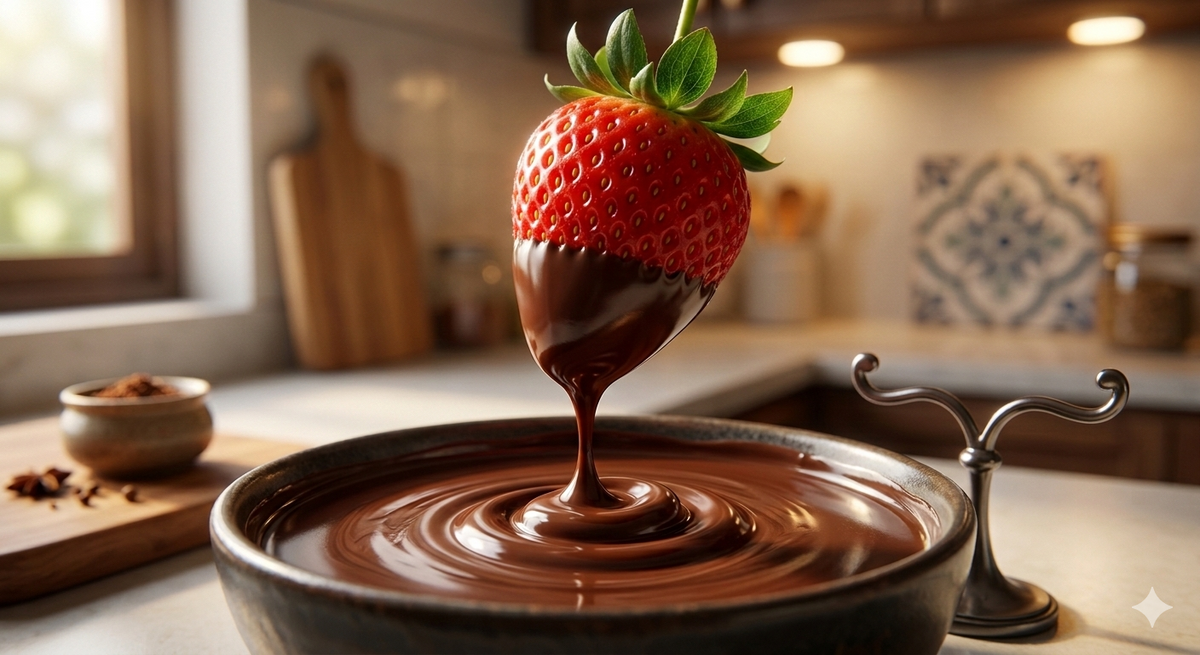
- Fruits : tenez les fraises par les feuilles, trempez, soulevez et laissez l'excédent retomber dans le bol. Pour choisir le chocolat, lisez le meilleur chocolat pour les fraises enrobées.
- Bretzels, biscuits, truffes et bonbons : une fourchette à tremper permet d'enrober toute la pièce, de la soulever et de tapoter l'excédent avant de la déposer. Le jeu Martellato compte 10 fourchettes en acier inoxydable de 18,5 cm. Notre guide comment utiliser les outils de trempage montre la technique.
- Cristallisation : laissez cristalliser les pièces dans une pièce fraîche. La fiche de Bassan indique 16–18 °C (61–64 °F) pour son 71 %, et un stockage à 16–20 °C sous 50 % d'humidité relative.
Voir les fourchettes à tremper →
Couleur et décoration des gourmandises trempées
Pour colorer le chocolat, utilisez des colorants liposolubles, qui se dissolvent dans le beurre de cacao ; les colorants à base d'eau apportent l'humidité qui rend le chocolat granuleux.
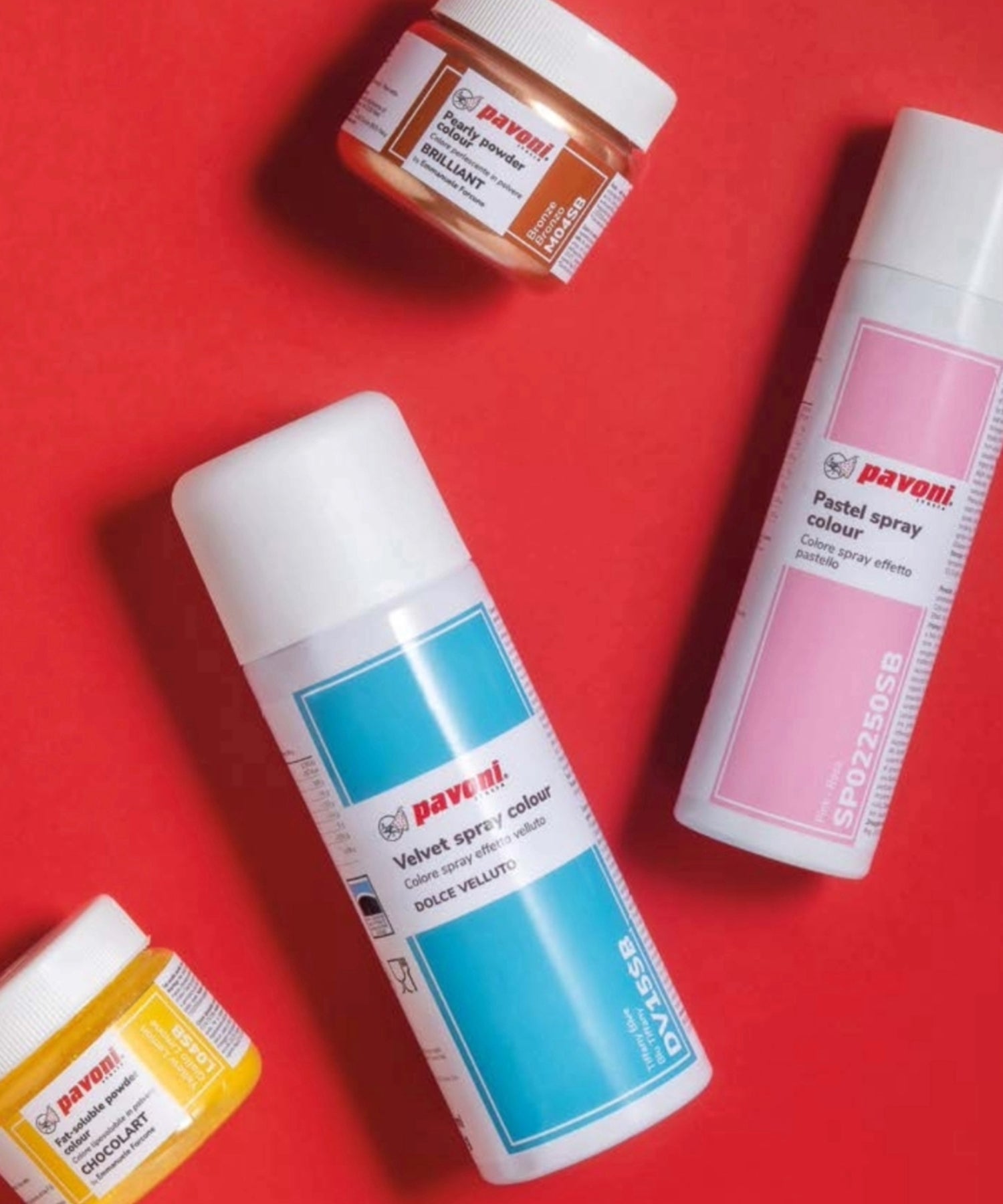
- Chocolat coloré : les poudres liposolubles Chocolart de Pavoni Italia se dissolvent dans le beurre de cacao pour colorer les masses de chocolat et les glaçages. Voir la poudre liposoluble blanche → $46.99 CAD
- Finition métallique : la poudre Brilliant Gold de Pavoni s'applique à sec au pinceau sur le chocolat ou diluée dans de l'alcool alimentaire pour peindre. Voir Brilliant Gold → $56.99 CAD
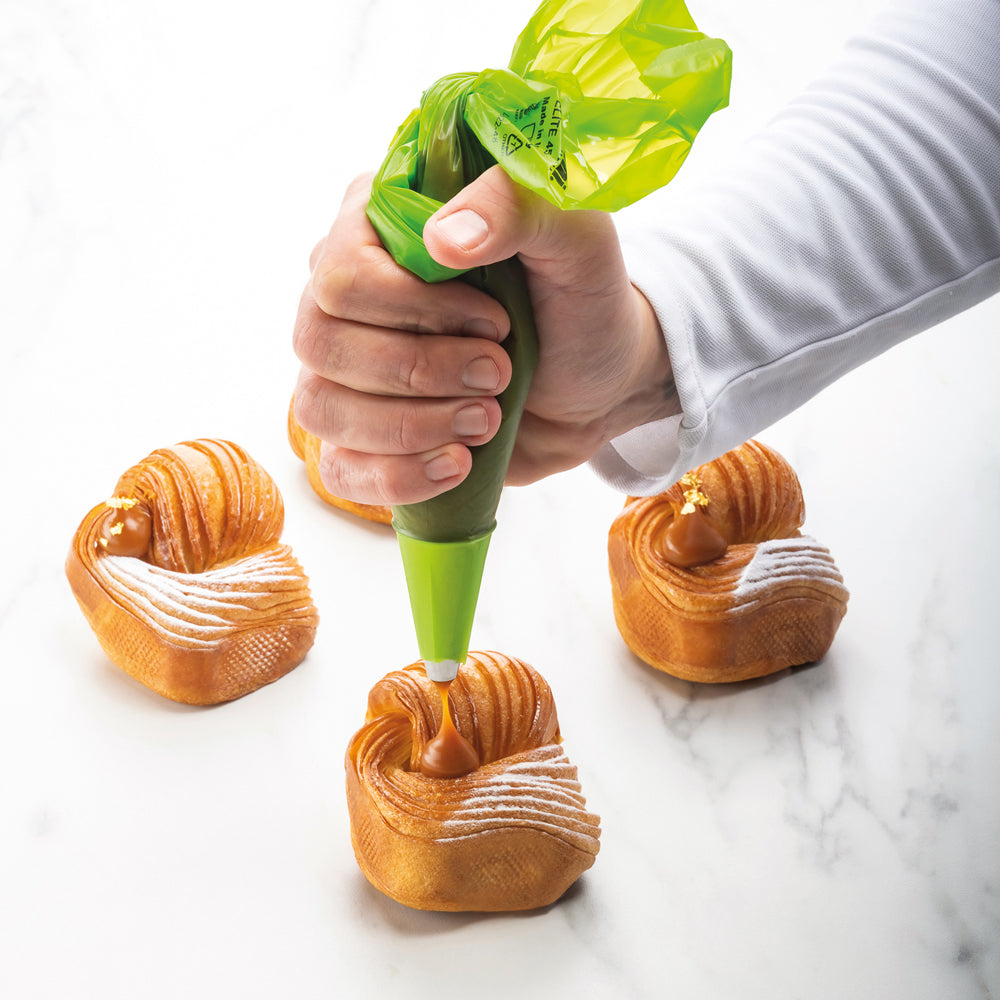
- Filets : les poches jetables Martellato GreenPoche ont une structure multicouche et un revêtement antidérapant. Voir les poches GreenPoche → from $7.95 CAD
- Motifs : les feuilles de transfert Pavoni, comme Pearly Gold (340 × 265 mm, boîte de 30), s'utilisent avec le chocolat noir, au lait ou blanc.
Voir les feuilles de transfert → Voir les colorants liposolubles →
Pour colorer les enrobages composés, voyez peut-on colorer les candy melts ?
Quand passer du bol au fondoir
Dès que vous trempez plus de quelques centaines de grammes à la fois, ou que le chocolat doit rester prêt pendant des heures, un fondoir qui maintient une température fixe fait gagner du temps et du chocolat.
KREA Swiss note qu'à la main, au-delà d'environ 500 g, le refroidissement passif ne peut pas descendre le chocolat aux ~26 °C (79 °F) que demande le tempérage : c'est pourquoi le tempérage manuel ne suit pas les volumes. Chaque fondoir Martellato ci-dessous a sa fonction :
| Modèle | Capacité | Idéal pour | Prix |
|---|---|---|---|
| Mini Meltinchoc MC09 | 1,8 L | Petites séries de pralines et trempage ; chaleur sèche, thermostat manuel jusqu'à 50 °C | $390.00 |
| Deep Meltinchoc MC10 | 1,7 L | Trempage sur bâtonnet (barres glacées, parfaits) : un bol rond profond | $669.00 |
| Digital Meltinchoc MCD101 | 3,6 L | Trempage tempéré : fond à 45 °C, signale le moment d'ensemencer, puis maintient 31 / 29 / 28 °C pour le noir, le lait ou le blanc | $1,150.00 |
Les trois fonctionnent en 110 V et sont livrés avec une raclette professionnelle de 145 mm offerte : c'est la spatule gratuite incluse avec chaque fondoir de table Martellato. Pour les grandes cuves et les autres marques, voyez la collection complète.
Voir tous les fondoirs à chocolat →
Comment l'IA peut aider votre production
Collez la fiche technique de votre chocolat dans un assistant IA et demandez-lui de rédiger une procédure de trempage d'une page pour votre équipe : limite de fonte, ensemencement, température de travail, température de la pièce de cristallisation et durée d'utilisation du chocolat. Demandez-lui de créer un registre de poste (heure, température du chocolat, test de tempérage, notes sur la brillance) et d'estimer la quantité de chocolat utilisée par produit trempé, pour savoir combien de kilos commander pour la ruée des fraises enrobées des fêtes.
L'IA organise l'information ; la dégustation et la décision finale restent entre les mains de votre chef.
Chocolat de trempage et outils chez Zucchero Canada
Nous sommes distributeur autorisé de Martellato et de Pavoni Italia, et nous proposons chocolat, fondoirs et outils aux chocolatiers, pâtissiers et passionnés de pâtisserie de tout le Canada. Choisissez selon la tâche : pépites biologiques 70 % ou couverture Bassan Sur del Lago 71 % (sac de 5 kg $273.00 CAD) pour le chocolat, un thermomètre et des fourchettes à tremper pour le travail à la main, un Mini ou un Deep Meltinchoc pour maintenir le chocolat pendant une séance, et le Digital Meltinchoc quand le trempage tempéré devient quotidien. Pour une référence complète sur le tempérage et l'enrobage, Chocolate, 6e édition de Ramon Morató (416 pages, 200 recettes) est sur nos étagères : $160.00 CAD.
Vous achetez pour une chocolaterie, une boulangerie ou un traiteur ? Contactez notre équipe pour les commandes en volume et des conseils sur l'équipement, écrivez à sales@zuccherocanada.ca ou appelez le 587-774-8873 (sans frais 877-741-8251).
Fondoirs à chocolat | Fourchettes à tremper | Feuilles de transfert | Le meilleur chocolat à fondre | Rendre le chocolat fondu plus fluide
Cet article est fourni à titre informatif seulement. Chaque entreprise est différente : tirez vos propres conclusions selon vos attentes, votre budget et vos objectifs, et consultez des experts qualifiés avant de décider ou d'investir.
Sources : BC Cook Articulation Committee, Understanding Ingredients for the Canadian Baker (BCcampus, CC BY 4.0), §7.3 « Compound Chocolate », §7.4 « Couverture » et §7.7 « Chips, Chunks, and Other Baking Products » ; KREA Swiss Knowledge, « Tempering, what it really is and where it goes wrong » (kreaswiss.com) ; Afoakwa E. O., Paterson A. et Fowler M., « Factors influencing rheological and textural qualities in chocolate – a review », Trends in Food Science & Technology 18(6):290–298, 2007 ; Martellato, manuel d'utilisation et d'entretien du Digital Meltinchoc (programmes et mode d'emploi) ; données produits pour Bassan Sur del Lago 71 %, pépites de chocolat noir biologique 70 %, fondoirs Martellato Meltinchoc, fourchettes à tremper, thermomètre et poches GreenPoche, colorants et feuilles de transfert Pavoni Italia, et Chocolate de Ramon Morató (zuccherocanada.ca).
Good to know
Frequently asked questions
Comment faire fondre des pépites de chocolat pour le trempage ?
Mettez les pépites dans un bol parfaitement sec et faites-les fondre doucement : au micro-ondes par courtes séquences en remuant entre chacune, ou au bain-marie à l'abri de la vapeur. Arrêtez quand il reste quelques morceaux solides et remuez jusqu'à obtenir une texture lisse, car le chocolat continue de chauffer après l'arrêt. Vérifiez au thermomètre et restez sous le maximum du fabricant (50 °C / 122 °F pour la couverture Bassan 71 %).
Vaut-il mieux faire fondre les pépites au micro-ondes ou au bain-marie ?
Les deux conviennent pour de petites quantités si le chocolat reste sec et la chaleur douce. Le micro-ondes est plus rapide mais chauffe de façon inégale : il faut de courtes séquences et remuer souvent ; le bain-marie est plus doux, mais la vapeur ne doit pas atteindre le chocolat. KREA Swiss cite le micro-ondes et la fonte au bain d'eau comme des voies fréquentes d'entrée de l'humidité : un bol sec et un thermomètre comptent plus que la méthode.
Pourquoi mes pépites fondues sont-elles devenues épaisses et granuleuses ?
En général parce que de l'eau ou de la vapeur est entrée dans le chocolat, ou qu'il a surchauffé. L'humidité fait s'agglomérer les particules de sucre en grumeaux granuleux (Afoakwa et al., 2007). Un chocolat qui épaissit lentement pendant le travail peut aussi être en train de refroidir et de surcristalliser. Notre guide pour récupérer un chocolat surchauffé ou tourné explique ce qui peut être sauvé.
Les pépites fondues durcissent-elles après le trempage ?
Elles figent, mais si le chocolat n'a pas été tempéré, il peut figer mou, terne ou strié et blanchir plus tard. Pour un enrobage brillant et cassant à température ambiante, tempérez le chocolat : faites-le fondre, ensemencez-le, refroidissez-le et maintenez-le à la température de travail de sa fiche technique (30–32 °C / 86–90 °F pour le Bassan 71 %). Les enrobages composés (candy melts) n'ont pas besoin de tempérage.
Peut-on ajouter du colorant alimentaire à des pépites de chocolat fondues ?
Utilisez des colorants liposolubles, qui se dissolvent dans le beurre de cacao, comme les poudres liposolubles Chocolart de Pavoni Italia. Les colorants à base d'eau apportent de l'humidité, ce qui rend le chocolat épais et granuleux.
Les fondoirs à chocolat donnent-ils droit à la livraison gratuite ?
Les machines, dont les fondoirs, sont exclues de notre livraison gratuite pour les commandes de 300 $ CA ou plus, tout comme le chocolat et le cacao. Les commandes de plus de 500 $ CA obtiennent 5 % de rabais automatiquement à la caisse, et chaque fondoir de table Martellato, Mol d'Art et Bilait est offert avec une spatule gratuite.
Shop this article
Products mentioned in this guide
 Canada Cacao Co.Pépites de chocolat noir bio 70% cacao 1 kg$45.95 CADView product →
 MartellatoThermomètre numérique pour chocolat 50T001$29.95 CADView product →
 MartellatoEnsemble de fourchettes à tremper - 10 pièces$69.50 CADView product →
 Martellato"Mini Meltinchoc" Fondoir à chocolat 1.8 LFrom $390.00 CADView product →
For professionals
Equipping a chocolate shop, bakery or kitchen?
Tell us what you produce and how much. We will recommend the right machine, moulds and ingredients, and send you a quote.
For home bakers
Professional tools for your own kitchen
The same European moulds, tools and ingredients the professionals use.
5% off orders over $500 CAD, applied automatically at checkout.
Keep reading

Laisser un commentaire
Tous les commentaires sont modérés avant d'être publiés.
Ce site est protégé par hCaptcha, et la Politique de confidentialité et les Conditions de service de hCaptcha s’appliquent.