




Le choix du meilleur chocolat pour la pâtisserie a un impact considérable sur la qualité finale du dessert, affectant l'intensité de la saveur, la texture et le succès global des recettes, des biscuits aux gâteaux élaborés. Comprendre quel type de chocolat est le meilleur pour la pâtisserie nécessite des connaissances sur les pourcentages de cacao, les types de chocolat et comment les différentes formulations se comportent sous la chaleur pendant diverses applications de cuisson. Ce guide complet explore les critères de sélection du chocolat, recommande des produits spécifiques pour différentes recettes et révèle des techniques professionnelles garantissant que les produits de boulangerie atteignent une saveur et une texture de chocolat optimales à chaque fois.
Comprendre les types de chocolat pour la pâtisserie
Chocolat non sucré vs chocolat sucré
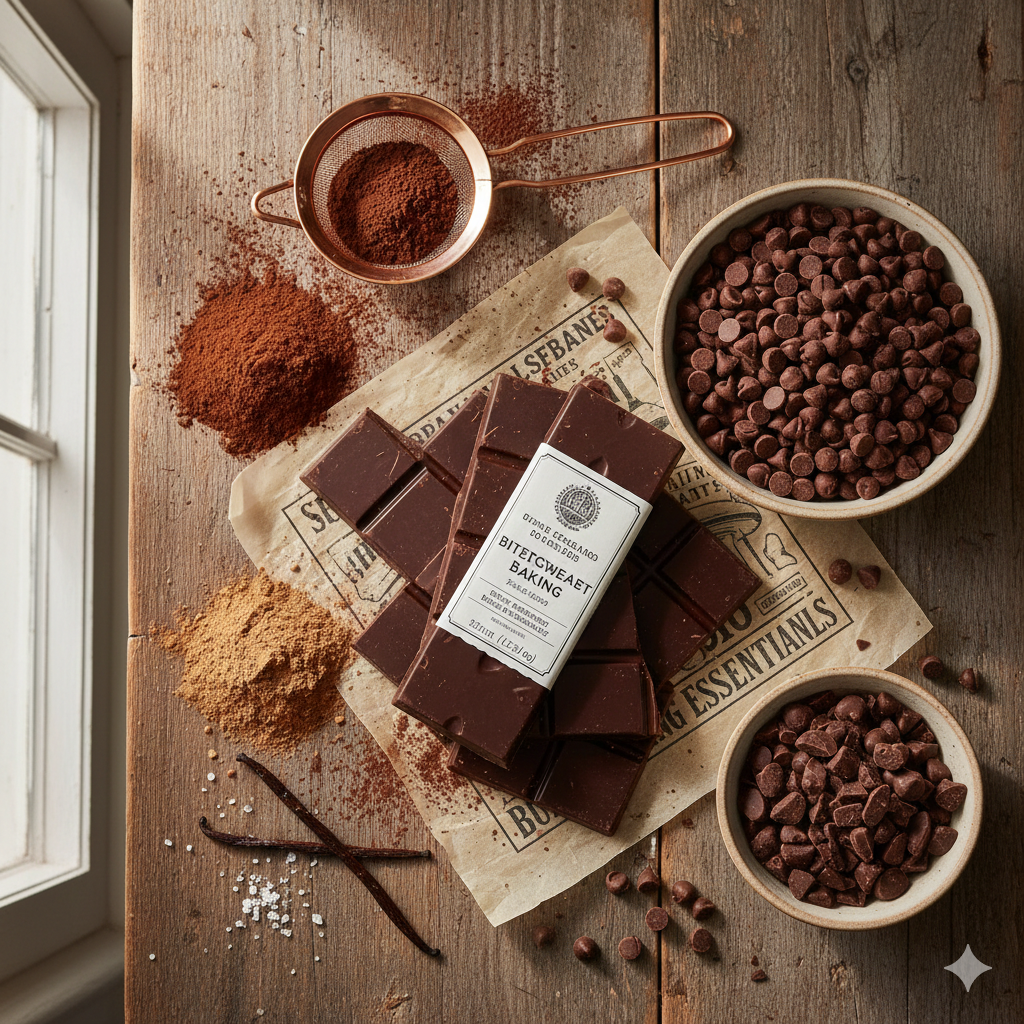
Le chocolat non sucré contient 100 % de solides de cacao et de beurre de cacao sans sucre ajouté, offrant une intensité maximale de chocolat pour la pâtisserie lorsque les recettes incluent du sucre séparément. Les Wafers de Liqueur de Cacao Naturelle 100% représentent un chocolat pur adapté aux recettes où le boulanger contrôle précisément le degré de sucre.
Les chocolats mi-amers et semi-sucrés contiennent 50 à 90 % de cacao avec du sucre ajouté, ce qui simplifie la formulation des recettes. Le Chocolat Noir 55% Venezuela offre un équilibre entre douceur et intensité de chocolat adapté à la plupart des applications de pâtisserie. Des pourcentages plus élevés (70 % et plus) créent des produits de boulangerie au goût de chocolat plus intense avec moins de douceur.
|
Type de chocolat |
Teneur en cacao |
Teneur en sucre |
Meilleures utilisations en pâtisserie |
|
Non sucré |
100% |
0% |
Brownies, gâteaux avec un contrôle précis du sucre |
|
Mi-amer |
70-85% |
15-30% |
Biscuits, ganache, gâteaux au chocolat intenses |
|
Mi-sucré |
50-69% |
31-50% |
Pâtisserie tout usage, pépites, morceaux de chocolat |
|
Chocolat au lait |
30-45% |
40-55% |
Desserts au chocolat doux, pâtisserie pour enfants |
|
Chocolat blanc |
0% solides de cacao |
55-60% |
Contraste de couleur, saveur douce, travail décoratif |
Poudre de cacao pour les applications de pâtisserie
La poudre de cacao est utilisée pour les applications nécessitant une saveur de chocolat sans ajout de matière grasse. La Poudre de Cacao Vénézuélienne Fine Naturelle apporte des notes de chocolat vives et acides, convenant aux recettes utilisant du bicarbonate de soude. La Poudre de Cacao Alcalinisée Hollandaise offre une saveur plus douce avec une couleur plus foncée, s'associant à la levure chimique.
La poudre de cacao naturelle contient une acidité plus élevée (pH 5.0-6.0) réagissant avec le bicarbonate de soude pour créer un agent levant. La poudre de cacao traitée à la hollandaise neutralise les acides (pH 6.8-8.1) produisant une saveur plus douce et une couleur plus foncée sans contribuer à la levée chimique. La chimie de la recette détermine quel chocolat est le meilleur pour la cuisson en ce qui concerne le choix de la poudre de cacao.

Sélection du chocolat pour des pâtisseries spécifiques
Biscuits et brownies
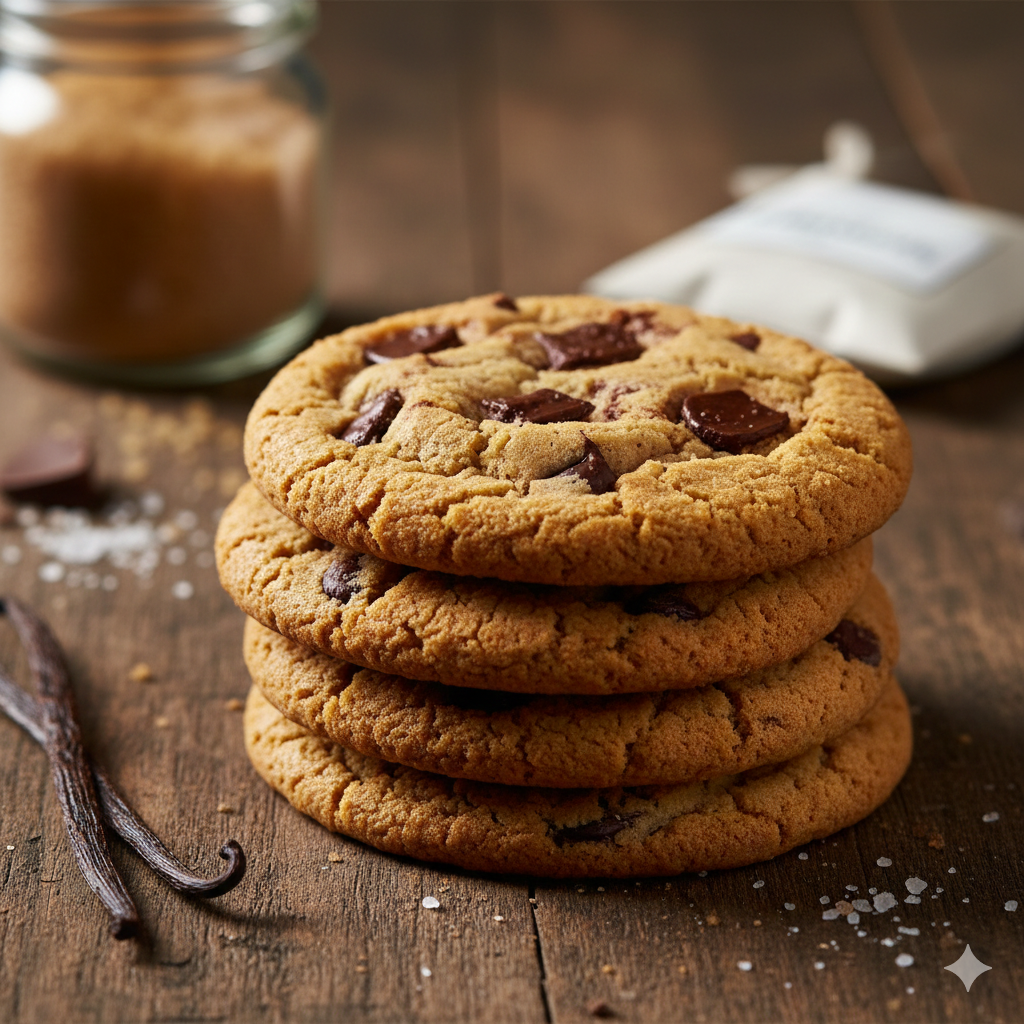
Les biscuits aux pépites de chocolat bénéficient d'un chocolat qui conserve des morceaux distincts plutôt que de fondre complètement. Les pépites de chocolat mi-sucré ou les barres hachées créent des poches de saveur de chocolat concentrée. Les Bâtonnets de Mélange Vénézuélien 55% se hachent facilement en morceaux irréguliers offrant une distribution variée du chocolat dans les biscuits.
Les brownies nécessitent un chocolat qui fond uniformément et s'incorpore à la pâte. Le meilleur chocolat pour les brownies comprend du chocolat non sucré ou mi-amer combiné à de la poudre de cacao pour une saveur de chocolat intense. Le chocolat de qualité fond de manière fiable, bien que le chocolat de couverture de qualité supérieure offre une saveur supérieure justifiant l'investissement pour les brownies d'occasion spéciale. Pour plus de conseils, consultez notre article sur le guide pour choisir le meilleur chocolat pour les brownies.
Gâteaux et tourtes
Les gâteaux au chocolat nécessitent un chocolat qui fond complètement sans devenir granuleux. Un chocolat mi-sucré ou mi-amer de haute qualité combiné à de la poudre de cacao crée des couches de saveur de chocolat dans tout le gâteau. Le chocolat fondu ajoute de la richesse et de l'humidité, tandis que la poudre de cacao répartie dans les ingrédients secs assure un goût de chocolat uniforme.
Les tourtes au chocolat sans farine exigent un chocolat de première qualité comme ingrédient principal. Utilisez un chocolat à 60-70 % de cacao pour une saveur intense sans amertume excessive. Le chocolat noir 55 % offre un excellent équilibre pour les tourtes où la qualité du chocolat détermine directement la qualité finale du dessert.
Ganache et garnitures
Les garnitures à la ganache nécessitent une texture lisse et crémeuse. Une teneur plus élevée en beurre de cacao produit une ganache plus soyeuse; le chocolat de couverture de qualité supérieure contient un minimum de 31 % de beurre de cacao, créant une sensation en bouche luxueuse. Le chocolat au lait FCH d'origine latino-américaine 44% offre une option de ganache au chocolat au lait tandis que le chocolat noir 55% crée une ganache noire classique.
Les ratios chocolat/crème varient selon la consistance désirée. Une ganache molle pour le glaçage utilise un ratio de 1:1, tandis qu'une ganache ferme pour truffes utilise un ratio de 2:1 chocolat/crème. La teneur plus élevée en beurre de cacao du chocolat de qualité supérieure affecte ces ratios ; les chocolatiers professionnels ajustent les recettes en fonction des formulations de chocolat spécifiques utilisées.
Indicateurs de qualité pour le chocolat de pâtisserie
Lire les étiquettes de chocolat
Le chocolat de cuisson de qualité liste la pâte de cacao, le beurre de cacao et le sucre comme ingrédients principaux. Évitez les produits mentionnant du "liquide de chocolat" sans spécifier la teneur en beurre de cacao - ceux-ci peuvent contenir des graisses végétales produisant une texture inférieure. L'ordre des ingrédients indique les proportions ; les produits à base de cacao devraient précéder le sucre dans le chocolat de qualité supérieure.
La lécithine apparaît comme un émulsifiant dans la plupart des chocolats, améliorant la texture sans affecter la qualité. La vanille ou la vanilline améliore la saveur, bien que le chocolat de qualité supérieure repose principalement sur la qualité du cacao. Évitez les chocolats qui listent plusieurs graisses végétales ou des additifs excessifs suggérant un chocolat de composition plutôt qu'un vrai chocolat adapté aux applications de pâtisserie.
Considérations relatives au pourcentage de cacao
Des pourcentages de cacao plus élevés n'indiquent pas automatiquement un meilleur chocolat de pâtisserie. Le meilleur chocolat dépend de l'intensité de saveur désirée et de la teneur en sucre de la recette. Un chocolat à 85 % de cacao crée des desserts intensément chocolatés avec une douceur minimale, tandis qu'un chocolat à 55 % produit des saveurs plus équilibrées et accessibles.
|
Pourcentage de cacao |
Profil aromatique |
Niveau de douceur |
Meilleures applications |
|
100% |
Intensément amer |
Aucun |
Recettes avec contrôle séparé du sucre |
|
70-85% |
Chocolat fort |
Minimal |
Desserts pour adultes, ganache noire |
|
55-69% |
Chocolat équilibré |
Modéré |
Pâtisserie tout usage, biscuits, gâteaux |
|
40-54% |
Chocolat doux |
Notable |
Pâtisserie pour enfants, desserts au chocolat au lait |
|
Blanc (0%) |
Pas de chocolat |
Élevé |
Contraste décoratif, desserts doux |
Les boulangers professionnels combinent souvent plusieurs pourcentages de chocolat pour créer des profils de saveur complexes. Un brownie pourrait utiliser 100 % de liqueur de cacao pour l'intensité de base, des morceaux de chocolat à 70 % pour la texture et de la poudre de cacao pour la couleur et une saveur répartie dans la pâte.

Chocolat de composition vs chocolat de couverture
Comprendre le chocolat de composition
Le chocolat de composition remplace le beurre de cacao par des huiles végétales (palme, noix de coco, soja), créant des produits qui fondent facilement sans nécessiter de tempérage. Le chocolat de composition est pratique lorsque la facilité prime sur la saveur supérieure.
Le chocolat de composition coûte moins cher que la couverture et tolère mieux les variations de température, ce qui le rend pratique pour les boulangers débutants ou les opérations commerciales à grand volume. Cependant, le chocolat de composition manque de la complexité et de la sensation en bouche du vrai chocolat. Les graisses végétales ne fondent pas à la température corporelle comme le beurre de cacao, créant une sensation cireuse plutôt que la fonte douce qu'offre le chocolat.
Avantages du chocolat de couverture
Le chocolat de couverture contient au minimum 31 % de beurre de cacao, offrant une saveur et des propriétés de fusion supérieures pour les applications axées sur la qualité. La couverture premium de notre collection de chocolats fins fond en douceur, s'incorpore facilement aux pâtes et délivre une saveur complexe impossible à obtenir avec des alternatives de composition.
La teneur plus élevée en beurre de cacao de la couverture crée des produits de boulangerie tendres et moelleux. La matière grasse contribue à la structure de la mie des gâteaux, à l'étalement des biscuits et à la texture générale. Bien que plus chère que le chocolat de composition, la performance et la saveur supérieures de la couverture justifient l'investissement pour la pâtisserie d'occasion spéciale ou les applications professionnelles où la qualité distingue les produits.
Pépites de chocolat vs chocolat en barre
Formulation des pépites de chocolat
Les pépites de chocolat contiennent des stabilisants qui les aident à conserver leur forme pendant la cuisson plutôt que de fondre complètement. Cette formulation convient aux applications nécessitant des morceaux de chocolat distincts dans les produits finis. Les pépites de chocolat standard fonctionnent parfaitement pour les biscuits aux pépites de chocolat, les muffins et les applications similaires.
Cependant, les stabilisants des pépites affectent le comportement de fusion dans les recettes nécessitant une incorporation lisse du chocolat. La ganache, la mousse ou la pâte à gâteau bénéficient du chocolat en barre haché qui fond proprement sans résidus de stabilisants affectant la texture. Il existe des pépites de qualité supérieure sans stabilisants excessifs, bien que le chocolat de couverture en barre haché donne généralement de meilleurs résultats pour les applications non à base de pépites.
Hachage du chocolat en barre
Le chocolat en barre coupé en morceaux irréguliers crée une distribution variée du chocolat, offrant un intérêt textural. Les gros morceaux restent substantiels après la cuisson, tandis que les petits morceaux fondent dans la pâte environnante, créant des tourbillons de chocolat. Les barres de chocolat noir se coupent facilement avec un couteau de chef aiguisé sur une planche à découper.
La température affecte la facilité de hachage ; le chocolat légèrement chaud (18-21°C) se coupe proprement, tandis que le chocolat froid se brise, créant un excès de fines particules. Le chocolat à température ambiante, environ 20-22°C, représente la température de hachage idéale, produisant un mélange de tailles de morceaux allant des petits copeaux aux morceaux substantiels.
Techniques de pâtisserie professionnelles avec le chocolat
Faire fondre le chocolat correctement
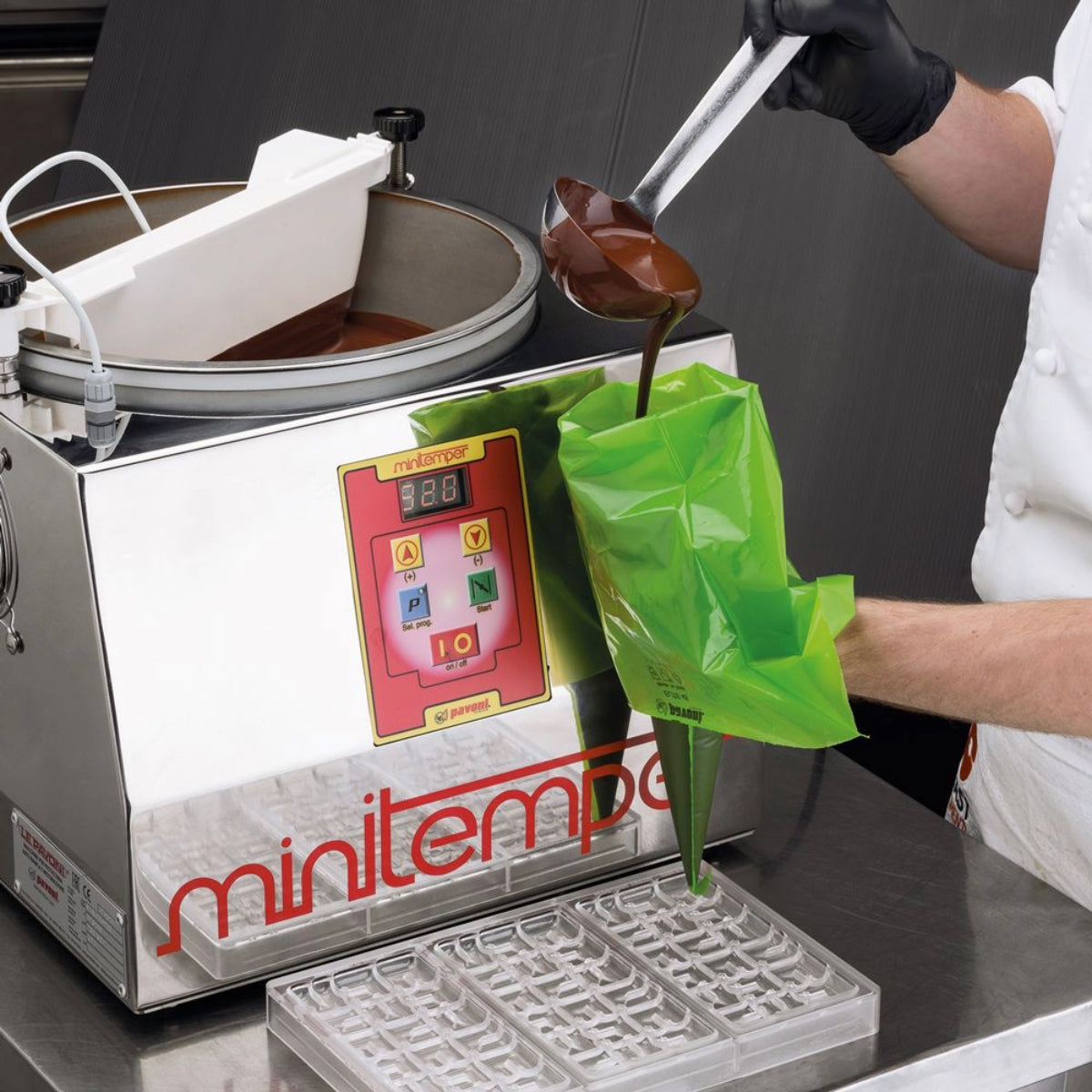
Une chaleur douce empêche le chocolat de brûler et de se solidifier pendant la fusion. La méthode du bain-marie consiste à suspendre un bol au-dessus d'eau frémissante, chauffant le chocolat indirectement. Les fondoirs à chocolat professionnels maintiennent des températures précises idéales pour les applications nécessitant une consistance spécifique du chocolat.
La fonte au micro-ondes fonctionne avec une attention particulière, en utilisant des intervalles de 15-20 secondes à 50% de puissance tout en remuant entre les sessions de chauffage. Le chocolat continue de fondre grâce à la chaleur résiduelle après l'arrêt du micro-ondes ; retirez le chocolat lorsqu'il reste de petits morceaux non fondus, en remuant jusqu'à ce qu'il soit complètement lisse. Le chocolat surchauffé devient granuleux et peut se solidifier, gâchant le lot. Pour plus de détails, consultez notre guide sur les méthodes pour faire fondre le chocolat.
Incorporer le chocolat aux pâtes
Les ingrédients à température ambiante se combinent plus facilement avec le chocolat fondu, évitant la solidification ou la granularité. Incorporez progressivement le chocolat aux autres ingrédients plutôt que de verser la quantité entière d'un coup. Cette technique assure une intégration en douceur dans la pâte, quelle que soit la sélection de chocolat.
Certaines recettes incorporent les morceaux dans la pâte finie comme dernière étape pour éviter que le chocolat ne coule pendant la cuisson. Enrobant les morceaux de chocolat avec une petite quantité de farine de la recette, on aide à les suspendre uniformément dans la pâte. Cette technique est particulièrement efficace pour les muffins, les pains rapides et les biscuits aux gros morceaux.
Stockage et manipulation du chocolat de pâtisserie
Conditions de stockage optimales
Conservez le chocolat de pâtisserie entre 15 et 18 °C (60-65 °F) avec une humidité inférieure à 50 % pour éviter le blanchiment. Emballez hermétiquement le chocolat dans du papier d'aluminium ou transférez-le dans des contenants hermétiques pour le protéger de l'humidité et de l'absorption des odeurs. Des solutions de stockage de qualité maintiennent des conditions idéales.
La réfrigération devient nécessaire dans les climats chauds, mais elle exige une manipulation soigneuse. Emballez hermétiquement le chocolat avant de le réfrigérer, puis laissez-le atteindre la température ambiante, toujours emballé, avant de le déballer. Cela empêche la condensation de se former sur la surface froide du chocolat, ce qui provoque une floraison de sucre qui altère l'apparence et affecte la texture.
Considérations sur la durée de conservation
Le chocolat noir conserve sa qualité pendant 18 à 24 mois s'il est correctement stocké. Le chocolat au lait dure 12 à 16 mois, tandis que le chocolat blanc se conserve 8 à 12 mois en raison de sa teneur plus élevée en matières solides de lait. La poudre de cacao dure 2 à 3 ans si elle est stockée hermétiquement, à l'abri de l'humidité et des odeurs.
Achetez du chocolat en quantités utilisées dans les périodes de durée de conservation. Bien que le chocolat périmé soit rarement dangereux, la qualité de la saveur diminue et le blanchiment est plus probable. Datez les emballages de chocolat lors de l'achat, en faisant une rotation des stocks pour utiliser les produits plus anciens en premier afin de garantir que le chocolat conserve sa qualité optimale.
Chocolat économique vs chocolat premium
Quand investir dans du chocolat de première qualité
Les recettes où le chocolat est la saveur principale justifient l'investissement dans un chocolat de qualité supérieure. Le gâteau au chocolat sans farine, la tarte au chocolat ou la mousse au chocolat mettent tellement en valeur le chocolat que la qualité détermine directement le succès du dessert. Le chocolat fin vénézuélien au cacao offre une saveur nuancée qui élève les préparations simples en desserts mémorables.
La ganache, les truffes et les décorations en chocolat bénéficient de la saveur et de la texture supérieures du chocolat de couverture de qualité supérieure. Lorsque le chocolat est seul plutôt que mélangé à des saveurs dominantes comme le café ou le caramel, la qualité devient primordiale pour obtenir les meilleurs résultats.
Choix économiques pour la pâtisserie en gros volume
La pâtisserie en grand volume ou les recettes où le chocolat joue un rôle de soutien permettent des sélections de chocolat plus économiques. Les biscuits aux pépites de chocolat contenant des noix, de l'avoine ou d'autres saveurs fonctionnent bien avec des pépites de chocolat standard. Des produits de milieu de gamme de qualité offrent des options économiques pour la production en grand volume.
Les gâteaux à étages avec glaçage, les biscuits décorés ou les pains rapides marbrés de chocolat tolèrent un chocolat de milieu de gamme, car d'autres composants contribuent de manière significative à la saveur générale. Réservez le chocolat de qualité supérieure pour les applications où il fait une différence notable, tout en utilisant des produits de milieu de gamme de qualité pour la pâtisserie quotidienne.
Conclusion
Le choix du meilleur chocolat pour la pâtisserie dépend des exigences spécifiques de la recette, de l'intensité de saveur désirée et des attentes en matière de qualité, plutôt que de suivre des règles universelles. Comprendre les types de chocolat, les pourcentages de cacao et les indicateurs de qualité permet aux pâtissiers d'adapter leurs choix de chocolat aux applications envisagées, qu'il s'agisse de créer des tourtes sans farine intensément chocolatées nécessitant une couverture de première qualité ou des biscuits aux pépites de chocolat quotidiens utilisant des pépites mi-sucrées de qualité. Le succès vient de la reconnaissance de la façon dont la composition du chocolat affecte les performances de cuisson et le développement de la saveur, tout en équilibrant les aspirations de qualité avec les considérations budgétaires pratiques. Explorez le chocolat de pâtisserie de première qualité, les poudres de cacao professionnelles et les produits de chocolat de qualité chez Zucchero Canada pour découvrir comment une sélection appropriée de chocolat transforme les produits de boulangerie ordinaires en produits exceptionnels grâce à une saveur et une texture supérieures à chaque bouchée.
Références
Beckett, S. T. (2023). The science of chocolate (3e éd.). Royal Society of Chemistry.
Figoni, P. (2023). How baking works: Exploring the fundamentals of baking science (4e éd.). John Wiley & Sons.
Greweling, P. (2023). Chocolates and confections: Formula, theory, and technique for the artisan confectioner (3e éd.). John Wiley & Sons.
McGee, H. (2023). On food and cooking: The science and lore of the kitchen (éd. révisée). Scribner.
Sua, L. Y., et al. (2023). Thermal and rheological properties of chocolate as affected by cocoa butter replacement. Food Research International, 167, 112698.







Laisser un commentaire
Tous les commentaires sont modérés avant d'être publiés.
Ce site est protégé par hCaptcha, et la Politique de confidentialité et les Conditions de service de hCaptcha s’appliquent.