


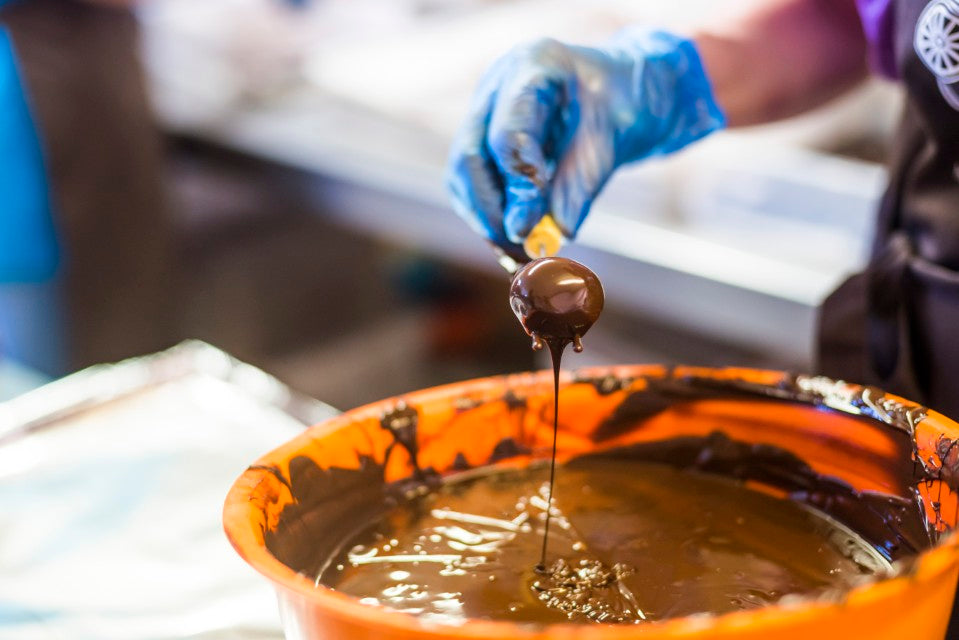
Double Boiler vs Microwave for Melting Chocolate: Pros, Cons and Temperatures
Short answer: both methods work if the chocolate stays dry and never goes past its melting limit. A double boiler (bain-marie) gives gentle, indirect heat, but its steam can make chocolate seize; a microwave is quick and needs no water bath, but heats unevenly, so run it at half power, in short bursts, and stir. Check the temperature with a thermometer: according to their technical data, the FCH 55% and Bassan 71% couvertures we stock should be melted at no more than 50°C (122°F). If you melt chocolate every day, a dry-heat melter holds the temperature for you, with no water and no guesswork.
Quick answer: which method for which job?
| Your need | Method and tool | Price |
|---|---|---|
| A small batch for baking, now | Microwave at 50% power, checked with a Martellato digital thermometer for chocolate | $29.95 CAD |
| Gentle melting for dipping a few pieces | Double boiler, checked with a Martellato infrared thermometer | $76.50 CAD |
| Melting and holding small amounts all day | Dry-heat melter: Martellato Mini Meltinchoc 1.8 L | from $390.00 CAD |
| Regular production | Dry-heat melter: Martellato Meltinchoc 6 L | $925.00 CAD |
| Melting and tempering with programs | Tempering machine: Pavoni MiniTemper 110V | $3,350.00 CAD |
Double boiler vs microwave at a glance
The double boiler is gentler, the microwave is faster, and the main risk is different for each: water for the first, uneven heating for the second.
| Double boiler (bain-marie) | Microwave | Dry-heat melter | |
|---|---|---|---|
| How it heats | Indirectly, from hot water under the bowl | Directly, in bursts | Dry heat under a removable tank, set by a thermostat |
| Main risk | Steam or condensation getting into the chocolate and making it seize | Uneven heating; heat keeps rising after you stop | No water involved; the thermostat caps the heat |
| Control | Keep the water hot but not boiling; stir and measure | 50% power, check often, stir, measure | Thermostat up to 50°C (122°F); digital models have dark, milk and white programs |
| Best for | Small batches you can watch | Small batches for baking and sauces | Daily dipping, moulding and holding chocolate ready |
What temperature should chocolate melt at?
Follow the technical sheet of your chocolate: the couvertures and melters below all work at or under 50°C (122°F).
| Source | Melting guideline |
|---|---|
| FCH 55% dark chocolate (technical data) | Melt at 45–50°C (113–122°F); temper at 31–32°C (88–90°F) |
| Bassan Sur del Lago 71% dark couverture (technical data) | Melt slowly at 50°C (122°F) maximum; temper to 30–32°C (86–90°F) |
| Martellato Digital Meltinchoc programs | Melts dark, milk and white chocolate to 45°C (113°F); after seeding, holds 31°C (88°F) dark, 29°C (84°F) milk, 28°C (82°F) white |
| Exploratorium, Science of Cooking (general guidance for home cooks) | Do not let melting chocolate rise above 115°F (46°C) |
Whatever the method, measure: KREA Swiss, the Swiss chocolate-equipment maker, warns that the heat source lags behind the chocolate, so the chocolate keeps climbing after you think you have stopped.
How to melt chocolate in a double boiler
Use water that is hot but not boiling, keep everything dry, and leave the bowl uncovered.
- Dry everything. The bowl, the spatula and the chocolate must be completely dry. KREA lists a bowl that is not fully dry and steam off a bain-marie among the moisture sources that can cause sugar bloom and disturb crystallisation.
- Heat the water, not to a boil. The Exploratorium's cooks advise keeping the water in the bottom pan hot but not boiling; the steam escaping from below is enough to make chocolate seize.
- Do not cover the bowl. Moisture condenses on a lid and drips into the chocolate, with the same result.
- Stir and measure. Stir with a heat-resistant spatula, such as the Martellato soft one-piece spatula rated up to 100°C (212°F) $12.95 CAD, and take the bowl off the heat when the chocolate reaches the melting limit on its technical sheet.
How to melt chocolate in the microwave
Use 50% power, check the chocolate often, and stop when it is almost melted.
- Put the chocolate in a dry bowl that its maker says is microwave-safe.
- Heat at 50% power. The Exploratorium suggests checking it every 90 seconds.
- Stir at every check: KREA describes microwave heat as uneven.
- Stop when the chocolate is almost melted. The carry-over heat held in the chocolate usually finishes the job.
- Measure with a thermometer before you use it, and stay under the melting limit of your chocolate.
Melting chocolate chips for dipping? See our guide on how to melt chocolate chips for dipping.
Why chocolate seizes, and how to rescue it
A few drops of water or steam turn melting chocolate thick and grainy; a lot of liquid, oddly, does not.
- Small amounts of water make it seize. The Exploratorium explains that melting chocolate simply can't tolerate small drops of water, whether steam from the double boiler or condensation from a lid.
- Rescue for baking, not for moulding. Once seized, chocolate is not easy to bring back. Whisking in 1 tablespoon of warm water, then more a teaspoon at a time, sometimes works; so can a few drops of vegetable oil or clarified butter. This can soften it enough to mix with other ingredients.
- Melting with liquid on purpose. With larger amounts of water, chocolate liquefies smoothly. When a recipe melts bittersweet, semisweet or white chocolate with liquid, the Exploratorium recommends at least 1 tablespoon (15 ml) of water per ounce of chocolate.
If your chocolate burnt or overheated rather than seized, read how to fix overheated and seized chocolate.
Melting is not tempering
Melting dissolves the cocoa butter crystals; for shine and snap you must temper the chocolate again before moulding or dipping.
KREA Swiss explains that tempering starts by melting the chocolate enough to dissolve every existing crystal, then seeding and cooling it so the stable form (Beta-5) develops, then holding it at working temperature; take it much above about 34°C (93°F) and the stable crystals are destroyed. Martellato's digital melter follows the same logic: it melts to 45°C (113°F), signals when to seed, then holds the tempering temperature. KREA also notes that hand tempering by passive cooling does not scale past roughly 500 g, which is why small producers struggle to stay consistent without a machine.
Step-by-step methods are in our guide on how to temper chocolate, and the difference between the two machines is in chocolate melter vs chocolate temperer.
When to stop using a double boiler: dry-heat melters
If you melt chocolate every day, a melter replaces the water bath with dry heat and a thermostat.
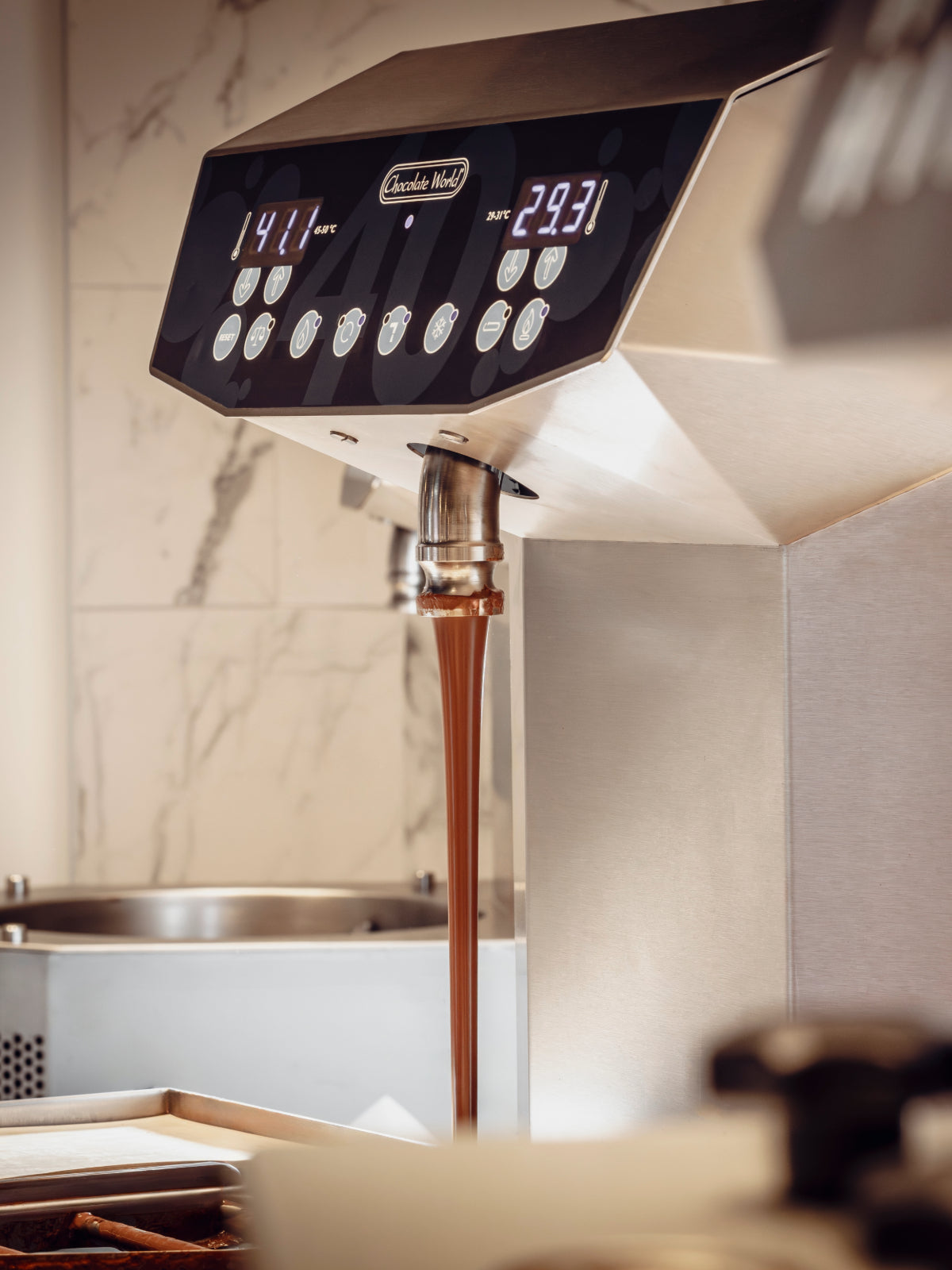
Martellato Meltinchoc melters heat dry, without water, under a removable tank, with a thermostat that goes up to 50°C (122°F). Analogue models have a manual thermostat; digital models have a built-in probe and three programs (dark, milk, white). All are 110V. Each Martellato table-top melter comes with a free spatula.
- Mini Meltinchoc 1.8 L (MC09) → from $390.00 CAD: small batches of pralines, and dipping desserts and ice cream on sticks.
- Meltinchoc analogue 6 L (MC102) → $925.00 CAD: regular dipping and coating.
- Meltinchoc Digital 3.6 L (MCD101) → $1,150.00 CAD: dark, milk and white programs that melt, then hold your tempering temperature after seeding.
When you need tempering itself handled by a machine, the Pavoni MiniTemper $3,350.00 CAD has a 3.5 kg (5 L nominal) tank and five programs, each with melting, crystallisation and hardening stages, set from 20°C to 60°C in 0.5°C steps.
How AI can help your production
Give an AI assistant the technical sheets of the chocolates you use and ask it for a one-page melting card per chocolate: melting limit, tempering temperature, which method or machine your team uses, and a line to log the temperature at each batch. Ask it to convert every °C to °F for staff who think in Fahrenheit, then check each number against the sheet. A written card keeps every shift melting the same way.
AI organises the information; tasting and the final decision stay with your chef.
Melting equipment and chocolate at Zucchero Canada
We are an authorized distributor of Martellato and Pavoni Italia in Canada. Each tool has a job: a thermometer for anyone melting by hand, a Mini Meltinchoc for small daily amounts, a 6 L or digital Meltinchoc for regular production, and the MiniTemper when you want melting and tempering in one machine. For the chocolate itself, Bassan's Sur del Lago 71% is made in Canada from Venezuelan cacao and ships across Canada from Calgary, AB, with its melting and tempering temperatures on the technical sheet.
- Bassan Sur del Lago 71%, 5 kg bag → $273.00 CAD
- FCH 55% dark chocolate minibars, 10 kg → $299.00 CAD
Equipping a bakery, café or chocolate shop? Contact us, write to sales@zuccherocanada.ca or call 587-774-8873 (toll free 877-741-8251).
Chocolate melters | Thermometers & scales | Dark couverture | Best chocolate for melting | How to temper chocolate
This article is for information only. Every business is different: draw your own conclusions based on your own expectations, budget and goals, and talk to qualified experts before you decide or invest.
Sources: Exploratorium, Science of Cooking, "Ask the Inquisitive Cooks: Why does my melted chocolate seize up?"; KREA Swiss, "What is tempering and where it goes wrong" (kreaswiss.com); Martellato, Digital Meltinchoc instruction manual (programs table) and General Catalogue 2026 (Meltinchoc, thermometers); Zucchero Canada product data for FCH 55%, Bassan Sur del Lago 71%, Martellato Meltinchoc melters, thermometers and spatulas, and Pavoni MiniTemper.
Good to know
Frequently asked questions
Is it better to melt chocolate in a double boiler or in the microwave?
Both work. A double boiler gives gentler, indirect heat, but its steam can make chocolate seize, so keep the water hot but not boiling and leave the bowl uncovered. A microwave needs no water bath but heats unevenly, so use 50% power, check often and stir. For daily work, a dry-heat melter such as the Martellato Meltinchoc holds the temperature with a thermostat, without water.
How do I melt chocolate in the microwave without burning it?
Use a dry, microwave-safe bowl and 50% power. The Exploratorium's Science of Cooking suggests checking every 90 seconds; stir at each check, because microwave heat is uneven, and stop when the chocolate is almost melted, since the heat held in the chocolate finishes the job. Check it with a thermometer: the technical data of the FCH 55% and Bassan 71% couvertures we stock say to melt them at no more than 50°C (122°F).
Why did my chocolate seize in the double boiler?
Almost always water. Melting chocolate cannot tolerate small drops of water: steam escaping from the bottom pan, or condensation dripping from a lid, is enough to make it thick and grainy. Keep the water hot but not boiling, keep the bowl and spatula dry, and do not cover the bowl.
Can you fix seized chocolate?
Sometimes, for baking. The Exploratorium suggests whisking in 1 tablespoon of warm water, then more a teaspoon at a time, or adding a few drops of vegetable oil or clarified butter; this can soften it enough to mix with other ingredients. Once seized, chocolate is not easy to bring back to a fluid state for moulding or dipping.
What temperature should melted chocolate be?
Follow your chocolate's technical sheet. FCH 55% dark chocolate melts at 45–50°C (113–122°F) and Bassan Sur del Lago 71% at 50°C (122°F) maximum; Martellato's digital melter melts dark, milk and white chocolate to 45°C (113°F). Melted chocolate must then be tempered before moulding or dipping, for example at 31–32°C (88–90°F) for FCH 55%.
Do chocolate melters qualify for free shipping?
No: machines are excluded from our free shipping on orders of $300 CAD or more. Orders over $500 CAD get 5% off automatically at checkout, and Martellato table-top melters come with a free spatula. Free shipping applies to selected products within Canada; remote areas and the territories pay the actual carrier rate.
Shop this article
Products mentioned in this guide
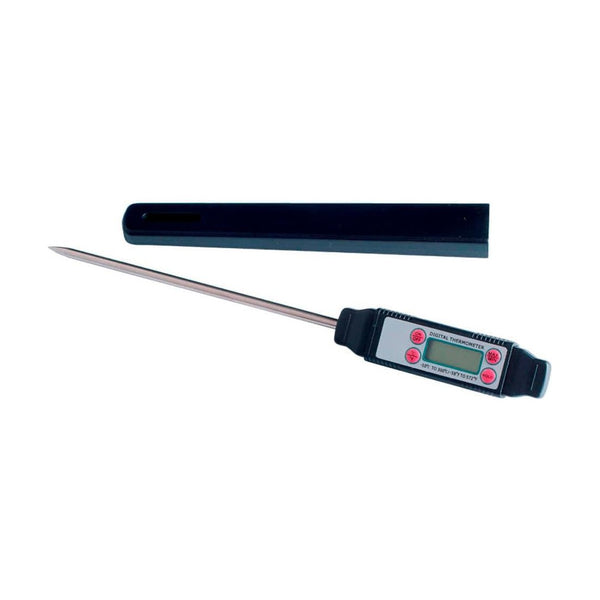 MartellatoDigital Thermometer for Chocolate 50T001$29.95 CADView product →
 MartellatoInfrared Digital Thermometer – 50T002$76.50 CADView product →
 Martellato"Mini Meltinchoc" Chocolate Melter 1.8 L – MC09GUSAFrom $390.00 CADView product →
 MartellatoMeltinchoc Analogue Melter 6 L – MC102110V$925.00 CADView product →
For professionals
Equipping a chocolate shop, bakery or kitchen?
Tell us what you produce and how much. We will recommend the right machine, moulds and ingredients, and send you a quote.
For home bakers
Professional tools for your own kitchen
The same European moulds, tools and ingredients the professionals use.
5% off orders over $500 CAD, applied automatically at checkout.
Keep reading



Leave a comment
All comments are moderated before being published.
This site is protected by hCaptcha and the hCaptcha Privacy Policy and Terms of Service apply.