What Is a Chocolate Truffle? Ganache, Coatings and How It Is Made
Short answer: a chocolate truffle is a small chocolate confection with a soft ganache centre, made from chocolate and cream (sometimes butter), finished with a dusting of cocoa powder or a thin coat of tempered couverture. It is named after the fungus it resembles once it is rolled in cocoa. Truffles are made by hand, in moulds or on an enrobing line; below is what goes into each, with a tested ganache from Le Cordon Bleu.
| To make truffles you need | What we recommend | Price |
|---|---|---|
| Dark couverture for ganache and coating | Bassan Sur del Lago 71% dark couverture, 5 kg | $273.00 |
| Moulded truffles, 24 at a time | Chocolate World Semi-Textured American Truffle mould CW12092 | $39.95 |
| Dipping truffles in tempered chocolate | Martellato dipping fork set, 10 pieces | $69.50 |
| Checking the coating temperature | Martellato digital thermometer for chocolate 50T001 | $29.95 |
| Cocoa powder for rolling, in production quantities | Dutched 20/22 cocoa powder, Peru, 25 kg | $710.00 |
What is a chocolate truffle?
A chocolate truffle is, in the Britannica Dictionary's words, "a kind of chocolate candy with a soft center". That soft centre is ganache. Sara Jayne Stanes (Chocolate: The Definitive Guide, 1999) describes the ganache as the chocolate and cream, and sometimes butter, that make "the vital component of the centre", and the ideal truffle as hand-made, with the ganache enrobed in a thin coating of 60–70% couverture.
Stanes, writing in 1999, called the chocolate truffle "an invention of about 80 years", which makes it a young classic compared with chocolate itself.
Why is it called a truffle?
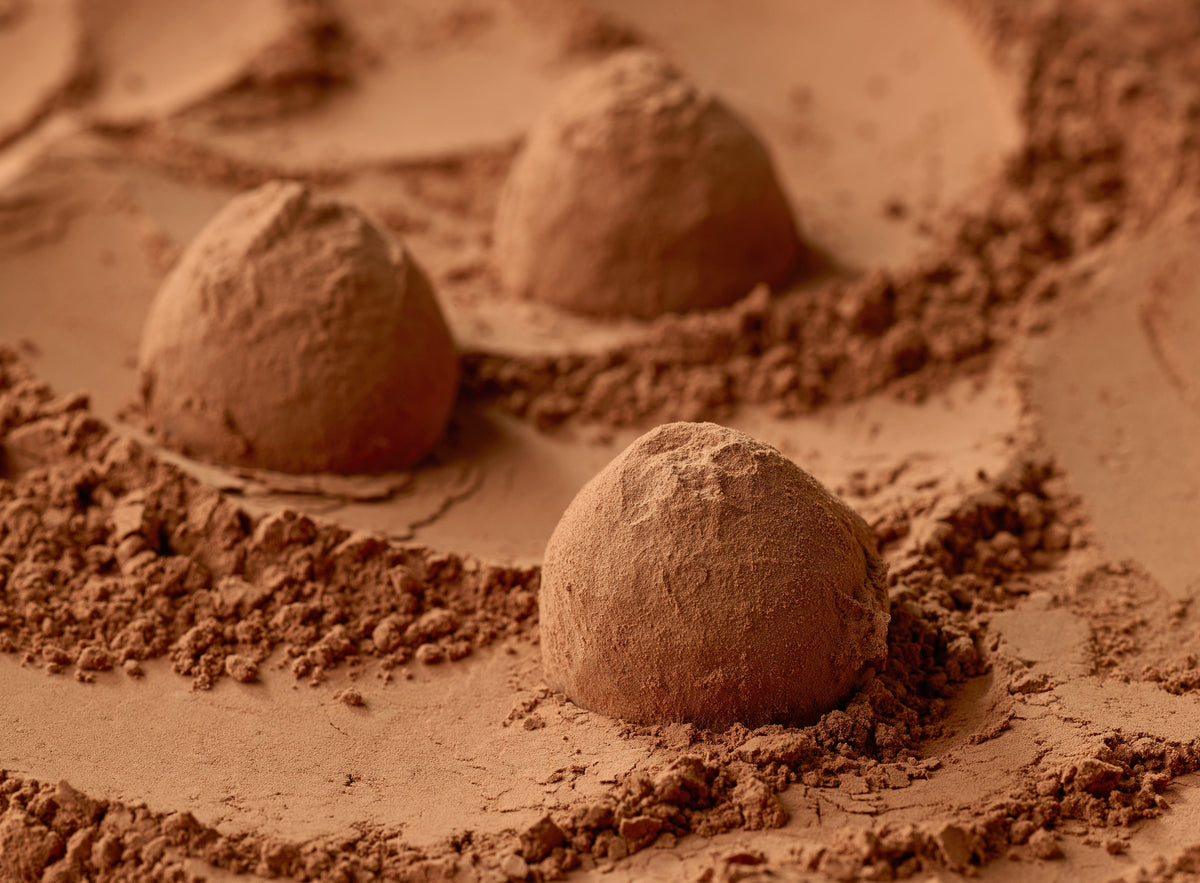
Because of the way it looks. Stanes explains that chocolate truffles are "so named because when dusted with cocoa powder they resemble those rare earthy little gems of fungus". The irregular ball, rolled in cocoa, looks like a truffle fresh from the ground.
Inside the truffle: the ganache
The centre is a ganache of chocolate and cream. As a working reference, Le Cordon Bleu's Armagnac truffle uses:
| Ingredient | Quantity |
|---|---|
| Dark chocolate, 53% cacao | 140 g |
| Cream | 100 g |
| Armagnac | 10 g |
| Dark chocolate for the coating | 200 g |
| Cocoa powder for rolling | 100 g |
That is 1.4 parts chocolate to 1 part cream by weight. If you work with another chocolate, make a test batch first: BCcampus warns that two chocolates with the same percentage can have very different amounts of cocoa butter and cocoa solids, and that swapping one for the other can change a recipe.
Truffle vs bonbon: what is the difference?
A truffle is defined by its ganache centre and its finish, not by its method; a moulded bonbon starts from a chocolate shell made in a mould. In practice the two overlap:
| Hand-made truffle | Moulded truffle or bonbon | |
|---|---|---|
| Centre | Ganache, piped into portions and set | Ganache or another filling, piped into a chocolate shell |
| Outside | Thin coat of tempered couverture, often rolled in cocoa powder | The moulded shell, closed with chocolate |
| Look | Irregular, like the fungus it is named after | The exact shape of the mould cavity |
The vocabulary also changes by country: in Chocolate World's moulds catalogue, Belgian chef Alexandre Bourdeaux calls the Belgian truffle "a classic praline". For the moulded technique step by step, see how to mold chocolate and our guide to shiny chocolate bonbons.
How chocolate truffles are made
There are three ways, from the pastry bench to the production line.
1. By hand: Le Cordon Bleu's method
- Heat 100 g of cream in a saucepan.
- Put the chocolate in a bowl and add the hot cream gradually, mixing with a rubber spatula until smooth.
- Add the Armagnac and mix well.
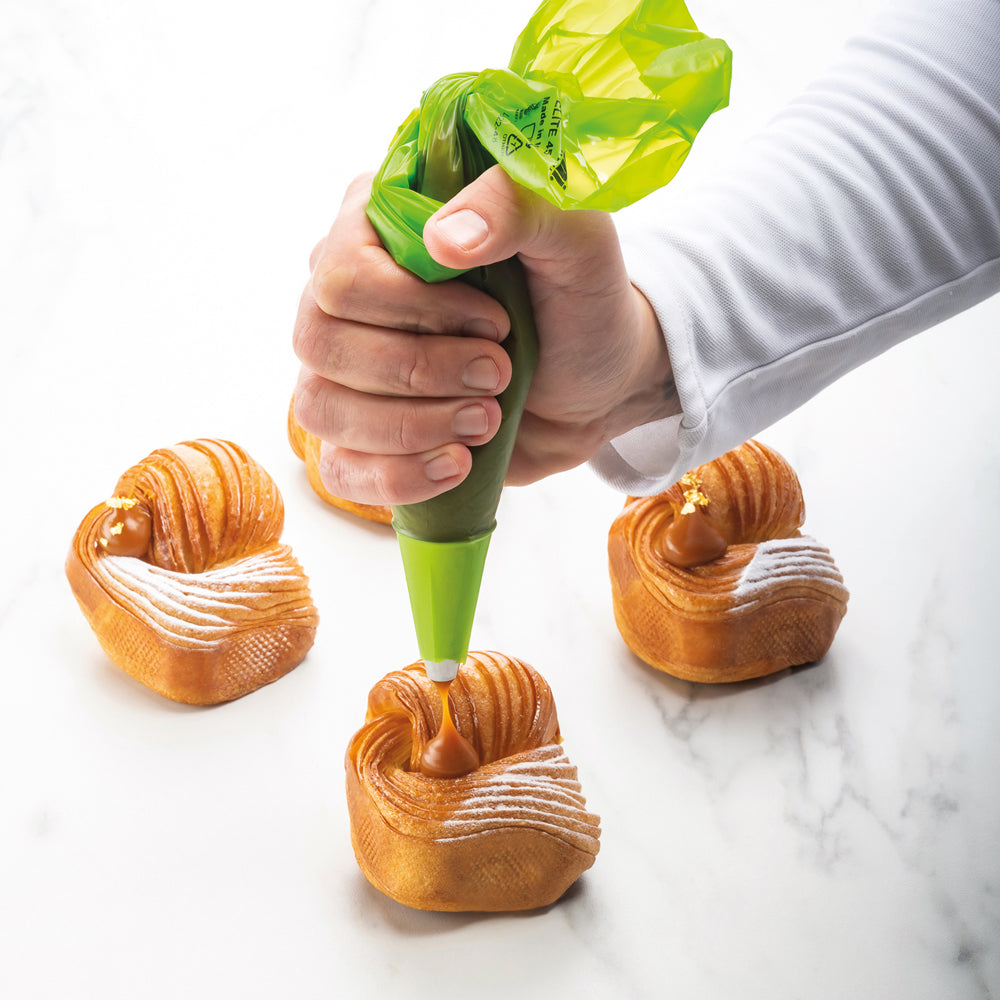
- Leave the ganache until it is slightly firm, then pipe equal portions onto a tray with a 12 mm nozzle and refrigerate to set.
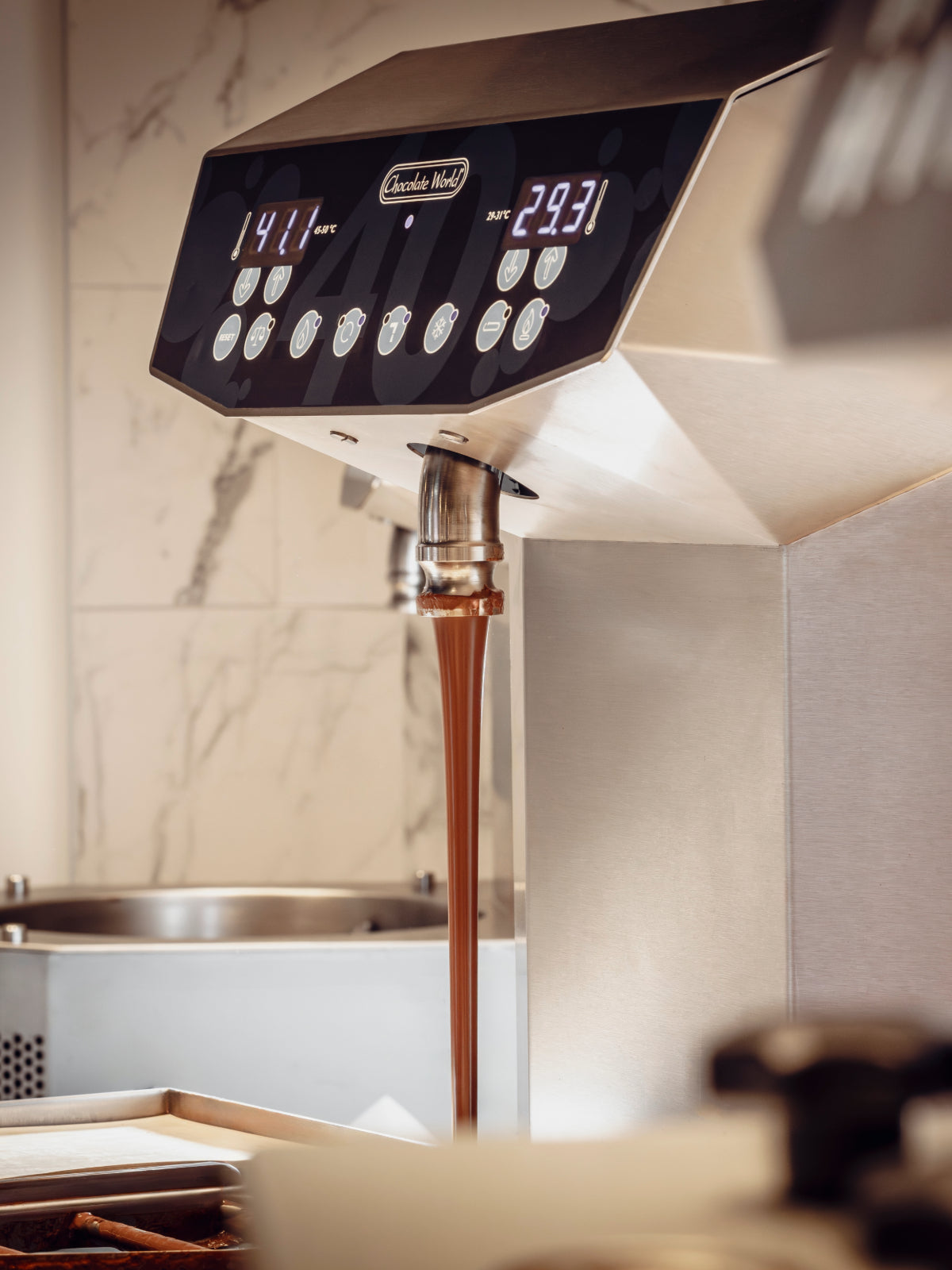
- Temper the coating chocolate: melt two thirds of it over a bain-marie to 50°C (122°F), take it off the heat, stir in the remaining third until it reads 29°C (84°F), then rewarm to 31°C (88°F).
- Coat the set ganache in the tempered chocolate, then roll each truffle in cocoa powder.
For the coating step by hand you need dipping forks, and a thermometer to check each temperature of the coating chocolate.
- View the Martellato dipping fork set → $69.50 CAD
- View the Martellato digital thermometer 50T001 → $29.95 CAD
2. In a mould
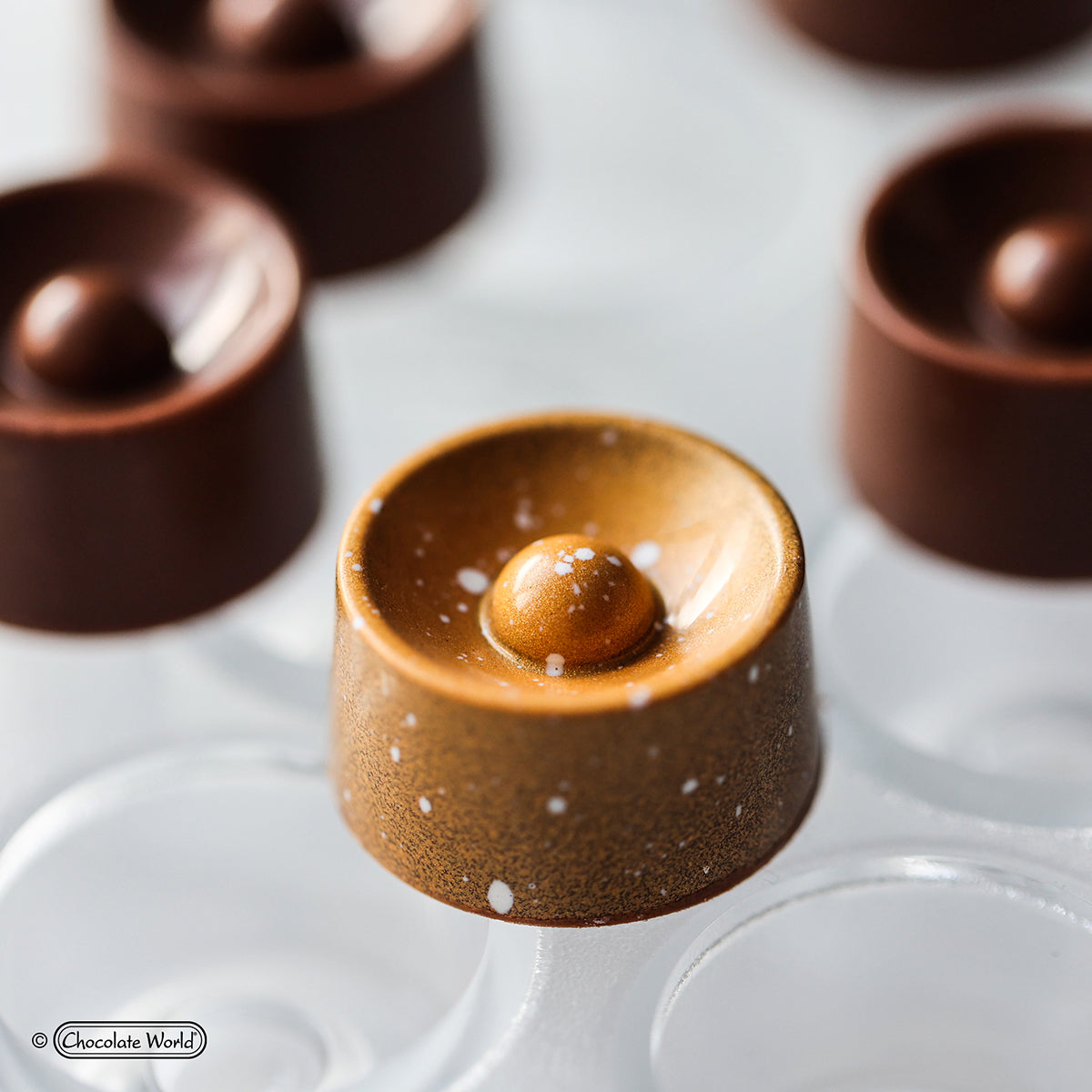
Chocolate World makes polycarbonate "American truffle" moulds for ganache-filled half-spheres and dome pralines. The Semi-Textured American Truffle mould CW12092 has 24 cavities of 10 g and is dishwasher safe on the top rack.
- View the Semi-Textured American Truffle mould CW12092 → $39.95 CAD
- View the American Truffle L mould CW1291 → $39.95 CAD
- View the American Truffle S mould CW1292 → $39.95 CAD
3. On an enrobing line
For volume, Chocolate World offers two options for its enrobing lines (M1200A, M1300A, M1300ADB and M1300AXL): the M1300B truffle grill, which gives enrobed chocolates the rough truffle texture as they leave the enrober, and the M1300C truffle mill, a rotating drum that applies cocoa powder, chopped nuts or shaved chocolate automatically.
View chocolate enrobing machines →
Truffle coatings
The classic finish is cocoa powder, the one that gives the truffle its name. The sources above add:
- Tempered couverture: a thin coat; Stanes specifies 60–70% couverture.
- Cocoa powder over tempered chocolate: Le Cordon Bleu coats first, then rolls in cocoa.
- Chopped nuts or shaved chocolate: the coatings Chocolate World's truffle mill applies. To make your own, see chocolate curls vs shavings.
View the Dutched 20/22 cocoa powder, 25 kg → $710.00 CAD
Which chocolate to use for truffles
Use a couverture whose maker recommends it for ganache, and follow its working temperatures for the coating.
- Bassan Sur del Lago 71%: made in Canada from Venezuelan Trinitario cacao with ancestral Criollo lineage, with notes of fruit, wood and nuts. Bassan lists "ganaches and truffles" among its applications; work it at 30–32°C (86–90°F).
- FCH 55% Venezuela: from fermented Venezuelan Trinitario cacao, recommended for ganaches and coating; its curve is melt 45–50°C (113–122°F), crystallisation 28–29°C (82–84°F), tempering 31–32°C (88–90°F).
- View Bassan Sur del Lago 71%, 5 kg → $273.00 CAD
- View FCH 55% Venezuela, 10 kg → $299.00 CAD
Not sure your chocolate will melt and flow well? Read what chocolate is best for melting.
How AI can help your production
Give an AI assistant your ganache recipe and ask it to scale it to the number of truffles you need, to cost each piece from your ingredient prices, and to build a production plan that fits ganache setting time, coating and packing into your shifts. Ask it to keep a batch sheet with cream and chocolate weights, coating temperatures and the result of each batch, so changes in texture can be traced.
AI organises the information; tasting and the final decision stay with your chef.
Making truffles with Zucchero Canada
We supply chocolatiers and pastry kitchens across Canada, with one clear job for each product:
- Ganache and coating: Bassan Sur del Lago 71%, made in Canada and shipped across Canada from Calgary, and FCH 55% from Venezuelan cacao.
- Moulded truffles: Chocolate World polycarbonate truffle moulds; we are an authorized Chocolate World distributor.
- Hand-dipped truffles: Martellato dipping forks and thermometers.
- Volume: Chocolate World enrobing lines with truffle grill and truffle mill options.
For the theory behind the centre, Ramon Morató's Files includes a full file on ganache among its 15 projects (529 pages, English/Spanish); we stock Books for Chefs titles in Calgary and ship across Canada.
View Files by Ramon Morató → $150.00 CAD
Producing truffles for retail, hotels or corporate gifts? Contact our team for volume pricing on couverture, moulds and equipment, or call 587-774-8873 (toll free 877-741-8251).
Bassan Chocolate | Bonbon & praline moulds | Dipping forks | Shiny bonbons guide | How to mold chocolate
This article is for information only. Every business is different: draw your own conclusions based on your own expectations, budget and goals, and talk to qualified experts before you decide or invest.
Sources: S. J. Stanes, Chocolate: The Definitive Guide (1999), "Truffles"; The Britannica Dictionary, "truffle"; Le Cordon Bleu, "Armagnac Truffles Recipe" (cordonbleu.edu); BC Cook Articulation Committee, Understanding Ingredients for the Canadian Baker (BCcampus), §7.4; Chocolate World Moulds catalogue, Edition 15 (Chef's Signature, CW1730); Chocolate World product data (CW12092, M1300B, M1300C); Bassan Chocolate and FCH product data.
Good to know
Frequently asked questions
What is a chocolate truffle made of?
A ganache centre of chocolate and cream, sometimes with butter, finished with cocoa powder or a thin coat of tempered couverture (Sara Jayne Stanes, Chocolate: The Definitive Guide). Le Cordon Bleu's Armagnac truffle uses 140 g of 53% dark chocolate, 100 g of cream and 10 g of Armagnac, coated in tempered dark chocolate and rolled in cocoa powder.
Why are chocolate truffles called truffles?
Because they look like the fungus. Stanes explains that chocolate truffles are so named because, dusted with cocoa powder, they resemble those rare, earthy gems of fungus.
What is the difference between a chocolate truffle and a bonbon?
A truffle is defined by its ganache centre and its finish: hand-made truffles are ganache coated in tempered couverture and often rolled in cocoa. A moulded bonbon starts from a chocolate shell made in a mould, filled and closed with chocolate. Truffles can also be moulded, and Belgian chef Alexandre Bourdeaux calls the Belgian truffle a classic praline.
How do you coat chocolate truffles?
Le Cordon Bleu tempers the coating chocolate by melting two thirds to 50°C (122°F), stirring in the last third until it reads 29°C (84°F) and rewarming to 31°C (88°F), then coats the set ganache and rolls each truffle in cocoa powder. Other coatings include chopped nuts and shaved chocolate.
What chocolate is best for making truffles?
A couverture recommended for ganache. Bassan Sur del Lago 71% lists ganaches and truffles among its applications and works at 30–32°C (86–90°F); FCH 55% Venezuela is recommended for ganaches. If you change the chocolate in a recipe, make a test batch: two chocolates with the same percentage can behave differently.
Do chocolate and truffle moulds qualify for free shipping?
Chocolate is excluded from free shipping, and food products ship within Canada only. Chocolate moulds count toward free shipping on orders of $300 CAD or more within Canada; remote areas and the territories pay the actual carrier rate. Orders over $500 CAD get 5% off automatically at checkout.
Shop this article
Products mentioned in this guide
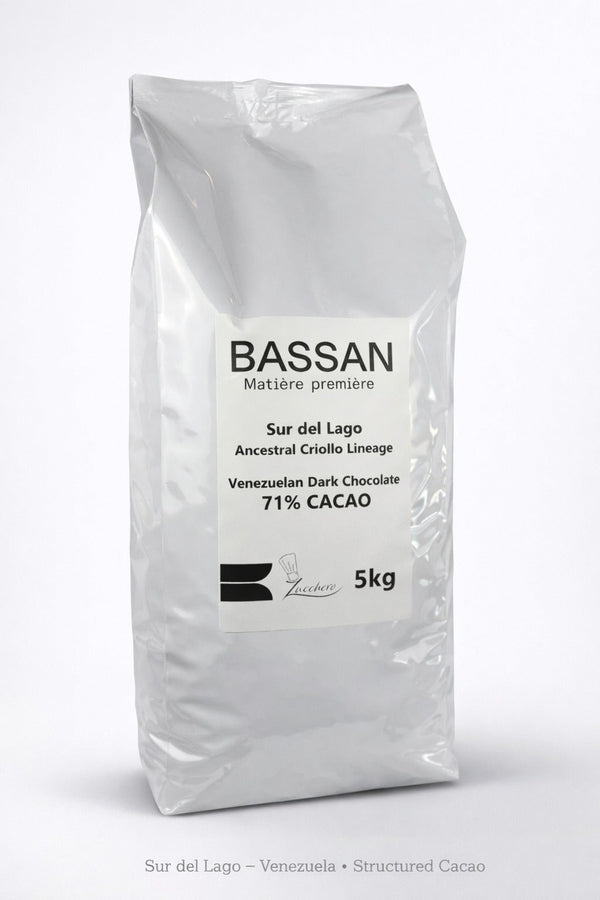 Bassan ChocolateSur del Lago Ancestral Criollo Lineage Dark Chocolate 71%From $69.95 CADView product →
 Chocolate WorldSemi-Textured American Truffle Chocolate Mold CW12092From $39.95 CADView product →
 MartellatoDipping Fork Set - 10 Pcs – CHOCOFORK$69.50 CADView product →
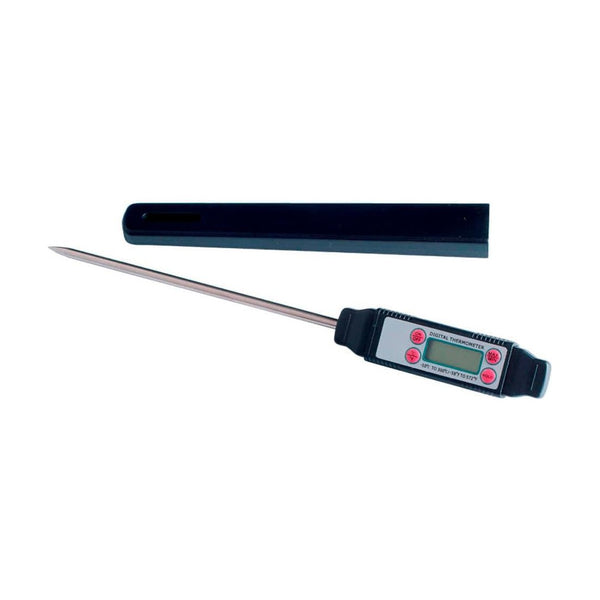 MartellatoDigital Thermometer for Chocolate 50T001$29.95 CADView product →
For professionals
Equipping a chocolate shop, bakery or kitchen?
Tell us what you produce and how much. We will recommend the right machine, moulds and ingredients, and send you a quote.
For home bakers
Professional tools for your own kitchen
The same European moulds, tools and ingredients the professionals use.
5% off orders over $500 CAD, applied automatically at checkout.
Keep reading


Leave a comment
All comments are moderated before being published.
This site is protected by hCaptcha and the hCaptcha Privacy Policy and Terms of Service apply.