


Bean-to-Bar · The Professional Setup
How to Make Bean-to-Bar Chocolate — The Professional Machine Setup.
From raw bean to finished bar, every stage of production has a machine that does it faster, cleaner, and more consistently than your hands ever will. Tempering by hand is fine for a hobby. If you're making chocolate to sell, this is the setup that saves you the time — and the headaches.
Build it once, build it right.
Zucchero Canada is the authorized Canadian distributor for the European houses that build serious chocolate equipment. We'd rather help you buy the right machine once than watch you outgrow a cheap one in six months.
For bean-to-bar production we recommend, in order: Bilait first — compact, Italian-built machines priced to get you started and grow with you; then Chocolate World and Pomati as your volume grows. Two FBM machines round out the line where they earn their place.
Roast the beans.
Roasting develops flavor and loosens the husk so the beans crack cleanly. Good news: you don't need a dedicated roaster to make excellent chocolate. Most makers start with a quality convection oven and dial in by origin and batch.
Recommended setup
No machine required to start — a reliable convection oven does the job. We point our roasting budget at the next step.
Crack & winnow.
Roasted beans get cracked and the husk separated from the nib. By hand this is slow, messy, and wastes good nib. A cracker-winnower crushes and separates clean nib from husk in a single pass — quietly, with almost no dust.
Recommended setup — Bilait first
Primary Bilait MI30 — cracks up to 30 kg/h, winnows up to 10 kg/h Available soon → FBM Ninja Kid — cracks & winnows 25–30 kg/h →Refine & conche.
This is where gritty nib becomes smooth chocolate. Refining drives the particle size down; conching develops flavor and drives off harsh volatiles. At production quality, this step is effectively impossible by hand. Bilait's refiners do both — refine and conche in the same machine, so you don't buy two.
Recommended setup — Bilait → Chocolate World → FBM
Primary Bilait R7 — 7 kg, refines + optional conching fan Available soon → Bilait R15 — 15 kg, heats & holds to 70 °C Available soon → Bilait R60 — 60 kg, touch display, double conching fan Available soon → Chocolate World M1025 — 4.5 kg tabletop conche & refiner (110V) → FBM TAOBROMA — 35 kg ball mill for larger batches →Melt & hold.
Cocoa butter and finished chocolate need to be melted and held at working temperature without scorching. A melter keeps everything fluid and ready so your bench never stalls.
Recommended setup
Mol d'Art melter — 3 kg / 6 kg — reliable bench melters for small production → Martellato Meltinchoc — analog & digital melters, 1.7–13.7 L → Bilait Fontana — optional: keeps tempered chocolate flowing at the bench Available soon →Temper.
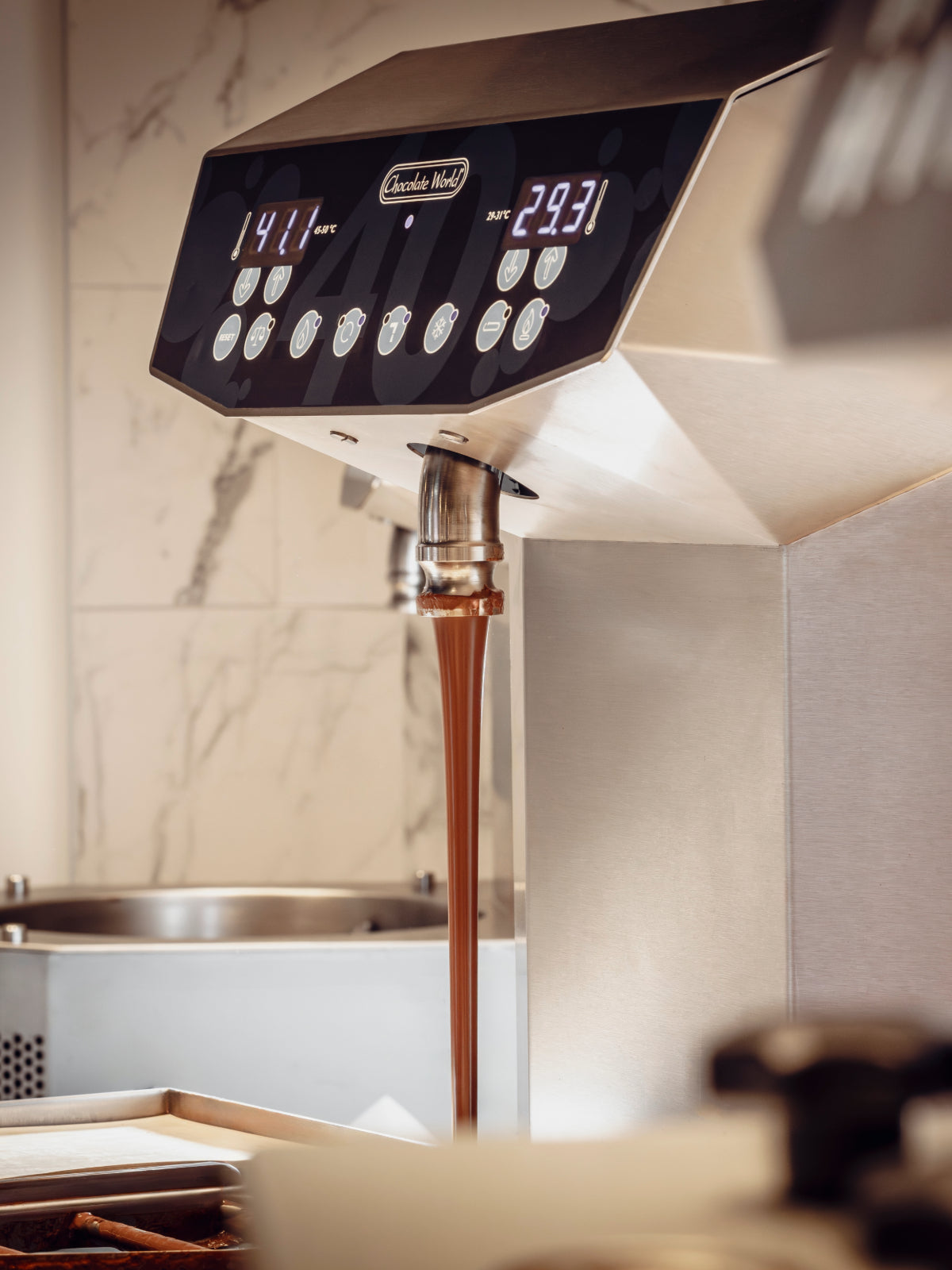
Tempering sets the cocoa butter into the right crystal form — the snap, the shine, the shelf stability. This is the step makers most want to automate, because hand-tempering is slow and drifts batch to batch. A tempering machine holds the curve for you, every time.
Recommended setup — smallest to largest, most makers start at the top
Start here Pavoni MiniTemper — 110V, compact tabletop for the smallest batches → Chocolate World Easy Temp — 3 kg tabletop, entry automatic tempering → Pomati T5 — 5 kg tabletop → Bilait Adam K6 — 6 kg tabletop, up to 24 kg/h → Pomati T8 — 220V single-phase, compact continuous tempering → Chocolate World CW12 — 12 kg automatic tempering → Pomati SL16 — 16 kg continuous → Chocolate World CW24 Delight — 24 kg, single-phase continuous → Pomati SL30 — 30 kg continuous → Chocolate World CW40 — 40 kg, 3-phase continuous → Pomati SL50 — 50 kg continuous, high volume → Chocolate World CW80 — 80 kg, 3-phase, full production → Bilait Adam K12 / K24 / K60 — 12–60 kg, growing the Bilait range Available soon →Cool, crystallize & store.
Finished chocolate has to cool and crystallize at controlled temperature and humidity — and stay there. Store it wrong and you get bloom: that dull, whitish film and grainy texture that kills a sale. A chocolate refrigerator holds the exact conditions chocolate needs, automatically.
Recommended setup — the Bilait fridges we'd put in every shop
Primary Bilait Chocolate Mini Glass — Wi-Fi, 12–18 °C at ~45% RH, glass door Available soon → Bilait Chocolate 70 Glass — mid-size, Euronorm trays Available soon → Bilait Chocolate 100 Glass — largest capacity for busy production Available soon → Bilait Cooling Tunnel — continuous cooling for molded & enrobed output at volume Available soon →Mold & finish.
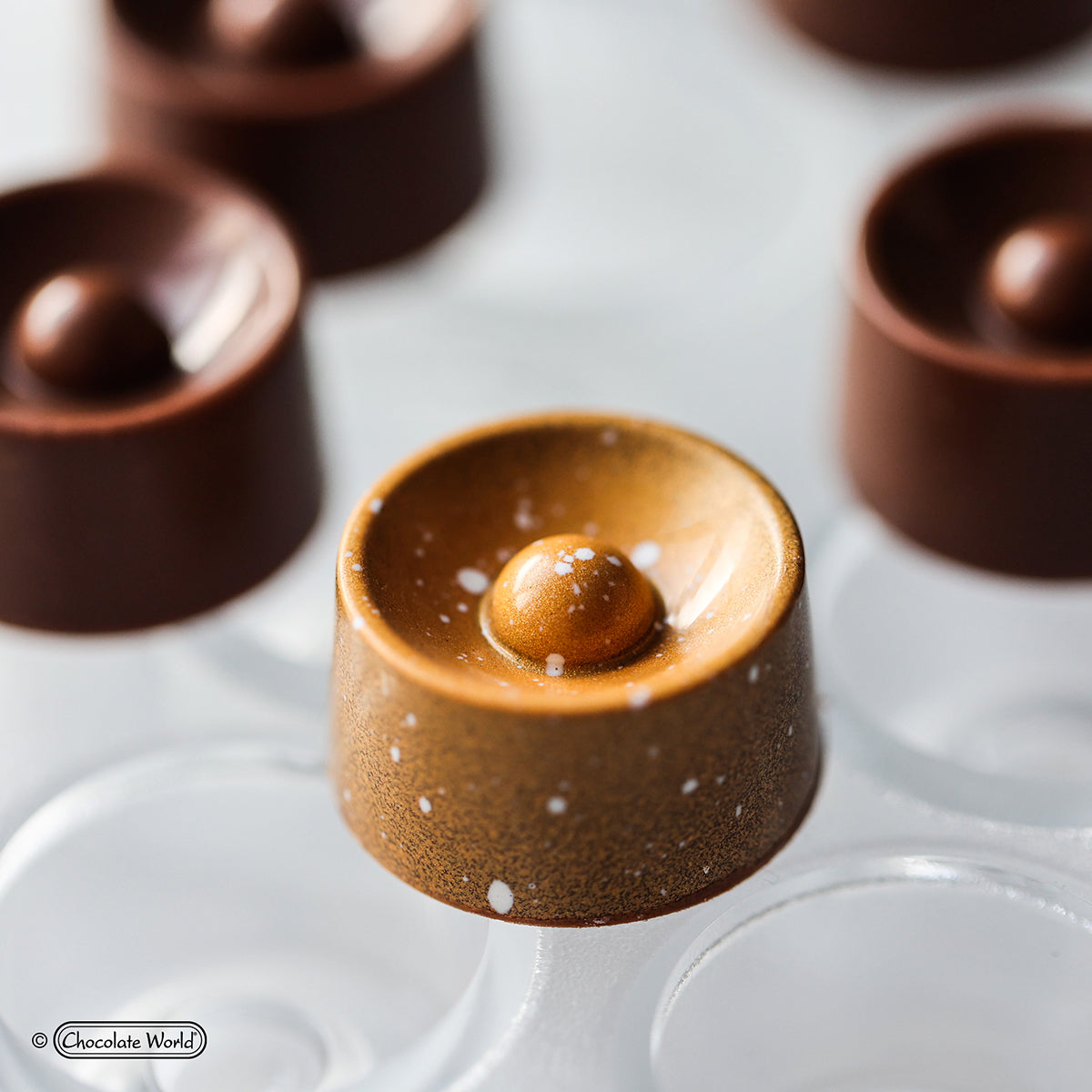
Pour tempered chocolate into bar molds, vibrate out the air, cool, and demold. Finish with colored cocoa butter for a signature look that sets your bars apart on the shelf.
Recommended setup
Bar & tablet chocolate molds — our full polycarbonate bar-mold collection → Bilait Choco-Hot Spray — optional: colored cocoa butter & velvet finishes Available soon →Power & installation — plan ahead.
Most professional European machines run on 230V (some larger models are three-phase). Plan a dedicated 230V circuit for your space before your machine arrives — never use a voltage converter. Tell us your room and we'll help you confirm the electrical requirements for each machine.
Wholesale
Building a bean-to-bar operation in Canada?
Open a Wholesale Account for trade pricing, and let our team spec the right machine for your volume — so you buy once, not twice.
See everything for bean-to-bar makers →